Who really did 21/4?

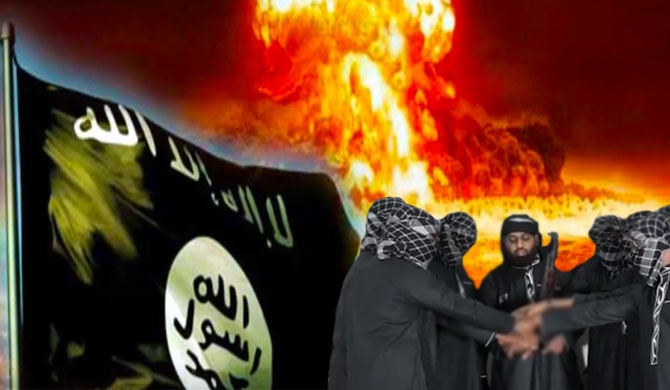
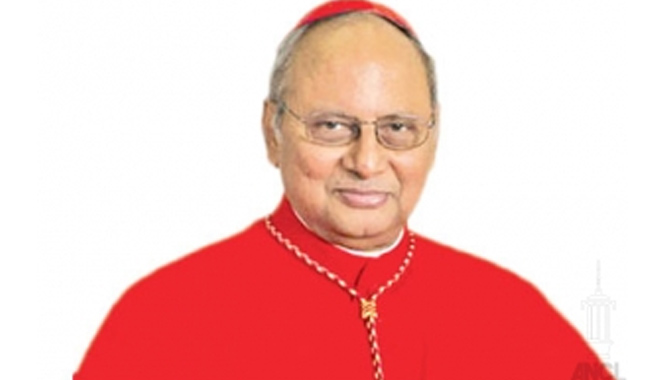
Addressing the Media on Tuesday (13), Archbishop of Colombo, Malcolm Cardinal Ranjith said there were several mysterious circumstances about the Easter Sunday attacks that still remained unanswered almost two years on.

He urged the Government to refrain from trying to sweep the entire tragedy under the carpet by making a few arrests and stop conducting haphazard investigations.

However, with a Police force, a CID, and legal system that act according to agendas of the political elite, there is a serious question as to whether it is possible to resolve these riddles.

The Cardinal cast doubt on the functioning of the Police, CID and legal system claiming that they seem to be operating parallel to the agendas of the political elite and questioned if the mysterious circumstances surrounding the worst terror attack committed in Sri Lankan soil since the end of the separatist conflict would ever be brought to light.

He said a letter has been sent to President Gotabaya Rajapaksa with several questions regarding the probes into the Easter attacks pointing out the urgent need for answers.

The current regime came to power promising to punish all those involved with the terror plot. The public at that time was aghast with the deadly carnage; nobody thought that Sri Lanka would ever taste the bitter fruits of terror after 10 years of peace and prosperity. Almost overnight, the economic honeymoon driven by the tourism boom lost its momentum with several countries imposing travel advisories.

Things were not looking entirely rosy in 2019, with uncertainties looming over the country like a dark shadow. The authorities started probing a sophisticated network of Jihadi terror cells that had been growing in plain sight. With every raid the media followed quickly with sensational headlines; pushing the public to the polls to vote for a change that will make Sri Lanka safe again.

But despite almost a year’s worth of investigations resulting in a final report thick as a phonebook, there are many things that remained puzzling. Who can really plan a terror attack of this scale while hoodwinking the authorities? How sophisticated is the terror network in the region and who are they funded by? And most importantly: Who benefited from these horrendous attacks?

The Catholic leadership has called for an in-depth, impartial probe to find the truth. Cardinal Malcolm Ranjith said the document has been prepared by the National Catholic Proclamation Committee comprising seven Bishops, priests and scholars.

Persons who contributed towards executing those attacks, by foiling attempts by Police and State intelligence to probe the terrorists who killed 269 people, remain free and had even been awarded promotions, it further said.

The Archbishop said the matter needs further investigation since the former Attorney General, Dappula de Livera, claimed that the attacks were a grand conspiracy. The mysterious circumstances surrounding Pulasthini Rajendran still sticks up like a sore thumb in the entire affair that has sparked several theories.

The Easter Sunday attacks will always be regarded as flashpoint in Sri Lankan history that exposed its vulnerabilities when politics, national security and social issues intertwine. However, the truth cannot be hidden for long.

Even if the public is spared the details, the issues that led to the radicalisation and mayhem will only resurface to terrorise the country again. With full disclosure this administration will fulfil its pledge to seek justice and respect all those who lost their lives on that fateful Easter Sunday.

Posted in Uncategorized

PAFFREL summoned before PSC today to present election law reform proposals

Sri Lanka Election monitoring organization, People’s Action For Free and Fair Elections (PAFFREL) has been summoned before the Parliamentary Select Committee (PSC) on Election law reforms appointed to identify appropriate reforms of the election laws and the electoral system and to recommend necessary amendments.

The Select Committee chaired by the Leader of the House and Foreign Minister Dinesh Gunawardena is scheduled to convene in Parliament this afternoon (14) and at the invitation of the Committee, PAFFREL will present its proposals for the reform of election laws and regulations.

Meanwhile, the proposal made by Minister Gunawardena to invite Chairman and members of the Elections Commission to the committee meetings has been approved by the PSC, said its Secretary and Deputy Secretary – General and Chief of Staff, Kushani Rohanadeera.

In addition, the Committee has decided to invite the relevant officials of the Attorney General’s Department in every meeting of the Committee, said Ms. Rohanadeera.

The deadline for political parties to submit proposals to the Special Parliamentary Committee on Electoral Structure and Election Law Reform expires on July 15.

Posted in Uncategorized

“Many Experienced Officials Transferred Out Of Elections Comm. Within Short Period”: Madduma Bandara Raises Suspicion

SJB General Secretary Ranjith Madduma Bandara said a number of experience officials at the Elections Commission have been tarnsferred out within a short period of time.

“The manner in which these transfers were carried out has raised serious dooubts,” Madduma Bandara said in a statement.

The SJB General Secretary said all pro-democratic forces must unite to protect the people’s right and the transparency of the electoral process.

Madudma Bandara pointed out the importance of carrying out activities of the Elections Commission free from the influence of political authorities.

No dollars in our commercial banks: Wickremesinghe

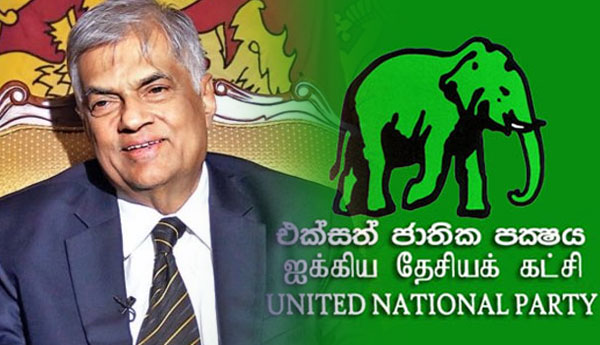
In a statement addressing the current economic situation of the country, former Prime Minister and Leader of the United National Party (UNP) Ranil Wickremesinghe alleged that Sri Lanka’s commercial banks do not have any US dollars.

“There are no dollars in our commercial banks today. Our banks are in debt,” he said.

Wickremesinghe highlighted that Sri Lanka is mired in an economic crisis centered on a foreign exchange deficit and added that present foreign exchange reserves stand at $ 4 billion.

“After paying US $1 billion in bond servicing in the middle of the year, the Treasury has only US $3 billion in reserves left. In addition, the CPC is stuck with US $1.3 billion in unpaid dollar bills,” he said.

Further, it was mentioned that the total amount of debt the country has to repay is US $4.3 billion. He then asked the question of how the country is to service this debt when reserves stand at US $3 billion.

“What will be left in the country’s treasury when the country pays off the US $3 billion and more than US $1 billion in instalments before the end of the year?” he asked.

According to him, a “known financial crisis” has been created in Sri Lanka.

“The government imposed import restrictions as there was no money to import goods into the country. The farmer was told to buy organic manure. The government is telling farmers to choose organic fertilizers due to lack of funds for them to purchase non-organic fertilizer and for no other reason,” he alleged.

Attention was also drawn to the oil tanker that is currently docked at the Colombo Port, with Wickremesinghe stating that the government is looking for dollars so that they can purchase this oil.

“We don’t have the US dollars to pay for an oil tanker that has docked at the Colombo Port. If you don’t pay dollars, this ship will take the oil that is due here,” he said.

Stating that even a small loan in the short term is not enough to get out of this crisis, Wickremesinghe said that if the government does not have an alternative way of raising money, he suggests that it discusses with the International Monetary Fund to find the money needed to sustain the country’s economy.

“Once we get the IMF certificate, we will be able to get money from countries like India, China and Japan,” he said.

He also predicts that Sri Lanka’s unemployment rate will increase by the middle of next year, resulting in the increased hunger of Sri Lankan people.

Stating that the current financial crisis is a serious issue, Wickremesinghe noted that he looks forward to hearing a debate in Parliament on the same.

“The financial affairs of the country are controlled by Parliament. The Central Bank and the Treasury operate under Parliament and not above it. Therefore, I request that under the privileges of Parliament a debate be held in regard to this matter,” he concluded.

First Vice Chancellor of the 13th University of Sri Lanka named

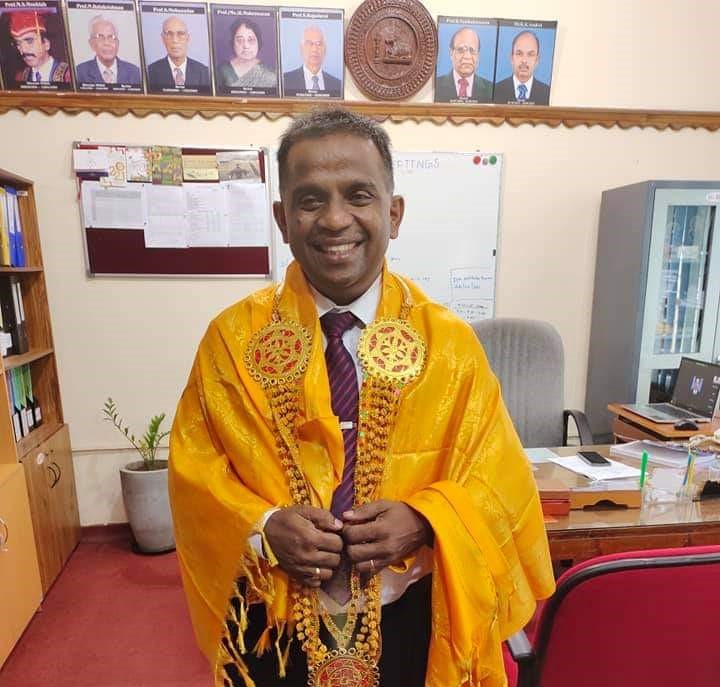
President Gotabaya Rajapaksa has appointed Prof. T. Mangaleswaran as the first Vice Chancellor of the 13th University of Sri Lanka, which will be renamed as the University of Vavuniya from August 1.

Until now, the university was run as the Vavuniya Campus of the University of Jaffna and Prof. Mangaleswaran served as the Rector of the campus.

The University of Vavuniya will be officially operational from August 1 and its official opening ceremony will be held on August 11 under the patronage of President Gotabhaya Rajapaksa.

Posted in Uncategorized

China blacklists Nawaloka hospital

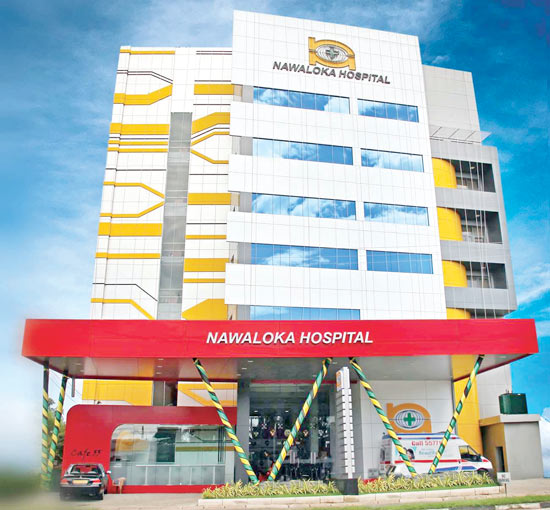
The Chinese Embassy in Sri Lanka has suspended Nawaloka hospital as the designated hospital for PCR and IgM anti-body tests.

This measure has been taken after several passengers from Sri Lanka holding the negative reports of PCR and IgM anti-body tests issued by Nawaloka hospital were diagnosed as COVID-19 patients after they entered China, the embassy said in a public notice published on its website.

“In order to ensure the health and safety of all passengers to China, the Chinese Embassy in Sri Lanka will suspend Nawaloka hospital as the designated hospital for PCR and IgM anti-body tests and will not accept the reports of PCR and IgM anti-body tests issued by Nawaloka hospital from July 13, 2021,” the notice stated.

Posted in Uncategorized

Sri Lanka to offer digital nomad visa to boost tourism

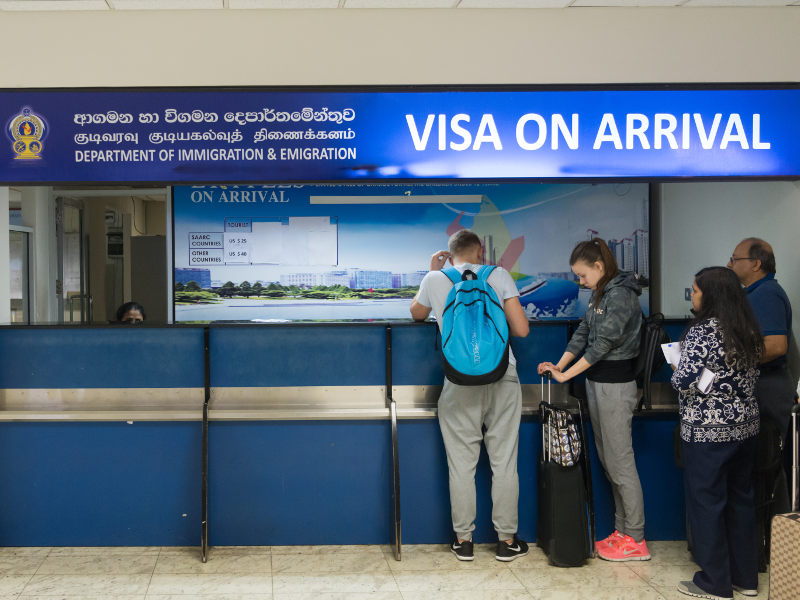
Sri Lanka cabinet of ministers has cleared a proposal to give visas for up to one year for foreign visitors who can work remotely and stay in the country for long periods.

“Sri Lanka is positioned well to promote the “work from your own tropical paradise’ concept and Sri Lanka Tourism recognizing this is facilitatingthe expansion of the Digital Nomad market as part of its sustainable strategies,” Sri Lanka Tourism said.

“Digital Nomads not being sensitive to seasonal travel is also an added advantage to boost off-season tourism with the benefit of digital content generated by this segment pushing promotions for Sri Lanka Tourism organically.”

After experiencing prolonged lockdowns and travel restrictions, people are embracing the ‘work from anywhere’ concept with the requirements being a picturesque setting, cultural experiences, adventure and good wifi connection”, said Sri Lanka Tourism Chairperson Kimarli Fernando said.

Availability of high speed internet, long term visas, affordable accommodation, tax exemption for earnings are among requirement to draw such visitors, the statement said.

Several countries in Asia and Europe now offer ‘digital nomad’ visas for remote workers who can prove a foreign income.

Some countries also offer nomad visas to remote free lancer workers abroad to come to the country and stay for a long period. They will therefore spend their income within the country.

Some countries also offer e-residency.

Fast growing East Asian nations generally have a liberal visa regime for foreign nationals and investors with countries like Singapore providing a naturalization track especially for high income earners.

Sri Lanka enacted an extreme nationalist immigration law barring thousands of years of naturalization shortly after independence from British rule making many who were born in the country also stateless, critics say.

Cardinal demands action on MS, RW and others

The Archbishop of Colombo, His Eminence, Malcolm Cardinal Ranjith, has questioned the failure of the Government to take action against former President Maithripala Sirisena and former Prime Minister Ranil Wickremesinghe over the Easter Sunday attacks.

In a 20-page letter to President Gotabaya Rajapaksa, the Archbishop said the National Catholic Committee for Justice to Easter Sunday Attack Victims is saddened by the lethargic pace at which the state machinery is moving in order to find those who are responsible for these attacks, those who planned it, and those who, even though they had forewarnings about it and could have easily prevented it, did not fulfill their responsibility and willfully neglected it, and bring them before the law.

He further questioned why those in authority are delaying or are neglecting their duty in implementing the recommendations of the Presidential Commission of Inquiry (PCoI) appointed to investigate the 2019 Easter attacks.

Highlighting excerpts from the report which had recommended action against former President Maithripala Sirisena for failing in his duties and responsibilities to prevent the attack, the Archbishop said the Government has taken no action in this regard, adding that the past five months or so would have been amply sufficient to at least initiate action on this recommendation.

He further questioned why the PCoI had not made any recommendations on former Prime Minister Ranil Wickremesinghe, stating that his lax approach to Islamic extremism was an irresponsible attitude and called for an additional investigation into the matter.

In his statement, the Archbishop thereafter pointed out the recommendations against the former Defence Secretary Hemasiri Fernando, and several Police officers, Including former Inspector General of Police Pujith Jayasundara, Chief of National Intelligence Sisira Mendis, and the Director of the State Intelligence Services Nilantha Jayawardena.

Pointing out that legal action has been initiated against only former Defence Secretary Hemasir and former IGP Jayasundara, the Archbishop said action has not been taken against the other state officials, while some of them have been promoted in recent times.

His Eminence, Malcolm Cardinal Ranjith has also highlighted politicians M.L. A. M. Hizbullah and Rishad Bathiudeen, along with several others as persons who have assisted the terror attacks in different ways. He also called for further inquiries to be launched into the conduct of Hizbullah.

The Archbishop further questioned the whereabouts of Sara Jasmine, the wife of the suicide bomber of the Kattuwapitiya church, who he mentioned was a key suspect linked to the attacks.

Questions were also raised with regard to the Police officer attached to the Kaluwanchikudy Police station who had helped Sara Jasmine flee the country after the attacks and an officer from the Military Intelligence Unit who had been in contact with the suicide bomber who was unable to stage the attack at the Taj Hotel in Colombo as planned.

Malcolm Cardinal Ranjith called on the Government to take stock of the lethargic approach to investigations, which he said seems to reveal a conspiracy to protect certain individuals and prevent the truth from emerging.

Urging the President to ensure that the investigations are conducted soon to provide justice for the victims, the Archbishop warned they will have to resort to alternative measures to continue the agitation if the Government fails to address the requests in the letter.

Malcolm Cardinal Ranjith further urged the Government to provide a credible answer within one month of their appeal.

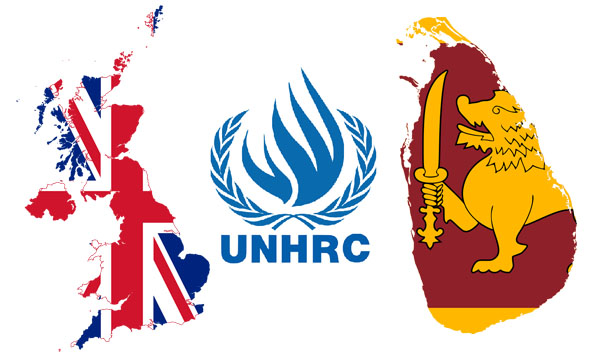
Sri Lanka signs China sponsored statement raising concerns on human rights in UK

Sri Lanka has signed a joint statement initiated by China, raising concerns on the human rights situation in the UK.

The joint statement was delivered during the 47th Session of the UN Human Rights Council in Geneva.

“I have the honor to speak on behalf of a group of countries. We express our deep concerns on the human rights situation in the United Kingdom. Severe systemic racism, racial discrimination, hate speech, xenophobia and related violence have long been existing in the United Kingdom,” the Chinese delegation in Geneva said after delivering the statement.

China said the discriminatory actions are toxic residues of colonialism and trade in enslaved Africans in UK’s history.

The delegation said that a number of Special Procedures have expressed their concerns, but the Commission on Race and Ethnic Disparities, which was set up by the UK Government, is trying to deny the facts. UK military service men have committed killings of civilians in overseas operations but are at large to this day.

The UK has been accused of trying to shield them from due accountability by way of legislation.

“The migrant detention centers in the UK are operating under poor conditions and the rights of migrants are severely violated. In addition, the UK spread disinformation and provoked confrontation out of political purposes, using human rights as a pretext to interfere in other countries’ internal affairs. Politicized acts as such have seriously undermined international human rights cooperation and are deeply concerning,” the Chinese delegation said.

The joint statement signed by China, Belarus, Bolivia, DPRK, Iran, Russia, Sri Lanka, Syria and Venezuela urged the UK Government to face up to its human rights problems, immediately stop all human rights violations, address the root cause of racial discrimination and hate crime, and carry out thorough and impartial investigations into cases of unlawful killings of civilians and other crimes, bring the perpetrators to justice and provide victims with remedies.

The signatories also called on the Human Rights Council to look into human rights violations in the UK and take necessary steps to monitor actions of the UK Government to correct its mistakes.

Posted in Uncategorized

“This govt. printed Rs. 880 billions”

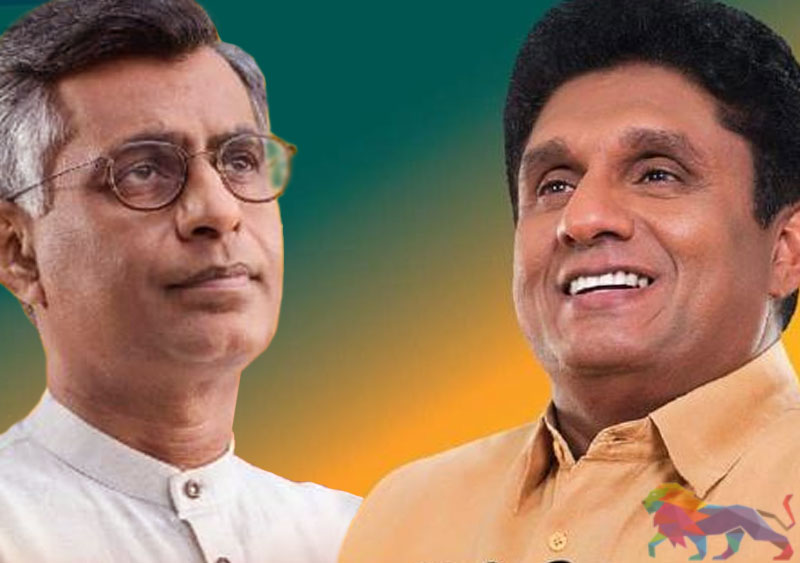
SJB (Samagi Jana Balawegaya) MP Patali Champika Ranawaka, in an interview with the Daily Mirror speaks about his political plan. He shares his views amids speculation that he is planning to be a candidate for the 2024 presidential elections.

Excerpts:

Q:We learned from media reports that the 43rd brigade, the movement led by you, is ready to give political leadership to the opposition. Does it mean you are planning to contest the 2024 Presidential Elections?

It is nothing like that. It is true that this country endured many a crisis during the post–independence era. There were security related issues, economic crises, political, racial and religious turmoil. There were negative growth rates. The debt component, as a percentage of the Gross Domestic Production (GDP) exceeded more than 100 percent. But, we never experienced bankruptcy. For the first time we have taken the first step in the direction of bankruptcy. Today, the foreign reserves in the banking sector have dropped to minus levels. The pandemic is not the reason. It is nothing but the government’s weakness in fiscal management. We have raised U.S. dollar loans from the international financial market since 2005. We invested them without forethought on returns on investments. Today, we have to settle these loans with ‘very high interest rates’. It will affect us. Debt repayment is a big issue. For example, our external debt payment accounted for two billion dollars in 2013. It is U.S. $ 7 billion this year. The government is looking forward to have U.S. $ 3 billion currency swaps. We are supposed to settle them next year. It will amount to U.S. $ 10 billion with all accrued. It means our debt servicing cost will have a fivefold increase within a decade since 2013. Our GDP has increased only by 20 percent during the period. This is the real crisis. International rating agencies have lowered our ranking to level CCC (challenging foreign-currency sovereign external debt repayment burden). We are only one notch above default level. We were about to raise US $ 100 billion by issuing Sri Lanka Development Bonds. There were bids only for 35 percent of it. Such a crisis has not occurred in the post-independence era. Today, dollars are sold in black market at Rs. 240. It is bound to increase to Rs. 300. The Government has opted for import controls as a strategy to face this situation. They restricted imports starting from vehicles to chemical fertilizer. Now, a food crisis is imminent with the pandemic situation. A crisis in the energy sector is also foreseen. The previous Yahapalana Government printed money valued Rs. 29 billion. But, the present government printed money valued Rs. 880 billion. This is the roadmap of Zimbabwe.

We can’t get out this crisis by a mere change of the government. In our country, we have professionals with merits. In politics, doors are closed for such professionals. In the business sector too, there is no room for them to some extent. So, we need a new breed of leaders to tide over this crisis and work out a new economic path. That is the generation of people who scaled up the social ladder based on meritocracy. That is what we called ‘43rd brigade’. The Free Education Act was introduced in 1943.

Q:There are no quick solutions to economic problems you mentioned in a practical context. What do you propose to increase the GDP and resolve the debt crisis?

First and foremost a team, with a clean track record in performance and not tainted by corruption, should take over the country. I identify professionals in four categories. You find one set of professionals with fine rhetoric, but a dismal performance in the duties assigned to them. There is the next category comprising those with high academic credentials, but no practical competence to deliver on the ground. Those who identified themselves as economic wizards in the Ranil Wickremesinghe Government belong to this category. They are thorough about theories, but unable to deliver. In the third category, you come across professionally qualified people. But they are an utterly corrupt lot. In the fourth category I see professionals and academics who are aware of reality of the country. However, they remain mute since they are servile to their political leaders. But we won’t involve anyone belonging to these four categories in our political work.

Q:Who are the professionals and academics you have identified outside these categories?

We are in the process of identifying them. There are politicians as well as professionals. We have also social activists. Within a short span of time we intend to create a brigade of 10,000 such people. After that we invite those who are the products of free education to come forward to rebuild this country.

Q:What is your answer to the question I asked about your solution to the economic woes mentioned earlier?

Ok. This is the first step. That is for the creation of a breed of leaders, who are patriotic, well- performing and empathic, to take over this country. We want to increase revenue for the government. We want to do away with tax concessions given to the wealthy by President Gotabaya Rajapaksa. We want to tax them. That is also the policy of G7 countries. President Rajapaksa is ultra-neoliberal. He is slavishly neoliberal. Even neoliberal leaders such as U.S. President Joe Biden want the big companies to be taxed.

Q:But, tax reductions were announced for the small, medium entrepreneurs. They benefitted due to a VAT reduction. Doesn’t it run counter to what you said?

Tax cuts announced for them have not translated into overall economic benefits. The economic growth was 1.6 percent (negative) during the first quarter of 2020.

The debt component, as a percentage of the Gross Domestic Production (GDP) exceeded more than 100 percent. But, we never experienced bankruptcy. For the first time we have taken the first step in the direction of bankruptcy. The pandemic is not the reason. It is nothing but the government’s weakness in fiscal management
The Government has opted for import controls as a strategy to face this situation. They restricted imports starting from vehicles to chemical fertilizer. Now, a food crisis is imminent with the pandemic situation. A crisis in the energy sector is also foreseen
In our country, we have professionals with merits. In politics, doors are closed for such professionals. In the business sector too, there is no room for them to some extent. So, we need a new breed of leaders to tide over this crisis and work out a new economic path
We want to do away with tax concessions given to the wealthy by President Gotabaya Rajapaksa. We want to tax them. That is also the policy of G7 countries. President Rajapaksa is ultra-neoliberal. He is slavishly neoliberal. Even neoliberal leaders such as U.S. President Joe Biden want the big companies to be taxed.

The network of expressways should be built according to a proper feasibility study. What is not feasible can be feasible in the future. For example, the Dambulla- Kurunegala expressway will be feasible in 2030. The Hambantota- Matara expressway will be feasible in 2035. But, it has already been constructed
6.The president counts on a few entrepreneurs to do all business activities from house building to sugar imports. We won’t violate procurement guidelines no matter what. Today, what we see is ‘state capture’ by a lumpen political and entrepreneur class. We are going to liberate the country from them

Q:From another perspective such concessions are meant to serve as a stimulus to increase investments. Aren’t they?

Secretary to the President Dr. P.B. Jayasundara has experimented this economic model since 2005. Tax revenue remained 28 percent in 1977. P. B. Jayasundara reduced tax revenue from 14 percent of the GDP to nine percent. This is a strategy that is tested and failed.

Secondly, we need to reduce expenditure of the country. Today, the government is going to make unnecessary expenditures. There is a plan to build an expressway to Dambulla investing Rs 1 billion. There is also a move to build the Athurugiriya- Dematagoda road as a U.S. $ 1600 million investment. Besides, U.S. $ 450 million will be spent for a road project between Chaitya Road to Kollupitiya in Colombo. Then, there is the Kahatuduwa-Ingiriya expressway. These are not expenses that should be borne by the country at this juncture.

Q:You have been critical of building expressways for some time. Don’t you think expressways are needed for fast connectivity in the country?

The network of expressways should be built according to a proper feasibility study. What is not feasible can be feasible in the future. For example, the Dambulla- Kurunegala expressway will be feasible in 2030. The Hambantota- Matara expressway will be feasible in 2035. But, it has already been constructed. The actual cost of the Dematagoda- Athurugiriya expressway is only US $ 380 million. But, the government is planning to pay US $ 1620 million. The actual cost of the road project connecting Chaitya road with Kollupitiya is US $ 150 million. But, they are going to pay US $ 450 million.

The chairman of SriLankan Airlines admitted that the national career lost US $ 1 billion due to the airbus transaction. Now, the Government is planning to pay US $ 500 million. Of it, US $ 240 million has already been paid. The government stopped fertilizer imports to save only US $ 180 million. A member of the Rajapaksa family is responsible for the airbus transaction. We have to stop such transactions. We have to make capital expenditures only after studies on feasibility, financial viability and returns on investments.

Q:How can you avoid payment for international transactions which Sri Lanka is legally bound?

What transactions do you mean?

Q:I mean the payment involved in the airbus transaction, for example?

Whatever anyone might say the Yahapalana Government scrapped the payment of one part of it. As for debt management we have raised foreign currency loans in terms of International Sovereign Bonds, Sri Lanka Development Bonds, multilateral lending and bilateral lending. Of them, we have to renegotiate loans other than those raised through sovereign bonds and development bonds. While renegotiating, we should give an assurance that we would resettle them in the future . Then, we have to do structural reforms in economy. Alongside, we have to introduce fast income generation projects. We plan for the introduction of a digital economy. I am saying these things based on my experience. I am someone who converted loss making ventures into profitable ones. Today, the government institutions are run at a loss. I challenge anyone to show me a government institution turned around by the Rajapaksas. There are also others who performed like me. For example, Minister Nimal Siripala de Silva can be taken. He is the one who made Sri Lanka Central Transport Board profitable.

Q:Who are the others identified with better performance levels?

I have identified a lot. I am not going to disclose them now.

We have to gather all of them regardless of their party affiliations. I believe the JVP should drop its ideology. Instead, it should team up with us in this endeavour. There are people with competence in Samagi Jana Balawegaya (SJB), Sri Lanka Podujana Peramuna (SLPP) and Sri Lanka Freedom Party (SLFP) who can deliver. They should gather together on a common platform. But, the majority should be from outside. The Tamil National Alliance (TNA) cast aside its separatist ideology. Professionals in the Tamil community should come forward to build this country. We cannot undertake this journey by alienating them. In the Muslim community, genuine politicians, professionals and entrepreneurs should team up with us. We are in touch with all the ethnic groups in this regard.

Q:You talk about structural economic reforms. When you implement such reforms acceptable to the International Monetary Fund (IMF), it can lead to hardships for people. What do you say about such hardships?

Anyway, in another six months people won’t have income sources and sufficient food on the table. Whether the IMF says or not the country is in need of structural reforms. Our target is to bring the primary balance of the country to zero level. We will create a level playing field for entrepreneurs. The president counts on a few entrepreneurs to do all business activities from house building to sugar imports. We won’t violate procurement guidelines no matter what. Today, what we see is ‘state capture’ by a lumpen political and entrepreneur class. We are going to liberate the country from them.

Q:You mentioned about the move to form a body of 10,000 professionals and intellectuals. Viyath Maga was also formed in a similar fashion to promote President Gotabaya Rajapaksa as the presidential candidate. Is this the political movement that promotes your candidacy at the 2024 presidential election?

It is a movement meant not to enthrone a family, but to empower a generation. That is the difference between Viyath Maga and us. Earlier, I talked about four types of professionals and academics. Viyath Maga comprised them. We won’t include them.

Q:ou are insinuating that you are ready for 2024?

In 2024 or before, no matter what, we have to be ready with a new breed of leaders to take over this country. That should happen. Otherwise, there is no future for the country. The young generation has decided to leave the country. We need to stop them from leaving. For it, we should do what we plan.

Q:What is the chemistry between you and SJB Leader Sajith Premadasa?

We joined SJB under historical circumstances that prevailed at that time. SJB people gave us a mandate. We respect it and are with SJB. Yet, we think of future politics beyond the scope of SJB. We believe in the departure from traditional politics to opt for a new political culture to salvage this country.

Q:Today, Sri Lanka is sandwiched in the struggle of super powers. China has launched its Belt and Road Initiative (BRI). To counter it, G7 countries have proposed a programme called B3W (Build Back Better World). What is your plan to manage foreign relations?

When the Port City remained under my purview, nobody talked about it being a Chinese colony. We gave the environmental licence to the project company and imposed 72 regulations.

The company was not incensed with us. It was a good reputation for that company to execute the project without any damage; at least in terms of a crack in buildings, in Colombo. We took over freehold land from the company. We wanted to bring Cambridge University to invest here. We wanted to establish a franchise hospital of Singapore’s Mount Elizabeth hospital. We negotiated with France to bring an international convention centre here. We remained open. We advocated friendship with all.

The United States has remained a wold power since 1875. Today, its super power status is challenged economically, militarily, technologically, financially by China. It is reality. The U.S. is launching counterattacks. The U.S. and G7 countries have launched B3W. They say they will help us develop sustainable projects. We are ready to look at their list. It is yet to be elaborated. We won’t accept anything with political strings. But, we will accept anything with economic strings.