A perception shift in relations between Sri Lanka and China? – The Hindu

From the time the pandemic struck last year, China has topped the charts in providing crucial and timely support to Sri Lanka — by way of over $ 2 billion in loans and a currency swap, and Sinopharm vaccines totalling over a million in donation, and about six million for procurement so far. However, despite the past and pandemic-time assistance, China is under more public scrutiny in the island nation than ever before.

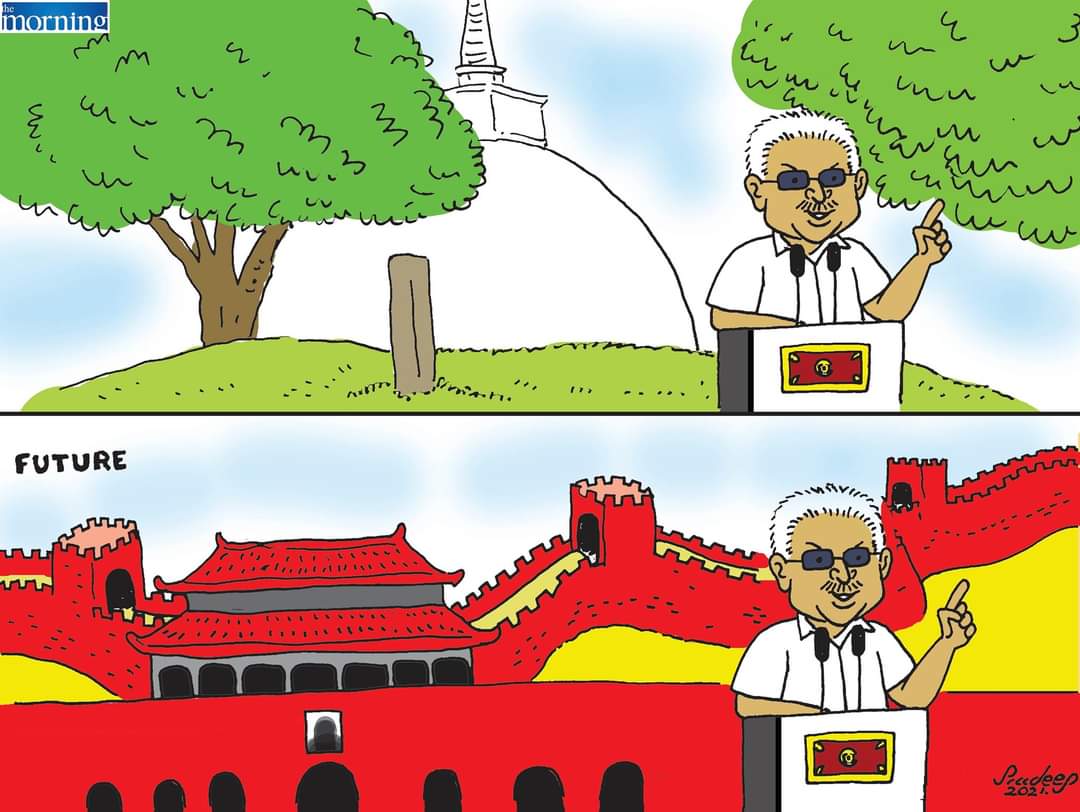
This is significant, because in Sri Lanka’s Sinhala nationalist political landscape, resistance to the “imperialist” West, and “interventionist” India is a popular political position, dominating rhetoric in the country’s Sinhala-majority south, since its Independence in 1948, through its civil war years, and the decade after. But the growing scepticism of China, in public discourse and the media – including cartoons alluding to the dragon or Chinese flag – is relatively new.

The sentiment came to the fore in May this year, when the government passed a controversial Bill governing the China-backed Colombo Port City, and during recent controversies over sign boards in public places and government offices that included mandarin while excluding Tamil, a national language in Sri Lanka. In resistance to the Port City Bill, Sri Lanka’s influential Buddhist monks said they would never allow a “Chinese colony” in their country.

What has changed in how Sri Lankans perceive their country’s relationship with the Asian giant?

Karunasena Kodituwakku, Sri Lanka’s former Ambassador to China during the previous government, blames the Rajapaksa administration. When the country takes pride in its “non-aligned” foreign policy legacy, to see Sri Lankans calling the Port City a “Chinese colony” brings a “very negative connotation” to the project, Mr. Kodituwakku said.

“The Port City is a good investment for Sri Lanka. The former government too wanted the project, to develop the country into a regional financial hub. The current administration should have handled it in a mature way and built national consensus on it. They failed to do that,” he told The Hindu. “They should have passed laws after discussions with all domestic stakeholders. If you look at Sri Lanka’s history, all important international accords and agreements were inked only after ensuring bipartisan consensus.”

Former Foreign Secretary Prasad Kariyawasam said given its geographic location, Sri Lanka has maintained friendly relations with maritime nations, including China, since ancient times. Such relations have always had “a sense of strategic content”. Post-independence Sri Lanka has been circumspect “to avoid a zero-sum approach” in relations with foreign partner nations, thus striving to maintain equally close relations with all countries in both word and deed, he pointed out. But the traditional friendship between Sri Lanka and China has now become “more nuanced”, he noted, with “unique, unprecedented characteristics in the bilateral relationship”, displaying a “special partnership”, especially at the level of two governments.

Pointing to a possible perception shift, from China being seen as a “partner and collaborator”, to a “competitor” now, Mr. Kariyawasam said: “The fact that the 21st century export-oriented China is not only a development assistance partner, but a competitor with trade, industrial and human resources interests of Sri Lanka and its several other foreign partners, appears to be making the relationship increasingly challenging, especially in the minds of the public, raising their concerns with respect to the fundamental framework of the democratic nature of the Sri Lankan State as well.”

The new dynamic could also have political costs domestically, according to Tamil Progressive Alliance (TPA) Leader and Opposition MP Mano Ganesan. Sinhalese people, he said, are feeling “let down” after supporting the Rajapaksas based on their promise that “they will not sell national assets” to other countries. “The term “selling” could be tricky, but for all practical purposes, we have a Chinese State-run company with substantial control in the Port City for a long time to come, and the government enacted a Bill endorsing that,” he said.

Further, reading Chinese engagement in relation to Sri Lanka’s plural context, in Mr. Ganesan noted that China “appears ignorant” of the ethnic and religious diversity in the island nation. “If they [Chinese] wish to win the Tamils’ confidence, they have to acknowledge that we are a diverse country with different ethnic and religious groups, not an entirely Sinhala-Buddhist country,” Mr. Ganesan said, reiterating his remarks in his statement, following TPA’s recent meeting with the Indian High Commissioner in Colombo. “China’s presence in Sri Lanka is not just India’s national security concern. Tamils view China with suspicion because we wonder if they accept us as Sri Lankans,” the statement issued on Tuesday said.

All the same, Tamils also “greatly appreciate” India’s geopolitical concerns. “We are in South Asia, and in that sense, India is immediate family and China is a distant relative. So, when I think of the Chinese having controlling stakes in the southern part of our island, I am reminded of the Cuban missile crisis and its consequences,” Mr. Ganesan told The Hindu.

Voicing a similar sentiment in Parliament this week, Tamil National Alliance Jaffna district legislator S. Shritharan spoke of alleged attempts by China and Pakistan to work in projects in the islands off Jaffna peninsula. “Do not instigate India in this manner,” he told the government. “No matter how many problems we face, Tamils will always stand with India, with whom we have an organic link,” he said.

Posted in Uncategorized

Sri Lanka’s Rajapaksa family tightens grip with ministerial picks -Aljazeera

Sri Lankan President Gotabaya Rajapaksa has appointed his younger brother Basil Rajapaksa as finance minister, in a move that further tightened the family’s grip over the island nation.

Basil on Thursday was sworn in as a member of parliament and took over as minister of finance from Prime Minister Mahinda Rajapaksa, also his older brother.

Basil, who holds dual US-Sri Lankan citizenship, according to DPA news agency, takes control of the country’s important institutions, including the Treasury and Central Bank under his purview.

Mahinda was also given an additional role as minister of economic policies and plan implementation, according to the presidential media division.

In addition to the latest changes, another of Gotabaya’s brothers, Chamal, is minister of irrigation and a junior minister for defence.

Mahinda’s son, Namal, is minister for youth and sports.

Gotabaya and his older brother Mahinda won an overwhelming majority in parliamentary elections last year, giving the family the power to enact sweeping changes to the island nation’s constitution.

Mahinda was the country’s president from 2005 to 2015, holding the position in two successive terms and again took over a premier post after winning the 2020 vote.

Some members of the governing Sri Lanka Podujana Peramuna (People’s Party) predict that Basil will stand in the next presidential election.

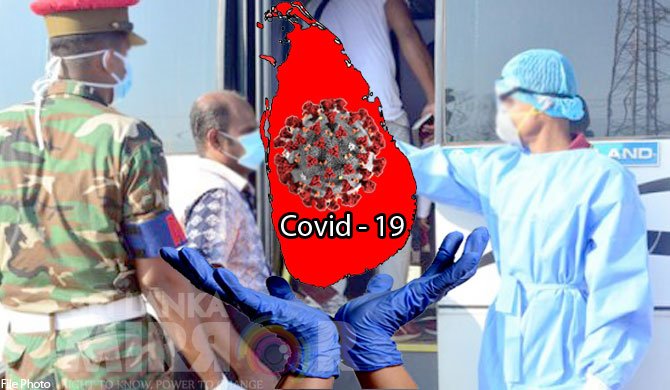
Tourism-dependent Sri Lanka is battling the coronavirus pandemic.

On Thursday, the total confirmed COVID-19 infections in the country increased to 268,676 and the death toll was 3,351, according to health ministry data.

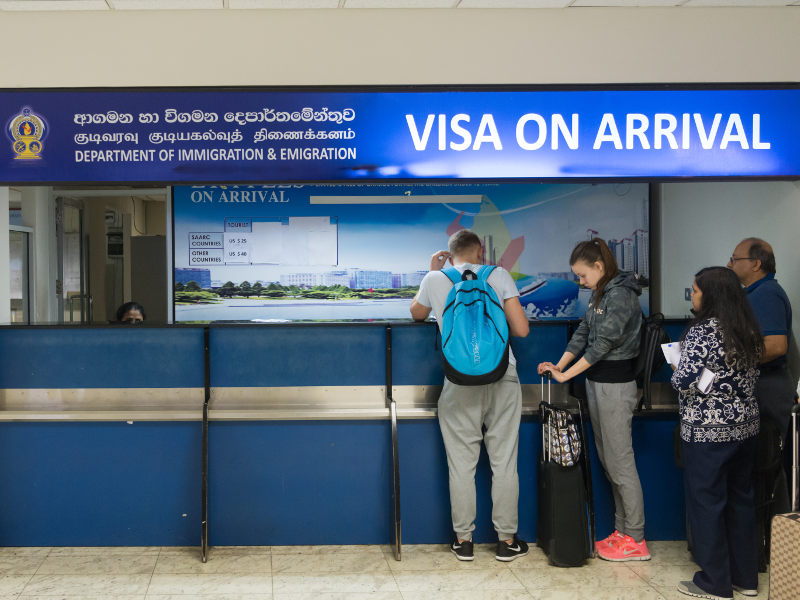
All types of visas for foreigners extended for another 30 days in Sri Lanka: Immigration Dept.

The validity period of all types of Visas currently obtained by foreigners in Sri Lanka has been extended up to August 8 from today, the Immigration Department said.

The Department requested the foreigners to proceed as advised below.

“All the applicants are hereby advised to pay the relevant visa fee and get their visas endorsed in the passport by securing an appointment via the link – https://eservices.immigration.gov.lk/vs-before August 8.

“If tourists intend to leave the country during the aforementioned period, their journey will be also facilitated by paying the relevant visa fee at the airport or by visiting the Head Office at Battaramulla on or before August 8 and getting endorsed the visas in their passport by making the necessary visa fees.

The department also issued instructions for Resident Visa holders.

Accordingly, the visa extension from July 9 to August 8 also applies to all resident visa holders.

To get their resident visas extended before that date, are requested to contact 070 710 1050 from 8.30 am to 3.00 pm on working days to make an appointment and visa endorsement shall be obtained by visiting the head office at Battaramulla on or before August 8 and making payment for the relevant visa fee, the Department said.

Posted in Uncategorized

Government MP expected to cross

A Government Member of Parliament is expected to cross and sit in the opposition as an independent MP over the next few weeks, sources said.

Colombo Gazette learns that the ruling party MP is likely to sit as an independent MP in Parliament.

The move comes as a rift in the ruling Sri Lanka Podujana Peramuna (SLPP) coalition continues to widen.

There has been some opposition to Basil Rajapaksa’s entry to Parliament and appointment as the Finance Minister.

Additionally, there has also been a rift in the SLPP over the fuel price hike and on other matters.

Well informed sources said that efforts are being taken to prevent a split in the SLPP.

Posted in Uncategorized

COVID: 43 new victims take death toll to 3,434

Sri Lanka has registered 43 more COVID-19 related fatalities confirmed by the Director General of Health Services on Thursday (July 08).

The new development has pushed the official death toll due to the virus in Sri Lanka to 3,434.

According to the data released by the Department of Government Information, the latest victims confirmed today include 30 females and 13 males.

Fourteen of the victims are aged between 30-59 years and the remaining 29 are aged 60 and above.

Posted in Uncategorized

Human rights situation in Sri Lanka further deteriorated in 2020: UK report

The overall human rights situation in Sri Lanka continued to deteriorate in 2020, the UK’s annual report on human rights and democracy said.

Titled ‘Human Rights and Democracy: 2020 Foreign, Commonwealth & Development Office report‘, the document noted an alleged increase in surveillance and intimidation of civil society, limited or no progress with regard to accountability, militarisation and other issues.

“The government of Sri Lanka delivered free and peaceful parliamentary elections despite the COVID-19 pandemic, and maintained low numbers of COVID-19 cases compared to global figures. However, there was increased surveillance and intimidation of civil society, constraints placed on communities practising religious burial rites, a number of lengthy detentions without charge, and several setbacks on post-conflict accountability and reconciliation,” it said.

Noting Sri Lanka’s withdrawal from the United Nations Human Rights Council (UNHRC) resolutions 30/1, 34/1, and 40/1 on post-conflict transitional justice, accountability and reconciliation, the UK report said there was no progress shown by Sri Lanka despite the government announcing its commitment to a domestic mechanism for reconciliation and accountability.

“The UK made clear its commitment to reconciliation and accountability in statements delivered on behalf of the Core Group on Sri Lanka at the HRC in February, June and September,” the report said.

In June 2021, the core group, comprising, Canada, Germany, North Macedonia, Malawi, Montenegro and the UK, expressed concern over what it called the lack of progress with regard to human rights, the rights of religious minorities and other issues highlighted in resolution 46/1.

Related: UNHRC core group concerned over Sri Lanka’s lack of progress on human rights

The UK report, dated July 08 2021, said Sri Lanka’s commitment to accountability was further called into question in March 2020 when President Gotabaya Rajapaksa pardoned and released former Army Staff Sergeant Sunil Ratnayake, who was convicted in 2015 for the murder of eight civilians (including children) in Jaffna in 2000.

Ratnayake, who was attached to the long range reconnaissance patrol of the army, was sentenced to death by the Colombo High Court in June 2015 for his alleged involvement in the Mirusuvil massacre in 2000. The former soldier, who was the first accused in the case, was found guilty of the murder of eight civilians including three children. He was pardoned by President Rajapaksa on March 26, days after an island-wide curfew was declared to contain the spread of the novel coronavirus.

Amnesty Intentional, too, said in May last year that in pardoning Ratnayake, the COVID-19 pandemic was exploited as an “opportunity to reverse justice”

The Foreign, Commonwealth & Development Office report further said the President continued to appoint controversial military figures accused of war crimes to government roles, while civilian functions such as the Secretariat for Non-Governmental Organisations were brought under the control of the Ministry of Defence. In October, the government passed the 20th amendment to the constitution, which the report said extended executive power over appointments to the judiciary and independent institutions, and reversed several important institutional checks and balances.

“In March, the President dissolved parliament ahead of elections, which were then twice postponed because of the COVID-19 outbreak. Although the government went on to deliver peaceful and democratic elections in August, the delay resulted in a lack of parliamentary oversight between March and August. The government instead formed several presidential ‘taskforces’ without parliamentary scrutiny, including to oversee the COVID-19 response,” the report said.

The report was also critical of the government’s widely condemned move in March 2020 to cremate Muslim victims of COVID-19 against the wishes of the community with little or no scientific basis to the decision. World Health Organisation guidelines had also permitted burials.

“This particularly affected Muslim and some Christian communities, for whom burial is an essential rite. In December, the Supreme Court dismissed several petitions that challenged this policy. The outbreak of COVID-19 also led to an increase in anti-Muslim sentiment, fuelled by hate speech and disinformation suggesting that Muslims were ‘carriers’ of COVID-19 and were violating prevention measures. In June, the UN High Commissioner for Human Rights, Michelle Bachelet, expressed concern over the clampdown on freedom of expression, noting an announcement made by the police in April to arrest those critical of the Government’s COVID-19 response,” the report said.

The report also made references to allegations that judicial medical officers and police had conducted invasive intimate examinations on LGBT+ persons without their consent, following which the Justice Minister Ali Sabry gave instructions to halt and investigate the practice.

The Prevention of Terrorism Act (PTA) has been a running theme in international pronouncements on Sri Lanka’s human rights record. The European parliament moved a resolution on June 10 calling for its release.

Related: EU parliament adopts resolution on Sri Lanka; wants PTA repealed, GSP+ withdrawn

The UK report on Sri Lanka’s human rights situation in 2020, too, noted that the government of Sri Lanka continued to use the PTA, despite a renewed pledge at the 43rd session of the UNHRC to review the legislation.

“In April, prominent human rights lawyer Hejaaz Hizbullah was arrested by Sri Lanka’s Criminal Investigation Department under the PTA. Hejaaz was detained without charge or presentation before a court. International rights groups noted an increase in intimidation, surveillance and online abuse, including threats to lawyers, journalists, families of disappeared persons and individuals working on human rights and anti-corruption.”

Riots in Sri Lanka’s prisons in late 2020 were also highlighted in the report.

“In November, unrest at Mahara prison over COVID-19 concerns resulted in the death of eleven inmates and injury of over 150. A committee appointed to investigate the unrest concluded that the inmates’ demands had been reasonable, and autopsies revealed that all inmates had died of gunshot wounds. In November, the Human Rights Commission of Sri Lanka wrote to the Inspector General of Police to highlight an increase in deaths in custody, and released a prison study which noted that the treatment of prisoners fell below international standards,” it said.

Related: Govt takes full responsibility for Mahara prison riot: Keheliya

The UK will continue to press for progress on human rights, gender equality and protections for minorities and vulnerable groups in 2021, the report further said.

“We shall continue to invest in ambitious programmes which support conflict-affected communities, promote the role of civil society, facilitate social cohesion, and underline the critical importance of post-conflict reconciliation and accountability,” it added.

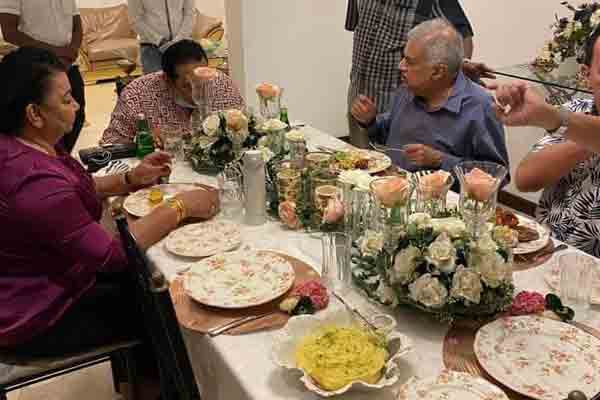
Prime Minister And Former Prime Minister Meet For Dinner At The Residence Of Colombo Businessman

Prime Minister Mahinda Rajapaka met former Prime Miister Ranil Wickremesinghe at a dinner hosted by a businessman in Colombo.

The dinner coincided with the birthday of the businessman, a neighbour of the former Prime Minister.

Former first lady Shiranthi Rajapaksa, former Sri Lankan Airlines Chairman Nishantha Wickremasinghe, the brother-in-law of the Prime Minister, were also invited for the dinner. The businessman is known to have a cloe connections both the current PM and the former PM.

The Prime Minister was seen having a long discussion with his predecessor during the dinner.

Posted in Uncategorized

No stock market euphoria over Basil’s return – FT.LK

Contrary to expectations, investors appeared unimpressed by the emphatic return of Basil Rajapaksa with the key Finance Ministry portfolio assigned as the Colombo stock market remained lacklustre.

The All Share Price Index closed just up by only two points, sliding from its early gain whilst the S&P SL20 improved by only 23 points, or 0.8%. Turnover was below average, hitting a new low of Rs. 1.2 billion with 48.7 million shares traded. Year to date net foreign selling was moving towards a half a billion mark after early this week it crossed the Rs. 27 billion figure.

Basil’s eventual portfolio was subject to much speculation with some insisting Premier Mahinda Rajapaksa will not give in and his younger sibling will only be a State Minister. Economic Development was tagged as an additional role by those who were confident Basil would be given Finance.

However, whilst Finance prevailed along with sanity, the creation of yet another Ministry for Economic Policies and Planning (also held by the Prime Minister) was seen as unwarranted.

Prior to yesterday, many private sector leaders and investors viewed the entry of Basil as a boost to business confidence. In that context, a more convincing sentiment was expected from the stock market yesterday.

“The market doesn’t have oxygen and needs some energy,” high-net-worth individual investor Nimal Perera told some of his peers as a general comment, as the CSE continues to struggle to come up with more robust sentiment and activity.

First Capital said the Bourse remained in the green zone for the second consecutive day while recording a nearly two-week low turnover.

“ASPI spiked in the first 40 minutes of trading, reaching an intraday high at 7,848, before declining steadily for the remainder of the day, closing at 7,812 gaining two points,” First Capital said.

It said turnover was led by the Banking sector, followed by the Diversified Financials sector, collectively accounting for a total contribution of 52%.

Asia Securities said the ASPI reached an intra-day high of 7,847 level (+38 points) during early hours, however, gradually declined and ended the session marginally higher. The more liquid S&P SL20 index opened on a positive note and remained in a range of 2,960-2,950, supported by price gains in JKH, EXPO and LOLC. It said turnover stood below the month-to-date average of Rs. 1.4 billion.

Banks, Diversified Financials, Capital Goods and Food, Beverage and Tobacco sectors led activity, collectively accounting for 71.5% of turnover.

Asia also said foreigners recorded a net outflow of Rs. 233 million while their participation increased to 28.3% of turnover (previous day 14.7%). Estimated net foreign buying topped in Commercial Bank of Ceylon PLC at Rs. 2.2 million and net foreign selling topped in Hatton National Bank PLC at Rs. 173.5 million.

NDB Securities said the ASPI edged up as a result of price gains in counters such as John Keells Holdings, Expolanka Holdings, and LOLC Holdings.

It said high-net-worth and institutional investor participation was noted in Hatton National Bank. Mixed interest was observed in LOLC Holdings, Hayleys Fabric, and Panasian Power, whilst retail interest was noted in SMB Leasing non-voting, Industrial Asphalts, and Browns Investments.

The Banking sector was the top contributor to the market turnover (due to Hatton National Bank), whilst the sector index gained 0.38%. The share price of Hatton National Bank increased by Rs. 0.75 (0.58%) closing at Rs. 131, whilst foreign holdings decreased by 1,324,722 shares.

Diversified Financials sector was the second-highest contributor to the market turnover (due to LOLC Holdings), whilst the sector index decreased by 0.27%. The share price of LOLC Holdings gained Rs. 3.25 (0.81%) to close at Rs. 405.00.

Hayleys Fabric, Panasian Power and Teejay Lanka were also included amongst the top turnover contributors. The share price of Hayleys Fabric moved up by Rs. 0.50 (2.59%) to close at Rs. 19.80. The share price of Panasian Power recorded a gain of Rs. 0.10 (2.44%) to close at Rs. 4.20. The share price of Teejay Lanka closed flat at Rs. 38.50.

SLFP wins against SLPP in Panduwasnuwara!

The Sri Lanka Freedom Party (SLFP) emerged victorious against the Sri Lanka Podujana Peramuna at the secret vote held to elect a chairman for the Panduwasnuwara Pradeshiya Sabha.

The vote was held today (08) and while the SLFP candidate nominated under the directive of party General Secretary – Dayasiri Jayasekara secured 20 votes, the SLPP candidate had only managed to secure 16 votes.

There are 18 SLPP members, 11 United National Party (UNP) members, 07 SLFP members and one Janatha Vimukthi Peramuna (JVP) member at the Panduwasnuwara Pradeshiya Sabha.

The Panduwasnuwara electorate is the electoral base of Dayasiri Jayasekara while MP Gunapala Rathnasekara is the electoral organiser for the SLPP.

It is said that the losing SLPP candidate had been nominated by MP Rathnasekara and minister Johnston Fernando.

Canada’s minister of foreign affairs, Hon. Marc Garneau Clarifies governments’ position to Tamils

Canada’s Minister of Foreign Affairs Marc Garneau, in a remarkably candid response to a Tamil petitioner, clarified Canada’s stand on the long standing Tamils’ issue that has been a matter of concern for 12 years to the International Community and the UNHRC.

The minister responded to an online petition with three prayers, filed by a Canadian Tamil Citizen on Feb 10. The petition, in its preamble, highlighted facts drawn from the UNHRC high Commissioner Michelle Bachelet’s report released on Jan 27.

1. Work with members of the Co-Group, and garner support from other council members, to adopt a new resolution at the upcoming February and March 2021 sessions, guaranteeing justice to victims of international atrocity crimes;

2. Ensure the new resolution incorporates mechanisms to refer Sri Lanka to the International Criminal Court; and

3. Ensure the new resolution mandates non-recurrence of mass atrocities and proposes a referendum with international monitors and victims’ participation, to determine the Tamils’ political future, as remedial justice, – were the three prayers in the petition.

As part of his elaborate responses to the prayers, Minister Marc Garneau, while mentioning about the Mar 23 UNHRC resolution and Canada’s role in it, pointed that,

“ The resolution also requests the OHCHR to enhance its monitoring and reporting on the situation of human rights in Sri Lanka, including the preparation of a comprehensive report with further options for advancing accountability to be presented at the Human Rights Council fifty-first session (September 2022). Canada and the international community will consider these options for future accountability processes – which may include an international investigation – when the OHCHR presents its comprehensive report. “

Roy Wignarajah the initiator of the petition said, “The foreign affairs Minister Hon. Marc Garneau’s responses are a milestone. The response has put unequivocally on record, Canada’s stand, in the pursuit of justice and equality for Sri Lanka’s Tamils.”

I see the government’s response as a message that possesses the worthiness to be presented to the Canadian and world Tamil polity and every domestic and international stakeholder working to see equality and justice delivered to Sri Lanka’s Tamils. While my sincere appreciation and gratitude goes to the government of Canada and Hon. Marc Garneau the Minister of Foreign affairs, it is my duty to give due credit to the 683 fellow Canadians and the initial four supporters who signed the petition.

On behalf of everyone that supported the petition, I take pride in acknowledging the Canadianism shown by Heather McPherson MP, Edmonton Strathcona New Democratic Party Caucus Alberta, in accepting the petition and presenting it in the House of Commons. Also on behalf of all the Tamil Canadians and the Tamils of Sri Lankan descent, I thank Hon. Marc Garneau MP, Minister of Foreign Affairs and the government of Canada’s for the unequivocal response to the Tamils he further said.

The petition and the response by the government of Canada: e-3168 (Foreign affairs) E-petition Initiated by Roy Wignarajah from Scarborough, Ontario Original language of petition: English Petition details Petition to the Minister of Foreign Affairs

Whereas: Canada is a member of the Sri Lanka Co-Group at the UN Human Rights council; ·

The High Commissioner of the Council released the Sri Lanka report on January 27, 2021; · The High Commissioner urges the Member States to take steps to refer the situation in Sri Lanka to the International Criminal Court, in paragraph 59 of the report; · Twice before, the UNHRC has leant its support to domestic accountability and reconciliation initiatives, culminating in resolution 30/1, from which Sri Lanka unilaterally withdrew in March 2020; · The High Commissioner indicates that Sri Lanka has now demonstrated its inability and unwillingness to pursue a meaningful path towards accountability for international crimes and serious human rights violations; · In March 2011, the UN Secretary General’s Panel of Experts and Internal Review Panel on Accountability in Sri Lanka reported that as many as 40,000 Tamils were killed and 70,000 people were unaccounted for in the final six months of the war ending in 2009; and · The failure to refer Sri Lanka to the ICC will embolden it to continue international atrocity crimes unabated, against the Tamils.

We, the undersigned, citizens and residents of Canada, call upon the Minister of Foreign Affairs to:

1. Work with members of the Co-Group, and garner support from other council members, to adopt a new resolution at the upcoming February and March 2021 sessions, guaranteeing justice to victims of international atrocity crimes;
2. Ensure the new resolution incorporates mechanisms to refer Sri Lanka to the International Criminal Court; and
3. Ensure the new resolution mandates non-recurrence of mass atrocities and proposes a referendum with international monitors and victims’ participation, to determine the Tamils’ political future, as remedial justice.

Government response tabled Response by the Minister of Foreign Affairs Signed by (Minister or Parliamentary Secretary): Rob Oliphant Canada had long supported UNHRC resolution 30/1 and its successors, and was disappointed when the Government of Sri Lanka withdrew its support from the resolution and its consensual framework in February 2020. Canada, along with its partners in the Core Group on the Sri Lanka resolution, believes that previous domestic processes have proven insufficient to tackle impunity and deliver real reconciliation.

At the Council’s 46th session (February-March 2021), Canada’s Minister of Foreign Affairs highlighted Sri Lanka’s deteriorating human rights situation. At the Session, through Core Group efforts, the Council adopted a new resolution which advances accountability in Sri Lanka by mandating the Office of the United Nations High Commissioner for Human Rights ‘to collect, consolidate, analyse and preserve information and evidence’ of gross violations of human rights and humanitarian law. The continued reporting and the attention of the UNHRC will assist in monitoring ongoing human rights concerns in the country.

The new resolution 46/1 strengthens the capacity of the OHCHR to collect and preserve information and evidence of crimes related to Sri Lanka’s civil war that ended in 2009. The resolution also requests the OHCHR to enhance its monitoring and reporting on the situation of human rights in Sri Lanka, including the preparation of a comprehensive report with further options for advancing accountability to be presented at the Human Rights Council fifty-first session (September 2022). Canada and the international community will consider these options for future accountability processes – which may include an international investigation – when the OHCHR presents its comprehensive report. UNHRC resolution 46/1 does not incorporate a mechanism to refer Sri Lanka to the International Criminal Court (ICC). Only the United Nations Security Council can refer cases to the ICC if the country concerned is not a party to the Rome Statute or has not accepted the ICC’s jurisdiction. That said, Canada recognizes the importance of an independent and credible justice process that has the trust and confidence of victims and believes this remains necessary for reconciliation and long-term prosperity.

The OHCHR’s new mandate will be critical for establishing future accountability processes. Canada also encourages all non-States Parties to consider acceding to the Rome Statute of the ICC. Resolution 46/1 emphasizes the importance of a comprehensive approach to dealing with the past to ensure accountability, to serve justice, to provide remedies to victims, and to avoid the recurrence of violations of human rights and to promote healing and reconciliation. The resolution further calls upon the Government of Sri Lanka to protect civil society actors, including human rights defenders, and to investigate any attacks and to ensure a safe and enabling environment as well as to foster freedom of religion or belief and pluralism by promoting the ability of all religious communities to manifest their religion, and to contribute openly and on an equal footing to society. The resolution reaffirms the UNHRC’s commitment to sovereignty, independence, unity and territorial integrity of Sri Lanka.

Canada will continue to urge Sri Lanka to uphold its human rights obligations, end impunity and undertake a comprehensive accountability process for all violations and abuses of human rights. Canada believes that resolution 46/1 is a step toward securing a safe, peaceful and inclusive future for Sri Lanka, and, to this end, we stand ready to support efforts that work towards this goal.

Link to the petition and governments response:

https://petitions.ourcommons.ca/en/Petition/Details?Petition=e-3168
Roy Wignarajah
Roy Wignarajah
+1 416-457-1633
roytheadvisor@gmail.com