Continuous recusals of judges from Rishad’s case are unexpected: AAL Rushdie Habeeb

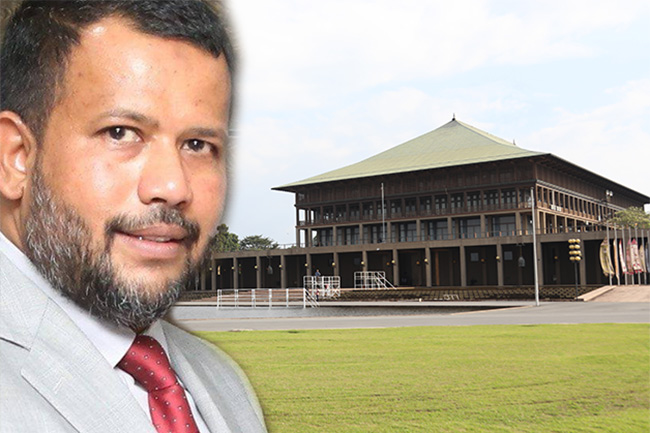
Today’s (05) recusal of another Supreme Court Judge from the case of Parliamentarian and Leader of the All Ceylon Makkal Congress (ACMC) Rishad Bathiudeen, who is currently being detained by the Criminal Investigation Department (CID) under the Prevention of Terrorism Act (PTA) has brought the total number recusals to four.

Rushdie Habeeb, Attorney-at-Law representing Bathiudeen told The Morning that this many recusals of Judges from hearing a case in a Supreme case setup is very unexpected

“Justice Janak De Silva was the first to recuse, stating that he had given recommendations to the Presidential Commission of Inquiry (PCoI) tasked with looking into the Easter Attacks. Justice Yasantha Kodagoda cited Bathiudeen being his neighbour as the reason for his recusal. Justice A.H.M.D Nawaz meanwhile did not give any reasons for recusal. Today, Justice Mahinda Samayawardhana cited personal reasons along with the fact that he had heard another case relating to Bathiudeen’s brother as the reason for his recusal,” Habeeb stated.

Habeeb also said that the case has been re-fixed for 08 July to support for leave to proceed. Additionally, he noted that the petitioners have sought interim reliefs such as granting of bail or looking into the possibility of placing Bathiudeen under house arrest until the detention order is resolved.

Further, Habeeb mentioned that in court today, the Attorney General’s (AG) Department informed the court that the submission of one more document has to take place, which may be favourable to Rishad.

“As mentioned earlier, we do not know whether the AG was consulted before his arrest. This has not been confirmed yet. The Speaker of Parliament was also not informed,” he stated.

Additionally, Habeeb told The Morning that while Bathiudeen is attending Parliament, he has limited access to lawyers, especially during the past two weeks when Bathiudeen was not granted access to any lawyers. Habeeb also notes that Bathiudeen is having a “difficult” time in detention, and is subjected to lack of proper facilities and overcrowding.

“He is a diabetic patient. At times his sugar levels spike along with his blood pressure levels. The cells are infested with rats which has resulted in an inability to get proper sleep. Psychologically, he is not in a good position,” Habeeb said.

He also reiterated that the arrest and detention of Bathiudeen has nothing to do with the judicial custody of a citizen.

“My client is currently in administrative custody, we are trying to bring this to the attention of the court. The due process of law is that after a person is arrested, a judge has to look into the matter before a decision is made. This is why the law provides for police officers to keep suspects in custody only for 24 hours, before producing them before a court of law,” he stated.

Habeeb also notes that the multiple recusals of Supreme Court judges has delayed the primary review of Bathiudeen’s detention.

When queried if the European Union (EU) Resolution and the pressure exerted on the Government to withdraw or repeal the PTA will affect Bathiudeen’s case, he stated that such interventions are welcome.

“The PTA is a draconian law which has no place in a democracy. It is used to inflict political victimisation and personal revenge. Bathiudeen is a political prisoner. This is why we welcome the EU’s intervention. However, we are not supporting the withdrawal of the GSP+ trade concession as it will make things worse for Sri Lankan citizens,” he stated.

Habeeb went on to highlight that it has been reiterated to the EU that the arrest and detention of Bathiudeen is an “illegal misuse of the PTA”, and that he believes that the EU will take steps towards the release of Bathiudeen.

Posted in Uncategorized

Debate on no-confidence motion against Gammanpila on July 19 & 20

The Committee on Parliamentary Business chaired by Speaker Mahinda Yapa Abeywardena has decided to convene Parliament for 4 days starting from 06th to the 09th of July.

Meanwhile it has been decided that the motion of no confidence against Minister Udaya Gammanpila will be taken up for debate in parliament on July 19 and 20.

The Code of Criminal Procedure (Amendment) Bill, Convention against Torture and Other Cruel, Inhuman or Degrading Treatment or Punishment (Amendment) Bill, an Order under the Code of Criminal Procedure (Special Provisions) Act, the revision of salaries and allowances accorded to the Office of the Missing Persons is scheduled to be taken up for debate tomorrow (06).

The Motion at the Adjournment Time by the Government will be taken up for debate from 4.50 p.m. to 5.30 p.m.

2 Orders under the Export Development Act are to be taken up for debate and approved on the 07th. Thereafter, Motion at the Adjournment Time by the Opposition will be taken up for debate from 4.50 p.m. to 5.30 p.m.

The Registration of Electors (Amendment) Bill, General Sir John Kotelawala National Defense University Bill, Regulations under the Immigrants and Emigrants Act will be taken up for debate on July 08th.

The Adjournment Debate on the Annual Report of the Central Bank of Sri Lanka for the year 2020 will be held on Friday (09) from 11.00 am to 5.30 p.m.

On June 16, several Members of Parliament representing the Samagi Jana Balawegaya (SJB) signed a 10-point motion of no confidence against Energy Minister Udaya Gammanpila, citing the recent ‘arbitrary’ increase in fuel prices.

It alleged that the energy minister had proceeded to increase the fuel prices without the approval of the Cabinet of Ministers and thereby violated a pledge under the Constitution.

The motion also cites the recent statement issued by the General Secretary of the ruling party, Sri Lanka Podujana Peramuna (SLPP) regarding the fuel price hike.

The no-confidence motion was officially handed over to the Speaker on June 22.

Sri Lanka ready to work with US to advance mutual interests

Sri Lanka says it stands ready to work with the United States to advance mutual interests, both bilaterally and in multilateral fora.

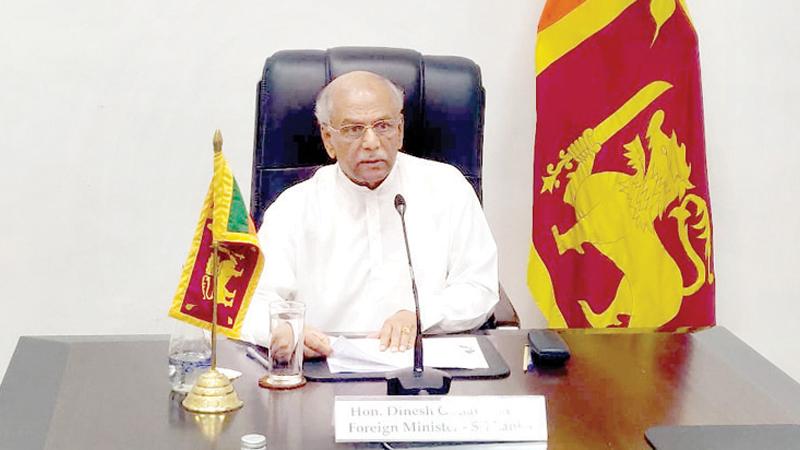
Foreign Minister Dinesh Gunawardena expressed these views in a letter to US Secretary of State Antony Blinken.

In the letter, the Foreign Minister conveyed his heartiest felicitations and greetings on the auspicious occasion of the 245th anniversary of Independence of the United States of America.

“Since the establishment of diplomatic relations in 1948, Sri Lanka’s ties with the United States have continued to expand and flourish across a range of areas of mutually beneficial cooperation. I remain confident that this multifaceted and vibrant partnership will be further consolidated and deepened in the years ahead for the betterment of our two countries and peoples,” Gunawardena said.

He said the Government and people of Sri Lanka deeply appreciate the invaluable support and assistance extended by the United States for the control of the COVID-19 pandemic, including US President Biden’s recent initiative to donate millions of doses of surplus vaccines to countries in need, including Sri Lanka.

The relationship between the US and Sri Lanka has been on rocky ground after President Gotabaya Rajapaksa came to power in 2019.

Posted in Uncategorized

Basil To Oversee Colombo Port City Project And BOI: Several Institutions Coming Under MR, Chamal, Namal To Be Transferred To Basil

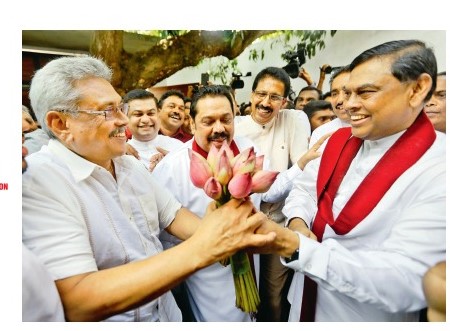
SLPP National Organiser Basil Rajapaksa, who is expected to be sworn in as the Minister of Finance and Economic Affairs, will also oversee the Colombo Port City project and the Board of Investments (BOI).

The Colombo Port City project currently comes under the purview of the Urban Development Authority which has been placed under Prime Minister Mahinda Rajapaksa. The BOI comes under the purview of the Ministry of IT and Digital Infrastructure whose State Minister is Namal Rajapaksa. Several ministries currently placed under Minister Chamal Rajapaksa will also be brought under the purview of Basil Rajapaksa.

Basil Rajapaksa is expected to take oaths as a national list MP on July 08, informed political sources said. He is likely to be sworn in as the Minister of Finance and Economic Affairs a week later.

His entry into parliament has already sparked a fierce debate among constituent members of the ruling alliance due to the existing tension among minor party leaders and the supporters of Basil Rajapaksa.

Posted in Uncategorized

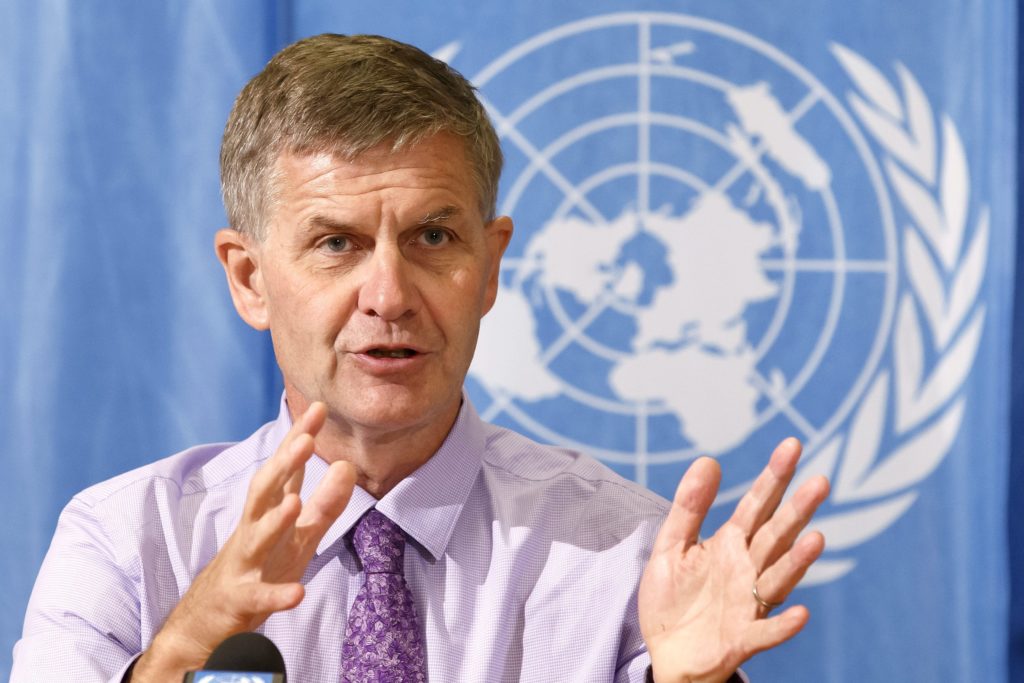
“Sri Lankans will have to find a solution, not foreigners” – Erik Solheim

The Daily Mirror recently spoke to Erik Solheim, former peace negotiator, who acted as the main facilitator of the peace process in Sri Lanka from 1998 to 2005. Followers of the discussion on Twitter had the unique opportunity to pose questions and engage with Solheim directly, during this live DM Twitter Space. Excerpts of the discussion:

First of all, I believe that Sri Lankans will have to find a solution to the Sri Lankan problem. Not foreigners. At the end of the day, Sri Lanka is the island of the Sinhalese, Muslims and the Tamils. It’s not the island of the Indians, Europeans or Americans.

If the UNP made a peace effort and made a deal with the LTTE, they would be afraid that the SLFP will not come along and undermine it, and vice versa. When (President) Chandrika tried to do something for peace, she was afraid that Ranil would undermine it at the time. That made peace very difficult and sometimes even felt that the two parties spent more calories fighting each other rather than finding a common ground to find a compromise with the Tigers.

Q What was the outline of the peace process in Sri Lanka?

In 1998 Norway was approached by the then President Chandrika Kumaratunga and the Tamil Tigers LTTE to be the third party in the peace process. They discussed other options but settled on Norway and that was mainly because it was a faraway country with no particular interest in Sri Lanka and acceptable to both parties, but also important to India and some other important foreign players in Sri Lanka.

The first couple of years everything was a complete secret in Colombo. Only (President) Chandrika herself and then Foreign Minister Kadirgamar were aware of the efforts on the LTTE side. But in 2000 after Chandrika was attacked and nearly killed by the Tigers she went forward and made our role public. In 2001 and 2002 we made the ceasefire agreement. For the first two years it was incredibly successful, no one was killed on either side.

The so-called Oslo Declaration was agreed upon which said that the two parties would explore a federal solution to the issue in Sri Lanka. When this happened the LTTE was in the peak of its power. Most people in Colombo said LTTE was dragged into the peace process and did it because they were weak. But they had just taken Elephant Pass and were very, very close to driving the Sri Lankan Army out of the Jaffna peninsula. The attacks on the airport had a crippling effect on the Sri Lankan economy. So the LTTE was at the peak of its power when they started the peace process.

Gradually the peace process collapsed and killings started to pick up on both sides. But the LTTE did more than the government side. When Mahinda Rajapaksa was elected to power the LTTE from the very beginning started to undermine his presidency with roadside explosives. The LTTE made it possible for Mahinda to be elected.

From the beginning Prabhakaran was a very successful military leader, not so successful as a political leader. He started to make every mistake in the book, started to act like a conventional army rather than a killer force. In my idea, it’s fairly clear that war crimes were committed by both sides at the end of the war. The LTTE kept the civilian population hostage for their cadres, while the Sri Lanka armed forces bombed areas with heavy civilian population and targeting civil institutions like hospitals. It is for international human rights commissions to decide, but I think it’s very clear that massive war crimes were committed.

Q You spoke about the lack of vision among the political leadership in Sri Lanka which complicated achieving a political solution. Can you elaborate?

The two main political blocs of Colombo at the time the UNP and the SLFP never were able to cooperate. They were competing for the same positions in parliament and government. The lack of ability to work together for the common ground by the two main parties in Sri Lanka was making the peace process very difficult. If the UNP made a peace effort and made a deal with the Tigers, they would be afraid that the SLFP will not come along and undermine it, and vice versa. When (President) Chandrika tried to do something for peace, she was afraid that Ranil would undermine it at the time. That made peace very difficult and sometimes even felt that the two parties spent more calories fighting each other rather than finding a common ground to find a compromise with the Tigers.

Q In hindsight with your role as a peace negotiator, was there anything you could have done to change the outcome?

Norway could not really influence the main parties to find a common ground. Maybe we could have worked more closely with India. It’s hard to make some common efforts in Colombo polity to achieve that, it would have been difficult but we should have done more on that side. We should have done more to reach out to the religious leaders in Sri Lanka. I visited Kandy and on a number of times I spoke to the Mahanayakes but it would have been good to establish a better relationship with particularly Buddhist leaders, because religion is a very critical influence in Sri Lanka.

We should have been allowed to meet Mr. Prabhakaran much more. We should have made sure that more people met with Mr. Prabhakaran. His view was very narrow. He really didn’t understand India, he had done something as stupid and criminal as killing Rajiv Gandhi, the Prime Minister of India. He had a very limited world view. It would have been good if more people had met him. We tried to encourage American, European and Asian leaders to go meet him but this was stopped by the government. They did not want visits to Prabhakaran. It ended up being me and the Norwegians being basically the only foreigners who met him. As far as I’m aware during the last 15 years, Prabhakaran never met any Sinhalese, Indians. Basically everyone he met was Tamil and it would have been very good if he had got a broader perspective of the world.

Q You said several times that Prabhakaran didn’t have any knowledge on politics or geo-politics. And if you didn’t spend much time with Prabhakaran how were you sure that he didn’t have this knowledge? Can you clarify?

I spent quite some time with Prabhakaran and lots more with Anton Balasingham, the chief negotiator.
What may have been useful was to make other people meet Prabhakaran so that he could have learned more about perspectives, directly from the Europeans, Americans, Indians or others.
At the time if I were to tell Prabhakaran these views, he may not have liked to hear it from me. In my view, Anton Balasingham was the hero in the peace process. Sometimes Prabhakaran listened to Balasingham and sometimes not. When he didn’t, he mainly made mistakes like fighting as a conventional army, rather than a guerilla force, which came to an end in 2009. It was not exactly a federal solution which Balasingham strongly advocated.

Q After the Sri Lankan government took care of the LTTE, do you think now they have found Muslims as their new enemy, using Islamophobia for their own reasons? Can you throw some light on it?

There are two aspects to this. Muslim terrorism is a real thing. We had these horrible killings during the Easter Attacks. The government needs to take that aspect seriously. If you keep a very close watch over extremists groups, maybe they are sometimes also encouraged by foreigners. But besides that I think it’s very important to meet Muslims with respect, and all the four religions in Sri Lanka. Let’s remind ourselves that there have been extremists in all communities in Sri Lanka. Reaching out to Muslims in society and not making enemies out of Muslims is very important.

Q Even during the conflict Muslims were on the state side, and never against the state. But even before this attack there was a lot of anti-Muslim sentiment among especially Buddhist clerics. But I see the way they go after Muslims is pretty Islamophobic.

During the peace process the Muslims at a time demanded separate Muslim delegation to the peace talks. That was rejected by the LTTE who insisted that it should be a two-partite dialogue between the LTTE and the government. The end of that was that Muslim leader Rauff Hakeem was included in the government delegation. Overall Muslims in Sri Lanka have not supported a separate state.

Q The story since the end of the conflict has been various UNHRC attempts to resolutions etc. I find very little progress in those resolutions promoting peace and reconciliation. What can external actors, such as yourself do to foster reconciliation?

First of all I believe that Sri Lankans will have to find a solution to the Sri Lankan problem. Not foreigners. At the end of the day, Sri Lanka is the island of the Sinhalese, Muslims and the Tamils. It’s not the island of the Indians, Europeans or Americans. Resolutions will have to be found domestically. What the international community can do is to support. By far without any comparison the most important foreign actor is India. They have clearly demanded that the government should implement the 13th Amendment, which will be self-governance for Tamils, but within a Sri Lankan state. If the Sri Lankan government were to adopt that, there would be huge support from every corner of the world. There will be none objecting to that in America, Europe or China.

Q The 13th amendment is an Indian sponsored solution and a hugely contested issue in terms of implementation. I can’t see the interventionist measures from UNHRC in terms of accountability mechanisms, actually leading to reconciliation. It pushes the communities further apart.

I believe for instance when Prime Minister Modi of India visited Sri Lanka, he asked solutions to the problem. Of course he didn’t impose them; he pointed the way forward which is to recognise that Tamils need some kind of self-government in the Tamil dominated North and East. And that Tamils need to be seen as first class, not as second class citizens in their own nation.
At that time I got a lot of criticism mainly from Sinhalese nationalists and sometimes extremists. Lately I have been criticized the same way or even worse by the remnants of the LTTE claiming that I was the person who killed Prabhakaran. All these accusations are completely meaningless and I don’t really bother much about the seriousness of those charges. We knew it was about the life and death of people, if we could bring peace to Sri Lanka, thousands of lives will be spared. A big regret is that we couldn’t succeed and a huge number of Sri Lankans were killed.

Q Do you have any regrets or note any failures on your part?

We could not enforce anything; we couldn’t assert any pressure on (President) Chandrika or Mr. Prabhakaran to enforce peace. We could only do what the two parties at the time wanted us to do. I don’t want people to discourage people to fight for peace, there are many conflicts in the world today. It’s a risky business, very often it will fail, but we need more, not less peacemakers in the world.

Q Would there be another armed struggle in Sri Lanka?

I potentially don’t see any future armed struggle taking place in Sri Lanka because I think the people of Sri Lanka are so tired of war. The main problem causing the conflict is the Tamil national question which is not resolved. The Sinhala people of Sri Lanka will do well to try to understand how Sri Lanka looks like from a Tamil perspective. Tamils feel like second-class citizens in their own nation, they cannot approach the Police or authorities in a language they understand. There is a need to find a settlement to the Tamil question to go forward.

Q How do you see the re-engagement strategy of the Sri Lankan Diaspora? How important is it to invest in it?

Diaspora has a huge role to play. The Sri Lankan Diaspora is mainly Tamil but also Sinhalese and they are successful. They are a highly educated group. In my nation Norway, young Tamils are doing much better than the average young Norwegians do in universities. This is the case in Canada, Germany and UK. If we could invest that (potential) into good schools, universities, jobs, factories or tourist spots in Sri Lanka that will take Sri Lanka forward. Diaspora should provide support to all peace efforts but they need to accept that the peace effort in Sri Lanka should be led by Sri Lanka itself. Diaspora should be encouraged to give critical, intellectual and moral support as well.

This interview has been edited and condensed for clarity

Posted in Uncategorized

Govt. must amend PTA and stop hunting social media bloggers

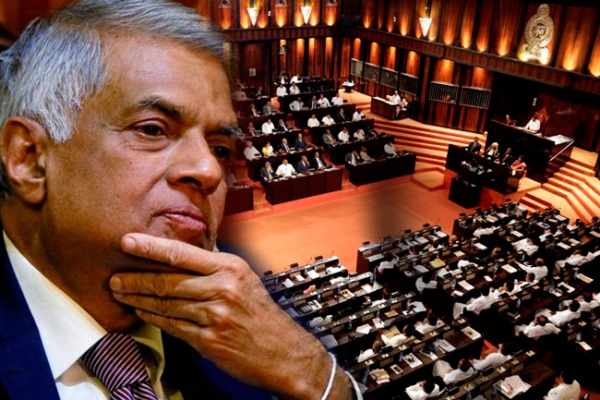
Government should introduce an amendment to the Prevention of Terrorism Act (PTA) to prevent arresting people for making posts in social media, Former Prime Minister Ranil Wickremesinghe proposed over the weekend.
This is one of the few proposals which Mr. Wickremesinghe came out with when he was asked questions on various issues faced by Sri Lanka during a webinar organized by a UNP-led youth group “Parapura” on Saturday.
“An amendment should be brought into PTA where a person could be arrested only if he/she is engaged in terrorist activities. Apprehending people for making a post in social media should be avoided. “Also, either Supreme Courts could propose amendments to PTA where Parliament could discuss and decide on necessary amendments to the legislation,” he said.
Coming up with another proposal, Mr. Wickremesinghe said Batticaloa Airport could be made use of to develop the domestic air travel industry if its runway is expanded, the former Prime Minister said over the weekend.
“Aviation industry had fallen because of the current pandemic situation. However Sri Lanka could benefit from the aviation industry if the government worked with India and even with the Maldives. We started negotiations with India during our regime. We discussed with India to develop Palali Airport. We also focused on introducing regional air traffic from India to Mattala. Our aim was to bring in Indian tourists to Kataragama temple. But these talks have stopped now. Also the Batticaloa Airport could be made use of, if the runway would be extended,” he said.

Finance Min. denies reports on halting import of non-essential luxury goods

The Ministry of Finance says the government has not taken a decision to impose restrictions on the import of non-essential luxury goods.

Recent media reports claimed that the government is mulling the restrictions of electronic appliance including mobile phones, televisions and refrigerators as wells as perfumes, deodorants and other similar items.

It was further reported that steps would be taken to relax the import restrictions after foreign reserves in the country are strengthened.

However, a spokesperson of the finance ministry denied the media reports as ‘baseless.’

Meanwhile, a special press conference chaired by State Minister of Money & Capital Market and State Enterprise Reforms Ajith Nivard Cabraal is expected to take place tomorrow (July 05) to brief the public on the country’s current economic situation.

Posted in Uncategorized

Abduction and assault of man in Norochcholai: Captain, three soldiers remanded

The Captain and three soldiers of the Army, who were arrested for abducting and assaulting an individual in Norochcholai, have been remanded till July 12 by the Puttalam Magistrate Court.

The suspects were arrested following a complaint made to the Norochcholai Police station that men dressed in uniforms similar to those of Army attire have abducted and beaten up a resident of Norochcholai and left him on the beach side on June 30.

Inter provincial travel restrictions till 19 July, no restrictions within provinces

Sri Lanka has extended COVID-19 travel restrictions between provinces for another 14 days until July 19, the national COVID-19 task force said Sunday (04).

Restrictions were to be fully lifted Monday (05) ending an unofficial curfew-style lockdown imposed since May 21 that was partially lifted June 21 with travel between provinces still prohibited.

After reviewing data, officials said, it was decided to continue the inter-province restrictions. Essential services such as health, police, military, power, petroleum, water supply, media and some private and government sector institutions will however be permitted to move.

No decision has been taken to fully lockdown the country, the task force said.

Emirates suspends carriage of SL passengers

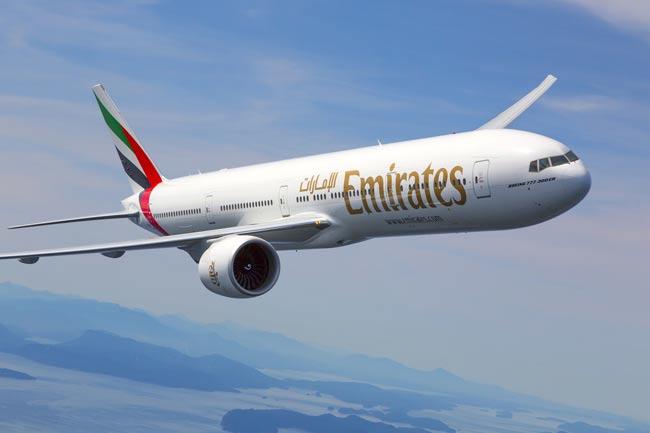
Emirates airline will be suspending the carriage of passengers from Bangladesh, Pakistan and Sri Lanka to Dubai until July 15, 2021, the Dubai-based carrier said on its website.

The statement notes that passengers who have connected through Pakistan, Bangladesh or Sri Lanka in the last 14 days will not be accepted to travel from any other point to the UAE.

UAE Nationals, holders of UAE Golden Visas and members of diplomatic missions who comply with updated COVID 19 protocols are exempt and may be accepted for travel.

The latest announcement comes a day after Emirates said it would suspend all passenger flights from India until July 15.

Last week, Abu Dhabi-based carrier, Etihad, announced that it will not be permitted to carry passengers from Pakistan, Bangladesh, Sri Lanka or India until July 21.