Sri Lanka informs EU of action to review PTA and discusses GSP+

The Government of Sri Lanka has apprised the European Union (EU) of progress in specific areas of reconciliation, as part of its regular engagement and dialogue with the organization, said the Foreign Ministry of Thursday (01).

Accordingly, the Foreign Ministry on 25th June, informed the EU of action underway to revisit provisions of the Prevention of Terrorism Act, No 48 of 1979, with the study of existing legislation, past practice, and international best practices.

The EU was informed of the decision made by the Cabinet of Ministers on 21st June to appoint a Cabinet Sub-committee and an Officials Committee to assist the Cabinet Sub-Committee, to review the PTA, and to submit a report to the Cabinet within three months, it added.

The EU was further informed of the granting of pardon by the President, exercising his powers in terms of Article 34 of the Constitution, to sixteen (16) former LTTE cadres convicted and serving sentence under the PTA, on 24 June. The organization was also apprised of the process that has been set in motion to release detainees who have been in judicial custody for a prolonged period, under the PTA.

With reference to progress in ongoing reconciliation mechanisms, the Government has informed the EU of the release of Rs 79 million to the Office of Reparations in June to settle 1,230 processed claims for reparation. An addition, Rs 80 million was released on 29 June to settle a further 1,451 processed claims, out of a total 3,389 processed claims.

The Government of Sri Lanka maintains a regular, cordial and multifaceted dialogue with the EU. This includes the constructive cooperation existing between Sri Lanka and the European Commission on the review of the country’s EU GSP+ compliance with the 27 core International Conventions.

In this regard, the Third Cycle of Review of Sri Lanka in the GSP+ Monitoring Process for 2020-2021 is ongoing. As part of this process, the Foreign Ministry has provided to the European Commission through diplomatic channels, the comprehensive Response of the Government of Sri Lanka to the List of Follow-up Questions on the current GSP+ monitoring cycle, in adherence to the agreed timeline. The Response was compiled by the Foreign Ministry in consultation with 26 line ministries / state ministries / agencies and commissions. A GSP+ Monitoring Mission for the Third Cycle is scheduled to visit Sri Lanka on mutually convenient dates in September/ October 2021.

As per the regular engagement between Sri Lanka and the EU, plans are underway to convene the Working Group on Governance, Democracy, Human Rights and Rule of Law on mutually agreed dates in the fourth quarter of this year. The Foreign Ministry looks forward to convening, in consultation with the EU, the 24th session of the EU-Sri Lanka Joint Commission in the first quarter of 2022, to review all aspects of bilateral cooperation.

The Government of Sri Lanka will continue its close and cordial dialogue with the EU with regard to commitments, while demonstrating the country’s substantial progress in areas of reconciliation and development.

Foreign Minister Dinesh Gunawardena and Foreign Secretary Admiral Prof. Jayanath Colombage have met senior representatives of the Joint Apparel Association Forum (JAAF) Sri Lanka, the Seafood Exporters’ Association of Sri Lanka (SEASL) and trade unions, and reassured them of the Government’s commitment to ensuring that the EU GSP+ would continue to remain beneficial to the country. Meetings with the relevant Chambers of Commerce are scheduled, with a view to updating them on the Government’s engagement with the EU.

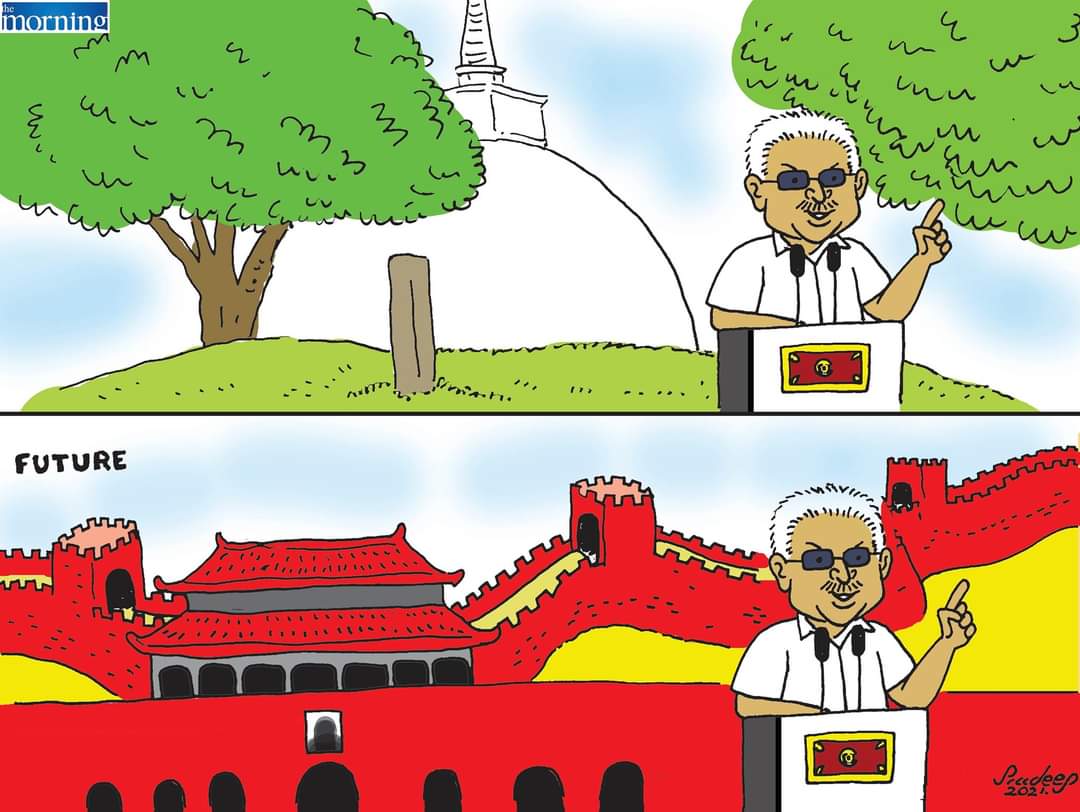
Sri Lanka morphing into ‘Xi-Lanka’?

As the Communist Party of China (CPC) celebrates 100 years of its founding today, much has been said and written about Communist Chinas infrastructure and development activities in Sri Lanka. While commentaries have waxed eloquent on how Sri Lanka’s landscape is being transformed, precious little has been done to critically examine whether the average Sri Lankan on the street has actually benefited.

CPC-funded projects in Sri Lanka are executed by Chinese entities and undertaken using equipment, machinery, and material from China. A significant proportion of labour and most of the top management is also from China. In effect, while Sri Lanka pays for the project, plough-back is into Chinese coffers.

Chinese infrastructure projects have also been associated with a steep rise in Chinese imports into Sri Lanka and reduction of exports to China. This has resulted in a growing trade deficit with China, putting tremendous pressure on the Sri Lankan Rupee.

The only way to offset this trade deficit is by substantial export-oriented Foreign Direct Investment (FDI) flowing into Sri Lanka from China, which is unfortunately not in the Chinese scheme of things.

Chinese projects have also not provided any significant benefit to the average Sri Lankan. More often than not, these are vanity projects, which have been used by powers-that-be for enrichment of self, kith, and kin.

The Lotus Tower, cricket stadium and port at Hambantota and Mattala airport have had no impact on the citizens, who are left struggling with rising prices and dropping income.

The $104 million Lotus Tower was inaugurated in September 2019 with much fanfare. Yet, as with other Chinese projects, it was mired in controversy, with then President Maithripala Sirisena claiming that Chinese contractors were absconding with US$11 million.

The $20 -million airport built at Mattala is now infamous as the ‘Worlds Emptiest Airport’. Sri Lanka’s Strategic Enterprise Management Agency had opposed construction of this airport and recommended that Colombo airport be expanded instead.

The Mattala airport, located in then President Mahinda Rajapaksa’s home constituency, was built anyway, while Colombo airport continues to burst at its seams. Was it a coincidence that Mattala airport was financed by a loan from EXIM Bank of China while expansion of the Colombo airport was to be financed by Japan?

Similar issues have dogged Hambantota Port, which was built at a cost of $1.4 billion. Sri Lanka was forced to lease out the port for the long-term to the Chinese since the revenue generated by the port was not even enough for repayment of the interest component of the project’s Chinese loans.

In 2017, the port earned only $2 million, whereas the annual loan repayment was in excess of US$70 million. Even at an annual growth rate of 20 per cent, the port would not have been able to cover its interest payments for the next 30 years. Clearly, this port was never intended to be viable in Sri Lankan hands!

Notwithstanding pronouncements to the contrary, the Sri Lanka Ports Authority has an extremely limited role in running and controlling operations at Hambantota. The Sri Lankan Navy also has to plead with the Chinese to berth their own ships at the port.

The Chinese authorities are now pushing for acquisition of 15,000 acres of land around the port to set up an export zone, claiming that the port does not make economic sense without this zone.

Pushed by Communist China, government officials are forcing families to part with fertile agricultural land. This is a standard Chinese tactic seen all over the world and particularly evident in Pakistan, Sri Lanka, and Maldives. However, violent protests by locals have stalled creation of this zone, for now.

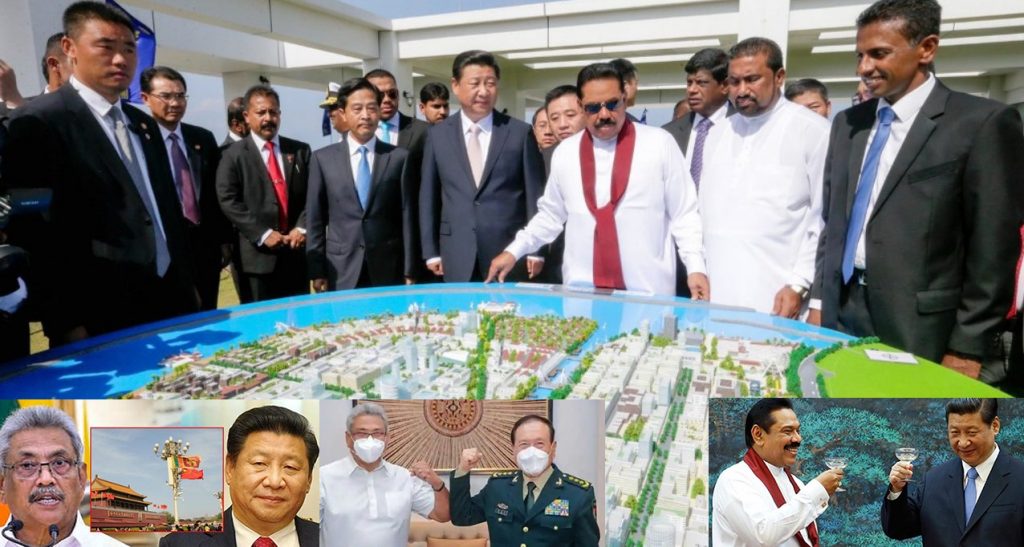
The much-publicised US$1.5-billion Colombo Port City being built by CHEC (China Harbour Engineering Company) has also seen its share of controversies. One of the members for the Environmental Impact Assessment of the project was also a consultant for the parent company of CHEC.

When the project was initiated, it was decided that dredging would be done at least five km away from the coast to prevent erosion and damage to local fishing activity. Due to sustained protests by local fishermen who stood to lose their livelihood, dredging was shifted to 10 km away from the coast.

This was subsequently quietly re-established to 8 km, under pressure from CHEC. Dredgers were, thereafter, observed to be operating as close as 3 km from the coast, due to connivance of local authorities and CHEC.

CHEC has also subverted the political and bureaucratic apparatus to ensure that the project is executed in accordance with Chinese requirements. It is being claimed that 83,000 jobs would be created for locals and investment of up to $15 billion would flow into the country.

These claims by the Chinese seem unrealistic and it is likely that the project would only bring gains to a select few. Contrary to assertions being made of the overall benefit of the Colombo Port City project, the livelihood of fishermen along the coast to the North and South of Colombo has already been affected by the project.

Large-scale sand mining and quarrying for granite being undertaken for the project will also impact Colombo, Gampaha and Kalutara, the three most populous districts in the country and home to a quarter of the country’s population.

The malignancy of Chinese infrastructure projects is not restricted to economic and environmental domains but is beginning to have a societal impact as well since Chinese projects have not resulted in any job opportunities.

The Port City Project is estimated to have 22 per cent Chinese workers. An average Chinese construction worker is paid 1,000 LKR a day compared to 1,500 LKR that has to be paid to a Sri Lankan. In addition, the Chinese worker is also expected to work longer.

This has obviously made Chinese labour more desirable. Whilst official estimates state that there are 15,000 Chinese workers in Sri Lanka, the unofficial figure is closer to 100,000.

There is also no transfer of skill and knowledge to the local labour force. In a telling indication of the Chinese stranglehold on the local labour market, most major projects came to a standstill when Chinese workers, who had gone home for the Chinese New Year, could not return due to Covid-19 crisis.

Sri Lankan fishermen also face the brunt of poaching by Chinese IUU fishing vessels. IUU stands for Illegal Unreported and Unregulated. Recently, Chinese fishing vessels were found to be operating just outside the territorial waters of Colombo, but government authorities, unable to confront the Chinese, let these vessels off on a technicality.

The tourism sector has also not been spared. A controversy erupted when it emerged that Chinese nationals were moonlighting as unauthorised guides for visiting Chinese tourists.

It is also commonplace to see Chinese symbols and signage on business establishments. The mushrooming of Chinese shops throughout Sri Lanka had reached such alarming proportions that former president Sirisena had raised this issue in one of his Cabinet Meetings.

There is indeed a strong case to examine whether Sri Lanka has actually benefitted from Chinese projects. While some projects have proven to be beneficial, such as the China International Container Terminal and expressways, a vast majority have only benefited the Chinese at the expense of the common Sri Lanka citizen. Word on the street is – Sri Lanka will soon be called Xi-Lanka.

(N.C. Bipindra is Chairman, Law and Society Alliance, and Editor, Defence.Capital magazine. He can be reached at ncbipindra@gmail.com)

–IANS

Posted in Uncategorized

China’s control over Sri Lankan infrastructure reignites fears -Nikkei Asia

COLOMBO — China’s de facto control of high-profile Sri Lankan infrastructure projects has renewed fears that the island nation may soon become a Chinese colony.

As China steadily expands its footprint across the island, China Harbor Engineering Company (CHEC), a subsidiary of state-owned China Communications Construction Company (CCCC), won a new development project last month when the government approved CHEC’s proposal for a 17-km elevated highway on the outskirts of Colombo.

But the terms of the deal allow CHEC to own the highway, recover the principal, earn profits, and then after 18 years — finally — hand it over to the Sri Lankan government, making CHEC the first foreign company to own a highway in Sri Lanka.

Opposition parliamentarian Harsha De Silva highlighted that the project has been in the pipeline for several years, and the previous government also wanted to construct it, but in a public-private partnership as the original estimate was around $1 billion.

“In 2016, when the government [led by the current opposition] was looking for an investor, a feasibility study indicated that the project [could not] be done on a purely build, operate and transfer (BOT) basis, which CHEC has come forward to do,” he told Nikkei Asia.

De Silva, an economist by profession, also said that an investor would not be able to recover their original investment plus a reasonable profit by just collecting tolls on a 17-km highway.

However, Umesh Moramudali, a lecturer at Colombo University who researches public debt and finance, feels that BOT projects are much better than debt-financed projects because the country does not have to pay overseas investors back, eliminating foreign currency outflow.

“But, when I say BOT is good for the country, it should be done in a competitive bidding process and in a transparent manner,” he said. “Also, the project should benefit the country and not the company. The issue here is that this BOT project has created a lot of doubt.”

CHEC has a significant project portfolio in Sri Lanka, especially in Colombo and Hambantota, the latter being the hometown of former President and current Prime Minister Mahinda Rajapaksa. During his tenure, Sri Lanka increased its dependence on China for investment in massive infrastructure projects. The presidency is now held by Gotabaya Rajapaksa, Mahinda’s younger brother.

CHEC has led several infrastructure projects in Sri Lanka, including Hambantota Port and Mattala International Airport — both of which are white elephants — and is currently constructing the $1.4 billion Colombo Port City.

Sri Lanka touts the new offshore development as a future financial hub but the 269-hectare plot has already attracted a fair number of critics, who claim the government fast-tracked controversial legislation that gives China sweeping powers over the site at the expense of Sri Lankan sovereignty. Other concerns cite the legislation’s lack of control over the offshore banks and companies that will operate there. Observers are worried that these foreign entities could become conduits for money laundering or other illicit operations.

“A financial hub requires heightened scrutiny, and merely applying the law of the land may be insufficient,” said Sankhitha Gunaratne, deputy executive director of Transparency International Sri Lanka, an anti-corruption organization. According to her, without proper oversight the Port City could morph into its own jurisdiction beyond the reach of Sri Lankan law and offer a safe haven for criminal proceeds.

Jonathan E. Hillman, a senior fellow and director at the Center for Strategic and International Studies in the U.S., believes that China’s opaque lending “provides an avenue for influence.”

According to Hillman: “[This] can put pressure on borrowing countries to make additional concessions, such as granting preferred access to natural resources, future government contracts and diplomatic support. Those types of concessions are more likely than asset seizures because they are not as publicly visible and directly connected to specific projects.”

In August last year, CHEC’s parent company CCCC was blacklisted by the administration of former U.S. President Donald Trump for helping China build militarily strategic islands in the South China Sea, which the U.S. claimed were illegal. Bangladesh blacklisted CHEC in 2018 for allegedly trying to bribe a senior government official when the company was negotiating with Dhaka to expand a major highway in the capital.

CHEC has also had its share of corruption scandals in Sri Lanka, including allegations that it funded former president Mahinda Rajapaksa’s election campaign in 2015 in his bid for a third term. Investigators linked payments totaling $1.1 million from the Chinese company’s bank account to Rajapaksa supporters involved in election work. CHEC denied the allegations, saying it has never been involved in the internal affairs of Sri Lanka.

Sri Lanka’s giant neighbor India has been wary of China’s creeping influence on the island. Early this year, India reportedly expressed concern after China’s Sinosoar-Etechwin Joint Venture won a bid to install hybrid renewable energy systems in several islands north of Sri Lanka’s main island and close to India.

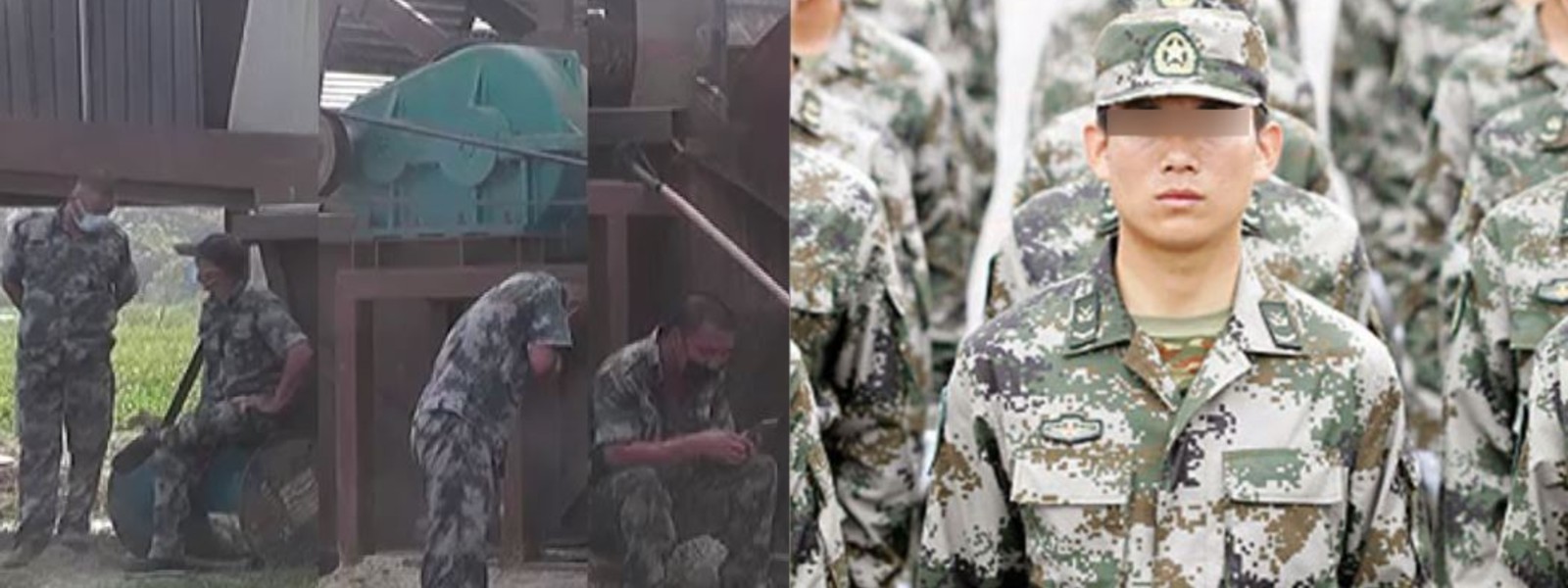
Meanwhile, Sri Lankan television channel News First reported seeing Chinese men in military-like attire cleaning an old irrigation tank south of Sri Lanka. In response to the report, the Chinese Embassy in Colombo tweeted that camouflage clothing can be purchased online. However, as per Sri Lankan law, wearing or even being in possession of a military uniform when not serving in the military is a punishable offense.

As India remains anxious about China’s presence, CHEC Port City Colombo has invited Indian companies and others to invest in the offshore city. Yamuna Jayaratne, director of sales and marketing at the company, said the project is a good play for Indian investors due to Sri Lanka’s proximity to India.

“Port City Colombo offers a compelling investment opportunity and the project welcomes investment from anywhere in the world,” she said. “Indian investors are welcome to invest and grow their investments through the port city. In doing so, we do believe that it will contribute to bridging any tension.”

Fitch Ratings raises RED FLAG over Sri Lankan Banks’ Exposure to Sovereign Risk

Fitch Ratings believes Sri Lanka’s largest banks are the most susceptible to heightened sovereign risk due to their greater exposure to foreign-currency-denominated government securities and, in some cases, weak capital positions.

This exposure for Fitchrated banks stood at around 6.4% of total assets and 78% of total equity at end-2020. For every 10% reduction in the value of foreign-currency-denominated government securities, we calculate that the large banks’ common equity Tier 1 (CET1) ratios would have dropped by 18-219bp as at end-2020.

Some smaller banks may appear to be relatively unscathed by such exposure, but they would not be immune to any spillover effects of sovereign stress.

Overall, Fitch-rated Sri Lankan banks had about one-third of their combined assets exposed to the central government as at end2020, increasing the risk of heightened sovereign stress causing significant deterioration in their financial condition.

Fitch expects bank ratings to remain constrained by, and closely linked to, its assessment of the Sri Lanka sovereign, which has a ‘CCC’ Long-Term Local-Currency Issuer Default Rating (IDR), due to the strong correlation between the sovereign and bank credit profiles.

This stems from the banks’ significant direct exposure to the sovereign, largely via their government-security holdings as well as to the wider domestic economy and local financial markets through their Sri Lanka-centric operations.

Under Fitch Rating’s Bank Rating Criteria, a bank can only be rated above the sovereign if we assess that it has the capacity to continue to service its obligations in the event of a sovereign default, and there would likely be no imposition of restrictions on the banks’ ability to service their obligations by the sovereign in the event of a sovereign default.

As such, Fitch do not rate any Sri Lankan banks above the sovereign’s Local-Currency IDR and have a ‘ccc’/negative score on the banks’ operating environment.

Posted in Uncategorized

EU monitoring mission here in Sept

The European Union (EU) is planning to send a monitoring mission in September to Sri Lanka in the wake of the resolution against Sri Lanka in the EU Parliament seeking a withdrawal of GSP+ concessions owing to alleged human rights abuses.

“We were informed that a delegation will visit Sri Lanka in September subject to COVID-19 conditions,” said veteran trade union leader Palitha Athukorala.

This was confirmed by the EU Office in Colombo. In a statement to the Business Times it said a (zoom) meeting was organised by the Dutch Embassy with representatives of trade unions and other organisations in the garment sector. The EU was one of the participants.

“Under GSP+ every two years an EU monitoring mission is visiting the country. The last mission took place in September 2019. We hope to be able to send the next mission in autumn 2021,” it said adding that the EU Delegation is in regular contact with various stakeholders, also in relation to GSP+. “We have a close interaction with the government, but also civil society, human rights groups, trade unions, employers’ organisations and other stakeholders,” the statement said

Mr. Athukorala along with FTZ trade union leader Anton Marcus, and officials of the Women Centre and Dabindu Collective (two FTZ trade unions representing female workers) were part of the discussion on Wednesday. Twenty representatives from EU countries, the US, Australia and Japan took part in the discussion with the intention of seeking the views of trade unions on the proposed withdrawal of trade concessions.

The resolution seeking the withdrawal of GSP+ concessions pushed through the European Parliament on June 10 will severely hurt apparel exports.

Mr. Athukorala told the Business Times that women’s groups explained that they were subject to harassment by the police in pursuing trade union activities. Health centres set up based on COVID-19 guidelines in FTZ factories were a farce as they had more employer representatives than workers, it was noted.

“We explained that we didn’t want GSP+ to be withdrawn as it would be lead to job losses,” Mr. Athukorala said adding that he and Mr. Marcus had agreed to write to Foreign Minister Dinesh Gunawardena on the need to ensure GSP+ concessions are not removed. This week the government said it planned to amend the Prevention of Terrorism Act (PTA) while releasing a number of Tamil prisoners detained under the PTA, both acts meant to placate the EU.

Posted in Uncategorized

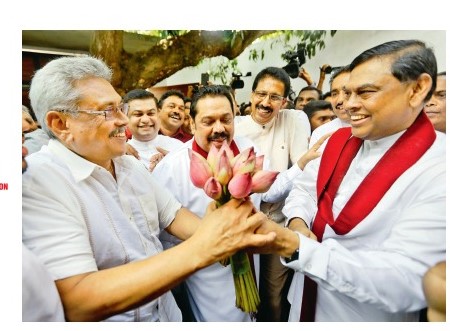
Major rift in Govt. due to possible entry by Basil?

A major rift has erupted within the government following reports that Basil Rajapaksa will take oaths as an MP early next month and will thereafter receive a ministerial portfolio, the Daily Mirror learns.

Some government coalition party members have objected to the move, citing Rajapaksa’s dual citizenship as a reason, and have voiced their disapproval to the President and Prime Minister.

Sources said reports had surfaced that Rajapaksa was likely to be appointed as the Minister of Economic Development, a portfolio newly created for him and the one he held in the previous Rajapaksa government.

Although initially there were reports that he would also take over as the Finance Minister, this has been shot down as this portfolio is likely to be retained by Prime Minister Mahinda Rajapaksa. However, certain institutions which come under the purview of the Finance Ministry are likely to be transferred under the new portfolio. While Basil was set to receive his Cabinet portfolio early next month after he takes oath as an MP, the move may be delayed due to the strong objections raised by some of the party members.

Rajapaksa returned back to Sri Lanka last week after being in the US for a little over a month. He is currently the Head of the Economic Revival and Poverty Eradication Presidential Task Force.

Posted in Uncategorized

Sri Lanka lifts ban on passenger arrivals from several gulf countries

The Chairman of the Civil Aviation Authority (CAA) says that the ban on airline passengers with a recent travel history to Saudi Arabia, UAE, Qatar, Kuwait, Bahrain, and Oman during the last 14 days has been lifted subject to several conditions.

The CAA had announced on 28th June 2021, the imposing of restrictions on air passengers from the aforementioned 6 Middle Eastern countries stating that those with a travel history to these countries within the last 14 days will not be allowed to disembark in Sri Lanka.

However, the CAA says it has now revoked that decision subject to certain conditions.

It stated that in accordance with instructions received from the Ministry of Health and the National Operations Centre for Prevention of COVID-19 Outbreak (NOCPCO) the passenger restriction on the following 6 Countries (Qatar, Oman, Bahrain, United Arab Emirates, Saudi Arabia, Kuwait) is revoked with immediate effect on the following conditions:

• All arriving passengers must have a negative PCR Test obtained within 96 hours prior to departure. Airline to ensure this before boarding passengers.
• Antigen tests cannot be accepted as a pre-departure test for boarding.
• PCR test must be presented from a Government approved hospital/laboratory in the respective Country with a QR Code/Bar Code.
• Airlines must satisfy themselves with the authenticity of the test reports presented by the passengers.
• Passengers are permitted to arrive only for Hotel Quarantine or through the Sri Lanka Tourism Bio Bubble Route.

The above conditions will apply until further notice, the CAA chairman said.

Posted in Uncategorized

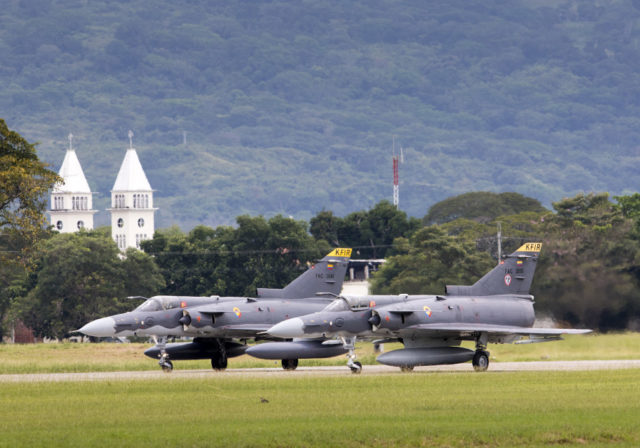
Ministry of Defence signs $50 Mn deal to upgrade SLAF’s Kfirs

Israel Aerospace Industries (IAI) stated today (30) that it recently signed a contract, worth $50 million, with Sri Lanka’s Ministry of Defence to upgrade Kfir aircraft for the nation’s Air Force, Isreal Defense reported.

The deal includes replacing the aircraft’s basic avionics with advanced 4+ generation fighter aircraft avionics in order to one day integrate advanced radar, sensors, communication systems, and new helmets. The upgrade process will also include transfer of related knowledge and skills to Sri Lankan Air Force personnel. The upgrades will be completed in cooperation with the Air Force and in its facilities, IAI said.

Yossi Melamed , IAI Executive VP and GM of IAI’s Aviation Group, said, “I am proud that IAI’s Kfir has been chosen by customers around the world, including in the United States and as the Columbian Air Force’s primary fighter jet. I am grateful to Sri Lanka’s Air Force for choosing to renew their Kfir selection and continue using the Kfir as their Multi-Role Combat Aircraft. I believe this deal is an early step in preparing for future upgrades to the advanced model KNG (Kfir New Generation).”

The Kfir, when first developed, was a game changer on the battlefield with its ability to carry thousands of tons of ammunition and reach enemy targets in a precise manner, IAI stated.

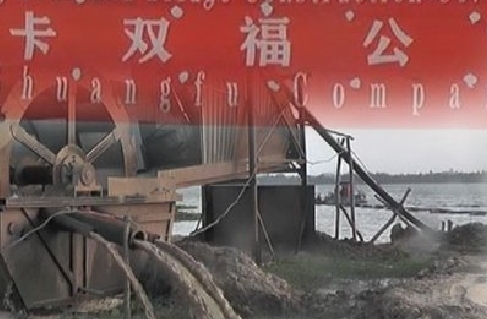
Chinese company seeks Archaeology Department approval

The company involved in the Chinese Joint Venture (JV) to clean the country’s irrigation tanks has sought permission from the Archaeology Department on 28 June, following allegations that the first phase of the project at the Tissa/Tissamaharama Wewa was done without prior permission from the Department.

The controversial project, which was launched earlier this month, is currently on hold following concerns raised by the Archaeology Department.

The Morning learnt that a letter requesting permission has been received by the Department’s offices in Galle and that the Department is currently reviewing the request. It is learnt that permission may be given for the project, to proceed subject to a number of strict conditions.

At the time the venture was launched, the Irrigation Minister Chamal Rajapaksa told the media that when the water from the Uma Oya project is released, it is his Ministry’s responsibility to ensure it does not reach the sea and therefore the clean-up of dredged sediment at the Tissa Wewa is needed.

Government sources told The Morning that the clean-up at the Tissa Wewa using special machinery is done as a pilot project, to test the success of this particular clean-up technique.

According to sources, the cleaning of sediment in the Tissa Wewa is needed and the JV with the Chinese company involves a clean-up of an area of approximately 100 acres.

“If that kind of clean up is done using normal techniques, it would require the Tank to be drained, which would affect the farming cycles. Therefore, in order to combat this issue, the company would be employing special machinery to clean the Tank without draining it,” the sources added.

It is also learnt that the pilot project was due to be launched in Kurunegala, although it was later moved to the Tissa Wewa in February of this year.

Meanwhile, another controversy surrounding the project was that a worker wearing clothes allegedly similar to that of the Chinese military was seen near the Tissa Wewa. Responding to these concerns at the Cabinet media briefing held yesterday (29), Cabinet Spokesman Keheliya Rambukwella said that following an investigation by the Army and the Criminal Investigations Department (CID), they have clearly stated that this alleged piece of clothing can be worn in the country. “We are not silent or cowardly on the matter. There is a set of laws in the country that can be accessed if the Antiquities Ordinance has been violated. The Army and the CID have done a complete investigation into the matter about the uniform. There are workers of security companies in these work sites. As far as we know, they are not from the Chinese Army,” said Rambukwella.

Tissa Wewa, part of the country’s famous irrigation system, is one of the oldest reservoirs built during the 3rd Century Before Christ by King Devanampiyatissa.

Defence Secretary questions Chinese Embassy on camouflage uniforms

Defence Secretary General Kamal Gunaratne (Retd) has questioned the Chinese Embassy in Sri Lanka over camouflage uniforms worn by Chinese employees of a private company in Tissamaharama.

The opposition had recently questioned the presence of foreigners in Tissamaharama wearing clothing similar to the Chinese military uniform.

Samagi Jana Balawegaya (SJB) MP Manusha Nanayakkara raised the concerns in Parliament saying workers attached to a project in Tissamaharama were seen wearing clothing similar to the Chinese military uniform.

The Defence Ministry said that the Chinese Embassy had informed Defence Secretary General Kamal Gunaratne (Retd), that the said employees are not members of the People’s Liberation Army.

The Embassy has told the Defence Secretary that the clothes are part of the Chinese company’s uniform.

However, the Defence Secretary has told the Chinese Embassy to educate the respective employer to refrain its employees from wearing the controversial military style camouflage uniforms in future.

The Ministry of Defence has also informed the local company to ensure the staff do not wear such uniforms.

“Defence Secretary Gen. Kamal Gunaratne (Retd) has also directed the Southern Province Senior Deputy Inspector General of Police to thwart any further attempt of such nature,” the Defence Ministry said.

Meanwhile, Cabinet co-spokesman Keheliya Rambukwella had said today that the Criminal Investigations Department (CID) and the Military intelligence had investigated the claims and found that the allegations were baseless.

He said that some groups had raised concerns over the matter with vested interests.

Posted in Uncategorized