Switzerland hands over humanitarian assistance to Sri Lanka

Switzerland today handed over medical supplies to Sri Lanka to help fight the coronavirus pandemic

The Ambassador of Switzerland to Sri Lanka Dominik Furgler called on Prime Minister Mahinda Rajapaksa this morning at Temple Trees to hand over medical supplies donated by the Government of Switzerland to Sri Lanka.

Commenting on the Swiss relief provided to South Asian countries to help fight the pandemic, including this donation to Sri Lanka, Swiss Foreign Minister Ignazio Cassis earlier had said, “We can only end this pandemic together – international support is essential.”

Prime Minister Rajapaksa thanked the People of Switzerland for the generous donation and stressed the importance of continuing the already strong cooperation between the two countries.

The humanitarian assistance contained medical supplies amounting to more than US$ 4 million, including oxygen concentrators, ventilators and Antigen test kits, among other supplies, that would assist the Sri Lankan Government’s efforts in containing the COVID-19 pandemic.

The two delegations discussed the need to reactivate the Sri Lanka – Swiss Parliamentary Friendship Association (SLSPFA) and conduct programs between parliamentary members of both countries as has been successfully done in the past. Prime Minister Rajapaksa handed over that responsibility to the current SLSPFA Convener MP Premanath C. Dolawatta.

Ambassador Furgler also expressed to Prime Minister Rajapaksa his Government’s interest in assisting Sri Lanka enhance activities and services of the hospitality sector as the world hopes to revitalize tourism in the near future.

Farmers protests rage across Sri Lanka

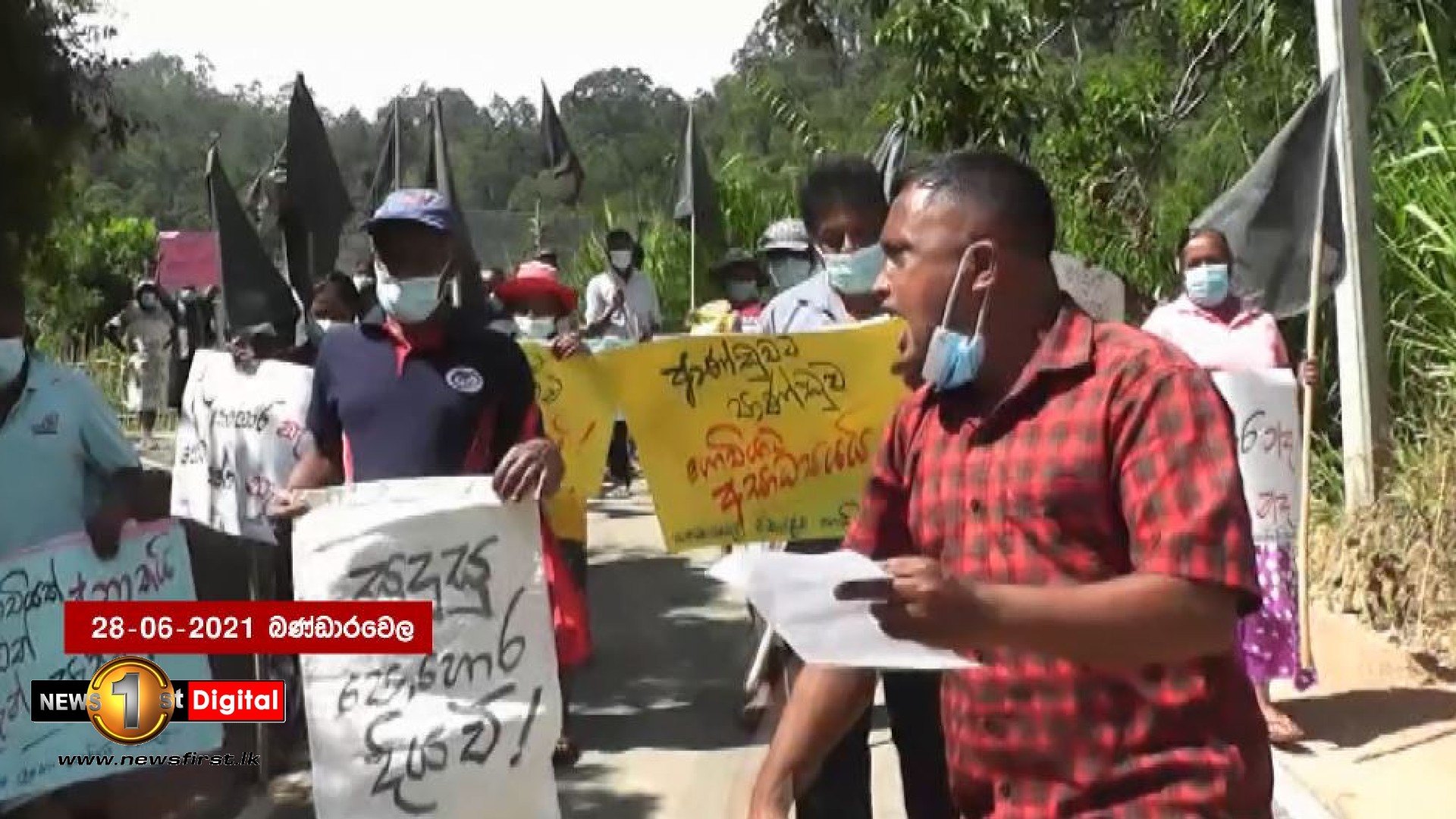
Farmers across many areas in Sri Lanka for the second consecutive week protested against the shortage of fertilizer in the country.

On Monday (27) protests took place in Diyathalawa, Sapugolla, Pahalakadurugama, Dambagolla, Bandarawela, and Nochchiyagama among other areas.

‘The farmer is now forced to protest in the streets because this government does not understand what the farmers are going through,’ said one farmer.

Over the past two weeks, farmers have been lining up at agrarian centers across Sri Lanka to obtain fertilizer and in many instances, they are forced to turn back empty-handed due to low stocks.

Farmers have claimed that if this situation continues, they will be forced to abandon their cultivations.

Posted in Uncategorized

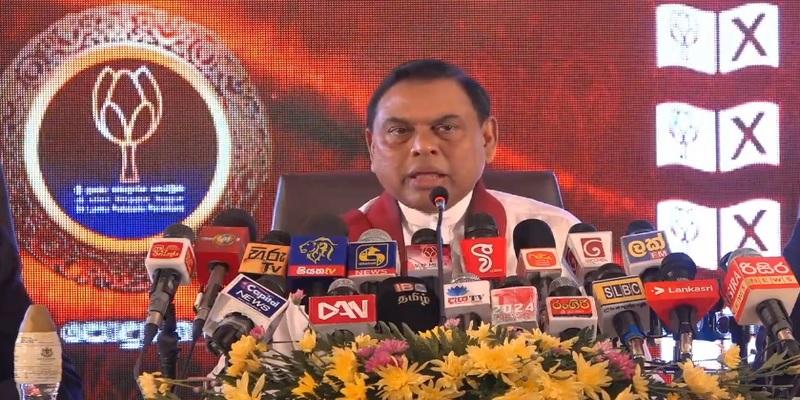
New Ministry to be formed for Basil – Sources

While Prime Minister Mahinda Rajapaksa will continue to hold the post of Finance Minister, Basil Rajapaksa will be appointed a new Cabinet ministerial post which will be created by merging a number of institutions under the Finance Ministry, high level sources at the Finance Ministry told The Morning.

Despite reports that there are plans to give Basil Rajapaksa the post of Finance Minister, the sources within the Ministry claimed that Mahinda Rajapaksa will not be resigning from the post of Finance Minister.

“There may be some changes, but most likely the post of Finance Minister will be held by Mahinda Rajapaksa himself and a separate ministry such as the Ministry of Economic Revival will be established and handed over to Basil Rajapaksa,” the sources stated.

Most of the responsibilities of the Finance Ministry, according to said sources, are to be transferred to the new Ministry.

However, the sources said that no final decision had been taken thus far and that the final decision may change according to future developments. However, they claimed: “Basil Rajapaksa will definitely come to Parliament, but the arrival will take some time. What will happen can only be seen at the last moment.”

Meanwhile, backbenchers of the Sri Lanka Podujana Peramuna (SLPP) were scheduled to hand over a letter to Basil Rajapaksa yesterday (27) requesting the latter to enter Parliament on the SLPP national list. According to party sources, the letter was handed over during a discussion held at the SLPP office last evening.

Economic Revival and Poverty Eradication Presidential Task Force Head Basil Rajapaksa, returned to the country on 24 June, after he left the country on 12 May for the US. He was welcomed by a group including State Minister Nimal Lanza upon his arrival at the Bandaranaike International Airport (BIA) in Katunayake. Speaking to the reporters, Lanza said that Basil Rajapaksa would follow quarantine regulations.

Basil Rajapaksa was a member of Parliament from 2007 to 2015. During the period from 2005 to 2010 he served as a Presidential Senior Advisor for then President Mahinda Rajapaksa and was the Cabinet Minister of Economic Development from 2010 to 2015. Basil Rajapaksa has also held the citizenship of the US since 1997, and the laws barring dual citizens from entering Parliament, that was introduced through the 19th Amendment to the Constitution, were revoked through the 20th Amendment which was passed in October, 2020.

Meanwhile, in response to a question raised at a recent media briefing regarding reports that Basil Rajapaksa is to enter the Parliament, State Minister Dilum Amunugama said that in order for Basil Rajapaksa to enter Parliament, a Member of Parliament elected from the National List should resign. “Such a discussion is taking place. Accordingly, it will be decided in the future who will leave,” he said.

How China shackled Sri Lanka

In early June, US President Joe Biden, under an executive order, essentially blacklisted Chinese firms by prohibiting US investments in certain Chinese firms that “undermine the security or democratic values of the United States and our allies”.

The port city developers, China Harbour Engineering Company (CHEC), and the mother company, China Communications Construction Company (CCCC), were on this list.

On its China policy, the US stands firm with its bipartisan consensus. This would raise concerns in nations like Sri Lanka, which has a large Chinese infrastructure portfolio constantly growing in the country.

Regional powers and their periphery

Such Chinese firms are barely exclusive to Sri Lanka. In fact, they operate in the US’s own backyard along the 82-kilometre Panama Canal. The Panama Canal was built for the strategic expansion of the US, connecting the Atlantic–Pacific Ocean route, and is today surrounded by Chinese infrastructure projects.

Chinese firms such as CHEC and CCCC are also involved in infrastructure development in Panama. In 2017, Panama ended its diplomatic relationship with Taiwan and embraced Chinese BRI assistance amounting in billions of dollars toward infrastructure. China is involved in a bridge project over the Canal for $1.4 billion and a $4 billion rail project.

It is also involved in the power sector, mining, and a Chinese telecom infrastructure project with Huawei, including a digital free trade zone in San Miguelito. Panama’s shifting to Beijing had a domino effect, with 15 Latin American nations welcoming China’s BRI.

However, the present Panamanian regime has managed to rebalance and scale back its Chinese infrastructure including the bridge, considering the Chinese ‘debt trap’ and the US geopolitical security concern.

In a similar manner, in the backyard of the regional power India, Sri Lanka has invited the Chinese BRI with several projects that are of concern to India. Colombo has fallen into the premeditated scheme of a Chinese debt trap, paying off its loans in varied ways, from leasing its strategic assets through debt-equity swaps to creating extra-jurisdictional Special Economic Zones.

Like in Panama, the Sri Lankan government would need to backtrack its China ‘bandwagoning’ foreign policy and bring a ‘balance’, and develop a considered perspective on the geopolitical and regional security concerns its close relationship with China brings.

The interwoven regional geographical alignments, such as India-Sri Lanka and the US with its immediate periphery in Panama, cannot be outweighed by the strategic interest drawn by an extra-regional power, China. The same ‘Monroe Doctrine’ is applicable in China’s periphery.

China’s port city victoryin Colombo

Speaker of the Sri Lankan house, Mahinda Yapa Abeywardena, inked the Colombo Port City Economic Commission Bill on May 27 after it received approval from two-thirds of the government. Sri Lanka’s Supreme Court observed several clauses of the bill to be unconstitutional.

The praetorian regime, with its majoritarian power, passed the Port City Bill in a hurry, ignoring and threatening the nation’s sovereignty.

Justifying the passing of the bill during the pandemic and lockdown, the Speaker of the house explained, “There were precedents that Parliament sittings have been conducted without any hindrance even during World War II and also when the Sri Lankan Parliament came under a bomb attack.”

(Asanga Abeyagoonasekera is a geopolitical analyst and author of ‘Conundrum of an Island [2021]’. This commentary was initially published by ORF New Delhi)

Posted in Uncategorized

Circular issued with new quarantine regulations

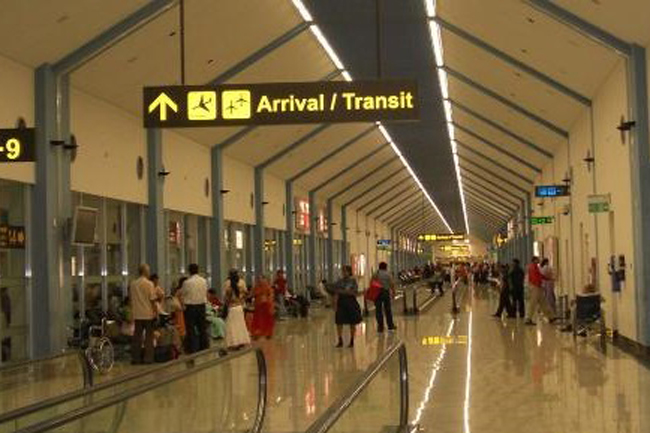
The Director General of Health Services has issued a circular including new quarantine regulations for persons travelling to Sri Lanka from overseas.

Accordingly, it is mandatory that Sri Lankan citizens produce a negative PCR test 96 hours prior to arriving in the island or a Rapid Antigen Test taken 48 hours before arrival.

Foreigners and dual citizens must produce a negative PCR test result 96 hours prior to landing in the country.

The card holding information pertaining to COVID-19 vaccinations received by the individual, should be produced only in the English language.

Persons arriving from overseas will be required to undergo a PCR test on the first day of arrival while they will be subjected to a 14-day quarantine period at a hotel or quarantine centre.

Diplomats will be allowed to spend their quarantine period in the accommodation provided by the respective Embassy.

The new circular issued by the Director General of Health Services stated fully vaccinated Sri Lankans or dual citizens travelling from overseas who have also completed the 14-day quarantine period, should notify health services on the matter.

Posted in Uncategorized

The truth will prevail: Shani Abeysekara

Former Director of the Criminal Investigations Department (CID) Shani Abeysekara who was recently released on bail, reiterated his innocence in an interview with Al Jazeera.

“The truth will prevail. I am an honest and hardworking officer. In my whole career, I didn’t do any wrongdoing, that’s all I can say,” Abeysekara told Al Jazeera.

Abeysekara had stated that he worked true to his conscience, while treating his duties to enforce the law as sacred.

“As a result, I was forced to stay away from home, away from my family, my children for no reason. That is something I regret,” he said.

He also noted that as a follower of the Buddhist way of life, he does not have hate for anyone and is not ‘angry’.

“People who live according to their conscience find that it’s not hard to face anything. They know that if they do something wrong, they have to face the punishment. I won’t have to face punishment because I have not done any wrong,” he said.

Following Abeysekara’s interdiction from the Police service in January 2020, he was arrested in July of that year on allegations of the fabrication of evidence to frame a false case against former Deputy Inspector General of Police Vaas Gunawardena.

However, the legal representation for Abeysekara has pointed out that no credible evidence has been brought before the Court to substantiate these claims. CID Sub Inspector Sugath Mendis, who initially made the allegations against Abeysekara, later claimed that Colombo Crimes Division (CCD) officers had coerced him into making the statement.

Abeysekara led many high profile investigations during his time in the CID, including that of the murder of the late editor Lasantha Wickrematunge, the disappearance of cartoonist Prageeth Ekneligoda, and the case involving the Navy being implicated in the abduction of 11 youths.

Posted in Uncategorized

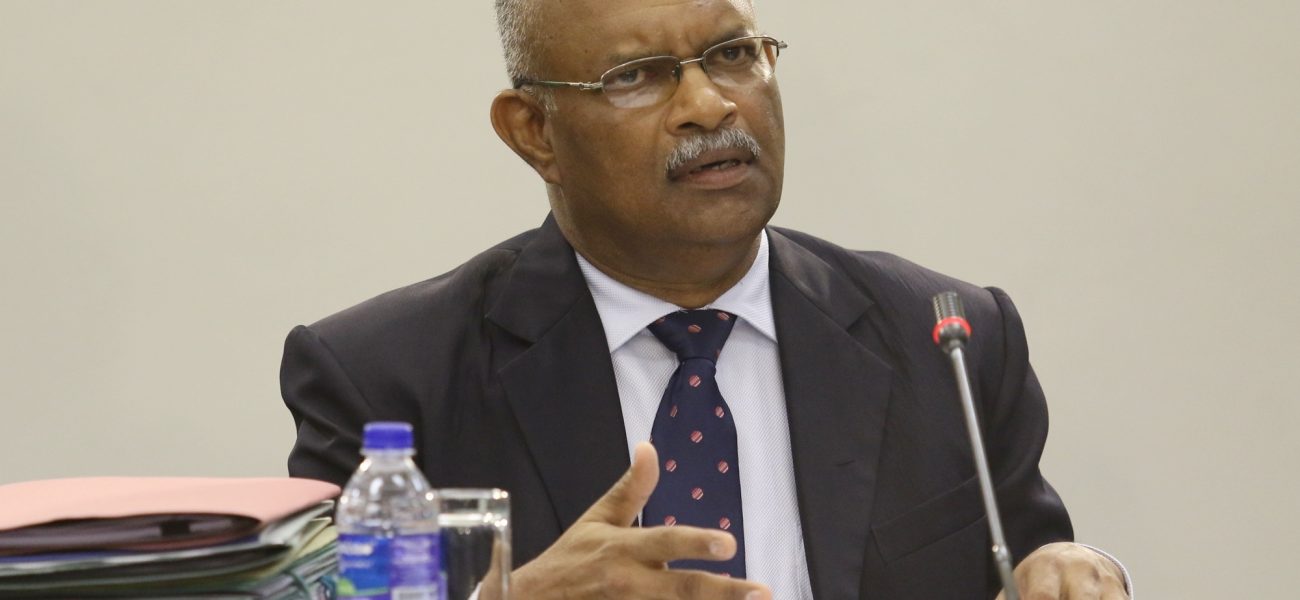
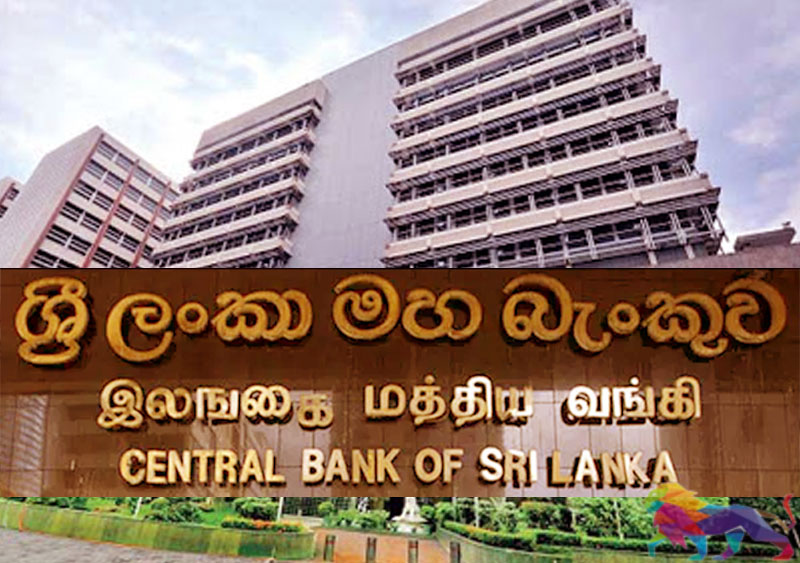
Dollar crisis: CB shuts door for commercial banks; importers badly hit

The Central Bank has told banks not to request dollars from the banking regulator’s depleted foreign currency reserves, and instead find it in the cash-short market as the country faces a major scarcity of dollars in the forex market.

This has resulted in several private banks being unable to pen Letters of Credit (LCs) to importers even for essential items such as pharmaceutical products.

According to a Central Bank directive, commercial banks dealing in the inter-bank foreign exchange market have been restricted in maintaining foreign currency reserves and managing foreign exchange liquidity within the banking system.

This has created a shortage of dollars in the country for transactions involving individual or institutional customers, Finance Ministry sources confirmed.

Local banks are also facing difficulties in accessing foreign-currency funding while forex reserves had come down to low level of US$ 4.4 billion by the end of April.

Banks’ holdings of Sri Lanka Development Bonds have declined by 15 percent in 2020 to $2.24 billion and it is likely to come down further this year due to the forex shortage, according to available Finance Ministry statistics.

The present drop in dollar circulation and conversion in the market is temporary due to exporters holding on to their dollar earnings hoping for a high rate while importers are rushing to buy dollars, State Minister of Finance Ajith Nivard Cabraal told the Sunday Times.

He noted that the exporters were not converting their foreign currencies till they got higher deposit rates in dollars.

He was of the view that gross foreign exchange inflows of over $3 billion from long term foreign loans would strengthen foreign reserves position and make the dollar situation and exchange rate stable soon.

Meanwhile, gross inflows on account of long-term loans included the receipt of the syndicated loan facility from the China Development Bank amounting to $ 500 million and from Bangladesh a $200 million currency swap facility plus a $400 million foreign currency swap with the Reserve Bank of India.

The Central Bank has also entered into a currency swap with the Central Bank of China for $ 1.5 billion and a term loan and concessional loan of $ 500 million from the Exim Bank of Korea.

Some exporters have resorted to the practice of obtaining US dollar loans to continue their exports and thus they had to settle the loan soon after they receive their payments for export products making them penny less, an economic expert said.

“Sri Lanka importers have been badly hit by a foreign currency scarcity as the banks are now refusing to open Letters of Credit even for the importation of essential commodities,” P.M. Abeysekera, President of the Sugar Importers Association and consultant of Essential Food Commodities Importers and Traders Association told the Sunday Times.

Banks are refusing the request of the clients to open LCs, even with the endorsement of the Central Bank, due to the shortage of dollars in the market.

The banks have a responsibility to help customers, specially essential commodity dealers, by informing them about the current situation before making them enter into forward exchange contracts desperately to mitigate the exchange risk, he said.

Commercial banks have been directed not to enter into forward exchange contracts with importers for three months, he said, adding that this was the only facility available for importers to tackle forex risk.

This restriction was extended until further notice and this act prevented the forex market from revealing the real exchange rate.

Posted in Uncategorized

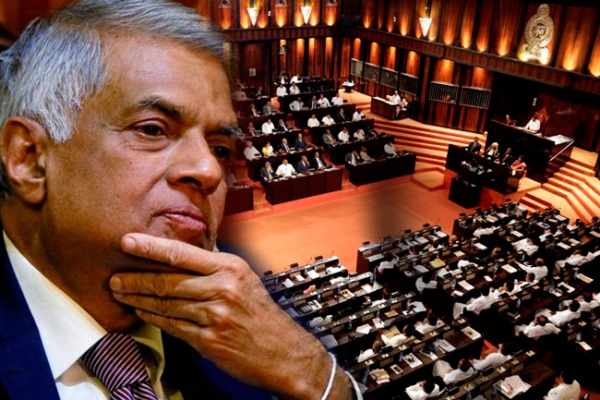
Ranil to reintroduce 19A

Former Prime Minister Ranil Wickremesinghe plans to reintroduce the 19th Amendment to the Constitution which was replaced by the 20th Amendment by the incumbent government.

Noting that it is a part of his future political plan, he said that the necessary constitutional amendments will be introduced in a manner that wouldn’t allow anyone to change it in the future.

He also said that he will focus on achieving his goals instead of trying to take back the government considering the dire situation caused by the Covid-19 pandemic.

UNP leader Ranil Wickremesinghe made this observation during a programme on ‘Neth News’, his first interview with a radio station since he was sworn-in as a parliamentarian.

Sinovac wants price kept secret; any disclosure and deal is off

The Chinese manufacturer of Sinovac vaccines, which Sri Lankan plans to procure in the millions, has placed a condition on its purchase contract: if the price of the jab is disclosed or even spoken about in public, the deal is off and there could be legal trouble.

“They [Sinovac Lifesciences Co. Ltd.] have said that if the price in the agreement is disclosed to the public or spoken about in public it will be subjected for termination of the agreement or they will take legal action against us,” V. Nadarajah, Chairman of Kelun Lifesciences (Pvt) Ltd, the local company that has a Memorandum of Understanding with the Chinese firm, writes in a June 13 letter to Prof Channa Jayasumana, Sri Lanka’s State Minister of Pharmaceutical Production.

Mr Nadrajah says this was because “…we are getting a very competitive price for Sri Lanka”. The official name of the vaccine is CoronaVac but it is commonly called the Sinovac COVID-19 vaccine. Sinovac Lifesciences is the Beijing-based unit of Sinovac Biomed that developed the jab.

But the subject of price has been sticky. A regional controversy recently broke out when it was found that the quoted price of the other Chinese vaccine, Sinopharm, was five US dollars more for Sri Lanka (US$ 15 a dose) than it was for Bangladesh (US$ 10 a dose).

At the time, the Chinese Embassy in Sri Lanka said through its verified Twitter account that it was “a common practice of different price range for all the phama [sic] companies and Sri Lanka gets a best corporate price with a fastest delivery”.

It also quoted the Chinese Embassy in Dhaka as saying Bangladesh’s procurement agreement including pricing was not finalised and called the price discrepancy reports “fake news on social media”. The inclusion of a non-price disclosure clause in Sri Lanka’s proposed contract with Sinovac Lifesciences has taken place against such a backdrop.

President Gotabaya Rajapaksa in his address to the nation on Friday said Sri Lanka hoped to vaccinate 13 million people by September. Kelun Lifesciences in a separate June 11 dated letter to Prof. Jayasumana said it was a “key condition” of Sinovac Lifesciences for a guaranteed purchase quantity–the minimum purchase order being 13 million vaccine doses.

Under the deal, Sri Lanka will enter into an agreement with Kelun Lifesciences to secure 13 million Sinovac doses which are set to be manufactured–that is, dispensed, filled, packaged and tested–at its site in Pallekele. It has sought confirmation from the State Ministry on how many doses of it should be produced for Sri Lanka.

It later conveys that payment for the first 3 million doses will have to be made in advance. For the 10 million doses, payment must be through “an irrevocable LC/Advance”. In an irrevocable letter of credit, the terms and conditions can neither be amended nor cancelled.

Kelun Lifesciences states that it is Sri Lanka’s first and only sterile liquid and infusion manufacturing facility. It has signed a non-disclosure agreement and a Memorandum of Understanding with Sinovac Lifesciences which is its vaccine bulk material supplier and technology partner. A business agreement is next to finalise the financial terms of the partnership.

How China won over local agency to shackle Sri Lanka using a port city (Opinion)

In early June, US President Joe Biden, under an executive order, essentially blacklisted Chinese firms by prohibiting US investments in certain Chinese firms that “undermine the security or democratic values of the United States and our allies”.

The port city developers, China Harbour Engineering Company (CHEC), and the mother company, China Communications Construction Company (CCCC), were on this list.

On its China policy, the US stands firm with its bipartisan consensus. This would raise concerns in nations like Sri Lanka, which has a large Chinese infrastructure portfolio constantly growing in the country.

Regional powers and their periphery

Such Chinese firms are barely exclusive to Sri Lanka. In fact, they operate in the US’s own backyard along the 82-kilometre Panama Canal. The Panama Canal was built for the strategic expansion of the US, connecting the Atlantic–Pacific Ocean route, and is today surrounded by Chinese infrastructure projects.

Chinese firms such as CHEC and CCCC are also involved in infrastructure development in Panama. In 2017, Panama ended its diplomatic relationship with Taiwan and embraced Chinese BRI assistance amounting in billions of dollars toward infrastructure. China is involved in a bridge project over the Canal for $1.4 billion and a $4 billion rail project.

It is also involved in the power sector, mining, and a Chinese telecom infrastructure project with Huawei, including a digital free trade zone in San Miguelito. Panama’s shifting to Beijing had a domino effect, with 15 Latin American nations welcoming China’s BRI.

However, the present Panamanian regime has managed to rebalance and scale back its Chinese infrastructure including the bridge, considering the Chinese ‘debt trap’ and the US geopolitical security concern.

In a similar manner, in the backyard of the regional power India, Sri Lanka has invited the Chinese BRI with several projects that are of concern to India. Colombo has fallen into the premeditated scheme of a Chinese debt trap, paying off its loans in varied ways, from leasing its strategic assets through debt-equity swaps to creating extra-jurisdictional Special Economic Zones.

Like in Panama, the Sri Lankan government would need to backtrack its China ‘bandwagoning’ foreign policy and bring a ‘balance’, and develop a considered perspective on the geopolitical and regional security concerns its close relationship with China brings.

The interwoven regional geographical alignments, such as India-Sri Lanka and the US with its immediate periphery in Panama, cannot be outweighed by the strategic interest drawn by an extra-regional power, China. The same ‘Monroe Doctrine’ is applicable in China’s periphery.

China’s port city victory in Colombo

Speaker of the Sri Lankan house, Mahinda Yapa Abeywardena, inked the Colombo Port City Economic Commission Bill on May 27 after it received approval from two-thirds of the government. Sri Lanka’s Supreme Court observed several clauses of the bill to be unconstitutional.

The praetorian regime, with its majoritarian power, passed the Port City Bill in a hurry, ignoring and threatening the nation’s sovereignty.

Justifying the passing of the bill during the pandemic and lockdown, the Speaker of the house explained, “There were precedents that Parliament sittings have been conducted without any hindrance even during World War II and also when the Sri Lankan Parliament came under a bomb attack.”

The environment was conducive towards suppressing the democratic mechanism of public protest, discussion, and to bulldoze the bill through. There are ample mechanisms in the Sri Lankan government political toolkit to turn down the bill. It was simply not used against China.

In other cases, such as India’s East Container Terminal project or for the US MCC grant, there were public protests and experts committees of inquiry. China’s strength in handling the local agency, perhaps, with an ‘agency side payment’ to manoeuvre projects is clear through this.

Revisiting the work of Robert Putnam, Diplomacy and domestic politics: the logic of two-level games, considering how diplomacy and domestic politics are entangled in Sri Lanka, the present Gotabaya regime has crushed the domestic decision-making and negotiation space.

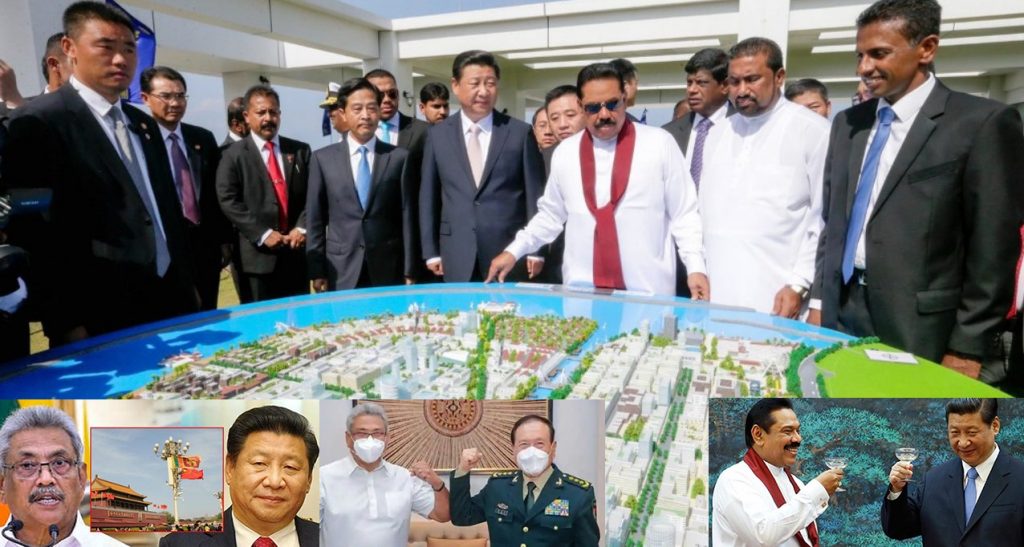
The government mechanism of bargaining for a better deal at different bureaucratic levels with a foreign party is absent. When the decisions are made and concluded at the higher level first (Gotabaya with Xi), there is no space for bargaining.

The acceptance of Chinese proposals without any negotiations will have serious consequences. Tagging along with China’s BRI and bandwagoning with the Middle Kingdom without any negotiation minimise the fallback option with other players, especially Sri Lanka’s closest neighbour, India.

Gulbin Sultana warns “given the dynamics of India-China relations, Sri Lanka should not expect that India will shut its eyes and keep mum over the developments in the Colombo Port City, which is just 290 kilometres away from its mainland, even though unlike the US, it has not raised any official concern”.

The domestic decision to favour China and lose its foreign policy balance will significantly impact India-Sri Lanka relations.

The recent China tilt strengthened President Gotabaya’s win-set at the domestic political level within the SLPP coalition securing his Presidency. This same coalition, which had successfully created a fear amongst the public over the US project MCC by depicting it as a threat to sovereignty, has used China’s port city to secure a domestic political victory upon passing the bill.

What the present regime failed to understand was the domestic political victory upon passing the bill has failed to address the foreign policy fallout, which is fundamental for Sri Lanka to sustain a balanced foreign policy.

The belligerence of China and the defence of China in an unusual manner, such as by Sri Lankan Foreign Secretary speaking on Xinjiang, has invited multiple levels of external pressure on Colombo’s foreign policy.

An assessment of the recent developments in the country reveals a subversion of democracy and a weaponisation of the neutral agencies that would otherwise ensure checks and balances in an effective democratic set up. The elected office bearers maintain a veneer of democracy and rhetorically accept the foreign policy balance while eviscerating its substance by endorsing an alternative Chinese model.

In China’s CCP (Chinse Communist Party) model, President Xi has nothing to worry about over Sri Lanka’s port city project. The Sri Lankan government’s acceptance and passing of the bill is another victory for President Xi’s BRI strategy. It is a victory more for his foreign policy than for the domestic.

Gotabaya has a different measure where the passing of the bill has become more of a domestic political concern due to the democratic nature of governance in Sri Lanka. If the bill fails to deliver, it could even cost him his presidential seat while President Xi has no such concerns. The majoritarian win-set created and used to play the China card can switch its position, making the democratically-elected leader vulnerable.

There are two reasons the government hurried the Port City bill in just under a month. First, Sri Lanka’s economic situation has worsened with the pandemic.

The country’s foreign inflows had been impacted and debt management has become a serious concern, with accumulated ‘total outstanding external debt at US$ 35.3 billion by end of August 2020’.

PB Jayasundara, Secretary to the President, justified the port city by pointing out that “this is why the Port City law matters… Port City legislation enables Sri Lanka to create a service centre with an incentive structure that will encourage the FDIs on a much stronger footing”.

He further explained the government’s position on foreign loans, asking “to refrain from getting foreign loan-funded projects in the future”. While the government’s fiscal position has deteriorated, China’s port city is seen as a promise to restart the ailing economy.

Second, the political security guaranteed at the human rights council by China to the regime was proven by China’s support to vote against the UNHRC resolution to look into human rights violations during Sri Lanka’s long civil war that ended in 2009.

The phone call after the UNHRC vote was well-timed by the Chinese leadership. For the Rajapaksas, this political security is an essential ingredient for survival.

China openly backs this cause, reaffirmed by a high level official visit of Chinese State Councillor and Minister of National Defence, Wei Fenghe, who said, “Chinese side appreciates Sri Lanka’s position on issues relating to China’s Taiwan, Hong Kong Special Administrative Region and Xinjiang Uygur Autonomous Region, and will as always support Sri Lanka’s stance on issues relating to human rights”.

While China would defend the Sri Lankan government’s human rights posture and accept whatever form it presents, Western democracies will be obliged to highlight the long-delayed minority concerns in the island.

The recent resolution from the US House Foreign Affairs Committee (HFAC) on Sri Lanka is a clear indication of pressure on the Sri Lankan government to achieve some credible transparent domestic process.

The Sri Lankan Ambassador in Washington has denied what the resolution has concluded and stated: ‘Calling an international mechanism at this juncture was sinister, at a time the present government had provided such mechanism’.

This ‘state of denial’ is a common trend in sync with with the UNHRC resolution denial; the absence of a credible mechanism is evident in Sri Lankan society. The new European Union Parliament adopting a resolution to withdraw the Generalised Scheme of Preferences (GSP+) is a clear warning to the Sri Lankan regime.

The resolution highlights Sri Lanka’s “alarming path towards the recurrence of grave human rights violations”.

Being sheltered by only China’s financial muscle and security are clear miscalculations. For China, pushing this port city deal is high on the agenda, especially at a time when there is significant global pressure over China’s belligerent behaviour in its neighbourhood and elsewhere.

Bringing Colombo into its sphere is a considerable victory in its larger BRI trail. Further, the agreed period of the port city bill exceeds the time span of the present government. Could a future government re-open the bill or default on the deal? A similar revisit was discussed by the former government after signing Hambantota Port deal.

If a revisit is possible and the port city deal is feasible, then Sri Lanka would be grateful for such transformative infrastructure. But President Gotabaya’s election promise to revisit the Hambantota Port deal that has been signed for 99 years never occurred. History tells us that there won’t be much difference in Chinese flexibility in revisiting the port city bill.

The fast track approval for the port city bill shows the strength of the Chinese sphere of influence dominating and dictating local agency. Sri Lankan foreign policy today is in the shape of a doughnut, focused on the external interests of China.

Worryingly, it is hollow at the centre, with national interests safeguarding sovereignty lying completely neglected. This foreign policy will begin to shake once an external partner intervenes in domestic affairs and the Sri Lankan regime loses its domestic political grip.

(Asanga Abeyagoonasekera is a geopolitical analyst and author of ‘Conundrum of an Island [2021]’. This commentary was initially published by ORF New Delhi)

–IANS

Posted in Uncategorized