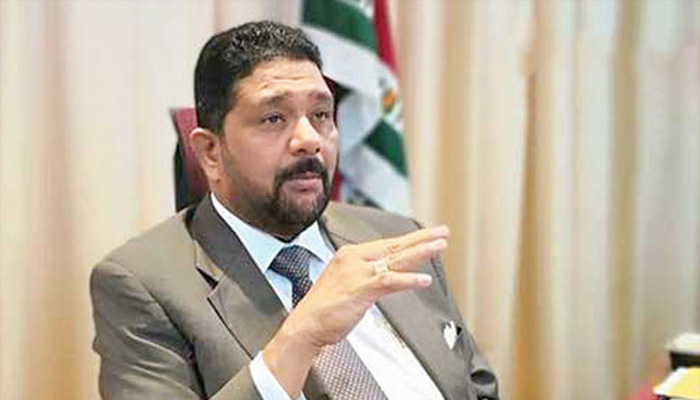
Organization of Islamic Cooperation condemns move to ban burqa in SL

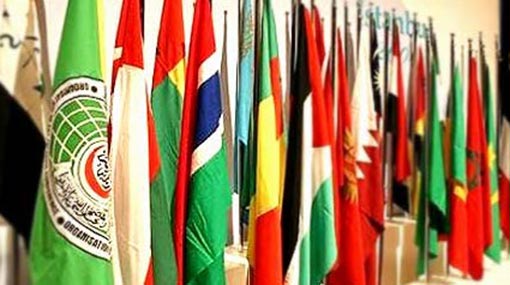
The Independent Permanent Human Rights Commission (IPHRC) of the Organization of Islamic Cooperation (OIC) has condemned Sri Lanka’s purported burqa ban stating it is a violation of human rights of minorities.

“The OIC-IPHRC condemns Sri Lankan Ministers’ statement to ban burqas and Madrassas in violation of the Article 18 and 27 of the International Covenant on Civil & Political Rights (ICCPR) Act, which guarantees minorities the right to freely profess, practice and manifest their religion,” the organisation said in a tweet.

Further, they requested the Sri Lankan Government to denounce the statement.

“The IPHRC urges the Sri Lankan Government to publicly denounce such discriminatory and Islamophobic statements and desist from any measures against law abiding Muslims which negate spirit of pluralism and contravene the International Human Rights Law,” they stated.

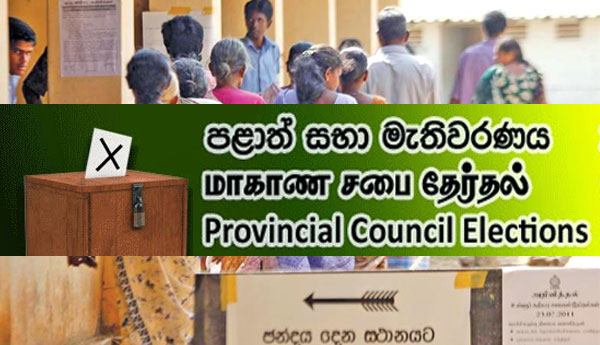
Party leaders to go for PC Polls – Minister

Leaders of the political parties aligned with the government have decided to prepare the necessary legal infrastructure to conduct the provincial council elections soon, a Minister said today.

Agriculture Minister Mahindananda Aluthgamage who attended the meeting chaired by President Gotabaya Rajapaksa and Prime Minister Mahinda Rajapaksa told the Daily Mirror that the necessary legal amendments would be done to call for elections as early as possible.

“We are ready for the elections,” he said.

The elections to some provincial councils have been held up since 2017 due to a legal snag created after the attempt by the previous government to change the present electoral system.

The previous government introduced it in the form an amendment to the PC Elections Act. It secured two-thirds for it at that time with the support of the Tamil National Alliance (TNA) and the Janatha Vimukthi Peramuna (JVP).

The resolution to be moved on Sri Lanka at the United Nations Human Rights Council (UNHRC) also calls for the conducting of elections to the provincial councils to strengthen the local governance. In the recent times, India has repeated its call for the implementation of the 13th Amendment which provides for the constitution of provincial councils.

However, the nationalist forces that back the government are opposed to the system. They have already urged the government to scrap the system.

China to play central role in supporting ‘CCC’ rated Sri Lanka, Maldives, Laos: Fitch

China is expected to play a major role in providing financial support for ‘CCC’ rated borrowers, Sri Lanka, Maldives and Laos, who owe large volumes of money to Chinese banks, Fitch Ratings said in a report.

India was also helping Maldives in a big way and had give a swap which had been settled pending a program with the International Monetary Fund.

“We expect bilateral credit to play a central role in providing financing support to Laos, the Maldives and Sri Lanka,” Fitch Ratings said in a report.

“This partly reflects the geopolitical strategic importance of these countries amid regional rivalry between India and China.

“China’s policies on extending debt relief or permitting debt rollovers may play a significant role in the debt sustainability dynamics of the three ‘CCC’ APAC sovereigns.

“In addition to China’s official support, Chinese state-owned banks are major commercial creditors in these markets.”

In Laos around half of external debt falling due was owed to China. The People’s Bank of China has already given Laos a swapline.

“The new government in Laos has indicated a desire to pursue equity, rather than debt financing, in the future, in which China is likely to play a crucial role,” the report said.

Analysts say Laos has monetary instability, while the Maldives has the best monetary authority among the lot.

All three CCC rated economies are expected to pick up in 2020.

“Economic recoveryis unlikely, on its own, to restore the creditworthiness of ‘CCC’ APAC sovereigns–Laos, the Maldives and Sri Lanka –to pre-pandemic levels,” Fitch said.
“The potential for heightened external liquidity strains leading to increased signs of default poses the most likely source of downward rating pressure for ‘CCC’ APAC sovereigns :

“External financing support from India may also be important,” the rating agency said. “The Indian government provided 250 million dollars of pandemic relief to the Maldives in September 2020, for example.”

In November the Reserve Bank of India gave Maldives 400 million dollar swap line. Maldives has an ongoing IMF program and has a received broad support from creditors including the Middle East.

Sri Lanka was also given a swap which was settled in February pending an IMF deal. Entry to the Debt Service Suspension Initiative of the G20 also required a IMF deal.

Sri Lanka did not qualify for DSSI. But there was also another program going beyond DSSI.

“Countries with IMF financing arrangements may benefit from a broader range of funding options, including access to funding from other multilaterals,” Fitch said

“Sovereigns would also need to enter an IMF programme to access the Common Framework for Debt Treatments Beyond the DSSI.”

Posted in Uncategorized

Sri Lanka urged to withdraw religious disharmony order

Sri Lanka’s Government should immediately withdraw an order that allows two-years of detention without trial for causing “religious, racial, or communal disharmony,” Human Rights Watch (HRW) said today.

HRW says the Prevention of Terrorism (De-radicalization from holding violent extremist religious ideology) Regulations No. 01 of 2021, issued on March 9, 2021, expands the draconian and abusive Prevention of Terrorism Act (PTA).

According to HRW, the regulation will allow the Government of President Gotabaya Rajapaksa to more easily target religious and racial minorities, in violation of their basic rights. The United Nations Human Rights Council is considering a resolution to strengthen monitoring and promote accountability for human rights violations in Sri Lanka, after the UN high commissioner on human rights identified “clear early warning signs … of future violations.”

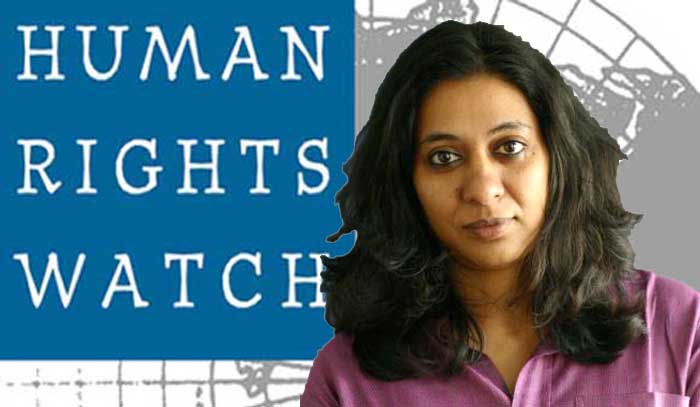
“The Sri Lankan Government has added a new weapon to its arsenal of abusive laws, putting religious and racial minorities at greater risk of torture and prolonged detention without trial,” said Meenakshi Ganguly, South Asia director at Human Rights Watch. “Instead of addressing the UN’s concerns by repealing the notorious Prevention of Terrorism Act, the Rajapaksa administration is embracing it with a vengeance.”

The regulation broadly allows the authorities to detain and “rehabilitate” anyone who “by words either spoken or intended to be read or by signs or by visible representations” causes the commission of violence or “religious, racial or communal disharmony or feelings of ill will or hostility between different communities or racial or religious groups.”

Instead of being tried, the suspect faces detention in a “reintegration center” for up to one year. The Defense Minister, currently President Rajapaksa, is empowered to extend the detention for a second year.

On March 12, the Public Security Minister, Adm. (ret.) Sarath Weerasekara announced plans to ban Islamic face coverings, which he claimed was justified on “national security” grounds. He also said he intended to shut down over 1,000 Islamic schools in the country. If imposed, the actions would be a serious violation of the right to religious freedom.

HRW notes the Rajapaksa administration has used the Prevention of Terrorism Act and other laws to target members of minority communities, especially Muslims and Tamils, while taking no action against those inciting violence and discrimination against minority groups. Among those currently detained under the act are Hejaaz Hizbullah, a Muslim human rights lawyer who has been in custody since April 14, 2020, and Ahnaf Jazeem, a Muslim poet who has been in detention since May 16, 2020, for a book of verse promoting peace and toleration.

Sri Lanka’s relatively small Christian community has also been targeted. “You can’t even write anything on Facebook,” a Christian activist told Human Rights Watch. “Anything could happen. We don’t feel safe to express ourselves. They could lock you up under any pretext.”

For nearly a year, the Rajapaksa government imposed a policy requiring cremation, instead of burial, for anyone who died with Covid-19, in violation of Muslims’ religious rights. The government claimed the policy was necessary to protect public health although it had no medical basis. It was abandoned in March, after considerable domestic and international pressure.

The United Nations Human Rights Council in Geneva is considering a resolution that would strengthen monitoring of Sri Lanka’s deteriorating human rights situation and create a mechanism to collect and analyze evidence of violations for use in future prosecutions. Several senior members of the current government are implicated in alleged war crimes and other grave abuses during Sri Lanka’s civil war.

The draft resolution also calls upon Sri Lanka to “review the Prevention of Terrorism Act, and to ensure that any legislation on combating terrorism complies fully with the State’s international human rights and humanitarian law obligations.”

The government’s latest repressive measures highlight the importance of the Human Rights Council adopting a strong resolution that will help to prevent future abuses and advance accountability for past atrocities, Human Rights Watch said. UN member countries should also act on the recommendation of the UN high commissioner for human rights, Michelle Bachelet, and impose targeted sanctions, including travel bans and asset freezes on Sri Lankan officials implicated in grave violations.

At a meeting in January, the European Union, Sri Lanka’s second-largest trading partner, urged Sri Lanka to amend the PTA and bring it in line with international standards. Sri Lanka has previously undertaken to ratify and put into effect several human rights treaties to benefit from preferential EU tariffs, known as GSP+.

The Sri Lankan government “confirmed its intent on revisiting the provisions of the PTA with a view to making the appropriate amendments.” Because the new regulations make the PTA more abusive, not less, the EU should remind Sri Lankan authorities of the GSP+ consequences of persistent failure to comply with their human rights obligations, Human Rights Watch said.

International development partners, including the United Nations Office on Drugs and Crime (UNODC), the EU, Interpol, and others, are currently supporting a €4.5 million counterterrorism project with Sri Lankan security forces. HRW says they should immediately suspend their engagement until the Sri Lankan Ggovernment adopts measures to make purported “counterterrorism” policies compliant with international human rights standards.

“Sri Lanka’s new regulations will only make matters worse for families of victims and other government critics already facing harassment, intimidation, and surveillance,” Ganguly said. “The UN Human Rights Council should send a message loud and clear that these abuses need to stop.”


Posted in Uncategorized

Operation to oust Wimal Weerawansa underway: Eye on Dullas, Dayasiri, Keheliya and Bandula too

An operation has been launched to remove minister Wimal Weerawansa and the anti-Basil Rajapaksa group from the government. According to sources, the main targets of the campaign are said to be ministers Udaya Gammanpila, Vasudeva Nanayakkara and Wimal Weerawansa.

The first step of the operation is to remove certain individuals holding top posts at state media institutions who are loyal to minister Weerawansa.

The operation will expose a number of frauds related to these ministers, sources said, adding that they will also focus their attention on ministers Dullas Alahapperuma, Bandula Gunawardena, Mahindananda Aluthgamage, Keheliya Rambukwella and Dayasiri Jayasekara, who are known represent the anti-Basil Rajapaksa camp in the government.

Rishad to replace Wimal?

Quoting a report on the ‘Sunday Lankadeepa’ newspaper, pro-government news website ‘Lanka C News’ reported that both Wimal Weerawansa and Udaya Gammanpila would have to leave the government coalition.

The report states that the government will have the support of the minority parties headed by Rishad Bathiudeen and Rauff Hakeem.

It also states that SLPP backbenchers have requested Prime Minister Mahinda Rajapaksa to remove minister Wimal Weerawansa from the government and to remove Udaya Gammanpila from the post of Co-Cabinet spokesman.

State Minister meets SJB MP

Meanwhile, a state minister from the Gampaha District has requested a SJB MP to file a complaint with the Criminal Investigation Department against National Freedom Front (NFF) leader minister Wimal Weerawansa over his comments on the Easter attack. Minister Weerawansa recently said that certain leaders of the ruling party may also be connected to the deadly terrorist attacks on Easter Sunday.

“We will expel the group including Wimal and Udaya from the government soon. If they are accommodated, the government will be finished. They stand against everything the government is doing. They should be expelled the same way Mahinda Rajapaksa expelled Mangala Samaraweera. We will lose some votes. But Rishad and Hakeem are with Basil. They wouldn’t join the government now but will do so closer to the elections. Therefore, losing Wimal shouldn’t be an issue. Basil will contest the next presidential election and win,” the state minister said, requesting the SJB MP to support Basil’s presidential bid.

Posted in Uncategorized

AIADMK pitches for dual citizenship for Sri Lankan Tamil refugees

“The AIADMK had pitched for dual citizenship for the Sri Lankan Tamil refugees in Tamil Nadu though we accepted the Citizenship Amendment Act,” said Information and Publicity Minister Kadambur C Raju here on Monday.

The minister said Chief Minister Edappadi K Palaniswami, who is expected to visit Prime Minister Narendra Modi on December 19, would stress the need to provide dual citizenship for the Tamil refugees.

Saying the AIADMK believes in the people, Raju accused the DMK of trying to cancel the local body elections by approaching the court.

“Though the Tamil Nadu State Election Commission accepted the Supreme Court’s order on delimitation, the DMK attempted to stall the civic polls since they are afraid to face the public,” he said.

Referring to the exit of Pazha Karupaiah from the DMK and his subsequent ‘corporate party’ remarks on the DMK, Raju said, “We do not believe in the corporate structure. People are our masters.”

Confirming the AIADMK’s alliance with the BJP, PMK and other allies, he said the sharing of wards was successfully completed and that the combination would be victorious.

Posted in Uncategorized

Rupee depreciates against the US Dollar

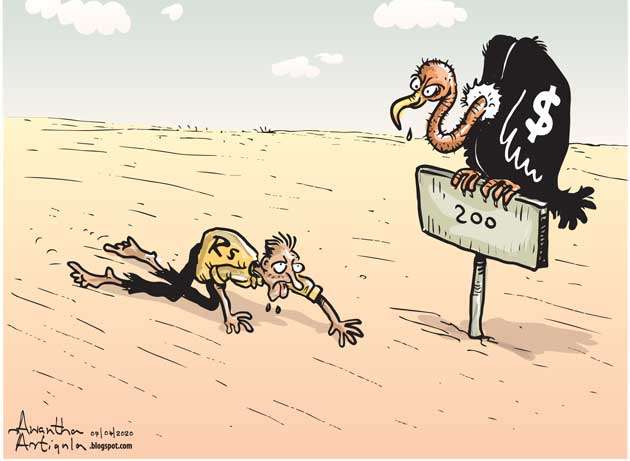
The selling rate of the Sri Lankan Rupee depreciated to Rs 200.06 against the US Dollar on Tuesday, crossing the Rs 200 mark for the third time in history.

According to the Central Bank of Sri Lanka, the current buying rate of the US Dollar today stands at Rs 195.28 while its selling rate stands at Rs 200.06.

The last time in which the rupee had depreciated against the US dollar, has been recorded in April last year, amidst the outbreak of the COVID-19 pandemic in the country.

Posted in Uncategorized

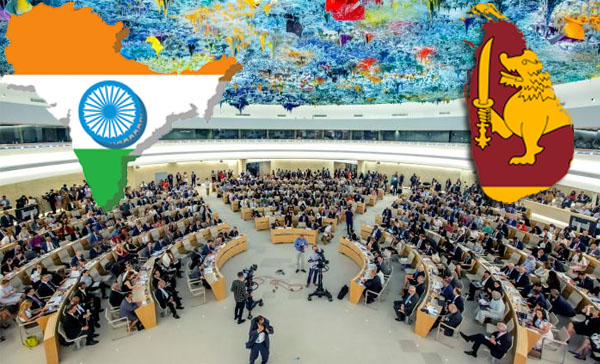
Sri Lanka seeks India’s help to save face at crucial UNHRC vote – WION

Sri Lanka is in a fix. This weekend, Sri Lankan President Gotabaya Rajapaksa spoke to Indian Prime Minister Narendra Modi, just over a week before a crucial vote at United Nations Human Rights Council.

Colombo wants to avoid a defeat at the world stage and escape the global scrutiny on the issue of human rights. Especially after its recent decision to ban the burqa and close 1,000 Islamic schools.

A press release from New Delhi says, among other things, the two leaders discussed cooperation in multilateral fora. The statement says a lot more, but mention of ‘multilateral forums’ stands out. Next week, Sri Lanka faces a crucial vote at the UNHRC in Geneva and it’s bad news for Colombo.

The resolution is backed by Canada and the UK. It says the human rights situation in Sri Lanka is deteriorating. The civilian government’s functions are being militarised. Institutions like the judiciary are losing their independence, minorities are being marginalised and the civil society and media are facing intimidation.

When this scathing resolution comes up for a vote in Geneva, Sri Lanka reportedly wants India’s support. Will they get it?

India can choose to abstain but Colombo cannot be sure.

A statement made by an Indian diplomat in Geneva signals that India is unhappy with Sri Lanka. Last month, India said the UN Human Rights chief’s report on Sri Lanka raises ”important concerns”. There was also a mention of “respecting the rights of the Tamil community”.

India was referring to the report from January released by the UN Human Rights chief. The report says Sri Lanka is on an alarming path towards the recurrence of grave human rights violations. It adds that, since taking power, the Sri Lankan president has appointed at least 28 serving or former military and intelligence personnel. They have been given key administrative posts in the government. This includes senior military officials, who were implicated by the United Nations in alleged war crimes and crimes against humanity during the civil war that ended nearly 12 years ago.

New Delhi has more reasons to be upset with Colombo. Sri Lanka recently refused to honour a port agreement with Japan and India and went ahead with an energy project with a Chinese company close to the coast of Tamil Nadu. The Rajapaksa government says it has offered an alternative terminal project with the vote at the UNHRC looming.

The Sri Lankan foreign secretary said last month in an interview, “India cannot abandon us”. The Modi government has a choice to listen to that appeal and abstain from the vote but if it chooses to send a message, Sri Lanka might struggle to defend itself at the UN.

Posted in Uncategorized

Turkish terror group’s links to Easter Sunday carnage under investigation

President Gotabaya Rajapaksa, in terms of the Presidential Commission of Inquiry (PCoI) report on the 2019 Easter Sunday carnage has issued specific instructions to the Police/Criminal Investigation Department (CID) and other relevant authorities to expedite investigations, SLPP Chairman Prof. G.L. Peiris said yesterday.

Addressing the regular SLPP briefing at the Waters Edge, Prof. Peiris, who is also the Education Minister said that President Gotabaya Rajapaksa intervened on behalf of the government whereas the Attorney General proceeded with own actions.

Prof. Peiris said that the entire set of PCoI volumes was handed over to the AG recently to enable him to proceed. The SLPP Chairman emphasized the pivotal importance in taking tangible measures to secure the arrest of those suspects living abroad.

Prof. Peiris said that as part of the overall investigations law enforcement authorities had been instructed to probe the alleged FETO (Fetullah Terrorist Organization aka the Gulen movement) links to the Easter Sunday carnage. Prof. Peiris explained that the proscribed Turkish organization had provided funding to some persons named in the report and a thorough inquiry was called into foreign involvement in the attacks.

The PCoI revealed that the previous government had turned a blind eye to information provided by Turkey regarding FETO activities in Sri Lanka. FETO leader Gulen has secured US protection.

Reiterating the government’s commitment to bring Easter Sunday perpetrators before court, Prof Peiris revealed the arrest of 99 persons in connection with the attacks and also efforts to secure the extradition of 35 others. However, the Minister didn’t explain the status of the extradition process pertaining to those 35 living overseas.

Prof Peiris said that the 36 separate investigations into various aspects of the Easter Sunday attacks had been completed. The police were directed to hand over the relevant files without delay, the minister said.

Appreciating the services rendered by the PCoI, Minister Peiris said that specific information hitherto not available were now with authorities and quite useful in the investigations.

The former top law academic also discussed the Wanathavilluwa detection made by the CID in the run up to the Easter Sunday attacks. Making reference to three wounded persons in custody, Prof. Peiris said that the police were directed to conduct thorough investigations into their alleged involvement.

Archbishop of Colombo Malclom Cardinal Ranjith moved Court of Appeal regarding the recovery of swords and daggers in the wake of the Easter Sunday attacks. The SLPP spokesperson said that President Gotabaya Rajapaksa issued specific instructions as regards the detection of some 1,440 swords and daggers. The academic explained the judiciary addressing the Easter Sunday issues while President Gotabaya Rajapaksa issued directives to expedite the overall process.

Prof. Peiris censured the previous government over allowing extremist elements a free hand. The minister pointed out how foreign preachers were allowed in without any scrutiny. Dismissing Opposition and civil society criticism of planned prohibition of burqa, Prof Peiris emphasized the right and the responsibility on the part of the government to take tangible measures to neutralize the threat.

Blaming the previous government for issuing visa on arrival to dangerous foreign elements, Prof Peiris explained how irresponsible and foolish conduct of the previous administration created an environment for extremists to destroy Buddha statues at Mawanella. If the government of the day properly inquired into Mawanella incidents, including the attempt to kill the then Minister Kabir Hashim’s coordinating secretary, the Easter Sunday carnage could have been averted, the minister said.

Minister Peiris also questioned the rationale in one-time Western Province Governor Azath Salley’s declaration that his community wouldn’t care about laws of the country and would abide by Muslims law. The minister said that no one would be able to take such a stand under any circumstances.

Commenting on PCoI recommendations and findings, Prof. Peiris said that 54 persons living abroad were categorized as wanted in connection with the Easter Sunday investigations. Of them, 50 had been already extradited and were under investigations whereas actions were being taken to bring down the remaining four in foreign custody.

Minister Peiris said that the government would soon request Australia to inquire into some persons who had been arrested in Qatar in Oct 2020 and subsequently sent Down Under.

According to Minister Peiris, the PCoI called for the establishment of a separate unit at the AG’s Department to handle terrorism cases, bring in amendments or introduce new laws in parliament as regards foreign funding matters, extradition and money laundering et al, setting up a National Intelligence Organization by way of a parliamentary act, restrictions on setting up of private organizations by lawmakers and special court to hear Easter Sunday case and any other case related to it.

Ex-Governor Azath Salley arrested by CID

Former governor Azath Salley was arrested by the Criminal Investigation Department on Tuesday (16) on the advice of the Attorney General.

Attorney General Dappula De Livera had advised the DIG of Criminal Investigations Department that Azath Salley had committed offenses under the Penal Code, Prevention of Terrorism Act, and the International Covenant on Civil and Political Rights over a statement made on the 10th of March.

This was confirmed to News 1st by State Counsel Nishara Jayaratne who serves as the Coordinating Officer to the Attorney General.

Police Spokesperson DIG Ajith Rohana said Azath Salley was arrested in terms of the provisions of the PTA in connection with the 2019 April 21st Attacks and he will be detained and interrogated under the provisions of the Prevention of Terrorism Act.