Sri Lanka reports seven COVID-19 deaths Sunday, toll rises to 471

Sri Lanka confirmed five deaths on Sunday due to COVID -19 raising the death toll from the viral disease to 471, according to health authorities.

The Director General of Health Services confirmed the following deaths caused by COVID -19 virus infection and accordingly the total number of deaths due to COVID -19 infection in Sri Lanka is 471 by now.

01. The deceased is a 56 year old male resident from Kurunegala. He died on 26.02.2021 while undergoing treatments at Teaching Hospital Kurunegala. The Cause of death is mentioned as acute diabetes and acute gastritis with Covid-19 infection.

02. The deceased is a 55 year old male resident from Anuradhapura. He died on 26.02.2021 at his residence. The cause of death is mentioned as acute respiratory complication caused by Covid 19 infection.

03. The deceased is a 59 year old male resident from Gampaha. He was diagnosed as infected with Covid 19 and transferred from District Hospital Dompe to IDH Hospital where he died on 28.02.2021. The cause of death is mentioned as blood poisoning, Covid pneumonia and liver infection.

04. The deceased is a 79 year old female resident from Rukgahawila. She was diagnosed as infected with Covid 19 and transferred from Base Hospital Wathupitiwala to Base Hospital Homagama where she died on 27.02.2021. The cause of death is mentioned as Covid pneumonia and blood poisoning shock.

05. The deceased is a 51 year old male resident from Demalagama. He was diagnosed as infected with Covid 19 virus and transferred Colombo North Teaching Hospital to Base Hospital Homagama where he died on 28.02.2021. The cause of death is mentioned as Covid pneumonia and a cancer.

06. The deceased is an 81 year old male resident from Colombo 05. He was diagnosed as infected with Covid 19 virus and transferred from General Hospital Colombo to Base Hospital Homagama where he died on 28.02.2021. The cause of death is mentioned as Covid pneumonia with Covid 19 infection.

07. The deceased is an 87 year old male resident from Pannipitiya. He was diagnosed as infected with Covid 19 and transferred from Colombo South Teaching Hospital to National Hospital Kandy where he died on 27.02.2021. The cause of death is mentioned as Covid pneumonia,

Posted in Uncategorized

India-made Indian Air Force planes in Lankan Air Forces’ 70 th. Anniversary celebrations

he Sri Lanka Air Force is celebrating its 70th Anniversary on 02 Mar 2021 and also the presentation of President’s Colours to No. 5 Fighter Squadron and No. 6 Helicopter Squadron of the Sri Lanka Air Force.

To commemorate this historical event, a Fly Past and an Aerobatic Display by teams of the Indian air and naval forces are also being organized for the first time in Sri Lanka at a grand scale at Galle Face from 03-05 Mar 2021.

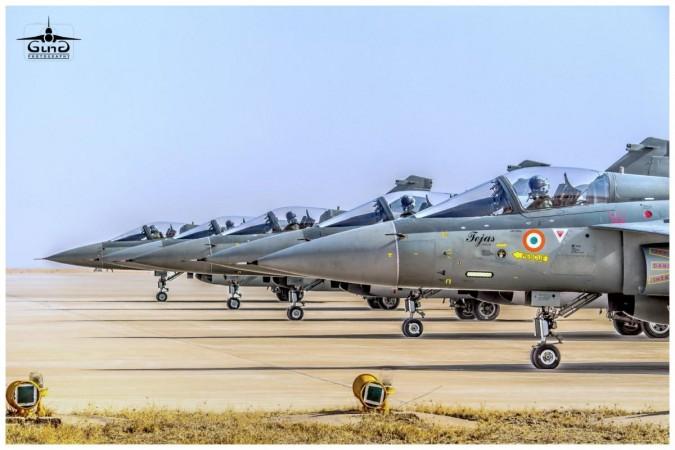
As a gesture of solidarity, and in keeping with years of close interaction and camaraderie between the two countries and their militaries, the Indian Air Force (IAF) and Indian Navy will participate in the event with an Aerobatic Display by Sarang (Advance Light Helicopter), Surya Kiran (Hawks), Tejas Fighter Aircraft, Tejas Trainer and the Dornier Maritime Patrol Aircraft, the Indian High Commission said on Sunday.

A total of 23 aircraft of the Indian Air Force and Indian Navy would participate in the grand event.

The detachment for the Aerobatic Display arrived in Colombo on 27 Feb 2021, with the support of C17 Globe Master and C130J transport aircrafts of Indian Air Force.

The deployment of such wide variety and huge inventory of aircrafts and helicopters of the IAF and Indian Navy is testimony to the strong bonds of friendship and close interoperability between the corresponding forces of India and Sri Lanka.

All the Indian aircraft on display are Made in India and as such represent the indigenous technical prowess of Indian research and development sector & reliability of products of India’s Defence Industry. Tejas Trainer, on display for the first time, would also afford the opportunity of independent sorties for the Sri Lanka Air Force Pilots, accompanied with the Indian Pilots whilst adhering to relevant strict health guidelines.

Indian air force transport aircraft

During the deployment, the officers from Sri Lanka Air Force and Sri Lanka Navy will also have firsthand experience onboard the Indian Navy’s Maritime Patrol Aircraft Dornier. Sri Lanka Air Force pilots and Sri Lanka Navy observers will fly along with the Indian crew. This is in continuation of the half yearly Dornier training sorties being facilitated for SLAF/ SLN.

Sri Lanka is ‘Priority One’ partner for Indian in the sphere of Defence. The assurance of India’s fullest cooperation in the field of Defence and security was recently reiterated to Sri Lanka’s leadership by the National Security Adviser of India Mr Ajit Doval during his visit to Sri Lanka for the trilateral Maritime Security Cooperation talks among India, Sri Lanka and Maldives hosted by Sri Lanka in November 2020. The participation of IAF and Indian Navy aircraft and personnel in the 70th Anniversary celebration of SLAF is indicative of the growing cooperation, camaraderie and friendship between the Armed Forces of the two nations.

Posted in Uncategorized

In Geneva, India Signals to Sri Lanka that Support in UNHRC Is Not a Given

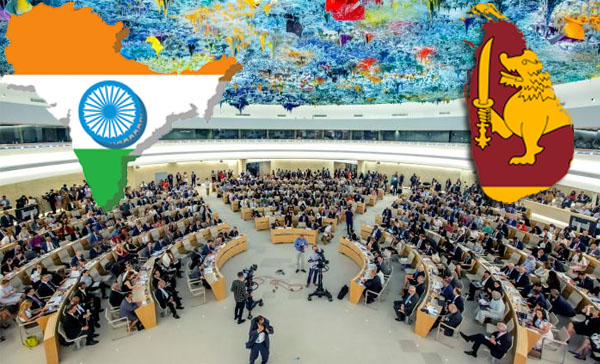
New Delhi: Indicating that New Delhi has kept all options open, India has signalled to Sri Lanka that its support for the country at the United Nations Human Rights Council should not be taken for granted.

In Geneva, the UN Human Rights Council is holding its 46th regular session, which will decide the fate of a critical resolution against Sri Lanka. The first draft (also confusingly termed the ‘zero draft’) was circulated earlier this week. The vote will take place in the last couple of days of the session, ending on March 22.

The draft resolution, submitted by the Core Group comprising the United Kingdom, Germany, Malawi, Montenegro and North Macedonia, responds to a scathing report released by the Office of the UN High Commissioner for Human Rights on January 27.

This report was formally presented to the UN Human Rights Council on Wednesday, February 24, followed by member states offering their views over two days.

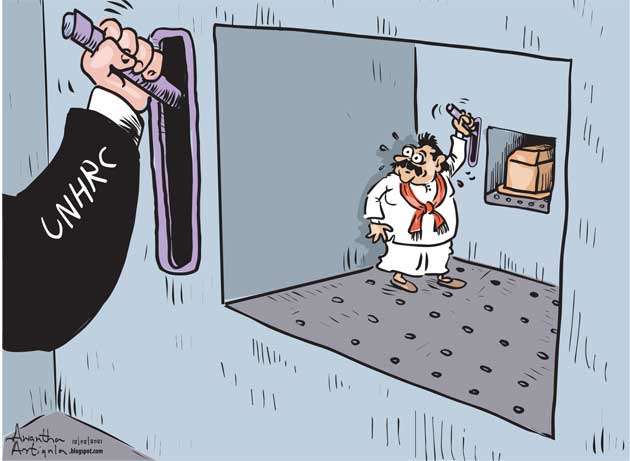
At the meeting, Sri Lankan foreign minister Dinesh Gunawardena had called on the member states to reject the draft resolution.

Indian permanent representative to the UN in Geneva, Indra Mani Pandey, significantly noted that the UN report had raised “important concerns” and aspirations of Tamils contributions to Sri Lanka’s unity and integrity.

“The assessment of the High Commissioner regarding developments nearly 12 years from the end of the conflict raises important concerns,” said Pandey at the virtual meeting.

The UN report warns that lack of accountability of Sri Lanka’s previous violations has not only increased the risk of repetition of those crimes but also highlighted “worrying trends over the past year, such as deepening impunity, increasing militarisation of governmental functions, ethno-nationalist rhetoric, and intimidation of civil society”.

India also noted that the Sri Lankan government “has articulated its position on these issues as well”. “In evaluation of both of these, we should be guided by a commitment to find a lasting and effective solution for this issue,” added Pandey.

He then noted that India’s position rested on two pillars. The first was support for Sri Lanka’s unity and territorial integrity. Commitment to Sri Lankan Tamils’ aspirations for “equality, justice, peace and dignity” was the second pillar, said the Indian diplomat.

India declared that these were “not either-or choices”.

“We believe that respecting the rights of the Tamil community, including through meaningful devolution, contributes directly to the unity and integrity of Sri Lanka. Therefore, we advocate that delivering on the legitimate aspirations of the Tamil community is in the best interests of Sri Lanka,” said Pandey.

Calling on Sri Lanka to address Tamil aspirations, India said that Colombo should take “necessary steps” through the “process of reconciliation and full implementation of the 13th Amendment to the Constitution of Sri Lanka”.

After the UK-led core group circulated the draft resolution, the first informal consultations with other countries will be held in Geneva on March 1.

It is learnt that India has not yet taken a call on its vote in the resolution, as it awaits the resolution’s final shape. India’s statement on Thursday, however, was an indication that “all options were open”.

A clear signal was conveyed through the statement that it was not providing full support to Colombo, said sources.

Speaking to The Wire, the spokesperson of the UK-based group of Sri Lanka Tamils diaspora, Global Tamil Forum, said that he was “very happy” with India’s statement.

He even compared it with India’s explanation of the vote when New Delhi voted against Sri Lanka in a critical resolution approved by Human Rights Council in 2013.

“Although the context of this statement made by the current HC Indra Mani Panday yesterday was different from what the then HC Dilip Sinha did in 2013 when India voted in favour, the basic contents remain pretty similar. The importance is that this is possibly the strongest statement by Indian at an interactive dialogue on Sri Lanka, since the end of armed conflict in Sri Lanka,” said GTF spokesperson Suren Surendiran.

He also added that it was significant that India had underlined that resolving the aspiration of Tamils of Sri Lanka for equality, justice, peace and dignity” was fundamental to finding a permanent solution. “Note, it includes Justice!” he said.

Similarly, K. Gurupuran, attorney-at-law and formerly Senior Lecturer in Law at the University of Jaffna, felt that India’s statement “referring to meeting Tamil aspirations and Sri Lanka’s sovereignty as mutually reinforcing is interesting”.

“One wonders whether India also meant the contrary, that not meeting Tamil aspirations will weaken Sri Lanka’s sovereignty,” he asked.

The draft resolution recognises a “persistent lack of accountability through domestic mechanisms” and urged the UN human rights commission to devise strategies to support “relevant judicial proceedings in Member States with competent jurisdiction”.

India has a national position against resolutions targeting a single country in multilateral bodies. But, with regard to Sri Lanka, India’s record has been varied, as domestic political factors often dictated its voting decision.

In the last 12 years, there have been seven resolutions on Sri Lanka at the UN human rights council.

India’s vote at resolutions on Sri Lanka at UNHRC

After the end of the civil war, Sri Lanka had submitted a resolution (S-11/1) at a special session in May 2009. It was passed by 29 votes in favour, with the western bloc voting against it. India had voted in favour.

Three years later, the United States brought a substantial resolution (19/2) against Sri Lanka, which was approved. For the first time, India joined 23 other states voting in favour of the resolution.

Next year in March 2013, India again voted in favour of another resolution (22/1) on Sri Lanka, drafted by the United States. Just ahead of the vote, Tamil Nadu’s main opposition party, Dravida Munnetra Kazhagam (DMK), had withdrawn from the Centre’s ruling alliance on the grounds that India was not doing enough to alleviate the alleged human rights violations of Sri Lankan Tamils.

In March 2014, the Human Rights Council, through resolution 25/1, authorised an investigation of war crimes committed in Sri Lanka between February 2002 and 2011. India abstained during the vote on grounds that the resolution ignored steps taken by Sri Lanka at reconciliation.

After the Mahinda Rajapaksa government’s defeat in 2015, Sri Lanka joined resolution 30/1 drafted by the Core Group that called for a domestic accountability mechanism, with the prospect of international judges. The Council adopted the resolution without a vote.

The next two resolutions in 2017 (34/1) and 2019 (40/1) were also approved by consensus.

However, there will undoubtedly be a vote on a resolution on Sri Lanka before the end of the current HRC session. This will be the first such resolution after the Rajapaksa brothers came back to power in November 2019.

During the discussion on February 24 and 25, the divide between the member states were on expected lines – China, Pakistan defending Sri Lanka, while the UK and the EU were calling on Colombo to show more accountability. However, there was no statement on behalf of the bloc of Islamic countries.

Unlike in previous years, India’s remarks did not list any steps that Sri Lanka had taken on the reconciliation process.

GTF”s Surendiran was optimistic that India might not just abstain at the voting. “I would read the last paragraph as an indication that India could potentially vote in favour of the resolution”.

Sri Lanka has made it clear that it wants a vote from India rejecting the resolution. Sri Lankan foreign secretary Jayanth Colombage told The Hindu that he hoped for “proactive” and “constructive” commitment, rather than abstention, which is “neither here, nor there.”

Gurupuran felt that the Indian statement was indicative of its “frustration” with the Sri Lankan government. “The frustration is fuelled by the cancelling of the agreement signed during the former regime handing the development of the Eastern Container Terminal of the Colombo Port to India and other developments which reflect a realignment of Sri Lanka’s foreign policy priorities favouring China,” he said.

The Jaffna-based lawyer also felt that India’s vote would be decided with an eye on elections in Tamil Nadu. India’s Election Commission announced on Friday, February 26, that the southern state of Tamil Nadu will have a single-phase polling on April 6.

“AIADMK has already started reminding voters that UPA (i.e. Congress and DMK) had failed to stop the Sri Lankan government from committing atrocities during the last phase of the war in 2009. While the Sri Lankan Tamil issue has never been a deciding factor in Tamil Nadu elections, the AIADMK and BJP will be desperate to use anything that comes their way,” he said.

Prime Minister Narendra Modi had raised the issue of Sri Lanka during his last visit to the southern state on February 14, 2021.

Source:The Wire

SL informs OIC about its decision to allow burial of Muslim Covid-19 victims – OIC countries support is crucial at the UNHRC

Sri Lanka was to inform in writing to the General Secretariat of the Organisation of Islamic Cooperation (OIC) yesterday about its decision to allow the burial of Muslim Covid-19 victims, Daily Mirror learns.

The Government decided to reverse its mandatory cremation policy based on recommendations by the technical committee of experts appointed to look into it. The gazette notification giving effect to this decision was issued on Wednesday night under the signature of Health Minister Pavithra Wanniarachchi.

The burial of bodies of Covid-19 victims are allowed in accordance with directions by the Director General of Health Services (DGHS) at a cemetery or a place authorised by him.

The OIC raised concerns about the mandatory cremation policy earlier. OIC Secretary General Yousef Al Othaimeen said at the meeting of the High level Segment of the UNHRC that the OIC is concerned with the situation of Muslims in Sri Lanka since they are denied the right to be buried.

He called for the Government to allow Muslims to bury their people dying of Covid-19 in accordance with their religious rites.there are 13 OIC countries which are members of the UNHRC this time. Their support is crucial for Sri Lanka to defeat the resolution to be moved by the core group of countries led by the United Kingdom.the zero draft of the resolution also refers to the burial issue. Some of the Islamic countries such as Bangladesh, Pakistan and Iran have already spoken in favour of Sri Lanka at the UNHRC. Sri Lanka has already rejected the resolution.

Sri Lanka: High Ranking Officials Involved in War Crimes – Wenzel Michalski Director, Germany

Germany should push for strong resolution in Human Rights Council

Foreign Minister Heiko Maas is rightly proud of Germany’s commitment to global human rights. The Foreign Office says that human rights are at the core of German foreign policy. The federal government now has the chance to fill this postulate with life when Sri Lanka is on the agenda at the next session of the United Nations Human Rights Council.

Germany is a member of the “core group” of states at the Human Rights Council that presented a 2015 landmark resolution on Sri Lanka. It offered victims of abuses during the country’s long civil war the hope of truth, justice, and reconciliation, and upheld the principle of accountability for the most serious international crimes. Victims’ groups welcomed Germany’s role, and there were significant improvements in human rights, particularly freedom of expression. The shadow of fear and repression was lifted.

But the human rights situation in Sri Lanka has worsened to such an extent since Gotabaya Rajakpaksa became president in 2019 that Germany should place itself at the head of the states taking action to protect human rights there. Rajapaksa, his brother and associates are implicated in many of the war crimes and abuses committed when they were previously in government between 2005-2015.

It is therefore astonishing – and disconcerting — that there are worrying indications Germany is not playing its crucial role for justice and might even consider weakening the resolution in the interests of compromise. The recent tweetfrom the German ambassador in Colombo, in which he expressed hope that the Human Rights Council resolution will be passed by consensus with Sri Lanka’s endorsement, was particularly irritating.

That such a resolution could have a bite, and that senior government officials who are implicated in war crimes would condemn and hold themselves accountable for their own actions, would be an illusion, to say the least.

In a hard hitting new report, the UN high commissioner for human rights, Michelle Bachelet, says that “Sri Lanka remains in a state of denial about the past”, and the “current trajectory sets the scene for the recurrence of the policies and practices that gave rise to grave human rights violations.” She warns of growing militarization, and calls for member states to take urgent action.

Tens of thousands of civilians were killed in the civil war between government forces and the separatist Liberation Tigers of Tamil Eelam (LTTE), which ended in 2009. Both sides committed numerous war crimes, particularly in the final months of the war. At that time Mahinda Rajapaksa was president and his brother Gotabaya was the defence secretary. They oversaw armed forces that repeatedly and indiscriminately shelled civilians and summarily executed captured LTTE fighters. Critics of the government and suspected LTTE supporters were murdered, tortured, and “disappeared” in white vans, abuses that continued even after the fighting ended. When the Rajapaksas finally lost power in the 2015 presidential election, there seemed to be an opening for change.

Now fear has returned. In November 2019 Gotabaya Rajapaksa was elected president and he appointed his brother Mahinda as prime minister.

Soon after, the government renounced its commitments under the 2015 Human Rights Council resolution. He has appointed to his administration numerous individuals who were implicated in war crimes, including his chief of defense staff, Gen. Shavendra Silva, who is banned from traveling to the United States for “his involvement, through command responsibility, in gross violations of human rights, namely extrajudicial killings.”

In March, Rajapaksa pardoned former army sergeant Sunil Ratnayake, who killed eight Tamil civilians including children, one of very few security force members ever held accountable for violations. In September, Sri Lanka told the Human Rights Council that allegations against senior military officers are “unacceptable” and without “substantive evidence.”

In October, the government amended the Constitution to remove the remaining constraints on political interference in Sri Lanka’s courts. The few officials who have sought to pursue justice are now at risk.

Instead of reconciliation and justice, the government is promoting extremist Sinhala Buddhist nationalism that discriminates against minority groups. Tamil communities in the north and east fear increasing instances of arbitrary and abusive treatment by security forces. Meanwhile, there has been an alarming rise in discrimination against Muslims, such as a ban on the burial of people who died with Covid-19, which denies the religious rights of Muslims and has no medical justification.

At its next session, beginning later this month, the Human Rights Council will face a crucial decision: whether to allow the Sri Lankan government to continue down this path, or take action to protect vulnerable Sri Lankans and uphold international law.

For the past decade the council has sought to work with Sri Lanka to promote reconciliation and accountability, but Sri Lanka has rejected those efforts. Now other measures are required. Steps to advance international accountability for international crimes will reduce the growing risk of future horrors. Germany should ensure that the warning signs are heeded, by working with partners on the core group to adopt a strong and effective resolution before the situation deteriorates further. It is crucial for Germany to step up once more to take the meaningful action that is urgently required.

Posted in Uncategorized

Sri Lanka sailing in troubled waters – Wion

Pressure politics, if used wisely, can be a powerful tool. The best example is Sri Lanka. In April last year, the country introduced a new rule. All coronavirus victims would be cremated and no burials.

There was no scientific explanation for it. A few Buddhist monks claimed burying the victims would contaminate the ground and the government agreed. A classic case of appeasement politics but they probably didn’t anticipate the backlash. Rights groups and community leaders were appalled.

The organisation of Islamic cooperation expressed concern that Muslims on the island were being denied dignity in death. In December, 19 bodies were forcefully cremated, including that of a baby.

The world community turned on Colombo. The Lankan Government had backed itself into a corner. Now, the order has been revoked and there are no more forced cremations. Muslims are free to bury their relatives. The pressure campaign worked but there’s more to this story than activism.

Sri Lanka is facing a stern test at the UN Human Rights Council. There’s a new resolution doing the rounds that slams the country for its dismal reconciliation efforts.

It’s been 12 years since the civil war ended. The Tamils are still awaiting justice. Far from punishing the war criminals, the government is rewarding them. Several former generals accused of war crimes have been appointed to government jobs to avoid being indicted at the UN, Sri Lanka needs help. It needs to gather enough votes to kill the resolution by reversing the burial ban, Colombo is wooing Islamic nations. Many of whom have a seat at the council. So while the global outcry definitely helped political convenience too played a part.

Here’s another reason why we can’t call this a change of heart. The Lankan government is considering a controversial law, one that would ban burqas in public. The cabinet has been consulted and with their permission, this proposal could make its way to the Parliament.

It’s one step forward and two steps back. Sri Lanka’s justification for the burqa ban is a time-tested one.

This has become the norm under President Gotabaya Rajapaksa. Stigmatisation has been used as a state policy while the government drums up anti-minority sentiments.

It seems oblivious to real issues like China’s expanding debt trap and Sri Lanka’s finances are in a shambles. The treasury is almost drained. Sri Lanka’s solution is to borrow from China. The country is seeking $ 2.2 billion dollars from Chinese banks.

Borrowing from China is never a good idea as it invariably ends with Beijing taking over strategic assets. Sri Lanka should know this because it’s happened to them already.

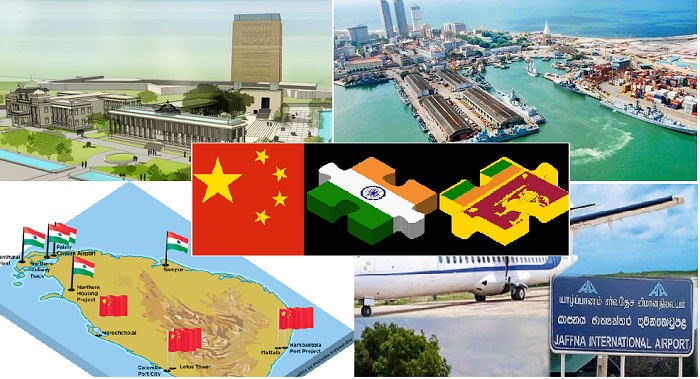
The Hambantota fiasco where China holds a 99-year lease on the strategic port and if reports are true, there is an option to extend it by another 99 years. Colombo wants to renegotiate the deal but Beijing isn’t interested. Every time, there is a new project in Sri Lanka. Chinese companies are first-off the block as they secure contracts with exorbitant bids and set up strategic Chinese presence all over the island. This is exactly what’s happening in northern Sri Lanka. Three islands are being developed as clean energy hubs. The contracts have been given to Chinese firms but here’s where it gets interesting.

These islands are just 48 kilometres from mainland India. How convenient that China’s strategic and economic interests converge so seamlessly! Right now, Sri Lanka finds itself in a vulnerable spot. It needs diplomatic backing at the United Nations and financial support to keep the country running.

It’s not an ideal situation for any sovereign nation but then again, that’s where misplaced priorities get you.

Posted in Uncategorized

Why the reversal of Sri Lanka’s Covid-19 burial ban holds geopolitical significance

Sri Lanka on Friday reversed its controversial order banning the burial of bodies of those who died of Covid-19.

The reversal has come in the same week when Pakistan Prime Minister Imran Khan visited Sri Lanka on a two-day visit on 23-24 February, and after months of international pressure and protests by Muslim groups.

The order, which had been in force since April last year, had been criticised for targeting minorities.

The controversial burial ban

Soon after the coronavirus pandemic spread across continents, the Sri Lankan government in April passed an order that banned burials of Covid-19 victims in the country. It came amid concerns by influential Buddhist monks that burials could contaminate groundwater– claims that several experts dismissed as baseless. Under the order, burials were strictly not allowed, and all bodies were to be cremated.

The move was criticised by rights groups, including the United Nations Human Rights Council (UNHRC), as well as by Muslim, Catholic and some Buddhist community leaders. The World Health Organisation (WHO) also said that there was no risk of contamination, and recommended both the burial and cremation of those who died of Covid-19.

The Islamic world was appalled, as Muslims traditionally bury their dead facing the holy city of Mecca. Community leaders in Sri Lanka accused the move as being an extension of the state’s persecution of Muslims. The 57-member Organisation of Islamic Cooperation also expressed concern.

The order was criticised globally in December when Sri Lankan authorities ordered the forced cremation of at least 19 Muslim victims of the virus, including a baby, after families did not claim their bodies from the morgue, an AFP news report said.

The Muslim community, whose numbers are about 11 per cent of Sri Lanka’s 2.1 crore population, has had tense relations with the state and with the Sinhala Buddhist majority for much of the last decade, with riots shattering the calm once every few years. But the tensions have spiked after the synchronised Easter suicide bombings by a group of men and women who proclaimed themselves to be members of ISIS.

Pakistan PM Imran Khan’s visit

When Sri Lankan Prime Minister Mahinda Rajapaksa indicated in Parliament recently that Muslim burials would be allowed, Imran Khan tweeted his praise. “We welcome Sri Lankan PM Mahinda Rajapaksa’s assurance given in Sri Lankan Parliament today allowing Muslims to bury those who died from COVID-19,” Khan tweeted, although the government was yet to act upon that assurance.

International Human Rights watchdog Amnesty International had also urged Khan to take up the issue with Sri Lanka during his visit to the country this week. Sri Lankan media reports speculated that this could have been one reason why the visiting Prime Minister’s planned Parliament address was cancelled by the hosts.

On Tuesday, the first day of Khan’s visit, Muslim protesters in capital Colombo carried a mock jenazah, or coffin, criticising the government’s burial policy. A day later, Muslim parliamentarians asked Khan to take up the issue with Sri Lanka’s leaders. On Friday, the Sri Lankan government lifted the ban.

According to the BBC, Sri Lanka now expects Pakistan’s support at the 46th regular session of the UNHRC, which is currently taking place virtually and lasts until March 23. Five years ago, Sri Lanka had committed at the UNHRC to conduct a time-bound investigation of war crimes that took place during the military campaign against the Liberation Tigers of Tamil Eelam (LTTE). Sri Lanka now faces another resolution at the current session.

The draft resolution is based on a damning report by the Office of the High Commissioner for Human Rights (UN Human Rights) that was submitted to the Human Rights Council on January 27.

Source:The Indian Express

EU concerned over intensified surveillance in Sri Lanka

The European Union (EU) is concerned over intensified surveillance in Sri Lanka.

The EU also said that it attaches great importance to the assessment by the UN High Commissioner for Human Rights Michelle Bachelet on possible avenues for advancing accountability and to end impunity in Sri Lanka.

In a statement made at the UN Human Rights Council during the ongoing 46th Session, the EU reaffirmed its commitment to Human Rights, reconciliation and accountability in Sri Lanka.

“We regret that the Government of Sri Lanka no longer supports the comprehensive HRC process after 2015. We are concerned about a set back of the important gains made in recent years,” the EU said.

The EU noted that it is key to preserve achievements like the Office of Missing Persons and the Office for Reparation, safeguard their independence and provide them with sufficient resources.

“We share the concern of the High Commissioner about the warning signs of a deteriorating human rights situation, mainly the erosion of democratic checks and balances and the rise of exclusionary rhetoric. We are particularly worried about intensified surveillance and intimidation of CSOs, human rights defenders and victims,” the EU said.

The EU said it was also concerned about the ongoing impunity for past gross human rights violations and serious violations of international humanitarian law, including torture and ill-treatment.

“Though the HRC has for many years stressed the need for accountability, domestic processes did not deliver. We therefore attach great importance to the High Commissioner’s assessments on possible avenues for advancing accountability and end impunity,” the EU said.

The EU hopes that the Government of Sri Lanka will remain committed to promoting reconciliation and accountability in the country.

Sri Lanka: End of forced cremations for coronavirus victims restores dignity for Muslim burials

Responding to the Sri Lankan authorities’ decision to end the practice of forced cremations for victims of COVID-19, Yamini Mishra, Amnesty International’s South Asia Director, said:

“This is a long overdue but welcome move by the Sri Lankan authorities. Forced cremations, which should never have been carried out in the first place, have denied the Muslim community the right to say goodbye to loved ones in accordance with their religious beliefs.

“The ending of this cruel practice, which has not been scientifically proven to prevent the spread of the virus, allows Sri Lanka’s Muslim minority a dignified burial in line with Islamic burial rites.

“The decision is a testament to the tireless struggle of families of victims, activists, and members of the Muslim community.”

Amnesty had previously called for religious minorities in Sri Lanka to have their final rites respected in the midst of the COVID-19 pandemic.

Posted in Uncategorized

UN to act on report despite objections

The Office of the UN High Commissioner for Human Rights (OHCHR) is to implement recommendations in a report tabled at the UN Human Rights Council, despite objections raised by Sri Lanka.

The United Nations Deputy High Commissioner for Human Rights Nada Al-nashif said that the report by the High Commissioner for Human Rights Michelle Bachelet, which was formally tabled at the Council on Wednesday, was amended to include changes after talks with the Sri Lankan Government.

She said that the final document was delayed by three weeks after Sri Lanka had raised some concerns and proposed changes.

Nada Al-nashif said that several models will be looked at to implement some of the mechanisms proposed in the report on Sri Lanka.

She said that existing systems like those implemented on Syria, Myanmar or North Korea or an entirely new configuration can be considered when dealing with Sri Lanka.

“This is entirely up to the Council to see what is the best fit for the discharge of specific accountability functions,” she said.

Nada Al-nashif said that the OHCHR has huge amount of material and evidence collected over the years.

The Deputy High Commissioner said the OHCHR enjoys a very open and frank relationship with the Government of Sri Lanka (GOSL).

She also expressed hope that Sri Lanka will continue to engage with the UN Human Rights Council.

Foreign Minister Dinesh Gunawardena told the Council on Wednesday that Sri Lanka rejects the recommendations made by Bachelet in her report.

He said the call for asset freezes, travel bans, references to the ICC and the exercise of universal jurisdiction by individual States points to a distinct and imminent danger which the international community as a whole need to take note of.