Can’t let unqualified people act on PCoI recommendations

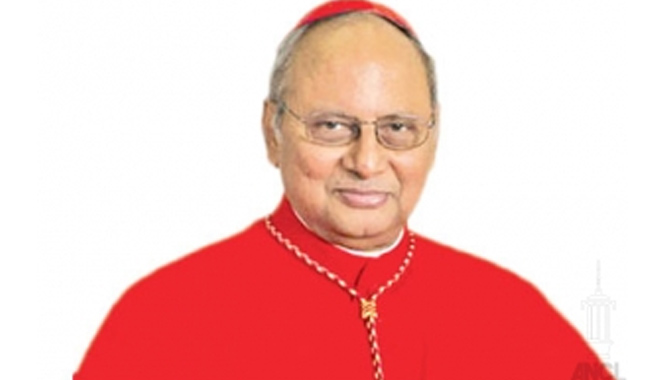
Those who don’t have even basic education shouldn’t be allowed to decide and act on the recommendations by the Presidential Commission of inquiries (PCoI) on Easter Sunday attacks, Archbishop of Colombo, His Eminence Cardinal Malcolm Ranjith said today.

Cardinal Ranjith who joined a protest staged by the Catholics of Katuwapitiya together with the clergy, said it is the Attorney General who should decide and act on the recommendations made by the Presidential commission.

“Those who have not got through the ordinary level exam cannot be allowed to make such decisions” the Cardinal said.

“The government should publish the PCoI report soon. We are suspicious as to why the government is reluctant to do so,” he added.

Cardinal Ranjith reiterated that he would have to seek the assistance of international institutions, if action is not taken against those who are responsible for the attack.

Posted in Uncategorized

A group of eminent persons calls for action to end the recurring cycle of violence in Sri Lanka

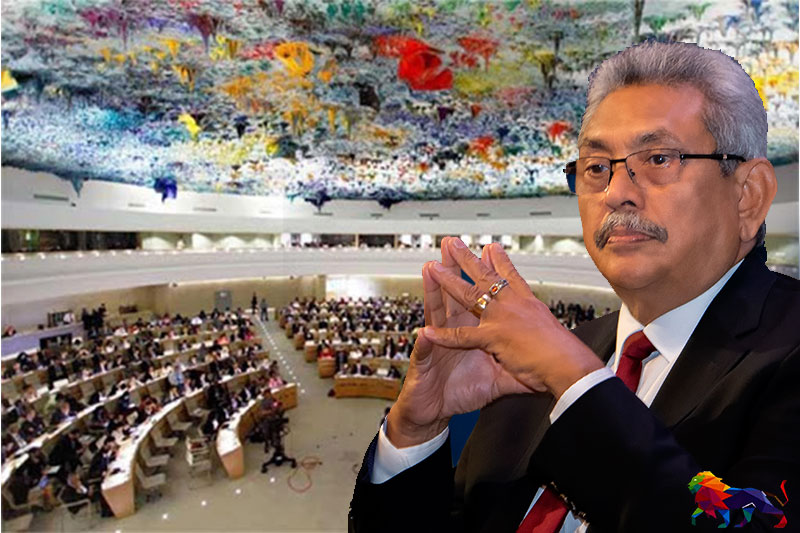
A group of eminent persons has called for immediate international action against the Gotabhaya Rajapaksa regime in Sri Lanka. ‘Sri Lanka has made its justice institutions unavailable to its own victims’, more than 20 human rights experts and world leaders have jointly stated in a statement.

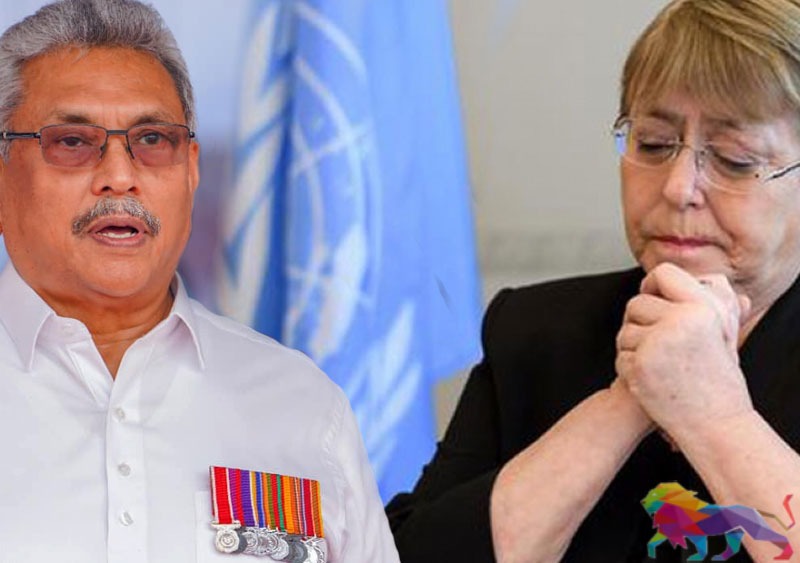
They called on Member States of the UN to heed the call by the UN High Commissioner for Human Rights, Michelle Bachelet in her recent report to work with victims and their representatives to pursue justice through universal or extraterritorial jurisdiction. ‘Existing international avenues for accountability such as the International Criminal Court should be considered, in the face of Sri Lanka’s opposition to ending impunity. We also support the High Commissioner’s suggestion of imposing targeted sanctions against credibly alleged perpetrators of international crimes and strengthened monitoring and reporting by a dedicated Special Rapporteur.’

The 46th regular session of the Human Rights Council will be held from 22 February to 23 March 2021 and a new resolution on Sri Lanka is to be tabled. The elders’ group’s statement comes as UK is currently working on a new proposal in consultation with the member countries.

Sri Lanka is becoming increasingly isolated from the international community as international human rights organizations, foreign diplomats , and retired UN dignitaries issue harsh statements on the current situation in Sri Lanka.

Among the signatories to the open letter are the Chair of the ‘Elders’ Mary Robinson, the former president of Ireland and Juan Manuel Santos, the Nobel Peace Prize winning former president of Colombia. The ‘Elders’ is a grouping of eminent leaders, established by former South African President Nelson Mandela. The current Elders comprise former US President Jimmy Carter, South African freedom fighter Arch Bishop Desmond Tutu and Former UN Secretary General Banki-Moon among several others.

All the former UN Human Rights High Commissioners since the Human Rights Council was established in 2006 have signed the open letter. Louise Arbour, Navanethem Pillay and Zeid Ra’ad Al Hussein have endorsed the report and recommendations of the incumbent High Commissioner. Prominent among the other signatories are Jan Eliasson, Deputy Secretary General of the United Nations (2012-2016), Charles Petrie, former United Nations Assistant Secretary General, Head, Secretary General’s Internal Review Panel on United Nation’s Actions in Sri Lanka (2012) and Marzuki Darusman, Secretary General’s Panel of Experts on Accountability in Sri Lanka (2010-2011).

Posted in Uncategorized

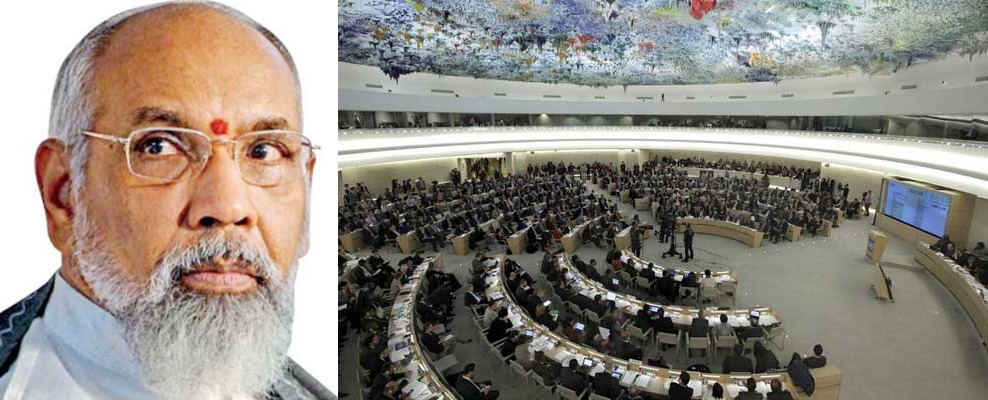
Leaders of the Core group should hang their heads in shame: Wigneswaran lambasts UNHRC draft resolution

Parliamentarian and former Northern Provincial Council Chief Minister Justice CV Wigneswaran has said that the Zero Draft circulated within Geneva Missions on Sri Lanka is very disappointing and insufficient and that it sends the opposite message to the Sri Lankan government.

“Leaders of the Core group countries UK, Canada, Germany, Montenegro and North Macedonia should hang their heads in shame”. Wigneswaran said in a statement issued today.

Criticizing “this does not auger well for the future of the UN”, he expressed his frustration that “it is a sad day for all those who care about human rights and basic decency”.

Here is the complete answer to the question released by Wigneswaran:

Question: Have you seen the Zero Draft circulated within Geneva Missions on Sri Lanka and what are your observations?

Response: Yes. I was sent a copy by email. The draft is disappointing and insufficient. It is even more so for its serious departures from the recommendations of High Commissioner Bachelet and the OHCHR. It falls far below even the standard set by Resolution 30/1, which failed due to its inadequacies. This sends the government of Sri Lanka the opposite message to that which the Tamil people deserve and the international community expects. Justice delayed is justice denied. Already six years have passed. Sri Lanka has hardly complied with what it undertook.

It is both sad and shocking to see the Core-Group on Sri Lanka for UN Human Rights Council have come up with this disappointing draft which protects mass killers, murderers and rapists. Sri Lankan leaders will be holding parties with great relief. This also gives green light to governments around the world that they can commit War Crimes, Crimes Against Humanity and Genocide without any fear. It is a sad day for all those who care about human rights and basic decency. Leaders of the Core group countries UK, Canada, Germany, Montenegro and North Macedonia should hang their heads in shame. This does not auger well for the future of the UN.

Meanwhile the P2P marches and demonstrations, both from the Tamil North and East and around the world, demonstrate renewed resolve and a growing unity among the Tamil people to agitate for a dignified political solution. To engage the Tamil victim/survivor community, whose interests and safety the resolution is apparently designed to protect, the longstanding demands of that community, must form the basis of any new resolution. I am not sure if any of our so called Tamil Leaders had a hand in playing down the seriousness of the issues involved to the Member Countries. The legitimacy of the UNHRC process regarding Sri Lanka hangs in the balance!

SL writes to 47 nations seeking support at UNHRC

The government has decided to write to all 47 member nations including India, Pakistan and China, requesting their support for Sri Lanka at the upcoming United Nations Human Rights Council session.

Speaking to NewsRadio, Foreign Minister Dinesh Gunawardena said official letters have already been sent to several countries including India.

The Foreign Minister said explanations have also been sent along with the letters over the allegations that are expected to be tabled against Sri Lanka at the upcoming Human Rights Council session.

Meanwhile, President Gotabaya Rajapaksa has personally requested several Heads of States to support Sri Lanka at the upcoming session.

Foreign Minister Dinesh Gunawardena noted due to the current coronavirus situation, they are unable to visit countries to meet Heads of States and senior government leaders and are instead meeting with ambassadors and diplomats stationed in Sri Lanka.

Tamils – and Justice – Can’t Wait: The Need for Decisive UN Action on Sri Lanka

(Editor’s Note: This is the ninth article of a series on the likely spotlight to be placed on allegations of war crimes and other abuses in Sri Lanka during the next session of the United Nations Human Rights Council, beginning Feb. 22. The series includes voices from former U.N. officials, international NGOs, human rights litigators, and researchers. The full list will appear, as installments are published, at the end of the first article, Spotlight on Sri Lanka as UN Human Rights Council Prepares Next Session.)

Though Sri Lanka’s armed conflict ended in 2009, the entrenched impunity for the deaths of tens of thousands of Tamil civilians in what the United Nations called a “bloodbath” has kept the conflict on the Human Rights Council’s agenda ever since. The prospects for accountability reflect inevitably on the credibility of the Council and the U.N. itself, after a 2012 internal review of the U.N.’s actions – or, more accurately, inaction – in the final stages of the war and the aftermath found “systemic failure … to the detriment of hundreds of thousands of civilians and in contradiction with the principles and responsibilities of the UN.”

Another damning report just last month from the Office of the High Commissioner for Human Rights (OHCHR) will be debated at the upcoming session. The report tracks Sri Lanka’s current, deteriorating human rights situation, identifying developments that “risk the recurrence of… the grave violations of the past.”

Yet a draft resolution released today by the Human Rights Council’s Core Group on Sri Lanka contains serious shortcomings (more on that below). Impunity for Sri Lanka’s past crimes has very real consequences, even beyond the preservation of international rule of law. Its consequences are lived daily by Tamil survivors, who continue to live in a heavily militarized security state – Mullaitivu, the most war-ravaged district, for example, has one soldier for every two civilians. Tamil families of the disappeared also suffer the unimaginable, endless trauma of not knowing the fates of their children, spouses, or siblings.

Tamil Demands for Justice

Tens of thousands of Tamils began a march through the streets of Sri Lanka on Feb. 3, demanding justice and accountability for Sri Lanka’s war crimes, crimes against humanity, and genocide. They were joined by Muslim communities, many of whom were also protesting Sri Lanka’s forced cremations policy that infringes on their religious practices, even though health experts say it isn’t necessary to prevent the spread of the coronavirus. Protesters marched for five days, from Pottuvil in the East to Polikandi in the North (over 250 miles), covering all eight districts of the traditional Tamil homeland. From the state, they were met with surveillance, harassment, and threats, as well as court orders attempting to quash the peaceful march.

These protests were unprecedented in two key ways: in size and scale in the post-war period, and in the solidarity it reflected across Tamil and Muslim communities. However, protests for justice and accountability for mass atrocities against Tamils are nothing new on the island.

Tamil families of the disappeared have protested for years — most incredibly with continuous protests since 2017 — demanding answers about the fates of their loved ones, many of whom were taken by the Sri Lankan government in 2009, just before the war ended, and have not been seen since.

Such resistance and resilience is ingrained in Tamil history in post-independence Sri Lanka. Indeed, my own father protested in the 1970s against Sri Lanka’s structural discrimination, which privileged Sinhalese people in education and employment over Tamil and Muslim peoples. Unsurprisingly, Tamils’ earlier protests were also met with state violence.

Despite this, Tamils continue to mobilize against virulent Sinhalese Buddhist nationalism that permeates every aspect of governance in Sri Lanka — from making Sinhala the only official language in 1956 to the unabashed Sinhalese nationalism of the current president, Gotabaya Rajapaksa, who was sworn in November 2019 at the Buddhist temple where an ancient Sinhalese king defeated a Tamil king and brought the island under one (Sinhalese) rule.

This reflects the fundamental nature of the Sri Lankan state: it is designed around — and to advance — Sinhalese Buddhist values and ideology, at the expense of non-Sinhalese communities, particularly Tamils. President Rajapaksa himself — a reported U.S. citizen — is implicated in war crimes, including the atrocities of 2009, when he served as secretary of defense. This was a key factor in the landslide victory Sinhalese voters awarded him in 2019 — he is nicknamed “The Terminator” and widely regarded as a hero of Sinhalese Buddhist nationalism, precisely because of his role in the brutal end to Sri Lanka’s armed conflict.

Despite decades of Tamil protests and unequivocal calls for international action to end impunity in Sri Lanka, the Human Rights Council has continued to heed Sri Lanka’s requests for “time and space” to address allegations of international crimes with a homegrown solution.

Domestic Institutions Will Fail – They are Designed To

Unfortunately, Sri Lanka’s homegrown solution is impunity. Decades of “make believe” domestic commissions, as Amnesty International called them, ostensibly tasked with investigating the state’s crimes against Tamils, have only bought time to evade justice. The farce of Sri Lanka’s domestic commissions and judicial processes is well-known and well-documented.

The OHCHR, for instance, has tracked the investigation and prosecution of emblematic cases such as the execution of five Tamil students by the Special Task Force (STF) in Trincomalee in 2006. The STF officers who murdered these students, just steps away from their parents, were acquitted in 2019 due to what the magistrate called a “lack of evidence.” So well-known was the STF’s role in the killings that Basil Rajapaksa, the brother and adviser of then-president Mahinda and current president Gotabaya, said, “We know the STF did it, but the bullet and gun evidence shows that they did not. They must have separate guns when they want to kill someone.”

A few years earlier, in 2016, an all-Sinhalese jury acquitted six Sri Lankan soldiers who reportedly shouted “Demala kattiya maranuwa” (“Death to the Tamils”) when they went on a rampage and massacred 26 Tamil civilians in Kumarapuram in 1996. An in-depth report on the case and its handling in Sri Lanka’s judicial system, produced by People for Equality and Relief in Lanka (PEARL), a Tamil advocacy organization where I serve as executive director, analyzed systemic barriers that contributed to the acquittals. These barriers included improper investigation and evidentiary issues, such as the police claiming that all physical evidence of the killings was lost, though the statements of two soldiers who died before the case went to trial were miraculously preserved. The case was also transferred from an ethnically-mixed region to a predominantly Sinhalese region — reportedly requested and granted to avoid trial by a Tamil judge.

Further, the long delays and mishandling of the case reflected the fundamental lack of political will to address state atrocities against Tamils. Lastly, victims, witnesses, and others involved in the case faced decades-long intimidation and harassment by security forces. Indeed, last week was the 25th anniversary of the killings, and villagers in Kumarapuram who attempted to commemorate this date were again met with intimidation and harassment by Sri Lankan soldiers. Given that the case spanned over two decades and over three different regimes, it exemplifies Sri Lanka’s systemic and structural barriers to justice, regardless of who is in power. PEARL’s report concluded that Sri Lanka is completely unwilling to prosecute atrocity crimes perpetrated against Tamils.

The exception that proves this rule is Staff Sergeant Sunil Ratnayake, the only one of five defendants to be convicted in 2015 for the murder of eight Tamil civilians, including four children in Mirusuvil in April 2000. He was granted a Presidential pardon in March 2020. The OHCHR report condemned this move, noting that pardons must comply with “international obligations under human rights and international humanitarian law, and should exclude those responsible for international crimes or gross violations of human rights.”

Indeed, the latest OHCHR report notes: “Despite investigations over the years by domestic Commissions of Inquiry and the police, and the arrest of some suspects and trials at bar, not a single emblematic case has been brought to a successful conclusion or conviction.”

In an almost-Orwellian move, Sri Lanka appointed yet another Commission of Inquiry in January to investigate the findings of prior commissions. The U.N. High Commissioner for Human Rights was understandably skeptical of this development, stating she was “not convinced the appointment of yet another Commission of Inquiry will advance this agenda”.

Decisive International Action Needed Now to Prevent Recurrence

The recent protests shine a spotlight not only on the need for justice and accountability for Sri Lanka’s past mass atrocities, but also on current human rights violations related to militarization, land grabs, attacks against journalists and human rights defenders, obstruction of memorialization, and arbitrary and indefinite detention and torture of political prisoners. Both the mass atrocities and ongoing abuses disproportionately affect Tamil-speaking peoples. Of note, a key demand of Muslim communities in the most recent protests was to end the forced cremation of COVID-19 victims.

In response to escalating international pressure, including from the United States, the prime minister on Feb. 11 told parliament that authorities would allow burials, but the government quickly backed away from that statement the following day. Nevertheless, this issue and the government’s clearly-ambivalent response demonstrates that international pressure, deployed strategically, plays a significant role in Sri Lanka’s calculations of which human rights violations it can get away with — and which require redress.

Meanwhile, as the January OHCHR report noted, the institutionalized impunity for Sri Lanka’s mass atrocities puts Sri Lanka on an “alarming path towards recurrence of grave human rights violations.” This is even more apparent after Sri Lanka’s public security minister said the government is preparing to file cases against the tens of thousands of protesters who participated in the march earlier this month. Concerningly, yet unsurprisingly to Tamils, he also reportedly said Tamil political leaders who participated should have been attacked or tear gassed.

The U.N. Human Rights Council’s Core Group on Sri Lanka today released a draft resolution, which mandates the OHCHR to “consolidate, analyse and preserve information and evidence” of violations of international law in Sri Lanka. Such a limited mandate – and tasking the OHCHR with it – falls far short of the independent investigative mechanism established by the U.N. General Assembly for Syria. The investigative mechanism established for Syria is explicitly mandated with preparing files to facilitate independent criminal proceedings. This more robust mandate better ensures that the investigation is focused on ensuring accountability. The OHCHR has already collected and analyzed a significant amount of evidence during its work on the OHCHR Investigation on Sri Lanka – there is no need to duplicate that process again now. Any investigative mechanism created through the upcoming Human Rights Council session should also be explicitly mandated with investigating genocide, as Tamils have long demanded.

The draft resolution also fails to acknowledge the need for an international accountability process on Sri Lanka – though it does task OHCHR with developing “possible strategies for future accountability processes.” The resolution should urge member states to support proceedings against Sri Lanka in appropriate international fora, such as at the International Criminal Court through a U.N. Security Council referral or an Article 15 preliminary examination by the Office of the Prosecutor; through bilateral or multilateral action at the International Court of Justice; or by establishing an international ad hoc tribunal for Sri Lanka.

The draft resolution asks the OHCHR to report back on options for advancing accountability at the 51st session of the Human Rights Council, which will be held in September 2022. Eighteen months is far too long to wait, especially given the deteriorating human rights situation in Sri Lanka. The OHCHR should provide this report back at its September session this year.

Member states also should be encouraged to work with Tamil civil society to leverage opportunities for justice in these international accountability processes and in member state’s own national courts under principles of universal jurisdiction. Indeed, engaging and accounting for the perspectives of Tamils in Sri Lanka, where safe, and in the diaspora is absolutely essential to delivering meaningful, victim-centric accountability.

These options should be pursued simultaneously, not in the alternative. The credibility of the Human Rights Council — and indeed the entire U.N. system, given its “grave failure” in the past, as the 2012 inquiry concluded — depends on achieving accountability for Sri Lanka’s atrocities.

Impunity in Sri Lanka also begets impunity elsewhere — including in Sri Lanka’s comrade-at-arms in militant Buddhism, Myanmar. Myanmar and Sri Lanka both seek to establish a “pure” Buddhist state (i.e., one without the Rohingya and Tamils) — militant monks in both countries reportedly have a signed pact.

Decisive international interventions on Sri Lanka’s mass atrocities are necessary at the Human Rights Council and elsewhere, to protect and promote international human rights and humanitarian law. As importantly, Tamil lives depend on it, too.

Source:justsecurity.org

Posted in Uncategorized

Sri Lanka Seeks Indian Support Ahead Of Key UNHRC Sessions

Sri Lanka has officially sought India’s support ahead of next week’s UNHRC sessions on the island nation’s rights and accountability record, a top foreign ministry bureaucrat told a state-run channel on Friday.

Speaking to Hitu TV, Foreign Ministry Permanent Secretary Jayanath Colombage said India was the first country that Sri Lanka had turned to for support.

During the UN Human Rights Council (UNHRC) session in Geneva next week, Sri Lanka’s record in human rights and related accountability will be probed.

“We sent a special communique to the Honourable Indian Prime Minister seeking his help… ,” Colombage said.

The senior foreign ministry official’s comments came after the UNHRC Core Group on Sri Lanka, in a joint statement earlier in the day, said a resolution would be moved next week to focus on Sri Lanka’s rights accountability.

The Sri Lanka Core Group consists of the UK, Germany, Canada, Malawi, North Macedonia and Montenegro.

“The Core Group restates the ongoing importance of addressing Sri Lanka in the Human rights Council. Informed by the report the core group intends to present a resolution to promote reconciliation accountability and human rights in Sri Lanka,” the statement read.

Colombage expressed confidence that India would support Sri Lanka for the sake of regional solidarity.

“This is unwanted interference by powerful countries, still talking about the war time in Sri Lanka when our country is now a peaceful democratic nation,” Colombage said.

Colombage said he was expecting support from Russia and China as well.

The previous Sri Lankan government, headed by the Sri Lanka Freedom Party, had co-sponsored the resolution in 2013, calling for accountability in alleged war crimes committed by the government forces and the Liberation Tigers of Tamil Eelam during the final phase of the near-three-decade-long civil war in May 2009.

The current government, led by Sri Lanka Podujana Peramuna, has officially withdrawn from the resolution.

(Disclaimer: This story has not been edited by www.republicworld.com and is auto-generated from a syndicated feed.)

Posted in Uncategorized

Tens of Thousands Who Walked For Justice For Tamils Urge UK Foreign Secretary to Refer Sri lanka to Int’l Criminal Court

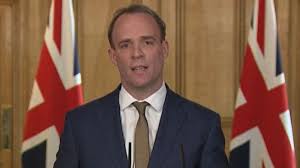
In a letter to UK’s Foreign Secretary Dominic Raab, the organizers of North-East Civil Society Forum, who led tens of thousands in the recent Walk for Justice for Tamils, urged him to take steps to refer Sri Lanka to International Criminal Court (ICC).

“We from the North – East Civil Society Forum who organized the recent Walk for Justice for Tamils which was joined by tens of thousands of Tamils despite attacks, Harassment and intimidation by police and special task force, appeal to you to include in your Sri Lanka Resolution at the UN Human Rights Council, to Refer Sri Lanka to the International Criminal Court (ICC) for War Crimes, Crimes Against Humanity and Genocide committed against the Tamil people by the Sri Lankan State” said the letter.

“As you are aware, Michelle Bachelet, the United Nation’s High Commissioner for Human Rights (OHCHR) in her Report dated 12th January 2021 urged UN Human Rights Council Member States to take steps toward the referral of the situation in Sri Lanka to the International Criminal Court (ICC).”

“We specifically urge you this request after losing any hope of getting justice for war crimes, crimes against humanity, and Genocide committed against Tamil people by the Sri Lankan State”.

THE LETTER HIGHLIGHTED THE FOLLOWING INTERNATIONAL CRIMES COMMITTED AGAINST TAMIL PEOPLE BY THE SRI LANKAN STATE:

1) According to the November 2012 Report of the UN Secretary-General’s Internal Review Panel on UN Action in Sri Lanka, over seventy thousand (70,000) Tamils were killed during the final six months of the war that ended in May 2009.

2) Several were killed when Sri Lankan forces repeatedly bombed and shelled an area designated by the Government as No Fire Zones (Safe zones). Even hospitals and food distribution centers were bombed. Several also died of starvation and bled to death due to lack of medical treatment.

3) International Truth and Justice Project (ITJP) in February 2017 handed over details to UN of Sri Lankan Military run “Rape Camps”, where Tamil women are being held as “sex slaves.”

4) According to UK Foreign and Commonwealth Office report on April 2013, there are over 90,000 Tamil war widows in Sri Lanka.

5) Thousands of Tamils disappeared including babies and children. UN Working Group on Enforced Disappearances stated that the second-highest number of enforced disappearance cases in the world is from Sri Lanka.

HISTORY OF FALSE PROMISES BY THE SRI LANKAN GOVERNMENT:

We also would like to bring to your attention that successive Sri Lankan Governments have failed to implement any of the UNHRC Resolutions, including the ones they voluntarily co-sponsored.

The previous Government not only failed to take any meaningful steps to implement the Resolution that it co-sponsored, on the contrary the President, Prime Minister and senior members of the Government have repeatedly and categorically stated that they will not implement the UNHRC Resolution.

The current new Government went one step further and officially withdrew from the co-sponsorship of the Resolutions 30/1, 34/1 and 40/1 and walked away from the UNHRC accountability process.

Furthermore, as a snub to UNHRC, only soldier who was ever punished and sentenced to death for killing civilians including children were pardoned by the current President.

Also, several senior military officials who were credibly accused of committing war crimes have been given promotions and treated as “war heroes.” One officer who was named in UN reports as a suspected war criminal was promoted as a four-star General.

THIS LETTER WAS SIGNED BY:

1) Thavaththiru Velan Swamigal (Organiser)
2) S.Sivayoganathan (Organiser)
3) Rev.Fr. Kandiah Jegathas (Organiser)
North-East Civil Society Forum
NCSF
+94 77 906 0474
northeastcivilsocietyforum@gmail.com

Is Sri Lanka falling to Chinese debt trap? -Wion

Sri Lanka has decided to re-acquire 99 oil tanks, which were leased out to Indian Oil for 30 years in 2003. The Indian High Commission in Sri Lanka says the reports are incorrect but there’s a pattern.

Recently, Sri Lanka halted a port project involving India and Japan. US withdrew its aid offer because Colombo wasn’t using the funds. While Chinese investments are being steadily approved.

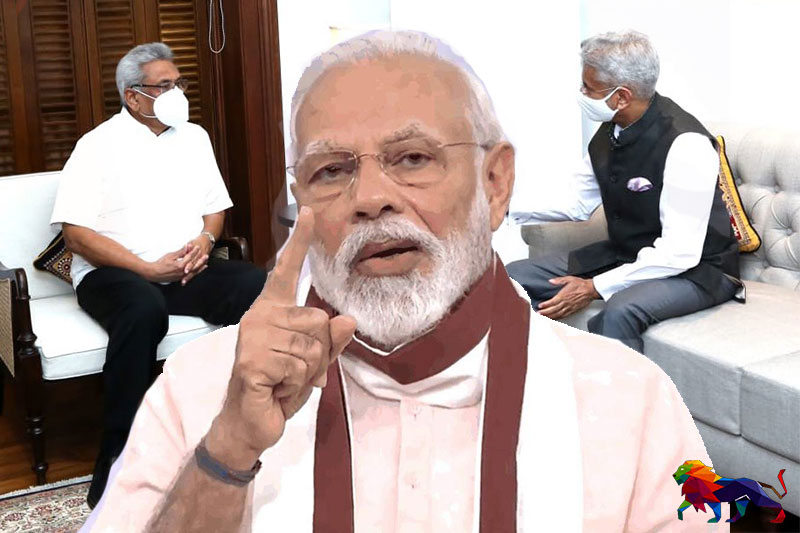
Reports say India was supposed to upgrade and commission the world war era tanks. But talks remained stalled for more than a decade. Then in 2015, discussions revived when Prime Minister Modi visited Sri Lanka. By 2017, the two sides had a roadmap but the project never really took off.

The Indian High Commission issued a statement on Thursday, claiming that there is no truth in these reports. Indian diplomats say both sides will explore ways to jointly develop and operate the facility.

Last month, Colombo had scrapped a trilateral agreement with India and Japan. This was for the development of the eastern container terminal at the Colombo Port.

Apparently, the project had received strong opposition from trade unions across Sri Lanka. This is despite the fact that Colombo was supposed to hold the majority stake.

It’s not just Indian projects that Sri Lanka is scrapping. Even the United States suffered a setback this year. It withdrew $480 million in infrastructure aid to Colombo because Sri Lanka said it wasn’t keen on using it.

The only country that seems to be getting a red-carpet welcome in Colombo is China. Within weeks of rejecting US aid, the Sri Lankan cabinet cleared a Chinese energy project. It is quite close to Indian borders.

A Chinese company has won the contract to set up hybrid wind and solar energy projects off the northern Jaffna peninsula on three islands, which are barely 50 kilometers away from the Tamil Nadu coast.

Reports say India had lodged a strong protest with Sri Lanka. It happened days before the Colombo Port deal was cancelled.

The Chinese seems to be deepening their influence in Sri Lanka under the Rajapaksa Government.

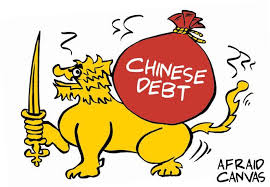
Before the energy deal, they secured several major projects. It includes a $13 billion city on Sri Lanka’s sea front, a new Chinese factory in Hambantota, a $300 million tire plan for the Shandong Haohua tire, a $one billion road from Colombo to Kandy and $300 million coal-based power plant in Norochcholai. Colombo has given green-light to all these projects and pushed itself further under Chinese debt.

India hasn’t given up though. Reports say India has offered a grant of $12 million to displace the Chinese company for the energy project off the Jaffna peninsula. A group of Tamil parties have also voiced their opposition to Chinese involvement.

Sri Lanka’s northern Tamils sceptical ahead of ‘another Geneva session’ – The Hindu

In the nearly 12 years since her husband surrendered to the Sri Lankan Army, E. Sumathra has seen many sessions of the UN Human Rights Council in Geneva come and go. Half a dozen resolutions on Sri Lanka have been adopted since, but she is no closer to finding out where he is.

Ahead of the 46th session of the Council beginning next week, the Sri Lankan government, Tamil polity, civil society, and diaspora groups are frantically lobbying member countries, hoping for different outcomes. But Ms. Sumathra is not waiting with bated breath. “We are used like trophies every time, and nothing that comes out of these sessions alters our reality,” she says.

She was seated at a concrete shelter by the sea, shining in a lavish blue-green shade under the afternoon sun, last weekend. Along with her are groups of women, from both the Tamil and Muslim community residing in the district, all gathered for a campaign on caring better for the environment.

“Families of forcibly disappeared persons have been agitating since the war ended [in 2009], but some of our politicians and diaspora organisations have split our struggle. Today, we are all in different groups with no prospect for truth or justice,” says the 36-year-old.

So far, none of the past UN resolutions or governmental mechanisms has delivered a convincing outcome for many like her. Although the UN human rights chief, in her latest Sri Lanka report, called for an International Criminal Court probe into alleged war crimes committed by different warring actors, as well as sanctions, Ms. Sumathra is unable to feel hopeful. The new, likely contested, resolution in the coming session is “just another” one, in her view.

Sri Lanka’s long civil war played out across the Tamil-majority north and east, but Mullaitivu bore the brunt of its gruesome end. According to UN estimates, some 40,000 civilians were trapped and killed in the final battle between the armed forces and the separatist LTTE, at the Nandikadal lagoon here in May 2009.

The Rajapaksa administration in power then and now — except from 2015 to 2019 — has repeatedly denied the number of civilian casualties, deeming it an “exaggeration”. The numbers may be contested, but survivors’ suffering is hard to miss, following death and destruction all around. Districts in the former war zone are among the poorest in the country. Neither appropriate development, nor adequate jobs have come their way. Mullaitivu district remains militarised, with even traffic checkpoints run by armed military men.

Domestic mechanism

Months after Gotabaya Rajapaksa was elected President in late 2019, Sri Lanka said it would withdraw from the existing UN resolution on post-war accountability and reconciliation. It has instead proposed a domestic mechanism that Tamils have even less faith in, compared to international ones.

“If you look at the Tamil people here, we did not get a solution through the armed struggle that lasted 30 years. We have not got a solution in the decade after that, either. Meanwhile, our people are struggling in poverty, as livelihoods are destroyed and the youth are jobless,” says Ganeswaran Selvamani, a counsellor who has worked with war-affected families. In addition to coping with the trauma of the past, they face “enormous hardships” today, she says, referring to numerous conflicts over land — some of it still held by the military — destruction of old Hindu temples based on “archaeological” claims, growing concerns of narcotics penetrating villages, and a rise in teen marriages and pregnancies.

“The worst of all the problems are in Mullaitivu, maybe that is why even the coronavirus fears us, we have that level of immunity,” Ms. Selvamani says, barely hiding her sarcasm. Women, at the forefront of protests to reclaim land, demanding answers about their missing loved ones, or against predatory microfinance-induced debt, have an especially hard time, with nothing but their resilience to count on. “I don’t know if anyone speaks of women’s problems in Geneva. The continuous assault on our livelihoods is affecting women disproportionately,” says Prasanna Sujatha, a pre-school teacher, speaking of families in which women are sole earners.

The going has never been easy, but the heightened fear after the Rajapaksas’ return to power is stark. Many prefer to speak anonymously, fearing “questioning” by the CID or army. They see a pattern in the scrapping of the Tamil national anthem, the destruction of a war memorial at the University of Jaffna, and the denial of burial rights to Covid-19 victims Muslims, within about a year.

It is in this climate that thousands of Tamil-speaking people recently took out a mass rally from Pothuvil in the eastern Ampara district to Polihandy in Jaffna (titled ‘P2P’), demanding the rights of Tamil and Muslim minorities. Some in Mullaittivu are agnostic about the outcome of the march but see it as a necessary assertion of the minorities’ rights. “When our basic right to bury our dead is refused, I feel even more for Tamils who have suffered so much during and after the war. The rally has made me hopeful about the two minority communities coming together,” says M. Jenusa, an activist.

The two Tamil-speaking, but distinct, ethnic groups joining forces in the rally was significant, given their strained relationship, especially after the LTTE’s overnight expulsion of northern Muslims in the early 1990s. Tamils and Muslims are not yet on the same page on matters pertaining to resettlement or provincial administration, but see value in a joint strategy.

There is “no other way to take on majoritarianism,” says a history teacher, asking not to be named. “Whether it was the rally or this Geneva session, it is about retaining what little we have. We don’t expect major gains,” he says. Few people in the district seem dewy-eyed about the Human Rights Council delivering big outcomes or lasting solutions. But with the space for negotiation shrinking further within the country, they see no other option. Considering the geopolitical interests that dominate such forums, they realise that any positive outcome is more incidental than intentional.

“Whether Geneva delivers or not, people are certain that this government will not. That is why we pursue international mechanisms despite all the limitations,” says Shanthi Sriskantharajah, a former MP from the district.

“Already, so many mothers are unable to tell their children where their missing fathers are. Now, with this government trying to systematically erase our histories, and markers of our identity, we may not be able to tell our grandchildren that our ancestors lived here,” she worries. “All we are saying is let us live in our lands, peacefully and with dignity. Is that too much to ask for?”

Posted in Uncategorized

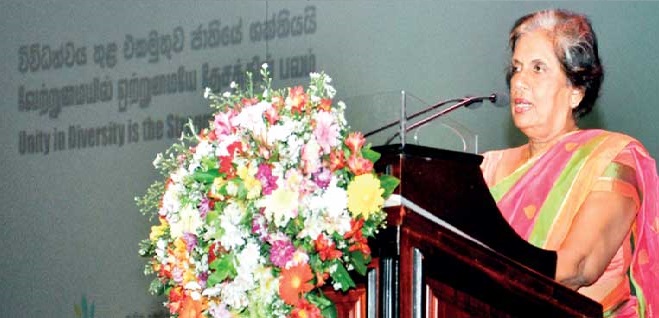
Sri Lanka has become Chinese colony, says ex-President Kumaratunga – AaniNews

Sri Lanka has become a colony of China and trade unionists and others, who vehemently opposed a recent deal with India, but have not said a word in protest against Beijing making inroads in the island nation, said former Sri Lankan President Chandrika Bandaranaike Kumaratunga.

Speaking to the privately-owned NewsFirst network on Thursday, the former president said the parties that opposed the Indian deal are keeping mum about every national asset being allegedly handed over to China, reported Economy Next.

Her remarks come days after Sri Lanka cancelled oil storage and port deals with India. The Sri Lankan government said this week that it will cancel a lease on oil storage tanks in the eastern port district of Trincomalee that was awarded to India’s biggest refiner state-controlled Indian Oil Corporation (IOC).

Earlier this month, Colombo cancelled a trilateral deal with India and Japan to develop the eastern container terminal at Colombo Port.

The proposed deal drew heavy opposition from trade unions, left-leaning political parties, members of the clergy and sections of the government itself.

“If you look at their bank accounts – those in trade unions and others – how they become millionaires overnight – you have to wonder,” said Kumaratunga.

“We didn’t bow down to anybody. Those who are in charge must have an understanding of foreign policy and foreign relations,” she said, noting that certain individuals in the present government used to openly mock the very idea of foreign relations. “Today, for all intents and purposes, we are a colony of China,” she added.

Kumaratunga further said that in order for Sri Lanka to make any progress, the people must change their outlook and look for leaders of a different caliber.

“Each administration keeps undermining the one that preceded it. This is no way forward for this country. The people must change first. To change the people, the education system must be overhauled. We also need political leaders of a different caliber: young, educated, not given to corruption – people who do not treat politics as a business opportunity,” she said.

There is a growing Chinese influence in Sri Lanka. Beijing took over Hambantota port in the south of the country in 2016 after Sri Lanka failed to keep up with debt repayments, and is involved in the construction and operation of a neighboring port terminal in Colombo, as well as other critical infrastructure.