Carefully reviewing UN report on human rights situation in Sri Lanka: US

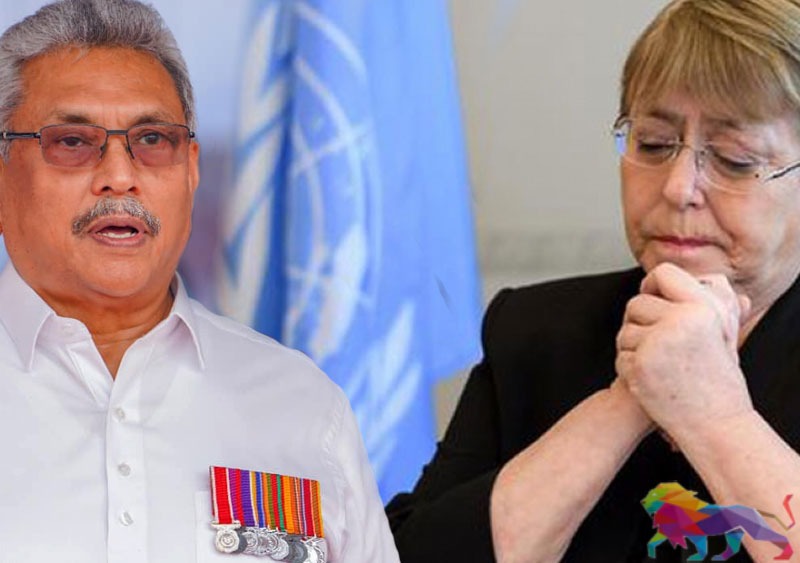
The US has said that it is carefully reviewing a report from the UN on Sri Lanka’s human rights situation which highlights worrying trends such as deepening impunity, increasing militarisation of governmental functions, ethno-nationalist rhetoric and intimidation of the civil society over the past year.

The report urges enhanced monitoring and strong preventive action by the international community, warning that “Sri Lanka’s current trajectory sets the scene for the recurrence of the policies and practices that gave rise to grave human rights violations.”

“We are carefully reviewing the significant report from” the UN Human Rights Council “on human rights in Sri Lanka,” US State Department Spokesman Ned Price said.

“Sri Lanka’s future depends on respecting rights today and taking meaningful steps to deal with the past,” Price said in a tweet, a day after the UN report warned that the failure of Sri Lanka to address past violations has significantly heightened the risk of human rights violations being repeated.

Nearly 12 years after the armed conflict in Sri Lanka ended, impunity for grave human rights violations and abuses by all sides is more entrenched than ever, with the current government proactively obstructing investigations and trials, and reversing the limited progress that had been previously made, according to the report, mandated by the UN Human Rights Council resolution.

The report highlights worrying trends over the past year, such as deepening impunity, increasing militarisation of governmental functions, ethno-nationalist rhetoric and intimidation of the civil society.

Among the early warning signals, the report highlights are: the accelerating militarisation of civilian governmental functions, reversal of important constitutional safeguards, political obstruction of accountability, exclusionary rhetoric, intimidation of civil society and the use of anti-terrorism laws.

According to the UN figures, up to 40,000 civilians were killed by the security forces during then Mahinda Rajapaksa”s regime that brought an end to nearly three decades of civil war in Sri Lanka with the defeat of LTTE in 2009.

Both the government troops and the Tamil Tiger rebels are accused of war crimes.

‘Sri Lanka will face the UNHRC with grit’

Minister Keheliya Rambukwella says the Sri Lankan government will face the upcoming United Nations Human Rights Council with grit.

Speaking to media in Kandy today, the Minister said the former good governance lost the confidence of the international community, adding that as a result the present government has faced many obstacles.

Minister Rambukwella said the UNHRC has made various baseless allegations over the prevalent situation in Sri Lanka adding that certain groups led Sri Lanka to the present state of affairs.

The Minister claimed Sri Lanka will be answerable to the UNHRC and the world for its actions during the term of the former government.

He explained that the former government introduced the 30/1 resolution and accepted the charges levelled against the country, promising to punish military personnel.

Minister Rambukwella hoped the government’s honesty would triumph against international forces.

Sri Lanka reports seven COVID-19 deaths Thursday, toll rises to 297

Sri Lanka confirmed seven deaths on Thursday due to COVID -19 raising the death toll from the viral disease to 297, according to health authorities.

The Director General of Health Services confirmed the following deaths caused by COVID -19 virus infection and accordingly the total number of deaths due to COVID -19 infection in Sri Lanka is 297 by now.

01. The deceased is an 86 year old male resident of Colombo 06 area. He died on January 26 on admission to Itthepana District Hospital. The cause of death was said to be exacerbated diabetes and high blood pressure associated with COVID-19 infection.

02. The deceased is a 73 year old male from Nittambuwa area. He has died at his residence on January 28. The Cause of death is mentioned as exacerbated diabetes and high blood pressure and heart attack associated with COVID-19 infection.

03. The deceased is a 76 year old female from Ratnapura. She died on January 28 while receiving treatment at the Ratnapura teaching Hospital. The cause of death is mentioned as Covid pneumonia, blood poisoning and heart disease.

04. The deceased is a 61 year old male resident of Colombo 13 area. He was diagnosed as infected with Covid-19 virus and transferred from General Hospital Colombo to the Mulleriyawa Base Hospital where he died on January 27.

05. The deceased is a 61 year old male inmate of Colombo Prison. He was diagnosed as infected with Covid-19 virus and transferred from the Prison Hospital to the General Hospital Colombo, where he had died on January 16. The cause of death is mentioned as Covid pneumonia, heart attack and acute diabetes.

06. The deceased is a 67 year old female from Colombo-06. She died on January 24 while receiving treatment at a private hospital in Colombo. The cause of death is mentioned as Covid pneumonia and acute asthma.

07. The deceased is a 62 year old male from Enderamulla. He has died on January 21 on admission to General Hospital Colombo. The cause of death is mentioned as Covid pneumonia and kidney complications.

Posted in Uncategorized

UK to support human rights in SL & to consider new report at upcoming UNHRC session

UK’s Permanent Representative to the UN in Geneva, Julian Braithwaite said UK would be considering the new UN Human Rights report on Sri Lanka at the upcoming session of UN Human Rights Council (UNHRC).

He said the UK will also continue to support human rights and accountability in Sri Lanka at the upcoming session.

Posted in Uncategorized

Sri Lanka on alarming path towards recurrence of grave human rights violations – UNHRC report

A new UN report published on Wednesday warns that the failure of Sri Lanka to address past violations has significantly heightened the risk of human rights violations being repeated. It highlights worrying trends over the past year, such as deepening impunity, increasing militarization of governmental functions, ethno-nationalist rhetoric, and intimidation of civil society.

Nearly 12 years after the armed conflict in Sri Lanka ended, impunity for grave human rights violations and abuses by all sides is more entrenched than ever, with the current Government proactively obstructing investigations and trials, and reversing the limited progress that had been previously made, states the report, mandated by UN Human Rights Council resolution 40/1.

The report urges enhanced monitoring and strong preventive action by the international community, warning that “Sri Lanka’s current trajectory sets the scene for the recurrence of the policies and practices that gave rise to grave human rights violations.”

Among the early warning signals the report highlights are: the accelerating militarization of civilian governmental functions, reversal of important constitutional safeguards, political obstruction of accountability, exclusionary rhetoric, intimidation of civil society, and the use of anti-terrorism laws.

Since 2020, the President has appointed at least 28 serving or former military and intelligence personnel to key administrative posts, the report states. Particularly troubling are appointments of senior military officials who were implicated in United Nations reports in alleged war crimes and crimes against humanity during the final years of the conflict. These include Shavendra Silva as Army Chief in August 2019 and Kamal Gunaratne as Secretary to the Ministry of Defence in November 2019.

The Government has created parallel military task forces and commissions that encroach on civilian functions, and reversed important institutional checks and balances, threatening democratic gains, the independence of the judiciary and other key institutions, the report says.

The report also documents a pattern of intensified surveillance and harassment of civil society organisations, human rights defenders and victims, and a shrinking space for independent media. More than 40 civil society organizations have reported such harassment from a range of security services – including the Criminal Investigation Department, Terrorist Investigation Division and State Intelligence officials.

“The High Commissioner urges the authorities to immediately end all forms of surveillance, including intimidating visits by State agents and harassment against human rights defenders, lawyers, journalists, social actors and victims of human rights violations and their families, and to refrain from imposing further restrictive legal measures on legitimate civil society activity,” the report states.

It warns that despite the Government’s stated commitment to the 2030 Agenda, Tamil and Muslim minorities are being increasingly marginalized and excluded in statements about the national vision and Government policy. Divisive and discriminatory rhetoric from the highest State officials risks generating further polarization and violence. Sri Lanka’s Muslim community is increasingly scapegoated, both in the context of COVID-19 and in the wake of the Easter Sunday attacks of April 2019.

The report notes that Sri Lanka’s armed conflict emerged against the backdrop of progressively deepening discrimination and marginalization of the country’s minorities, particularly the Tamils. Grave human rights violations and abuses committed by all parties have been documented in successive UN reports, including extrajudicial killings, enforced disappearances, arbitrary detention, torture and sexual violence affecting Sri Lankans from all communities.

Numerous commissions of inquiry appointed by successive governments have failed to credibly establish truth and ensure accountability for the violations, the report notes. The Government has now appointed a new commission of inquiry to review the findings of previous commissions, but its membership lacks diversity and independence, and its terms of reference do not inspire confidence it will produce any meaningful result.

A Presidential Commission of Inquiry to investigate alleged “political victimisation” of public officials, security forces and others has undermined police investigations and court proceedings related to several high profile human rights and corruption cases.

One former chief of the Criminal Investigation Division, who led investigations into several emblematic human rights cases, has been arrested while another inspector from the Division left Sri Lanka, fearing reprisals for his lead investigative role in several emblematic cases, and now faces criminal charges.

“While the criminal justice system in Sri Lanka has long been the subject of interference, the current Government has proactively obstructed or sought to stop ongoing investigations and criminal trials to prevent accountability for past crimes,” the report states.

UN High Commissioner for Human Rights Michelle Bachelet stressed that the failure to deal with the past continues to have devastating effects on tens of thousands of family members from all communities who persist in seeking justice, reparations – and the truth about the fate of their loved ones.

“I urge the international community to listen to the determined, courageous, persistent calls of victims and their families for justice, and heed the early warning signs of more violations to come,” Bachelet said, calling for resolute measures by UN Member States.

“Given the demonstrated inability and unwillingness of Government to advance accountability at the national level, it is time for international action to ensure justice for international crimes. States should also pursue investigations and prosecution in their national courts – under accepted principles of extraterritorial or universal jurisdiction – of international crimes committed by all parties in Sri Lanka,” Bachelet said.

“States can consider targeted sanctions, such as asset freezes and travel bans against credibly alleged perpetrators of grave human rights violations and abuses.” Sri Lanka’s contributions to UN peacekeeping operations must be kept under review, the High Commissioner added. Bachelet also urged the Council to support a dedicated capacity to collect and preserve evidence for future accountability processes.

The High Commissioner stressed that Sri Lanka will only achieve sustainable development and peace if it effectively addresses systemic impunity and ensures civic space.

“The failure to do so carries with it the seeds of repeated patterns of human rights violations and potential conflict in the future,” she said.

In preparing the report, the UN Human Rights Office sent detailed questions to the Government and received written responses, followed by a substantive virtual meeting with Government representatives on 7 January 2021. The Government also commented on the report.

The report will be formally presented to the Human Rights Council on 24 February, followed by an interactive dialogue.


Posted in Uncategorized

Indian coronavirus vaccines arrive in Sri Lanka

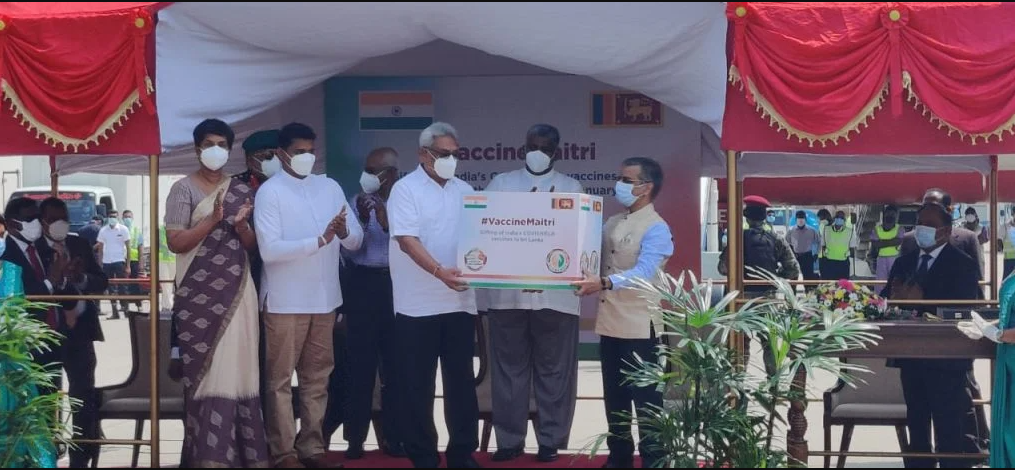
Coronavirus vaccines gifted by India arrived in Sri Lanka today in a special Air India flight.

Under the Government of India’s #VaccineMaitri, India has gifted 500,000 doses of made in India COVISHIELD vaccines to Sri Lanka.

The consignment was transported in a special Air India flight and packed in tailor-made boxes for the purpose.

Indian High Commissioner to Sri Lanka Gopal Bagley formally handed over the consignment to President Gotabaya Rajapaksa at the Bandaranaike International Airport in Katunayake today.

Senior Advisor to the President and Head of the Presidential Task Force for Sri Lanka’s COVID-19 vaccination drive Lalith Weeratunga said any citizen is entitled to the right to refuse to be vaccinated.

The President’s Media Division quoting Weeratunga said obtaining the vaccine will be at the discretion of any citizen.

The first consignment of the Indian government-gifted AstraZeneca Covidshield vaccines was officially handed over to President Gotabaya Rajapaksa by High Commissioner of India Dr Gopal Baglay at the Colombo airport on Thursday (28) morning.

President Gotabaya Rajapaksa recently requested the Indian Prime Minister Narendra Modi for the vaccines to be used in Sri Lanka.

Oxford-Astrazeneca’s COVISHIELD vaccine is manufactured by Serum Institute of India.

The consignment weighing 1323 kilograms was transported in special freezers in a special Air India Flight AI 218 and it reached the Katunayake Airport at 11:45 AM on Thursday (28).

The President’s Media Division said the vaccines will be stored in special freezer facilities at the airport and thereafter will be transported to all districts in the country.

It must be stored in 2-8 degree Celsius freezers, which Sri Lanka has facilities for at district as well as MOH levels.

The vaccines will be distributed among frontline Health workers, Army, Navy, and Air Force personnel, Policemen on a priority basis.

‘This Covidshield vaccine injected in two doses per person will be first used at Colombo National Hospital, Ragama Hospital, and six other hospitals, including the Colombo Army Hospital and the Panagoda Army Hospital beginning tomorrow (29),’ reported the Sri Lanka Army Website, quoting the Army Commander.

‘From the day after tomorrow, it will be taken to other areas and all Army Hospitals as planned. In fact, we had a few rounds of rehearsals for transport, storing, inoculation, and other measures before today,it added.

According to the Sri Lanka Army Website, this vaccination is restricted strictly to those whose names have already been listed and the entire programme will remain very transparent.

Deputy Director-General of Health Services, Dr. Hemantha Herath said frontline healthcare workers will receive the jab at six main hospitals in and around Colombo.

Thereby, the COVID-19 vaccination drive will begin tomorrow at the Colombo National Hospital, Colombo North Teaching Hospital-Ragama, Colombo-South Teaching Hospital, Homagama Base Hospital, Colombo East Base Hospital Mulleriyawa, and the Infectious Disease Hospital in Angoda.

The first recipients of the vaccine will be 250,000 personnel in the health service sector and members of the Armed Forces and Police who are deployed in the quarantine and intermediate Covid treatment facilities.

A survey conducted by the Ministry of Health to determine the attitudes of the people with regard to the COVID-19 vaccine has shown that 8 percent preferred not to be vaccinated.

57.4 percent of healthcare workers have confirmed that they will be receiving the vaccine, while 37 percent said they are uncertain on whether or not to receive the jab, the report compiled by the Ministry of Health based on data collected through the survey showed.

Based on the report, of the total sample used for the survey, 54 percent preferred to obtain the vaccine, if it is being provided; while 38 percent were uncertain about being vaccinated.

The Ministry of Health has released the report as the country’s COVID-19 vaccination drive is set to begin on Friday (Jan. 29), with frontline healthcare workers receiving the jab first.

Posted in Uncategorized

Sri Lanka: UK must spearhead international push for justice following damning UN report

The UN Human Rights Council (UNHRC) must take urgent steps to address the worsening human rights situation in Sri Lanka Amnesty International said today, following the release of a damning UN report on the country’s efforts to ensure accountability for crimes committed during the civil conflict.

Almost 12 years on from the end of Sri Lanka’s civil war, the report, from the Office of the High Commissioner for Human Rights (OHCHR), warns that the Sri Lanka’s persistent failure to address historic crimes is giving way to ‘clear early warning signs of a deteriorating human rights situation and a significantly heightened risk of future violations.’

In February 2020, the Sri Lankan government announced that it would no longer cooperate with the UNHRC’s landmark resolution 30/1, which promotes reconciliation, accountability, and human rights in the country, and would instead pursue its own reconciliation and accountability process.

David Griffiths, Director of the Office of the Secretary General at Amnesty, said:

“This report lays bare Sri Lanka’s abject record on delivering justice and accountability and the decaying effect this has had on human rights in the country. The seriousness of these findings highlights the urgent need for the UN Human Rights Council to step up its efforts in Sri Lanka.

“For more than a decade, domestic processes have manifestly failed thousands of victims and their families. Given the government’s decision to walk away from resolution 30/1, and regression on the limited progress that had been made, the Human Rights Council must send a clear message that accountability will be pursued with or without the cooperation of the government.”

Amnesty is calling on the UN Human Rights Council to implement the report’s key recommendations to put in place more stringent oversight on Sri Lanka, including more robust monitoring and reporting on the human rights situation, and the collection and preservation of evidence for future prosecutions.

Amnesty is particularly urging the UK Government to follow through on its commitment to work with partners to present a strong resolution when the Human Rights Council meets next month, putting in place more robust monitoring and reporting on the situation, and mandating the collection and preservation of evidence for future prosecutions.

The report, which accuses Sri Lanka of being in a ‘state of denial about the past’, details how the failure of domestic mechanisms has further entrenched impunity, exacerbating victims’ distrust in the system. Among a litany of failures, the report addresses the rollback of 2015 reforms that offered more checks and balances on executive power, the erosion of judicial and institutional independence, and the failure to reform the security sector and remove and hold to account those responsible for alleged grave crimes and human rights violations.

The report also offers a withering assessment of regression in other human rights areas, including the increasing marginalisation of Tamil and Muslim minorities, fuelled by divisive and discriminatory rhetoric from state officials, and a shrinking space for civil society, including independent media.

Posted in Uncategorized

Tamils must unite to fight against the dictatorial government bent on seizing Hindu Temples to build Buddhist Viharas

The Sri Lankan government has declared a religious war against Tamil Hindus who are victims of Thirty Years-long Civil War. Under the cloak of identifying Buddhist archaeological importance, the Department of Archaeology has laid siege to historical Hindu temples and build Viharas in their places. The state machinery is being fully galvanised for this unholy purpose.

Last week, at the Kurundurmalai Adi Iyanar Temple in the Mullaitivu district, a Trident was pulled out to install a statue of Buddha. Thereafter, a Buddhist ceremony was held by monks in the presence of State Minister Vitdura Wickramanayaka.

Earlier the area was cleared by the army and decorated with hundreds of Buddhist and Army flags. Hundreds of soldiers were seen participating in the ceremony.
This act has caused acute pain and consternation among the Hindu Tamils. Tamil leaders have strongly condemned this act as a blatant attempt to Buddhistise the traditional habitat of the Tamils.
It may be recalled that President Gotabaya appointed a pan-Sinhala Buddhist Presidential Task Force in June 2020 under the chairmanship of Secretary to the Ministry of Defence Major General (Retired) Kamal Gunaratne. This Task Force has been mandated to –

1. Identify sites of archaeological importance in the Eastern Province,
2. Identify and implement an appropriate program for the management of archaeological heritage by conserving and restoring such identified sites and antiquities,
3. Identify the extent of land that should be allocated for such archaeological sites and take necessary measures to allocate them properly and legally, and
4. Preserve the cultural value of sites of archaeological importance and promote the uniqueness of Sri Lanka, both locally and internationally, and make recommendations for the promotion of such heritages.

This buddhistisation under the cloak of identifying Archaeological sites (read Buddhist sites) follows the Sinhalisation of the North-East since independence in 1948. Because of state-aided colonisation of Tamils’ traditional habitat they have been reduced to a minority in Trincomalee (32.29%) and Ampara (17.1%) Districts.
Even recently under the Weli Oya (Manal Aru) scheme, a new Divisional Secretariat has been created in the Mullaitivu District. This Divisional Secretariat consists of 18 villages comprising 3,336 families (11,189 persons). The then President Mahinda Rajapaksa personally handed over the land-permits to the Sinhalese settlers in 2015.

Since the end of the 30 years civil war a large number of Buddhist viharas, statues of Buddha and War Memorials have sprouted in the North thanks to the Sri Lankan armed forces.

Various institutions of the Government of Sri Lanka make use of Acts of Parliament most of them enacted before the enactment of the 13th Amendment to the Constitution to undermine the powers conferred on the Provincial Councils on land. The relevant Acts are:

(1) Mahaweli Authority Act No. 23 of 1979 (as amended)
(2) Urban Development Law No. 41 of 1978 (as amended) and Town and Country Planning Ordinance No. 13 of 1946 amended by Amendment Act No. 49 of 2000
(3) Sri Lanka Ports Authority Act No. 51 of 1979
(4) Tourism Act No. 38 of 2005 which retains sections of the Tourism Development Act No. 14 of 1968
(5) Antiquities Act No. 24 of 1998 together with the Archaeological Sites of National Importance Act No. 16 of 1900

In the past as well as at present successive governments have liberally used the Mahaweli Authority Act No. 23 of 1979 (as amended) and the Antiquities Act No. 24 of 1998 together with the Archaeological Sites of National Importance Act No. 16 of 1900 liberally to both Sinhalise and Buddhistise the North-East.

Obviously, the state is using the Archaeological Sites of National Importance Act to dislodge or forcibly shut-down Hindu temples under the guise that they occupy Buddhist sites. The above Kurunthur Iyanar temple is a typical example.

In close proximity at Kumulamunai is another temple called Vedukkunari Adi Lingeswarar temple. The Department of Archaeology with the support of the Army has commenced excavations claiming that there is a ruined Kurundaseva Buddhist temple buried under.

The excavations were initiated by Minister Vidura Wickremanayaka, Minister of State for National Heritage, Archaeology and Rural Sculpture Development. He was accompanied by the Sri Lankan Army, Prof. Anura Manatunga, Director General of the Department of Archaeology and Jagath Ratnayake, Commander of the Mullaitivu Defence Forces, Secretary to the Ministry of Archaeology. At this time a Buddha statue was brought to the Kurundurmalai for worship before excavation work was commenced.

Another Archaeological excavation for another shrine at Padalaikallu near Thannimurippu Pond started recently.
In the east, the appointment of the Archaeological Heritage Management Task Force has energised Sinhala nationalists and they are on spree to hurriedly fence archaeological sites and livelihood zones.

The Task Force has identified thousands of hectares of land as Buddhist heritage remains in Thiriyai, Kutchaveli, Kumpuruppiddy and Thennamaravadi and taken over. The lands have been vested in 7 Buddhist organisations for Buddhist worship for 30 years according to a gazette notification. Tamil Hindus have gone to the courts to stop the seizure of their lands that include farms and homes.

The Ven. Ellawala Medhananda Thero, a member of the Archaeological Heritage Management Task Force, stated that the team has examined and identified 2,000 sites as Buddhist heritage. This poses an ominous threat not only to Hindu places of worship but also to lands belonging to Hindu Tamils.

In short, many historical Hindu temples are under siege by the different agencies of the government and has declared virtual ‘holy war’ against Hindus and their places of worship.

United and concerted action by Hindus all over the world is urgently needed to halt the large-scale buddhistisation and colonisation of lands belonging to Hindu Tamils.

Saiva Thirukkovil Ondrium in the UK

Posted in Uncategorized

US reiterates concerns on Chinese projects in Sri Lanka

The United States has once again noted concerns on Chinese projects in Sri Lanka.

The US has in the past raised concerns over the Hambantota Port and the Colombo Port City, two major projects funded by China

The US Ambassador to Sri Lanka Alaina B. Teplitz said that US businesses like to compete in Sri Lanka.

“But the playing field has to be level. This is in terms of public procurement and government tenders. And also private sector opportunities. It needs to be an easy place to do business,” she said.

She said that the US believes partnerships must be open, transparent and mutually beneficial.

“If this is what Sri Lanka’s relationship with China embodies, we encourage it,” she said.

Teplitz questioned if Sri Lankans have a major stake in some partnerships involving the Chinese.

The Ambassador said that media reports have indicated concerns raised on some Chinese projects in Sri Lanka.

She said that the concerns includes the impact some projects have on the environment and on the limitations on Sri Lankan companies from competing for contracts.

“That doesn’t deliver the sustainable development that Sri Lankans deserve,” she said.

The Ambassador expressed these views during a round-table discussion with a group of journalists yesterday.

Lanka needs to commit to more than commissions

PREPARING for the forthcoming UN Human Rights Council cannot be easy for a government that was elected on a nationalist platform that was very critical of international intervention. When the government declared its intention to withdraw from Sri Lanka’s co-sponsorship of the October 2015 resolution no 30/1 last February, it may have been hoping that this would be the end of the matter. However, this is not to be. The UN human rights high commissioner’s report that will be taken up at the forthcoming UNHRC session in March contains a slate of proposals that are severely punitive in nature and will need to be mitigated. These include targeted economic sanctions, travel bans and even the involvement of the International Criminal Court.

Since UN secretary general Ban Ki-Moon’s visit in May 2009 just a few days after the three decade long war came to its bloody termination, Sri Lanka has been a regular part of the UNHRC’s formal discussion and sometimes even taking the centre stage. Three resolutions were passed on Sri Lanka under acrimonious circumstances, with Sri Lanka winning the very first one, but losing the next two. As the country became internationally known for its opposition to revisiting the past, sanctions and hostile propaganda against it began to mount. It was only after the then Sri Lankan government in 2015 agreed to co-sponsor a fresh resolution did the clouds begin to dispel.

Clearly in preparation for the forthcoming UNHRC session in Geneva in March, the government has finally delivered on a promise it made a year ago at the same venue. In February 2020 foreign minister Dinesh Gunawardena sought to prepare the ground for Sri Lanka’s withdrawal from co-sponsorship of UN Human Rights Council resolution no 30/1 of 2015. His speech in Geneva highlighted two important issues. The first, and most important to Sri Lanka’s future, was that the government did not wish to break its relationships with the UN system and its mechanisms. He said, ‘Sri Lanka will continue to remain engaged with, and seek as required, the assistance of the UN and its agencies including the regular human rights mandates/bodies and mechanisms in capacity building and technical assistance, in keeping with domestic priorities and policies.’

Second, the foreign minister concluded his speech at the UNHRC session in Geneva saying ‘No one has the well-being of the multi-ethnic, multi-lingual, multi-religious and multicultural people of Sri Lanka closer to their heart, than the government of Sri Lanka. It is this motivation that guides our commitment and resolve to move towards comprehensive reconciliation and an era of stable peace and prosperity for our people.’ On that occasion the government pledged to set up a commission of inquiry to inquire into the findings of previous commissions of inquiry. The government’s action of appointing a sitting Supreme Court judge as the chairperson of a three member presidential commission of inquiry into the findings and recommendations of earlier commissions and official bodies can be seen as the start point of its response to the UNHRC.

Negative response

THE government’s setting up of a commission of inquiry has yet to find a positive response from the international and national human rights community and may not find it at all. The national legal commentator Kishali Pinto-Jayawardena has written that ‘the tasks encompassed within its mandate have already been performed by the Lessons Learnt and Reconciliation Commission (2011) under the term of this president’s brother, himself the country’s executive president at the time, Mahinda Rajapaksa.’ Amnesty International has stated that ‘Sri Lanka has a litany of such failed commission of inquiries that Amnesty International has extensively documented.’ It goes on to quote from the UN high commissioner for human rights that ‘Domestic processes have consistently failed to deliver accountability in the past and I am not convinced the appointment of yet another commission of inquiry will advance this agenda. As a result, victims remain denied justice and Sri Lankans from all communities have no guarantee that past patterns of human rights violations will not recur.’

It appears that the government intends its appointment of the commission of inquiry to meet the demand for accountability in regard to past human rights violations. Its mandate includes to ‘find out whether preceding commissions of inquiry and committees which have been appointed to investigate into human rights violations, have revealed any human rights violations, serious violations of the international humanitarian law and other such serious offences.’ In the past the government has not been prepared to accept that such violations took place in a way that is deserving of so much of international scrutiny. Time and again the point has been made in Sri Lanka that there are no clean wars fought anywhere in the world.

International organisations that stand for the principles of international human rights will be necessarily acting according to their mandates. These include seeking the intervention of international judicial mechanisms or seeking to promote hybrid international and national joint mechanisms within countries in which the legal structures have not been successful in ensuring justice. The latter was on the cards in regard to Resolution 30/1 from which the government withdrew its co-sponsorship. The previous government leaders who agreed to this resolution had to publicly deny any such intention in view of overwhelming political and public opposition to such a hybrid mechanism. The present government has made it clear that it will not accept international or hybrid mechanisms.

Sequential implementation

IN THE preamble to the establishment of the commission of inquiry the government has made some very constructive statements that open up the space for dialogue on issues of accountability, human rights and reconciliation. It states that ‘the policy of the government of Sri Lanka is to continue to work with the United Nations and its agencies to achieve accountability and human resource development for achieving sustainable peace and reconciliation, even though Sri Lanka withdrew from the co-sponsorship of the aforesaid resolutions’ and further goes on to say that ‘the government of Sri Lanka is committed to ensure that, other issues remain to be resolved through democratic and legal processes and to make institutional reforms where necessary to ensure justice and reconciliation.’

As the representative of a sovereign state, the government cannot be compelled to either accept international mechanisms or to prosecute those it does not wish to prosecute. At the same time its willingness to discuss the issues of accountability, justice and reconciliation as outlined in the preamble can be considered positively. The concept of transitional justice on which Resolution no 30/1 was built consists of the four pillars of truth, accountability, reparations and institutional reform. There is international debate on whether these four pillars should be implemented simultaneously or whether it is acceptable that they be implemented sequentially depending on the country context.

The government has already commenced the reparations process by establishing the Office for Reparations and to allocate a monthly sum of 6,000 Sri Lankan rupees to all those who have obtained Certificates of Absence (of their relatives) from the Office of Missing Persons. This process of compensation can be speeded up, widened and improved. It is also reported that the government is willing to consider the plight of suspected members of the Liberation Tigers of Tamil Eelam who have been in detention without trial, and in some cases without even being indicted, for more than ten years. This contrasts with the release of those detained following the Easter Sunday bombings. The sooner action is taken the better.

With regard to institutional reform which is a part of transitional justice that underlay the UNHRC resolution that the government has withdrawn from, the constitutional reform process can address unresolved issues. A reduction in power to the presidentially appointed governors would facilitate more to be done for people by the provincial councils. Setting a date for the provincial council elections would be another confidence boosting measure. The government can also seek the assistance of the international community, and India in particular, to develop the war affected parts of the country on the lines of the Marshall Plan that the United States utilised to rebuild war-destroyed parts of Europe. Member countries of the UNHRC need to be convinced that the government’s actions will take forward the national reconciliation process to vote to close the chapter on UNHRC resolution 30/1 in March 2021.

Jehan Perera is executive director of the National Peace Council of Sri Lanka.
Source:newagebd.net