New Cabinet of Ministers to be sworn in tomorrow

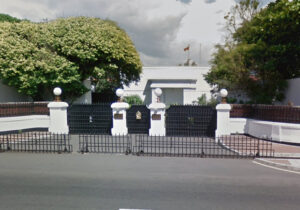
A new Cabinet of Ministers will be sworn in tomorrow (July 22) at the Prime Minister’s Office in Kollupitiya.

According to the President’s Media Division (PMD), the swearing-in ceremony is scheduled to commence at 9.00 a.m.

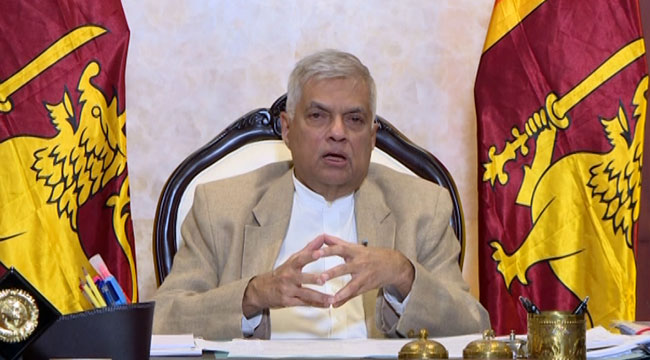
Newly-elected President Ranil Wickremesinghe, who was voted in by Sri Lanka’s parliament to the office of President vacated by his predecessor Gotabaya Rajapaksa, took oaths this morning at the parliament complex.

Accordingly, a new Cabinet of Ministers will be formed under administration of President Wickremesinghe.

Source: Adaderana

Posted in Uncategorized

‘He’s not our president’: Protesters reject new Sri Lankan leader

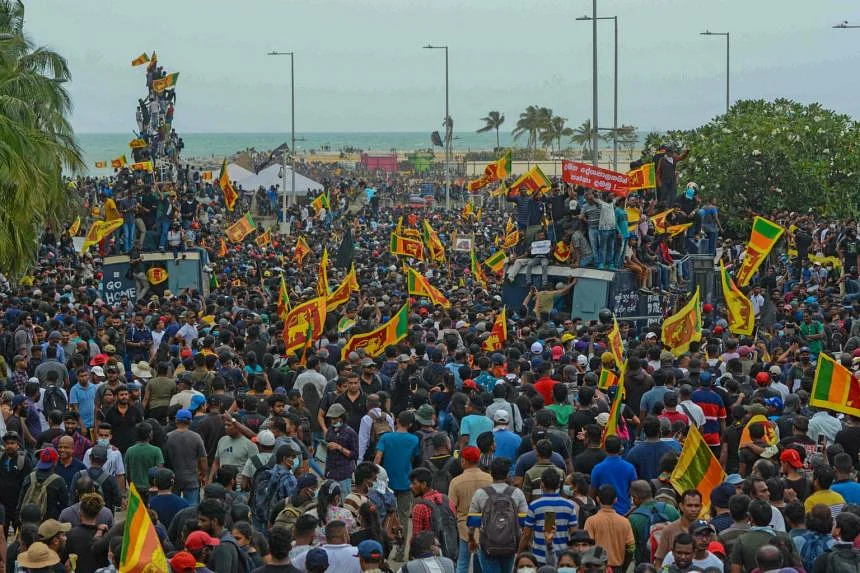
Anti-government protesters have returned to the streets of Sri Lanka’s capital and say they will continue their weeks-long uprising after parliament voted in acting leader Ranil Wickremesinghe as the country’s new president.

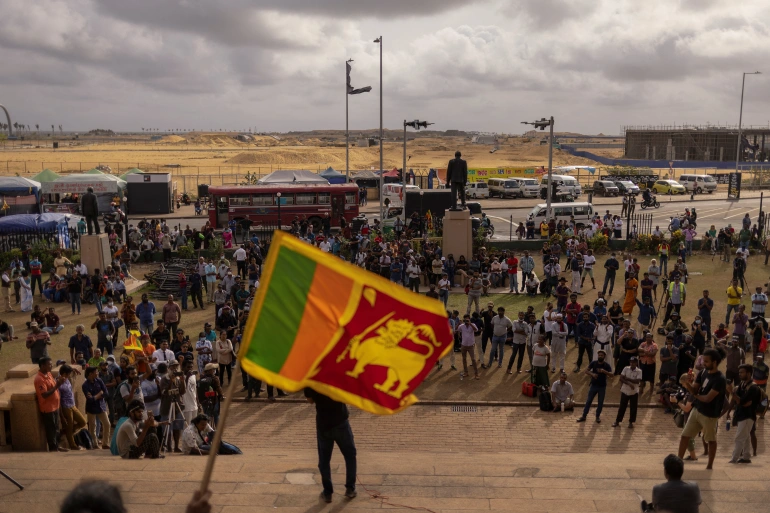
Hundreds of protesters gathered at the GotaGoGama site in Colombo on Wednesday, where only last week they had celebrated Gotabaya Rajapaksa’s resignation as president.

Addressing the crowds, protest leaders refused to accept six-time Prime Minister Wickremesinghe, 73, as the new head of state, holding him partly responsible for the country’s unprecedented economic and political crisis.

“As you know, the parliament elected a new president today, but that president is not new to us, it is not the people’s mandate,” Wasantha Mudalige, the leader of Inter University Student Federation, told the crowds.

“We managed to kick out Gotabaya Rajapaksa, who secured 6.9 million votes, but Ranil Wickremesinghe has now secured that seat from the back seat,” he added. “Ranil isn’t our president … the people’s mandate is on the streets.”

Protesters have also accused Wickremesinghe of making deals with the powerful Rajapaksa family to outmanoeuvre political rivals. Gotabaya Rajapaksa’s appointments of Wickremesinghe as prime minister in May and then acting president after he fled the country in July further angered protesters, who want the country’s ruling elite to go.

Protesters set Wickremesinghe’s personal residence on fire and occupied his office during protests last week.

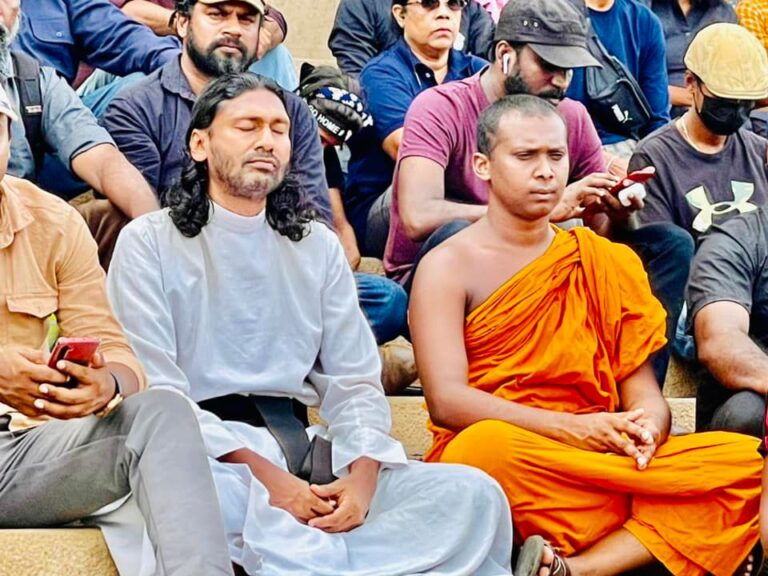
At the protests on Wednesday, speaker after speaker – including Buddhist monks, Catholic clergy, students and artists – refused to endorse the parliament’s choice.

“Ranil Wickremesinghe should know that millions in the streets are much bigger than 134,” said artist Jagath Manuwarna, referring to 134 lawmakers who voted for Wickremesinghe.

While celebratory firecrackers were heard in some parts of the country last week when Sri Lankans heard Rajapaksa had resigned days, no such celebrations greeted Wickremesinghe’s appointment, with just dozens of his supporters seen celebrating on the streets.

Many Sri Lankan protesters were also left unimpressed with Wickremesinghe’s main rival at the election today, Dullas Alahapperuma, as he has no experience of governance in a heavily indebted country desperate for an International Monetary Fund bailout.

Sri Lankans have been protesting for weeks amid an unprecedented economic meltdown that has brought the country to the brink of bankruptcy and increasingly unable to pay for food, fuel and medicine.

‘No political base’
Feeling betrayed by parliament, the youth-led protest movement is currently regrouping and rethinking its strategy, according to Melani Gunathilake, a leading protester.

“We know very well that Ranil Wickremesinghe isn’t the same as Gotabaya Rajapaksa. He is a more cunning person,” she told Al Jazeera.

“Recently he has even been trying to suppress protests by imposing a state of emergency and sending air force helicopters over GotaGoGama. But I don’t think people will be intimidated by these actions any more. Sri Lanka deserves a leader who actually cares for its people, not somebody who thinks about his political future.”

But one analyst, who did not want to be identified, told Al Jazeera “the protests may not be sustainable”, as many of the demonstrators in Colombo and other urban areas are middle-class and could be less likely to keep protesting if their material situation improves under Wickremesinghe.

Wickremesinghe is scheduled to take the oath as Sri Lanka’s president on Thursday morning, with his presidential term set to last until 2024.

As soon he becomes president, the post of prime minister becomes vacant and the cabinet of ministers is dissolved. Wickremesinghe will also resign as a member of parliament.

His immediate focus would be to find a suitable candidate for prime minister in the new administration.

On Wednesday, Wickremesinghe called on political opponents to put aside their divisions and work together to tackle months of severe food, fuel and medicine shortages

“Now that the election is over, we have to end this division,” he said.

Speaking to the media soon after Wickremesinghe’s election, Minister Harin Fernando hinted that the president will try to form a national government together with many other parties.

Shehan Malaka Gamage, a protest leader who has been campaigning for justice for the victims of the 2019 Easter Sunday attacks, said Wickremesinghe will likely make concessions to protesters due to his lack of a strong base.

“Unlike years ago … he has executive powers but without a firm political base. Therefore, in my opinion, he is a very weak leader,” Gamage told Al Jazeera.

“If the protesters could challenge [the] all-powerful Rajapaksas, he knows it is not difficult for the masses to rise up against him. He knows he was not elected by the people. This is not his comfort zone. And I don’t think of this as a defeat in our struggle. We have already won our struggle.”

She said that if he delivers reforms and relief to the masses, Wickremesinghe could calm unrest and buy himself time.

“Our next option [to remove him] would be the next election,” Gamage said.

Source: Aljazeera

Sri Lanka upgraded to Tier 2 in human trafficking report

Sri Lanka has been upgraded to Tier 2 in the annual human trafficking report issued by the United States.

The report says the Government of Sri Lanka does not fully meet the minimum standards for the elimination of trafficking but is making significant efforts to do so.

However, the Government demonstrated overall increasing efforts compared with the previous reporting period, considering the impact of the COVID-19 pandemic on its anti trafficking capacity; therefore Sri Lanka was upgraded to Tier 2.

These efforts included slightly increasing investigations, including of several Sri Lankan officials allegedly involved in child trafficking, and establishing a specialized unit to strengthen trafficking investigations.

The Government identified more victims, including among migrant workers exploited abroad.

The Government also increased coordination among agencies to further implementation of the 2021-2025 national action plan (NAP).

The Government expanded its trafficking hotline services to include online support for referrals.

In addition, the Government secured a new shelter location to accommodate victims of crime, including trafficking victims.

However, the report says the Government did not meet the minimum standards in several key areas.

The Government prosecuted fewer trafficking cases, and sentences for convicted traffickers remained inadequate. Law enforcement efforts against labor trafficking were disproportionately low compared with the number of identified labor trafficking victims.

The capacity of local officials to identify trafficking victims remained low, especially among women in commercial sex. The Government did not effectively address vulnerabilities to trafficking faced by migrant workers, including high worker-paid recruitment fees, largely unregulated sub-agents, and policies and procedures that undermined safe and legal migration.

Source: Colombo Gazette

UN experts sound alarm on economic crisis in Sri Lanka

Independent Experts today expressed alarm about record high inflation, rising commodity prices, power shortages, crippling fuel crisis and the economic collapse in Sri Lanka, as the country grapples with unprecedented political turmoil.

This crisis has had a serious impact on the enjoyment of human rights for the entire population, the experts said.

“Time and again, we have seen the grave systemic repercussions a debt crisis has had on countries, exposing deep structural gaps of the global financial system, and affecting the implementation of human rights,” said Attiya Waris, UN independent expert on foreign debt and human rights.

Sri Lankan President Gotabaya Rajapaksa stepped down on 15 July, after fleeing the country as protestors stormed key government buildings in the capital Colombo. New leadership has been elected by the Parliament today.

Mass protests broke out in March following heavy shortages of food, fuel, medicines, and other essential items compounded by a series of ill-conceived economic reforms like tax cuts and servicing debt payments that ate into the country’s forex reserves. Prolonged disrupted access to food and healthcare has severely affected people with illnesses, pregnant women and lactating mothers who are in serious need of life-assistance.

Earlier this year, UN experts urged the Sri Lankan government to guarantee the fundamental rights of peaceful assembly and expression during peaceful protests as thousands of people gathered in front of the President’s office in Colombo, demanding his resignation over corruption and mishandling of the economic crisis. On 9 May, the UN High Commissioner for Human Rights Michelle Bachelet condemned the violence which erupted across the country, killing at least seven people.

As foreign reserves dried up, unable to make interest payments on the loans, the country defaulted on the debt of USD 51 billion in May 2022. After suspending all debt payments, the government took steps to restructure the country’s debt with the International Monetary Fund (IMF). In June, IMF staff noted that significant progress had been made on the staff level arrangement on the Extended Fund Facility.

“Any response towards mitigating the economic crisis should have human rights at its core, including in the context of negotiation with the IMF”, Waris said.

The UN experts noted that the issue of rising institutional debt had been flagged in a previous country visit report to Sri Lanka in 2019. The report found that debt repayments were the country’s largest expenditure, and emphasised the need for complementary alternatives and pursuit of less harmful policy options.

In July 2022, inflation in the country hit a record high of 54.6 per cent while food inflation rose to 81 per cent. The snowballing economic and debt crisis was deepened by the government’s hasty and botched agricultural transition. Under such conditions, the World Food Programme has launched an emergency response, warning that nearly 62,000 Sri Lankans were in need of urgent assistance.

“Sri Lanka’s economic collapse needs immediate global attention, not just from humanitarian agencies, but from international financial institutions, private lenders and other countries who must come to the country’s aid,” the experts said.

Source: Colombo Gazette

Galle Face protests to continue till RW goes home

Addressing reporters, the protesters said that Wickremesinghe does not have the support of the people to continue in office.

They warned that if they could send former President Gotabaya Rajapaksa home then they can do the same with Ranil Wickremesinghe.

The protesters also urged the public to continue to ensure the protests are peaceful.

Wickremesinghe was elected President by Parliament today securing 134 votes.

MP Dullas Alahapperuma secured 82 votes while MP Anura Kumara Dissanayake secured just 03 votes.

Of the 225 members of Parliament 223 had cast their votes of which four were declared invalid.

Ranil Wickremesinghe, National Peoples Power (NPP) Leader Anura Kumara Dissanayake and MP Dullas Alahapperuma had been nominated for President.

Source: Colombo Gazette

Posted in Uncategorized

Is India gaining over China in crisis-hit Sri Lanka?

During the ongoing anti-government protests in Sri Lanka, protesters shouted slogans targeting former president Gotabaya Rajapaksa and his family. But they also raised chants against India.

Slogans like – “Don’t sell the country to India and the US”; “India: Sri Lanka is not another state”; and “India don’t exploit Sri Lanka’s situation” – could be widely heard during the demonstrations.

But while anti-Indian sentiments like these still persist, how Sri Lankans view India might be changing as the country grapples with political and economic chaos.

Sri Lanka is in the midst of a deep and unprecedented economic crisis that has sparked massive protests, and forced its president to quit after fleeing the country.

Over the years, Sri Lanka has built up a huge amount of debt – to the point that it is now struggling to buy essentials such as food, fuel and medicine.

Protesters blame Mr Rajapaksa and his family, who fled to Singapore last week, for the situation. The parliament has begun the process of electing a new president and MPs are expected to vote on Wednesday.

Some sections of the Sri Lankan polity have always viewed with suspicion the presence of its bigger and powerful neighbour, India. I have seen several anti-India protests in Sri Lanka over the years by majority Sinhala nationalists and Left-wing parties.

But when Sri Lanka suddenly found itself in a deep economic mess a few months back, it turned to India and the Bharatiya Janata Party (BJP) government in Delhi responded with financial help.

This was not the first time though – in fact, no other country or institution has helped Sri Lanka as much as India in the past year.

Experts say that Sri Lanka’s desperate financial need, in a way, has helped Delhi regain its influence in the island-nation of 22 million people after China made inroads by offering loans and other forms of financial aid for infrastructure projects in the past 15 years.

“India has played a very crucial role, especially at this critical juncture. We have gone through an immense crisis as a country, and India has come forward and supported us,” Sajith Premadasa, Sri Lanka’s main opposition leader, told the BBC.

Source: Colombo Page

Posted in Uncategorized

India rejects reports of attempts to influence the election

India today categorically denied as baseless and speculative media reports of efforts at political level from India to influence political leaders in Sri Lanka regarding elections to appoint a President.

The Indian High Commission in Sri Lanka said India categorically denies such media reports as completely false and termed them a figment of someone’s imagination.

The High Commission reiterated that India supports the realisation of aspirations of the people of Sri Lanka in accordance with democratic means and values, established institutions as well as constitutional provisions, and doesn’t interfere in internal affairs and democratic processes of another country.

Source: News Radio

Posted in Uncategorized

Court bars anyone from moving close to Bandaranaike Statue

Colombo Fort Magistrate Thilina Gamage issued an order barring any faction from entering or gathering within a 50 meter radius of the Bandaranaike Statue located in Galle Face, Colombo.

Sri Lanka Police told the court that there is a possible attempt being made to cause harm to the statue.

Source: News 1st

Sri Lanka: ‘If we want change we need new faces’

Gathered outside the Presidential offices, still under the control of a small band of protesters – with the entrance hall turned into a community library – a number of activists watched a live stream from Sri Lanka’s parliament on their phones as Ranil Wickremesinghe was selected as the island’s new leader.

On the steps, a small group began chanting “Ranil Go Home” but the reigning mood was one of disappointment and resignation rather than overwhelming outrage.

Protest leaders had vowed not to accept Mr Wickremesinghe as president, dismissing him as too close an ally of the ousted former President Gotabaya Rajapaksa, blamed for the dire economic crisis currently engulfing Sri Lanka.

Mr Wickremesinghe had been serving as Prime Minister since May.

During huge, unprecedented protests earlier this month, massive, angry crowds took over his official residence and offices, whilst others set fire to his family home.

The same protests also targeted Mr Rajapaksa, forcing him to flee the country and then resign, with Mr Wickremesinghe taking over as acting president.

Today 134 members of Sri Lanka’s parliament voted for him to take over permanently – his closest rival received 82 votes.

Nuzly Hameem, a leading activist from the protest movement, told the BBC, “people are burnt out after four months of continuous protest.”

Nonetheless he listed a series of demands that have been laid out, including changes to the constitution and decreasing the power of the president, as well as calling fresh elections within a year after providing “relief” to the people.

Many in the movement appeared unnerved by the speed at which it had grown and the street power it had accumulated, worried about the possibility of violence.

Last week, they handed back control of the official buildings, barring the President’s Secretariat, next door to the main protest camp on a seaside strip known as Galle Face.

Mr Hameem said he was disappointed the country had to “settle” for Mr Wickremesinghe, despite having successfully ousted his powerful predecessor, but added, “when an election comes, people will have a sense of how to vote next time.”

Mr Wickremesinghe has served as Prime Minister on six previous occasions, though he never completed a term and is regarded as having long desired to become president.

Now finally in office, however, he will face unenviable challenges.

Sri Lanka’s economy remains in a deep crisis.

A series of disastrous policy decisions, coupled with the after effects of the Covid-19 pandemic means the country’s foreign reserves have all but run out, leaving the government unable to afford to import enough fuel or medicine, while food prices have soared.

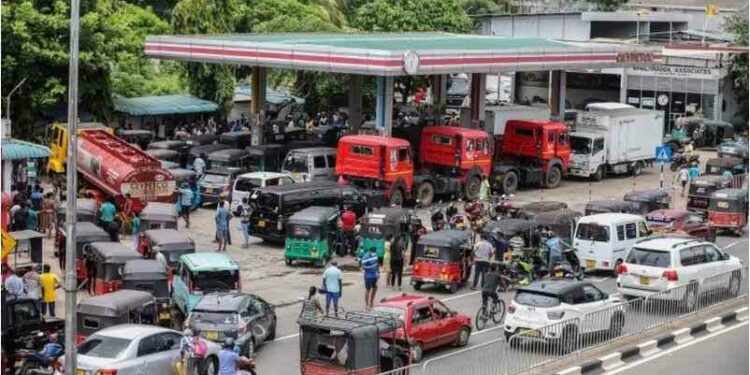
There are queues at petrol stations stretching for miles, with drivers often sleeping in their cars for more than a week to get to the front.

Last month inflation was measured at more than 50%, but at a market in the capital Colombo, stallholders said the price of most items had doubled or tripled since last year.

Padma Kanthi, a mother of three, whose husband works as a labourer, wells up with tears as she describes her daily struggle.

“Everything is so expensive, my children ask me for milk in the morning but I can’t afford it, ” she says. “I feel so bad… the electricity in our home has been cut off because we couldn’t pay the bills.”

With long queues for gas cylinders, and steep rises in its cost, alongside fruit and vegetables it’s become common to see small bundles of firewood for sale in Sri Lanka’s markets, with some families forced to light fires in order to cook their meals.

Jayanthi Karunarathne cares for her two grandchildren, one of whom has learning difficulties.

“We’ve been using firewood for the past three months,” she says, “I got gas and kerosene once by queuing up, but after that I couldn’t get it at all.”

Some have had to cut down the number of meals they eat.

With the help of family and friends, Ms Karunarathne, who works as a dressmaker, still manages to provide three meals a day for her grandsons, but she’s reduced the amount she cooks.

“We never expected this to happen, we own our own house,” she told the BBC, speaking from her small patio lined with flower pots.

“I’ve never had to live like this before, but now I have to for the sake of my grandchildren, it’s hard.”

The Sri Lankan government is in talks about restructuring its debts to foreign countries, and is also discussing a bailout deal with the International Monetary Fund, but that would likely entail tax rises and reduced public spending.

Further political instability would make those negotiations even more challenging, but many involved in the protests feel real “change” can only happen when those linked to the current crisis are replaced.

Waiting in a queue for fuel, stretching for miles along a main road facing the ocean, some drivers were hopeful that Mr Wickremesinghe’s political experience meant he would be best placed to guide the country going forwards.

Others were furious. “These people have been ruling for the past 70-odd years, they have been stealing, how can we expect good things to happen?!” asked Anil, a retired truck driver indignantly.

“We should beat them and throw them out… If we want change we need new faces.”

Further down the queue, Mukesh, a Tuktuk driver, says wistfully, “we don’t want change, we just want our country to go back to what it was before all this.”

Source: BBC News

Posted in Uncategorized

Sri Lanka parliament elects Ranil Wickremesinghe as new President

The Parliament today (July 20) elected Acting President Ranil Wickremesinghe as the 8th Executive President of Sri Lanka by majority votes.

In a secret ballot that got underway in the House this morning, the Members of Parliament voted to elect a succeeding President to fill in the post left vacant after the resignation of Gotabaya Rajapaksa last week.

In the 225-member parliament, 223 had cast their votes and four were declared invalid. Two members, namely MPs Selvaraja Gajendran and G.G. Ponnambalam, abstained from voting.

Wickremesinghe was elected to the office of President with a total of 134 votes, while MP Dullas Alahapperuma was polled second with 82 votes. Meanwhile, MP Anura Kumara Dissanayake secured 03 votes.

The procedure for electing a new president by Parliament is provided in the Constitution and the Presidential Elections (Special Provisions) Act (No. 2 of 1981), in the event of a vacancy in the office of the President before the end of the term.

UNP leader Ranil Wickremesinghe faced off against Sri Lanka Podujana Peramuna (SLPP) dissident and former minister Dullas Alahapperuma and leader of the National People’s Power (NPP) MP Anura Kumara Dissanayake in the election.

Wickremesinghe, a six-time former prime minister who became acting president after his predecessor resigned, had the backing of the Sri Lanka Podujana Peramuna (SLPP), the largest bloc in the 225-member parliament

His main opponent in the vote was Alahapperuma, a former journalist who was supported by the opposition including the main opposition Samagi Jana Balawegaya (SJB), Tamil National Alliance (TNA), Sri Lanka Freedom Party (SLFP) and several independent MPs.

Several other dissidents of the Sri Lanka Podujana Peramuna (SLPP) had also opted to back Alahapperuma.

Meanwhile, MP C.V. Vigenswaran, the former chief minister of the Northern Province and the leader and the only parliamentarian of the Tamil People’s National Alliance (TMTK), as well as the Ceylon Workers’ Congress (CWC) also backed Wickremesinghe in the vote.

Wickremesinghe embarked on active politics in the mid-1970s representing the United National Party (UNP) and entered the parliament in 1977.

He has been the leader of the UNP since 1994. The 73-year-old has held the office of prime minister six times although he never completed a term.

His latest and shortest term in office as the prime minister was when former President Gotabaya Rajapaksa appointed him to the position on July 13 this year, after his brother Mahinda Rajapaksa was forced to step down amidst growing public agitation over economic mismanagement and corruption allegations.

After the former President resigned from his position effective from July 14, the parliamentary session was convened on the 16th, during which the Secretary-General of Parliament announced that the office of the President has become vacant.

The presidential race was initially a four-way contest before Opposition Leader Sajith Premadasa withdrew his candidacy to support Alahapperuma in the presidential race.

Subsequently, the parliament met again yesterday to accept nominations for the election. Accordingly, the names of Wickremesinghe, Alahapperuma and Dissanayake were proposed.

The vote to appoint a succeeding President commenced earlier today after the parliamentary session began at 10.00 a.m. The Secretary-General of Parliament acted as the Returning Officer in this secret ballot.

Speaker Mahinda Yapa Abeywardena cast the first vote, followed by Acting President Wickremesinghe.

The parliament has decided to meet again on the 27th of July.

Brief history of newly elected President Ranil Wickremesinghe

Ranil Wickremesinghe was elected to the 9th Parliament on June 23rd, 2021 as a National List Member representing the United National Party.

Born on March 24th, 1949, Ranil Wickremesinghe also held the position of Prime Minister of the previous Yahapalana government.

An alumnus of the Royal College of Colombo, Wickremesinghe was later selected to the Faculty of Law of the University of Colombo and sworn in as a lawyer.

He started his political career as the chief organizer of the United National Party in Kelaniya Constituency in the mid of 1970 and was later appointed as the chief organizer of the Biyagama Constituency.

In 1977, he was elected as a Member of Parliament for the first time and was the youngest cabinet minister in the J.R. Jayewardene government where he held the position of Minister of Youth Affairs and Employment.

He was the Minister of Foreign Affairs at the age of 28, and later served as the cabinet minister for Youth Affairs, Education and Industry, Science and Technology.

Ranil Wickremesinghe, who also served as the Leader of the House between March 06, 1989 and May 07, 1993, also served as the Leader of the Opposition in the Parliament of Sri Lanka from 1994 to 2001 and from 2004 to 2015.

He was first elected as the Prime Minister of Sri Lanka on May 7, 1993 and held that position until August 19, 1994. Ranil Wickremesinghe was the Prime Minister of Sri Lanka for the second time from December 9, 2001 to April 2, 2004, for the third time from January 9, 2015 to August 21, 2015, for the fourth time from August 24, 2015 to October 26, 2018, and for the fifth time from December 16, 2018 to November 21, 2019.

Thereafter, given the resignation of the former Prime Minister Mahinda Rajapaksa on the 9th of May, Ranil Wickremesinghe returned to the post of Prime Minister on the 12th of the same month in the capacity of Prime Minister.

Following the resignation of Gotabaya Rajapaksa from the office of President, he became the Acting President from 14th as per the Constitution.

Source: Adaderana