Parliament entry roads closed off as security tightened

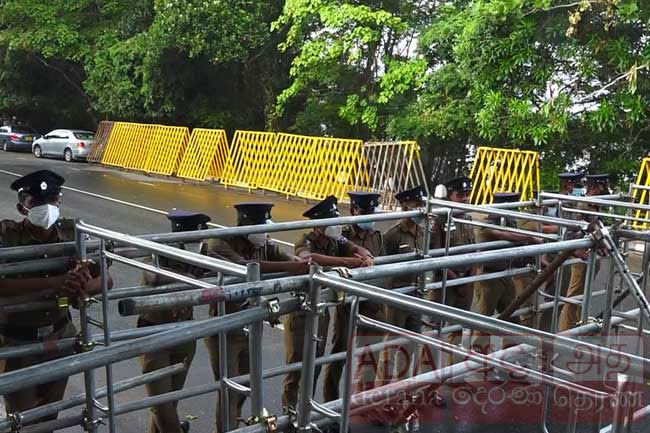
The security around the Parliament complex has been tightened and all the entry roads leading to it have been closed off with roadblocks, according to Ada Derana reporter.

Meanwhile, the Parliament is scheduled to convene tomorrow (19) at 10.00 a.m. chaired by the Speaker Mahinda Yapa Abeywardena.

Due to the current political crisis in the country, the calling of nominations to appoint a successor president is scheduled to be held tomorrow.

The voting related to this will be held as a secret ballot in the Parliament the next day (20).

It has already been announced that five members, including Acting President Ranil Wickramasinghe and Opposition Leader Sajith Premadasa, will contest the election to appoint the successor president.

Accordingly, tomorrow, their nominations will be handed over to the General Secretary of the Parliament and then he will announce it before the Parliament.

The candidate who gets more than 50 percent of the votes of the Members of Parliament who will vote on the day of the polling will be elected as the new president.

Each political party in the parliament has already announced the candidate they will support while the SLFP has said it will abstain from voting.

It is said that the votes of the members of the Sri Lanka Podujana Peramuna (SLPP), which controls the majority power in the Parliament, is a strong factor in electing the new president.

SLPP has 145 parliamentary seats in the current parliament and Samagi Jana Balawegaya (SJB) has 54 parliamentary seats.

Illankai Tamil Arasu Kadchi (ITAK) has 10 seats, National People’s Power (NPP) has 3 seats, Eelam People’s Party and Akila Ilankei Tamil Congress have 2 seats each.

Apart from this, Tamil Makkal Vidudalep Pulikal (TMVP), Sri Lanka Freedom Party (SLFP), Muslim National Alliance, Tamil Makkal Thesia Kuttani, Ahila Ilangei Mahajana Congress, National Congress, Sri Lanka Muslim Congress, United National Party and Ape Janabala Pakshaya have one seat each.

Source: Adaderana

Posted in Uncategorized

The hard choices Sri Lankans must make now

“No time for Gota ‘cos we are the champions… of the world!”

It is a hot afternoon at Galle Face Green, the epicentre of Sri Lanka’s fledgling protest movement. Above the sea of tents at the protest village floats the voice of a woman, singing her unique take on a Queen song.

For months, these protesters have been at the forefront of the millions-strong Aragalaya movement – named after the Sinhalese word for “struggle” – calling for the resignation of reviled president Gotabaya Rajapaksa.

Sri Lankans hold him and his elder brother, former president Mahinda, chiefly responsible for their country’s economic ruin.

Defying all expectations, the protesters have won a victory. Last week Gota, as he is popularly known, quit and fled.

But now comes the hard part: grappling with the political aftermath of Mr Rajapaksa’s departure and making some very difficult decisions.

Can Sri Lanka’s acting president restore order?
How Sri Lanka’s war heroes became villains
Why is Sri Lanka in crisis?
With Mr Rajapaksa gone, protesters have turned their sights on Ranil Wickremesinghe, the unpopular former prime minister.

He is seen as someone with close ties with the Rajapaksas, a powerful dynasty that ruled Sri Lanka for nearly two decades.

As the current acting president, he has little legitimacy in the eyes of the people. Mr Wickremesinghe failed in past presidential campaigns and lost his own seat in parliament in 2020. He is seen as having got the top post by sheer circumstance, after Mr Rajapaksa appointed him caretaker leader while making his hasty exit.

Last Wednesday, thousands of Sri Lankans stormed the prime minister’s office. At Galle Face Green, where the slogan “Gota Go Home” has dominated for months, the refrain is morphing to “Ranil Go Home”.

But Mr Wickremesinghe has vowed to follow the constitutional process, and will remain in power until parliament votes in a new president on Wednesday.

Many believe he could throw his hat in the ring and possibly win with the support of the Rajapaksas’ ruling Sri Lanka People’s Front party (SLPP).

A six-time prime minister who has never completed any of his terms, tainted by corruption scandals during his time in office, Mr Wickremesinghe has a flawed track record to say the least.

But he does have experience of running the country and is thought to have the support of many MPs who want stability and continuity.

There are others laying claim to the throne, such as opposition leader Sajith Premadasa and Dullas Alahapperuma, a SLPP MP. But this may mean a split vote – which could benefit Mr Wickremesinghe.

Meanwhile, the clock is ticking for Sri Lanka. Its central bank governor told the BBC it is uncertain they have enough foreign currency to buy fuel after the end of this month. The country urgently needs a leader to negotiate with the International Monetary Fund for a much-needed bailout of its debt.

Could protesters stomach a compromise, and accept Mr Wickremesinghe for the time being to ride out the economic storm?

No, said everyone the BBC spoke to last week. So tarnished is his reputation that they prefer anyone except him.

“He came into power saying he was going to hold everyone accountable, the Rajapaksas even, but he did nothing. It’s absurd to think that people are going to trust him again,” said university student Anjalee Wanduragala.

On Saturday, protest organiser Nuzly Hameem called on parliamentarians to listen to the people and deny Mr Wickremesinghe the presidency.

“If you are going to support Ranil as president of this country, when the next election happens, you will not be supported by the people and you should remember that,” he warned.

Protest organisers have vowed to continue demonstrating if Mr Wickremesinghe wins power on Wednesday.

The only way he could possibly mollify them is if he is able to solve the economic crisis – or at least get an uninterrupted supply of fuel – but that will not happen overnight.

Some argue the demonstrations would only hinder and distract at a time when the country needs to come together to dig itself out of the hole.

“Aragalaya has to accept whoever comes into power next. You cannot keep protesting,” one lawmaker told organisers in a meeting last week.

But the deeper question is whether continued protest is justifiable.

The strength of the Aragalaya movement has been its leaderless, organic nature. It’s what makes it so good at spontaneous mass uprisings – but it also makes it difficult to predict or control.

In the past few months, peaceful marches have morphed into chaotic clashes with military and police. In the past week alone, protesters have stormed the official residences of the president and prime minister, taken over the presidential secretariat building, and attempted to enter parliament.

The movement is now facing backlash from some quarters.

The Bar Association pleaded with protesters to vacate the prime minister’s office last week, saying it would not support “a situation of lawlessness or anarchy”. An ambulance service complained it had been attacked during the chaos.

Some citizens say the protesters have violated the sanctity of Sri Lanka’s institutions by forcing entry to government buildings seen as symbols of state power.

In solidarity with the protesters, some businesses have given them some much needed financing. But they could rethink this if the protests are prolonged and add to the destabilisation of the economy.

Privately, the protest organisers constantly worry the movement could spin off into violence due to fringe elements, the BBC understands.

In recent months demonstrators have torched MPs’ homes, as well as Mr Wickremesinghe’s private residence and the Rajapaksas’ ancestral home.

Security forces are accused of brutality in their attempts to quell demonstrations, including shooting at protesters, badly beating them and firing massive amounts of tear gas. They have injured hundreds of protesters so far.

Organisers are now hoping to dial down the temperature as they press on.

They have vacated most of the buildings they were occupying, and are now stressing they will only focus on peaceful demonstrations.

Asked by the BBC if he thought the protest movement had gone too far, organiser Father Jeevantha Peiris said: “We only wanted a protest rally – that was organised by us. The rest of it we had no control.

“People are desperate, they are in unrest… Ranil is directly responsible for this.”

He said they would be pursuing various forms of non-violent protests such as marches and strikes, as well as occupation of government buildings. “The only thing is we will never let public property get damaged. We don’t want anyone to get hurt,” he said.

But no matter the difficult choices that lie ahead for Sri Lankans in the coming days and weeks, they have already achieved much.

The uprising has for the first time brought together three major communities – Sinhalese, Tamils and Muslims – for a common cause. Men, women, children, Buddhist monks, Christian priests and nuns and Muslim businessmen have all joined in.

“Our younger generations, we have taught them not to turn back. They will go forward, they will be asking for all demands,” said protest leader Visaka Jayaweera.

After so many years in thrall to the Rajapaksas, Sri Lankans have done the unthinkable, prying their country out of the family’s iron grip.

It may go down in history as a moment when ordinary people were emboldened to demand a greater say in how their country should be run.

Sri Lanka’s politicians now know what awaits them if they do not deliver.

Source: BBC
Written by: Tessa Wong & Anbarasan Ethirajan

Ex-leader Mahinda Rajapaksa will not flee Sri Lanka: Top aide

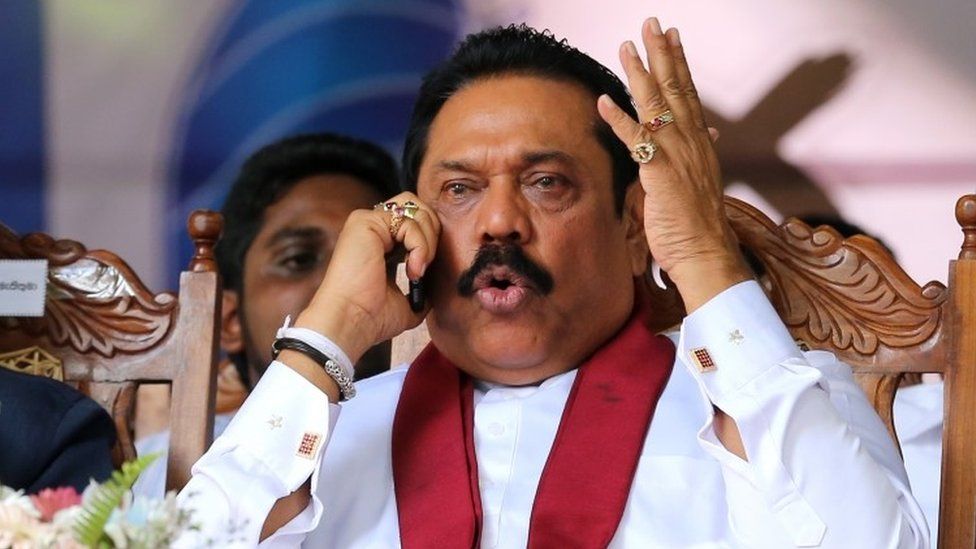
The man who paved the way for the Rajapaksa dynasty’s dominance over Sri Lankan politics for over two decades has no immediate plans to flee the country, according to a top aide.

Former President and Prime Minister Mahinda Rajapaksa, 76, heads the Rajapaksa clan that most Sri Lankans blame for the country’s worst economic crisis in decades that has triggered the ongoing unrest in the island nation.

Mahinda’s younger brother, President Gotabaya Rajapaksa, escaped to the Maldives on Wednesday after thousands of protesters stormed his residence last week.

He reportedly flew to Singapore in a Saudi plane on Thursday as the nation awaited his resignation.

Another brother and former finance minister, Basil Rajapaksa, also tried to leave the crisis-hit country but was stopped at the airport by the immigration authorities.

However, a top aide of Mahinda Rajapaksa on Thursday said the former strongman and patriarch of the Rajapaksa dynasty has no such plans. Mahinda’s eldest son, former minister Namal, has also publicly stated that he would not leave the country.

“They both have clearly said they would not leave Sri Lanka,” the aide who wished to remain anonymous told Al Jazeera.

Mahinda’s aide also indicated that there was a rift between him and Gotabaya, the military officer-turned-president who fled.

“It was because of him [Mahinda] that Gotabaya came to power, but once elected, the prime minister was sidelined by his own brother,” the aide told Al Jazeera.

“Until the last moment, Gotabaya Rajapaksa didn’t know how to govern but he never listened to Mahinda’s advice.”

Speaking on a social media platform in May, Gotabaya’s cousin Udayanga Weeratunga also said the president never consulted with the prime minister while making decisions.

Weeratunga described Gotabaya as a man “with a military mindset who only understands military way of dealing with things”.

Sri Lankan media have reported that Mahinda was reluctant to nominate Gotabaya as the presidential candidate in the 2019 elections.

A Bloomberg report this week said Namal is being groomed by Mahinda to be a future leader and carry forward the family’s legacy in politics.

Protesters reject aide’s claims
But Sri Lanka’s protesters denounced the comments made by Mahinda Rajapaksa’s aide, describing it as another attempt by the Rajapaksa “cartel” to come back to power.

Vimukthi Dushantha, a member of the Black Cap Movement led by young protesters, said “blaming somebody else” has been a strategy of the Rajapaksa family during a setback.

“Rajapaksas are a family that drank blood from the Sri Lankan society like leeches for years,” he told Al Jazeera. “They always blamed somebody else when they were in trouble.”

“Mahinda Rajapaksa was Gotabaya Rajapaksa’s prime minister, so he cannot now simply say he didn’t know anything.” – Vimukthi Dushantha, Sri Lankan protestor

Dushantha rejected claims made by Mahinda’s aide that the former leader did not agree with the policies pursued by his younger brother, President Gotabaya Rajapaksa.

“Mahinda Rajapaksa was Gotabaya Rajapaksa’s prime minister, so he cannot now simply say he didn’t know anything. This is another propaganda drive to protect Mahinda Rajapaksa, and Namal Rajapaksa by extension.”

Activist Shehan Malaka Gamage said while the Rajapaksa brothers may have political differences, they “would not harm each other under any circumstances”.

“When it comes to family bonds, they are united like nobody else,” he told Al Jazeera.

Mahinda, who entered politics in 1970, became Sri Lanka’s fifth executive president in 2005 after a closely-fought battle with another veteran, current Prime Minister Ranil Wickremesinghe.

Mahinda’s presidency paved the way for several of his brothers, including Gotabaya and Basil, to hold prominent positions in the Sri Lanka administration.

During his presidency, Mahinda, along with then-Defence Secretary Gotabaya, brutally crushed a decades-long rebellion by the ethnic Tamils in the north, a civil war that claimed tens of thousands of lives, including 40,000 civilians.

In the last stages of the civil war that ended in 2009, Mahinda’s government was accused of wartime atrocities, extrajudicial killings and other systematic abuses – allegations the Rajapaksas deny.

Many in the Buddhist-majority nation of 22 million people hailed Mahinda for his brutal crushing of the civil war, calling him a hero.

At the height of their popularity, the Rajapaksas were revered as a “royal family”, with many people, including senior politicians and officials, literally bowing down before them.

Mahinda remained president till 2015, when he lost to the opposition. But the clan made a comeback in 2019 when Gotabaya won the presidential election with a sweeping majority in the wake of the Easter Sunday bombings.

Gotabaya appointed Mahinda as the prime minister in a new Rajapaksa administration in the Buddhist-majority country.

The new government promised to lead Sri Lanka out of the economic slump. But a series of policy mistakes led the island to an unprecedented meltdown.

In a reversal of fortunes for the island’s most powerful clan, Mahinda was forced to resign as prime minister earlier this year following a deadly protest over an escalating economic crisis.

No change in decision to support RW, says Sagara

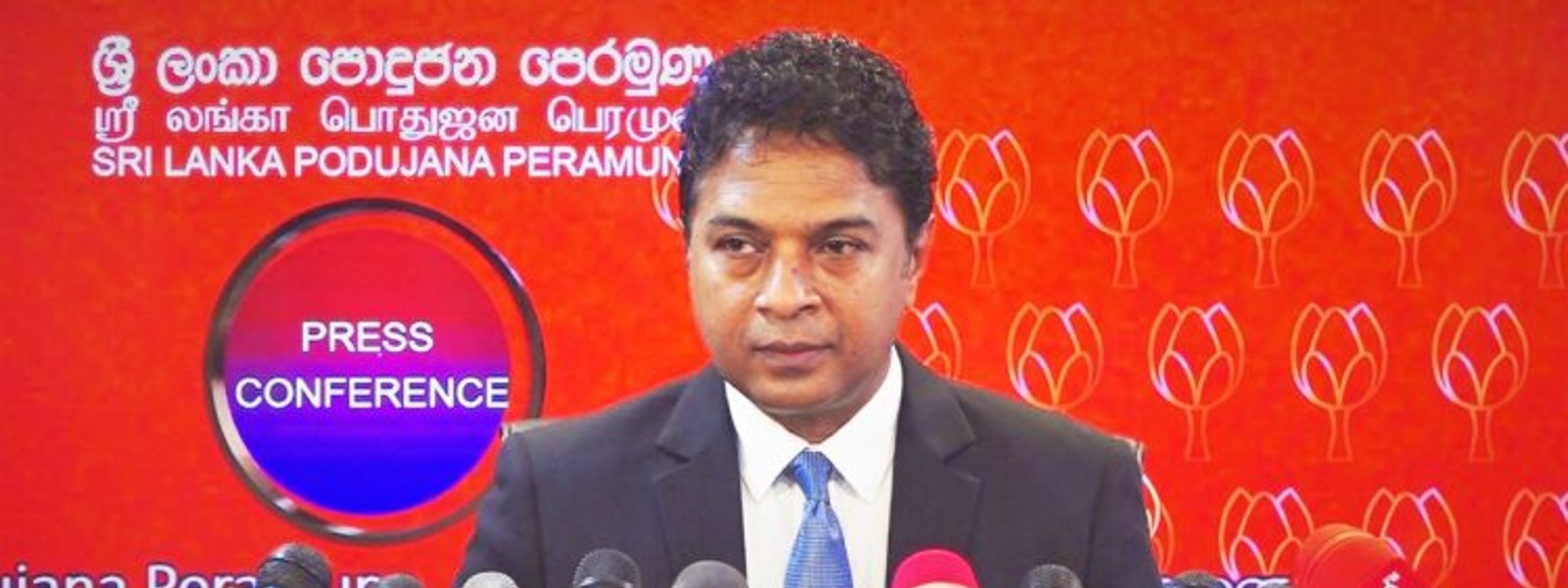
The General Secretary of the Sri Lanka Podujana Peramuna, Attorney-at-Law Sagara Kariyawasam says that he will reply to the letter directed by the party Chairman, Prof. G. L. Peiris, inquiring about the decision taken by the SLPP to support the Acting President, Ranil Wickremesinghe, as a Presidential Candidate.

When inquired by News 1st, the General Secretary of Podujana Peramuna said that there has been no change in the decision taken by his party so far.

Kariyawasam added that the majority opinion of the SLPP remains favorable to the acting President.

Source: News 1st

SLMC to agree with SJB on candidates

The Leader of the Sri Lanka Muslim Congress, Rauff Hakeem says that he agrees with any decision taken by the Samagi Jana Balawegaya regarding the candidates for the election of a new President in Parliament.

The MP stated that the candidate who emerges should be flexible to fulfill the demands of the people without depending on positions.

SLMC Leader Hakeem pointed out that solutions to the problems faced by the people should be found by establishing an all-party Government.

Accordingly, he said that continuous discussions are being held to seek solutions to solve the crisis in SriLanka.

The SLMC Leader also mentioned that the Sri Lanka Podujana Peramuna remains divided, as there is no agreement within the Party for a single candidate.

Source: News 1st

Posted in Uncategorized

Indian government calls an all-party meet on Sri Lanka crisis

The Narendra Modi government has called for an all-party meeting on Tuesday evening to discuss the crucial issue of the Sri Lanka crisis.

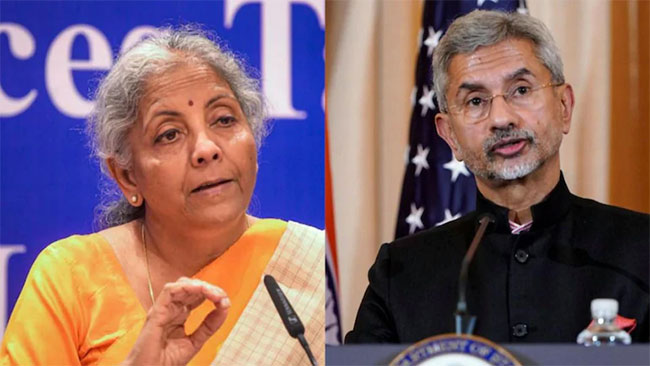
India’s Parliamentary Affairs Minister Pralhad Joshi made the announcement on Sunday saying, “On Tuesday, we are calling for another all-party meeting to brief on the Lankan crisis. We have requested Finance Minister Nirmala Sitharaman and External Affairs Minister S Jaishankar to hold this briefing.”

According to the sources, the foreign secretary is likely to make a presentation before the members on the situation in Sri Lanka and the assistance that India has given in the past to the island nation. And the meeting is likely to start at 5:30 pm.

“The government is calling for suo motto meeting to address the concerns of several political parties, especially in Tamil Nadu as they are worried about the Sri Lankan crisis and the influx of refugees in the state,” the sources said.

In his recent meeting with Indian Prime Minister Narendra Modi and External Affairs Minister Jaishankar, Tamil Nadu CM MK Stalin expressed his concern about the situation in Sri Lanka and asked for permission to send relief material to the economically-hit nation.

Sri Lanka is facing an economic and political crisis. Gotabaya Rajapaksa resigned as president after protesters stormed his residence on July 9 and his resignation has been finally accepted by the Parliament Speaker.

Meanwhile, Wickremesinghe was sworn in as Acting President on Friday, and Sri Lanka’s 225-member Parliament will elect the new president by a vote on July 20.

Currently, Sri Lanka is witnessing a severe shortage of fuel and other essential supplies and is in the throes of its worst economic crisis with soaring inflation. The oil supply shortage has forced schools and government offices to close until further notice.

Reduced domestic agricultural production, a lack of foreign exchange reserves, and local currency depreciation have fuelled the shortages.

The economic crisis will push families into hunger and poverty – some for the first time – adding to the half a million people who the World Bank estimates have fallen below the poverty line because of the pandemic.

Amidst the crisis in Sri Lanka, India has extended this year alone support of over USD 3.8 billion for ameliorating the serious economic situation in the island nation as a mark of its Neighbourhood First policy. (ANI)

Source: Adaderana

Posted in Uncategorized

Sri Lanka a ‘warning sign’ for countries with high debt levels and limited policy space – IMF

IMF chief Kristalina Georgieva on Saturday warned officials from the Group of 20 major economies to take urgent action to combat inflation, warning that the “exceptionally uncertain” global economic outlook could turn worse if higher prices persisted.

Georgieva, speaking at a G20 finance officials meeting in Indonesia, said: “I wish the global economic outlook was as bright as the sky in Bali, but unfortunately, it is not. The outlook has darkened significantly, and uncertainty is exceptionally high. Downside risks about which the IMF had previously warned have now materialized.”

She pointed out that Russia’s intensifying war in Ukraine had increased pressure on commodity and energy prices, and global financial conditions were tightening more than expected.

“And continuing pandemic-related disruptions and renewed bottlenecks in global supply chains are weighing on economic activity,” remarked Georgieva.

“As a result, later this month we will project a further downgrade to global growth for both 2022 and 2023 in our World Economic Outlook Update. Moreover, downside risks will remain and could deepen – especially if inflation is more persistent – requiring even stronger policy interventions which could potentially impact growth and exacerbate spillovers particularly to emerging and developing countries,” she noted.

“Countries with high debt levels and limited policy space will face additional strains. Look no further than Sri Lanka as a warning sign,” she cautioned.

“Emerging and developing countries have also been experiencing sustained capital outflows for four months in a row. They now suffer the risk of reversing three decades of catching up with advanced economies and instead falling further behind,” she added.

The IMF chief said to navigate this extraordinarily challenging environment, there are three priorities:

*First, countries must do everything in their power to bring inflation down. Failure to do so could risk the recovery and further damage living standards for vulnerable people.

“The good news is that central banks are stepping up. Monetary policy is increasingly synchronized: more than three-quarters of central banks have raised interest rates and have done so 3.8 times. Central bank independence is critical for the success of these policy actions, as is clear communication and a data-driven approach,” stated Georgieva.

*Second, fiscal policy must help – not hinder – central bank efforts to tame inflation. This is a complex task. With growth slowing down, some people will need more support, not less. So fiscal policy needs to reduce debt while providing targeted measures to support vulnerable households facing renewed shocks, especially from high energy or food prices.

*Third, a fresh impetus for global cooperation will be critical to confront the multiple crises the world is facing.

“We need G20 leadership particularly to address the risks from food insecurity and high debt. Here, I welcome the focus on food security issues during these meetings. Food insecurity means hunger for millions of people,” observed Georgieva.

“Yet it is a solvable problem. Together with heads of the UNFAO, World Bank, WFP and WTO, the IMF is calling on the international community to step up and work together to support those in immediate need, remove export restrictions, promote food production, and invest in climate-resilient agriculture,” she added.

According to her, a strong global leadership is needed to tackle the scourge of high debt, which has reached multiyear highs.

More than 30% of emerging and developing countries are at or near debt distress. For low-income countries that number is 60%. And with tightening financial conditions and exchange rate depreciations, the debt service burden is a harsh – and for some countries – unbearable burden.

“In that environment, it is paramount for the G20’s Common Framework (CF) to deliver on its promise. I am encouraged that the three creditor committees for Chad, Ethiopia, and Zambia are meeting this week. We need results. The whole world is watching, she noted.

Georgieva pointed out that new rules and timelines should be established for the CF. “Also it is important to expand coverage to non-DSSI countries. I urge the G20 to come together on a way forward and to do so swiftly. The debt situation is deteriorating fast and a well-functioning mechanism for debt resolution should be in place, she added.

The IMF chief urged G20 leaders to reinvigorate collective efforts to deliver on common global ambitions. “This includes making progress on SDR channeling to amplify the effect of the IMF’s recent $650 billion SDR allocation,” she stated.

Lauding the G20 in helping establish the Resilience and Sustainability Trust (RST) with close to $40 billion in pledges, Georgieva said: “Now is the time to turn those pledges into actual contributions for the new Trust to be operational by the Annual Meetings in October.

“The need to support our vulnerable member countries to address longer-term structural challenges, especially those related to climate change and pandemics, could not be more pressing,” she added.

Source: TradeArabia News Service

Posted in Uncategorized

Sri Lanka’s ousted president says he ‘took all possible steps’ to prevent crisis

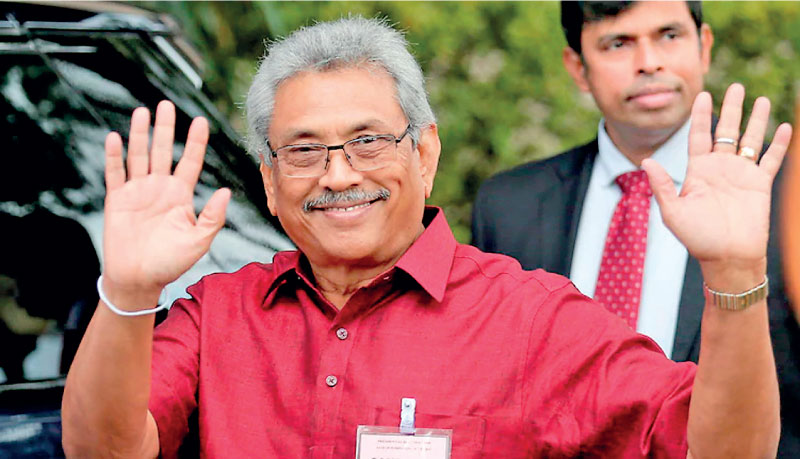
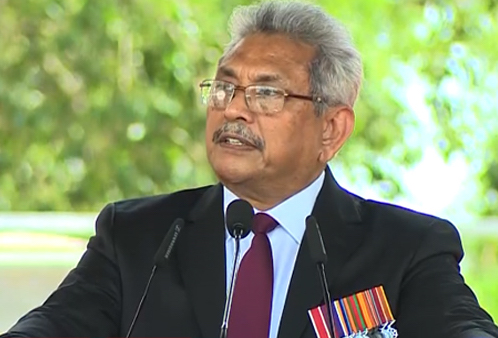
Sri Lanka’s ousted president Gotabaya Rajapaksa, who fled overseas this week to escape a popular uprising against his government, has said he took “all possible steps” to avert the economic crisis that has engulfed the island nation.

Rajapaksa’s resignation was accepted by parliament on Friday. He flew to the Maldives and then to Singapore after hundreds of thousands of anti-government protesters came out on the streets of Colombo a week ago and occupied his official residence and offices.

Sri Lanka’s parliament met on Saturday to begin the process of electing a new president, as a shipment of fuel arrived to provide some relief to the crisis-hit nation.

During the proceedings Dhammika Dasanayake, the secretary general of Sri Lanka’s parliament, formally read out Rajapaksa’s resignation letter, the contents of which have not previously been made public.

In his letter Rajapaksa said Sri Lanka’s financial crisis was rooted in years of economic mismanagement that pre-dated his presidency, along with the Covid-19 pandemic that drastically reduced Sri Lanka’s tourist arrivals and remittances from foreign workers.

“It is my personal belief that I took all possible steps to address this crisis, including inviting parliamentarians to form an all-party or unity government,” the letter said.

Parliament will next meet on Tuesday to accept nominations for the post of the president. A vote to decide the country’s leader is set to take place on Wednesday.

Six-time prime minister Ranil Wickremesinghe, an ally of the Rajapaksas who is the sole representative of his party in parliament, has been sworn in as acting president until then.

Wickremesinghe, who protesters want gone too, was selected as the ruling party’s candidate for president on Friday, leading to the prospect of further unrest should he be elected.

The opposition’s presidential nominee is Sajith Premadasa, while the potential dark horse is senior ruling party lawmaker Dullas Alahapperuma.

Over 100 police and security personnel with assault rifles were deployed on the approach road to parliament on Saturday, manning barricades and a water cannon to prevent any unrest. Columns of security forces patrolled another approach road to parliament, though there were no signs of any protesters.

Street protests over Sri Lanka’s economic meltdown simmered for months before boiling over on July 9, with protesters blaming the Rajapaksa family and allies for runaway inflation, shortages of basic goods, and corruption.

Days-long fuel queues have become the norm in the island nation of 22 million, while foreign exchange reserves have dwindled to close to zero and headline inflation hit 54.6% last month.

Sri Lanka received the first of three fuel shipments on Saturday, Energy Minister Kanchana Wijesekera said. These are the first shipments to reach the country in about three weeks.

A second diesel consignment will also arrive on Saturday, with a shipment of petrol due by Tuesday.

“Payments completed for all 3,” the minister said in a tweet.

Rajapaksa Told to Leave Singapore After 15 Days, India Refuses to Let Him Stay Here

More trouble seems to be in store for Gotabaya Rajapaksa, who resigned as the Sri Lankan President on Friday, as Singapore is not keen on letting him stay for long, according to sources.

Rajapaksa, 73, left the country along with his wife and two security officers on a military jet on Wednesday and went to the Maldives, from where he headed to Singapore.

The authorities in Singapore have told Rajapaksa that he has permission to stay for 15 days, which is unlikely to be extended, added sources.

Rajapaksa is not clear about his plan after the next 15 days, they added. Sources confirmed to CNN-News 18 that he has also approached India, but India has denied his request. India does not want to be seen against the Sri Lankan people, said sources.

Source: News 18

Posted in Uncategorized

Gota quits on the run

President Gotabaya Rajapaksa, who was forced out of office by waves of public protests, sent in his registration letter from Singapore yesterday bringing to an end nearly three years of rudderless and chaotic rule.

The President, who fled the country on Wednesday, emailed his resignation letter via the Sri Lanka High Commission in Singapore last night to Speaker Mahinda Yapa Abeywardena. Rajapaksa did so after arriving in Singapore via a Saudi Air flight from the Maldives where he spent a day after being flown in by an Air Force military plane in the early hours of Wednesday.

Rajapaksa was allowed to enter Singapore on the basis of a private visit and has not been granted asylum, the city-State said, after the leader arrived from the Maldives.

“It is confirmed that Rajapaksa has been allowed entry into Singapore on a private visit,” Singapore’s Foreign Ministry said in a statement. “He has not asked for asylum and neither has he been granted any asylum. Singapore generally does not grant requests for asylum.” There was speculation that Rajapaksa is planning to travel to another country from Singapore.

Speaker Abeywardena said last night he will formally announce that Rajapaksa has vacated the post of President to the public today in keeping with the relevant constitutional provisions after verifying the authenticity of the letter. The Attorney General (AG) was consulted last night by the Speaker’s office in this connection,” the Daily FT learns. Originally Rajapaksa said he will tender his resignation on Wednesday 13 July.

The President was forced out of office just two years and eight months into his five-year term, making him the first President to resign from his post. It is a humiliating exit for a man who was elected by a landslide in the Presidential poll held in November 2019 on the back of the promise of efficient and clean administration.

The office of Prime Minister Ranil Wickremesinghe, who is the Acting President, could not confirm if he will take oath today as interim President pending the vote in Parliament to select a successor to Rajapaksa.

A spokesperson for the office said they are waiting to get confirmation regarding the resignation letter.

The Sri Lanka Podujana Peramuna (SLPP) announced yesterday that it will not field a candidate to contest for the Presidency when the Parliament meets to elect a new President.

The party said that it was bowing to the public demand for a change in a SLPP-led administration and has hence taken this decision.

Party leaders had earlier agreed to hold the election to elect a new President for 20 July but this may be delayed as an earlier decision for Parliament to meet today has been postponed. The House will now meet on Tuesday as scheduled when the Speaker will inform the House that a vacancy has occurred in the post of President and fix a date to call for nomination.

In a related development representatives of several parties including the SJB, SLFP, the independent group within the SLPP, TNA that met yesterday decided to inform the Speaker that they will nominate Opposition Leader Sajith Premadasa for the post of Prime Minister of the all-party Government that is being mooted to overcome the economic crises facing the country. The JVP did not attend the meeting.

Source: Daily FT