Why Muslims protest against ‘One Country One Law’

President Gotabaya Rajapaksa through a Gazette (extraordinary) notification No. 2251/30 dated 26-10-2021 and No. 2252/56 dated 06/11/2021 established a ‘Presidential Task Force for One Country, One Law (OCOL)’, by virtue of the powers vested in the President by Article 33 of the Constitution of Sri Lanka. The 13-member One Country One Law task force is headed by Galagoda Aththe Gnanasara Thero.

The President’s Senior Assistant Secretary Jeevanthie Senanayake was appointed as the Secretary to the Presidential Task Force. The ‘Presidential Task Force for One Country, One Law’, is tasked with the study of the implementation of the concept; ‘OCOL’ within Sri Lanka and prepare a draft Act for the said purpose.

Lead Muslim civil society organisations and religious leadership wrote to the President expressing their deep concern and lack of confidence in the impartiality and competence of the Chairman of the Task Force to examine the issues involved and drafting relevant laws.

The findings of The Presidential Commission of Inquiry to investigate and inquire into and report or take necessary action on the bomb attacks on 21 April 2019 clearly indicate, that his speeches “contained without any doubt, hate speech” and further was of the view that part of the speeches made, can form the basis for a prosecution in terms of the International Covenant on Civil and Political Rights (ICCPR) Act No. 56 of 2007. Moreover, they went on to recommend that the Attorney General considers filing charges against him; in view of which, the Muslim community is unconvinced that the purpose of the One Country One Law Task Force can be achieved by such an individual chairing this task force.

Sri Lanka is a multi-cultural, multi-ethnic and multi-religious country. This diversity is reflected in its personal laws of minority groups and are protected under our Constitution. Whilst there is no question that there must be uniformity in the application of the general, civil and criminal law (Penal Code, Criminal Procedure Code, etc.), personal matters such as marriage, divorce, inheritance and succession, are matters that properly fall within the purview of personal laws. The Muslim community has enjoyed the benefits of these personal laws (whether codified or not) since time immemorial; from the time of the Sri Lankan Kings to date, more than 1,000 years in existence.

These personal laws have never infringed on the rights of other communities, whilst being protected by the Constitution of Democratic Socialist Republic of Sri Lanka. The culmination of a One Country One Law, which seeks to abolish personal laws (Thesawalamai, Kandyan, and Muslim) of all communities, will merely be a cause for contention amongst communities and not a cause of harmony. Undoubtedly, there is an urgent need for reform of these laws but not a need for it to be abolished.

The Muslim community vehemently opposes any attempt to abolish its personal laws in the guise of implementation of the “One Country One Law” concept, and are convinced that 98% of the Muslim community will stand in solidarity, in emphatically opposing the elimination of all personal laws, especially the Muslim Personal Laws of Sri Lanka.

Regretfully, some Muslims had been coaxed in to submitting proposals to the task force to abolish the Muslim Personal Laws (MPL). Some of them have complained of personal experiences of injustice, corruption and prejudice of certain Quazis, hence the Muslim Personal Laws should be repealed. MPL has been in existence since the Dutch period and was called the Mohammedan code that addresses the Muslim marriage, divorce, inheritance, etc. These laws have religious and cultural foundations that conform to the Islamic faith.

The betrayal by certain Muslims with vested interests caused a huge uproar amongst the Muslim community. Muslim activists started a signature campaign to protest the possible repeal of the Muslim Personal laws. So far over 50,000 protesting signatures have been delivered to the Presidential Task Force Secretariat from across the country and is expected to increase to at least 75,000 within the next few days. Many Muslims have called upon the Task Force not to repeal but reform the Muslim Personal Laws that respects gender equality and justice conforming to international standards while preserving Quranic injunctions.

There may be individuals who are corrupt in the quazi system, but the majority of them are honourable persons. They have acceptance by the community and are appointed by the Judicial Service Commission. As we all know, there have also been quite a few allegations against the judiciary and was a hotly debated subject with the recent imprisonment of Parliamentarian Ranjan Ramanayake. No one has called for repeal of the justice system because of various allegations. Corruption, nepotism and political bias has encompassed every level of Sri Lankan society. A few individuals not conforming to norms is no reason to repeal any law.

The Quazi system certainly needs reforms and the Muslim community has already submitted its proposals to the Minister of Justice that calls for the Quazi system to be upgraded, suitable persons recruited, appointment of female Quazi, a private place to conduct proceedings and various other constructive recommendations.

The Quazi system is a judicial body with personnel appointed by the Judicial Services Commission. Appeals lie with the Board of Quazis and then to the Supreme Court. The primary role of a Quazi is to mediate and reconcile marriages in conflict based on the Quran and Islamic jurisprudence.

This legal system is a complex mixture of laws. Dutch colonial administrators codified the rules of inheritance, marriage and divorce in order to facilitate the application of Muslim family law. This Code was adapted by the British in 1799. The British later enacted the Registration of Muslim Marriages Ordinance in 1896 repealing parts of the Dutch Code. The other important piece of legislation relating to Islamic family law is the Muslim Intestate Succession Ordinance of 1931 which is still in force. The 1896 Ordinance was later abolished and the Muslim Marriage and Divorce Act (MMDA) was enacted in 1951, which essentially reinforces the principle that, in matters of personal status, the rights and duties of the parties involved are to be determined by the religious school of laws to which the parties belong.

The Muslim community has been intimidated into silence since the fateful Easter Sunday bombing of 21/4/2019 due to the involvement of a few Muslims by name. This tragedy branded the 2.1 million Muslims as terrorists. The community did not recognise the bombers as Muslims and were not even given an Islamic funeral. Pushing the entire community to the wall by vested interests may have far reaching consequences leading to despair and radicalisation of Muslim youth. Many are losing faith in the Sri Lankan nation and are endeavouring to migrate.

Sri Lanka needs equitable justice through its judiciary while recognising the inalienable rights of minorities in a multi ethnic, multi religious, multicultural and multilingual communities that form the Sri Lankan nation. These vibrant colours form the Sri Lankan nation that should flourish.

Posted in Uncategorized

Crisis-hit Russians, Ukrainians boost Sri Lanka’s tourism recovery

Foreign visitors from Russia and Ukraine, the two countries now threatening the world of an armed war amid escalated tension, helped Sri Lanka’s post-Covid-19 tourism recovery this year, the official government data showed on Monday (14).

Russians accounted for 18,044 or 15.8 percent of the total 113,670 holiday makers who visited Sri Lanka this year up to February 11, while Ukrainians accounted for 9,883 or 8.7 percent of the total visitors in the same period.

Russia has more than 100,000 troops massed near Ukraine, which is not part of the Atlantic military alliance, and Washington – while keeping open the diplomatic channels that have so far failed to ease the crisis – has repeatedly said an invasion is imminent, Reuters has reported on Monday.

“An analysis of Russian arrivals in the consecutive years reveals that it has almost exceeded the pre
pandemic levels as experienced in January 2019,” the state-run Sri Lanka Tourism Development Authority said in its January monthly report.

“This could be likely due to increased interest by Russian tour operators in alternative destinations to
Thailand and Goa with strict public health measures in place and the launching of direct flights to
Russia.”

The country saw an increase of Ukrainian and Russian travelers after a tourism revival projected
targeting those countries was launched in late 2020 by former Sri Lankan Ambassador to Russia
Udayanga Weeratunga.

Sri Lanka started direct flights between Sri Lanka and Russia from November last year following an agreement between Russia’s Aeroflot airline and Sri Lanka’s Civil Aviation authority.

The island nation, populour for its shallow beaches and diverse nature attracted 12.3 percent of the offshore visitors from both Russia and Ukraine in 2021 when it saw only a total of 194,495 tourists visited the country.

The SLTDA has targeted at least 1.1 million arrivals this year with a targeted average of
90,000 tourists per month.

Sri Lanka’s revenue from tourism hit 110.7 million US dollars in January this year compared to 2.3 million US dollars a year ago mainly due to lockdown in 2021.

The SLTDA has aimed to promote Sri Lanka as a destination for foreign weddings, meeting, nd conferences to boost the number of tourists in the country.

Lankans want both elections and a strong leader untrammelled by elections

A survey conducted by the Colombo-based  Centre for Policy Alternatives (CPA) in September-October 2021, found that while the majority of Sri Lankans were wedded to the principle of elections, they were also hankering for “a strong leader who is not inconvenienced by elections.”

An overwhelming majority (92.2%) were in support elections as a way of choosing the rulers. However, 75% favored a strong leader. From an ethnic perspective it was mostly respondents from the Sinhala and Tamil communities who said that there should be a strong leader who did not have to worry about elections. Up Country Tamils and Muslims  opposed the strong leader principle.

Exactly half of the respondents (50.3%) were of the opinion that more powers should be given to parliament by reducing the powers of the President.

An overwhelming majority (87.4%) said that all major decisions that concerned the country should be taken by experts rather than politicians. Nationally, a majority of respondents (60.7%) were of the view that there should be more experts as opposed to politicians in the government.

There appeared to be overwhelming support for the military as a result of its efforts to mitigate the COVID-19 crisis in the country. However, when asked as to whether the country should be governed by the military, a substantial majority (70.8%) said “no”.

There was however considerable support in the military handling public affairs at a time of crises. This view was held particularly by the Sinhala community (60.5%), as opposed to those from the minorities (Tamils 30.5%, Up Country Tamils 30.2% and Muslims 25.2%).

On giving decision-making powers to religious leaders, a majority of respondents (76.3%) disagreed that major decisions should be taken by religious leaders.

A majority of respondents (64.1%) said that it is unlikely that during its term in office, the Gotabaya Rajapaksa government would lift the country from the economic crisis it has been in.

There appears to be a certain degree of skepticism about the government’s plans to bring about a new constitution. Nearly 40% were of the view that a new constitution was unlikely.

Fertilizer Question

A majority of respondents (72.1%) were of the opinion that even though chemical fertilizers are not good for one’s health, until a viable solution is found, chemical fertilizers should continue to be used to some extent. Only 23% of the respondents were of the view that chemical fertilizers must be completely stopped, immediately.

Foreign Investment

Nearly 45% of the respondents felt that the government should allow foreign companies to invest in the country, as an increase in trade would benefit everyone. But 37.5% said that due to exploitative practices of foreign companies, the government should not allow foreign investment in the country.

On household income, a significant proportion of respondents (75.1%) indicated that their household income got worse. This is felt most among the Up Country Tamil community (63.6%) which indicated a drop in income. A significant majority of respondents (58.8%) from the Up Country Tamil community indicated that their political party affiliations resulted in their being unfairly treated when receiving government subsidies.

Ethnic Relations

Nearly 48.6% were of the view that their association with persons from other ethnic groups had remained the same when compared to what it was two years ago. Nearly 30% of the respondents claimed that it had got worse. Up Country Tamils (47.3%) and Muslims (40.5%) reported that inter-ethnic relations had got worse.

Nearly 37% of the respondents believed that freedom to criticize the President and other political leaders had decreased, whilst nearly 32% of the respondents claimed that it had remained the same. Muslims (51.9%), Up Country Tamils (51.5%) and Tamils (50.3%) claimed that there had been a decline in the level of freedom to criticize the President and other political leaders when compared to what it was during the previous government.

Muslims (50.4%) and Up Country Tamis (56.6%) and Tamils (45.3%) said that it had become difficult to criticize the military. Only 25.3% of the Sinhalese felt so.

Whilst a majority of respondents (58.2%) were of the view that the government would maintain good foreign relations, nearly one third of the respondents indicates that the government would not. From those who indicated that the government would not maintain successful foreign relations, it was mostly respondents from the Muslim community (40.2%) who held this view.

Sri Lanka prints Rs1.2trn in 2021, money supply, food prices up 40-pct over 2-years

Sri Lanka has printed 1.2 trillion rupees in 2021 most of which has flowed out of the country as a balance of payments deficit official data shows on top of 505 billion rupees printed in 2019 mostly to keep interest rates down.

Central bank credit to government grew to 2,093 billion rupees by December 2021 from 868.9 billion rupees a year earlier.

A part of the central bank credit to government including over 200 billion in July 2021 relates to foreign reserves appropriated to repay bonds, which did not create domestic inflation. However they prevented the monetary system from tightening and rates from rising.

In 2020 Sri Lanka printed 505.9 billion rupees based on official data, but the liquidity injected to the banking system was much higher. Money was injected also by a cut in the statutory reserve ratio. In a bizarre move the money was re-printed in September 2021.

BOP hit

In 2020 some of the money was printed to give Covid-19 re-finance.

In the way data is currently calculated in Sri Lanka, printed money remaining as excess liquidity in the system does not get captured as central bank credit until it disappears from the country as a BOP deficit. At the beginning of December 200 billion rupees of excess liquidity remained in the system.

A large part of the money in both years was printed came from yield controls imposed on Treasuries auctions, which caused them to fail and liquidity to be injected.

After August 2021 price controls were lifted and bond auctions were mostly successful.

However since then money is printed mostly to sterilize reserves given for imports. The central bank is also printing money for remittances.

The money boomerangs as import demand when the families of expat workers spend them and more reserves are lost as they new money is exchange for dollars via imports.

In 2021 Sri Lanka was hit by a balance of payments deficit of 2.3 billion rupees as the printed money was exchanged for monetary reserves.

In 2021, the BOP deficit was 3.9 billion US dollars.

In September 2021, a statutory reserve ratio was hiked and the entire money was printed in a bizarre move.

Inflation

In the two years reserve money has grown 40 percent. Broad money had also grown 40 percent despite weak economic growth, creating conditions for rapid price rises.

While liquidity injections hit the balance of payments fast (4 to 6 weeks) with imported goods coming in to fill domestic demand.

Persistent money printing to keep rates down leads to growth in credit and broad money, triggering domestic inflation.

When rates are kept down artificially, money also go to long term assets, driving up a speculative bubble. People may also buy assets fearing inflation or currency depreciation. Capital flight may also take place.

In most countries broad money growth turns in to domestic inflation after 12 to 24 months. Similar problems had been seen in countries like the US.

In Sri Lanka the broader consumer price index, which also includes services which rises slowly, has risen 17 percent over the two years.

Food prices have risen 40 percent.

Sri Lanka exported and imported goods also rise when the US prints money, driving up commodity prices. Traded goods respond quicker to loose policy.

Anchor Conflicts

Sri Lanka’s monetary policy deteriorated rapidly after the end of a 30-year war and accelerated after the retirement of Deputy Governor W A Wijewardena, analysts have said.

Sri Lanka stated following ‘flexible’ inflation targeting, a highly discretionary domestic anchor, despite having a foreign reserve collecting highly unstable peg with the US dollar called a ‘flexible’ exchange rate as an external anchor, which are in conflict with each other.

Though Sri Lanka had a Latin America style central bank from 1950 set up by a US money doctor, the island’s commercial borrowings were limited.

After 2015, monetary instability ratcheted as anchor conflicts worsened leading to a rapid rise in commercial debt.

When money is printed (inflationary policy is followed with a peg) foreign reserves cannot be built with current inflows and also the ability to repay maturing debt and interest with current inflows is lost.

In 2015, 2016 and 2018 the country could not repay maturing debt with current inflows as inflationary policy (money printing) was followed under ‘flexible’ inflation targeting coupled with liquidity injected to target call money rate.

Under ‘flexible’ inflation targeting with-reserve-collecting-peg, liquidity injections start about two years after monetary tightening ends a currency crisis claiming that inflation is low (Sept 2014, March 2018 and Feb 2020) which is roughly the time it takes for inflation from the previous money printing bout to dissipate, triggering another crisis.

In 2020 and 2021, though sovereign bonds were repaid, the central bank’s reserves were run down and it has become a large net debtor as fiscal debt was effectively transferred to the monetary authority.

Has white van culture returned?: Rev. Cyril Gamini Fernando

Following the arrest of civil society activist Shehan Malaka Gamage by the Criminal Investigations Department (CID) yesterday (14), National Catholic Social Communication Centre Director Rev. Cyril Gamini Fernando raised concerns about whether a ‘white van’ culture is on the rise again.

“All Gamage did was raise a voice seeking justice for victims of the Easter Sunday terror attacks. We are all critical of the delay in serving justice for these victims. His arrest leads us to suspect as to whether a ‘white van’ culture is on the rise again as he was arrested by those claiming to be CID officers who had come in a white van, while he was on the road,” said Fernando.

He emphasised that this “culture” should not have a place in Sri Lanka or in a democratic country, adding that the freedoms of speech and expression are fundamental rights. “This includes the right to be critical of the Government,” he added.

“As always, we demand that justice be served to the victims of the Easter Sunday attacks through the Attorney General’s Department, without political influence. We remind the Government that such actions do not get rid of the unhappiness in the minds of the people. Is the Government dragging Sri Lanka into an authoritarian State?” questioned Fernando.

A video, recorded by Gamage and released at the time of his arrest, shows his conversation with the CID officers at the time of his arrest. When he questioned the officers as to the reason for his arrest, the video features faint audio of an officer saying that he is being arrested under Section 120 of the Penal Code (exciting or attempting to excite disaffection). Gamage further mentions that he was taken while he was on the road, by officers in a white van. Further footage also features audio of people questioning as to how Gamage is still in possession of his phone, to which he replies that he will only hand over the phone once he signs the document to officially hand it over. “I will face what comes,” he added.

Speaking to The Morning, Police Media Spokesperson and Attorney-at-Law Senior Superintendent of Police (SSP) Nihal Thalduwa said that the arrest of Gamage was made due to a statement made back in 2021 with regard to the Easter Sunday attacks. “Gamage’s arrest was made by the CID in connection to the statement he had made about the Easter Sunday attacks. He claims that he does not know, but he knows very well,” claimed Thalduwa.

Gamage was summoned for a statement by the CID in 2021 as well, over comments he had made regarding the Easter Sunday terror attacks.

Posted in Uncategorized

Opposition Leader condemns attack on journalist’s residence

The Leader of the Opposition Sajith Premadasa has expressed his deep disgust and displeasure over the attack on senior journalist Chamuditha Samarawickrema’s residence in Piliyandala last night.

Issuing a statement, the Opposition Leader said the thug attack on senior journalist Chamuditha Samarawickrema is a thug attack on the media which is considered to be the fourth government.

The Leader of the Opposition said that an impartial, formal and transparent investigation into the attack should be carried out as soon as possible and that the law should be enforced against all those directly and indirectly involved in this heinous act.

The Leader of the Opposition said that no one has the right to impose restrictions on the conduct of the media and that the media should have its rightful freedom.

Following is the statement:

We condemn last night’s attack on the house of veteran journalist Chamuditha Samarawickrema with the utmost contempt the heinous attack deserves.

We were shocked to learn of the attack and regret not being able to go to his house as we were away from Colombo.

Together with journalist Chamuditha Samarawickrema who has been affected by this incident, we share his trauma and we would not hesitate to extend our full support to him in this regard.

We emphasize the need for a transparent, impartial and fair investigation into this heinous act of thuggery and to strictly enforce the law against all those directly and indirectly involved.

The right to freedom of expression is a universal right, as recognized by the Universal Declaration of Human Rights, the United Nations Charter on Civil and Political Rights, the European Convention on Human Rights, and our Constitution. It should also be emphasized that this is an inalienable right that cannot be violated.

“Media freedom means freedom to criticize and oppose,” said George Orwell.

We strongly believe that the media, which is considered to be the fourth government in a country, should never be censored and that the only censorship is “self-censorship”. The same is valid for journalist Chamuditha Samarawickrema and we stand unconditionally with all those who are fighting for media freedom on his behalf.

Posted in Uncategorized

Sri Lanka agrees to further changes to terror law to save GSP plus ahead of UNHRC

Sri Lanka has expressed its willingness to amend the Prevention of Terrorism Act (PTA), a move that analysts and diplomats are calling a bid to evade criticism at the upcoming United Nations human rights session and to prevent the loss of a lucrative European Union trade concession.

The island nation is under pressure to prove its sincerity in addressing alleged past human rights violations and to change the PTA, the country’s four-decades-plus-old anti terror law. Both local and international rights groups have claimed successive governments have used the PTA to muzzle ethnic minorities and political rivals.

The ruling Sri Lanka Podujana Peramuna (SLPP) coalition government’s Foreign Minister G L Peiris tabled the “Prevention of Terrorism Temporary Provision Act of 48 of 1979” in parliament on Thursday as per standard procedure.

The amendment came a day after Foreign Ministry in a joint statement with the EU said the European bloc has noted that “important elements had not been included in the Amendment Bill gazetted”.

“Sri Lanka  took note of the views expressed by the EU to take further steps to make the PTA fully compliant with international norms,” the EU-Sri Lanka joint statement said.

“In the interim, while taking note of the administrative steps taken in the form of directives issued by the Inspector General of Police, the EU urged Sri Lanka to continue reducing the use of the PTA, and to undertake further practical and administrative steps to release on bail those detained under the PTA without charges.”

The incumbent government used the PTA to detain Hejaaz Hizbullah, a lawyer who was accused of being linked to the 2019 Easter bombers sans evidence. Hizbullah was released on bail this week after 667 days in detention.

Hejaaz was released two months after the authorities granted bail to Ahnaf Jazeem, a poet who was detained for 19 months over concerns that his poems and teachings had caused ‘communal disharmony’.

The EU and global human rights groups had requested the previous government to repeal the PTA in exchange for continued access to the EU’s Generalized Scheme of Preferences (GSP) plus, a lucrative trade concession annually worth over 500 million US dollars.

GSP+ hanging in balance 

The SLPP had earlier resisted reforms to the terror law, but is now forced to amend it after EU has demanded the PTA’s repeal it in return for GSP+, diplomats say. The renewal of the GSP+ is due this year and some diplomats say the EU is likely to be tough on its stance.

Sri Lanka under the previous government had agreed to repeal the PTA in compliance with 27 international conventions related to human rights, labour rights, protection of the environment and good governance covered by the GSP+ scheme.

“Sri Lanka reiterated its commitment to effective implementation of the 27 conventions, and noted its adherence to the principle of non-discrimination, and the removal of any further impediments in the exercise of labour rights and fundamental freedoms,” the joint statement said.

However, international rights groups said Sri Lanka has been targeting people’s basic rights through the PTA.

“Sri Lankan authorities continue to use the Prevention of Terrorism Act to sweep away targeted people’s basic rights, reneging on past government promises to repeal the law,” Meenakshi Ganguly, South Asia director at Human Rights Watch said in a statement this week.

“Proposed government changes to the PTA appear aimed to assuage the concerns of the EU and other governments, without ending abuses.”

Ahead of UN session

The government’s move to table the PTA amendments in parliament also comes just days ahead of the upcoming United Nations Human Rights Council (UNHRC) session where the island nation is likely to be criticised for the various alleged rights abuses under the current government and the continued use of the PTA.

Sri Lanka’s Justice Minister Ali Sabry has said the amendments to the PTA are temporary until the government comes up with an internationally accepted anti-terrorism law.

The Human Rights Watch (HRW) this week said the EU is unlikely to be satisfied with the amendments the government has presented to parliament and that “may mean trouble for the government”.

“The proposed amendments were an attempt to salvage Sri Lanka’s tariff-free access to the EU market under the bloc’s GSP+ trading scheme, which is conditioned on respect for international human rights,’ the HRW said in a statement.

“Some detainees were released or bailed over recent weeks, but many more remain in arbitrary detention, often held for months or years.”

Rights groups have campaigned against the PTA and called for its repeal claiming that its provisions are used for arbitrary detention and torture, particularly targeting minority Tamil and Muslim communities and suppressing civil society.

“The Sri Lankan authorities must ensure that all those still detained under the PTA have access to fair bail hearings and release those who have not been charged with recognisable crimes under international law,” the New York-based Amnesty International said in a statement after Hizbullah’s release.

“They must also repeal the PTA and issue an immediate moratorium on its use, as repeated attempts to amend the law have proved futile.”

In December, UN experts said people apprehended under the PTA continue to remain in arbitrary detention, often held for months or years under its provisions.

Posted in Uncategorized

SL envoy meets Indian finance minister to discuss USD 1 billion credit line

Indian Finance minister Nirmala Sitharaman and Sri Lankan high commissioner Milinda Moragoda on Friday discussed the finalisation of a USD 1 billion line of credit to be provided by India to the island nation to purchase essential items to tide over an economic crisis.

Moragoda met Sitharaman and conveyed Sri Lanka’s appreciation for the support provided so far by India. He thanked her for the personal interest she has taken in supporting Sri Lanka at this “critical time”, according to a statement from the Sri Lankan High Commission in New Delhi.

“The high commissioner also followed up with minister Sitharaman on the early finalisation of the USD 1 billion line of credit to purchase essential items, which is part of the four-pillar bilateral economic cooperation concept,” the statement said.

As part of the four-pillar package decided during Sri Lankan finance minister Basil Rajapaksa’s visit to New Delhi last year, the Indian side has so far provided a USD 500-million line of credit for purchasing fuel and a currency swap of USD 400 million under the SAARC facility. The Indian side has also deferred the payment of USD 515 million that was due to the Asian Clearing Union.

Progress in finalising the USD 1 billion line of credit was last reviewed at a virtual meeting between Rajapaksa and external affairs minister S Jaishankar on January 18.

Moragoda also thanked Sitharaman for the assistance provided by India to Sri Lanka as envisaged under the four pillars of cooperation, and discussed arrangements for Rajapaksa’s forthcoming visit to New Delhi.

The four-pillar package envisages India supporting Sri Lanka in terms of food and health security, energy security, a currency swap to address the balance of payment issue and facilitating Indian investments in different sectors. The $1-billion line of credit will allow Sri Lanka to make emergency purchases of food, medicines and other essential items.

“Collective for Consensus” suggests amendments to Lankan anti-terror law

The Sri Lanka Collective for Consensus (SLCC), a group of concerned citizens from various walks of life, has made some suggestions to amend the draconian Prevention of Terrorism Act (PTA).

The PTA amendment Bill, prepared by the Gotabaya Rajapaksa government, is now before parliament in anticipation of the issue coming up in the February-March session of the UN Human Rights Council (UNHRC).

The SLCC says that the Prevention of Terrorism Act was introduced to the Sri Lankan legal system as a temporary law to deal with a growing armed insurrection. The PTA is being amended today in a time of peace and circumstances very different from when it was first introduced.

As pointed out by the government, the PTA is being amended for the first time in 43 years. SLCC recognizes some positive measures in the proposed revisions. These include: 1) Provision for detainees to apply for bail to the Appeal Court after one year of being detained 2) Ensuring that the magistrate looks into the conditions of detention periodically and 3) Obtaining a medical health check at the time of detention.

While welcoming these, and other improvements, the SLCC notes that the amendments do not touch the objectionable features such as the following: 1) The overbroad definition of terrorism 2) Detention orders given without supervision of the judiciary 3) Confessions to police continue to be admissible 4) Despite the release on bail of some PTA detainees, lawyer Hejaaz Hizbullah and journalist Keerthi Ratnayake, among many others, remain in detention for long periods.

At SLCC’s meeting with the ministerial subcommittee under the chairmanship of Foreign Minister Prof. G.L. Peiris on 27 November 2021, it presented our position on the reform process.

SLCC wishes to reiterate the main elements again: a) Clarify the law; Define what terrorism is; b) Avoid extrajudicial actions: Limit all detentions and punishments to the courts of law; c) Ensure compatibility with the Constitution through vetting by the Supreme Court.

First, the term “terrorism” needs to be defined and not left open to arbitrary and subjective interpretations of political and administrative authorities and the security forces. Second, the powers of arrest and detention should be confined to the judiciary. The extrajudicial powers vested at present with political and administrative authorities and with the security forces need to be subject to judicial review. The powers to grant bail need to be vested with the more accessible magistrate courts as per criminal procedure code. Third, the legislation pertaining to the revised PTA needs to be vetted by the Supreme Court. Finally, natural justice principles and rights of individuals need to be honoured countrywide at every stage and should be parallel to the criminal procedure code.

Best Option: Repeal PTA

In the absence of the above the revision of a new draft would fall short of expectations by national and international standards of preventing terrorism. In this eventuality, SLCC believes the best option is for the PTA to be repealed and replaced with a new law that conforms to international standards.

SLCC observes that the powers of arbitrary arrest and detention given by the PTA to political and administrative authorities and to the security forces are frequently misused. They have impacted most severely on ethnic and religious minorities and also on political opponents of incumbent governments. The indemnity clauses that protect public officials need to be removed in cases of egregious abuse as decision makers should be responsible for their actions.

With the aim of protecting the human rights of citizens, meeting the expectations of the international community and securing the GSP Plus tariff concession, SLCC calls on the Government to further amend the PTA on the lines proposed or repeal it. This can be a part of the structural transformation in the country essential to sustainable peace and reconciliation in Sri Lanka.

The Sri Lankan Collective for Consensus is a group of individuals drawn from multiple sectors of society, religion, academia, and non-governmental organisations. They are committed to a Sri Lanka that is founded on ideals of pluralistic coexistence, human rights, and justice.

HRW calls for Moratorium

The Human Rights Watch (HRW) on Thursday said the Sri Lankan government needs to uphold its human rights obligations starting with genuine reform of the draconian PTA, accompanied by a moratorium on its use and the release of those unjustly jailed in its application.

“Cosmetic interventions won’t suffice,” the HRW said in a statement after the Sri Lankan Government Thursday tabled a bill in parliament to amend the PTA. The HRW noted that although the Sri Lanka’s Foreign Ministry is hailing it as a “most progressive step” towards bringing the notorious law in line with “international best practice”, the European Union is not buying it and that may mean trouble for the government.

“The proposed amendments were an attempt to salvage Sri Lanka’s tariff-free access to the EU market under the bloc’s GSP+ trading scheme, which is conditioned on respect for international human rights,” the HRW said.

But in a meeting in Brussels with their Sri Lankan counterparts, EU officials made it clear that “important elements had not been included in the Amendment Bill” and urged “further steps to make the PTA fully compliant with international norms”.

The EU also called for “practical and administrative steps to release on bail those detained under the PTA without charges”. Some detainees were released or bailed over recent weeks but many more remain in arbitrary detention, often held for months or years as a recent Human Rights Watch report shows.

“Sri Lankan activists, lawyers, and victims of past abuses and their families have campaigned for decades urging the repeal of the PTA, which is used to enable arbitrary detention and torture, targeting the minority Tamil and Muslim communities and suppressing civil society. The previous Government had promised to repeal the law, but failed to deliver,” the HRW noted.

The New York-based human rights organization said at risk of losing their GSP+ benefits, the administration of President Gotabaya Rajapaksa published in January the flimsy set of proposed amendments, only a few days ahead of a key meeting with the EU. Prior to the meeting, Sri Lanka’s Foreign Ministry issued a grossly inaccurate and threatening statement against recent testimony by a prominent human rights lawyer Ambika Satkunanathan to the European Parliament, HRW pointed out.

In December, UN experts identified five “necessary prerequisites” for Sri Lanka’s counterterrorism legislation to comply with international standards. The HRW said the EU should continue to insist that those benchmarks be met: the freedom of countless Sri Lankans hangs in the balance, as does the country’s GSP+ status, which is vital to the economy.

“To safeguard it, the Rajapaksa government needs to uphold its human rights obligations, starting with genuine reform of the PTA, accompanied by a moratorium on its use and the release of those unjustly jailed in its application. Cosmetic interventions won’t suffice.”

Posted in Uncategorized

Sri Lanka’s fertilizer sell out to China – Analysis

Sri Lanka teeters on the edge of a grim economic precipice, entering 2022 with foreign currency reserves sufficient only for a single month of imports.


Domestic inflation rose to a decade-high record in 2021 following a surge in food prices triggered by import restrictions, a significant drop in the Sri Lankan rupee value and the government’s decision to print more money.

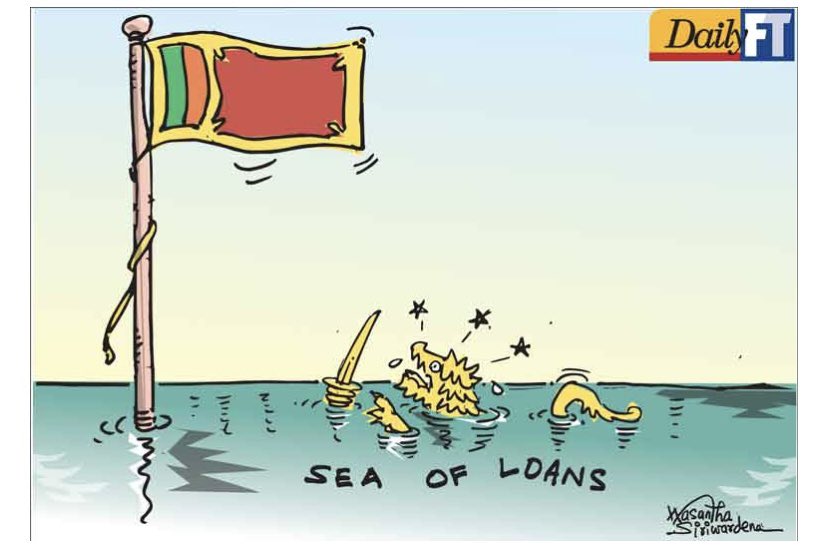
Sri Lanka is saddled with annual foreign debt settlements of US$4.5 billion for the foreseeable future. Notions of an investment friendly hub are satirised by the reality on the ground, with people standing in long queues waiting for daily essentials like milk powder and gas cylinders for cooking. These developments come amid an economic slowdown brought about by COVID-19, poor fiscal and monetary policies, and an abrupt decision to ban the importation of chemical fertiliser which gravely impacted local harvests.

The decision was made in April 2021 by an ‘out of touch with reality’ President Gotabaya Rajapaksa who believed that a prohibition on chemical fertiliser would increase his popularity as a promoter of organic farming and save much needed US dollars flowing out of the country. His attempt to proverbially ‘kill two birds with one stone’ backfired dramatically. Protests erupted throughout the country as farmers took to the streets demanding the continued importation of chemical fertilisers or the provision of a substitute organic fertiliser.

The Gotabaya regime reached out to China and imported organic fertiliser from Qingdao Seawin Biotech. Initial tests on samples carried out in Sri Lanka confirmed that Qingdao’s fertiliser contained a microorganism identified as ‘Erwinia’ which could cause crop failure. The Ceylon Fertilizer Company halted payments to Qingdao Seawin Biotech for the organic fertiliser. The Colombo High Court promptly ordered Sri Lanka’s People’s Bank to freeze the disbursement. The ship carrying the consignment of Chinese fertiliser was also denied entry into Sri Lankan ports.

Qingdao Seawin Biotech responded by demanding a US$8 million compensation from Sri Lanka’s National Plant Quarantine Services, asserting that failure to pay the sum in three days would result in legal action. The Chinese Embassy in Colombo tweeted that Sri Lanka’s People’s Bank would be blacklisted for freezing payments, despite the bank simply adhering to the High Court’s ruling. A local journalist observed that, ‘by slapping sanctions on People’s Bank, China could be showing disregard for domestic legal procedures, despite consistently maintaining internationally that it respects each country’s local processes, independence and sovereignty’.

The ship did not return to China after being blocked from entry to Sri Lanka. Instead, it left for Singapore and reportedly changed its name. Vessel tracking technology helped reporters locate the ship in Hambantota in southern Sri Lanka where China currently manages a port under a 99 year lease.

China’s heavy-handed approach forced the Sri Lankan government to back down. A government spokesperson stated that 75 per cent of the US$8 million will be paid out as compensation to Qingdao Seawin Biotech, despite Sri Lanka’s foreign exchange crisis. Sri Lankan Agriculture Minister Mahindananda Aluthgamage admitted that, ‘we cannot afford to damage diplomatic relations over this issue’. This highlighted the degree of leverage that China exercised.

Recent reports indicate that Sri Lanka plans to order a new consignment of organic fertiliser from Qingdao Biotech even though the company doubled the price of fertiliser that was initially agreed upon by the two parties. The Agriculture Minister also designated a committee to alter quality standards to enable Qingdao Biotech’s fertiliser to be imported and, in a move to conform to Qingdao’s demands, fertiliser samples will be tested in a laboratory recommended by China. The incident reflects Beijing’s ability to arm-twist small states when they challenge a Chinese firm or the Chinese government’s stance.

Sri Lanka’s weak economic position, coupled with the Rajapaksa family’s past connections with Chinese President Xi Jinping, undermines Sri Lanka’s ability to exercise independent agency and autonomy. The fertiliser debacle also demonstrates the likelihood that small states — particularly ones facing economic hardships relating to debt repayment — will be forced to swallow China’s ‘bitter pill’ regardless of whether it is in the national interest of the country.

*About the author: Shakthi De Silva is a Visiting Lecturer at the Bandaranaike Centre for International Studies and is currently pursuing his postgraduate studies at the National University of Singapore.