

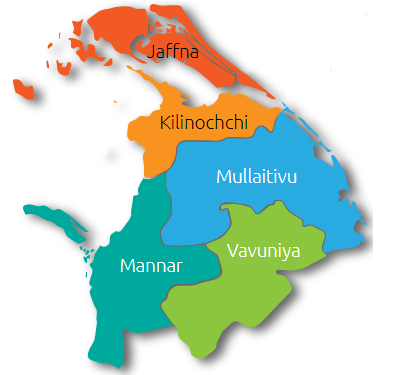
The condition of youth in the North cannot be understood through a single narrative. I t is shaped by history, the long period of war, social change and the pressures of a globalised economy. What emerges is a complex picture.
University students, particularly those at the University of Jaffna, have a strong sense of cultural and political custodianship. Many see themselves as protectors of Tamil identity in the post-war period. This has led to mobilisation around issues such as preserving the Tamil character of the university, especially in response to government policies that allow islandwide admissions. The entry of Sinhalese students into faculties such as law has therefore become politically sensitive. For these youth, education is not only about personal advancement but also about identity, history and collective memory.
Then there are youth who are outside formal education and employment. Remittances from the Tamil diaspora play a significant role in sustaining households. While this provides a safety net, it has also created a segment of young people who are economically dependent and disconnected from both the labour market and civic engagement. Some drift into lifestyles marked by consumption rather than production. There are rising concerns about drug use and petty crime among unemployed youth.
Diaspora money and the drug business mean that young people are able to live comfortably and buy motorcycles, smart phones and laptops without working too hard. Other than the diaspora money, young people want to do short term jobs that will earn them money quickly; they do not want to have careers. Many of them were looking for opportunities abroad, resulting in high rates of migration.
“In Jaffna the motivation is only education based on exams, not the practical skills or life skills. Only the qualification matters and usually it’s to be a doctor or engineer. Our education level is going down because children are not focussing on their education. They have different motivations,” said Rajny Rajeshwary, an activist working closely with youth in the Northern Province who is part of the Vallamai Movement that trains young people on networking, leadership, capacity building and entrepreneurship.
The drug menace was very real and drug use and selling was widespread, especially among young males. “They think that selling drugs and earning money is easier than other jobs. Although there are job opportunities because a lot of shops, supermarkets, hotels and companies are opening in Jaffna district, they can’t find people to work so they are bringing them from other areas,” Rajeshwary said.
A study by the National Peace Council (NPC) carried out in February this year captured the sentiments of a highly educated, youth-dominated demographic in Jaffna. The study revealed that there was clear evidence of improvement. A majority reported feeling safe in their daily lives. Many believed that their language and culture were treated more fairly by the state than in the past. There was also a degree of trust in the new government although it was measured and conditional. There was a significant reduction in violence and a gradual normalisation of civilian life.
“The study shows that ethnic relations at the everyday level are relatively positive. Many young people interact frequently with peers from other communities, particularly in universities and social settings. This suggests that inter-ethnic coexistence is not the primary challenge for this generation. However, such social contact does not automatically translate into political confidence or a shared national vision. The divide now lies less in daily interaction and more in unresolved structural questions,” said NPC’s Executive Director Dr Jehan Perera.
However, the optimism was sharply limited when it came to structural and historical issues. Concerns about land remained paramount. The legacy of displacement, high security zones and military occupation continued to shape perceptions. The fact that a very high proportion of young people express worried about land being taken for religious purposes indicated that the issue has evolved rather than disappeared. It was no longer only about state acquisition but also about perceived encroachment by other actors. Areas such as Palaly and other lands still under military or state control remain symbols of unfinished justice.
There was also dissatisfaction with how the past has been handled. Questions of missing persons, accountability and truth remained unresolved. These issues continued to affect trust in institutions and the sense of closure among affected communities.
The younger generation was not interested in continuing their parents’ search for their missing children. As the mothers and the fathers grew old, they were still unable to move on but their other children wanted to concentrate on going ahead with their own families and lives. Younger family members were not ready to attend protests especially when they saw how their parents’ demands have not resulted in any justice despite several decades. “They want to look after their future, so we can’t blame them and insist that we can’t forget about this; it’s not a practical life. Their lives are different,” Rajeshwary said.
Social media has widened the gap between children and their parents who are unable to understand how it works and impacts young people. “There is a big gap because the children know how to hide what they are watching. They are always on their phones even at meal times,” said Rajeshwary. “Social media is controlling our younger generation’s mind. They are not interested in the cultural aspects, religion or the rituals. Earlier we would go to temple or church together but now they don’t engage in any community activities.”
Another important dimension was internal social inequality within Jaffna society itself. The persistence of caste discrimination, along with disparities based on economic status and disability, indicated that not all challenges were externally driven. Even as perceptions of state discrimination improve, internal hierarchies continued to limit opportunities and social cohesion. This was a critical but often under-acknowledged barrier to youth empowerment.
“There needs to be credible progress on addressing the past. Even incremental steps towards truth and accountability can signal seriousness and reduce the sense of injustice that persists among young people. Land issues need urgent and transparent resolution. Returning land, reducing military involvement in civilian economic activities and establishing clear legal protections against arbitrary acquisition would go a long way in building trust,” Dr Perera pointed out.
“Youth themselves need to be engaged as active participants in shaping their future. The NPC study suggests that while they are thoughtful and aware, many are not yet mobilised around collective goals. At the community level, efforts are needed to address caste and other forms of discrimination. Youth programmes that promote inclusion, leadership and social mobility can help break down entrenched hierarchies. Creating platforms for participation in local governance, development planning and civic initiatives can harness their potential.
“The youth of Jaffna are neither trapped in the past nor fully free of it. They are navigating a transition. Their elders need to ensure that they have credible reasons to believe that it will be different from the past,” Dr Perera added.
S|ource:Groundviews