

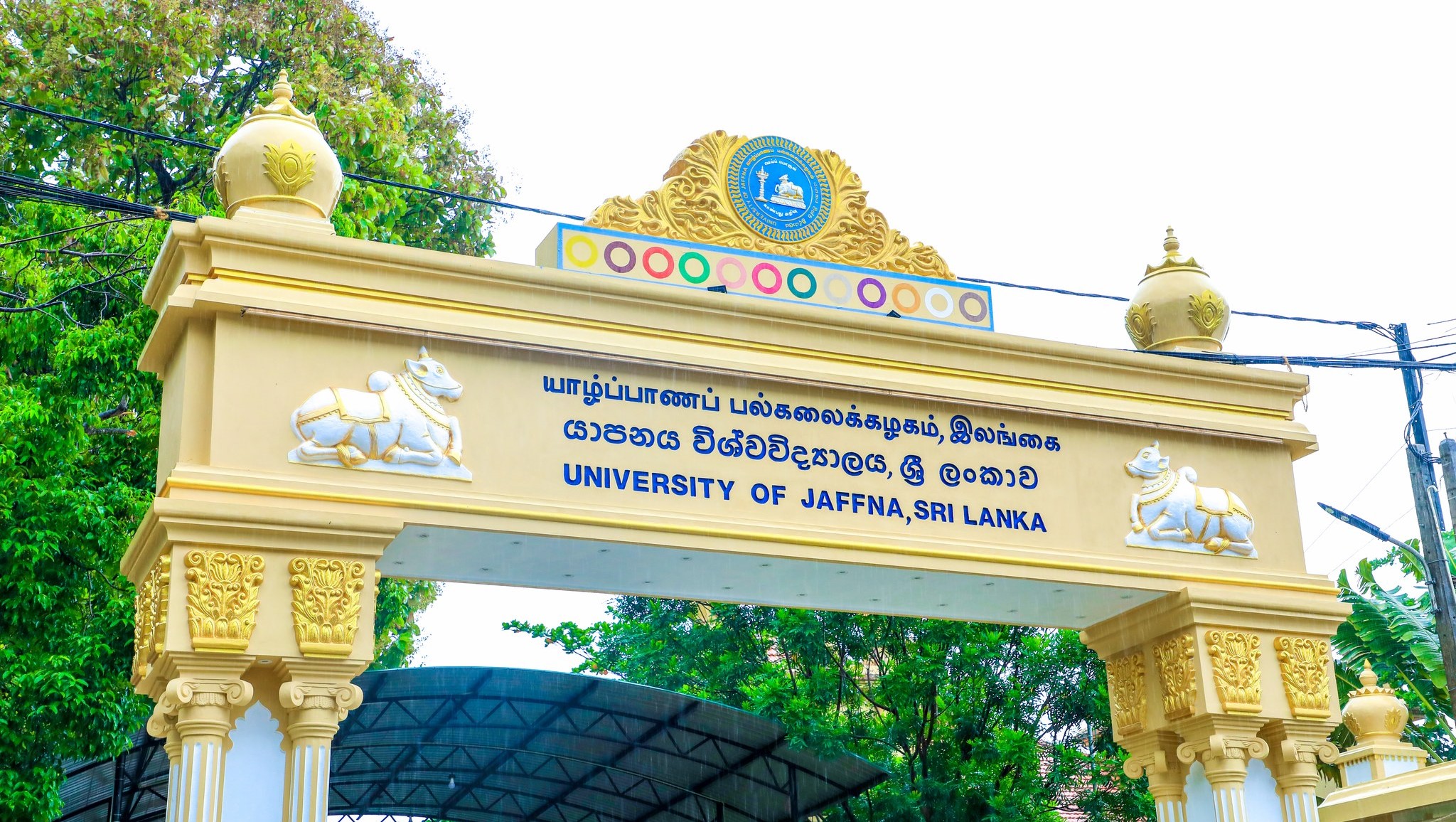
A university campus in northern Sri Lanka has become the latest flashpoint in the country’s long-running ethnic tensions, after police interrogated student leaders over a protest in which the national flag was replaced with a black flag on Independence Day.
Students at the University of Jaffna boycotted lectures and took to the streets on Thursday (19) in solidarity with three of their peers, who spent five hours being questioned at the Jaffna Police Headquarters over the incident, which took place on 04 February.
On that day, students had removed the Sri Lankan flag and hoisted a black flag in its place, an act of defiance that mirrored similar protests across the North and East, where Tamil communities raised black flags to signal that Independence Day holds little meaning for them while their political aspirations remain unrecognised.
Earlier this month, officers from the Crime Prevention Division entered the university campus and questioned the Vice-Chancellor and the Registrar for around three hours, recording their statements.
Students condemned the move, objecting both to the presence of police on university grounds and to the prolonged questioning of senior academics.
The summoning of student leaders added further fuel to the anger.
The President of the Jaffna University Students’ Union and the President of the Faculty of Arts Students’ Union were called in for questioning through a letter dated 13 March, instructing them to appear on the 16th.
However, the letter was only handed to the students on the 17th.
After clarifying the situation with police, the students appeared at Jaffna Police Headquarters on Thursday morning, where they were questioned for approximately five hours before their statements were formally recorded.
Police said further steps would be taken after seeking the advice of the Attorney General.
What has particularly angered students is that a parallel university inquiry had already been conducted at the direction of the University Grants Commission.
A committee comprising the professor in charge of the university’s racial reconciliation unit, the Student Disciplinary Officer and the Chief Security Officer investigated the matter and submitted a report to the Commission.
That inquiry identified 30 individuals, including two female students, as being directly connected to the incident.
During that internal process, students were clear about their intentions.
They stated that their actions were meant to convey that Sri Lanka’s Independence Day carried no significance for Tamils as long as the aspirations of the Tamil people continued to go unrecognised.
For many students, the police investigation running alongside a completed internal inquiry amounts to a second punishment for the same act, and a warning shot aimed at silencing dissent on campus.