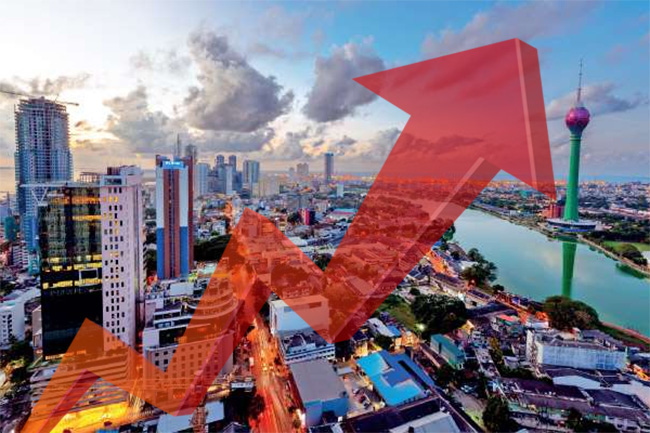
Sri Lanka faces default risks after abandoning scarce reserve system

Sri Lanka’s private credit is recovering from the latest currency crisis triggered by rate cuts to target output and high cost of living increase of 5 percent, and red flags are going up.

There are several red flags and one green one.

The biggest red flag is the single policy rate and state liquidity forecasts for private banks for which technical assistance has come from the International Monetary Fund.

As Sri Lanka is celebrating its independence, the macroeconomists are giving some limited freedom to buy cars. Gazette issued shows penalty taxes for holding stocks.

Meanwhile there are price controls for rice and heavy import duties. Exchange controls are also in place.

It is a sad plight for a country to be in 76 years after independence. And that is the second red flag.

From Scarce Reserves to Excess (or Ample) Reserve Framework

The single policy rate is the reddest of the red flags.

Under a corridor system, especially a wide corridor, the central bank only prints barely enough money for commercial banks which mis-manage their liquidity to clear transactions.

Without liquidity auctions, banks have to borrow at the top of the corridor at a rate slightly higher than the overnight market rate at times.

However when a mid-corridor rate is targeted, or a single rate is targeted, there is excess liquidity with banks bidding for easy money at low rates.

This was seen in October 2024 in particular.

For example, on September 03 the central bank offered 15 billion rupees through a liquidity auction, for which 36.28 billion rupees of bids came from banks. But since 15 billion was offered 15 billion was given at 8.51 percent, when the ceiling rate was 9.25 percent.

At 9.25 percent only 0.65 billion was borrowed. Though banks bid 36.58 billion rupees, the day’s transactions were cleared at 15.65 billion rupees, which is less than half the volume bid.

Banks will clear transactions by borrowing from clients or reducing credit if they were forced to do through a corridor system.

On September 05, 20 billion rupees was offered, 25.61 billion was bid. Since 15 billion rupees was offered, only 15 billion was given. There were no borrowings from the window.

If there was no liquidity offered, banks would soon learn to operate without central bank money. Foreign banks usually do that.

This is how scarce reserve frameworks work or borrowing small amounts from the ceiling window.

On September 09, 60 billion rupees was offered, 54.05 billion was bid and all bidders were given printed money. The lowest rate was 8.26 percent, which was one basis point about the lower policy corridor. The bidder obviously did not care whether they got any cash or not.

The big changes are because some money is also offered for a week or two through term auctions and some of them mature.

The lesser the variation in the daily rates, the higher the excess liquidity that is required. They have to be injected for days on end and weeks.

Ample or Excess Reserve Framework

Modern central banks in the age of inflation and volatile commodity and food prices give liquidity at the drop of a hat, like this.

If there is a ceiling rate it is reduced.

Up to the last quarter of 2024 the central bank was steadily selling down its Treasury bills portfolio, that is was a deflationary framework where there liquidity was constantly withdrawn and dollars were bought.

Now the central bank has run out of Treasury bills to sell.

When liquidity is injected, reserve money is inflated.

The current madness with excess liquidity had its roots in the end of the Great Moderation where in the US a narrower 25 basis point rate was targeted.

And then the policy rate was brought to almost zero, mis-understanding a productivity driven price index fall as a deflationary collapse (debt deflation).

After firing a Housing Bubble, in the style of John Law’s Mississippi Bubble, through what was then called the ‘mother of all liquidity bubbles’ the problem worsened.

After the collapse of the housing bubble, due to quantity easing large volumes of excess liquidity was generated in a great grandmother of liquidity bubbles.

Banks – which had a lot of bad loans and were also hit by the Frank Dodd Law – were initially not using the liquidity and were re-depositing them in the Fed. The Fed started to pay interest on them as well.

As the presence of excess liquidity got normalized, the Fed then said there was no reserve requirement at all.

And then suddenly it was an ‘ample reserve’ framework. No liquidity was ‘excess’.

READ MORE Implementing Monetary Policy in an “Ample-Reserves” Regime: The Basics (Note 1 of 3)

It is in this context that Sri Lanka is going into a single policy rate, regular liquidity auctions and targeting call money rates very narrowly.

This is deadly for a country which is trying to collect foreign reserves.

Reserve collection requires deflationary policy – gentle deflationary policy will keep the exchange rate stable through a scarce reserves regime.

Mis-pricing Risks, Destroying Market Discipline

The single policy rate and narrowly targeting the call money rate has other implications.

The call money rate is a clean rate which is supposed to be risky. However, it is happening among some prime banks with some limits to each other.

At the moment the un-backed call rate is below the treasury bill backed, repo market.

This is not normal.

(This column is based on one that was originally published in the Echelon Magazine of February 2025, but the trend is basically the same, except that the ‘signalled’ single policy rate turned out to be higher than rates further along the yield curve by late March. This phenomenon however will prevent an external default rather than create one.)

However, we can argue like this. The foreign banks are safer than government securities which are from a defaulted government.

Whatever it is, when the central bank gives liquidity, for days on end and weeks on end, banks that cannot borrow in the market, can escape the market discipline and trade with printed money, for days and weeks on end.

Eventually this money will turn into credit and imports, leading to loss of reserves, especially in the context of debt repayments.

One of the reasons banks in central bank regimes collapse and those is currency boards and dollarized areas do not collapse is due to the lack of these easy money.

Banks then become tightly managed.

When the US collapses due to the policy rate and open market operations, Hong Kong, which is a currency board, does not see banks collapses. Therefore when US rates fall there is a spike in property prices in Hong Kong because banks are healthy.

When the Housing Bubble collapsed, Dubai saw only one or two banks fail or threatened to fail. In Panama which is dollarized, only one bank failed or threatened to fail.

That is also why areas like Hong Kong, Cambodia, or Panama have low debt to GDP ratios. Just like bad money leads to bad budgets, good money leads to good budgets.

The Vehicle Import Debacle

The vehicle import restrictions also show that there is no knowledge about the matter.

In the absence of (inflationary) open market operations there is no problem with the balance of payments.

This column has previously explained why.

Related : Sri Lanka vehicle imports not a threat to rupee but inflationary open market operations will be

Nobody can buy anything without money they do not have. The only way to do that is to get credit – and in the absence of open market operations – one type of credit has to crowd out another.

If cars are imported through a loan, then a hotel project will have to wait until deposit and loan repayments come to banks or finance companies.

The reason countries have foreign exchange rate shortages and currency crises is due to credit being financed by central bank credit through open market operations or other means which allows the car and some other credit like that for a building to be also given at the same time.

There is no need to put restrictions on the import of cars, or on stocks of cars kept by dealers. It is up to the dealers to waste money and keep fleets of unsold imported cars paying the correct market interest rate on working capital.

All vehicles stocks will do is drive up interest rates little and delay the ability of a bank to give another credit unless new deposits come.

If money is injected to target a single policy rate, or domestic market dollar rupee swaps are done, the same thing that happened in 2011, 2015, 2018 and 2020-2022 will happen – which causes forex shortages.

The reason Sri Lanka has had low inflation since September 2022 is due to the central bank’s deflationary policy of selling down Treasury bills and running a scarce reserve framework due to the IMF’s requirement to sell down the bill stock.

It is not because of the Ceylon Electricity Board.

Green Flag

The one green flag is the Central Bank Governor’s statement that he will sell down the central bank’s Treasury bonds stock.

If there is no ceiling on domestic assets in the next IMF program, Sri Lanka will have forex shortages and have currency crises like in the 2012 and 2018 inside the program and foreign reserve targets will be missed.

Related Sri Lanka central bank to sell down its restructured bonds

Then the second default is inevitable.

If central bank securities (its own securities) are sold it is not a very good thing as past experience has shown. The central bank is then tempted not to roll-over the securities as market rates rise, as happens in Argentina.

However if the g-sec portfolio sold down, it is no longer the central bank’s responsibility to ensure their roll-over.

Dollar swaps are worse in a country like Sri Lanka with the liquidity-happy central bank and a single policy rate.

Central bank can convert its step down government bonds into a more simple marketable security, perhaps a floating rate one based on the 3-month bill yield.

The IMF lacks the knowledge to maintain monetary stability. Their technical assistance has the opposite effect. Sri Lanka had serial currency crises, and defaulted due to running an excess reserve (or ample reserves to use the modern term) from mid-corridor targeting.

The mid corridor targeting which led to the excess reserve framework has now been legalized through the new monetary law and a gazette issued for the single policy rate.

The 100 billion rupees printed in October/November is a foretaste of things to come, unless the central bank held bonds are converted to a marketable instrument and used to run a scarce reserve framework.

Sri Lanka’s macroeconomists have battered the people with printed money for decades, injecting money into banks and blaming politicians for deficits when inflation went up and people demanded salary hikes and subsidies.

Now it is open market operations after ‘monetary policy modernization’.

At the time it was central bank re-finance. The Import and Export Control Act was brought in 1969 when the central bank was doing re-finance credit.
President calls for unity and goodwill in Sinhala and Tamil New Year message

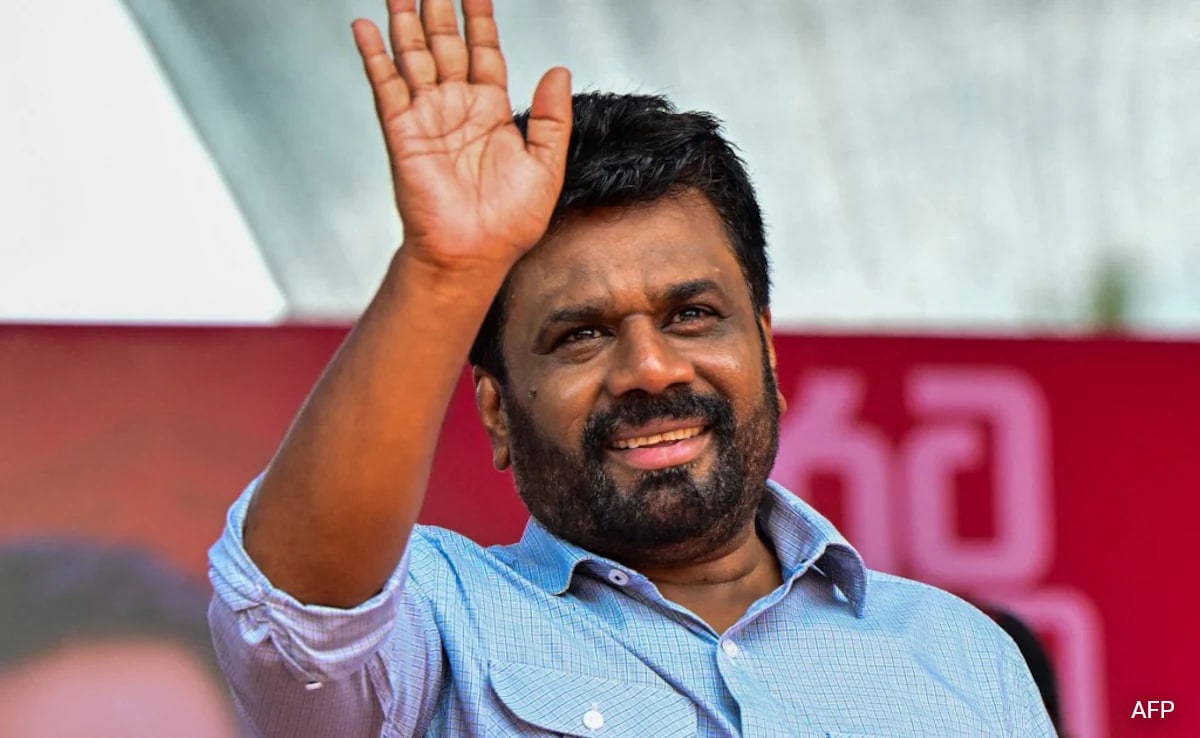
President Anura Kumara Dissanayake, in his Sinhala and Tamil New Year message, calls upon all Sri Lankans to come together with renewed strength, unity, and goodwill to support the nation’s journey toward transformation.

Emphasizing that this traditional festival marks both physical and spiritual renewal, the President highlighted the New Year as an opportunity to recommit to the shared goal of building “A Thriving Nation – A Beautiful Life”.

Reflecting on the progress made under the National People’s Power government, the President stated:

“It is with profound joy and gratitude that I reflect upon the efforts undertaken by the National People’s Power government over the past months to lift our nation from adversity and steer it towards economic, social and political advancement.”

He praised the resilience and support of the people, stating that the victories achieved belong to the citizens who placed their trust in the government through the recent Presidential and General Elections.

“As a responsible government, we possess the strength and determination to further deepen our commitment to the nation, even amidst formidable challenges,” he said, while reaffirming the government’s intent to continue implementing well-planned strategies to meet national and geopolitical challenges.

In his message, the President also highlighted the symbolic importance of the New Year’s traditions in promoting harmony between communities and coexistence with nature.

“The Sinhala and Tamil New Year traditions beautifully reflect the harmony between humanity and nature, bearing witness to the deep-rooted history of coexistence between our Sinhala and Tamil communities,” he said, noting that the New Year serves as a reminder of unity, compassion, and ethical values in a society often challenged by division.

The President concluded his message with a heartfelt call for collective effort and shared purpose.

“As we welcome this New Year, I call upon all of you to come together with renewed strength, unity and goodwill… ensuring enduring progress and prosperity for our country and all its people.”

President’s Full Message:

“As we celebrate the Sinhala and Tamil New Year this year, a festival that symbolises the hope of both physical and spiritual renewal, our nation finds itself at a defining moment, achieving significant victories while resolutely striving towards the realisation of a better and more prosperous future.

It is with profound joy and gratitude that I reflect upon the efforts undertaken by the National People’s Power government over the past months to lift our nation from adversity and steer it towards economic, social and political advancement. The successes we have thus far achieved rightfully belong to the people of this country, whose steadfast trust, as expressed in the most recent Presidential and General Elections, has been the driving force behind this transformative journey.

As a responsible government, we possess the strength and determination to further deepen our commitment to the nation, even amidst formidable challenges. We are implementing well-considered plans to address the multifaceted challenges confronting our country, both in terms of national development and within the broader geopolitical landscape.

The Sinhala and Tamil New Year traditions beautifully reflect the harmony between humanity and nature, bearing witness to the deep-rooted history of coexistence between our Sinhala and Tamil communities. While contemporary society may be burdened by various divisions, occasions such as the New Year provide a timely reminder of the enduring values of unity, harmony and peaceful coexistence. It is our solemn responsibility, particularly at this time of renewal, to nurture those values within ourselves and to foster a more compassionate and ethical society.

Moreover, the rituals associated with the sun’s transition are underpinned by the universal aspiration to create a renewed individual, one free from outdated thoughts and attitudes. The New Year, therefore, offers us an invaluable opportunity to embrace renewal in our own lives.

As we welcome this New Year, I call upon all of you to come together with renewed strength, unity and goodwill. Let us collectively work towards a common purpose, supporting the government’s vision for economic, social and political transformation and thereby ensuring enduring progress and prosperity for our country and all its people.

May this New Year bring you and your loved ones peace, happiness, renewed hope and abundant prosperity in your journey towards ‘A Thriving Nation – A Beautiful Life”.

Warmest wishes for a Happy Sinhala and Tamil New Year!”

Posted in Uncategorized

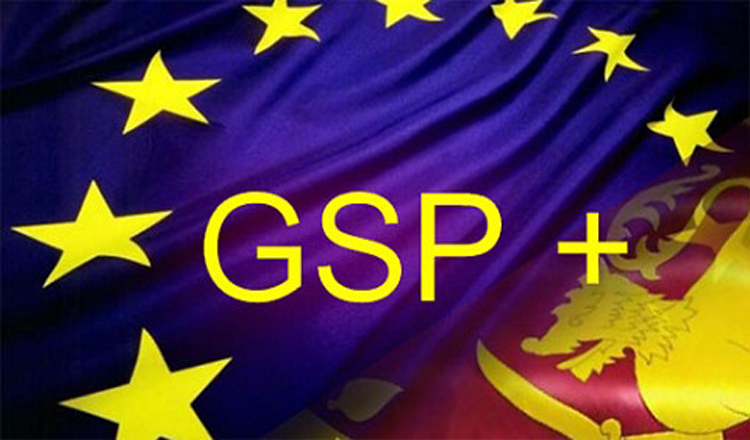
EU team to arrive in Sri Lanka to review GSP+

A team from the European Union is scheduled to arrive in Sri Lanka in the latter part of April to review the Generalised Scheme of Preferences Plus (GSP+) trade concession.

The team will hold discussions with representatives of the government and local officials regarding the GSP+ trade concession and its conditions, said the Leader of the Opposition, Sajith Premadasa.

During a meeting held with representatives of trade unions, Opposition Leader Premadasa said the GSP+ concession plays a vital part in Sri Lanka’s apparel industry as 28% of the exports head to the EU market.

Premadasa noted that the opposition will stand with the apparel industry and support the retention of the GSP+ concession.

He therefore requested the government to work towards complying with the conditions that will ensure Sri Lanka will continue to receive the GSP+ trade concession.

The GSP+ is a special incentive arrangement for Sustainable Development and Good Governance that supports vulnerable developing countries.

GSP+ countries are required to ratify 27 international conventions on human rights, labour rights, environmental protection and climate change, and good governance.

In order to ensure effective implementation of the conventions as well as compliance with reporting obligations, the EU engages in monitoring activities with the GSP+ countries including Sri Lanka. GSP+ beneficiaries can benefit from complete duty suspensions for products across approximately 66% of all EU tariff lines.

Committee appointed to look into repealing PTA

A committee has been appointed to look into the repealing of the Prevention of Terrorism Act (PTA), the Ministry of Justice and National Integration has announced.

The committee will be headed by President’s Counsel Rienzie Arsecularatne and is expected to commence public consultations in May.

The committee has also been tasked with obtaining inputs from civil society organizations, and feedback from international institutions and communities.

A preliminary discussion regarding the repeal of the PTA was held on 11 April under the leadership of the Minister of Justice and National Integration, Attorney-at-law Harsha Nanayakkara, at the Ministry of Justice premises.

During the discussion, the Justice Minister has claimed that the repeal of the Prevention of Terrorism Act is a policy of the incumbent government.

The Justice Minister has emphasized that the new Act should be one that can tackle global terrorism and challenges, while also ensuring it does not infringe upon constitutionally guaranteed human rights and the freedom of expression, as recognized internationally.

The Ministry of Justice further stated that past governments have not acted with due diligence in bringing about these legal reforms, and that the appointed committee has been instructed to concretely identify the relevant matters for repealing the Act within a short timeframe.

Posted in Uncategorized

Sri Lanka suffers over $28 mln foreign outflow from govt securities after Trump’s tariff deal

Foreign investors sold over $28 million worth Sri Lanka government securities in the week on April 10, the Central Bank data showed, amid jittery after U.S. President Donald Trump’s reciprocal tariff announcement early this year.

The rupee has fallen slightly since Trump’s declaration while global investors have been shifting to safe-havens like gold.

Sri Lanka saw 8.67 billion rupees ($28.7 million at 1 US dollar = 298 LKR) worth outflows from the government securities in the week ended on April 10 after enjoying a total inflow of 28.6 billion rupees ($95.6 million) since December 26 last year, the data showed.

The dollar and U.S. Treasuries have taken a beating as Trump’s tariffs, plus a 145% duty on China, took effect, while China swiftly retaliated. In contrast, safe-haven favourites such as gold and the Swiss franc continue to pull in cash.

The island nation witnessed total inflows of 29.9 billion rupees into treasury bonds and bills in the 15 weeks through December 26, the official data showed.

The value of government securities held by foreign investors was at 69,262 million rupees by December 26.

Sri Lanka’s deflationary policies have helped to see inflows amid curtailed imports, Analysts have said.

The country witnessed foreign outflows worth 48.2 billion rupees in 2024 with 66 percent or 78.1 billion rupees worth outflow from the government securities in the first nine months of last year.

Posted in Uncategorized

US Government Identifies Mastermind of Easter Sunday Attack

The affidavit, dated 11th December 2020, was sworn by Special Agent Merrilee R. Goodwin of the FBI, who has been involved in global terrorism investigations since 1998. The document spans over 70 pages and provides a comprehensive breakdown of the investigation, which includes forensic analysis, social media records, and testimony from witnesses and suspects.

In an extraordinary affidavit submitted to the U.S. District Court for the Central District of California, the United States government, through the Federal Bureau of Investigation (FBI), has definitively identified Zahran Hashim as the mastermind behind the 2019 Easter Sunday attacks in Sri Lanka. The attacks, which took place on 21st April 2019, resulted in the deaths of 268 people, including five American citizens, and injured over 500 others. Despite the magnitude of this atrocity and the detail found in the FBI affidavit, the document has remained largely ignored in Sri Lankan public and political discourse. Instead, many in the country have turned their attention to speculative theories and political posturing, often overlooking this concrete and damning piece of evidence.

The affidavit, dated 11th December 2020, was sworn by Special Agent Merrilee R. Goodwin of the FBI, who has been involved in global terrorism investigations since 1998. The document spans over 70 pages and provides a comprehensive breakdown of the investigation, which includes forensic analysis, social media records, and testimony from witnesses and suspects. It offers a clear narrative of how Zahran Hashim established and led a local ISIS cell in Sri Lanka, officially recognised by ISIS leadership, and how he coordinated a complex, multi-location suicide bombing attack.

The Easter Sunday attacks, targeting three churches and four luxury hotels across Colombo, Negombo, and Batticaloa, were carried out by eight suicide bombers. The targets included St. Anthony’s Shrine, St. Sebastian’s Catholic Church, and Zion Church, as well as the Cinnamon Grand, Shangri-La, Kingsbury, and Taj Samudra hotels. The attack was unprecedented in scale and brutality, claiming lives during a sacred Christian celebration. The FBI affidavit reveals that the attackers were members of a group referred to as “ISIS in Sri Lanka”, led by Zahran, who had pledged allegiance to ISIS and received direct approval from ISIS leadership to operate as an official affiliate.

The affidavit states unambiguously: “Zahran Mohamed Cassim, also known as Zahran Hashim, was the mastermind behind the Easter Attacks and the self-proclaimed leader of ISIS in Sri Lanka.” This assertion is not mere conjecture; it is substantiated by evidence including video footage, communications between Zahran and ISIS leaders, training documentation, and physical evidence from the attack sites and safe houses used by the perpetrators.

ISIS, through its media agency Amaq, publicly claimed responsibility for the attacks on 23rd April 2019. The organisation described the perpetrators as “Islamic State fighters” who targeted “citizens of coalition states and Christians in Sri Lanka.” A video was released showing the attackers, including Zahran, swearing allegiance to then ISIS leader Abu Bakr al-Baghdadi. Zahran, standing unmasked and centrally positioned in the video, led the pledge. This visual confirmation, along with communications intercepted by the FBI, makes it clear that the attacks were not the result of domestic grievance alone but were coordinated as part of ISIS’s global terror strategy.

The FBI affidavit names three individuals in addition to Zahran who were deeply involved in the conspiracy: Mohamed Naufar (NAUFAR), Mohamed Anwar Mohamed Riskan (RISKAN), and Ahamed Milhan Hayathu Mohamed (MILHAN). These individuals have been charged with providing and attempting to provide material support to ISIS, and with receiving military-type training from a designated terrorist organisation. Naufar, who served as the “second emir” of the group, was responsible for propaganda, recruitment, and training. He organised ideological and combat training sessions, attended by prospective suicide bombers and operatives.

The level of detail in the affidavit is remarkable. It outlines how the attackers constructed their improvised explosive devices (IEDs) using commercially available materials such as water gel explosives, urea nitrate, and common detonators. Christmas lights, batteries, and switches were repurposed into fusing systems for the bombs. The devices were packed with ball bearings to maximise lethality. Backpacks were used to conceal the bombs, and CCTV footage from the attack sites confirms the use of these specific containers.

Among the many shocking revelations in the affidavit is the claim that Zahran’s wife detonated a bomb during a police raid following the attacks, killing herself, three children, and three police officers. Furthermore, in a raid at a safe house on 26th April 2019, Zahran’s father and brothers were killed in a shootout and subsequent explosion. These events underscore the depth of the group’s commitment to jihadist ideology and their willingness to die rather than be captured.

In interviews conducted by the FBI, Naufar admitted that he had been warned by Riskan on the morning of the attacks to leave his safe house. He was told that one of the bombers, Mohamed Azaam Mohamed Mubarak, had been arrested and that an operation was underway. Naufar claimed he was unaware of the full extent of the planned attacks, yet the affidavit casts doubt on this, citing his deep involvement in planning and training activities.

The level of planning and operational security maintained by the group was sophisticated. Members used encrypted messaging apps such as Telegram and Threema to communicate. Phones were frequently changed, and participants were instructed not to use real names or disclose personal information during training sessions. These measures suggest a level of coordination far beyond that of an impromptu or isolated domestic terrorist cell.

Social media records obtained from Facebook, Google, and Microsoft further implicate Naufar, Zahran, and Milhan. Posts and private messages show the men expressing admiration for ISIS, discussing jihadist strategies, and distributing propaganda materials. Zahran and Naufar even exchanged official ISIS documents and newsletters, including issues of the al-Naba and Rumiyah publications. One message from Naufar chillingly stated, “The United States is the enemy of Allah,” while others encouraged attacks on churches and Western targets.

The FBI’s findings were based on rigorous forensic examinations, including analysis conducted by the Terrorist Explosive Device Analytical Center (TEDAC). TEDAC confirmed the presence of nitrite ions at the blast sites—compounds which do not naturally occur in the environment and are consistent with the detonation of nitrate-based explosives. This forensic evidence was matched with materials found in the group’s various safe houses.

The FBI deployed personnel to Sri Lanka within hours of the attacks, coordinated with local law enforcement, and assisted in medical evacuations and the repatriation of deceased U.S. citizens. Yet, the results of their exhaustive investigation have not penetrated mainstream political or media narratives in Sri Lanka.

Instead, the public dialogue has been polluted with conspiracies involving political parties, intelligence agencies, and foreign nations. While accountability and transparency are essential in any democratic society, the deliberate neglect of such a pivotal and credible document represents a collective failure. It is a failure not only of government and media but of the entire national consciousness.

This affidavit should have served as a foundational document in the national conversation about the Easter Sunday attacks. It provides names, evidence, motives, and even confessions. It describes in meticulous detail how a domestic terrorist cell linked to an international jihadist organisation carried out one of the most devastating terrorist acts in modern Sri Lankan history. And yet, it remains unread, unreferenced, and largely unknown to the broader public.

As Sri Lanka continues to wrestle with the legacy of the Easter Sunday attacks, it is imperative that this document be brought into the light. Truth must prevail over political theatre and media spectacle. The victims and their families deserve more than speculative theories; they deserve justice based on the facts. The facts are here, buried in an American affidavit that speaks volumes. It is time Sri Lanka started listening.

Let the record show: the United States government has declared the mastermind. The world, and especially Sri Lanka, must now pay attention.

(slguardian.org)

Posted in Uncategorized

Modi’s Colombo Mission: Security, Energy, and a Strategic Reset By Sulochana Ramiah Mohan

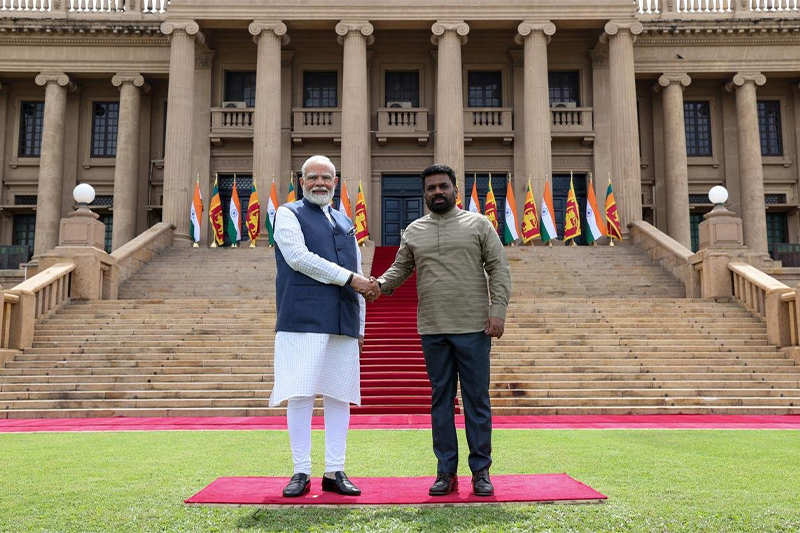
Indian Prime Minister Modi’s fourth visit last week expressed his commitment to safeguarding the national interests of both India and Sri Lanka, particularly in the security and energy sectors. This agreement comes after nearly four decades of strained relations, stemming from India’s intervention during Sri Lanka’s civil war in the late 80s. The visit showcased India’s concerted efforts to reset its strategic influence in Sri Lanka, a country whose leadership, until recently, had shown resentment towards India.

Modi arrived in Colombo directly from Thailand, accompanied by senior officials, including Minister of External Affairs S. Jaishankar, National Security Adviser Ajit Doval, the Foreign Secretary, and other key government representatives. Modi’s arrival marked a shift, with the NPP Leader offering India what it sought, while securing Sri Lanka’s own priorities, and ultimately concluding as strategic partners.

Indian security takes charge of PM Modi’s safety

Prime Minister Modi came to ink strong defence and bilateral agreements with Sri Lanka, accompanied by prominent members of his Office, which he always used to do. But the large Indian security contingent is particularly noteworthy this time. The security detail, which accompanied him throughout his stay and ensured his protection until his departure on Sunday, evoked strong memories of previous Indian leaders’ visits to Sri Lanka that took place some decades ago. The heightened security measures were most noticeable in Colombo and along the routes leading to Anuradhapura, with widespread road closures and a considerable deployment of personnel, including Indian commandos, members of the Tri-Forces and several intelligence officers who had arrived ahead of his visit.

The unprecedented security measures sent a clear message. The scale of the security presence was crucial for Modi, given his prominent role in global politics and his importance as a regional leader. At the same time, the Janatha Vimukthi Peramuna (JVP), a party rooted in leftist ideology that had historically struggled to gain popular support and once maintained a contentious stance towards India, may have contributed to the heightened security, suggesting a lingering trust deficit that India has towards the current ruling party. However, defying expectations, the Dissanayake-led Government redefined its relationship with India over the two-day visit and expressed its commitment to embracing closer ties with New Delhi.

The chemistry between the two leaders were indeed good, creating a positive atmosphere. Modi, with his father-figure persona, has attracted many leaders, including US President Donald Trump. This bond with Sri Lanka marks a new chapter in Sri Lanka-India ties, one better defined by strategic alignment rather than ideological division or past discord.

The Indian security presence in Sri Lanka under Modi’s leadership can also be attributed to escalating gun violence, a series of murders—some involving Army deserters—brutal attacks by gangsters, and ongoing security lapses related to the 2019 Easter Sunday attacks, which Sri Lanka is still struggling to resolve. India, which had tipped off Sri Lanka about the attacks, has yet to see the culprits brought to justice, as sought by the victims’ families. This may have prompted India to adopt a calculated and cautious approach too.

Several regional leaders have visited Sri Lanka in the past, but the level of intense security surrounding Prime Minister Modi’s visit was unprecedented. Even during Sri Lankan President Anura Kumara Dissanayake’s visit to India last December, security arrangements were far more routine and low-key in comparison. Modi’s two-day visit to Sri Lanka was widely discussed, particularly for the heavily guarded motorcade, which included Indian commandos and personal security officers, all managed by India’s own security command.

Notably, factions such as the Janatha Vimukthi Peramuna (JVP), historically opposed to Indian involvement in Sri Lanka, have been a concern for Indian security agencies till late. The JVP’s past confrontations with Indian forces and its alignment with Chinese interests could have also added to this Indian security dynamics.

In light of these complexities, India also deployed four Mi-17 helicopters as part of the Prime Minister’s convoy in Sri Lanka, accompanied by about 100 Indian Air Force personnel. Additionally, the Indian Naval Ship (INS) Sahyadri, a 143-metre frigate manned by a crew of 320, was docked in Colombo, coinciding with Modi’s State visit. During their visit, the crew of INS Sahyadri participated in events hosted by the Sri Lanka Navy aimed at strengthening bilateral ties, the Indian Government said.

Strict security measures were in place in both Colombo and Anuradhapura. A large contingent of Police and STF personnel was deployed for security and traffic control.

Anti-India sentiments

It’s important to draw a parallel to a significant incident in 1987, when the late Prime Minister of India, Rajiv Gandhi, visited Sri Lanka. During that visit, Sri Lanka Navy sailor Vijitha Rohana Wijemuni attempted to strike Gandhi with a Lee–Enfield rifle during a guard of honour. Although Gandhi ducked and the rifle made contact, he was not seriously injured. This incident became a major diplomatic embarrassment for both Sri Lanka and India, leaving a lasting stain on Indo-Sri Lankan relations. In contrast, Modi’s visit was carefully orchestrated—he was kept at a distance during the guards of honour, meeting only the Army and Air Force guards in Colombo and Anuradhapura, while the Sri Lanka Navy was notably absent. This absence is significant, especially considering the ongoing confrontations between the Sri Lanka Navy and Indian fishermen at sea, which have repeatedly angered the Indian Government. Alleged assaults have prompted India to summon the Sri Lankan Envoy in New Delhi in the recent past to express its displeasure.

In light of such past events, Modi’s security detail in Sri Lanka was exceptionally stringent. Reports indicate that nearly 6,000 Sri Lanka Police officers, including specialised units, were deployed to ensure his safety during the visit.

NPP aligning as a strategic partner of India

Perhaps most striking was the NPP Government’s apparent shift in stance, as it extended a warm welcome to the Indian Prime Minister. This gesture is particularly significant given the JVP’s historical opposition to India’s involvement in Sri Lanka’s internal affairs. In the 1980s, the JVP-led campaigns against the Indo-Lanka Accord, which led to the deployment of the Indian Peace Keeping Force (IPKF) in Sri Lanka. Their past actions included anti-India propaganda, strikes, and boycotts of Indian goods, all of which reflected deep-seated nationalist sentiments.

This shift in the JVP’s approach has contributed to a broader political realignment, with many local political parties now viewing ties with India as crucial for Sri Lanka’s growth. Recently, the JVP has moderated its previous anti-India rhetoric, adapting to changing regional dynamics. Under Dissanayake’s leadership, the Party has softened its stance, recognising the need to adjust to the prevailing geopolitical landscape.

Resetting friendship

The warm reception extended to Modi and his team not only reflects the JVP’s evolving political strategy but also highlights the changing landscape of Sri Lanka’s foreign policy, gearing for cooperation and engagement with neighbouring countries.

In an interview with Ceylon Today prior to their victory in both the Presidential and General Elections last year, NPP’s Vijitha Herath, then campaigning for election, made a strong statement: “Without India’s support, or bypassing India politically or economically, little can be achieved by Sri Lanka,” he added.

President Dissanayake had to reset his relationship with India, and he successfully aligned with Modi and his team, overcoming past tensions. The message was clear when he spoke at the official dinner reception held at the President’s official residence in Colombo for the Indian leader. He said Modi has demonstrated his recognition of Sri Lanka’s deep-rooted connection with India, highlighting the strong ties between the two nations over the past four years. He also praised Modi not only as a regional leader but also as a major player in global geopolitics.

Further emphasising the importance of India’s rise as a global power, President Dissanayake stated that Sri Lanka wholeheartedly welcomes this development. “We always offer a warm welcome to guests visiting Sri Lanka, and our friends across the Palk Strait are particularly close to our hearts,” the President recalled. He added that Sri Lanka, with its warm and welcoming people, looks forward to even more visits from India, affirming that the country is always eager to say, “Come again.”

Defence pacts

Before Modi’s departure, both leaders signed an MoU on defence cooperation, marking a major step in strengthening bilateral ties. The agreement outlined key areas of defence collaboration, starting with an institutionalised defence pact. It establishes a structured framework for military engagements, which includes joint exercises, maritime surveillance, capacity building, and humanitarian assistance operations. This structured approach ensures ongoing collaboration and helps maintain a robust defence relationship between the two countries. It was stated that the defence pact is valid for five years and can be terminated at any time with three months’ notice. The Sri Lankan Cabinet has given its approval.

Another significant aspect of the MoU is Defence industry collaboration, which opens avenues for cooperation in the defence industrial sector. This includes support for defence equipment and training opportunities for Sri Lankan officers at Indian institutions. Such collaboration is expected to enhance Sri Lanka’s defence capabilities while further strengthening ties between the two nations.

The pact also emphasises port calls and maritime security, highlighting increased Naval port calls and enhanced cooperation in maritime security. India will monitor Sri Lanka’s Exclusive Economic Zone (EEZ) as China competes for mineral resources, as noted by senior defence journalist Ajay Banerjee, who spoke on Modi’s visit to Sri Lanka and the security pact. He also mentioned that, following the 2008 Mumbai attacks, India installed a coastal chain of radars in Sri Lanka, which is linked to India’s network to monitor the Indian Navy’s activities in the Indian Ocean. This system provides real-time information to India, enabling a rapid response in times of crisis. With the new security pact, India has stated that it will send any number of Naval ships to Sri Lanka and its EEZ.

Additionally, there is a maritime rescue centre in Colombo, funded by the Indian Government. In 2023, the last Chinese research ship docked in Colombo, prompting vehement protests from India, leading to a ban on such vessels entering Sri Lanka. India also converted loans into grants to assist Sri Lanka during its financial instability.

When asked about a potential shift in foreign policy under the Dissanayake Government, Banerjee acknowledged that such a shift is indeed taking place. Given the strategic importance of the Indian Ocean for regional stability, both countries recognised the necessity of strengthening their maritime security cooperation to address shared concerns.

Moreover, President Dissanayake reassured India that Sri Lanka’s territory would not be used in ways that could undermine India’s security.

The defence agreement is also viewed as a strategic move to counter China’s influence in Sri Lanka. India aims to balance this influence while ensuring regional stability. The defence pact also covers energy, digital infrastructure, and economic collaboration. Notably, a trilateral agreement between India, Sri Lanka, and the UAE seeks to develop Trincomalee as an energy hub. Additionally, the two countries have agreed to undertake renewable energy projects, including solar plants and rooftop systems for religious centres.

Partners in the end

Modi’s visit is seen as a necessity for the NPP to align with India, as well as a continuation of diplomatic ties and the strengthening of relations under India’s ‘Neighbourhood First’ policy. Sri Lanka awarded India’s highest civilian honour, the Mitra Vibhushana medal, in recognition of Modi’s contributions to bilateral relations.

During Modi’s last visit, he visited the Nallur Temple in Jaffna to seek blessings, and this time, he paid a visit to the Anuradhapura Sri Maha Bodhi. He also announced that India would assist in the renovation of the highly revered Thirukoneswaram Temple in Trincomalee. This gesture of respect seems to strike a well-balanced tone that both Buddhism and Hinduism have their roots in India. Additionally, the Ram Setu (Rama’s Bridge) holds religious significance in both countries.

After concluding his Sri Lanka visit, Modi flew to Tamil Nadu from the Anuradhapura Air Force Base to inaugurate the highly advanced, AI-operated Pamban Bridge. He praised the strong historical and cultural connection between Sri Lanka and India, especially the Ram Setu. The Sri Lankan Government gazetted the Anuradhapura Air Force Base—a domestic airport—as an international airport for a single day, Saturday, 5 April, to facilitate the departure of Indian Prime Minister Modi in a helicopter along with three other helicopters carrying Indian security personnel.

Upon his arrival in Tamil Nadu, an impressive security detail of 3,500 Police personnel was deployed for Modi’s protection on land. Additionally, 300 Tamil Nadu Coastal Police officers were stationed on boats offshore, along with two outer layers of security provided by the Coast Guard and the Indian Navy.

So, the JVP-led NPP Government seems to have learned—perhaps at the right time—what psychologists might call a “Freudian slip” in the realm of politics: they went full-scale with anti-Indian rhetoric during their campaign for power, failing to distinguish between local politics aimed at the gallery and broader geopolitical realities. While the anti-India campaign may have helped them gain victory, Modi ‘changed the course of action’.

The final shot couldn’t have been called by India alone—not when the US, the IMF, and like-minded governments are also in the picture. Together, they appear to have tamed the NPP, nudging it away from its confrontational stance. In many ways, it’s a calculated effort to preserve the traditional style of politics and ensure regional stability. However, the true test will be how long the NPP continues to align with India, as the ‘dragon’ remains ever-present, ready to slither in.

(amiesulo@gmail.com)

Posted in Uncategorized

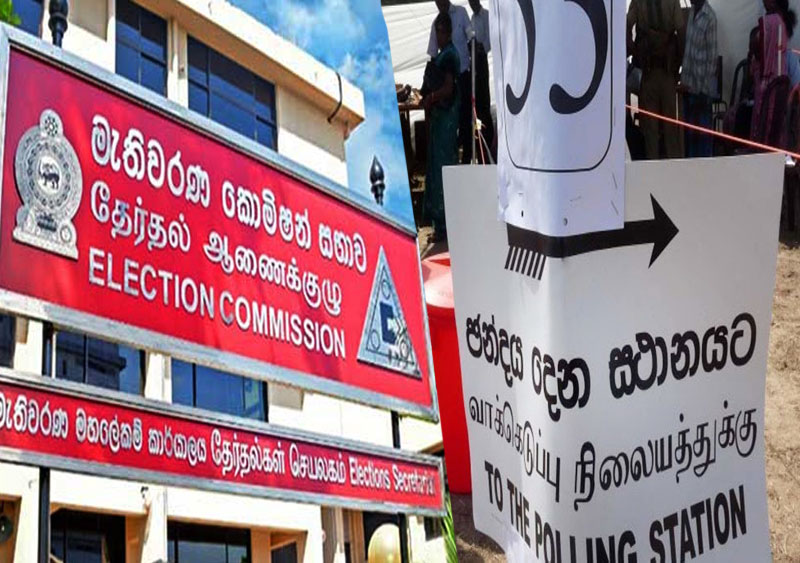
LG Elections: Ballot Paper Printing Nears Completion

Government Printer Pradeep Pushpakumara says that the printing of over one million ballot papers for 14 administrative districts has been completed.

Printing for the remaining 11 districts is ongoing and is expected to be completed by the 28th of April.

Meanwhile, Postmaster General P. Sathkumara said that approximately 50 percent of the ballot papers for postal voting are expected to be received by Department of Posts.

The postal ballots already received are currently being distributed.

He also noted that ballot papers for postal voting from local government institutions involved in ongoing court proceedings are anticipated to arrive soon.

The Court of Appeal yesterday lifted the interim injunction on 18 local government institutions, including the Colombo Municipal Council, allowing them to proceed with local government elections on May 6th as scheduled.

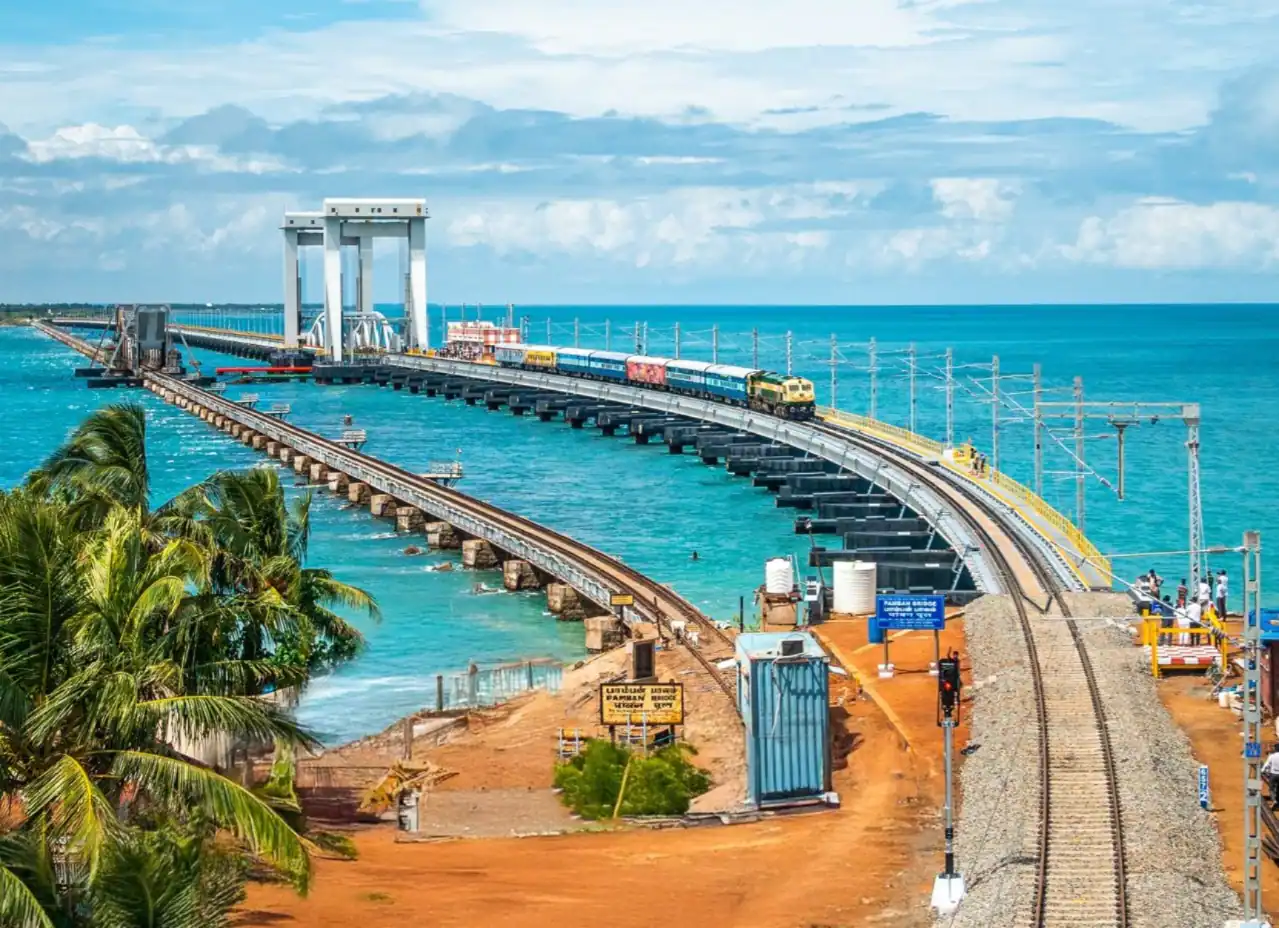
Chennai-Sri Lanka direct train: 60 years later, can Pamban Bridge bring a lost route back?

Decades ago, passengers could travel from Chennai (then Madras) to Colombo, Sri Lanka, by train and ferry. The journey began at Egmore station and continued along the eastern coast, crossing the iconic Pamban Bridge to reach Rameswaram. From there, trains ran to Dhanushkodi, the southernmost rail point in India. A short ferry ride across the Palk Strait took travellers to Talaimannar in Sri Lanka, where they could board a train to Colombo.

This seamless route was disrupted in 1964, when a powerful cyclone devastated coastal Tamil Nadu. The storm, with wind speeds over 150 kmph, damaged the Pamban Rail Bridge and wiped out the railway line between Rameswaram and Dhanushkodi. Since then, trains have terminated at Rameswaram, and the ferry link to Sri Lanka has not resumed, as per a report by India Today.

Sixty years on, a new bridge may breathe life into that lost connection. On 6 April 2025, Prime Minister Narendra Modi inaugurated a newly built Pamban Bridge, replacing the 110-year-old structure. The launch has revived hopes for a larger plan—a direct rail link between India and Sri Lanka.

The idea isn’t new. During British rule, a proposal was made to connect the two countries by rail, as part of a broader plan to move goods and people efficiently across the empire. In 1914, the South Indian Railway built the Pamban Bridge, enabling trains to reach Dhanushkodi. But the last segment—linking Dhanushkodi to Talaimannar—was never completed due to financial constraints and later global events like World War I.

Until the 1964 cyclone, a popular service called the Indo-Ceylon Boat Mail allowed passengers to travel from Chennai to Colombo through a combination of train and ferry. The cyclone not only halted this unique journey but also buried the vision of direct rail connectivity between the two nations.

In recent years, discussions around this long-standing idea have resurfaced. A road-and-rail bridge or undersea tunnel across the Palk Strait—from Dhanushkodi to Talaimannar, just 25 km apart—has been considered. Multiple feasibility studies have been conducted. The success of the new Pamban Bridge could serve as a stepping stone to extending the rail line further.

In 2002, Sri Lanka proposed a road-cum-rail bridge linking Rameswaram and Talaimannar, but the plan was shelved due to opposition from Tamil Nadu’s then-Chief Minister J. Jayalalithaa, who raised security concerns.

Though the political climate has shifted, questions of security and cost remain. In 2015, India’s Union Minister Nitin Gadkari pitched the project to the Asian Development Bank, which agreed to fund it. But Sri Lanka’s transport minister later dismissed the proposal.

Fresh interest in the idea emerged in 2024. Sri Lankan President Ranil Wickremesinghe stated that a feasibility study on the project was nearing completion. A Sri Lankan official also suggested that India might fund the entire $5 billion project, although this was later downplayed by another minister.

Meanwhile, India has deepened its role in upgrading Sri Lanka’s rail infrastructure. During PM Modi’s recent visit, he and Sri Lankan President Anura Kumara Dissanayake inaugurated two India-assisted railway projects. India has also built and upgraded several other rail lines in the island nation.

Sri Lanka is the only neighbouring country that India does not share a rail link with. Existing links connect India to Pakistan, Nepal, and Bangladesh, with plans for Bhutan in progress. Establishing a link with Sri Lanka could enhance trade, tourism, and cultural exchange, especially as both countries already share a Free Trade Agreement.

With growing focus on infrastructure, political realignment in Tamil Nadu, and renewed interest in regional connectivity, the dream of bridging the 25-kilometre gap between Dhanushkodi and Talaimannar might just move from paper to tracks.

Source: Times Now

Bimal vows to punish Ranil, even taking foreign assistance if necessary

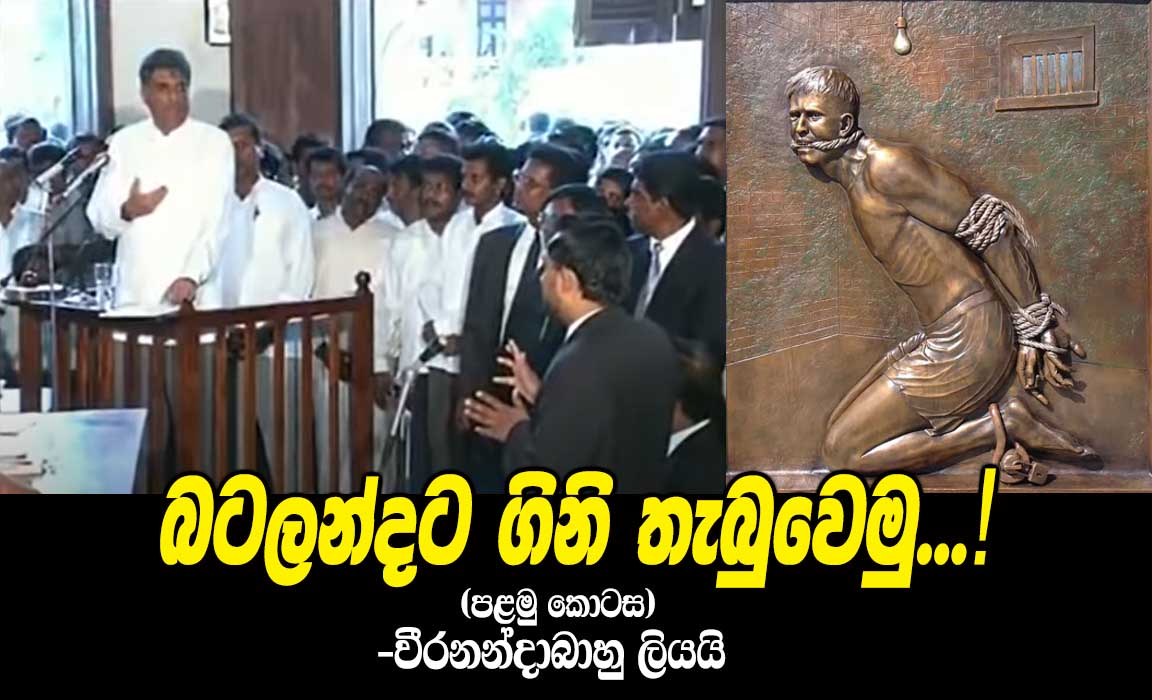
Minister Bimal Rathnayake says that steps will be taken—through legal means and, if necessary, with international assistance—against those found responsible for the Batalanda torture camps, including former President Ranil Wickremesinghe

“We will conduct all possible investigations within the law to hold Ranil Wickremesinghe accountable for his actions and ensure that these murderers are punished, even if it is at the latter part of their lives,” he said.

The Minister made this statement while participating in the first day of the parliamentary debate on the Batalanda Commission Report.

Posted in Uncategorized