Speaker, Ministers meet Sri Lankan community in UK

A group of Ministers along with the Speaker of House, Dr. Jagath Wickramaratne have undertaken a visit to the UK on an invitation extended by the Westminster Foundation for Democracy.

Minister of Health and Mass Media Dr. Nalinda Jayatissa, Minister of Women and Child Affairs Saroja Savithri Paulraj and Minister of Justice Harsha Nanayakkara are part of the group visiting the UK, the Ministry of Health in Sri Lanka said in a statement.

Upon arriving in London, their first official engagement was a meeting with members of the Sri Lankan community at the London Alperton School Auditorium.

The event, organized by the UK branch of the National People’s Power (NPP), drew a large and diverse Sri Lankan crowd—Sinhalese, Tamil, and Muslim—representing all political affiliations.

Ministers and government representatives were openly questioned by attendees throughout the program.

Members of the community posed direct questions to the ministers regarding the government’s progress, economic policies, the national question and issues faced by the Tamil and Muslim communities, the statement said.

The ministers responded comprehensively, explaining the political reforms carried out by the government to date, the economic relief provided to the people, and the ongoing efforts to address the specific concerns of the Northern and Eastern communities.

They also elaborated on the long-term development programs being implemented to build a prosperous nation and improve the standard of living, noting that the foundation for such progress had already been laid across various sectors.

The Sri Lankan expatriates, appreciating the government’s initiatives, expressed their support for the current administration, transcending political and ethnic divisions, the Health Ministry stated.

During their stay in the UK, the ministers are also scheduled to meet with Sri Lankan scholars, professionals, and business leaders residing there for further discussions.

Posted in Uncategorized

Moondrumurippu–Thatchankulam road won’t be reopened: Govt.

Deputy Defence Minister Maj. Gen. (Retd.) Aruna Jayasekera has ruled out the possibility of the re-opening of the Moondrumurippu–Thatchankulam main road and the release of the surrounding land.

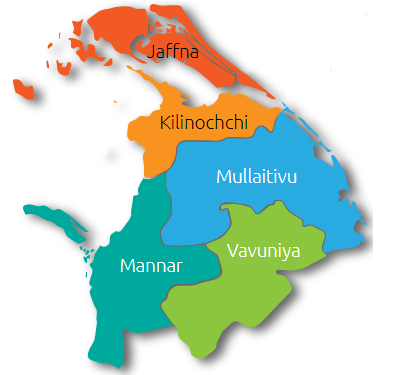
Maj. Gen. Jayasekera said so responding to Vanni District ITAK MP Dr P. Sathiyalingam during the parliamentary session last week. The lawmaker questioned the government over the continued military control of civilian land in Vavuniya, including the site of an LTTE cemetery.

Maj. Gen. Jayasekera said that “due to prevailing security considerations,” it was not possible, at present, to release the land or reopen the road. The Deputy MInister said that “alternative

routes are available for public use.”

Dr Sathiyalingam, however, pointed out that these alternate routes were only suitable for two-wheelers and urged the government to consider a special budgetary allocation in 2026 to repair and upgrade these roads.

The Minister replied that the matter would be taken up at the Vavuniya District Development Committee meeting and that efforts would be made to secure special funding for the rehabilitation of the roads.

The ITAK MP also raised concern that several key sites in Vavuniya continue to remain under

military control, including:

• the land belonging to the Vavuniya Municipal Council, where the Vavuniya Police Station is located;

• the private land at Eechankulam, where a Thuyilumillam (cemetery for LTTE cadres) stands; and

• the property of the Chettikulam cooperative society, currently occupied by a Special Task Force (STF).

Dr Sathiyalingam noted that despite more than 16 years having passed since the end of the armed conflict, these lands have yet to be released to their rightful civilian owners.

Kuwait Airways resumes direct flights to Sri Lanka

Kuwait Airways on Monday launched direct flights to Colombo after two years of codeshare operations.

The first flight arrived at Bandaranaike International Airport (BIA) in Katunayake this morning and was greeted with a celebratory water cannon salute organized by Airport and Aviation Services Sri Lanka (AASL), followed by a traditional Kandyan dance performance organized by the Sri Lanka Tourism Promotion Bureau (SLTPB).

Passengers were also presented with Ceylon Tea gift packs sponsored by the Sri Lanka Tea Board, a statement said.

Kuwait Airways now offers four weekly flights between Kuwait and Colombo.

Bimal in China: NPP seeks inputs over China’s growth, governance, stability By Kelum Bandara

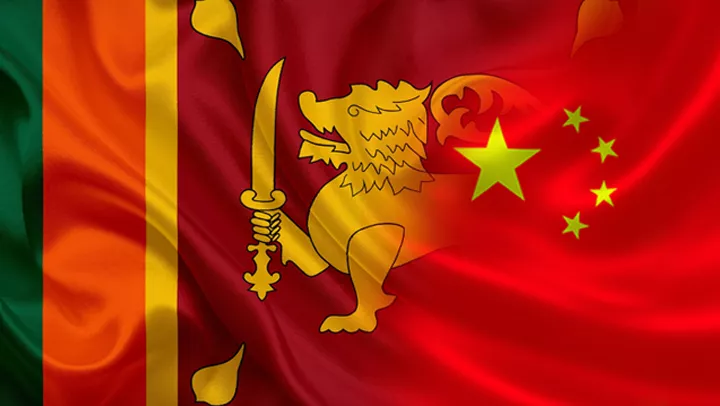
In a bid to deepen ideological and political engagement with Beijing, the Janatha Vimukthi Peramuna (JVP) — a key constituent of the ruling National People’s Power (NPP) — has stepped up its interaction with the Communist Party of China (CPC), seeking to learn from China’s experience in achieving economic growth, political stability, and public trust, while moving ahead with the implementation of the Memorandum of Understanding signed between the two parties.

Transport, Highways and Urban Development Minister Bimal Rathnayake who is a politburo member recently made a tour of China and had wide ranging engagements with the CPC which is the sole authority of one-party rule in that country.

In a Facebook post, Minister Rathnayake said that during his visit, he held talks with Liu Haixing, Head of the International Department of the Communist Party of China (CPC). He said the discussion focused on the CPC’s commitment to rebuilding China, sustaining stability while winning public trust, driving development through progressive reforms, implementing strong anti-corruption measures, and maintaining party discipline.

“They (CPC) emphasized the importance of environmental conservation, social welfare and protection,” he said in the post.

Besides, he said the two sides discussed the implementation of matters envisaged in the MoU between the two parties.

Mr. Liu took charge in the new position replacing Liu Jianchao, 61, as head of the party’s international department recently. Mr. Liu Haixing previously served as a senior director of a powerful party commission overseeing national security. He had studied in Paris in the 1980s. He is an expert on European affairs.

The CPC maintains relations with all the key political parties in Sri Lanka including the United National Party (UNP), Sri Lanka Podujana Peramuna (SLPP) and Samagi Jana Balawegaya (SJB).

President Anura Kumara Dissanayake visited Beijing at the beginning of this year. During Mr. Rathnayake’s visit, attention was also drawn to the areas discussed at that time. Before Mr. Rathnayake, JVP General Secretary Tilvin Silva toured China and had engagements with the CPC leaders.

Posted in Uncategorized

Government to grant voting rights to Sri Lankans working abroad – Vijitha

Minister of Foreign Affairs, Foreign Employment and Tourism Vijitha Herath announced that steps are being taken to grant voting rights to Sri Lankans working abroad.

The initiative aims to ensure that the country’s large overseas workforce can actively participate in the democratic process.

Speaking at an event marking the 40th anniversary of the Sri Lanka Bureau of Foreign Employment (SLBFE) on Monday (27), Minister Herath revealed that the Ministry of Public Administration is collaborating closely with his ministry to implement the proposal.

“A special committee has already been appointed by the Ministry of Public Administration to provide the necessary facilities for granting voting rights to Sri Lankans abroad and to establish the required legal framework,” he said.

He further disclosed that the government is also working to introduce a contributory pension system for Sri Lankans living overseas, noting that legal procedures are currently being formulated to make the scheme operational.

Posted in Uncategorized

Accra Court grants bail to 11 accused of defrauding Sri Lankan MP of $2 million gold scam

Modern Ghana – The Accra Circuit Court Eight has granted bail to eleven persons accused of defrauding a Sri Lankan Member of Parliament of USD2 million under the pretext of supplying gold.

Each accused was granted bail in the sum of GH¢500,000.00 with two sureties, one of whom must justify with a landed property and submit the original title certificate to the Court’s Registry.

The accused—Abdul Rauf Adam, Alhmamoudi Saleh, Yaw Attah Antwi, Osman Suleman, Nhyiraba Dwamena Ra-III, Benzcarl Dwamena, Sanfo Mubassir, Sallah Mammoudi, Ahmed Issah, Umaru Pafadenam, and Salifu Suleman—are facing charges of conspiracy to commit crime, defrauding by false pretence, and attempted fraud.

Their charges were read in court, but pleas were not taken pending further investigations. They are expected to reappear on November 20, 2025.

Presenting the facts, Police Chief Inspector Jacob Kuubal said the complainants were officers of the National Security Council Secretariat (NSCS).

He said the accused persons operated in and around Weija SCC and were part of a syndicate defrauding individuals under the guise of selling gold.

Investigations revealed that in 2023, Saleh and his accomplices defrauded Dr Muhammed Hizbullah, a Sri Lankan MP, of USD2 million under the pretext of supplying gold. After receiving the money, they failed to deliver the gold and cut contact with the victim.

Chief Inspector Kuubal said the accused later re-established contact with Dr Hizbullah, offering to sell him 50kg of gold and signing a Memorandum of Understanding to give the transaction a semblance of legitimacy.

Following an official complaint, a National Security team arrested the suspects at Weija SCC on October 16, 2025. Two yellowish metals suspected to be gold were retrieved during the arrest.

He said tests were being conducted to determine the authenticity of the metals.

Source:Dailymirror.lk

Jaffna named one of the best places to visit in 2026 by Lonely Planet

Jaffna has been named as one of the Top 25 Best Places to Visit in the World for 2026, by global travel publication Lonely Planet.

Jaffna, known as a cultural travel destination has attracted thousands of visitors in recent years.

The selection of Jaffna once again underscores Sri Lanka’s rich cultural and historical heritage and will help authorities’ push towards establishing the country as one of the most sort after tourist destination.

Lonely Planet unveiled its top destinations and experiences for the coming year with the release of Lonely Planet’s Best in Travel 2026.

In Lonely Planet’s new guide, the team of travel experts recommends where to go and what to do in 2026.

The book features 25 must-visit destinations and 25 essential experiences from all around the globe, illustrated with colourful photography, essays and local advice for exploring each place.

Founded in 1970, Lonely Planet is one of the world’s most trusted travel media brands, with more than 150 million guidebooks sold globally and an extensive digital reach.

These are the 25 best places to travel in 2026, according to Lonely Planet:

Peru, South America
Jaffna, Sri Lanka
Maine, USA
Cádiz, Spain
Réunion, Africa
Botswana, Africa
Cartagena, Colombia
Finland, Europe
Tipperary, Ireland
Mexico City
Quetzaltenango, Guatemala
British Colombia, Canada
Sardinia, Italy
Liberdade, São Paulo
Utrecht, Netherlands
Barbados, Caribbean
Jeju-Do, South Korea
North Island, New Zealand
Theodore Roosevelt National Park, North Dakota
Quy Nhon, Vietnam
Siem Reap, Cambodia
Phuket, Thailand
Ikra-Flinders Ranges and Outback, South Australia
Tunisia, Africa
Solomon Islands, Oceania

Posted in Uncategorized

Yal Devi Train Guard Arrested Mid-Journey for Being Drunk on Duty

The main train guard of the Jaffna-to-Colombo ‘Yal Devi’ express train was arrested yesterday (25) at the Anuradhapura Railway Station after he was allegedly found to be intoxicated while on duty. The incident, which occurred at approximately 2:30 PM when the train pulled into the Anuradhapura station, prompted immediate action from railway authorities.

According to railway officials, the Anuradhapura Station Master received a tip-off that the guard in charge of the train was under the influence of alcohol. The Station Master promptly alerted the Railway Security Department, whose officers subsequently intervened and took the 44-year-old guard into custody. The suspect is reportedly a resident of the Mount Mary Railway Quarters in Borella. Following his arrest, the guard was presented to the Judicial Medical Officer (JMO) for examination before being transferred to the train guards’ rest house in Anuradhapura.

The Anuradhapura Station Master confirmed that the Railway Department will launch a full investigation into the incident and that appropriate disciplinary action will be taken against the employee involved. Despite the disruption caused by the arrest, officials at the Anuradhapura station acted swiftly to ensure minimal impact on passenger services. A replacement guard was immediately assigned to the ‘Yal Devi’, allowing the train to resume its journey to Colombo Fort without any significant delay.

India and China to resume direct flights as ties improve

India and China resume direct flights on Sunday (Oct 26) after a five-year suspension, a move important both for trade and a symbolic step as Asia’s giants cautiously rebuild relations.

The neighbours – the world’s two most populous nations – remain strategic rivals competing for regional influence, but ties have eased gradually since a deadly Himalayan border clash in 2020.

India’s government said the resumption of flights will boost “people-to-people contact” and aid the “gradual normalisation of bilateral exchanges”.

Warming relations with Beijing come as India’s ties with key trade partner Washington struggle, following US President Donald Trump’s order of punishing 50 per cent tariffs.

Trump’s aides have accused India of fuelling Russia’s war in Ukraine by buying Moscow’s oil.

India’s largest commercial carrier, IndiGo, is set to operate the first daily flight to mainland China, departing Kolkata at 10pm on Sunday for Guangzhou.

There are already regular flights between India and Hong Kong, while additional services from the capital New Delhi to Shanghai and Guangzhou will begin in November.

“The direct air link will reduce logistics and transit time,” said Rajeev Singh, head of the Indian Chamber of Commerce in Kolkata, telling AFP it would benefit businesses.

India’s eastern port city of Kolkata has centuries-old ties with China dating back to British rule, when Chinese migrants arrived as traders.

Indo-Chinese fusion food remains a beloved staple of the city’s culinary identity.

“It’s great news for people like us, who have relatives in China,” said Chen Khoi Kui, a civil society leader in Kolkata’s Chinatown district of Tangra. “Air connectivity will boost trade, tourism and business travel.”

“LONG TERM CHALLENGE”

India runs a significant trade deficit with Beijing, relying heavily on Chinese raw materials for industrial and export growth.

The thaw between New Delhi and Beijing followed meetings between their leaders in Russia last year and in China in August.

India’s imports from China surged to more than US$11 billion last month, up more than 16 per cent compared with September 2024, according to New Delhi’s commerce ministry.

Exports from India to China were US$1.47 billion, modest by comparison, but up around 34 per cent year-on-year.

Direct flights between the two countries were suspended during the COVID-19 pandemic, halting roughly 500 monthly services.

Relations then plummeted after the 2020 border skirmish between the nuclear-armed nations, when at least 20 Indian and four Chinese soldiers were killed.

New Delhi responded by tightening restrictions on Chinese investments and banning hundreds of apps, including TikTok.

India then deepened ties with the US-led Quad alliance – also including Japan and Australia – aimed at countering China’s influence in the Asia-Pacific.

Both sides have troops posted along their contested 3,500-kilometre high-altitude frontier.

But this month, soldiers on each side exchanged gifts of sweets on the Hindu festival of Diwali, “marking a gesture of goodwill”, said Yu Jing, the spokesperson of the Chinese Embassy in India.

The Indian Express, in an editorial after Indian Prime Minister Narendra Modi and China’s President Xi Jinping met in August, said improving ties with Beijing “sends an appropriate signal” to Washington.

But relations still have far to go.

“Managing an increasingly assertive China remains India’s long-term challenge,” the newspaper added.

“These fundamental realities remain unchanged, regardless of Trump’s whimsical diplomatic actions.”

Source: AFP

Postponed Democracy: NPP’s Co-operative Defeats and the Silent Erosion of 13A -GroundViews

The recent Co-operative Society elections across Sri Lanka have quietly revealed a political undercurrent that the NPP can no longer ignore. While the party continues to project national confidence, the defeats in a series of key southern districts, including Kelaniya, Beruwala and Homagama, point to a deeper truth: the NPP’s grassroots strength is slipping.

In at least nine out of 14 co-operative contests, NPP backed groups suffered defeat at the hands of opposition or independent alliances. These are not isolated setbacks; they expose the widening gap between the government’s rhetoric of reform and the everyday reality of disillusionment among its base, particularly among the working class communities that lifted the NPP into power.

When President Anura Kumara Dissanayake took office, his government promised to restore democratic institutions that had long been neglected, particularly the Provincial Council (PC) elections, which have not been held since 2018. Early statements from NPP leaders suggested that polls would be conducted by early 2026, ensuring the revival of devolved governance under the 13th Amendment.

However, after the co-operative election defeats, that enthusiasm appears to have diminished. Within the NPP and JVP circles, some leaders are now calling for strategic patience, arguing that the government should focus on development and constitutional reforms before holding PC elections. In practice, this follows a familiar political pattern. Successive governments have used similar justifications, including delimitation and reform priorities, to defer provincial polls indefinitely. The NPP, once the loudest critic of such evasions, now seems poised to follow the same course.

The logic is straightforward: the NPP cannot risk another public test while its popularity weakens at the grassroots level. The co-operative results demonstrate that even in traditional left-leaning areas, the party’s support has eroded amid inflation, cost of living pressures and stalled reforms. Holding fresh elections, particularly in politically sensitive provinces, could expose the limits of its appeal beyond parliament and major urban centres.

Consequently, the postponement of PC elections is increasingly framed as an administrative necessity rather than a retreat from democracy. Behind this technical language, however, lies an uncomfortable truth: the NPP’s confidence in its people’s mandate is diminishing.

The victims of this political hesitation are not only the voters of the South but also the Tamil population of the North and East, whose right to devolved governance remains suspended. The 13th Amendment, established through the Indo–Lanka Accord of 1987, was intended to guarantee regional autonomy and self-administration. By continuing to delay PC elections, the NPP government risks further marginalising the Tamil people, replacing elected Provincial Councils with unelected governors accountable solely to Colombo.

This undermines the constitutional spirit of devolution and deepens the divide between the Northern and Southern populations. If a government that came to power promising to restore democracy now avoids fulfilling its constitutional obligations, it demonstrates a return to the same centralised arrogance that has fuelled ethnic mistrust for decades.

The most effective solution may lie not in politics but in law. If opposition parties, particularly Tamil representatives such as M.A. Sumanthiran challenge the delay in court, it could compel the NPP to act. A judicial order mandating PC elections would leave the government no choice but to honour its constitutional duty.

Several constitutional experts have already argued that the continued absence of provincial governance constitutes a breach of the 13th Amendment and Article 154 of the Constitution, both of which require the establishment of elected councils. A successful challenge could restore not only the councils themselves but also the principle of accountability that has steadily eroded.

The NPP’s co-operative election defeats are more than local setbacks; they represent a referendum on credibility. If the government chooses to hide behind reform agendas instead of facing the electorate, it risks repeating the very mistakes it once condemned. Postponing democracy to protect political comfort is not reform; it is regression.

Sri Lanka has waited long enough for its provinces to regain their democratic voice. For the Tamil people, each delay is another reminder that promises of inclusion remain unfulfilled. For the NPP, each postponed election erodes the moral ground upon which it claimed legitimacy. The choice before the government is clear: renew democracy or betray it.