Why The Anti-Terrorism Bill Should Be Rejected? By Lionel Bopage

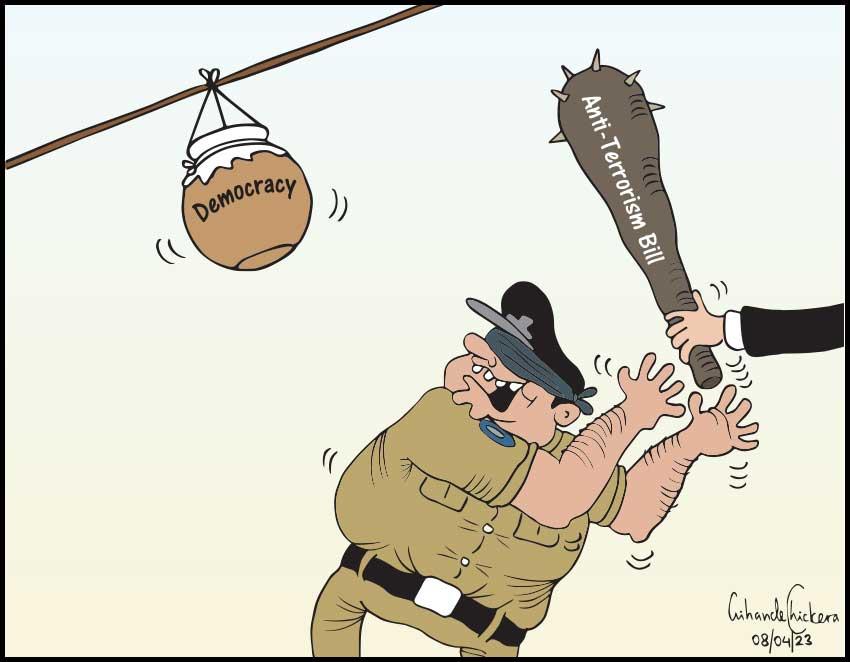
The proposed “Anti-Terrorism Act” (ATA) should be considered in the context of Sri Lanka’s post-independent history that is full of abuse of power in political, legislative and judicial matters. One only needs to recall the terror used against peaceful protesters and dissenters against abuse of power and mismanagement of economy in recent times.

Sri Lanka’s track record of fundamental rights violations has been appalling. Many organisations and individuals, both local and international, have continuously expressed serious concerns about this ongoing situation and have urged the government many times to take remedial steps. The United Nations have called upon the government to address the issues of the broad definition of terrorism, prolonged pre-trial detentions and torture, and the targeting of minorities and political dissenters under the present Prevention of Terrorism Act (PTA) which has been in the government’s rulebook since 1979. The PTA did not and could not prevent the armed conflict for which all the precursors were set by successive regimes since independence.

The UN request was to repeal the PTA and replace it with a new law in accordance with international standards that is inclusive, transparent and participative. This requires narrowing down the vast scope targeted by a broad definition of terrorism and providing proper legal safeguards for those detained under such law. It also requires allowing independent monitoring of all places of detention where they are held.

On the contrary, the proposed Bill is designed to reinforce systematic violations of fundamental human rights by further widening the scope of the definition of terrorism, so that those holding political power could use it against any entity or individual whom they wish to silence.

With the President and the security forces given wide powers without the need for proper judicial oversight, it enables detention of people without evidence, arbitrarily proscribe organisations and meetings, and criminalise criticism, dissent and protest. The Minister of Justice has repeatedly stated that no major changes would be made to the Bill, and his recent claim that it will help promote reconciliation among communities is farcical. The international community won’t have a bar of it.

It is in this light that an earnest Appeal to all Members of Parliament of Sri Lanka is made not to enact the proposed Anti-Terrorism Act, and to give democracy and the rule of law the utmost priority. It is high time the government listened to the cry of its citizens and enact laws that are only in the ‘people’s interests’. The said letter, sent yesterday, is as follows:

An Earnest Appeal to All Sri Lankan Parliamentarians

23 April 2023

Hon. Prime Minister, Cabinet Ministers and Members of the Parliament of Sri Lanka

Do not enact the proposed Anti-Terrorism Act

Democracy and the rule of law must come first.

One of the most solemn duties of a parliamentarian is to make new laws and change existing laws – keeping the views and interests of their constituents at heart. Carefully scrutinizing parliamentary bills, debating policies for the common good, and reviewing government decisions, are part and parcel of carrying out this paramount duty.

With the Anti-Terrorism Act bill to be presented to the parliament in the coming week, we ask you to exercise due diligence, conscious of the long-lasting consequences it will have on people’s lives and future generations.

The country has suffered immensely under the current PTA for over four decades. It is incumbent upon all our parliamentarians to right the wrongs of the past and get this bill right. What are the sticking points? There are many, including the following:

* The bill that is brought to replace a ‘bad law’ is in fact much worse than the current one.

* It doesn’t meet the benchmarks stipulated by the UN with respect to counter-terror laws.

* The offences referred to in the bill are wide-ranging, vague and subjective, with potential for abuse and miscarriage of justice.

* A Deputy Inspector General of Police could request non-judicial detentions, and arrests would occur before any formal charges are submitted.

* The President can proscribe persons and organizations without judicial oversight.

* It has the potential to label and delegitimise those the government considers to be its political enemies; dissenters and protesters could be held in jail for unspecified periods.

* The bill lacks provisions to prevent arbitrary arrest, detention and torture, and due process and fair trial guarantees – thus, breaking the government’s pledge to the international community to uphold human rights.

* It grants police and military sweeping powers to stop, question, search, and arrest anyone, or seize any document or object without a warrant, if they believe they have “reasonable grounds”.

* Replacing a bad law with a worse one won’t reap any economic benefits from the EU (GSP+ tariff concession) or other international donors, as claimed by the President. The international community cannot be deceived.

With so many vague provisions, the bill is ripe for abuse and will inflict long-term painful repercussions for society as a whole. In view of these, the bill in its current form must be scrapped.

As politicians holding power, we appeal to you to do the right thing with moral conviction and integrity. This is one such moment we hope that public interest, political honesty, and respect for the rule of law will triumph over self-interest.

PLEASE VOTE NO TO THE PROPOSED ANTI-TERRORISM ACT with courage and conviction.
To do otherwise would suggest that the nation’s collective will had withered when faced with the task of saving it from self-annihilation – socially, politically and economically.

Voice For Democracy in Sri Lanka, International Network

Australia, Canada, Europe, the UK and the USA
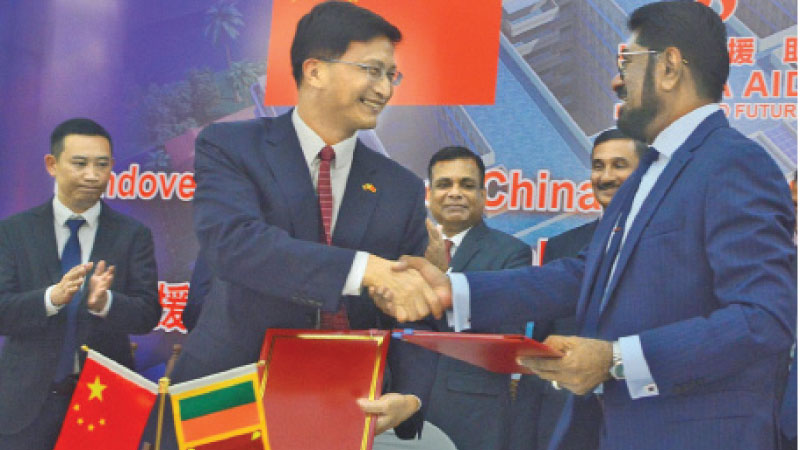
Largest ever China-Aid project in Sri Lanka handed over to the Health Ministry

The Out-Patient Department (OPD) building of the Sri Lanka National Hospital, the largest ever China-Aid project in Sri Lanka was handed over to the Health Ministry on Tuesday (25).

Ambassador of the People’s Republic of China to Sri Lanka Qi Zhenhong and Minister of Health Keheliya Rambukwella were among those present at the handing over ceremony.

The Out-Patient Department (OPD) building of the Sri Lanka National Hospital with eight stories has a 50,000 square meter area and a daily access of 6,000 patients.

Speaking at the event Minister of Health Keheliya Rambukwella said China decided to donate the OPD building project to Sri Lanka in response to a request by former President Mahinda Rajapaksa, during his term in office as Head of State.

Minister Rambukwella added that the project is the largest ever, single grant given by the government of China.

Minister Keheliya Rambukwella said the OPD clinic will be operational within one month, adding however it will take around one year to be fully functional.

Speaking at the event Ambassador of the People’s Republic of China to Sri Lanka Qi Zhenhong said he hopes the donation by the Chinese government will help health care workers and patients in need in Sri Lanka.

Ambassador Qi Zhenhong said the OPD building is a landmark that represents the longstanding relationship between China and Sri Lanka.

The Ambassador assured that China will continue to provide assistance to Sri Lanka.

Hartal opposing new anti-terror legislation and Sinhalisation brings North-East to a standstill

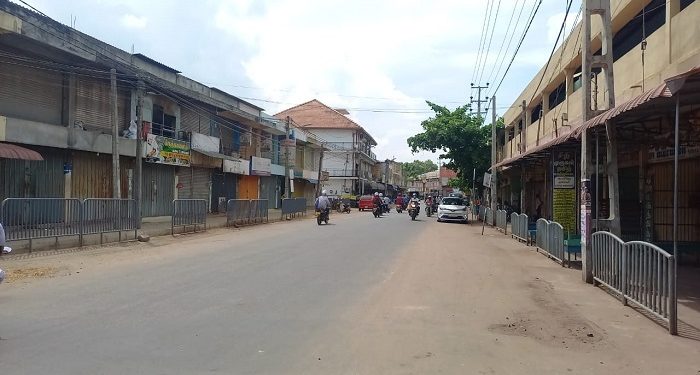
A hartal opposing the Sri Lanka’s new anti-terror legislation and the ongoing Sinhalisation of the Tamil homeland has caused a complete halt to all economic activities and movement of the public across the North-East.

Tamil political parties called for a hartal today as Sri Lanka is set to debate the proposed Anti-Terrorism Act which has been ciritcised for failing to adhere to international human rights standards. Sri Lanka’s Prevention of Terrorism Act (PTA) has been condemned by the international community for years but the state have not repealed the notorious legislation.

The proposed legislation which was published last month retains PTA provisions that enable prolonged detention for up to one year which can be extended on the request of the Attorney General.

In the Mannar district, all economic activities have been closed for the day, and the general public, civil organisations, and unions that engage in economic activities have unanimously supported the initiative. The movement of the public in the streets is practically non-existent, with attendance in schools extremely low.

Unanimous support for the hartal in Vavuniya has led to the complete halt of all economic activities, and the movement of the public has been limited. Private bus unions have stopped services completely, and private buses that are entering the northern provinces have stopped providing their services at Vavuniya. Even though schools are open, attendance is extremely low. Services have also halted in suburban areas such as Nedunkerny, Cheddikulam, and Kanakarayankulam.

All private services have also come to a halt in Mullaitivu district with business owners from Visuvamadu, Udayar Kattu, Puthukkudiyiruppu, Mulliyavalai, Mankulam, Oddusuddan, and Mallavi have completely shut down operations, and cooperatives have also completely shut down operations, including grocery shops and fish markets.

In Mullaitivu, a government bus service which departed from Mullaitivu around 5:30 am on its way to Jaffna was attacked with stones by two people on a motorbike. The windshield of the bus was damaged, and the driver was injured. Following this incident, a complaint was made at the Mullaitivu police station, and the Police have provided security for all government bus services in Mullaitivu.

In Jaffna, while government bus services are operating, private bus owners have ceased operations for the day. Three-wheelers are sparsely operating, and with the exception of a few restaurants, pharmacies, and other essential services, all business operations have been halted. Schools and universities have also stopped for the day.

In Trincomalee, all Muslim and Tamil-owned services have stopped for the day, and the daily lives of the general public are expected to be disrupted by this hartal.

It is important to note that government bus services from outside the northern district are not going beyond Vavuniya, causing significant inconvenience to passengers traveling to and from the northern districts. The hartal has brought to light the ongoing oppression faced by the Tamil and Muslim communities in Sri Lanka and the urgent need for the government to take action to address these issues.

Posted in Uncategorized

Indian tourists to Sri Lanka can pay in INR

Indian tourists visiting Sri Lanka can transact in Indian currency since the Central Bank has made it a designated currency, Governor Nandalal Weerasinghe said .

He said it also enables trade settlement between the two countries .

He also expressed support for the linking digital payment interfaces between the two countries. He made these remarks during a webinar .

Delivering a special address in the Webinar on ‘Economic Scenario of Sri Lanka: Current Status and Way Ahead’, organized by Federation of Indian Chambers of Commerce and Industry (FICCI), the High Commissioner of India Gopal Baglay highlighted the areas of prospective economic cooperation between India and Sri Lanka. He particularly focused on connectivity, IT, renewable energy and tourism.

Jaffna University student union voice concerns over proposed Anti-Terrorism Act

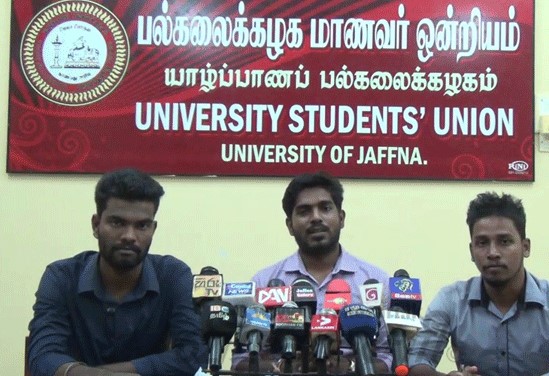
Jaffna University’s student union have expressed their concerns over the proposed Anti Terrorism Act which they state will curtail freedom of expression and association.

Speaking at a press conference, the leader of the student union, Azhagarasan Vijayakumar, said that the proposed act will will impede not only organisations but also individuals from engaging in their freedom of expression and freedom of association. The new act has been proposed to replace the Prevention of Terrorism Act (PTA), which has been used for decades against Tamils and Muslims to arbitrarily arrest and detain people, violate fair trial rights, and put detainees at risk of torture.

“The Tamil people’s voices have been systematically oppressed by the PTA, and student movements that have been democratically engaging in protests and dissent have been greatly affected by the existing PTA. Students have been arrested and intimidated, and the proposed Anti-Terrorism Act is likely to worsen the situation,” Vijayakumar added.

The international community needs to intervene to stop this act from being passed, and MPs should oppose it, Vijayakumar said. The Jaffna University students union is vehemently opposed to the new Anti-Terrorism Act and will mobilise its members to protest against it. The proposed act has raised concerns among student unions across the country, with many fearing that it will curb their right to dissent and protest.

The Jaffna student union is urging the government to reconsider its decision to introduce the Anti-Terrorism Act. The union added that the proposed act will have far-reaching implications, and it is essential that all concerned parties engage in constructive dialogue to find a way forward that protects the rights and freedoms of all citizens.

Posted in Uncategorized

World Tamil Diaspora Groups Support to Hartal in NORTH & EAST OF SRI LANKA on Tuesday 25 -04- 2023

We, the leading Tamil diaspora organisations, extend our full support for the forthcoming general strike (hartal) that has been scheduled in the traditional homeland of Tamils in the North & East of Sri Lanka on Tuesday – 25th April 2023 and cordially invite all other diaspora organisations to provide support leaving behind their differences aside at this crucial time.

The purposes of the hartal are:

• To reject the Anti-terrorism Bill that is to be submitted in the Sri Lankan parliament for ratification, because it is worse than the current Prevention of Terrorism Act.
• To oppose the racist state’s premediated actions of committing structural genocide and denying the Tamil people of their inalienable right to self-determination by carrying out:
o Land grab.
o Colonisation of the traditional homeland of the Tamil people with Sinhala people from the south
o Destruction of evidence on Tamil heritage.
o Demolition of historical Hindu temples and replacing them with Buddhist viharas, all aimed at distorting and denying the long history of the Tamil people in their traditional homeland in the North-East of the island.

We extend our sincere gratitude and appreciation of all political parties, religious groups, trade unions, university students and other civil society groups who have initiated and are conducting this hartal, and we encourage them to continue with organising similar integrated and coordinated actions in future.

We call upon all Tamil people living in Sri Lanka and the Tamil political parties to unite and participate in this hartal to demonstrate our unified strength to the Sinhala-Buddhist state, Sinhala majority and to the international community.

Thank you.

Posted in Uncategorized

Tamil organizations working with major political parties in Britain support the Hartal

The undersigned Tamil organisations working with the key political parties in the United Kingdom, wish to express our solidarity with the organisers of the general shutdown planned for Tuesday, 25 April 2023 demanding an end to militarisation in the North-Eastern regions and removal of the Prevention of Terrorism Act.

Despite repeated calls from the international community and against numerous commitments it has
made to the United Nations Human Rights Council, Sri Lanka continues its heavy military presence in the Tamil homeland with constant interference by security forces in civil matters and continues to use the draconian Prevention of Terrorism Act to intimidate and subjugate the Tamil People in the island.

We fully support this action by the organisers and call on all political parties, civil society organisations and people in North-East to join the general shutdown and send a strong message to the Sri Lankan government and the international community.

Gallery


Posted in Uncategorized

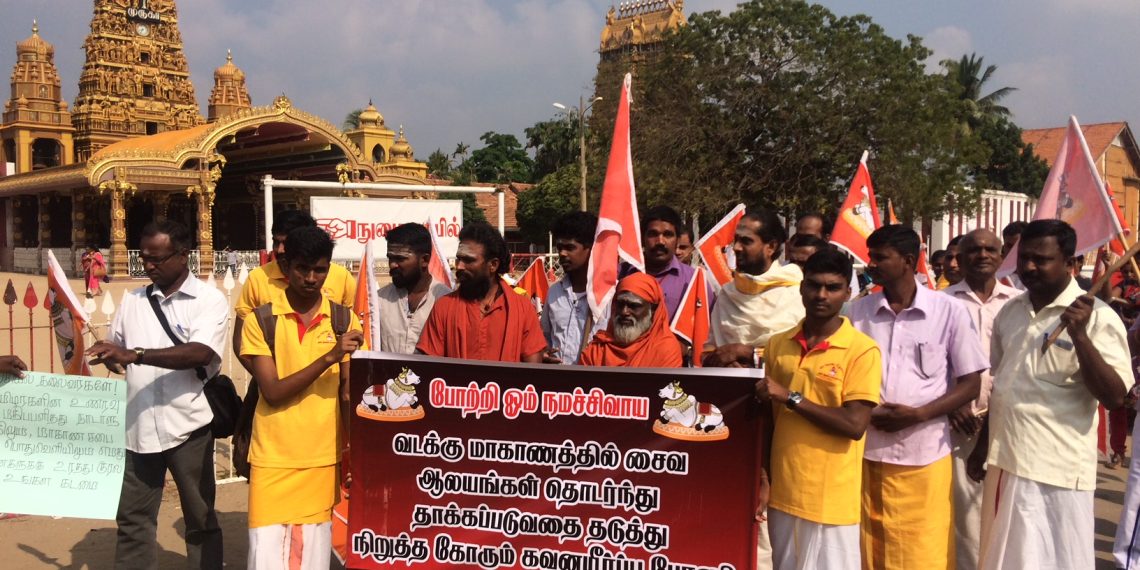
Tamils flag escalating attacks on Hindu temples in northern Sri Lanka

Tamils in Sri Lanka have witnessed an escalation in the attack on Hindu temples in recent weeks, a trend that they note is part of the State’s “ongoing Sinhalisation project” in the island’s north.

In recent weeks, Tamil media reported multiple incidents of vandalism at temples, where Hindu deities were found missing or damaged. In Jaffna, some Tamils have sought to counter the trend by placing a Hindu deity in a public space, prompting police to petition the court seeking its removal. Several Tamil political parties have called for a protest on April 25 against the recent temple attacks, among other issues.

Simultaneously, Tamils also point to an increase in the number of new Buddhist structures and shrines coming up in the Northern Province, where Hindus form the largest religious group, followed by Christians and Muslims, with Buddhists in the fourth place.

The developments come amid heightening activity of Sri Lanka’s Department of Archaeology in the Tamil-majority north and east. Authorities have restricted public access to some temples, citing ongoing “archaeological research” in the historic sites. In one instance, media reported the arrest of a youth who attempted to worship at a temple in Vedukkunarimalai, Vavuniya. A large protest was held in the area last month protesting the vandalism of idols at this temple.

Jaffna legislator and Tamil National People’s Front Leader Gajendrakumar Ponnambalam sees the incidents as part of a larger, persistent assault on Tamils’ rights, including to worship. Ever since the end of the war, consecutive governments have “accelerated the Sinhalization” of the north and east, he said, “as if to catch up with the gap of the 30 years during the war that they missed out on.”

The Aiyanar temple at Kurunthurmalai, Mullaitivu, has remained controversial amid a rapid increase in Buddhist structures on its premises in the last few years. Despite a court order preventing any new religious installations at the spot, a state minister in 2021 led a ceremony to place a Buddhist statue at the site, in the presence of military men and archaeological department officials. Similar contestations on land have also been reported in the east.

“The Rajapaksas spearheaded this [Sinhalisation] project, but that doesn’t mean the attitude of [President] Ranil Wickremesinghe or [Leader of Opposition] Sajith Premadasa is any different,” he told The Hindu. Recalling the manifesto of Mr. Wickremesinghe’s United National Party, ahead of the 2018 local government elections, the MP said: “It stated that their government will rebuild 1,000 Buddhist viharas [temples], a vast majority of them claimed to be in the north and east. Mr. Sajith was the Minister in charge of this project.”

Mr. Ponnambalam said Tamils have been struggling against “this genocidal agenda”, of “erasing the Tamil identity” of the north and east. “It is utter desperation that led [Tamils] to take up arms. Well, now that the Tamil armed struggle was crushed, we are back to business as usual.”

M.A. Sumanthiran, Jaffna legislator for the ITAK and a senior lawyer, is appearing for Hindu religious groups in multiple legal battles where temple land, or access, is being contested by authorities. There is “very clearly, a pattern and an agenda” seen in the escalating instances of attacks and vandalism on Hindu temple deities across the north, he noted.

Mr. Sumanthiran, too, accused authorities of pursuing a project of “Sinhalisation”, targeting places of worship of the Tamils, based on claims that these are archeological sites, implying they have a Sinhala heritage. “To start with, even if these sites had archeological evidence of some Buddhist heritage, it may not necessarily be Sinhalese, because we know that Tamil Buddhists have lived in the north,” he told The Hindu.

Observing that the Sri Lankan Constitution guarantees every citizen the right to worship, or to not worship, he said: “This Sinhalisation project cannot be countered by simply acting in competition, by placing more statues or deities. We need sober ways of putting an end to this practice. It needs regulation of the erection of new statues, across religions. Meanwhile, a citizen’s right to worship, which is an absolute right, ought not to be interfered with, irrespective of which religion one follows,” he said.

Some temple administrators have reportedly approached the Indian High Commission on the issue. Further, amid reports of Hindu religious groups also appealing to their Indian counterparts, some Tamils have voiced scepticism. “There have been calls by Sri Lankan Tamil groups to BJP/Indian Hindu groups to intervene and stop the destruction of Hindu temples & construction of Buddhist temples in their place in North & East. This is dangerous and ignores many socio-political realities. BJP is no progressive force,” said human rights activist Ambika Satkunanathan, in a recent Twitter thread. “BJP’s politics is akin to that of the Rajapaksas-they demonise and dehumanise Muslims, Christians and Dalits, portray them as the enemy and as obstacle to building a Hindu state,” she said.

In Mr. Ponnambalam’s view, seeking help from State or Government of India, or any other country, for “a reasonable and just” request is “totally acceptable”. But he cautioned Sri Lankan groups against seeking the help of organisations that have “a very clear political agenda”, which goes beyond religion, and “sees sections of the Tamil Nation in Sri Lanka that belong to different religions as enemies”.

“Help does not come free. It comes with conditions, and the conditions that some of these Hindu organisations lay will ultimately divide the Tamil Nation here,” he said, adding that Tamil nationalism in Sri Lanka had been a reaction to the Sinhala Buddhist ethnocratic state’s policies. “We have therefore insisted that our liberation has to be on the basis of secularism and equality. That aspect, as far as our organisation is concerned, can never be compromised.”

The Department of Archaeology is yet to respond to The Hindu’s query. When contacted, the Governor of the Northern Province Jeevan Thiagarajah said historical places that are religious in character are interpreted in different ways and that there have been “issues around their history”.

“The Department of Archaeology looks into archaeological matters, but there are other departments tasked with looking into religious concerns and unfortunately, they are not out there on the field doing their job. I will take it up with the Ministry [of Culture],” noted the most powerful central government representative in the Province. The Northern Province, like the island’s eight other provinces, is currently under Governor’s rule, owing to the indefinite postponement of provincial council elections. “Sectarianism is not the way forward…we hope not to go down that path,” he said.

Source:The Hindu

Posted in Uncategorized

Bill to amend the Provincial Councils Elections Act in Parliament on Tuesday

The bill to amend the Provincial Councils Elections Act, No. 2 of 1988 is scheduled to be tabled in Parliament on the 25th of April.

The Private Member Bill by Parliamentarian MA Sumanthiran was published in government gazette in 2019 as the Provincial Councils Elections (Amendment) Bill.

According to MP Sumanthiran, the first reading of the bill will take place on Tuesday.

If Parliament adopts the bill, the delayed Provincial Council elections can be held under the previous voting system.

The Provincial Councils Elections Amendment Bill was passed by Parliament on the 20th of September 2017 with the support of more than two-thirds of the Members of Parliament.

However, it led to the delay of the Provincial Councils elections for more than five years.

China Merchants, Sri Lanka’s Access to build US$392mn logistics hub

China Merchants Port Holdings said it is teaming up with Sri Lanka’s Access Engineering and Colombo port to set up a 392 million dollar logistics centre as a build operate transfer project.

outh Asia Commercial and Logistics Hub, will be a 50-year build operated transfer project with CM Port holding a 70 percent stake and Access Engineering and Sri Lanka Ports Authority holding 15 percent each.

The statement said the project will “result in an infusion of US$ 126 million in addition to an upfront payment of US$ 26 million after the agreement is signed.”

An 8 storey building with a 530,000 cubic metre capacity will be built in the centre of Colombo port. Construction will begin in the second half of 2023 and is expected to be completed by end 2025.

It will be linked to the Katunayake airport via a port access elevated highway.

If will offer services including multi-country consolidation. Container freight station, general warehousing and value added services.

Colombo port has been declared as a ‘freeport’ by the Government of Sri Lanka.

The “will enjoy the associated Freeport advantages in its operations, such as no customs clearance for transshipment and MCC cargo, resulting in reduced paperwork and associated costs,” the statement said.

“The project also provides an ideal platform for the registration of hub companies – which will enjoy tax concessions in CIT, WHT, VAT, etc.”