Sri Lanka and UK to convene Strategic Dialogue on 18 April in London

Foreign Secretary Aruni Wijewardane will participate in the inaugural UK-Sri Lanka Strategic Dialogue at Foreign Secretary level on 18 April 2023 at the Foreign Commonwealth and Development Office (FCDO) in London, Foreign Affairs Ministry announced.

UK Minister of State in the FCDO Anne Marie Trevelyan will open the dialogue, which will be conducted with the participation of Sir Philip Barton, Permanent Undersecretary of the FCDO.

The inaugural Strategic Dialogue is convened at the invitation of the FCDO at the important juncture of the 75th anniversary of diplomatic relations between Sri Lanka and the United Kingdom this year.

The Strategic Dialogue will provide a forum for both sides to discuss the multifaceted relations between the two countries.

On the sidelines of the dialogue, Foreign Secretary Wijewardane will have a bilateral meeting with Assistant Secretary General of the Commonwealth Prof. Luis G. Franceschi and interact with members of the All-Party Parliamentary Group (APPG).

SLPI concerned over implications on freedom of expression by ATA

The Sri Lanka Press Institute (SLPI), its constituents and affiliated organisations are deeply concerned over the proposed Anti–Terrorism Act (ATA) and its implications on freedom of expression.

The ATA was published on 22 March 2023 (Gazette notification dated 17 March 2023), and was drafted to replace the Prevention of Terrorism Act (Temporary Provisions) Act No. 48 of 1979 (PTA).

The SLPI is of the opinion that the presented bill has several controversial elements that are not conducive for the media community.

The proposed bill consists of an overbroad and vague definition of “acts of terrorism” that can be interpreted in a manner which curtails the freedom of expression.

The broad powers vested within the proposed bill enables the criminalisation of speech that is likely to be understood as an encouragement or inducement to commit or prepare for terrorism, with the burden of proof on the defendant to show that was not their intention.

These offences also apply to those who publish, distribute, sell, or transmit publications that could be interpreted as materials supporting acts of terrorism.

According to the Bill, confidential information could be any information having an ‘adverse impact’ on ‘national security/defence’ which includes ‘any information not in the public domain’. Therefore, the broad and vague classification of ‘confidential information’ could place media personnel in a precarious position in the due course of executing their duties, as many offences which fall under the criminal law could now be reframed as ‘terrorist offences’.

It is evident that the Constitutionally guaranteed fundamental rights of citizens, in terms of freedom of speech and expression, freedom of assembly and association, and freedom to dissent are threatened through the proposed ATA. While the SLPI understands the need to amend the PTA, it also endorses caution in making amendments that could undermine democracy and good governance.

Sri Lanka given more time to repay Bangladesh’s $200m loan

Bangladesh has extended the repayment period of Sri Lanka’s $200 million loan it had given by six more months.

Earlier, the Sri Lankan central bank sought time from Bangladesh to make the first installment of the $200 million credit by March this year, hoping that it would be able to restructure its debt by then.

However, the restructuring was not done.

Now, Sri Lanka is seeking six more months and said it would make its first installment by August this year and another installment by September, said Bangladesh Bank Governor Abdur Rouf Talukder while speaking to a group of journalists after a meeting with P Nandalal Weerasinghe, governor of the central bank of Sri Lanka, at the 2023 Spring Meetings of the World Bank Group and the International Monetary Fund (IMF) in Washington on Friday.

The Sri Lankan governor confirmed that it would need no further extension, Talukder said.

When a loan repayment period is extended, it is not free of cost. It adds more interest, he also said.

Sri Lanka, facing its worst economic crisis in history, borrowed the fund in May 2021.

Colombo could not start repaying the loan and announced its external debt default in April of 2022 amid a deepening crisis.

The loan repayment period has been extended thrice.

As per the agreement with Sri Lanka, Bangladesh was supposed to receive an interest payment of Libor plus 2% if the amount was returned in three months.

The Libor, the acronym for London Inter-Bank Offered Rate, is a benchmark interest rate at which major global banks lend to one another in the international interbank market for short-term loans.

The three-month Libor averaged around 0.53% in 2021.

Last month, Sri Lanka secured a $2.9 billion programme from the IMF to tackle its huge debt burden.

The country owes $7.1 billion to bilateral creditors, with $3 billion owed to China, followed by $2.4 billion to the Paris Club, and $1.6 billion to India, said Reuters on Friday.

The government also needs to renegotiate more than $12 billion of debt in eurobonds with overseas private creditors, and $2.7 billion on other commercial loans.

Source – Dhaka Tribune

Posted in Uncategorized

No more announcements of LG polls dates – election chief

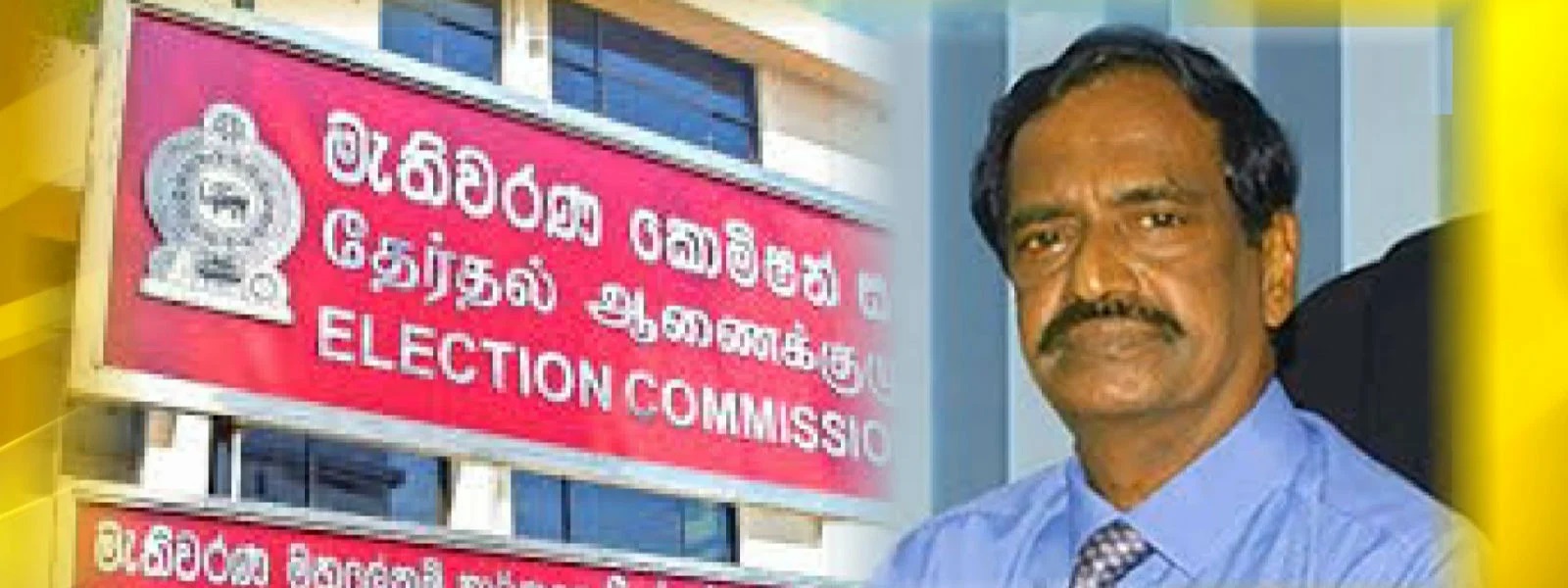
No more dates will be announced for the local government polls until funding and other requirements are made available, said Election Commission chairman Nimal Punchihewa.

He has told Neth News the EC had discussed matters with all the official authorities, with none left.

The election was postponed on April 11 for the second time.

Meanwhile, delimitation commission chairman Mahinda Deshapriya expects the LG polls to take place before either August 12 or September 15.

He has told ‘Mawbima’ that nominations already accepted would be unaffected by the delimitation process that has been finalized.

Nothing has been reported about a cancellation of the nominations accepted, he said.

Paris Club says aims to start Sri Lanka debt negotiations

PARIS : The Paris Club of creditor governments aims to start negotiations to restructure Sri Lanka’s debt, the group said on Friday after a creditor committee was set up this week.

The Paris Club said the Japanese and Indian finance ministers along with its president and representatives of Sri Lanka set up a creditor committee on Thursday on the sidelines of the spring meetings of the International Monetary Fund and World Bank in Washington.

Creditor committees lead talks about the terms for a future debt relief deal.

“The Paris Club intends to keep the momentum and start the restructuring negotiations in coordination with all relevant stakeholders, to ensure fair burden sharing, transparency and comparability of treatment,” it said in a statement.

It added that all public sector creditors were welcome to participate in the process.

Sri Lanka last month secured a $2.9 billion IMF programme to tackle its suffocating debt burden and its worst economic crisis in more than seven decades.

(Reuters)

Posted in Uncategorized

ATA a threat to journalists – IFJ

The new Anti-Terrorism Act (ATA) proposed by the Sri Lankan parliament, designed to replace the existing Prevention of Terrorism Act (PTA) of 1979, threatens to further exacerbate restrictions on the right to assembly and gravely curtail freedom of expression and press freedom, the International Federation of Journalists (IFJ) said in a statement.

The International Federation of Journalists (IFJ) joins its Sri Lankan affiliates, the Sri Lankan Working Journalists Association (SLWJA), the Federation of Media Employees Trade Union (FMETU), and the Free Media Movement (FMM), in strongly condemning the bill and urging Sri Lankan authorities to withdraw the proposed draft and repeal the punitive PTA.

Under the proposed ATA, the president would have the power to invoke proscriptive orders, restricting organisations labelled ‘terrorist’ from accessing funds or maintaining membership.

The president would also have the power to order curfews, declare places ‘prohibited’, instate rehabilitation programs, and obtain restriction orders that prohibit movement and activities, all conducted outside of the court system.

If passed, journalists, media workers and their representative unions and organisations who are deemed critical of the Sri Lankan government face legal persecution under undemocratic and arbitrary ‘terrorist activities’, the statement added.

Posted in Uncategorized

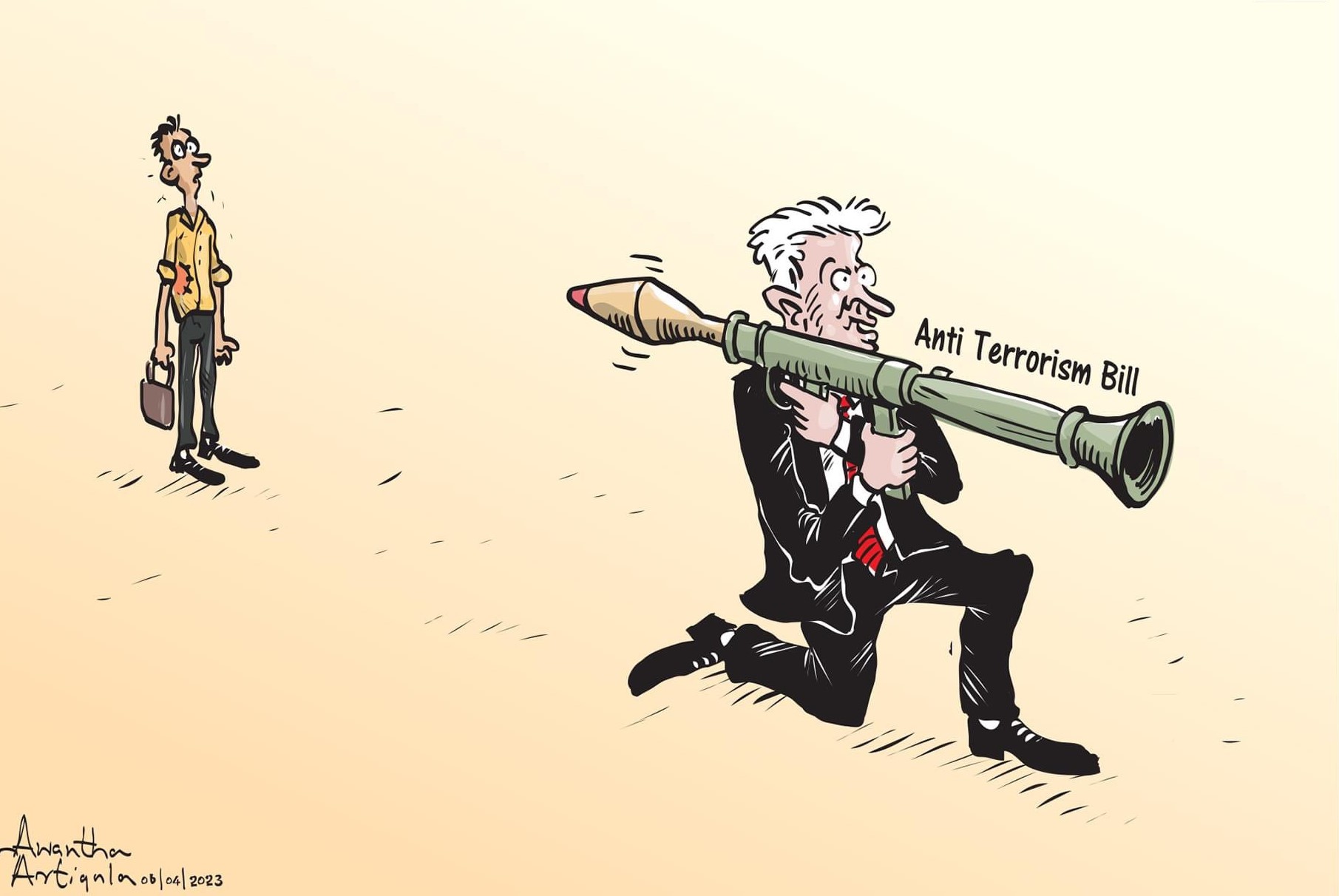
Party Leaders To Meet In Parliament On April 20 To Make Final Decision On Presentation Of Anti-Terrorism Bill

A party leaders’ meeting in Parliament has been scheduled for April 20th to discuss the presentation of the Anti-terrorism Bill, according to a statement by the Communication Department of the Parliament.

The meeting will be chaired by Speaker Mahinda Yapa Abeywardena and will be the first party leaders’ meeting held after the New Year. All party leaders have been requested to attend the meeting, which will be followed by the first parliamentary session on the 25th.

The Anti-Terrorism Act is expected to be presented in Parliament on that day, although a final decision will be made at the party leaders’ meeting on the 20th. The bill was initially scheduled to be presented on April 4th but was postponed due to opposition from several parties, with some requesting a delay to allow time to challenge the bill in court.

Posted in Uncategorized

‘Ripe for abuse’: Amnesty calls for influence from Biden on SL Anti-Terrorism Bill

Amnesty International (AI) has condemned Sri Lanka’s proposed Anti-Terrorism Act (ATA), claiming that it ‘categorically fails on every human rights benchmark’.

This observation about the proposed Act was made by AI Asia Advocacy Director Carolyn Nash, who called upon U.S. President Joe Biden to send a clear message to his Sri Lankan counterpart, President Ranil Wickremesinghe, that the legislature in question must be ‘overhauled entirely or scrapped altogether’ if he, Joe Biden, valued the rights of the Sri Lankan people.

She further raised concerns that in the event both the administration and Congress continue to remain silent as this draft law advances, they will allow the Sri Lankan government to further cement its ability to suppress dissent.

“The proposed legislation is an insult to civil society in Sri Lanka, who have advocated for decades for legal reforms to protect human rights. This is far from a good faith effort on the part of the Sri Lankan authorities to improve or replace a bad law – it is an effort to shore up the government’s ability to target and silence their critics”, she said.

The government of Sri Lanka has been using the draconian Prevention of Terrorism Act (PTA) to detain and torture critics and minorities for over four decades.

International condemnation of the PTA led the government of Sri Lanka to commit to repealing the law. The ATA, published on 22 March, is the replacement legislation the government has proposed after another bill brought in 2018 was shelved after widespread condemnation.

Meanwhile, AI South Asia Researcher Thyagi Ruwanpathirana also highlighted several discrepancies within the proposed law, saying;

“The drafters of the ATA have not taken into account the benchmarks laid out by UN experts in order to come up with a counter-terror law that would start to bring the legislation in line with international law. The offenses in the anti-terror bill remain broad, vague, and subjective. They are ripe for abuse. Even offenses under Sri Lanka’s ICCPR Act are now made terror offenses.

It’s clear after the mass protests last year, the state has become even more willing to misuse counter terrorism offenses in order to target activists. This is reflected in new offenses created that seek to classify acts of civil disobedience as terror offenses.

This provision is dangerous and facilitates torture, especially in a context that is already rife with allegations of torture in custody”.

The ATA still retains certain PTA provisions to enable prolonged detention (up to one year without charge), which can be extended by the High Court on the request of the Attorney General.

It also provides the police with access to those who are already indicted and in judicial remand and enables suspects to be removed from remand custody for the purpose of conducting further investigations under the authority of an order made by a Magistrate.

The Bill empowers the military to carry out arrests without warrants,, and retains unchecked powers of the executive, including to proscribe persons and organizations without judicial oversight.

Penalties include the death penalty, which Amnesty strongly opposes.

Posted in Uncategorized

We endeavoured to merge UNP, SJB – Mano

Whilst stating that he together with MP Rauff Hakeem initiated an effort to bring UNP and SJB under one umbrella, MP Mano Ganesan said they had to abandon the idea since the SJB leadership did not respond.

“It is true that Rauff Hakeem and I had initiated a path to bring UNP and SJB under one umbrella. Later we had to abandon the initiative as SJB did not respond,” Ganesan told the Dailly Mirror.

“However the subject of “premiership” never popped up in our discussion. All media reports claiming that the President had sent messages to opposition leader Sajith Premadasa offering Premiership were false and baseless,” he added.

IMF ‘will not get involved’ in SL debt restructuring negotiations with creditors

Director of the Asia and Pacific Department of the International Monetary Fund (IMF), Krishna Srinivasan has stated that the debt relief Sri Lanka currently awaits is expected to contribute USD 17 billion to close the Balance of Payments (BOP) financing gap from 2023 – 2027.

Speaking at the World Bank Group and IMF Spring Meetings, Srinivasan stated the IMF aims to restore debt sustainability and the BOP pressures even after the programme ends.

Thus, he explained that while the debt relief programme will cover nearly USD 17 billion of Sri Lanka’s USD 24 billion financing gap, the rest of the funds are expected to be covered by International Financial Institutions (IFIs).

He noted, however, that the process according to which the restructuring will happen, or how the required relief will be provided, must be negotiated between Sri Lanka and its creditors, stating that the IMF ‘does not get involved’ in this process.

He explained that Sri Lanka will be required to negotiate the matter with its creditors, and the form in which the debt relief will be provided, including principle haircuts, extension of maturity and interest reductions.

Sri Lanka is expected to outline a blueprint later this month, which will provide a basis for engaging with their creditors pertaining to the debt restructuring process.