SL cannot afford to plunge into another crisis over LG polls

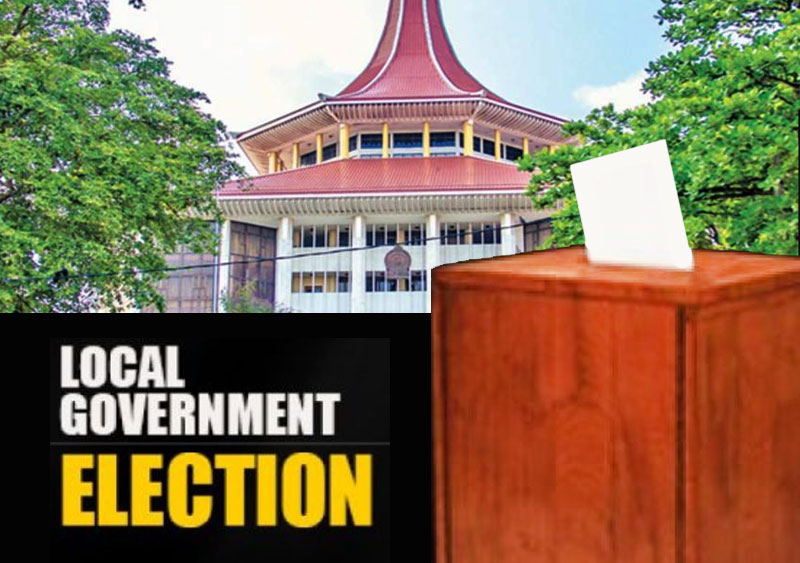
The upcoming Local Government (LG) is deemed to be one of the most decisive elections in the history of Sri Lanka, which could result in a massive breakthrough. However, the possibility of holding the election is getting uncertain day by day with the recent statement made by the Secretary to the Ministry of Finance that it is difficult to release funds for holding the LG polls given the current economic challenges.

In addition, the Supreme Court has also given green light for the Election Commission (EC) of Sri Lanka to hold the election as scheduled. In this context, it is imperative that the political hierarchy and citizens set the tone for the smooth conduct of the election without causing any sort of hindrances resulting in putting off the polls and creating chaos in the country.

The EC in struggle

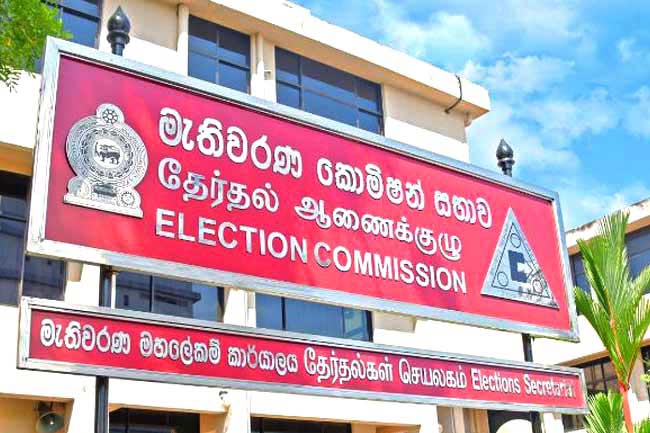
Finance Ministry officials have informed the Chairman of the Election Commission, Nimal Punchihewa that due to a circular issued recently, it is possible to allocate money only for essential services, adding that election activities have not been designated as an essential service under the said circular.

Accordingly, Finance Ministry officials have pointed out that if funds are to be issued to institutions that do not come under the category of essential services, the approval of President Ranil Wickramasinghe as the Minister of Finance must be obtained.

At the same time, an estimated sum of Rs. 770 million is reportedly required for the month of February, in order to meet the basic expenses incurred for the upcoming election due to be held on March 09. The Commission has requested the Ministry of Finance in writing to allocate
However, the EC is in a struggle to carry out its essential and urgent election duties as the Treasury has given only Rs. 100 million to the EC in spite of demanding Rs. 770 million for its day-to-day tasks.
According to the EC Chairman, if the Treasury continues to delay the provision of required funds for the EC, the Commission has no option other than reporting to the Supreme Court.

“The budget 2023 has allocated Rs. 10 billion for the EC in a special vote in Parliament as the EC is an independent Commission. We are hopeful that the EC could successfully conclude the Local Government (LG) polls with a budget of Rs. 3 or 4 billion by March 9. The Commission last week requested only Rs. 770 million out of Rs. 10 billion for the month of February to carry out immediate tasks related to the March 9 LG polls. The underfunding has put the EC in a severe financial constraint,” the Chairman of the Commission, told reporters recently.

Moreover, the EC will have to extend another request to the Treasury for election expenses for the month of March after calculating the cost to complete the election on March 9. The EC requires a minimum of Rs. 3 billion to conclude the LG polls on March 9 as most of the expenses are borne by other state establishments like the Police Department, and Government Printer, and payments to public officials for election duties are made after the conclusion of the election.

More confusion popping up

Meanwhile, Government Printer Gangani Kalpana Liyanage has said that initial printing activities in preparation for the 2023 Local Government Election have been completed adding that, the Government is yet to provide security for the smooth conduct of the ballot paper printing activities.

According to Liyanage, the Police have deployed only three police officers despite the request made to the police chief to deploy 60 police officers to oversee the security measures during ballot paper printing.
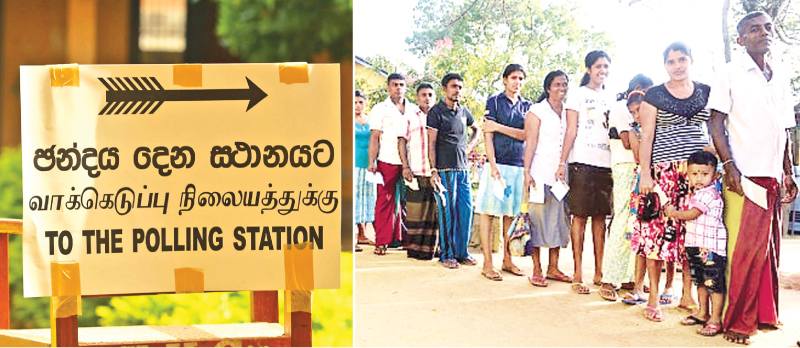
In this context, the Election Commission stated that if the ballot papers are received on time, the postal voting of the LG polls can be held on February 22, 23, 24, and 28 as scheduled. However, if the ballot papers are not provided on time, the Commission has to decide on new dates for the postal voting of the LG election, which could delay the entire proceedings.

For a free and fair election

In a backdrop where the Supreme Court has given the green light to the EC to go ahead with the LG election, a free and fair election is very much on the cards. However, the EC is yet to make an official statement with regard to the election in the wake of the statement of the Secretary to the Ministry of Finance. Nevertheless, the Treasury and the Finance Ministry have a constitutional and official obligation to transfer sufficient funds to the EC in time to ensure democracy and a free and fair elections.

In addition, as it is evident, the policies implemented by incumbent President Ranil Wickremesinghe do not reflect the mandate of the people as he was not elected by the people. In addition, the present composition in Parliament is also in a mess. In this context, the political analysts are of the viewpoint there an election is the need of the hour and in the event of no election, there is a tendency and possibility that people would rally around and come to the streets to show their agitation.

However, in spite of whether the election being held or not, the country cannot afford to go for another uprising, which would definitely aggravate the current crisis in the country. Therefore, the people of Sri Lanka should be mindful of the fact that the country needs to move on and stick to its priorities while ensuring democracy.

Posted in Uncategorized

Local Govt polls: EC to file special motion before Supreme Court

The Election Commission has decided to file a special motion before the Supreme Court citing difficulties it is facing while preparing to hold the 2023 Local Government Election on March 09.

The election body has cited inadequate funds, inadequate supply of fuel for transportation, the inability to print the ballot papers by the Government Printer and several other issues as obstacles to going ahead with LG election preparations.

Ex-deputy minister Myown Mustapha jailed for 6 months, loses civic rights for 7 years

The Colombo High Court has sentenced former deputy minister Myown Mustapha to six months in prison for trying to buy out National Freedom Front’s Mohammed Muzammil to support 2010 presidential election candidate Field Marshal Sarath Fonseka.

Further, Mustapha’s civic rights were also suspended for seven years.

The case was called before Colombo High Court Judge Aditya Patabendige on Friday (Feb 17).

On January 15, 2010, Muzammil, who convened a media briefing, disclosed that Mustapha had attempted to bribe him with a sum of Rs. 42 million to back Fonseka in the 2010 presidential election.

Following a lengthy trial, the Colombo High Court delivered the verdict of the case, 13 years after indictments were filed against Mustapha by then-Attorney General.

Delivering the verdict, the high court judge stated that the charges against the accused have been proven beyond a reasonable doubt after taking into consideration the telephone conversations, voice recordings and CCTV footage submitted as evidence in the case.

He also expressed regret about not being able to impose a severe punishment on the accused despite the severity of the offence he has committed.

German companies may withdraw from SL if import ban continues

German companies operating in Sri Lanka have raised the red flag with some warning they will be compelled to withdraw from the country if the import ban continues, Daily Mirror learns.

Sri Lanka has slapped an import ban on several items owing to the shortage of US dollars, but Germany has urged the Government to relax the ban.

The German Ambassador to Sri Lanka Holger Seubert told a group of journalists in Colombo today that some German companies have raised concerns over the import ban.

He said that if the import ban continues for another 2 years then some companies may withdraw from the country. A number of German companies are operating in Sri Lanka and promote German products, including vehicle spare parts.

Just recently leading Japanese companies Mitsubishi and Taisei announced they will be scaling back operations in Sri Lanka owing to the economic crisis. Germany has also suspended issuing loans to Sri Lanka after the island declared bankruptcy.

However, the German Ambassador said that they hope the situation will improve once Sri Lanka’s deal with the International Monetary Fund (IMF) gets approved. Seubert said that there are also concerns over the overall business environment for German investors.

Discussions in this regard have been held with the Sri Lankan authorities, including the Board of Investment (BOI).

IMF mulls loan approval to Sri Lanka, even without China’s assurance

The International Monetary Fund (IMF) is considering approving a loan for Sri Lanka, even without China’s assurance of debt-restructuring support, Bloomberg News reported on Friday (Feb 17).

Under a rarely used policy, the global lender may consider approving the island nation’s loan, as the only prerequisite hindering the go-ahead is China’s formal assurance, Bloomberg reported, citing people familiar with the matter.

“The Sri Lankan authorities continue to seek from their official bilateral creditors financing assurances so that the Fund’s Executive Board can consider their request for an IMF arrangement,” an IMF spokesperson said in a statement to Reuters.

The lender said it was premature to discuss the precise IMF policy modalities that could be applied, adding that IMF staff continue to engage with Sri Lankan authorities on completing upfront policy measures.

Sri Lanka has been fighting its worst economic crisis since gaining independence from Britain in 1948, amidst a shortage of dollars, surging prices and a lack of essential items, such as fuel and medicine. It has defaulted on loans and been forced to seek a bailout from the IMF.

The news the IMF may consider extending aid without assurances from China comes ahead of US Treasury Secretary Janet Yellen’s visit to India next week for G20 finance meetings, where the United States is reportedly going to focus on unblocking debt restructuring for distressed countries.

Earlier in February, the IMF said Sri Lanka’s US$2.9 billion bailout package was set to be approved as soon as the country obtained adequate assurances from bilateral creditors and met remaining requirements.

Posted in Uncategorized

Writ petition against holding LG elections for Matara Municipal Council dismissed by SC

The writ petition filed by an Independent Group seeking an order preventing the Election Commission from holding the local government elections in respect of Matara Municipal Council was today dismissed by the Supreme Court.

The three petitioners including the leader of the Independent Group Chaminda Prasanga Gunasekera filed this writ petition seeking an order quashing the Election Official’s decision to reject their nomination papers submitted for the Matara Municipal Council.

Supreme Court three-judge-bench comprising Justices Buwaneka Aluwihare, Janak de Silva and Priyantha Fernando decided to dismiss the petition taking into account the preliminary objections raised by the Election Commission.

Counsel Nuwan Bopage appeared for the petitioners. Senior Counsel Dharshana Weraduwage with Dhanushi Kalupahana and Ushani Atapattu appeared for the Election Commission.

Posted in Uncategorized

How Independent are the Independent Commissions? By M.S.M.Ayub

With the postponement of postal voting on Tuesday, the local government elections seem to be hanging in the balance. The main hurdle to the smooth functioning of the Election Commission in respect of the LG polls is the government’s reluctance to release the funds allocated to the Commission by the national budget.

Irrespective of whether the government has the capacity to fund the LG elections which were postponed by one year in February last year, it has been hell-bent on preventing them from happening as scheduled. The reason is obvious and well-known. The popularity of both the ruling parties – the Sri Lanka Podujana Peramuna (SLPP), the party that dominates the Parliament and the United National Party (UNP) led by President Ranil Wickremesinghe – is at a low ebb, owing to the current economic crisis.

The government leaders first attempted to postpone the election through legal means. President Ranil Wickremesinghe said he wants to downsize the LG bodies from over 8,000 to 4,000 members. Then, despite a Parliamentary Select Committee having presented a report on electoral reforms in June last year, they wanted to appoint another one in November for the same purpose. Thereafter, a private member’s Bill on the LG elections which provided for the inclusion of 25 per cent of youth members in local government bodies was presented by SLPP member Premnath C. Dolawatte. Another Bill (The Regulations of Election Expenditure Bill) was passed in Parliament last month.

In spite of the merit of these new laws, one has to infer the motive of presenting them at a time when an election has been announced. These things happened while the leaders of the government were arguing against holding the LG election at this juncture, citing economic hardships faced by the government and the people.
The government leaders made several other attempts other than creating legal hurdles. President Wickremesinghe on January 6 summoned the members of the Election Commission to his office and requested them to resolve the conflicts of opinion among them and it was given wide publicity. However, no such conflicts have been evident so far. He also made a subtle warning that the elections and the GCE Advanced Level examinations might clash which was also proved to be an unfounded fear.

Meanwhile, Secretary to the Ministry of Public Administration, Neil Bandara Hapuhinna had sent a letter to the Returning Officers on January 9 instructing them to stop accepting deposits from the candidates contesting the LG elections. Media reported that Hapuhinna had sent this letter in accordance with a decision by the Cabinet. Later Hapuhinna apologized to the Election Commission for this.

On January 18, two members of the Election Commission, namely S. B. Diwaratne and K. P. P Pathirana, had received death threats, demanding that they resign from their posts. Another Commission member M. M. Mohamed, also had received similar death threats on January 27, to resign from his position. It was said that a CID investigation has been initiated, but the outcome of it is yet to be revealed by the authorities. In fact, one member of the Commission, P.S.M Charles who worked in the North and East during the war as a District Secretary, handed over her resignation to President Ranil Wickremesinghe on Wednesday, January 25 which was accepted by the President on February 7.

Irrespective of whether the government has the capacity to fund the LG elections which were postponed by one year in February last year, it has been hell-bent on preventing them from happening as scheduled

It was against this backdrop that the funding for the election has come to the fore. Though Commissioner General of Elections, Saman Sri Rathnayake stated on January 8 that Rs.10 billion has been allocated for the Local Government polls, Treasury Secretary Mahinda Siriwardena, in relation to a writ application filed by a Retired Sri Lanka Army Colonel, W. M. R. Wijesundara seeking an order to delay the LG polls, had informed the Supreme Court via an affidavit on January 19 that sourcing funds for the election has become a challenge. The petition will again be taken up for hearing on February 23.

This series of events validly raises the question how independent the Election Commission is. In fact, recent events had raised the same question in respect of some other “Independent” commissions as well. Especially, the current power crisis exposed the vulnerability of the independence of two commissions, the Public Utilities Commission of Sri Lanka (PUCSL) and the Human Rights Commission of Sri Lanka (HRCSL).

The conflict of opinion between the PUCSL Chairman Janaka Ratnayake and the Power and Energy Minister Kanchana Wijesekara has emerged over the demand by the Ceylon Electricity Board (CEB) to raise electricity tariffs for the second time. It was only in September last year that the CEB increased the tariff by 75 per cent. The row between the PUCSL Chairman and the Minister escalated with the announcement by the former not to interrupt power supply during the GCE A/L examination between January 23 and February 17.

The CEB ignored the PUCSL Chairman’s announcement. The latter challenged the CEB’s action in the Court of Appeal, but the court rejected it on February 10. Earlier, on January 24 the HRCSL had summoned the PUCSL Chairman Janaka Ratnayake and the Secretary to the Ministry of Power and Energy among others for an inquiry as to why they failed to prevent the implementation of power cuts during the ongoing examination. During the discussion, it was agreed that no power cuts will be imposed from January 25 until 17 February.
When the CEB continued with its power cuts ignoring the agreement, the HRCSL filed a case in the Supreme Court on January 30 for contempt of the commission. The court rejected it. Though one cannot challenge the court ruling, it was a fact that the CEB reneged on the agreement its representative arrived at with other relevant parties on power cuts.

Sometimes the members of independent commissions themselves act in a manner that erodes their independence. Three days after Gotabaya Rajapaksa was sworn in as the President on November 18, 2019, the then Criminal Investigation Department (CID) Director SSP Shani Abeysekara was transferred to Galle by the National Police Commission. It was well known that Abeysekara handled so many high-profile cases against incidents that took place during the previous Rajapaksa government. Subsequent incidents including his arrest very clearly showed the attitudes of Rajapaksas towards him.

The Chairman of the National Police Commission Chandra Fernando and another commission member P.P. Perera had gone to the VIP terminal of the Katunayake airport on November 20 last year when there was a welcome party for former minister Basil Rajapaksa on his return to the country from the US. Whatever the subsequent reasoning of the Police Commission Chairman on his presence at the venue, pictures of him worshipping Rajapaksa had gone viral.
During the last Parliamentary election, one of the members of the Election Commission Professor Ratnajeevan Hoole created a controversy with a comment he made during an interview with the Jaffna-based DAN TV. His comment in Tamil was clearly against the SLPP, but the inadvertent jumbling flow of the comment and the lack of Tamil knowledge of his accusers finally saved his skin.

The independent commissions were established by the 17th Amendment to the Constitutions in 2001 during President Chandrika Kumaratunga’s tenure in order to dilute the executive powers of the President over State machinery. Hence, President Mahinda Rajapaksa, in 2010 made them redundant by way of bringing them under his purview through the 18th Amendment. Again they were detached from the President’s direct control by the 19th Amendment during the so-called Yahapalana government in 2015, but only to reverse it by another Rajapaksa, President Gotabaya Rajapaksa using the 20th Amendment in 2020. Last year’s Aragalaya, the public uprising compelled the current government to somewhat release them again from the clutches of the President.

Every time when they were strengthened they were expected to pave the way for the public service and the judiciary to act independently and without the fear of penalisation by the Executive. However, recent incidents raise the question about the degree of independence of independent commissions.

LG Election: Monitors have their say on lack of funds

The National Center for Election Monitoring of Sri Lanka has urged the National Election Commission to hold discussion with stakeholders to solve the issues related to the provision of funds for the Local Authorities Election.

The NCEMS issuing a statement said the Election Commission should solve the possible problematic situations related to the provision of funds before it turns into a major crisis, through negotiations between the relevant factions.

The NCEMS in a letter has also cautioned that such a situation might arise and requested to hold a discussion between the government, the Treasury and the Election Commission immediately.

The Monitoring Body noted that instead of threatening government officials and intimidating them, relevant officials should hold talks to solve the issues related to lack of funds to conduct the election.

The National Center for Election Monitoring of Sri Lanka added that the threats and intimidation of state officials have an effect on holding a free and fair election and that there is a possibility of very negative effects on the election.

Therefore, the NCEMS requested that according to a specific time schedule, a programme to obtain the funds required for the election should be made through agreements between all parties.

US delegation led by Principal Deputy Assistant Secretary at Defence Ministry for talks

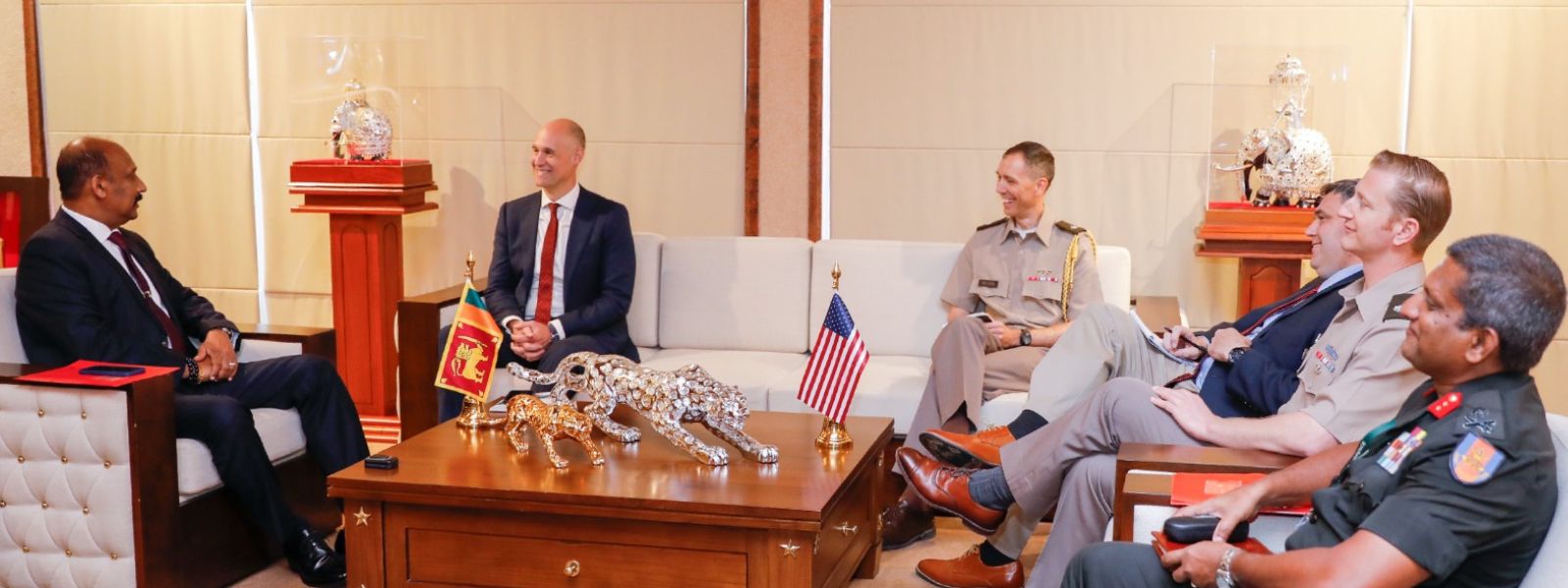
A US delegation that arrived in the country on Tuesday (14) night aboard two US Air Force planes had met with State Minister of Defence Premitha Bandara Tennakoon and Secretary of Defence General Kamal Gunaratne (Retd).

Principal Deputy Assistant Secretary of Defense for Indo-Pacific Security Affairs Jedidiah P. Royal led the delegation that arrived in the country on Tuesday (14) night aboard two US Air Force planes.

The US delegation met with the State Minister of Defence Premitha Bandara Tennakoon and Secretary of Defence Ministry General Kamal Gunaratne (Retd) at the Defence Ministry.

A statement noted that the discussions were centred on boosting US – Sri Lanka ties.

In addition, security cooperation enhancement, and regional defence stability enhancement were also discussed.

Posted in Uncategorized

How the Chinese are destroying Sri Lankan fishing community

The beautiful island nation Sri Lanka, also known as ‘the pearl of the Indian ocean’, has been going through its toughest economic crisis since its independence in 1948. Another victim of the vicious ‘debt-trap diplomacy’, Sri Lanka has seen significant growth in Chinese influence in the recent past.

While the entire world witnessed the tragedies of Hambantota port and Colombo port city projects, not much has been said about the exploitation of marine species and resources in Sri Lanka by the Chinese. A report published by South Asia Foresight Network (SAFN) titled ‘The baneful existence of Chinese sea cucumber farms in Sri Lanka’ attempts to quantify the damage caused to the environment and local communities by the presence of Chinese sea cucumber farms.

Considered a delicacy in China, sea cucumbers are often served during banquets and dinners. In addition, sea cucumbers are used in traditional Chinese medicine (TCM) to cure impotence, joint pain, etc., enhance sports performance and are known to have anti-fatigue effects. All these factors have made sea cucumbers one of the most expensive seafood items that already have a huge market available for business. The demand for sea cucumber has been on the rise which has led to the construction of massive farms along the Lankan coastline.

The Ministry of Fisheries leased out sea land plots ranging between one to ten acres on the seashore. The largest fish breeding sites are located near shallow coastal lands due to favorable marine environment including sunlight and sea plants. While all these factors make Sri Lanka a suitable place for sea cucumber farming, large-scale production could prove to be catastrophic. These areas are usually surrounded by thick electric fences keeping in line with the pen culture method.

About 4000 sea cucumbers can be bred at one time in one acre of area. In a sea cucumber hatchery, the baby animals are nursed for up to four months before they are sold to commercial farms run by locals. These babies then take at least ten months to mature and ready for export. According to the report, in 2020 alone, Sri Lanka exported about 326 tons of sea urchins with China being the biggest buyer. But the story began in 2015 when the Sri Lankan government issued a gazette notification on sea cucumber farming and proposed an area of 10,000 acres for the same. In 2016, a sea leech hatchery was established by a Chinese joint venture company ‘Gui Lan (Pvt) Ltd’ on the northern peninsula to facilitate the export of sea cucumbers and urchins to China. The company was registered as a private limited liability company with a registered address in Negombo with two Chinese and a Sri Lankan being named as directors in April 2016.

In June 2022, welcoming Chinese investment in the country, the Sri Lankan cabinet approved a proposal for a large-scale commercial sea leech and sea cucumber farming project spanning 5,000 acres in the districts of Jaffna, Mannar, Kilinochchi and Batticaloa in the Northern and Eastern Provinces. The government also plans to set up an export village in an area spanning 100 acres.

As per the report, the approximate price range for Sri Lankan Sea Cucumber is between US$ 30.39 and US$ 54.69 per kilogram or between US$ 13.78 and US$ 24.81 per pound (lb) in 2022. In 2017, a kilo of sea cucumber was priced at US$21.64 and in 2019 the price went up to $30.39 per kilo.

In India, though illegal, a kilo of sea cucumbers can fetch about Rs 50,000 and some fishermen could even earn Rs. 2 lakhs in a single day. This highly-priced delicacy is helping Sri Lanka bring in the much-needed foreign currency to combat the ongoing economic crisis in the country but not without a cost.

While the Sri Lankan government is busy counting the money, the local fishermen communities have been suffering because of the prevalent socio-economic and environmental issues. The report sheds light on the illegal operations of the Gui Lan joint venture, which has failed to secure a permit from the National Aquaculture Development Authority of Sri Lanka (NAQDA) for its new nursery in Kowtharimunai in Pooneryin. This new nursery is located only a few kilometers away from the company’s Ariyalai hatchery in Jaffna. According to the report, the establishment of this new nursery has led to acres of sea-land being fenced off for sea cucumber harvesting, shutting
out the traditional fishermen who harvest prawns for a living. The large nets on the shallow
waters of the sea prevent the breeding of fish, crabs, and prawns, posing a serious threat to longterm sustainability of the region. It was also found that out of 90 sea cucumber farms in the Jaffna
DS alone, and only 48 have permits. This makes most of the sea cucumber farms illegal in the
North.
The laid-back attitude of the authorities resulted in no proper action has been taken yet. About
3,200 small-scale fishing families have been seriously affected by the creation of sea leech farms,
losing their livelihoods during an ongoing economic crisis in the country. A group of fishermen
has also started a hunger strike near the Kiranchi fishing harbor because the roads leading to
their boats for fishing activities has been blocked due to the permission of a group of fishermen
to set up sea leech cultivation boxes. The fishermen point out that if out of 100 fishermen even
just 10 set up a sea leech farm, the livelihood of the remaining 90 who catch shrimp, prawns and
other fishes is put at stake. Out of the 17,000 fishing families living in the Northern Province, less
than 1000 have been selected to work in these farms, leaving the remaining 16,000 Dhiwara
families at risk of losing their livelihood and falling into the streets. This has led to continuous
protests demanding the closure of the illegal sea leech farms in Punagari, Kirawan and Ilavankuda
areas.
Not only the local communities but also the marine biodiversity has been seriously impacted by
the operation of these farms. The report states that at the hatchery, high levels of electricity, fuel
and water are required during the feeding stage to maintain the culturing water temperature
and oxygen status for juvenile sea cucumbers, which has a significant environmental impact. In
addition, high levels of fossil fuel emissions from energy use, large amounts of nitrogen and
phosphorus discharged in wastewater, and a low utilization rate of post-production waste
contribute to pollution in the farm area. Moreover, the lights aimed at the sea urchin production
farms across the lagoon are switched on in the evening which affects the movement of fish and
prawns toward the shore. These organisms live near the coast or move towards the sea
depending on the salinity of the waters. Chinese companies like Gui Lan have constructed several
sea cucumber farms with electric fences along the seashore, restricting the movement of other
aquatic species towards the coast during monsoon season. The operation of such farms without
proper planning and study has raised many obvious problems, especially in the sea areas where
shrimps, crabs and squids breed naturally.
This malevolent practice could pose a serious threat to the long-term sustainability of the region.

Sea cucumbers help detoxify contaminants in the soil and other environments and help in nutrient cycling and redistribution of sediments, making them excelling bioremediators. Moreover, they help increase seawater alkalinity, which creates buffers against ocean acidification, supporting the survival of coral reefs. In order to run a sea cucumber farm, wild sea cucumbers are caught from the sea and placed in the farms and hatcheries. This creates an ecological imbalance in the ocean, which leads to polluted and murkier waters in the areas where sea cucumber population has declined.

The report provides a great insight into the lesser-known back channel economic interest of China in Indian Ocean and the littoral states. Given the tremendous threat sea cucumber farms pose as highlighted in the report, the Sri Lankan government must take quick action to solve the problem and work to improve the living condition of the fishing community through the right technology and clean investments from local entrepreneurs. Handing over the coastline to Chinese domination will only bring disaster to humans as well as the marine environment.

Source:Colombo Gazette