Isn’t there a way to downsize LG bodies? BY M.S.M. Ayub

After weeks of speculation and allegation by the Opposition parties that the government was going to postpone the local government elections, the Election Commission (EC) finally on Thursday issued an official announcement on the matter. EC Chairman Nimal Punchihewa in his statement said that the Commission had decided to announce the dates to tender nominations for the elections during the last week of this month (December).He had further said in his statement that the decision was taken at the meeting of the Commission on Thursday. This is the first official announcement on the LG elections after they were postponed by a year in February this year. The last elections to elect members for 340 LG bodies for a period of four years was held on February 10, 2018 and the next elections had to be held last February.

Before this statement was issued the EC Chairman had told the same to the Daily Mirror as well which the paper carried last Monday.

The main Opposition, Samagi Jana Balawegaya (SJB) along with the National People’s Power (NPP) or Jathika Jana Balawegaya (JJB), the political movement led by the Janatha Vimukthi Peramuna (JVP) has been demanding for the past several weeks that the elections for local authorities be held before March 20, without being postponed.

The Chairman of the Election Commission had told the Daily Mirror that he had received the Attorney General’s opinion on conducting LG elections and hence there was no legal impediment to hold the elections for 340 LG bodies by March 19, 2023. However, the polls chief had said that he could not disclose the opinion conveyed by the Attorney General.

At the same time he seemed to be cautious of possible legal hurdles. “I don’t know whether there would be any legal or Constitutional impediment in the days to come, before releasing of the gazette” he had said. Yet, now that the he has officially undertaken to announce the dates for tendering nominations, one could be assured of elections being held, without being postponed again.

The Opposition parties’ suspicion that the government was attempting to postpone the local government elections arose with a recent statement by President Ranil Wickremesinghe. Wickremesinghe while making several suggestions to the country’s electoral system at a meeting with a group of professionals at the Presidential Secretariat on October 9 had stated that the number of members in local government bodies should be brought down from the current 8000 to 4000.

Irrespective of the fact that they cannot object to the President’s suggestion, especially against the backdrop of the current economic meltdown, the Opposition parties wasted no time to decide the motive of the government. In fact there were two very strong factors that prompt one to suspect that the ruling parties, the Sri Lanka Podujana Peramuna (SLPP) and the United National Party (UNP) which the President heads might postpone LG elections.

On the one hand, both the ruling parties have least confidence in their own popularity at this juncture, owing to the unprecedented economic hardships that majority of people are currently undergoing. On the other, the notoriety that the UNP had earned for foxiness
( shrewdness) by indefinitely postponing the provincial council election during the previous Yahapalana Government is still
fresh in the minds of the people.

The UNP during the previous government attempted to postpone the PC election through a Bill with provisions to hold elections for all nine provincial councils on the same day, but it did not materialize. However, it succeeded in it by introducing a mixed electoral system for PCs. Holding elections for all nine provincial councils on the same day as well as introducing mixed electoral system which had then been agreed upon by all parties after deliberations in a Parliamentary
select committee were no doubt good. However, the UNP used those ideas with ulterior motives.

Hence, one cannot blame the Opposition parties now for suspecting that the history might repeat itself, under the same leadership of the UNP.

The leaders of the ruling SLPP and the UNP have been showing their aversion to holding any election, national or regional since lately. They rejected the call for a mid-term Parliamentary election by the Opposition parties who argue that the current Parliament no longer reflects the real opinion of the people. Also they seemed to be not in favour of holding LG elections which have to be held in March according to the law. They justify their contention citing the economic crisis. That was another reason for the speculations that the LG elections would be deferred.

The recent public uprising was a clear indication of the fast sagging popularity of the government led by the SLPP. The uprising was not organized by any political party in spite of several Opposition parties supported it in order to gain political mileage. It was a convergence of various spontaneous protests due to frustration and anger in various groups in the Sri Lankan society over economic hardships. The absence of protests and agitations in that magnitude now does not mean that the government has regained its lost popularity. The relative tranquility is merely a direct outcome of the brutal crackdown on protesters. Therefore, the election fright among the leaders and the rank and file of the two ruling parties is comprehensible.

Yet, electing more than 8000 instead of 4000 members to 341 local government bodies just because to implement the mixed electoral system is a colossal waste of public funds at a time when money is printed while the burden of various taxes are heaped on the poor people to run the government. According to some reports the government had to spend monthly a staggering Rs. 135 million for salaries and little over Rs. 600 million for other allowances of 8691 members of local government bodies elected at the 2018 elections.

Nevertheless, the salary drawn by an ordinary Pradeshiya Sabha member is about Rs. 15,000 and the mayor of a municipality draws only Rs. 30,000. Only an awfully insane person would conclude that it is for these meager payments that these local politicians spend tens of millions of rupees and dare even to kill their opponents during elections. The bottom line is that there are undeclared illegal as well as legal but unscrupulous means and powers awarded to them, to earn millions. Besides, this is a country where according to a recent newspaper report the state had paid Rs. 40,000 for certain kind of an injection when its price was only Rs. 250. It was also revealed during a recent meeting of the Committee on Public Enterprises (COPE) that the Land Reform Commission had sold lands at a rate of Rs. 373 per acre (Rs. 2 per perch). The CPC had paid millions as overtime to its employees of the refinery while it had been closed for want of crude oil. When such corruption and impunity become the order of the day, price of positions in state sector with powers would go through the roof. And higher the number of such positions higher the corruption and waste of public funds as well.

Therefore, it is high time to downsize the local government bodies, despite there being a danger of elections being put off, in the guise of doing so. However, if the government and the Opposition are honest and concerned about the plight of the people, they can arrive at a conclusion to revert first to the old PR system temporarily and hold the LG elections in March as scheduled and then change the law later to reduce the number of members. However, now it seems to be too late as the EC has decided to go ahead with elections to elect over 8000 LG members.
Posted in Uncategorized

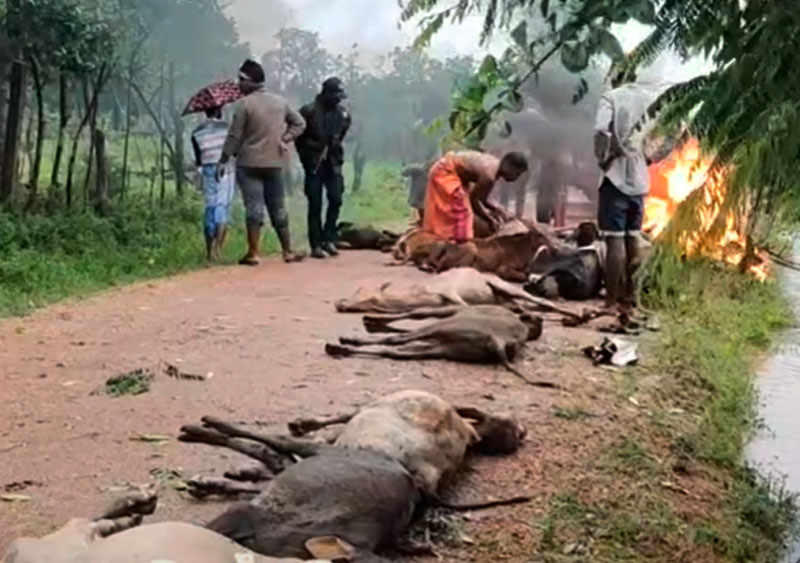
Cyclone Mandous kills hundreds of livestock in Sri Lanka’s northern farms

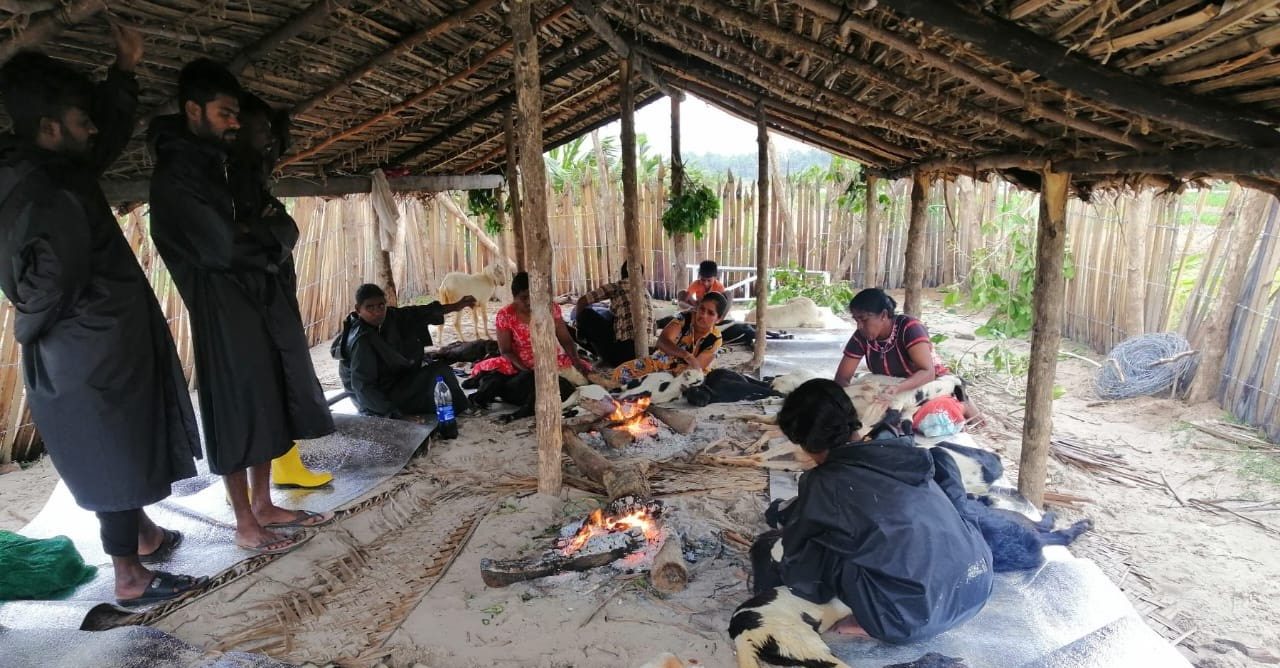
Unusually cold weather in Sri Lanka’s northern province caused by the Mandous cyclonic storm in the Bay of Bengal has led to the death of hundreds of farm animals with hundreds more falling sick.

An official said a drop in temperature below 20 degrees Celsius combined with strong winds triggered the death of nearly 350 cattle and 180 goats in four districts of the province.

Jaffna District Kilinochchi District Mullaitivu District Vavuniya District
Cattle deaths – 49 Sick – 17 Cattle deaths – 168 Sick – 159 Cattle deaths – 120 Sick – 159 Cattle deaths – 21 Sick – 17
Goat deaths – 58 Sick – 50 Goat deaths – 6 Sick – 3 Goat deaths – 42 Sick – Goat deaths – 85 Sick –
Deptaretment of Animal Production & Health (DAPH), Provincial Director, Dr S Vaseeharan attributed the incident to poor livestock management practices, which he said has been killing farming animals for years, long before the arrival of the cyclone.

“These kinds of tragedies occur every other year due to the extreme hot climatic conditions, floods and so on. These animals have no insurance cover since they are raised to be slaughtered,” Vaseeharan said.

The official said livestock in these districts have no safeguard against such natural disasters. They’re free grazing animals with no permanent shelter to protect them from environmental hazards.

“There are also 300- 400 in a herd. These animals are owned by farmers and they are sent astray to graze on available land. That’s the extent of their management system,” said Vaseeharan.

A majority of the animals, he said, are for meat production and not for dairy and therefore the farmers are not inclined to invest or care about their well-being.

The small farms too have being affected and Vaseeharan said prevention is actually impossible and the number of deaths may rise.

However, the latest updates from the Department of Meteorology said cyclone Mandous was expected to gradually weaken into a deep depression by Saturday morning and into a depression by noon.

US imposes sanctions on another SL army officer

The US has imposed sanction on another Sri Lankan military officer, Major Prabath Bulathwatte who was arrested on suspicion that he had assisted in the abduction and torture of senior Sri Lankan journalist Keith Noyahr in 2008.

The US took this action on Friday on the occasion of International Anti-Corruption Day and on the eve of International Human Rights Day as part of its actions to promote accountability for corruption and human rights abuse around the world.

According to the State Department, the US imposed sanction Prabath Bulathwatte, former head of a clandestine Army platoon, known as the ‘Tripoli Platoon.’

Pursuant to Section 7031(c), the Department of State is designating Bulathwatte for his involvement in a gross violation of human rights, namely torture and/or cruel, inhuman, or degrading treatment or punishment of Sri Lankan journalist Keith Noyahr in May 2008, the office of the spokesperson of the US Department of State said.

According to the office, On the occasion of International Anti-Corruption Day and on the eve of International Human Rights Day, the United States is taking the actions to promote accountability for corruption and human rights abuse around the world.

These actions include financial sanctions, using Executive Order (E.O.) 13818, which builds upon and implements the Global Magnitsky Act, and four additional country-focused Executive Orders. The actions also include visa restrictions pursuant to Section 7031(c) of the Department of State, Foreign Operations, and Related Programs Appropriations Act, 2022 (Div. K, P.L. 117-103), as carried forward by the Continuing Appropriations Act, 2023 (Div. A, P.L. 117-180) and pursuant to Section 212(a)(3)(C) of the Immigration and Nationality Act (INA).

All property and interests in property of individuals or entities designated under E.O.s 14024, 13818, 13722, 13687, or 13553 that are in the United States or in the possession or control of U.S. persons are blocked and must be reported to the Department of the Treasury’s Office of Foreign Assets Control (OFAC). In addition, any entities that are owned, directly or indirectly, 50% or more by one or more blocked persons are also blocked. Unless authorized by a general or specific license issued by OFAC, or otherwise exempt, all transactions by US persons or within (or transiting) the United States that involve any property or interests in property of designated or otherwise blocked persons are prohibited. The prohibitions include the making of any contribution or provision of funds, goods, or services by, to, or for the benefit of any blocked person or the receipt of any contribution or provision of funds, goods, or services from any such person.

Section 7031(c) provides that in cases where there is credible information that officials of foreign governments have been involved in significant corruption or a gross violation of human rights, those individuals and their immediate family members are generally ineligible for entry into the United States and must be either publicly or privately designated. INA Section 212(a)(3)(C) provides grounds for the Secretary of State to exclude any alien whose entry he determines would have potentially serious adverse foreign policy consequences for the United States.

In February 2020, the US had also imposed sanctions on former Army Commander and Cheif of Defence Staff Genaral Shavendra Silva for alleged war crimes committed at final stages of the conflict against the Tamil Tigers in 2009.

IMF chief Georgieva cites ‘fruitful exchange’ with China on debt issues

International Monetary Fund chief Kristlina Georgieva said she had a “fruitful exchange” with her Chinese counterparts this week on her repeated calls for accelerating debt treatments for countries like Zambia and Sri Lanka.

Georgieva, World Bank President David Malpass and other financial leaders met in person in China’s Anhui province this week with officials from the People’s Bank of China, China’s finance ministry and its EXIM Bank and China Development Bank.

Georgieva said the discussions touched on the common framework for debt treatment set up in late 2020 by China, the United State and other Group of 20 major economies, as well as some specific cases of countries seeking debt relief.

Implementation of the common framework process has been halting, with only one country, Chad, having completed the debt treatment process, and its agreement not resulting in any actual reductions of the country’s debt.

Zambia is pushing hard to finish its debt restructuring in the first quarter of 2023.

“We need to build on the momentum of the agreement on Chad’s debt treatment and accelerate and finalize the debt treatments for Zambia and Sri Lanka, which would allow for disbursements from the IMF and multilateral development banks,” Georgieva said in a statement.

Georgieva said other countries also faced mounting debt distress given tightening global financial conditions.

“We talked about how we can prevent individual cases of debt distress from triggering a global debt crisis,” she said, calling again for quicker, more predictable progress on debt treatments and expansion of the framework to more countries.

Malpass, in his remarks at the meeting, said the discussions focused on the urgent need for more rapid progress on debt issues, adding, “Changes in China’s positions are critical in this effort.”

He welcomed support voiced by Premier Li Keqiang for a “systematic engagement on debt” during the meetings, and underscored the need for transparent disclosure of China’s loan contracts, and removal of non-disclosure and non-restructuring clauses and hidden collateral and escrow arrangements.

“Greater transparency will help investors make informed decisions, build trust, and accelerate the debt reconciliation and restructuring processes,” he said.

Georgieva said she saw “space for a platform for more systematic engagement on debt issues, where China can play an active role,” but gave no further details.

Source: Reuters

Posted in Uncategorized

Sri Lanka bans beef, mutton transport after cold shock death wave

Sri Lanka President Ranil Wickremesinghe has banned the transport of beef and mutton between districts his office said, after hundreds of cattle and goats died amid unusually cold weather from suspected hypothermic shock.

“Taking into account public health, transport of beef and cattle in between districts and provinces has been banned with immediate effect,” the President’s office said in a statement.

“This was after the sudden death of cattle, buffalo and goats in Kilinocchio, Mullativu, Trincomalee, Baticaloa and Ampara.”

On the 08 and 09, 358 cattle and 191 goats had died in the Northern Province and 444 cattle, 34, buffalo and 191 goats had died in the Eastern Province.

The animals are suspected to have died from hypothermic shock, based on preliminary investigations the statement quoted Hemali Kothelawala, the Director of Animal Production and Health as saying.

Further investigations are being done at several laboratories.

Sri Lanka has experienced unusually cold weather and air pollution from a tropical Cyclone Mandous which drew air from India.

Cyclone Mandous kills hundreds of livestock in Sri Lanka’s northern farms

Veterinary officials have said most of the animals that died seemed to have been in the open and exposed to the weather.

Hypothermic shock of cold stress can be worsened due to wind chill.

Posted in Uncategorized

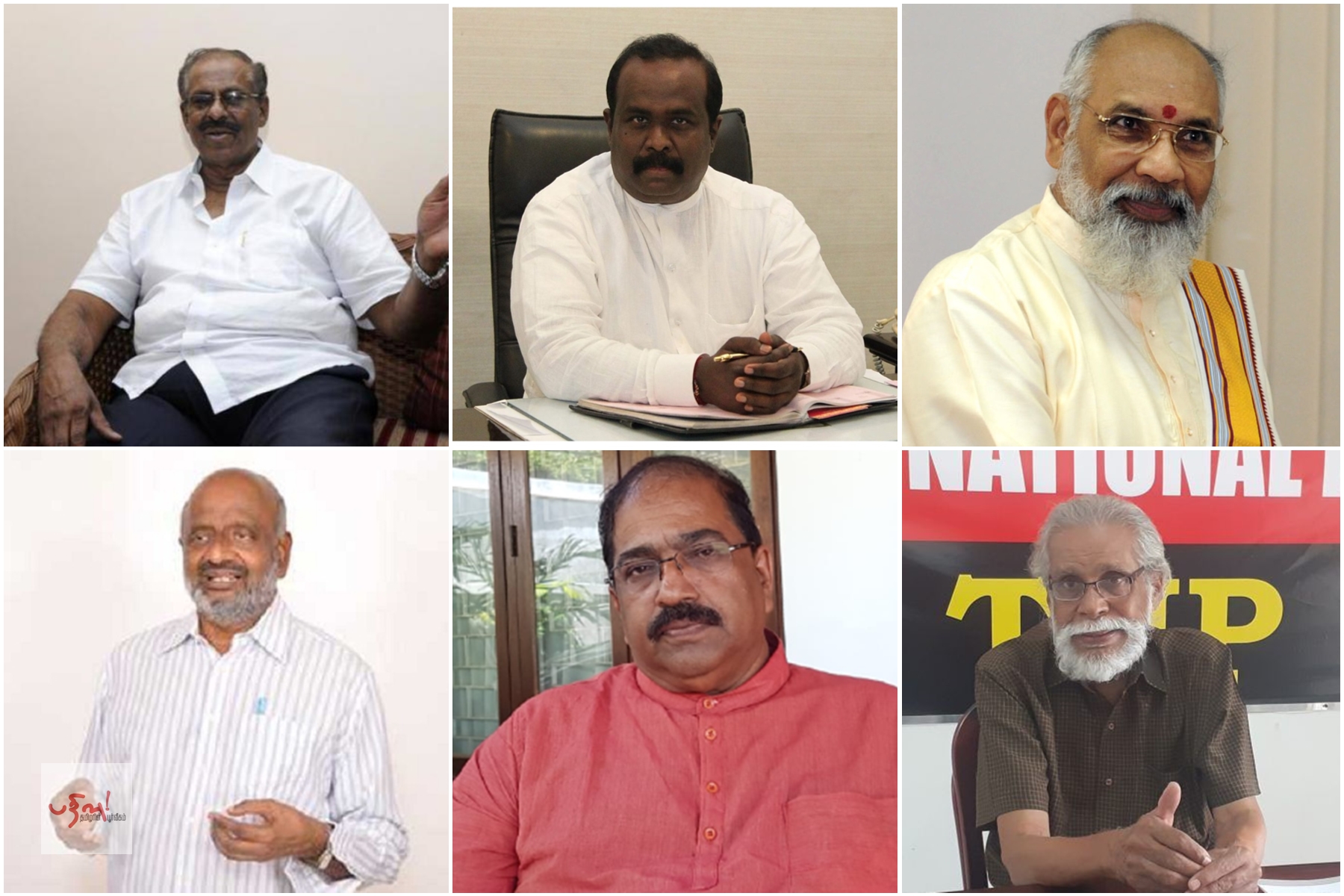
Tamil parties to propose federal solution at talks with president

Tamil leaders have decided to propose a federal solution based on self-determination rights at talks proposed by the president to resolve the ethnic issue.

TNA chief R. Sampanthan has spoken about this in an interview with India’s ‘Frontline’ magazine.

He said he was against a division of the country in any form, adding that the situation cannot continue despite their support for an undivided Sri Lanka.

Spokesman for the TNA M.A. Sumanthiran said that they would not lay down any condition for the discussion tipped to take placed in Colombo December 11.

Changes to the constitution for maximum devolution of powers, a federal solution with self-determination rights, holding the provincial council polls and a halt to the takeover of private land in the northeast will be among the matters to be raised, he said.

However, EPRLF ledader Suresh Premachandran called for solutions to issues in Tamil civilian life before the commencement of the talks. Seventy-five years of talks, agreements etc. brought nothing, he noted.

No to unitary state & call for third party involvement

TPA leader C.V. Vigneswaran said the president should be informed in writing before the talks that constitutional amendments or a new constitution were not possible within a unitary state.

TNA MP S. Sritharan stressed the need for a third party involvement to minimize attempts at deception.

Secretary of the Association of relatives of victims of enforced disappearances K. Rajkumar accused the president of deceiving Tamils, Sinhalese and the rest of the world by his call for talks.

He said Tamil leaders should be ashamed of themselves for continuing to be cheated for 75 years.

EPDP leader and minister Douglas Devananda said the Tamils wanted provincial councils empowered through the 13th amendment since they rejected the district development councils (DDCs) introduced in 1981.

Ex-president Maithripala Sirisena has backed the DDCs system, and his sentiments were echoed by incumbent Ranil Wickremesinghe.

MP Govindan Karunakaran said the president could set up DDCs for the south, but that Tamils should be given a federal solution with power devolution.

Speaking along similar lines, both TNPF leader Gajendra Kumar Ponnambalam and TULF secretary V. Anandasangaree said it was pointless to discuss Tamils’ issues with a president rejected by the majority. The final say lies with India, said the latter.

TELO leader Selvam Addaikkalanathan said attempting DDCs was not a solution as it has already been rejected by his community.

MR and several others issued notice to appear in Court in June

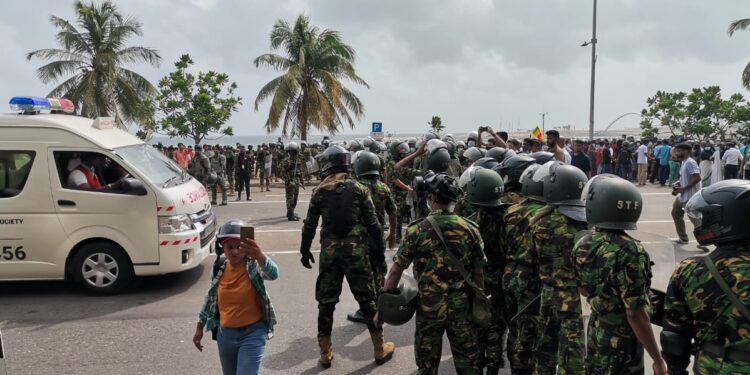
The Supreme Court today granted leave to proceed with five fundamental rights petitions filed by five individuals part of the people’s struggle claiming their rights were violated during the attack on the protest site in Galleface on the 9th of May.

Accordingly, notice was issued to former President Mahinda Rajapaksa, MPs Namal Rajapaksa, Sanath Nishantha, Johnston Fernando, Prasanna Ranathunga, Senior DIG in Charge of the Western Province Deshabandu Tennakoon, the Inspector General of Police and several others who have been cited as respondents in the petitions to be present in Court on the 22nd of June 2023.

The petitions were taken up for consideration before justices Vijith Mallalgoda and Janak de Silva.

Following lengthy considerations the bench ordered the petitions to be taken up for examination.

The petitioners charge that affiliates of the respondents carried out the attack on the protest site on the 9th of May and violated their rights.

The petitions call for an order to be issued to the IGP to compile a guideline to prevent such attacks on peaceful protests.

Attorneys representing the petitioners today (9) informed Court that they do not intend on continuing to include former Army Commander Shavendra Silva as a respondent and he was therefore released from the case.

Posted in Uncategorized

Impoverished Sri Lankans are selling assets, eating less: WFP

Sri Lankans thrown into poverty in the worst currency collapse in the history of its central bank are selling assets acquired in better times and are eating less, Rome-based World Food Program has said.

Three in 10 households were ‘food insecure’ in a household food security survey conducted by the agency in October 2022.

“Over seven in ten households are adopting food-based coping strategies such as eating less preferred food, continuing the alarming trend observed since June,” the WFP said in a Sri Lanka situation report issued in December 2022.

“Meanwhile, a staggering eight in ten households are turning to livelihood- based coping strategies such as selling productive assets, the highest observed since June.”

Sri Lanka’s central bank printed money for two years and collapsed the currency from 200 to 360 to the US dollar in 2022 putting food out of reach of the people.

According to a World Bank report Sri Lanka’s central bank was among the top 10 in the world driving up food prices by October 2022.

Reserve Bank of Zimbabwe which its deadly ‘RTGS dollar’ created 321 percent rise in food prices. Lebanon’s central bank created 203 percent food inflation and Venezuela’s central bank created 158 percent.

Central Bank of Turkey another notorious central bank which had been under pressure from the country’s President to print money to keep rates down created 99 percent inflation.

Banco Central de la República Argentina, the archetypical Latin America central on which American money doctors modelled Sri Lanka’s central bank in 1949 bank generated 92 percent food inflation.

Iran’s central bank created 84 percent inflation.

Coming in 08 place overall Sri Lanka’s central bank generated 81 percent food inflation by October.

The central bank of Sri Lanka has hiked policy rates, allowed market rates to go up and has largely stopped creating new inflation and traded goods prices are starting to ease.

The WFP said it had given relief to 1.1 million since the currency crisis began and 556,929 schoolchildren have received school meals prepared with rice supported by the agency.

Another 101,568 people had been given in-kind food assistance.

Sri Lanka farmers were hit by shortages chemical fertilizer despite a ban on agrochemicals being lifted and poultry farmers also faced shortfalls of feed and high prices amid forex shortages.

Food supplies and prices are starting to stabilize after the central bank raised rates to stop money printing but prices are almost double after the fall of the rupee.

Rs. 10 Billion – The cost for the local government election

The National Election Commission (NEC) says that it will cost approximately Rs. 10 billion to conduct the local government elections.

The Commissioner General of the NEC Saman Sri Ratnayake said the cost was approved via the budget that was passed in Parliament.

The Commission announced on Thursday (8) the nominations for the Local Government Elections will be called for during the final week of December.

The NEC in a statement said that the nominations will be called for as per the provisions of the Local Authorities Elections (Amendment) Act.

The Election Commission said that the preparation of the 2022 voter list at the local government level is complete.

Accordingly, the Election Commission said that voter lists were prepared for 341 local government bodies.

India recommences e-visas for Sri Lankans

India has resumed the issuing of electronic visas (e-visas) for Sri Lankan nationals.

Accordingly, Sri Lankans seeking to visit India for leisure, business, conferences and other purposes, are now once again able to apply for travel visas in an entirely virtual environment, the Indian High Commission in Colombo assured in a Tweet.

Travellers have been requested to visit indianvisaonline.gov.in/evisa/tvoa.html to apply for their visas.