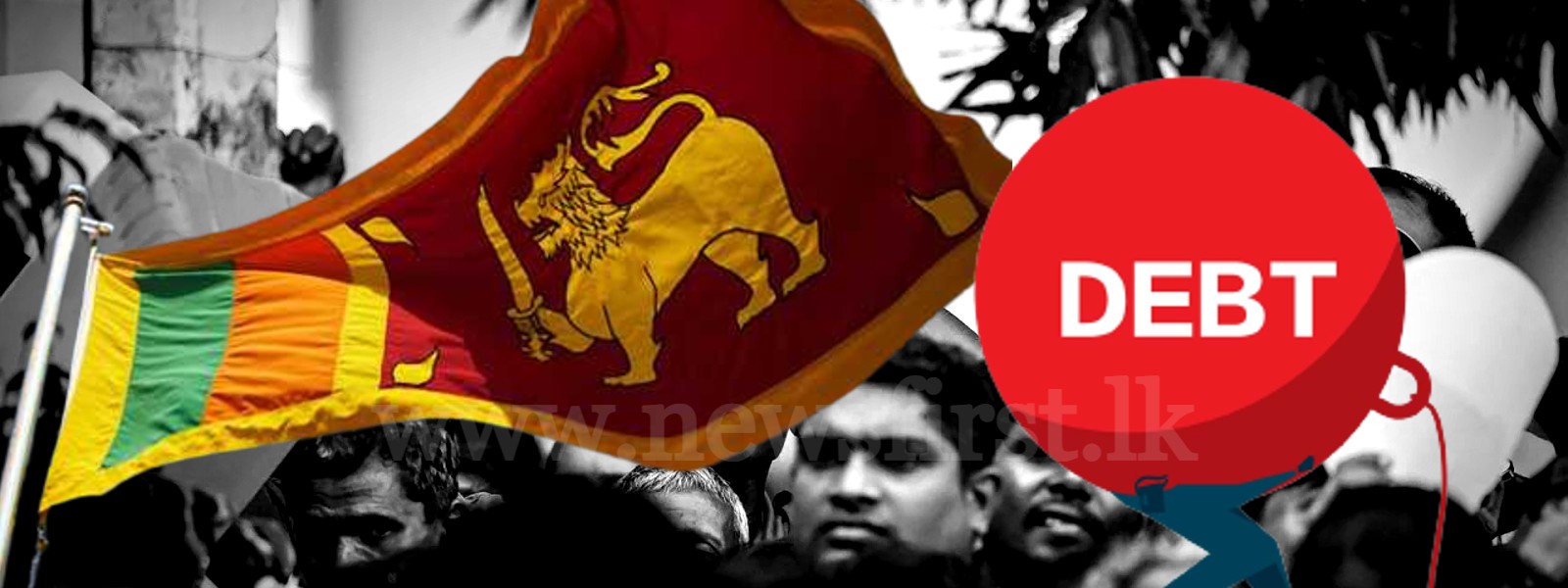
Lankan crisis embedded into political system with leaders playing Sinhalese Buddhist card and catering to majoritarian sentiment

A recent Democracy Forum seminar highlighted the dire political and economic problems overwhelming Sri Lanka, and what other South Asian nations might learn from its experience.On July 14th, Sri Lankan President Gotabaya Rajapaksa resigned, as his country faced economic ruin and civil unrest. Protestors demanded that the interim government probe allegations of corruption against Rajapaksa and his family, who have dominated Sri Lankan politics for much of the past two decades.

To analyze what lies behind the Rajapaksas’ fall and Sri Lanka’s economic collapse, and discuss what lessons other South Asian nations might learn from the country’s predicament, London-based NGO The Democracy Forum invited a panel of experts to address the central theme: ‘Sri Lanka: Lessons for South Asia’.

In his opening comments, TDF President Lord Bruce spoke of the plight of Sri Lanka, a country traumatized by its political shortcomings, exacerbated by a combined balance of payments and sovereign debt crisis, which betrays many of the systemic problems that continue to beset countries throughout South Asia.The Sri Lankan government’s reckless pursuit of unsustainable foreign borrowing has propelled the country into the midst of a proxy tug-of-war between China and India, he said, and although Beijing has long courted the Rajapaksa family with loans for huge infrastructure projects, it has been slow to respond to Colombo’s evolving crisis.

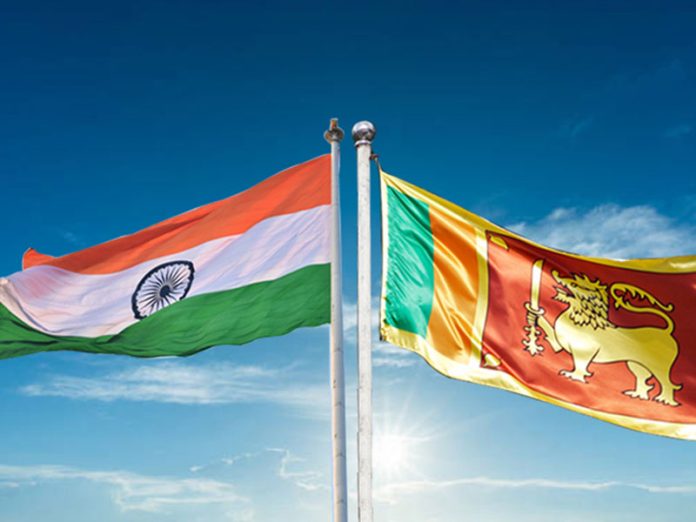
In contrast, the Indian government earlier this year offered a package of credit, loans, and humanitarian assistance worth USD 3.8bn. The outcome of this hegemonic rivalry is far from clear, but the machinations reflect the shifting sands of allegiance in South Asia, concluded Lord Bruce, with Beijing still wielding the most significant clout in the region.

Focusing on deep-rooted, long-term economic vulnerabilities that led to sovereign default in Sri Lanka – the first time in the country’s history – Umesh Moramudali, a Lecturer at the University of Colombo and Researcher on Public Debt and Development, pondered why Sri Lanka had come to this.

While some observers believe China, the Russian war, and Covid are key external culprits in Sri Lanka’s economic decline, Moramudali pointed to three long-term internal vulnerabilities: Sri Lanka’s declining tax revenue, a much reduced exports-to-GDP ratio, and very low foreign direct investment.On Sri Lanka’s path to becoming a middle-income country, he argued, it had failed to fix the structural weakness of its economy, and core political weaknesses. Heavy borrowing from China for infrastructure projects, as well as increasing domestic and external debt, had also left their mark.

Dr Neil DeVotta, Professor of Politics and International Affairs at Wake Forest University, discussed the proximate causes of the crisis facing Sri Lanka, juxtaposing that with mal-governance over the decades and linking the island’s current problems with its ethnocentric trajectory. The hardship that Sri Lanka continues to face is almost invisible, he said, as the protest movement is now less vigorous, yet malnutrition, poverty, dipping agricultural output and lack of medicines are among growing problems.

DeVotta also drew attention to exogenous causes (Covid, the war in Ukraine), although he believed the long-term explanation was rooted in Sri Lanka’s ethnonationalism and its dynamics, with decades of ethnocentric governance having eroded meritocracy, leading to poor governance, corruption and lack of transparency. This is embedded into the political system, he said, with leaders playing the Sinhalese nationalist Buddhist card and catering to majoritarian sentiment.

The political roots of the crisis were also at the forefront for Jonathan Spencer, Regius Professor of South Asian Language, Culture & Society at the University of Edinburgh, who specifically focused on the gap between the political class and the people. He underscored the essentially non-violent nature of most protests, but also the limitations of what has been achieved by the protestors, who initially focused their ire against Gotabaya and Mahinda Rajapaksa, but are now also directing it at the other 225 current members of parliament.

Spencer called the existing political system ‘sealed’, and asked why there have been no new forces and voices entering it – for example, there are only 12 women MPs in parliament out of 225, in a country that had the first democratically elected female prime minister, and young people and those from poorer communities are also blocked from participation. So there is a long-term structural crisis though a crisis of representation in the current Parliament.

The good news, concluded Spencer, is that the aspirations of the young protestors who want to see post-ethnic, post-corruption politics have not been crushed by the repression of recent months; but the bad news is it is very hard to see how they can find expression in the mainstream political realm.

Broadening the focus to a more regional viewpoint, Dr. Ali Cheema, Associate Professor of Economics, Lahore University of Management Sciences and Research Fellow, IDEAS, looked at Pakistan’s domestic political economy challenges and development, in light of what might be learned from Sri Lanka’s recent experiences.

He drew parallels between Sri Lanka and Pakistan, given their structural weaknesses, and how these have been worsened within the context of the global economic crisis. But Cheema cautioned against being reductive, as each South Asian nation has a different set of fragilities, underpinned by growth models that are themselves fragile.

Dr Deepa Ollapally, Research Professor of International Affairs & Director of the Rising Powers Initiative at the Elliott School of International Affairs, George Washington University, also addressed the regional repercussions of the Sri Lankan crisis, especially what it means for India’s role vis-a-vis Colombo, and in the region.

She spoke of how the region is being redefined, as are regional roles and expectations, with Quad member Japan now a major player, seen as an honest broker able to develop, along with other Quad members, restructuring packages and provide alternatives to the China option, especially the BRI.

Ollapally said that, previously, India had watched helplessly as Sri Lanka fell into Beijing’s arms. But, with the Ukraine war diverting most of the international community’s attention, China then vanished from the scene and India appeared as a first responder with a huge aid package, far outstripping China’s. Sri Lanka, she added, had been overly optimistic in its expectations of China, which is a tough customer when it comes to bailouts, as it is more concerned with its own economic situation.

Many countries are in debt to China (eg Pakistan, African nations), and the upshot is a slowing down of the BRI, which had been speeding up. At the same time, Sri Lanka has underestimated India – despite the island nation begging for global help, only India came good.

India’s expectations of Sri Lanka have also increased, as the crisis has given India the opportunity to push back China. Prime Minister Narendra Modi government has been much quicker than its predecessors to realize that, in order to project itself globally, India needs to take care of its immediate neighborhood – otherwise there are others waiting in the wings, like China, to play that role. So Sri Lanka, concluded Ollapally, is a test case in India’s journey towards being a global power.

Barry Gardiner MP, Chair of the Forum, closed the event by considering some of the elements of a useful rescue package for Sri Lanka. More money would need to be channelled to the bottom of society, and fuel and fertilizer would have to reach farmers for healthy harvests next year. Regarding lessons the region could learn from Sri Lanka’s situation, Gardiner stressed the importance of borrowing to invest, not to consume, and putting funds into the hands of the people, who will help drive growth, tackle corruption, and fostering transparency within the polity.
Posted in Uncategorized

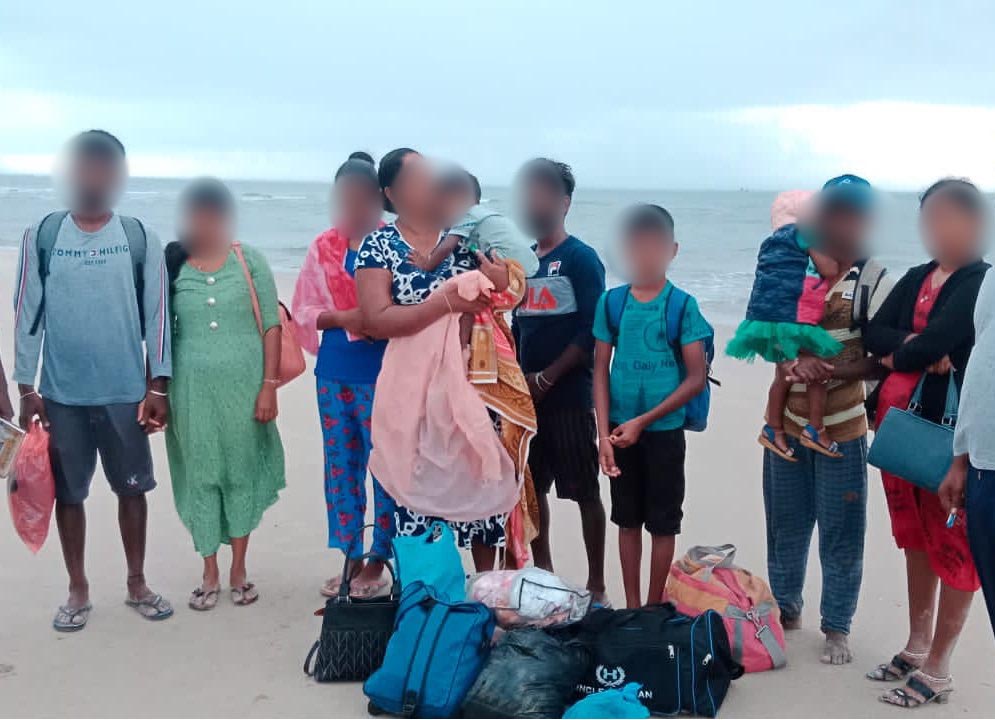
10 Sri Lanka Tamils, including 3-month-old, arrive in Tamil Nadu

RAMANATHAPURAM: Unable to bear the punishing economic distress in Sri Lanka, 10 more Tamils, including a three-month-old boy, fled the island nation and landed at Naduthurai islet near Dhanushkodi in Ramanathapuram district early on Saturday after undergoing a perilous journey for hours braving rough sea, lashing wind and pounding rain.

According to sources, M Jeyakumar (45), his wife J Yogeshwari (42) and daughters J Tamilmathi (22) and J Kanimathi (15) of Mannar; R Pushpam (64) and her son R Prabhakar (43) of Mullai Theevu; and R Justin (42) his wife J Ausiya (31), daughter J Ansika (3) and three-month-old son J Anjithan of Yazhpanam commenced their journey on a fibre boat from Mannar on Friday night.

Speaking to reporters in Dhanushkodi, R Pushpam, a daily-wage labourer, said surviving in the island had become difficult for her, particularly with a son with a mental condition.

“The price of sugar has skyrocketed to 300 Sri Lankan Rupee (SLR) per kg and price of rice per kg is 250 SLR. There is also a shortage of medicines in government hospitals in Sri Lanka,” she said.

“Our boat ride in the dark was scary because of the rough sea and we were continuously battered by rainfall. We risked our lives thinking it is better to die on the boat than to live there. It was quite difficult to protect the three-month-old baby amid the heavy rain and strong winds, she said.

“Each of us paid around 50,000 SLR to one lakh SLR for the boat ride,” Pushpam said. Upon information, the Rameswaram Marine Police reached the spot early on Saturday and took the refugees to the marine police station for interrogation.

Following inquiries by security officials, the refugees would be lodged at the Mandapam refugee camp. With this, the total number of Sri Lankan Tamils who reached Tamil Nadu seeking refuge since March 2022 has increased to 198.

Another SJB bigwig to crossover?

A bigwig of the Samagi Jana Balawegaya (SJB) is preparing to cross over to the government soon, ‘Lankadeepa’ reports.

Quoting highly placed sources in the party, the newspaper says that the politician in question was a minister in several governments and has continuously stated that the SJB should join the government.

The report says that the politician’s son is in the centre of the coordination activities behind the crossover.

Is Sri Lanka on track to access funds from the IMF?

Sri Lanka, which is under an ongoing economic crisis, is headed for another major turbulence as the country will not be able to secure the much-needed IMF loan in December as its ally and debtor China is yet to initiate a dialogue on debt restructuring with Colombo.

A report in the Hindustan Times quoting financial analysts based in Washington said that Sri Lanka will miss the IMF deadline and will have to wait till March next year to secure a loan of $2.9 billion, as Beijing was involved in the 20th National Party Congress.

The next meeting of the IMF executive board is in March 2023, Sri Lanka will most likely have to wait until then for IMF Board approval, and access to the funds.

Why is China’s involvement so important to access IMF funds?

Sri Lanka is now considered a country that defaulted on its external debt because the island nation lacked foreign reserves for debt servicing.

According to the Central Bank of Sri Lanka and the Finance Ministry, Sri Lanka’s total debt was $36 billion at the end of 2021.

Of this total debt, Colombo owes some 52% in bilateral credit to China, 19.5% to Japan, and 12% to India.

One of the main conditions for Sri Lanka to tap the USD 2.9 Billion funding from the International Monetary Fund is debt reconciliation and restructuring.

Bilateral means transactions between two countries, and there is an institution that operates with the support of the International Monetary Fund to talk about bilateral debt, and this is called the Paris Club.

Sri Lanka has obtained a large number of loans from Japan, India, and China, and among them, only Japan is a member of the Paris Club.

India is openly supporting Sri Lanka’s engagement with the IMF, and avenues are open for Sri Lanka to discuss debt reconciliation and restructuring with its neighbour.

However, the issue lies with China.

Sri Lanka has to engage with China on how to restructure the debt given by China.

What has Sri Lanka done with Chinese loans?

Sri Lanka used loans from China to invest in the Hambantota Port, Mattala Airport, Lotus Tower in Colombo, and Expressways.

Unfortunately, the return on investments was not enough to service the Chinese debt.

Some of these projects have been handed over to China labelling them as investments, however, the debt is yet to be settled.

The IMF has informed Sri Lanka to boost its revenue streams so that the debt can be serviced.

The IMF also looks at cutting down state expenditure and eradicating corruption to consider releasing funds to Sri Lanka.

According to Former Foreign Minister G. L. Peiris legitimacy of the government is also crucial.

Three major factors influence the approval of the IMF Executive Board for Sri Lanka to access the funds.

Debt relief from China

Taking necessary measures to prevent corruption and

A legitimate government that represents the true mandate of the people.

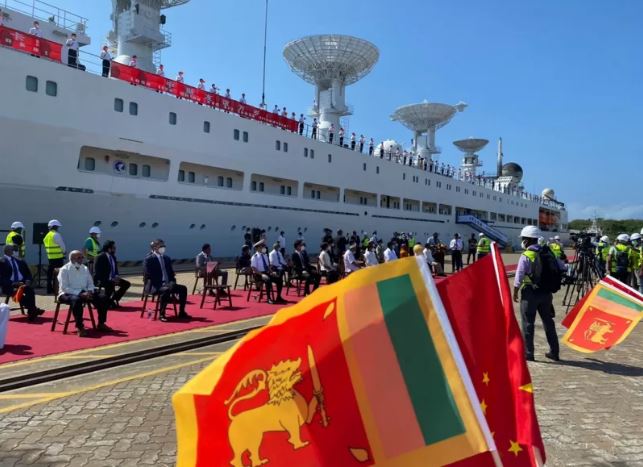
Chinese vessel: Yuan Wang 6 enters Indian Ocean

The Yuan Wang 6 (YW6), the sister vessel of the controversial satellite tracking vessel Yuan Wang 5 (YW5), which docked at Hambantota Port in August, entered the Indian Ocean region via the Lombok Strait in Indonesia on Wednesday (2), it is reported.

The Yuan Wang 5 caused controversy and a diplomatic spat between India and Sri Lanka when the regional giant raised concerns with the island regarding the Chinese State-owned vessel docking at the Hambantota International Port (HIP).

It is understood that Sri Lanka, following pressure from India and the US, decided to rescind the permission granted to YW5 to replenish at HIP. However, Sri Lanka later approved the vessel to call port at HIP following consultation with the parties concerned.

President Ranil Wickremesinghe, following the incident, commented that HIP was open to all commercial traffic, stressing that the Sri Lanka Navy and local law enforcement agencies were responsible for the security of the Chinese-funded port, which is now managed by a Chinese firm through a 99-year lease agreement.

According to open-source intelligence analysts and the MarineTraffic ship tracking platform, the YW6 (IMO registration: 9439527) entered the Indian Ocean with no destination port listed as of last evening (5).

This is not the first time that the Yuan Wang 6 has voyaged into the Indian Ocean, with one visit reported early in 2020 that lasted nearly three months.

News reports from India indicate that the Indian Government is keeping a close eye on the vessel.

Meanwhile, some Indian defence commentators have claimed that the YW6’s visit has been scheduled to coincide with a planned Indian test fire of an advanced ballistic missile in its nuclear arsenal.

However, last week China launched the last of the three modules that will comprise its space station into orbit and is expected to launch a number of satellites this month. The Yuan Wang 6’s journey into the Indian Ocean may be linked with its space programme.

Neither India nor Sri Lanka have officially commented on the arrival of the Yuan Wang 6 vessel in the Indian Ocean.

Posted in Uncategorized

Sri Lanka India discuss common maritime challenges faced by their navies in Indian Ocean

The navies of India and Sri Lanka have discussed ways to strengthen bilateral cooperation and actions to overcome common maritime challenges faced by the navies and coast guard personnel of the two countries in the Indian Ocean.

The 32nd international maritime boundary line (IMBL) meeting between Sri Lankan and Indian navies was held here on board SLNS Sayura off the coast of Kankesanthurai in the north on Friday, the Sri Lanka Navy said in a press release.

The talks between the navies of the two countries was held to mainly discuss common maritime challenges in the Indian Ocean region.

The objective of the IMBL meeting is to strengthen relationships between the two neighbouring countries and discuss actions to be taken pertaining to the navies and Coast Guard personnel to overcome maritime challenges.

“At this year’s meeting delegates from both sides discussed matters pertinent to the security of maritime borders of both countries and exchanged views on the progress of previous meetings”, the release said.

The IMBL meeting is held to strengthen relationships and exchange views on actions to be taken by the navies and coast guard personnel of the two countries, the release added.
The Indian High Commission here termed the discussion on matters of common concern as “fruitful”.

“Fruitful discussions on matters of common concern and effective surveillance between India and Sri Lanka at the 32nd International Maritime Boundary Line Meeting held onboard SLNS Sayura yesterday,” it tweeted.

The Sri Lankan delegation at the IMBL meeting was led by Commander Northern Naval Area, Rear Admiral Aruna Tennakoon, while the Indian delegation was headed by Flag Officer Tamil Nadu and Puducherry Naval Area, Rear Admiral S Venkat Raman, the release said.

Defence Adviser to the High Commission of India in Colombo, Captain Vikas Sood was also present at the meeting.

(This story has not been edited by THE WEEK and is auto-generated from PTI)

Posted in Uncategorized

UK House of Commons to debate situation in Sri Lanka

The UK House of Commons is to debate the situation in Sri Lanka next week.

A Backbench Business Committee debate on the UK response to the human rights and economic situation in Sri Lanka is scheduled for Wednesday 9 November 2022 in the House of Commons chamber.

The Backbench Business Committee gives opportunities to backbench Members of the UK Parliament to bring forward debates of their choice.

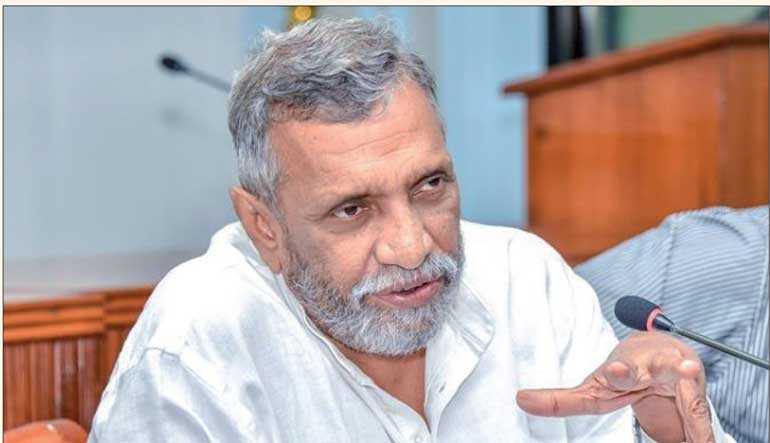
Mahinda Deshapriya to chair 5-member National Delimitation Committee

A five-member National Delimitation Committee has been appointed for the demarcation of wards for local authorities.

The appointment of the committee was announced in an extraordinary gazette issued by Prime Minister Dinesh Gunawardena, in his capacity as the Minister of Public Administration, Home Affairs, Provincial Councils and Local Government.

The National Delimitation Committee is effective from November 01, 2022, to February 28, 2023, according to the gazette notification.

It is headed by former Election Commission chairman Mahinda Deshapriya.

Meanwhile, Mr. Jayalath R.V. Dissanayake, Mrs. W.M.M.R. Adikari, Mr. K. Thavalingam and Mr. I.A. Hameed will serve as the members of the committee.

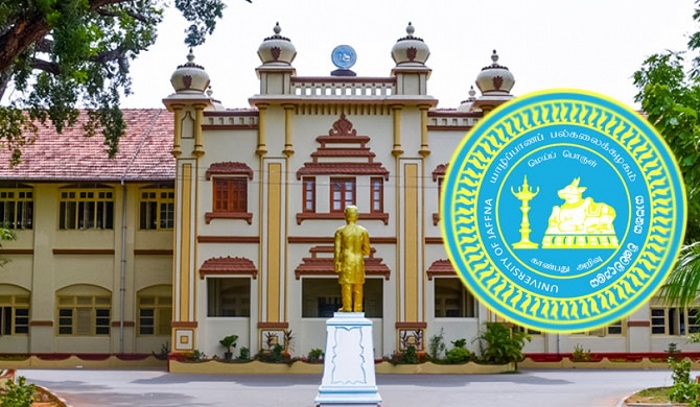
Parliamentary course introduced in Jaffna Uni

The recently initiated short course on parliamentary functions and procedures by Parliament for Universities was introduced to undergraduates of the University of Jaffna. The inauguration was held on 31 October at the University of Jaffna.

Vice-Chancellor of the University of Jaffna, Professor S. Srisatkunarajah thanked Parliament for arranging such a course and spoke to undergraduates on the importance of taking such course.

Senior officials of the Parliament Secretariat provide the material to resource persons from the Department of Media Studies – Faculty of Arts, University of Jaffna. Director of Legislative Services and Acting Director of Communications, Janakantha Silva, Director Administration, G. Thatchanarany and Manager Media Nimmie Hathiyaldeniya were present at the inauguration.

The Dean of the Faculty of Arts, Prof. K. Suthakar who addressed the gathering requested that the course be conducted for Political Science undergraduates.

Dr. S. Raguram, Professor of Media Studies and Head of Department of Media Studies, Lecturers of the Media Faculty, Poonkulali Sreesangithanan, Anutharshi Gabilan, Jude Dinesh Koduthor were also present.

The course intends to cover Democracy and Parliamentary System, Legislative Process of Parliament, Evolution of the Parliamentary System, Parliamentary Committee System, Parliament and the Public, Code of Conduct for the Members of Parliament, Standing Orders, Correlation for Public Service Process and Women’s Representation.

It includes four lectures and a study tour around Parliament.

Meanwhile, Parliament in collaboration with the University of Colombo initiated the Course in Colombo University to educate final year students of the Department of Political Science and Public Policy of the University, and give them an insight into the working of Parliament.

Posted in Uncategorized

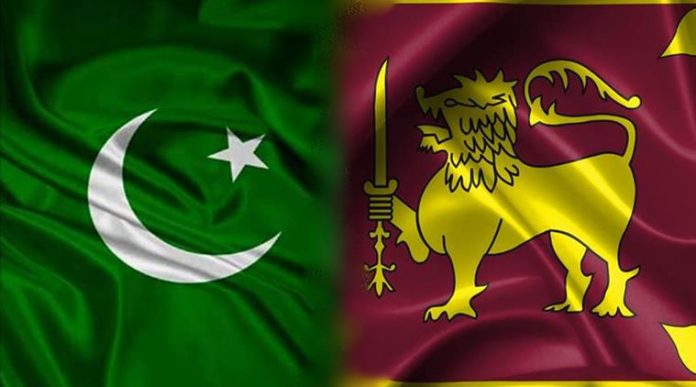
Sri Lanka keen to enhance trade with Pakistan

Consul General of Sri Lanka in Karachi, Pakistan Jagath Abeywarna says Sri Lanka and Pakistan have good trade and diplomatic relations, which can be enhanced with joint efforts of both the countries.

Consul General in Karachi Jagath Abeywarna highlighted that the total trade volume between Sri Lanka and Pakistan is $400 million and encouraged Pakistan exporters to make business delegations in order to expand exports to Sri Lanka.

Exchanging views at a meeting with Pakistan Yarn Merchants Association (PYMA), the Consul General stressed that collaboration between businessmen of both countries is the need of the day.

Consul General Jagath Abeywarna noted that major items of exports tea and coconut were exported by Sri Lanka to different countries, and $11 million were exported to Pakistan in 2021.

He said however the income from the tourism sector was only $3 million.

Meanwhile, Vice Chairman PYMA Sohail Nisar said Pakistan stands as Sri Lanka’s second-largest trading partner in South Asia.

He therefore stressed the need to promote air and sea connectivity between the two countries to strengthen cooperation in trade and industry.

Sohail Nisar added that Pakistani products especially pharmaceuticals, rice, fruits, vegetables, cement and garments have a wide scope in the Sri Lankan market.

Similarly, Sri Lankan tea, wall tiles, floor tiles etc. have a wide scope in Pakistan