Stand together to defeat president’s agenda to put off LG polls – Charitha Herath

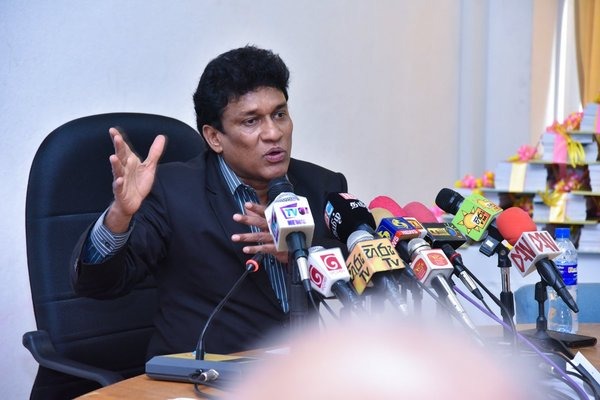
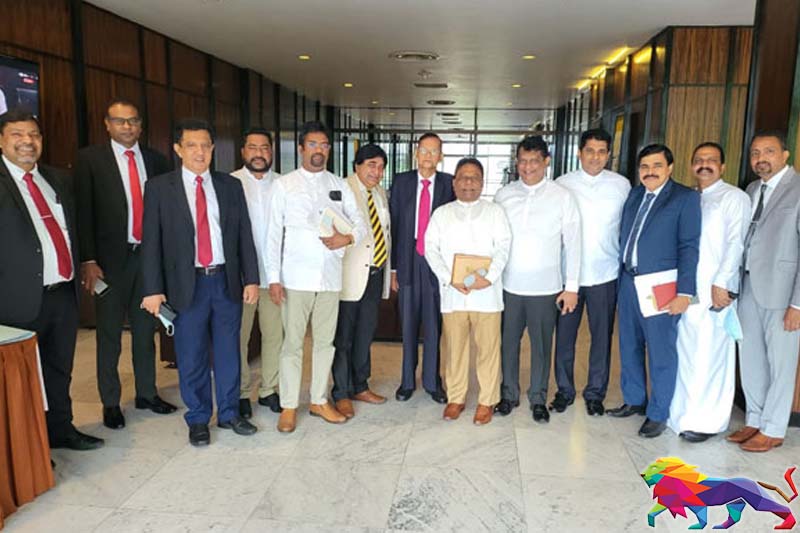
MP Prof. Charitha Herath urges the country to stand together to defeat the highly-personalized power agenda of president Ranil Wickremesinghe to postpone the upcoming local government election.

Prof. Herath, a top figure in the Freedom People’s Council, has tweeted, “Prez’s proposal to postpone upcoming LGA’s election is a damn illegitimate move by an unelected but a succeeding president. What he tries to do is the same thing they did for provincial councils.”

His comment came after the president’s statement yesterday that a referendum will decide on the parliamentary election system if a proposed select committee fails to reach consensus by July next year.

At a meeting with a group of professionals at the Presidential Secretariat yesterday, he also said desired changes to the political system should be brought about in accordance with the people’s aspirations, as a majority of them rejected the existing one, he said.

The president said he hoped to halve the 8,000-odd local government members and implement a Jana Sabha system before the next election.

Executive powers of Pradeshiya Sabha chairmen should be vested on chairmen-based committees, the laws for which will be formulated before the next election for LG bodies.

Wickremesinghe said the preferential voting system, the root cause of political corruption, should be replaced soon by a list-based system with non-preferential votes or a mixed system.

Limitations should be imposed as well by the law on the money spent on election propaganda, he added.

Ducking Sri Lankan Navy’s bullets, youth swims 13 km to Dhanushkodi

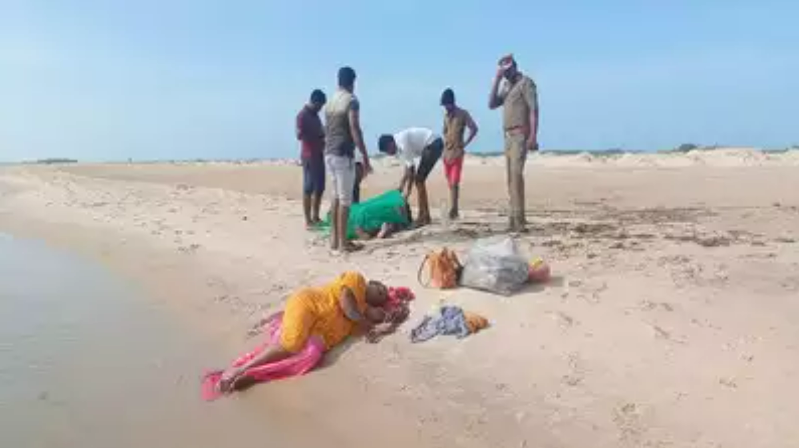
A 24-year-old Sri Lankan Tamil man swam about seven nautical miles in the Palk Strait and reached Dhanushkodi on Sunday.

The man, identified as Hassan Khan alias Ajay alias Khan of Mannar district, jumped into the sea after the Sri Lankan Navy fired at a boat ferrying him and a family of five illegally to Tamil Nadu. Following information from the fishermen, the marine police picked him up for interrogation. Senior officers of the Central agencies were questioning him.

A senior officer, who was part of the investigation, told The Hindu that Khan had left Sri Lanka about three days ago in an illegal vessel hired by a family of five in Mannar district. As they were nearing the fifth islet near Arichalmunai, there were gun shots mid-sea. Apprehending trouble, Khan jumped off the vessel. When the family of five reached the Mandapam shore on Friday, they were clueless about him.

Rameswaram fishermen spotted the youth swimming and alerted the marine police who brought him to the shores.

According to Khan’s statement, his parents lived in Kuthupattu, a refugee camp in Puducherry, while a few relatives lived in Ramanathapuram. As he could not survive in Sri Lanka owing to the economic crisis, he fled the island nation to join his parents and look for a livelihood in Tamil Nadu or Puducherry. However, the security agencies were baffled by his statement. They were keen to get his identity checked with the Sri Lankan police. Hence, Khan was detained at the Mandapam station.

The officer said that as and when the verification process was over, he would be handed over to officials of the Mandapam Rehabilitation Camp, where about 175 refugees have been staying since March.

Sorce:The Hindu

Posted in Uncategorized

Four protesters arrested at Galle Face Green granted bail

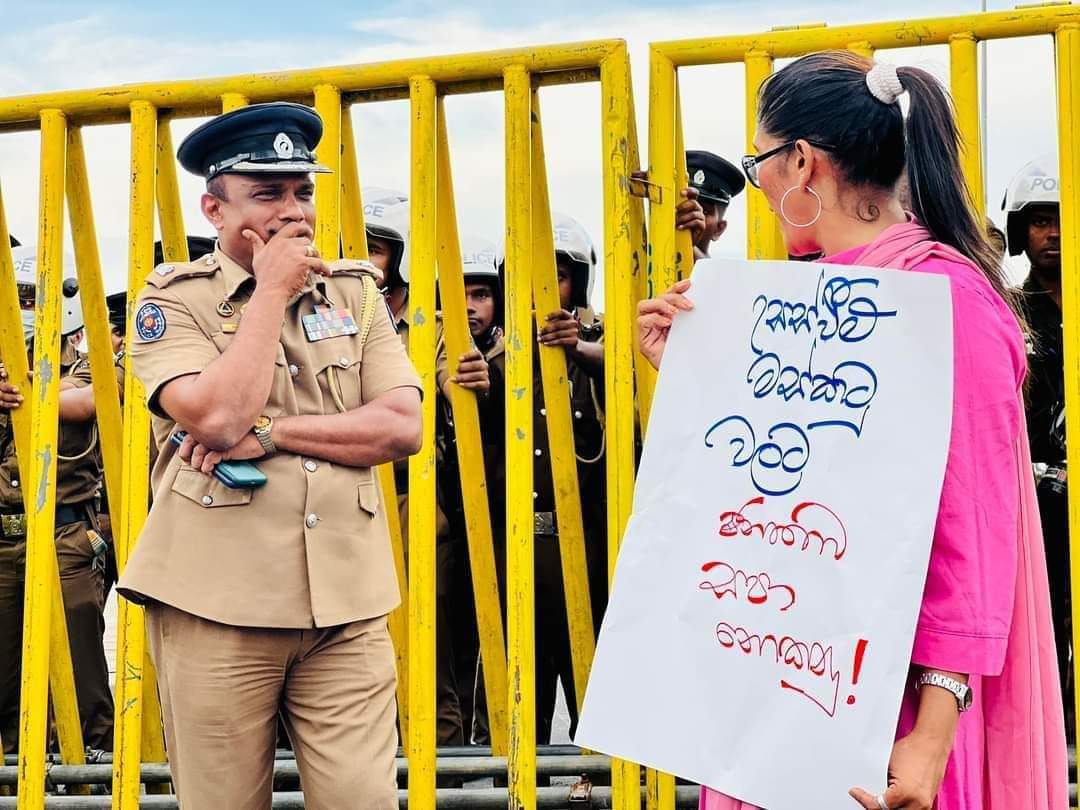
The four adults who were arrested by the police during Sunday’s (9) Aragalaya Heroe’s Memorial at Galle Face Green were produced to court on Monday (10) after were released on personal bail of Rs. 500,000/- each.

Producing the suspects in court, Sri Lanka Police said that the protesters behaved violently while making various remarks at police personnel.

Sri Lanka Police said that the protesters were informed to protest in a non-violent manner and that if they were to enter Galle Face Green, permission from the Sri Lanka Ports Authority, and the Urban Development Authority was necessary.

Sri Lanka Police also said that it was an offense to protest using torches, and said the torched were blown out and produced as evidence material in the country.

Sri Lanka Police requested the court to remand the suspects until the 21st of October.

However, President’s Counsels Saliya Pieris, Sarath Jayamanne and Rienzi Arsecularatne appearing for the protesters informed the court that Sri Lanka Police had failed to highlight the individual offenses committed by the protesters.

They pointed out that the protest was peaceful in nature, and that it was Sri Lanka Police that turned it violent.

Sri Lanka Police said that the Urban Development Authority and the Sri Lanka Ports Authority have filed a complaint requesting protesters not be allowed to enter Galle Face Green citing damage caused to the premises following previous incidents.

President’s Counsel Sarath Jayamanne said that it is not necessary to obtain permission to enter Galle Face Green as mentioned by Sri Lanka Police, adding that an inscription dating back to the colonial era affirms that the area has been designated for women and children.

President’s Counsel Saliya Pieris noted that a ruling by Former Sri Lankan Chief Justice Sarath N. Silva has made it clear the area is dedicated to the general public.

President’s Counsel Sarath Jayamanna pointed out that there is no need to obtain permission from the police under section 77/2 of the Police Ordinance based on how Sri Lanka Police had charged the suspects, and noted that it only states that Sri Lanka Police must be informed if there is a march.

The President’s Counsel said that protesters crossing the road opposite Galle Face Green had been construed by Sri Lanka Police as a procession or march.

The President’s Counsels told the court that Sri Lanka Police is using the power that is not vested in them and are engaged in such acts by following orders from above and to please the officers above them.

Producing video evidence to the Fort Magistrate, the counsel pointed out that two children were subject to police brutality during the protest.

Sri Lanka Police said that the father of the child had repeatedly brought his wife and child as a shield during the protests.

Responding to this claim, the President’s Counsel said that parents have the right to accompany their children.

Fort Magistrate Thilina Gamage who considered the submissions made by Sri Lanka Police and the defense ordered the four original suspects, and another who was named in court as a suspect, to be released on personal bail of Rs. 500,000/- each.

Prez promised to take action to stop Police collecting residents’ details: Ganesan

Samagi Jana Balawegaya Opposition MP and Tamil Progressive Alliance Leader Mano Ganesan yesterday (9) said that he brought to President Ranil Wickremesinghe’s attention that the collection of personal residential details carried out by the Police in the city of Colombo had caused disturbance among residents, and noted that he believes that President would take immediate action.

Ganesan told The Morning that President Wickremesinghe agreed to remedy the issue.

“President Wickremesinghe accepted that it is not right, and therefore, he said he would immediately inform the Inspector General of Police (IGP) and other officials to remedy this issue. Since the President himself is the head of the armed forces, I believe that he will solve this issue,” he added.

He urged the authorities to stop collecting such information, and claimed that if this is not done, he would stage a protest in Colombo alongside its residents.

“If the Police continue to do this, I will even start to protest in Colombo,” he noted.

Ganesan further said: “I made a phone call to the President on 8 October, which he returned last morning (9). I explained to him about this issue. I said that although there is a relevant provision in the Police Ordinance, there is no reason for this to happen now, as it is a time of peace. Peace is prevailing and therefore, there is no need for the Police to go from house to house and collect information officially.”

He said that the collecting of information had created unnecessary disturbance among Colombo residents.

“This act by the Police had caused disturbance among the residents of Colombo. Especially among those living in Bambalapitiya and Wellawatte. They are not only gathering information in the above areas, but in the entire Colombo city,” he said.

He further noted: “A police official told me that they are checking whether ‘aragalaya’ activists are hiding in Colombo. I told him, I don’t think ‘aragalaya’ activists are residing in Wellawatte or Bambalapitiya. Be it ‘aragalaya’ or otherwise, they can only seek a person by naming him via an arrest warrant. In that case there would be no issue. But they cannot go from house to house to collect personal information.”

“I have also brought the issue to the attention of subject Minister Tiran Alles and IGP C.D. Wickramaratne. I have told them the information collected by the Police will end up in the wrong hands. Some unlawful elements can access the collected information, and that may put people in danger. Under no circumstances will I agree to this,” he added.

However, section 76 of the Police Ordinance states every household should furnish information to police officers of the division in which they live, of inhabitants of the household, per order of the IGP or Magistrate.

Posted in Uncategorized

Erik Solheim in Sri Lanka

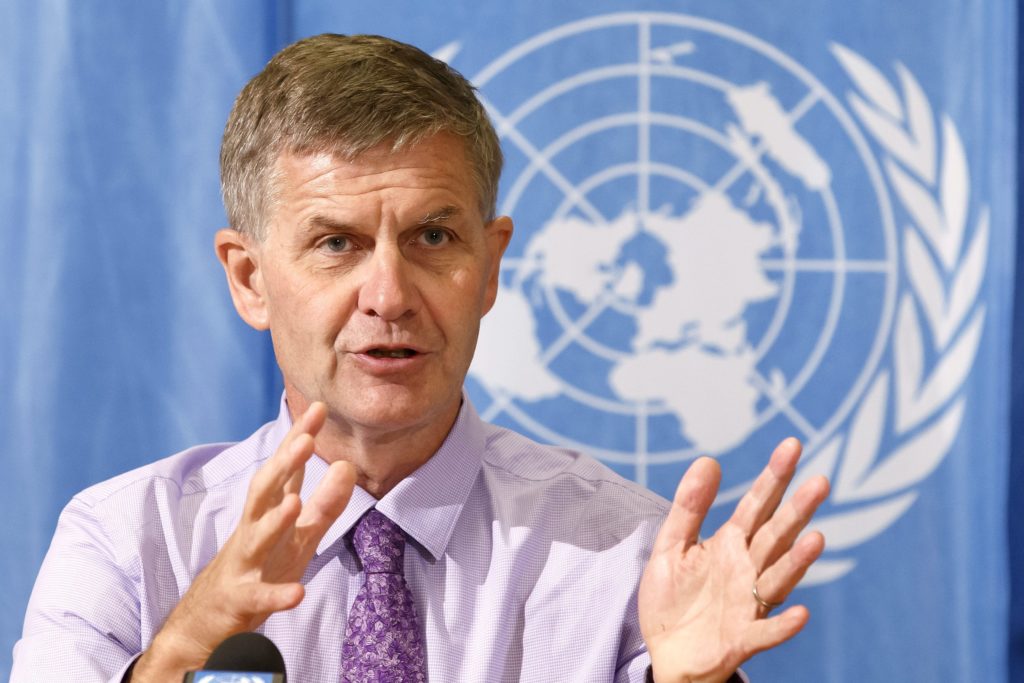
United Nations Environment Program Executive Director Erik Solheim flew into the country this afternoon, a senior official at the Katunayake Airport confirmed.

He said Mr. Solheim, a former Norwegian minister reached Colombo from Chennai.

The former chief negotiator between the Liberation Tigers of Tamil Ealam (LTTE) and the Sri Lankan government, Eric Solheim will meet President Ranil Wickremesinghe during his stay in the island.

Posted in Uncategorized

General Kamal Gunaratne’s dangerous overreach and the real Ranil-Rajapaksa relationship

The vote on the resolution on Sri Lanka in the United Nations Human Rights Council in Geneva will be a true test of the decades-old UNP proposition that the superior strength of President Ranil Wickremesinghe is that he can count on widespread international support. Ranil and his fans seem to believe that external support for him is axiomatic to the degree that unelected and devoid of a popular mandate though he is, he can do and attempt anything and everything autocratic and repressive locally, and yet be endorsed and supported globally.

The lawyer in President Ranil Wickremesinghe kicked-in on the High Security Zones ‘surge’ around the same time he figured that the Supreme Court may kick it out. His retreat on this issue is welcome but the damage has been done: intentionality has been revealed. He revoked it because he didn’t think he could get away with it legally.

To say he signed off on the HSZ gazette because he was in haste to emplane is silly, because as an experienced Cabinet Minister and lawyer, his first question would have been “what does the A-G say?” and if the answer was that it had not yet been shown to the Attorney-General, he should have tossed back the document insisting that it be done before sending it to him for signature, or should await his return.

The Securocrats

The Sunday papers named the initiators of the HSZ declaration and in so doing, revealed the site of the totalitarian dark heart of the regime: “Public Security Minister Alles and Defence Secretary Gunaratna prepared the document without consulting the Attorney General.”

The HSZ move confirmed the emphasis of former UN High Commissioner for Human Rights Michelle Bachelet on the danger of ongoing militarisation in Sri Lanka which she continued to track through the Ranil Wickremesinghe incumbency in her final report. Militarisation continues to figure in the draft UNHRC Resolution.

One would have thought that the regime would have been more careful with the UNHRC vote in the offing, but the arrogant folly of the two repressive centres, the Ministry of Defence and of Public Security, was manifested in the timing of the HSZ move, coming on the heels of the detention under the Prevention of Terrorism Act (PTA) of university student leader Wasantha Mudalige, when no act of terrorism had been committed anywhere since Easter Sunday 2019. The revocation of permission granted for an IUSF-trade union rally in Kiribathgoda, 4 October and the dispersal of the student marchers by water-cannon, was just days before the Geneva vote.

Shavendra Silva’s strategy and tactics

There are two key texts which mark its present stage of militarisation and militarism. One is not in the public domain, the other is. The text which is not (yet) publicly known is the report of the panel of retired military brass headed by Admiral Wasantha Karannagoda, on possible lapses, mainly on the part of General Shavendra Silva, in the maintenance and/or restoration of security during the Aragalaya which ousted President Gotabaya.

How much of President Ranil Wickremesinghe’s repressive agenda derives from or corresponds to the contents and recommendations of the report? The report may serve as a doctrinal policy document of the ex-military brass which constituted the real nucleus of the Gotabaya Rajapaksa administration and is now one leg of the bipod on which the Ranil presidency rests (the other being the Rajapaksas’ SLPP).

The critique of General Shavendra Silva derives from two quarters: the Rajapaksa cartel and its SLPP barons who argue that he should have cracked down bloodily on the Aragalaya but didn’t, and the ex-military brass including the current securocracy, which also thinks that he should have opened fire on the protestors, but avoided giving that order or impeded it.

Shooting into unarmed crowds would have fractured the ranks of the armed forces—a fissure had probably already opened with the fertiliser disaster—resulting in the possibility of a significant percentage joining the Aragalaya with or without weapons in hand. This would have turned the Aragalaya into what it was not, though the SLPP and Ranil say it was: a violent rebellion.

The SLPP and the ex-military hawks wanted to give the Aragalaya the Rathupaswela treatment to save Rajapaksa-rule. Given the public retaliation on 9 May in Colombo and in the provinces after the pro-Rajapaksa attack on GotaGoGama and MynahGoGama, any deaths by Police, STF, military or security contractor gunfire on the most decisive day 9 July, with almost a million people marching into Colombo, and corporate establishments, Lotus Tower, Port City and all centres of state power would have been on fire as darkness fell. The night of 9 May outside Temple Trees and in the provinces would have been replayed citywide and even island-wide. It would have been a socioeconomic (not ethnic/ethno-religious) July ‘83.

Gen. Shavendra Silva did the right thing because he did the smart thing. He (a) protected the unity of the armed forces and (b) preserved its rear base of social support, while (c) remotely regulating the Aragalaya, managing its parameters by not provoking it; keeping it this side of a violent revolt.

What are the threats that Kamal Gunaratna is talking about “that may impact the implied economic revival”?” Strikes? Pickets? In short, rights enshrined in the Constitution and labour laws? Who gave him the mandate and what credentials does he have to assess what is and isn’t important to “the effective functioning of Sri Lankan society”?

Generally-speaking General

I referred earlier to two texts, one of which is in the public domain. This is the address of (retired) General Kamal Gunaratne, Secretary Ministry of Defence, to the 15th International Research Conference of the Kotelawela Defence University (KDU), an establishment that has achieved commendable academic recognition in a fairly short period.

The speech shows firstly, what Kamal Gunaratne thinks, which counts only because he heads the massively funded Ministry of Defence which controls over quarter of a million men under arms. Secondly, the speech shows who and what Kamal Gunaratne thinks he is.

“…As per my belief, given the importance of certain sectors to the effective functioning of the Sri Lankan society, the said need for a deeper conceptual understanding of the threats that may impact the implied economic revival and sustainability in all aspects…” (General Sir John Kotelawala Defence University 15th International Research Conference – YouTube)

What are the threats that Kamal Gunaratna is talking about “that may impact the implied economic revival”?” Strikes? Pickets? In short, rights enshrined in the Constitution and labour laws? Who gave him the mandate and what credentials does he have to assess what is and isn’t important to “the effective functioning of Sri Lankan society”?

He seems to be oblivious to the fact that by all expert assessments, the ‘effective functioning’ of ‘certain sectors’ which are important, such as education and higher education, is impeded by the starvation of resources partly due to the hypertrophy of defence expenditure at a time of peace. A swollen defence expenditure is classified by professional economists here and overseas as a ‘threat’ to the ‘implied economic revival and sustainability’.

“Further, he [the Chief Guest, General Kamal Gunaratne] opined that from a strategic standpoint, keeping the past and also most recent lessons learnt in mind, with the new found leadership of the present government, Sri Lanka (SL) should call for a national determination where all sectors of SL society including civil organisations, security institutions, political entities, and business associations come together to discuss fundamental issues such as national identity, national reconciliation, transitional justice, governance structure and economic revival.” “This is a fundamental step towards building consensus and re-legitimising state institutions and private organisations in the country towards a common goal”, he added.” (15th International Research Conference General Sir John Kotelawala Defence University 29th – 30th September 2022 – KDU)

“…With the new found leadership of the present government, Sri Lanka should call…”? It is not part of the job description of Kamal Gunaratne or anyone who occupies the post of the Secretary/Ministry of Defence to pronounce publicly on what Sri Lanka “should” or should not do.

Nor it is within his remit or that of anyone who occupies his post, to publicly prescribe what is or is not “a fundamental step towards building consensus and re-legitimising state institutions and private organisations in the country towards a common goal”. Whether or not “state institutions and private organisations in the country” require “re-legitimising” is also not within his competence to pronounce upon.

“…Furthermore, giving high priority to giving solutions to the country’s most pressing matters of concern to improve the world’s image on the Sri Lankan society, the Sri Lankan government must take every step to recover high priority initiatives in the fields of the economy, institution-building, and political reform.”

General Sir John Kotelawala Defence University 15th International Research Conference – YouTube

“The Sri Lankan Government must take every step…” Who or what gives Kamal Gunaratne as Secretary/MoD the right to tell the Sri Lankan Government publicly, what it “must” do and its “high” priorities should be?

How can he as Secretary to the MoD, invade the realm of foreign relations and diplomacy – “to improve the world’s image on the Sri Lankan society” (sic)—especially when his counterpart in the Foreign Ministry is a far more educated and experienced official than he could ever aspire to be?

General Kamal Gunaratne’s speech could not have been made by someone occupying the same post, whatever his/her military credentials, anywhere in the world, from the USA to China, without losing his/her job.

What the speech shows is that Kamal Gunaratna thinks that as the top bureaucrat of the MoD, and with a war record, he has the stewardship of the nation and custodianship of the national policy direction. He doesn’t. As Shakespeare’s Julius Caesar reflected, “Such men are dangerous.” Of course, unlike the lean and hungry Cassius, it is not that Kamal Gunaratna “thinks too much”; it is that he thinks too much of himself.

He is displaying the same delusion that Gotabaya had, fed by the same generation of retired fellow-officers, many of whom went to the same schools and some of whom served in the same regiment.

Gotabaya won an election and therefore had a legitimate right to publicly articulate his delusions. When he translated them into policy practice though, the people who elected him threw him out. But who elected Kamal Gunaratne?

Whatever he thinks he is running for, he must surely know that after the Gotabaya trauma, there’s no way the voters will opt for yet another Rajarata Rifles-Gajaba Regiment-Anandian with zero political experience, as the country’s leader. If they want someone with political experience and the most impressive military record of all, there’s Field Marshal Sarath Fonseka. The combination of Sajith Premadasa and Sarath Fonseka gives the SJB a broad-spectrum national electoral appeal that no other political party has. But maybe General Kamal Gunaratne isn’t running on the electoral track.

General Kamal Gunaratne already has a target painted on his back internationally. If he makes himself a hate-symbol locally, he’ll become a target homed-in on by two legal laser range-finder beams, international and national, not just one.

The real Ranil-Rajapaksa relationship

President Ranil Wickremesinghe is no liberal who has fallen into the clutches of the illiberal Rajapaksas and their SLPP and needs rescue.

Those who’ve known his track record as a cabinet minister from 1977 would never confuse him for a ‘liberal’ in the American sense or even in the British. His tyrannical party Constitution and death-grip on the UNP prove he is no democrat either. Ranil is no liberal-democrat and has never been one.

There has also been a functional political alliance between Ranil Wickremesinghe and the Rajapaksas, first manifested in 2011, in President MR’s notorious ‘asphalt-paving’ and Police road-blocks which cut-off access to the UNP headquarters Sri Kotha during an inner-party reformist upsurge in support of Karu Jayasuriya and Sajith Premadasa.

True, Gotabaya Rajapaksa made Ranil Wickremesinghe the Prime Minister in 2022, and Mahinda and Basil Rajapaksa made him the President by swinging the parliamentary vote for him while backstabbing Mahinda’s righthand man for over a decade, Dullas Alahapperuma and bypassing SLPP chairman G.L. Peiris. But Ranil Wickremesinghe helped Gotabaya Rajapaksa be elected President in 2019, and also helped secure the SLPP a two-thirds majority in Parliament in 2020.

When Gotabaya Rajapaksa’s candidacy had been announced at a public ceremony and he had already done a lap or two of his campaign, UNP leader Ranil Wickremesinghe was refusing to do what his uncle J.R. Jayewardene had done in similar circumstances against Madam Sirimavo Bandaranaike in 1988: unleash a populist Premadasa, hand over all power over the campaign and stay out of the way.

When Ranil reluctantly conceded the candidacy to Sajith Premadasa, he simultaneously passed a resolution that allowed him to remain as UNP leader for six years more. He kept the campaign divided between Siri Kotha and Sajith’s campaign headquarters; blocked Sajith’s policy manifesto which had been drafted by 50 PhDs under Sajith’s chairmanship over months and substituted a manifesto infused with neoliberalism through his minions; cluttered Sajith’s stage by getting on it as J.R. Jayewardene never did Ranasinghe Premadasa’s in 1988; and declared that he would be PM if Sajith were elected President—a ghastly prospect that few voters wanted to risk. In short he actively sabotaged Sajith’s, i.e., the UNP’s Presidential bid of 2019.

Gen. Shavendra Silva did the right thing because he did the smart thing. He (a) protected the unity of the armed forces and (b) preserved its rear base of social support, while (c) remotely regulating the Aragalaya, managing its parameters by not provoking it; keeping it this side of a violent revolt

Despite this, Sajith fell short of the 50% mark by only 8%. Had he made it, there would have been no mega tax cuts, insane overnight ban on fertiliser or Dhammika Paniya. Instead, the airport would’ve been shut, masks ordered and worn early, and vaccines ordered early. We simply would not have been in the abyss in which we find ourselves today. Ranil helped trip us into it.

Even if Sajith had got 45%-47% instead of the impressive 42% he clocked, that would have meant that Gotabaya would have just scraped through, and the SLPP wouldn’t have won a two-thirds majority at the Parliamentary election of 2020, which in turn permitted the hyper-centralist 20th Amendment. Moreover, had Ranil transferred UNP leadership to Sajith after his creditable November 2019 performance, the SLPP’s two-thirds majority could have been thwarted.

Ranil’s political behaviour of active delay, dissonance and disruption guaranteed Gotabaya’s victory or at least his convincing margin of victory, and the two-thirds majority at the parliamentary election for the Pohottuwa, downstream.

By his calculated sins of omission and commission, Ranil proved that he preferred Gota over Sajith (the UNP candidate) as President in November 2019.

In 2020 he preferred the UNP to be run into the ground rather than give his leadership over to Sajith, the young man who had the guts to go up against Gota at his zenith.

No wonder then that Gota chose Ranil over Sajith as PM, and the Rajapaksa-run SLPP chose Ranil over Dullas as President.

In consequence, Sri Lanka is in the most grotesquely distorted place it has ever been in 75 years. Hard power is shared by President Ranil Wickremesinghe and Secretary/Defence (retd) General Kamal Gunaratne, neither of whom are elected. We are effectively ruled by a duumvirate with no popular mandate. The core of the power-structure has a vacuum where popular consent and legitimacy should be.

Source:FT.LK

Posted in Uncategorized

2nd witness of white van case, abducted

The second witness of the controversial white van case – Athula Sanjeeva Madanayake, has been abducted.

On Oct. 05, he had been assaulted near his house in Kelaniya Pethiyagoda before being blindfolded and abducted in a van.

He was injured after the related incident and is currently receiving treatment at the Colombo National Hospital.

Footage from a CCTV camera had revealed that the van used in the abduction had been parked for almost 02 hours at Biyagama Pattiya junction area before throwing him out and moving on.

Posted in Uncategorized

Dallas gets stronger in Parliament

It is reported that the number of MPs in the Freedom People’s Council (FPC) led by Dullas Ahalapperuma is to to increase to 20 MPs.

Currently, there are only 13 MPs in the group and in order to increase the number, a secret meeting was held at the residence of Prof. G.L. Peiris recently, reports say.

Following the discussion, the MPs who had attended had agreed to join them.

It is reported that Dallas Alahapperuma, Charitha Herath, Nalaka Godaheva, Dilan Perera representing the FPC as well as MPs Anura Priyadarshana Yapa, Priyankara Jayaratne, Sudarshini Fernandopulle, Jayaratne Herath, Chandima Weerakkodi and John Seneviratne also attended.

Meanwhile, the group of the Member of Parliament Dallas Alahapperuma has also held a discussion with the Sri Lanka Mahajana Pakshaya and has received the assent of the party leader – Asanka Navaratne.

It is reported that although Charitha Herath has initially expressed his reservations on the inclusion of Navaratne, it has now been settled.

The reason is that both of them represent the Kurunegala district.

When Charita Herath was to enter the fray from Kurunegala district under the SLPP ticket at the last general election, the SLPP founder – Basil Rajapaksa had cut him off. It was well known that Johnston Fernando had also supported this.

Major oil supplier threatens to withdraw triggering fuel crisis again

At least one oil supplier has threatened to cancel the fuel supply contract if Sri Lankan authorities fail to pay its balance payment, further exacerbating the crippling fuel crisis in the country.

Leading energy trading firm, BB Energy has informed the state-run Ceylon Petroleum Corporation (CPC) that they have the right to cancel the fuel supply contract owing to the non payment of their due amount as per its provisional invoice for 280,000 barrels of gas oil within 14 days following the arrival of their shipment.

The cash-strapped government is grappling to raise US $587 million to pay for several fuel shipments with Sri Lanka facing another severe fuel crisis after the government delayed payments for shipments already anchored at Colombo Port and several other shipments on its way to the port, informed sources said.

The CPC has unloaded a diesel consignment on September 14. One 37,000 metric tonnes (MT) Petrol 92 Cargo and one 100,000 MT crude oil cargo will have to be unloaded as the suppliers are awaiting payment, a senior Energy Ministry official said.

According to the message sent by BB Energy to CPC, it sated that they should be paid 2 per cent more than the amount quoted in provisional invoice and if failed to do so the company will unilaterally cancel the contract and divert the vessel to another discharge port.

The company is making this demand after receiving 10 per cent of the quoted amount in the provisional invoice, the senior official said adding that the government is grappling to ease fuel shortage under such difficult conditions.

Some of the present suppliers are yet to be paid for their fuel cargo already delivered to the CPC and if they withdraw from the fuel supply process the country will have to face another severe fuel crisis and people will have to bear the brunt, he opined.

The Sapugaskanda oil refinery is to face the risk of closing down again if the present crude oil supply is halted amidst current difficulties triggering an energy crisis that has led to island-wide rolling power cuts. The shutting down of the oil refinery from time to time for a long period would definitely cause mechanical and technical defects; senior equipment engineer of the CPC Janaka Wijesuriya said adding that restarting the system frequently and repairs were very costly. Some spare parts will have to be imported from the US and it has become a difficult task at present due to the dollar crisis.

This situation would not have arisen if the CPC stuck to the crude oil procurement plan of importing two shipment of 90,000 metric tonnes per month and 24 such consignments per year on term tenders, he pointed out.

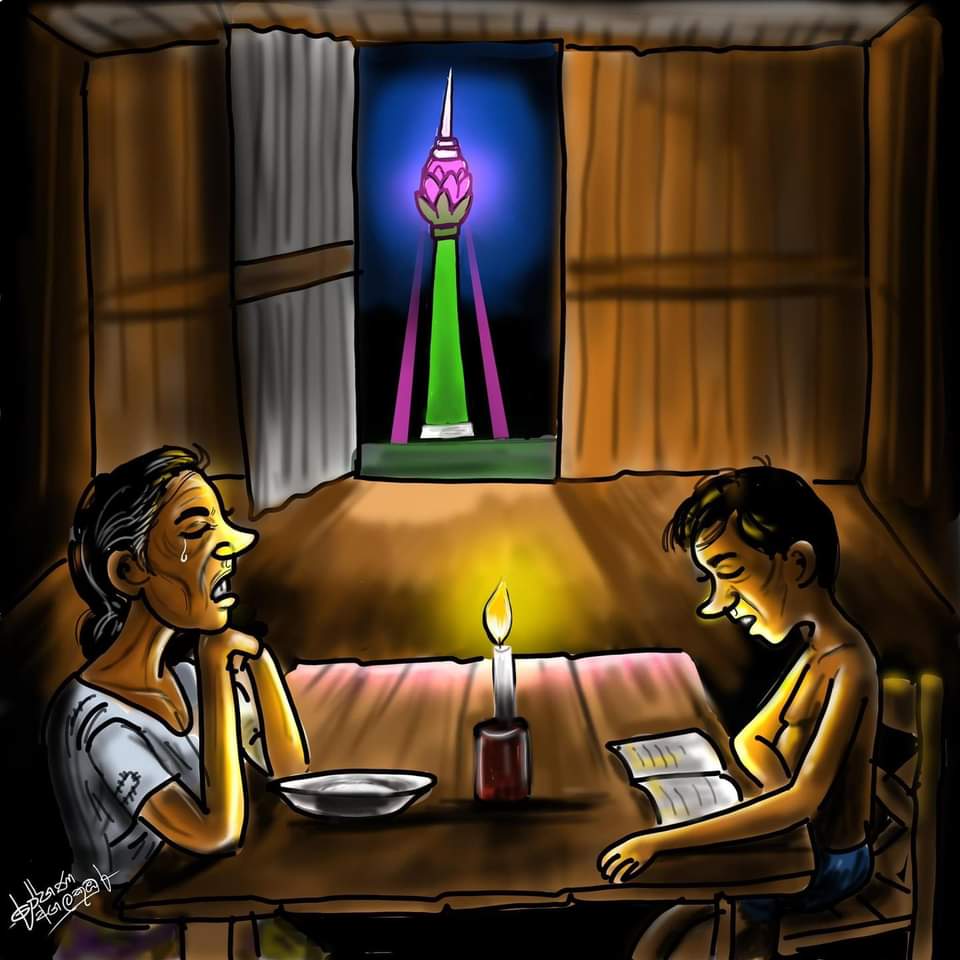
Sri Lanka heading for a humanitarian disaster

Sri Lankans have lost access to most medicine and medical supplies, setting them on course for a humanitarian disaster, Direct Relief reported.

Unlike Russia’s invasion of Ukraine and the recent hurricane batterings of Puerto Rico and Florida, Sri Lanka’s crisis grew slowly and has garnered few international headlines. But Sri Lankans are suffering amid the harshest economic crisis the country has confronted since gaining independence from the British empire in 1948.

With the country’s foreign reserves depleted, the nationalized healthcare system cannot afford to import medicine and medical supplies in sufficient quantities. Sri Lanka relies on imports for about 85% of its pharmaceutical needs and about 80% of its medical supplies. The country imported $815 million in medicine in 2021, but by May had only about $25 million in foreign reserves to pay for imports of any kind.

Last week in Sri Lanka, Direct Relief staff participated in an extensive series of meetings with Prime Minister Dinesh Gunawardena and much of the country’s healthcare leadership while overseeing the arrival of what may be the largest donation of medicine to the country since the crisis began.

What they encountered was grim. “For the next six months, they’re expecting a catastrophic number of deaths,” said Chris Alleway, Direct Relief’s manager of emergency response and new initiatives, who led the Sri Lanka meetings.

The 3,500-bed National Hospital of Sri Lanka in Columbo, which usually has 1,300 medicines in stock, is now down to requesting only the 60 most essential medicines.

With anesthesia in short supply, most general surgeries in the country have ceased, including kidney transplants. Cancer patients have lost access to medications needed to fight the deadly disease. Diabetes patients must secure and bring their own glucose meters for blood sugar checkups.

Many hospitals are stocked out of basic items like bandages and cotton balls. The stockouts are forcing rural clinics to close their doors and refer patients to larger facilities in urban areas, which also are overwhelmed by the flow of patients.

Due to a severe fuel shortage, the country’s fishing fleets cannot go far out to sea, slashing the supply of fish that is a significant source of protein in the country, including at its largest children’s hospital.

In addition to Sri Lanka’s Prime Minister and the Ministery of Health, Direct Relief staff met with the chairs of the country’s medical universities, including the colleges of oncology, psychiatry, nephrology, hematology, endocrinology, critical care medicine, anesthesiology, and maternal & child health.

Sri Lanka is also losing clinicians as they migrate to other countries with more opportunities, while its medical colleges see the number of applicants for medical education decline sharply.

“Every one of the medical college leaders informed us that they are in a dire situation, with major shortages across the board for everything,” Alleway said. “A lot of them were very emotional in our conversations. You could tell that they’re holding together the health care system to the best of their abilities with limited to no resources.”

Responding to the crisis spurred by Sri Lanka’s default in June of this year, Direct Relief has delivered eight humanitarian shipments totaling 27 tons and 16 million defined daily doses of donated medicine.

The largest shipment from Direct Relief to Sri Lanka—36,600 lbs. (18 tons) of medicine and medical supplies requested explicitly by Sri Lanka’s government—arrived in recent weeks.

“Direct Relief’s donation of $10 million worth of medicine will save many lives,” Prime Minister Gunawardena said in a statement.

The 18-ton shipment included medications to treat infections, wounds, seizures, mental health conditions, glaucoma, cardiovascular disease and respiratory issues.

These products were donated to Direct Relief by companies including Accord Healthcare, Apotex, Baxter International, Teva Pharmaceuticals and Viatris. One particularly considerable contribution from Accord included nearly 200,000 defined daily doses of IV furosemide, which is used to treat edema from heart failure and liver and kidney disease.

Other companies contributing donated medicine to Sri Lanka include AbbVie, Boehringer Ingelheim Cares Foundation, Eli Lilly & Co., Hikma Pharmaceuticals, Integra LifeSciences, Meitheal Pharmaceuticals, and Merck.

Partnering with Sri Lanka’s College of Endocrinologists and the Life for a Child program, Direct Relief has also donated and delivered two shipping containers of insulin that went to 25 health facilities for the benefit of patients under the age of 14 with diabetes.

Direct Relief works closely with Sri Lanka’s Ministry of Health, Ministry of Foreign Affairs, the Sri Lankan Embassy in the United States, the Medical Supply Division, and the National Medicines Regulatory Authority to deliver supplies and will continue to do so.

Direct Relief has also received invaluable assistance from Medical Help Sri Lanka, an organization formed by Sri Lankans in the United States.

“Direct Relief has established trusted relationships at all levels of the government and will continue to provide support as needed,” Alleway said.

In April, Sri Lanka suspended repayment of nearly $7 billion in foreign debt due this year out of a total foreign debt of more than $51 billion. On Sept. 1, the International Monetary Fund announced $2.9 billion in loans “to restore macroeconomic stability and debt sustainability while safeguarding financial stability, reducing corruption vulnerabilities and unlocking Sri Lanka’s growth potential.”

The loans, however, are not expected to restore Sri Lanka’s ability to import medicine quickly. In the meantime, Direct Relief will continue assisting the country to the fullest extent possible, with additional medical aid shipments already underway.

Posted in Uncategorized