Jaffna University students demand release of Tamil farmers

Students of the University of Jaffna staged a protest on Wednesday demanding the unconditional release of two Tamil farmers who have been remanded in custody over allegations of damaging an archaeological site in the Mullaitivu district.

The two farmers, Samithamby Egambaram and Sri Rathinam Gajaruban, were arrested and presented before the Mullaitivu Magistrate’s Court on May 29 and were ordered to be remanded until June 7.

The protest, held in front of the University of Jaffna, was led by the university’s Student Union.

Addressing the media, Union President Dayabaran Ligirdhar strongly condemned the racially discriminatory actions of several state institutions, including the Department of Archaeology, the Sri Lanka Police, and the Department of Wildlife Conservation.

“These arrests are part of an ongoing pattern of state institutions targeting Tamil civilians under the guise of legal and conservation work. We view these actions as illegal and deeply racist. The two farmers in question are innocent, and we demand their immediate and unconditional release,” he said.

He also raised concerns over the conduct of state officials in relation to land use and archaeological claims in the Northern Province, alleging that these actions are being used to marginalise Tamil communities and restrict their traditional livelihoods.

The protest comes amid heightened tensions surrounding land rights and archaeological claims in the North and East, where Tamil farmers and civil society groups have increasingly raised concerns about state interventions in areas historically inhabited by local communities.

Posted in Uncategorized

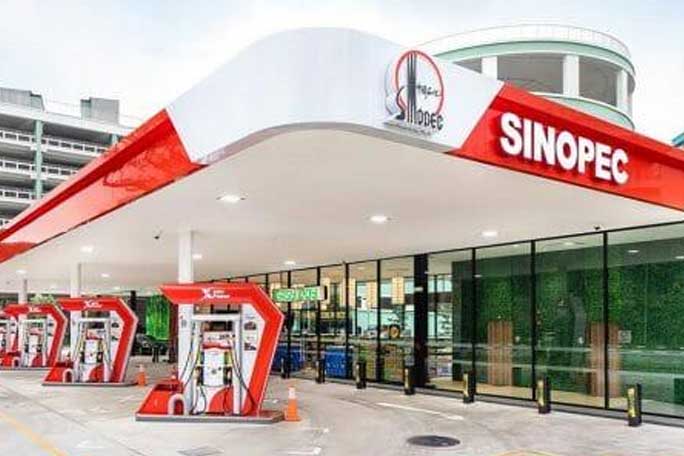
Sinopec launches second phase of program to empower Sri Lanka’s energy sector

Building on the success of its inaugural initiative, Sinopec, a global energy leader, is set to launch the second phase of its Energy Talent Growth (ETG) Program in Sri Lanka this year.

First introduced in 2024, the program has already conducted 18 training sessions for nearly 150 station managers across all 9 provinces, reflecting Sinopec’s long-term commitment to developing a high-performing, future-ready workforce within the country’s energy sector.

The ETG Program is designed to equip front-line station staff with advanced technical knowledge, operational excellence and international best practices. In 2024, 18 top-performing managers from Sinopec’s network in Sri Lanka participated in an intensive development journey in Colombo and Beijing, China combining theoretical learning, practical site visits, strategic capability-building, and Sinopec’s global management ethos. The program also included rigorous assessments to benchmark competencies against international best practices.

“This experience has truly re-energized us and strengthened our commitment to delivering even better service. It wasn’t just a great learning opportunity for me, but also for my colleagues at the station. We’re hopeful we’ll have the chance to return and build on what we’ve learned,” said Akila Fernando, Manager of the Sinopec A.D.A. Francis Appuhamy Filling Station in Marawila and one of the top-performing participants in the training program.

Commenting on the program in Beijing, the Sri Lankan Ambassador to China, Hon. Majintha Jayesinghe, stated “These programs reflect Sinopec’s commitment to not only empowering and enhancing the skills of Sri Lankan professionals, but also to strengthening Sri Lanka’s energy sector”.

Taking Dilly Fuelling Station in Nawala – the new benchmark of Sinopec Filling Station as an example, the changes are modest but tangible. With nearly 10% of daily visitors using restroom facilities at Sinopec stations, these changes are especially important in ensuring a clean, comfortable and dignified experience for customers.

Aligned with the newly launched Clean Sri Lanka Sinopec Action Plan, the ETG Program continues to drive front-line excellence by focusing on operational performance, customer-centric service and raises station managers’ awareness of safety, cleanliness and community-friendly practices.

Australia committed to work closely with Sri Lanka’s new administration

Australia is committed to work closely with Sri Lanka’s new administration, Deputy Prime Minister and Minister for Defence of Australia Richard Marles said.

President Anura Kumara Dissanayake held discussions with Richard Marles at the Presidential Secretariat in Colombo.

The meeting focused on further strengthening the historic ties between Sri Lanka and Australia, with a particular emphasis on enhancing bilateral cooperation.

President Disanayake highlighted Sri Lanka’s progress towards economic stability and briefed Deputy Prime Minister Marles on the government’s ongoing efforts to combat corruption and fraud.

He also expressed appreciation for the Australian Government’s support in recent maritime security operations and its assistance in addressing illegal trade, human trafficking, terrorism and arms smuggling.

The President further reaffirmed that Sri Lanka remains a secure destination for tourism and investment.

Deputy Prime Minister Marles, reflecting on the 70-year economic and political relationship between the two countries, conveyed Australia’s commitment to working closely with Sri Lanka’s new administration.

He praised the government’s anti-corruption initiatives and emphasized that enhancing trade, economic, political, tourism and investment relations was a central objective of his visit.

The Australian delegation included Paul Stephens, Australian High Commissioner to Sri Lanka; Gregory Laurence Moriarty, Secretary of the Department of Defence; Simon Eric O’Connor, Senior Adviser to the Deputy Prime Minister; and Ms Lalita Kapur, Australian Deputy High Commissioner to Sri Lanka.

Sri Lanka urges public to follow health measures amid Covid variant

Maintaining good health practices is key to preventing the spread of COVID-19 in Sri Lanka, a public official said, adding that seasonal increases in respiratory illnesses have been observed.

“It is important to maintain good respiratory etiquette and general health practices to prevent the spread of COVID-19 and other respiratory viral infections, such as influenza,” Ministry of Health Secretary Dr Anil Jasinghe said.

World Health Organization (WHO) data showed a global increase in the SARS-CoV-2 virus, which causes COVID-19, since February 2025, he said.

“Compared to recent years, seasonal increases in respiratory illnesses like influenza are commonly observed during this period, especially under prevailing climatic conditions.

“The average positivity of the SARS-CoV-2 virus so far this year is approximately 2%, with a slight increase observed at present.”

He urged the public to follow good health practices such as covering the mouth and nose with a tissue or the elbow when coughing or sneezing, avoiding touching the face, and ensuring hand hygiene through frequent, proper hand washing or the use of alcohol-based hand sanitizers.

“Individuals exhibiting symptoms of respiratory illness should wear a face mask to minimize the risk of transmitting the infection to others and avoid crowded public settings unless essential.”

The full statement is reproduced below:

COVID -19 Update

According to data from the World Health Organization (WHO), a global increase in the activity of the SARS-CoV-2 virus, which causes COVID-19, has been reported since February 2025.

Based on the International Respiratory Surveillance System, several countries, including several countries in Asia have reported a notable rise in COVID-19 cases in recent months.

In May 2023, the WHO officially declared the end of the COVID-19 global pandemic status, and since then, COVID-19 has been treated as a disease that circulates endemically, similar to other common respiratory infections.

It is a known phenomenon for the SARS-CoV-2 virus to undergo genetic mutations during its transmission.

The currently circulating variant reported in many countries in 2024 has been identified as a sub-lineage of a previously known genetic variant. In 2024, this same variant has been detected in Sri Lanka as well.

In May 2025, specimens tested by the Medical Research Institute (MRI) confirmed the presence of these previously identified sub-lineages.

Therefore, these are not novel variants, and no evidence of increased severity or complications has been reported.

According to Sri Lanka’s Respiratory Surveillance System, during 2024, 3% of respiratory specimens tested for SARS-CoV-2 yielded positive results.

This figure peaked at 9.6% in May 2024.

The average positivity of the SARS-CoV-2 virus so far this year is approximately 2%, with a slight increase observed at present.

Thus, an increase in reported COVID-19 cases was observed in May 2024 and again in May 2025.

However, according to WHO, no definitive conclusions have yet been reached regarding future transmission patterns of the virus.

Ongoing observation and research-based monitoring are still in progress.

Compared to recent years, seasonal increases in respiratory illnesses like influenza are commonly observed during this period, especially under prevailing climatic conditions.

Health authorities remain vigilant in monitoring disease trends, and the public need not panic unnecessarily.

If individuals experience fever or respiratory symptoms, there is no need for hospital admission out of fear.

However, if someone experiences difficulty breathing, medical attention should be sought.

Nevertheless, it is important to maintain good respiratory etiquette and general health practices to prevent the spread of COVID-19 and other respiratory viral infections, such as influenza.

Recommended measures include covering the mouth and nose with a tissue or the elbow when coughing or sneezing, avoiding unnecessary contact with the face, and ensuring frequent hand hygiene through proper hand washing or the use of alcohol-based hand sanitizers.

It is also advisable to avoid touching the face with unclean hands. Individuals exhibiting symptoms of respiratory illness should wear a face mask to minimize the risk of transmitting the infection to others and avoid crowded public settings unless essential.

Special attention must be directed towards high-risk populations, as they are more susceptible to developing complications from respiratory infections.

These groups include older adults, pregnant women, and infants and young children, whose immune systems are either compromised or stilldeveloping.

Furthermore, individuals with underlying medical conditions such as heart disease, chronic respiratory illnesses, diabetes, renal disease, cancer, or other chronic diseases, as well as those receiving immunosuppressive therapy, are at increased risk and require additional protection.

Dr. Anil Jasinghe
Secretary
Ministry of Health and Mass Media

Posted in Uncategorized

NEC Grants Public Access to Candidate Campaign Finance Reports

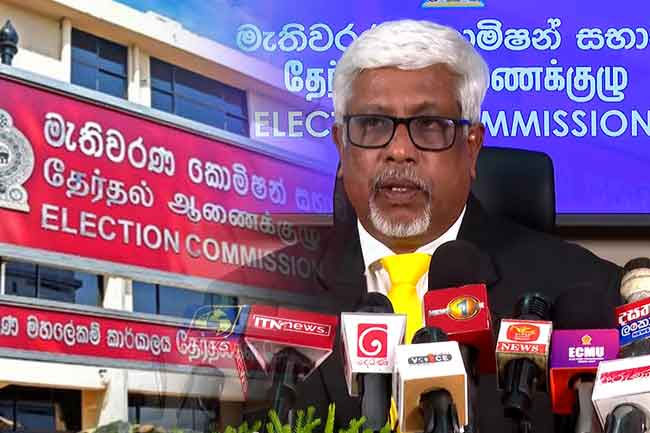
The National Election Commission of Sri Lanka has announced that any individual will be allowed to inspect and file complaints regarding the campaign income and expenditure reports submitted so far by candidates contesting the recent local government elections.

Accordingly, certified copies of the campaign finance reports will be made available for public inspection at district election offices starting from June 7th, during official working days from 9:00 AM to 4:00 PM.

This decision has been taken under Section 6 of the Regulation of Election Expenditure Act, No. 3 of 2023, which mandates that candidates submit detailed reports of their campaign income and expenses.

Chairman of the National Election Commission, R.M.A.L. Rathnayake stated that legal action will be taken against individuals who fail to submit their campaign finance reports in accordance with the law.

SC grants leave to proceed with petitions filed over issuance of liquor licenses in 2024

The Supreme Court has granted leave to proceed with two petitions filed seeking a ruling that then-President Ranil Wickremesinghe, in his capacity as the Minister of Finance Minister, violated fundamental human rights by issuing liquor licenses in violation of the Excise Ordinance after the announcement of the Presidential Election in 2024.

Petitions were filed by a group including a businessman from Matale.

Former President Ranil Wickremesinghe, Secretary to the Ministry of Finance Mahinda Siriwardana, and former Excise Commissioner M.J. Gunasiri were named as respondents in the petitions.

During proceedings, the Supreme Court bench ordered the Commissioner General of Excise to submit information to court regarding the liquor licenses issued during the period from the day the Presidential Election was declared last year until the election was held, as well as those issued throughout 2024.

After considering the facts presented in connection with the petitions, the Supreme Court bench comprising Justices Yasantha Kodagoda, Janak de Silva, and Mahinda Samayawardhena issued this order.

President’s Counsels Sanjeewa Jayawardena and Saliya Pieris, appearing on behalf the petitioners, informed court that between July 26—the date the election was announced—and September 21—the date the election was held—new liquor licenses had been issued by the respondents in violation of the election law.

They pointed out that even the 19-year-old son of former State Minister Shantha Bandara had received a liquor license during this period. Counsels further alleged that liquor licenses were issued to political allies and supporters in this manner.

They claimed that these licenses were granted with the intent of gaining political advantage during the Presidential Election, and that owners of licensed liquor outlets had lodged complaints with the Election Commission regarding this issue.

Deputy Solicitor General Viveka Siriwardena, appearing on behalf of the Attorney General, argued before court that the petitions had been filed after the statute of limitations and that the petitioners had concealed facts from court.

She also noted that the regulations related to the Excise Ordinance, which formed the basis of the case, have since been repealed and replaced with new ones.

Subsequently, the three-judge bench of the Supreme Court granted leave to proceed with the hearing of the petitions and scheduled the hearing for November 19.

Posted in Uncategorized

Political partnership of ethnicities by Jehan Perera

The United Nations High Commissioner for Human Rights, Volker Türk, is expected to visit Sri Lanka later this month. This will be an important visit as he will be seeking to assess the progress that the new government has made in implementing resolutions passed by the UN Human Rights Commission which his office facilitates. The last such visit was by former High Commissioner Al Hussein in February 2016, during the period of the Sirisena-Wickremesinghe government. At that time the relations between the Sri Lankan government and the UN Human Rights High Commissioner’s office were mutually supportive as the Sri Lankan government had co-sponsored UNHRC Resolution 30/1 which specifically included international participation in the transitional justice process.

The UN Human Rights High Commissioner’s visit on this occasion comes at a critical time, as the NPP government faces ongoing international pressure to address long-standing human rights concerns. Particularly controversial has been the Sri Lanka Accountability Project of the High Commissioner’s office (OHCHR), which has established an external mechanism for gathering evidence related to alleged human rights violations. The three successive governments that have had to face this issue have all strongly registered their opposition to it. As of 5 July 2024, the OHCHR repository established under this initiative contained 96,215 individual items that can be used for accountability processes gathered from over 470 sources, including international and multilateral organisations.

In the present international context, ethnic cleansing and war crimes are taking place in the public gaze of the world in a manner that is anathema to the international human rights community. There are governments in many countries and international organisations that continue to believe in the ideal of a Rules-based International Order. They would wish to show the world that they continue to stand by those values which have contributed to make the world a more just and less brutal place. Sri Lanka depends on international trade and development aid. These benefits are often conditional on demonstrating adherence to international human rights norms. By addressing the UNHRC recommendations the government will not only improve its international relations but also foster internal healing and stability.

Ethnic Partnership

Meeting the challenge of High Commissioner Türk’s visit will, however, not be an easy one for the NPP government. So far the government appears to have done little in its first six months in office to address the outstanding issues in the presently operating UNHRC resolution. The most recent UNHRC resolution concerning Sri Lanka is Resolution 51/1, adopted on October 6, 2022, which focuses on “Promoting reconciliation, accountability and human rights in Sri Lanka”. This resolution builds upon previous ones which brought up issues of missing persons, long term prisoners held under the Prevention of Terrorism Act (PTA), continued militarisation of the north and east after the end of the war and the military occupation of civilian lands. While there has been some progress in the return of land there has been no significant movement on many of the other matters.

The government also finds itself in the position of having to explain the non-implementation of its own manifesto in relation to the ethnic conflict and national reconciliation. The NPP manifesto which was published before the presidential election has several commendable pledges which, if implemented without delay, would contribute in great measure to the national reconciliation process. These include “Abolition of all oppressive laws including the Prevention of Terrorism Act (PTA) and ensuring civil rights of people in all parts of the country” and “Releasing of all political prisoners and ensuring their free socialisation”. The failure to move forward these pledges makes the government vulnerable to the criticism, which is now being made by Tamil political parties, that it is no different to previous governments which also failed to deliver on their promises.

The most important of the NPP pledges is to be found in Section 4.9 titled “A Sri Lankan Nation- The Universal Citizen”, where the manifesto puts forward as its first principle the concept of “Political partnership of all ethnicities.” In practice this is not working out. Recently, the Tamil media reported that the Palmyrah Development Board which is based in Jaffna had experienced a serious rupture with three independent board members from Jaffna resigning in protest, two of them being professors from Jaffna University. They felt that their views were disregarded and no translation facilities were provided for them when they met the minister in Colombo. Working in partnership with those from different parts of the country, with different ethnicity and language, requires sensitivity and engaging in dialogue and deciding together if it is to be a reality.

Need Partnership

Another example of lack of consultation and absence of partnership was the recently cancelled gazette notification regarding the vesting of vacant land in the north in the state unless the owners claimed it in three months. It is likely that this land takeover law contributed to the diminution of NPP votes at the local government election. Gazette No. 2430, issued on 28 March 2025, gave landowners in the north three months to assert ownership claims before their lands were declared state property. This was said to be under a colonial law enacted by the British to dispossess people lacking formal title. This gave rise to concerns that its enforcement now signaled a broader effort to legitimise taking land from the people in Tamil-majority areas, including Mullivaikkal where the last battles of the war were fought, threatening further displacement, undermining resettlement, and blocking memorialisation.

What is noteworthy however, is that despite these actions the government still for all obtained more votes in the north and east than any previous government. This is because the ethnic minorities, in the same way as the ethnic majority, want a system change in the way they are governed so that the country may develop and all people may prosper. The fact that politicians at the highest level are now being found guilty of corruption by the courts of law and that there is an enabling environment for independence of the judiciary is a major plus point. This is a unique strength the NPP government has and which it needs to use to the full to win and consolidate the support of the ethnic minorities.

Facing the challenge of the UN Human Rights system also requires the support of the representatives of the ethnic (and religious) minorities. If they are opposed to the government or take up positions contrary to it, Sri Lanka will continue to remain under international pressure. The next renewal or extension of the UNHRC resolution is expected to occur in September or October 2025. The trend line so far is that the resolutions get harder and harder. In Canada, a second genocide memorial is being planned, and this one will be in Canada’s largest city of Toronto. The Sri Lankan government cannot overcome these challenges by itself, but it can fare better if it has the ethnic minorities on its side in a “political partnership of all ethnicities” as promised in the NPP manifesto.

Sri Lanka parliamentarians on learning tour in India

Several Sri Lanka parliamentarians have participated in a capacity building programme in India organized by the Lok Sabha Secretariat’s Bureau of Parliamentary Studies and Training (BPST).

The programme included discussions on anti-defection law, role of Whips, legislative and budgetary process, parliamentary privileges and ethics, interactions with print and electronic media, and visits to Delhi Metro Corporation, IIT Delhi, and IT Parks.

“These sessions aim to strengthen institutional knowledge, improve democratic practices, and share best practices across Parliaments,” parliament said in a statement.

“The participation of the Sri Lankan delegation in this programme marks a significant step in enhancing Parliamentary diplomacy, reinforcing mutual understanding, and fostering long-term cooperation between India and Sri Lanka.”

The team included Rizvie Salih, Hemali Weerasekara, legislators representing the Speaker’s Panel of Chairs; chairmen of the Committee on Public Accounts (COPA) and the Committee on Public Enterprises (COPE); and other government and opposition MPs.

The parliament secretary-general and officials accompanied them.

The programme started at the Parliament Library Building in New Delhi, followed by visits to the Lok Sabha, Rajya Sabha, the Central Hall of the Samvidhan Sabha, and Prerna Sthal.

The delegation participated in Financial Committees in the Indian Parliament which outlined the core financial committees, especially the Public Accounts Committee (PAC), which is chaired by the senior Opposition Leader.

The Departmentally Related Standing Committees (DRSCs) session explained how these committees analyze the demands for grants submitted by ministries in the appropriation bill.

The Parliamentary Questions and Public Importance Matters session highlighted that 20 questions are permitted each day during Question Hour. Ministers are granted 14 days of notice to respond, and written answers are laid on the Table of the House by 10:30 a.m.

The engagements offered insight into India’s oversight and legislative systems, enabling comparison and learning opportunities for the Sri Lankan parliamentarians.

The delegation also visited the Unique Identification Authority of India (UIDAI) headquarters in Delhi, to study the digital infrastructure underpinning AADHAAR, India’s biometric identification system.

They met Speaker of the Lok Sabha Shri Om Birla, and visited the Research and Information System for Developing Countries (RIS).

They also met India’s External Affairs Minister Dr Subrahmanyam Jaishankar to discuss regional cooperation, India’s “Neighbourhood First” policy, and India’s continued support for Sri Lanka’s economic recovery.

Govt to remove legal barriers for return of refugees from India

The government has decided to remove the existing legal barriers for individuals who fled the country during the conflict with the LTTE and have been residing in India as refugees, in order to facilitate their return to Sri Lanka.

Minister of Public Security and Parliamentary Affairs Ananda Wijepala has said steps have already been taken to amend the existing immigration and emigration laws to facilitate the process.

During the conflict with the LTTE, a large number of people residing in the Northern Province fled to Tamil Nadu in India, and are residing in refugee camps.

Minister Wijepala noted that the existing immigration and emigration laws have become an obstacle for their return, and therefore attention has been drawn to amending those laws.

A Cabinet paper in this regard is expected to be submitted shortly to obtain approval for the initiative.

Meanwhile, three individuals, including a toddler, who arrived in the country from India via sea, have been taken into custody in Talaimannar.

According to Police, they had traveled to Sri Lanka from Rameswaram.

Police stated that the group consisted of a 24-year-old couple and their toddler.

Preliminary investigations revealed that they had fled to India by boat in May 2023.