China eyes more investments in Sri Lanka due to current transparent governance: Chinese Minister

The Minister of Commerce of the People’s Republic of China, Wang Wentao, who is currently on an official visit to Sri Lanka, has met with President Anura Kumara Dissanayake this afternoon (29) at the Presidential Secretariat for discussions.

Minister Wang noted that, considering the current political and economic stability in Sri Lanka, along with the clear policy direction being pursued by President Dissanayake’s administration, there has been a notable rise in interest from Chinese investors looking to invest in the country.

He further stated that this visit undertaken with the participation of over 100 Chinese investors demonstrates a solid dedication to enhancing economic collaboration between the two nations, the President’s Media Division (PMD) said in a statement.

The discussion also focused on the importance of working together to achieve mutually beneficial trade and economic goals during this challenging period. In light of global economic instability, the Chinese Minister of Commerce reiterated China’s commitment to providing the necessary support to Sri Lanka.

One of the key objectives of Minister Wang Wentao’s visit is to follow up on the agreements reached during President Anura Kumara Dissanayake’s recent visit to China.

The two sides also discussed the timely completion of on-going development projects in Sri Lanka with Chinese government support, as well as the prompt implementation of proposed new initiatives, the statement noted.

The Chinese delegation included Qi Zhenhong, Ambassador of China to Sri Lanka, Wang Liping, Director General of the Department of Asian Affairs and Ms. Shu Jueting, Director General of the Department of Foreign Affairs.

Representing Sri Lanka, Minister of Trade, Commerce, Food Security and Cooperative Development Wasantha Samarasinghe Secretary to the President Dr. Nandika Sanath Kumanayake and Senior Additional Secretary to the President Roshan Gamage, along with other officials, were also present at the occasion.

Posted in Uncategorized

India committed to support Sri Lanka’s development

India is committed to support Sri Lanka’s development, particularly in improving livelihoods, the High Commissioner of India to Sri Lanka, Santosh Jha, said.

High Commissioner of India to Sri Lanka, Santosh Jha and Minister of Urban Development, Construction and Housing, Anura Karunathilaka, jointly inaugurated and handed over Chandran Nagar Model Village in Mullaitivu to 24 beneficiary families.

Nagalingam Vethanayagan, Governor of Northern Province and Dr Sellaththamby Thilaganathan, Member of Parliament, also participated in the ceremony.

The event was also attended by District Secretary, Mullaitivu; Chairman and senior officials from National Housing Development Authority, and senior officials from the Ministry of Urban Development, Construction and Housing of Sri Lanka; Northern Provincial Council and Mullaitivu District Administration.

Speaking at the event, High Commissioner Santosh Jha emphasised India’s unwavering commitment to support Sri Lanka’s development, particularly in improving livelihoods and supporting development of communities in the Northern Province.

Minister Anura Karunathilaka conveyed gratitude on behalf of the Government of Sri Lanka for the people-centric development cooperation initiatives of India in the country, particularly in the housing sector.

A Memorandum of Understanding between the Government of India and the Government of Sri Lanka was signed for the Model Village project in October 2017. The project encompasses housing facilities for 600 low-income families of Sri Lanka, with a model village each consisting of 24 houses per district for families. The Ministry of Urban Development, Construction and Housing of Sri Lanka is implementing the project with grant support from the Government of India.

Earlier this month, Jim Brown Nagar Model Village was inaugurated. Model Villages in 13 other districts have been handed over earlier. The overall project progress is over 97% and the remaining model villages too are expected to be inaugurated and handed over to the beneficiaries soon.

Sri Lanka to engage with EU to address emerging economic pressures

Sri Lanka hopes to engage in broader cooperation with the European Union to address emerging economic pressures, President Anura Kumara Dissanayake said.

Minister of Foreign Affairs of the Republic of Poland, in the context of Poland’s Presidency of the Council of the European Union Radosław Sikorski, currently on an official visit to Sri Lanka, met with President Anura Kumara Dissanayake at the Presidential Secretariat on Thursday.

The discussions focused extensively on strengthening cooperation between Sri Lanka and the European Union. President Disanayake emphasized the importance of continued EU support in overcoming future global economic challenges facing Sri Lanka.

President Disanayake stated that, in the face of challenges arising from the newly introduced tariff regime by the United States and the fiscal constraints imposed by the International Monetary Fund, Sri Lanka hopes to engage in broader cooperation with the European Union to address emerging economic pressures.

The President expressed his appreciation for the positive response demonstrated by the European Union regarding the continued maintenance of the GSP+ concession granted to Sri Lanka.

Meanwhile Polish Foreign Minister Radosław Sikorski stated that his visit reflects the special attention both the European Union and Poland place on Sri Lanka.

The discussion also focused on further strengthening the historic ties between Sri Lanka and Poland, with both sides expressing interest in enhancing bilateral collaboration.

Polish Foreign Minister Radosław Sikorski recalled the 50 years of economic and trade and 30 years of development cooperation between Sri Lanka and Poland. He expressed his government’s intention to work closely with the new administration in Sri Lanka to further advance these relations.

The delegation including Ambassador of the European Union to Sri Lanka Carmen Moreno, Secretary to the President Dr. Nandika Sanath Kumanayake, Senior Additional Secretary to the President Roshan Gamage were among the other officials.

Facing international pressure, Sri Lanka Justice Minister discusses new anti-terrorism law

Facing international pressure to repeal the the current Prevention of Terrorism Act (PTA), Sri Lanka’s Justice Minister Harshana Nanayakkara said the government is in the process of bringing in a new anti-terrorism bill to face global terrorist challenges.

International pressure on Sri Lanka to repeal the PTA has intensified due to longstanding concerns over its use to suppress dissent and target minority communities.

Human rights organizations, including Human Rights Watch, have documented instances where the PTA has been employed to detain individuals without credible evidence, leading to arbitrary detention and torture.

Such practices have been criticized for violating international human rights standards and for undermining the rule of law in Sri Lanka.

Despite previous pledges by the Sri Lankan government to reform the PTA, critics argue that amendments have failed to address the law’s most abusive provisions, prompting calls for its complete repeal.

The previous government led by Ranil Wickremesinghe promised to repeal the law, but did not complete it, though there were some proposals discussed.

Minister Nanayakkara said although previous governments have appointed a number of committees to bring a new bill to replace the PTA and have taken it forward, no steps have been taken to draft a new bill.

The new government appointed a committee in this regard.

“We made a public request to the public to provide ideas and suggestions to that committee. We will accept the suggestions you have given positively and submit them to the relevant committee,” Nanayakkara said on Thursday (29) when he met a coalition of 240 organizations and individuals who prepared a proposal requesting to repeal the PTA and draft a new law.

“We are preparing a report by obtaining ideas and suggestions regarding the introduction of a new bill. We are also obtaining ideas for that.”

He also said the proposed anti-terrorism bill is not being drafted to be used for suppression on the grounds of racism, religion or any other issue.

“Such a bill is essential in facing global terrorist challenges. There are anti-terrorism bills in other countries of the world. Those bills have been drafted by those countries to protect human rights.”

The Minister also stated that such a bill should exist since it is the responsibility of the government to protect the country.

Two Former Sri Lankan Cabinet Ministers Imprisoned for 20+ Years

The Colombo Permanent High Court Trial-at-Bar sentenced former Sports Minister Mahindananda Aluthgamage to 20 years of rigorous imprisonment and former Trade Minister Nalin Fernando to 25 years of rigorous imprisonment.

The verdict was delivered in connection with the Carrom Board corruption case, filed by the Commission to Investigate Allegations of Bribery or Corruption (CIABOC).

What Was the Case About?

The case involved the alleged misuse of Rs. 53.1 million in public funds during the run-up to the 2015 Presidential Election.

The funds were used to import and distribute 14,000 carrom boards and 11,000 draughts boards to sports clubs across the country.

The purchases were made between September 1 and December 31, 2014, using Sathosa funds.

At the time, Aluthgamage served as Sports Minister, while Fernando was the Chairman of Sathosa.

The Trial and Verdict:

CIABOC filed the case under six charges, and a special three-judge bench comprising Justices Mahesh Weeraman, Pradeep Abeyratne, and Amali Ranaweera presided over the trial, which lasted six years and concluded on December 19.

What Did the Verdict Say?

The three-judge bench delivered an 84-page judgment, concluding that the charges brought against the accused had been proven beyond reasonable doubt.

Quote from the verdict: “The defense motion to acquit the accused under Section 201 of the Criminal Procedure Code, citing insufficient evidence, was rejected. Upon examination of the evidence, the court found that the charges against the accused were substantiated beyond reasonable doubt. Therefore, the accused are found guilty of the charges brought against them. If any submissions are to be made on behalf of the accused before sentencing, they may be presented.”

President’s Counsel Anil Silva, appearing for former Trade Minister and former Sathosa Chairman Nalin Fernando, argued that his client did not personally benefit from the transaction.

Quote: “My Lord, my client had no personal gain from this act. He merely followed instructions to import and distribute the goods. This case sends a message to public servants: following ministerial orders without question can lead to punishment. Even good intentions may not protect them. I respectfully request the court to consider a lenient sentence.”

President’s Counsel Shanaka Ranasinghe, representing Mahindananda Aluthgamage, requested a reduced sentence, citing his client’s clean record and withdrawal from politics.

Quote:

“My Lord, this case has dragged on for six years. My client has since stepped away from politics and has no intention of returning. He is now 61 years old and has no prior convictions. I kindly request a sentence that allows him to reintegrate into society.”

Assistant Director Anuththara Jayasinghe, representing the Commission to Investigate Allegations of Bribery or Corruption (CIABOC), responded:

Quote:

“My Lord, these accused, as public officials, committed this offense against the people. They knowingly misused over Rs. 53 million in public funds allocated for the benefit of citizens. This is a significant loss to the state. Public officials and elected representatives are entrusted with the responsibility of national development. They must exercise their powers responsibly. Misusing state authority for personal or political motives has contributed to Sri Lanka’s economic collapse. Though regrettable, this must be acknowledged. A strong sentence is necessary to deter others and reinforce public trust in the rule of law.” Presiding Judge Mahesh Weeraman, delivering the unanimous decision of the bench, stated:

Quote:

“Sri Lanka’s economic downfall has been partly caused by the misconduct of senior public officials and elected representatives. Accordingly, the first accused is found guilty on four charges and sentenced to 25 years of rigorous imprisonment. The second accused is found guilty on two charges and sentenced to 20 years of rigorous imprisonment. Additionally, the first accused is fined Rs. 400,000 and the second accused Rs. 200,000. The court also orders the collection of fingerprint records of both convicts.”

The case was prosecuted by Assistant Directors General Thushari Dayaratne and Anuththara Jayasinghe on behalf of CIABOC.

Posted in Uncategorized

EC to issue gazette with the names in hand after midnight today

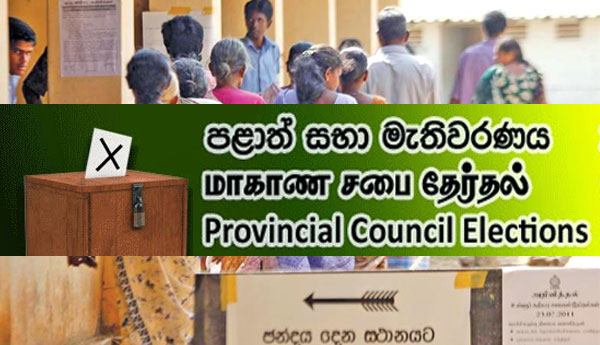
With the deadline to provide the names of the nominated and elected members of the recently concluded Local Government polls by party secretaries expiring midnight today (30), the Election Commission of Sri Lanka will go ahead and issue the gazette with the names that are already in hand, the Daily Mirror learns.

As per the gazette notification No.2424/02 dated 17 /02 /2025 issued by the Minister of Public Administration, Provincial Councils and Local Government, it has been ordered that the term of office of local authorities shall commence by June 02, 2025.

Therefore, the names of all elected and nominated members shall be published in the gazette prior to the commencement of the term of office, thus each party and group is directed to submit the names of all members to the respective Returning Officer on or before May 30, 2025.

However, when contacted a senior official of the commission told the Daily Mirror that although they have received the names of many members, a substantial number of names are yet to be received.

The official said they will however go ahead and issue the gazette with the names of the members, which had already been provided and will go for another gazette notification once the rest of the names are provided by the party and group secretaries.

The official further said it is not practical to wait until they receive all the names as there’s a notable delay in parties and groups forming the respective local authorities with their elected and nominated members.

Posted in Uncategorized

Sri Lanka, U.S. Discuss Tariff Reforms In 2nd Round Of Talks

A high-level discussion on U.S.-imposed tariff policies took place yesterday (28) in Washington, D.C., with the participation of a Sri Lankan delegation led by Deputy Minister of Finance and Economic Stabilization, Harshana Suriyapperuma.

The meeting was held at the invitation of the Office of the United States Trade Representative (USTR) and focused on strengthening bilateral trade relations between the two nations.

The dialogue is part of ongoing efforts to address tariff-related concerns and explore opportunities for deeper economic cooperation.

First Round Talks:

On 25th April, the President’s Media Division said that Sri Lanka and the United States of America are expected to sign a trade agreement soon, following productive discussions in Washington, D.C.

The President’s Media Division said that on April 22, 2025, a Sri Lankan delegation met with Jamieson Greer, the US Trade Representative, to hand over the original documents of the previously submitted documents, as directed by President and Finance Minister Anura Kumara Dissanayake.

During the meeting, the delegation briefed Ambassador Greer on the measures taken by the Sri Lankan government to address past challenges and prepare for future ones, aiming to fully restore the economy.

They highlighted Sri Lanka’s commitment to reducing the trade deficit and minimizing both tariff and non-tariff barriers in collaboration with the US government.

According to the President’s Media Division Ambassador Greer had appreciated Sri Lanka’s proposals and expressed optimism about quickly reaching an agreement to ensure fair and impartial trade relations between the two countries.

US Tariffs On Sri Lanka:

On 2nd April, US President Donald Trump announced the imposition of sweeping tariffs on some of the country’s largest trading partners.

President Trump highlighted that Sri Lanka imposes an 88% tariff on goods imported from the United States. In response, the executive decision stipulates that the United States will impose a 44% tariff on goods imported from Sri Lanka.

Days later, President Donald Trump announced a 90-day pause for countries hit by higher US tariffs.

Trump said he was authorising a universal “lowered reciprocal tariff of 10%” as negotiations continued.

Govt revokes controversial Northern Land Gazette By Sulochana Ramiah Mohan

President Anura Kumara Dissanayake and the Cabinet of Ministers yesterday (28) officially revoked the Gazette Notification issued on 28 March 2025, under Section 4 of the Land Settlement Ordinance, which had triggered widespread fear and resistance across Sri Lanka’s Northern Province.

Ilankai Tamil Arasu Kachchi (ITAK) Spokesman M.A. Sumanthiran welcomed the decision, stating, “We extend our sincere thanks to President Anura Kumara Dissanayake and the Cabinet of Ministers for revoking the Gazette, which had caused deep concern among the people of the North.”

The Gazette had required residents in Jaffna, Kilinochchi, Mannar, and Mullaitivu districts to submit land ownership documents within three months. Failure to do so would have resulted in the land being declared State property—an alarming prospect for many war-affected and displaced communities still struggling to reclaim their ancestral lands.

This move by the Government follows growing public outrage, legal concerns, and a significant political setback in the North, where Tamil voters overwhelmingly rejected the ruling NPP during the recent Local Government Elections, citing the Gazette as a key reason for their protest vote. During the LG Polls campaign, Sumanthiran warned the Government, demanding an immediate halt to land acquisition. He said it was contradictory to the NPP’s promises to the Tamils.

At a regional meeting in Kilinochchi, community leaders and civil society representatives called the Gazette “unclear and unjust,” pointing out that many residents were unaware of the circular or lacked access to proper documentation after decades of displacement.

ITAK Spokesman M.A. Sumanthiran emphasised that under Section 5(1) of the Land Settlement Ordinance, any land not claimed within the stipulated timeframe would automatically be declared State land. He criticised the Land Ministry’s letter dated 18 May, which referred only to a “temporary suspension,” arguing that this provided no legal protection for affected communities.

The revocation was formally requested in a letter sent yesterday (28) to the President and Cabinet, who have now acted on that demand, easing tensions in the region. However, activists caution that revoking this Gazette alone is not enough—calling for transparent, community-based processes for land settlement and the immediate restoration of land rights to rightful owners.

The land circular had reignited long-standing concerns about land grabbing, militarisation, and the need for fair resettlement policies in Sri Lanka’s post-war Northern and Eastern provinces.

Withdrawal of military personnel from temple duties praised as positive step

The decision by the government to withdraw military personnel from duties at Buddhist temples has been welcomed as a progressive move by K.W. Janaranjana, Editor-in-Chief of Anidda newspaper.

In a video statement on Anidda’s YouTube channel, Janaranjana emphasised that the state should no longer assign members of the armed forces to temple-related services.

“Following the end of the war, tri-forces personnel were deployed to various activities, including maintenance and support roles at temples. However, it is important to recognise that this arrangement is no longer appropriate,” he said.

He further noted that the military should focus on its core duties related to national security, while religious sites should be managed independently by relevant civilian authorities.

Posted in Uncategorized

‘NEXT’ Shut Down; What’s Next? By Sulochana Ramiah Mohan

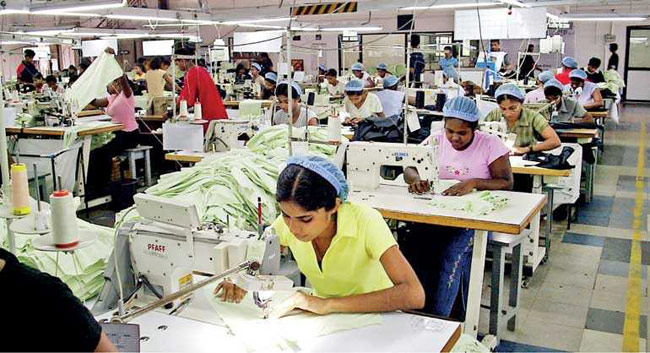
Despite the Sri Lankan apparel industry’s substantial contribution to government revenues, long-standing issues such as low wages, unsafe working conditions for women, and exploitation by manpower agencies continue to plague the sector. The recent closure of NEXT, a UK-based international fashion retailer’s main garment plant — a BOI-approved project that operated for over 30 years since 1994 at the Biyagama Industrial Zone, the biggest plant of the four in that zone — on 19 May 2025, came as a shock, though many industry insiders say it was not entirely unexpected. With 1,416 jobs lost, this unexpected shutdown raises concerns about whether it signals the beginning of a larger crisis in the garment sector.

This is sad news for many, especially the workers. The revenue generated by this single plant was substantial, and it consistently paid reasonable salaries and incentives over the years. Female workers are in a state of shock, having lost not only their livelihoods but also their dignity as employees of a renowned international brand. While the Government claims it was unaware of the closure, insiders and the Board of Investment (BOI) seemed to have anticipated it. Yet, the question remains: what precautions or alternatives were taken to prevent this outcome?

US President announced radical changes in his second term

The closure comes amid uncertainty over US President Donald Trump’s proposed tariff hikes on Sri Lankan exports —measures that would disproportionately impact the apparel sector. Sri Lanka has been hit with a huge 44 per cent tariff hike. President Anura Dissanayake’s Janatha Vimukthi Peramuna/National People’s Power (JVP/NPP) Government and Sri Lanka’s ruling elite were shocked. They breathed a sigh of relief after the announcement of Trump’s pause, but remain deeply concerned about what will happen next. The first round of talks within the 90-day grace period has taken place, but much more negotiation is needed. Can the government navigate this challenge and find a compromise with the US? The fate of NEXT may be just the beginning, as other industries could also face similar risks if the tariffs take effect. With the looming threat of tariff hikes from the Trump administration, the government has been criticised for failing to adequately assess how apparel industries would cope with the challenge. Although talks were held with several stakeholders and a government delegation even traveled to the US to meet with the Trump administration, questions remain: can the government effectively challenge companies like NEXT?

Acting Minister of Labour Mahinda Jayasinghe in Parliament said that discussions are expected with various stakeholders regarding the closure of the NEXT garment factory in Katunayake’s Free Trade Zone. “Out of 2,825 employees working across four units of the company, 1,416 will lose their jobs, while 1,409 will retain theirs,” he said. He said the Labour Department must be informed prior to any factory closure. However, the NEXT garment factory did not notify the department of its decision until 20 May. “Once informed, the Labour Ministry and Labour Department immediately began investigating the matter. We intend to meet with the company’s management, trade unions, and the Board of Investment (BOI) for further discussions,” Jayasinghe added. But the NEXT garment has already announced its plan to compensate its workers. When NEXT knew Trump tariff is going to hit hard they made the first move but the government is expecting the UK brand to go ‘soft’ about it. It was reported that employees were informed of the sudden closure via a WhatsApp message on Monday night, with operations ceasing immediately.

Operational costs and ongoing financial losses

In a statement, the factory — operating for nearly 40 years — cited rising operational costs and ongoing financial losses as reasons for the closure. The company also offered a severance package including two months’ salary to affected workers.

Speaking to Dhammika Fernando, Chairman of the Free Trade Zone Manufacturers’ Association, he said several ground realities contributed to the closure of the NEXT factory. He criticised the company’s poor management, saying the leadership let the business down. He also pointed out that the workforce was ageing, with little infusion of young talent. The older employees clung to their jobs, leaving no room for the factory to grow. Additionally, the management team was top-heavy with executives drawing high salaries that the business could not sustain. Fernando also blamed trade unions, saying they held the apparel industry to ransom by demanding higher wages and perks, leaving little room for the industry’s development. “The whole issue is mismanagement, and the trade unions are making things worse for both the workers and the industry,” he added.

Members of the Joint Apparel Association Forum Sri Lanka (JAAFSL) also noted that, while NEXT cited high production costs as the primary reason for the plant’s closure, internal sources reveal deeper issues behind the company’s financial losses.

These include alleged malpractices involving manpower agencies exploiting workers, damaged garments smuggled out of the company for sale. Additionally, there was a mafia operating in the collection of food waste, while workers were provided with half priced meals. Some workers were reportedly paid to facilitate this scheme. Insiders further described the overall management as a significant letdown, which compounded the challenges the company faced.

In an official notice released on 19 May, the company stated: “After much careful consideration, we are very sad to announce the immediate closure of the NEXT Manufacturing Katunayake Production Plant, Sri Lanka. This has been a very difficult decision for the company and has only been taken after exploring all alternative options.” The company cited high operational costs as the primary reason behind the closure. “At the heart of this decision is the increasingly high operating cost of the Katunayake Manufacturing Plant. For some years now, the plant has been unprofitable, and despite our considerable efforts to rectify the situation, we have been unable to make the factory economically viable. Recently, it has become clear that there is no prospect of this changing,” the statement added.

Other operations will continue

Despite the closure of the Katunayake Production Plant, NEXT confirmed that its other Sri Lankan operations will continue. The Embellishment and Product Development Plants in the Katunayake Free Trade Zone will remain operational, albeit with a reduced workforce. Additionally, the company’s manufacturing units in Andigama and Nawagaththegama — NMA 2, NMA 3, and the NMA Cutting unit — will continue running without interruption. NEXT’s sourcing office in Colombo will also remain unaffected by these changes.

Over the job losses, the company acknowledged the impact, calling it a “deeply regrettable consequence.” A breakdown of workforce reductions in other units was also provided to give a broader context of the situation across its Sri Lankan operations.

The closure of NEXT’s Katunayake Production Plant is not just a corporate decision — it is a critical moment for the apparel sector in Sri Lanka, emphasising the growing challenges faced by international manufacturing in the country. The notice further stated, “We would like to reassure our remaining colleagues that no further redundancies in Sri Lanka are planned or foreseen by NEXT Manufacturing.” This assurance comes as the company attempts to stabilise its remaining operations in the country.

NEXT also announced measures to support those impacted by the closure. The company will actively assist affected employees in finding alternative employment opportunities by reaching out to other local production facilities.

Acknowledging its long-standing presence in Sri Lanka, NEXT Manufacturing has committed to providing an enhanced severance package beyond the statutory requirements. “In recognition of NEXT Manufacturing’s history in Sri Lanka, the Company intends to meaningfully enhance the statutory severance package it will pay to those made redundant, subject to an agreement being reached,” the notice said.

TEWA benefits

All employees affected by the closure will receive a minimum of two months’ salary in addition to their legal entitlements. The company has also shared a table outlining the formula used to calculate TEWA (Termination of Employment of Workmen Act) benefits, based on years of service. An additional ex-gratia payment has been proposed for each service band. It was noted that TEWA payments will be capped at 2.5 million Sri Lankan Rupees per employee.

The notice further stated that, in addition to the severance amounts outlined earlier, all departing employees will receive several additional payments. These include full salary up to the last working day of May 2025, with no obligation to report to work during the remainder of the month. This payment will be made on the regular salary dates. Employees will also receive all outstanding holiday pay, any applicable production and attendance bonuses, and full gratuity entitlements. The company noted that in the coming days, affected employees will be informed individually about their status, along with details of the formal exit process and the schedule for payments. Concluding the notice on a personal note, a senior official expressed deep regret over the decision, thanking the Katunayake employees for their years of service and extending best wishes for their future.

There are three more units of the NEXT are operating outside the BoI zone of Katunayake but will that too eventually shut down?

Had the government made strategic arrangements and assurance with NEXT to address the challenges posed by the Trump tariffs and other issues, this business might have been saved. On the other hand, NEXT should have made critical decisions to restructure its management and steer the company in the right direction.