President Anura Kumara Dissanayake and his National People’s Power government are struggling to build a more stable, inclusive political culture in Sri Lanka. A mix of bold action and political skill will be needed. Support from the UN Human Rights Council can help.
The election of President Anura Kumara Dissanayake in September 2024, and the landslide parliamentary victory of his National People’s Power (NPP) alliance two months later, ignited hope throughout Sri Lanka. Elected on a mandate to eliminate the widely reported large-scale corruption, nepotism and abuse of power that contributed to the country’s economic collapse in 2022, the NPP appealed to voters in large part because it lacked experience in office and was distant from the elite-dominated parties that had ruled Sri Lanka since independence in 1948. Among their more soaring goals, Dissanayake and the NPP pledged to fight impunity and establish a “new political culture”. This culture would, among other things, end the divisive ethno-religious politics that led to 30 years of war and foster peaceful coexistence among all Sri Lankans – Tamils, Muslims and the Sinhalese Buddhist majority. The government’s first year in power, however, has been something of a letdown for constituencies that hoped to see concrete moves toward this promised new culture. Disappointment is particularly strong among Tamils and Muslims living in the northern and eastern provinces, who see little tangible progress on the confidence-building measures Dissanayake and the NPP promised.
As a practical and political matter, the new government was bound to face enormous challenges in building the politics of “national unity” its leaders promised. Sixteen years after a civil war with the Tamil separatist Liberation Tigers of Tamil Eelam came to a catastrophically bloody end in May 2009, successive Sri Lankan governments have done little to address the legacy and causes of nearly three decades of ethnic strife. During that period, the island nation’s conflicts generally pitted Sinhalese Buddhists against the Tamil minority, with Muslims caught in the crossfire. Mass graves are still regularly discovered around the island, though predominantly in the Tamil-majority northern province. Tens of thousands of missing or forcibly disappeared people remain unaccounted for, while the many atrocities committed during the war, especially in its final months, have gone without proper investigation. On top of a decades-long military occupation of large tracts of privately owned land in Tamil areas, recent years have seen government agencies and Buddhist monks seize control of dozens of locations owned or traditionally used by Tamils and Muslims, while the virtually all-Sinhala military retains a strong presence throughout the Tamil-speaking north and east, distorting and weakening the local economy.
Meanwhile, the underlying issues that led to armed conflict remain largely unchanged. Previous governments’ attempts to craft constitutional reforms that could provide a “political solution” for historical drivers of ethnic conflict have repeatedly been abandoned, largely due to resistance from Sinhala and Buddhist nationalists, who fear that the island will be divided and the Sinhala majority’s religion and culture weakened. The constitution’s thirteenth amendment – which in 1987 promised limited autonomy to partially meet Tamil demands for a federal power-sharing system – has never been fully implemented.
To nurture a new, more inclusive political culture, Dissanayake and the NPP will need to make difficult choices. In particular, they will need to begin distancing themselves from the Sinhala majoritarianism that has traditionally been a core tenet of the NPP’s main alliance partner, the Janatha Vimukthi Peramuna (JVP, or People’s Liberation Front). Doing so will require moves – on the return of seized land, the repeal of repressive counter-terrorism legislation and the establishment of accountability for wartime rights violations – that will invariably face pushback from Sinhala nationalism’s two strongest constituencies: the Buddhist clergy and the large, politically powerful military and intelligence agencies. But given the NPP’s electoral mandate – and the JVP’s own history of revolutionary militancy and suffering in the late 1980s – the current government is unusually well placed to frame these issues as symptoms of political dysfunction from which all Sri Lankans have suffered.
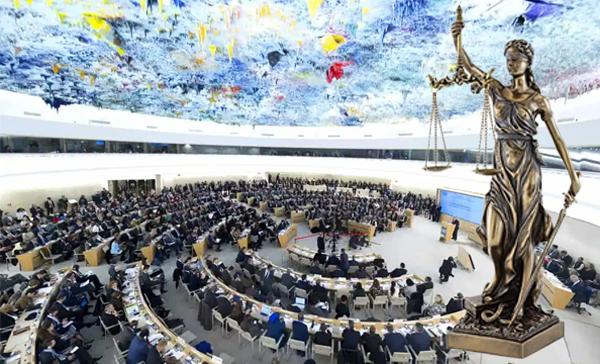
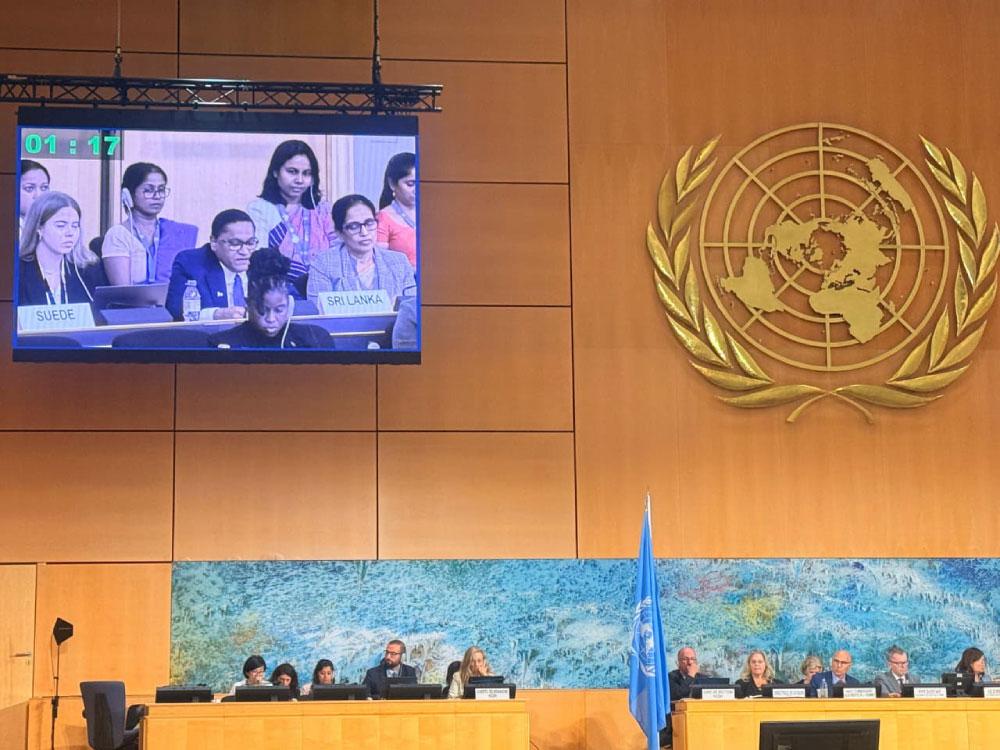
Against this backdrop, continued international engagement remains important. The Sri Lanka Core Group of member states on the UN Human Rights Council (UNHRC) has expressed concern at the government’s “limited progress in fulfilling its commitments on human rights”. The Core Group, which since 2012 has drafted and promoted UNHRC resolutions that encourage post-war justice and reconciliation in Sri Lanka, has begun discussions with Colombo and Council members about a new resolution to replace the expiring old one. This matter will be considered at the next Council session, which begins on 8 September. The Council’s long-term engagement on Sri Lanka has contributed to the modest improvements Sri Lanka has seen in its human rights situation since the war ended. The Council should approve a new resolution that continues this work.
The Ambiguities of “National Unity”
In a notable achievement for a party rooted in the Sinhala-speaking south, the November 2024 parliamentary elections saw the NPP win the most votes in the Tamil-majority Jaffna and Vanni districts and the majority of parliamentary seats in the north and east. Dissanayake and other NPP leaders have regularly celebrated the geographic and ethnic diversity of the party’s constituents. Data suggest that the NPP’s relative success among Tamil voters resulted as much from frustration with established Tamil parties, and fragmentation of the Tamil nationalist vote, as from enthusiasm for the NPP. Nonetheless, that the NPP actively sought and received considerable support from this constituency marked a potentially important shift in how Sri Lanka’s ethnic and religious differences are framed and managed politically. The NPP’s increased outreach in the north and active courting of Tamil and Muslim votes included promises to return military-held land, release Tamils imprisoned for terrorism-related offences, repeal the Prevention of Terrorism Act and boost economic development in the north and east.
These appeals were underpinned by a rhetorical shift away from the JVP’s traditionally Sinhala nationalist vision of a unitary state and nation. Dissanayake and the NPP have promised, instead, a form of “national unity” that “respects and celebrates the diversity of its people with no division or discrimination based on race, religion, class and caste”. Before and after his election, Dissanayake has regularly rejected the established practice among Sri Lankan political parties of “creating mutual suspicion and mistrust … between ethnicities … for the sake of obtaining and maintaining power”. Such statements gained credibility from the JVP and NPP’s defence of Muslims during the campaign of hate speech and violence organised by militant Buddhist nationalist groups, with state backing, from 2012 to 2020.
To institutionalise a more inclusive vision of equal citizenship and national unity, the NPP’s election manifesto promised a new constitution that would “guarantee … the devolution of political and administrative power to every local government, district and province”. Such changes would still fall short of Tamil nationalist demands for federalism or even stronger forms of self-rule in those parts of the north east where Tamils have been the overwhelming majority for centuries. Nonetheless, the NPP’s two-thirds majority opened at least the possibility of legal and constitutional reforms that could grant more power to Tamil-majority areas. Despite that, the government has neither started institutional reforms nor announced plans for long-delayed elections to provincial councils.
These delays contribute to worries that the NPP’s politics of “national unity” may prove in practice to be little different from traditional Sinhala majoritarianism. Muslim and Tamil analysts, for their part, point out that the cabinet has no Muslims and just two Tamils. They also note that a key presidential task force was established with no Muslim or Tamil representation. Concerns appear to be strengthened by post-election remarks from the powerful JVP general secretary, Tilvin Silva. Silva hailed the NPP’s victory as marking the birth of “the politics of the general public”, defined by its rejection of “Tamil and Muslim nationalism” as well as Sinhala Buddhist nationalism. Silva’s remarks have led some Tamil and Muslim constituents to worry that he envisages a future where overt identity politics have been defused, but the cultural hegemony of the majority remains quietly dominant.
The new government did set something of a new tone in the way that it handled the annual Remembrance Day (Maaveerar Naal, or Heroes Day, in Tamil) commemorations, held on 27 November 2024. Unlike in previous years, police did not obstruct the large crowds who gathered at former Tamil Tiger cemeteries to remember Tamils who died in the struggle for a separate state. Some of the good-will gained from the more relaxed approach was lost, however, when police later questioned a number of Tamil organisers of the gatherings, continuing the established practice of surveillance and intimidation of Tamil journalists and protest leaders in the north and east. State pressure remains particularly intense on the groups of mothers and other relatives demanding information about the fate of their disappeared family members, many of whom were last seen in military custody.
Ending security forces’ surveillance and harassment is a minimal but essential condition if the government is to transform its three existing “transitional justice” offices – the Office on Missing Persons, Office for Reparations, and Office of National Unity and Reconciliation – into agencies that can win the support of affected communities. All three offices were established in 2016 by the government of President Maitripala Sirisena under the terms of UNHRC resolution 30/1 on reconciliation and accountability, but they continue to be regarded, especially by families of the disappeared and other rights campaigners, as ineffective and possibly fatally flawed.
Land, Development, the Military and Monks
The NPP’s pledges to foster national unity will start to ring hollow unless it begins to quickly deliver on its promises to address the practical needs of north-eastern Tamils and Muslims.
Recognising the central role that ownership and control of land has played in Sri Lanka’s ethnic conflicts, as well as its pivotal role in job creation, Dissanayake has repeatedly promised to expedite the return of military-occupied land in the north and east to its owners and to fast-track economic development of the long-deprived region. Since Dissanayake’s election in September 2024, however, the government has yet to go beyond initial symbolic moves – opening roads closed by the military and returning small parcels of land. Many in the north are disappointed. It is no mystery why the NPP has failed to do more sooner. The return of more substantial amounts of land and the closure of military-run farms and businesses will require insisting that the politically powerful military accept a smaller footprint. The new government has yet to indicate that it is willing to push in this direction – though its decision to continue its predecessor’s slow but important reduction of troop numbers is encouraging.
Of urgent concern for many north-eastern Tamils and Muslims are the dozens of locations where they have recently lost access to land they had been either cultivating or using for worship. The seizures have been undertaken either by state agencies, in the name of environmental concerns, or by Buddhist monks, often with military or police backing, in the name of restoring what they argue is the lost Buddhist heritage of the north and east. Since the war ended in 2009, scores of Buddhist shrines and temples have been built in areas of the north east whose population is almost entirely Tamil or Muslim. More are under construction. In a number of high-profile cases, police and other state officials have refused to carry out court orders to reverse the seizures of land.
This situation highlights a core challenge for the government: to reverse the encroachment on Tamil and Muslim lands, it must do more than simply not exploit religious and ethnic differences for political gain. It will need to adopt a more active stance of preventing, and slowly rolling back, efforts by sections of the state and politically influential Buddhist organisations to impose the majority culture on other communities. But doing so without provoking a nationalist, possibly violent, backlash – of the sort Sri Lanka has seen before – will require considerable political skill.
The Challenge of Accountability
In a 25 February speech to the UNHRC, Foreign Minister Vijaya Herath announced that the government intended to establish a truth and reconciliation commission “empowered to investigate acts of violence caused by racism and religious extremism”. For its supporters, such a commission would offer a chance for victims’ families, and the country as a whole, to learn the truth of what happened to the thousands still missing and many more killed, as well as for the state to acknowledge its role in the brutalisation of its own citizens, including through torture and sexual violence. A commission was first promised at the UNHRC in 2015. Then-President Ranil Wickremesinghe presented a draft truth and reconciliation law to parliament in 2024, but it was never debated. The initiative was criticised by a broad spectrum of Sri Lankan civil society, which demanded that any such law be preceded by reforms to build confidence in the government’s seriousness and good faith and to provide witnesses and survivors the safety needed to speak freely about violence by state forces and Tamil armed groups.
With the NPP government reintroducing the truth and reconciliation commission concept, critics are once again expressing concerns that a commission will substitute for, and weaken future chances of, criminal accountability for the well-documented violations of international law during and after the civil war. Since the war’s end in 2009, impunity for military abuses has been complete. One reason is the enormous political challenges prosecutions would pose for any government, dependent as all inevitably are on support from Sinhala voters, who make up three quarters of the population. The NPP’s election manifesto promised to investigate and ensure that justice is served in connection with past “political assassinations, disappearances and assaults” in all areas including the north and east. But during his campaign, Dissanayake was also careful to calibrate his message with respect to accountability. He announced that his government would seek the truth about war-related violations but had no plans to punish anyone.
For many Tamils, the lack of justice for war-related atrocities and the refusal of the state even to acknowledge such crimes is its own injustice, one that validates their longstanding call for investigations and prosecutions by international courts. The UN High Commissioner for Human Rights has consistently argued that so long as the Sri Lankan state fails to establish “accountability mechanisms that are credible and have the trust and confidence of victims”, there will be justified demands for “assistance at the international level”.
In the absence of a government commitment to war-related justice … [the UN’s Sri Lanka Accountability Project’s] work fills a key gap.
The most important form of international support for accountability is the UN’s Sri Lanka Accountability Project (OSLAP). First mandated by the Human Rights Council in 2021, the project has been gathering, preserving and analysing evidence of serious rights violations. It is reportedly making its files available to prosecutors considering universal jurisdiction cases. Successive Sri Lankan governments, including the NPP in March, have, perhaps not surprisingly, refused to engage with OSLAP, arguing that it is neither needed nor legitimate. In the absence of a government commitment to war-related justice, however, OSLAP’s work fills a key gap. It should have its mandate extended by the Human Rights Council.
Despite its rejection of OSLAP and resistance to other forms of international justice, the NPP is in some ways better placed than its predecessors to build cross-ethnic support for at least limited accountability for war-related crimes. Initial, and potentially significant, steps toward honouring its electoral mandate to rebuild the rule of law have included arrests in a number of the “emblematic cases” of abductions and political killings – including of prominent Sinhala journalists – that occurred during Mahinda Rajapaksa’s presidency from 2005 to 2015. Some of the crimes were allegedly carried out by units of military intelligence. Successful prosecutions in these cases could yet produce additional evidence of military abuses and encourage greater openness among Sinhalese – who remain broadly supportive of the military – for credible investigations into at least some wartime atrocities.
Crucial to making this case is to bring out the ways in which the machine of extrajudicial murder has targeted Sinhalese and Tamils (and, to a lesser degree, Muslims) alike – and could someday do so again. Despite the JVP’s strong Sinhala nationalism and support for a military victory over the Tamil Tigers, there are signs that the party’s experience of Sri Lanka’s other “dirty war” – when tens of thousands were killed from 1987 to 1990 in brutal intra-Sinhalese violence between JVP militants and state security forces and death squads – could increase acceptance of the value of war-related accountability.
This possibility was glimpsed during April’s special parliamentary debate on a previously unpublished government report into the so-called Batalanda torture centre run by the government in 1989-1990. Minister and senior JVP leader Bimal Rathnayake told parliament that “our goal is to bring justice to all victims, not just those related to Batalanda” but also those who perished in “the massacres that occurred in the north from both sides”. Ratnayake’s speech was met with understandable scepticism from Tamils and human rights groups who have seen similar promises by previous governments go unfulfilled. Opposition leaders, in turn, questioned the willingness of an NPP government to investigate, or even acknowledge fully, the many atrocities committed by JVP militants.
Breaking with the Past
Nonetheless, if the government wishes to prove its critics wrong, it has an ideal place to start. Exhumations from recently discovered mass graves around the island offer the government a powerful opportunity to demonstrate its good faith, win increased trust from Tamil victims’ and survivors’ groups, and build greater public support for war-related truth and justice among Sinhalese. Since February, the remains of more than 230 people, including children, have been uncovered in Chemmani, in the northern Jaffna district, close to the site of another mass grave partially excavated in 1999. As with the earlier grave, the victims are believed to have been killed by the army, after it regained the area from the Tamil Tigers in 1996. Court-ordered exhumations at other recently discovered sites – in Kokkuthoduvai, in Mannar and in the port of Colombo – have moved slowly. Numerous other mass graves in southern, Sinhala-majority areas, including the well-known case in Matale, are believed to contain the remains of alleged or actual JVP members disappeared and killed in the late 1980s.
The NPP should seize the chance to break with Sri Lanka’s long history of ineffective and abandoned investigations into mass graves, in part for the opportunity it offers to build a case for how all communities can benefit from a broader process of truth seeking with justice. The government should accept the offers of technical assistance from the UN High Commissioner’s office and invite independent forensic experts – including the UN Special Rapporteur on Extra-Judicial Executions – to monitor and assist all exhumations in the country, including in Matale. International expertise, together with adequate funding, could increase the chances of accurately identifying remains and producing more reliable evidence for judicial processes. It could also strengthen the capacity of the Office on Missing Persons, which has observed a number of mass grave excavations but lacked the political clout or resources needed to push cases to prosecution. Formally consolidating current Chemmani exhumations with those done in 1999 into a single judicial inquiry, as recommended by Tamil legislators, is also essential.
However painful the histories that would emerge from credible exhumations and investigations of mass graves, they offer the government and the country a chance to challenge the culture of impunity while rebuilding trust that the state and the rule of law can serve the needs and respect the rights of all communities. But if no serious effort is made now, by Dissanayake and the NPP, Sri Lanka will have lost another rare opportunity to escape its painful past and craft a more inclusive state and political culture.
Finally, the UN Human Rights Council can support the current fragile opening for truth and reconciliation by approving a new resolution that mandates continued monitoring of the human rights situation by the High Commissioner’s office and extends the important, if limited, work of its accountability project. While Colombo regularly complains about the Council’s monitoring, its long-term engagement on Sri Lanka has nonetheless been an asset to the promotion of rights-respecting governance, however incomplete those aspirations may be, and thus to Sri Lanka’s relative post-war stability. A new resolution will allow it to keep functioning as a focal point for international efforts to encourage Colombo to take up the serious political challenges involved in addressing its legacy of conflict and forging a path toward enduring peace.
Source:www.crisisgroup.org