Despite the Sri Lankan apparel industry’s substantial contribution to government revenues, long-standing issues such as low wages, unsafe working conditions for women, and exploitation by manpower agencies continue to plague the sector. The recent closure of NEXT, a UK-based international fashion retailer’s main garment plant — a BOI-approved project that operated for over 30 years since 1994 at the Biyagama Industrial Zone, the biggest plant of the four in that zone — on 19 May 2025, came as a shock, though many industry insiders say it was not entirely unexpected. With 1,416 jobs lost, this unexpected shutdown raises concerns about whether it signals the beginning of a larger crisis in the garment sector.
This is sad news for many, especially the workers. The revenue generated by this single plant was substantial, and it consistently paid reasonable salaries and incentives over the years. Female workers are in a state of shock, having lost not only their livelihoods but also their dignity as employees of a renowned international brand. While the Government claims it was unaware of the closure, insiders and the Board of Investment (BOI) seemed to have anticipated it. Yet, the question remains: what precautions or alternatives were taken to prevent this outcome?
US President announced radical changes in his second term
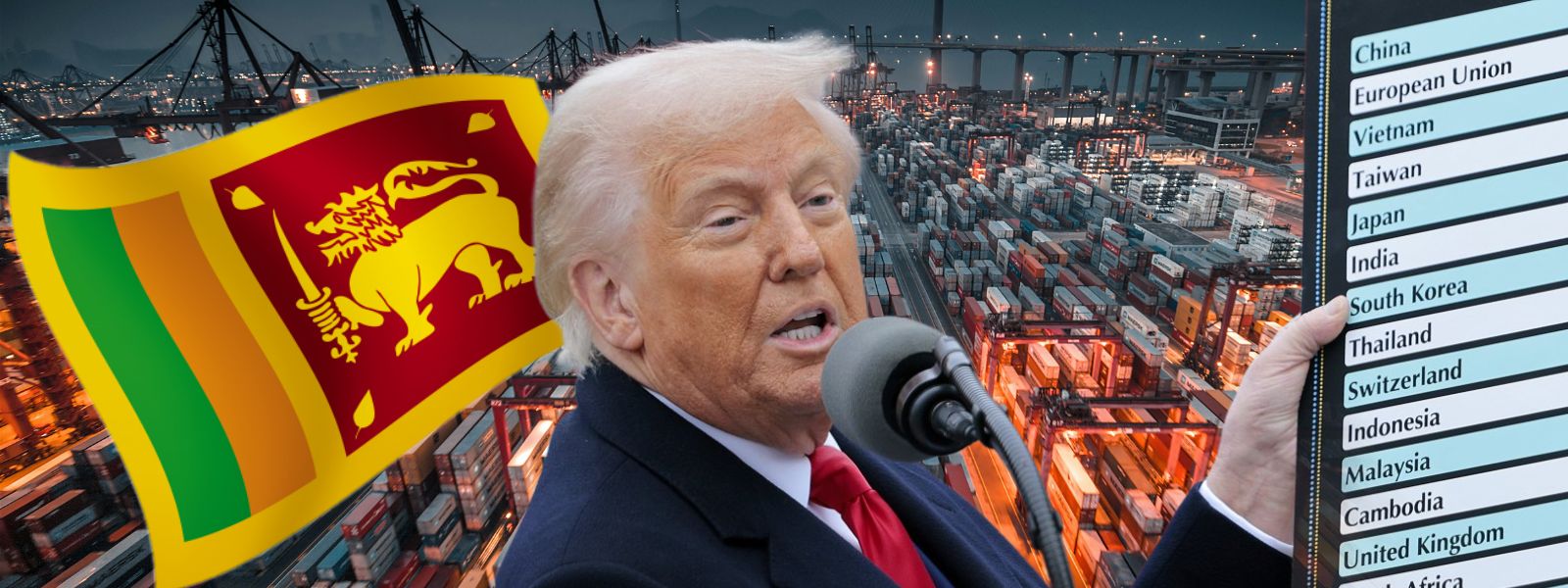
The closure comes amid uncertainty over US President Donald Trump’s proposed tariff hikes on Sri Lankan exports —measures that would disproportionately impact the apparel sector. Sri Lanka has been hit with a huge 44 per cent tariff hike. President Anura Dissanayake’s Janatha Vimukthi Peramuna/National People’s Power (JVP/NPP) Government and Sri Lanka’s ruling elite were shocked. They breathed a sigh of relief after the announcement of Trump’s pause, but remain deeply concerned about what will happen next. The first round of talks within the 90-day grace period has taken place, but much more negotiation is needed. Can the government navigate this challenge and find a compromise with the US? The fate of NEXT may be just the beginning, as other industries could also face similar risks if the tariffs take effect. With the looming threat of tariff hikes from the Trump administration, the government has been criticised for failing to adequately assess how apparel industries would cope with the challenge. Although talks were held with several stakeholders and a government delegation even traveled to the US to meet with the Trump administration, questions remain: can the government effectively challenge companies like NEXT?
Acting Minister of Labour Mahinda Jayasinghe in Parliament said that discussions are expected with various stakeholders regarding the closure of the NEXT garment factory in Katunayake’s Free Trade Zone. “Out of 2,825 employees working across four units of the company, 1,416 will lose their jobs, while 1,409 will retain theirs,” he said. He said the Labour Department must be informed prior to any factory closure. However, the NEXT garment factory did not notify the department of its decision until 20 May. “Once informed, the Labour Ministry and Labour Department immediately began investigating the matter. We intend to meet with the company’s management, trade unions, and the Board of Investment (BOI) for further discussions,” Jayasinghe added. But the NEXT garment has already announced its plan to compensate its workers. When NEXT knew Trump tariff is going to hit hard they made the first move but the government is expecting the UK brand to go ‘soft’ about it. It was reported that employees were informed of the sudden closure via a WhatsApp message on Monday night, with operations ceasing immediately.
Operational costs and ongoing financial losses
In a statement, the factory — operating for nearly 40 years — cited rising operational costs and ongoing financial losses as reasons for the closure. The company also offered a severance package including two months’ salary to affected workers.
Speaking to Dhammika Fernando, Chairman of the Free Trade Zone Manufacturers’ Association, he said several ground realities contributed to the closure of the NEXT factory. He criticised the company’s poor management, saying the leadership let the business down. He also pointed out that the workforce was ageing, with little infusion of young talent. The older employees clung to their jobs, leaving no room for the factory to grow. Additionally, the management team was top-heavy with executives drawing high salaries that the business could not sustain. Fernando also blamed trade unions, saying they held the apparel industry to ransom by demanding higher wages and perks, leaving little room for the industry’s development. “The whole issue is mismanagement, and the trade unions are making things worse for both the workers and the industry,” he added.
Members of the Joint Apparel Association Forum Sri Lanka (JAAFSL) also noted that, while NEXT cited high production costs as the primary reason for the plant’s closure, internal sources reveal deeper issues behind the company’s financial losses.
These include alleged malpractices involving manpower agencies exploiting workers, damaged garments smuggled out of the company for sale. Additionally, there was a mafia operating in the collection of food waste, while workers were provided with half priced meals. Some workers were reportedly paid to facilitate this scheme. Insiders further described the overall management as a significant letdown, which compounded the challenges the company faced.
In an official notice released on 19 May, the company stated: “After much careful consideration, we are very sad to announce the immediate closure of the NEXT Manufacturing Katunayake Production Plant, Sri Lanka. This has been a very difficult decision for the company and has only been taken after exploring all alternative options.” The company cited high operational costs as the primary reason behind the closure. “At the heart of this decision is the increasingly high operating cost of the Katunayake Manufacturing Plant. For some years now, the plant has been unprofitable, and despite our considerable efforts to rectify the situation, we have been unable to make the factory economically viable. Recently, it has become clear that there is no prospect of this changing,” the statement added.
Other operations will continue
Despite the closure of the Katunayake Production Plant, NEXT confirmed that its other Sri Lankan operations will continue. The Embellishment and Product Development Plants in the Katunayake Free Trade Zone will remain operational, albeit with a reduced workforce. Additionally, the company’s manufacturing units in Andigama and Nawagaththegama — NMA 2, NMA 3, and the NMA Cutting unit — will continue running without interruption. NEXT’s sourcing office in Colombo will also remain unaffected by these changes.
Over the job losses, the company acknowledged the impact, calling it a “deeply regrettable consequence.” A breakdown of workforce reductions in other units was also provided to give a broader context of the situation across its Sri Lankan operations.
The closure of NEXT’s Katunayake Production Plant is not just a corporate decision — it is a critical moment for the apparel sector in Sri Lanka, emphasising the growing challenges faced by international manufacturing in the country. The notice further stated, “We would like to reassure our remaining colleagues that no further redundancies in Sri Lanka are planned or foreseen by NEXT Manufacturing.” This assurance comes as the company attempts to stabilise its remaining operations in the country.
NEXT also announced measures to support those impacted by the closure. The company will actively assist affected employees in finding alternative employment opportunities by reaching out to other local production facilities.
Acknowledging its long-standing presence in Sri Lanka, NEXT Manufacturing has committed to providing an enhanced severance package beyond the statutory requirements. “In recognition of NEXT Manufacturing’s history in Sri Lanka, the Company intends to meaningfully enhance the statutory severance package it will pay to those made redundant, subject to an agreement being reached,” the notice said.
TEWA benefits
All employees affected by the closure will receive a minimum of two months’ salary in addition to their legal entitlements. The company has also shared a table outlining the formula used to calculate TEWA (Termination of Employment of Workmen Act) benefits, based on years of service. An additional ex-gratia payment has been proposed for each service band. It was noted that TEWA payments will be capped at 2.5 million Sri Lankan Rupees per employee.
The notice further stated that, in addition to the severance amounts outlined earlier, all departing employees will receive several additional payments. These include full salary up to the last working day of May 2025, with no obligation to report to work during the remainder of the month. This payment will be made on the regular salary dates. Employees will also receive all outstanding holiday pay, any applicable production and attendance bonuses, and full gratuity entitlements. The company noted that in the coming days, affected employees will be informed individually about their status, along with details of the formal exit process and the schedule for payments. Concluding the notice on a personal note, a senior official expressed deep regret over the decision, thanking the Katunayake employees for their years of service and extending best wishes for their future.
There are three more units of the NEXT are operating outside the BoI zone of Katunayake but will that too eventually shut down?
Had the government made strategic arrangements and assurance with NEXT to address the challenges posed by the Trump tariffs and other issues, this business might have been saved. On the other hand, NEXT should have made critical decisions to restructure its management and steer the company in the right direction.