

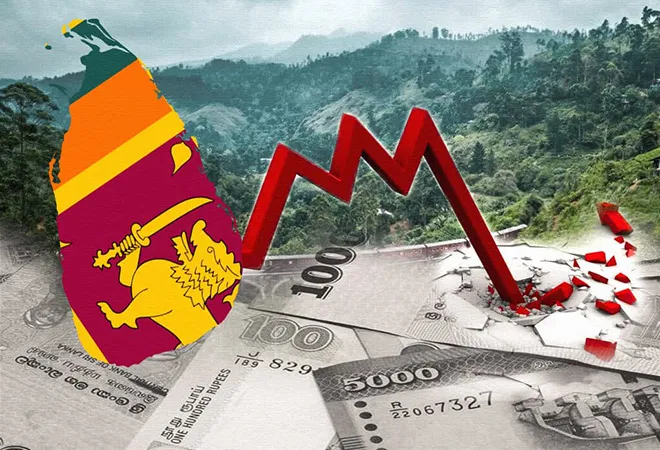
Sri Lanka faces a potentially severe economic hit from the Middle East conflict, with a leading economist warning that the country could lose billions of dollars in remittances, export revenue and tourism income if the fighting continues to escalate.
Prof. Priyanga Dunusinghe, head of the Department of Economics at the University of Colombo, said the stakes for Sri Lanka were particularly high given the country’s deep dependence on the region.
More than one million Sri Lankans work in the Middle East, he noted, accounting for around 70 percent of the country’s migrant labour force.
Remittances from the region total approximately USD 3.5 billion dollars annually, roughly half of Sri Lanka’s total remittance income of USD 7-8 billion dollars each year.
“If this Gulf conflict continues, there is a high risk to foreign inflows to the country,” he said.
The export sector faces additional pressure. Between six and eight percent of Sri Lanka’s exports, including tea, rubber and spices destined for markets such as Saudi Arabia and Qatar, are sold to the Middle East.
Prof. Dunusinghe estimated the potential loss to the export sector at around USD 1.4 billion.
Oil prices compound the concern further. Global crude prices crossed USD 100 per barrel on 08 March for the first time since the Russia-Ukraine war, briefly reaching around USD 115 the same day.
He noted that domestic fuel prices could rise from around Rs. 290 rupees to Rs. 370 per litre if the conflict escalates, driving inflation and significantly increasing Sri Lanka’s import bill.
In the most serious scenario, he observed that declining inflows could threaten the country’s ability to maintain adequate foreign reserves, potentially undermining debt repayments and pushing the economy toward instability.
He warned that without an early resolution to the conflict, the consequences for Sri Lanka could be devastating, and urged the government to take measured action on fuel pricing now rather than wait for the full weight of the crisis to arrive.