

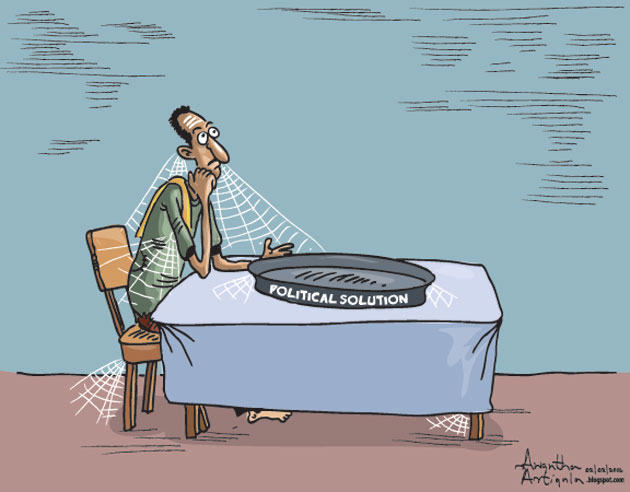
Opposition politicians representing several political parties have called on the government to initiate and actively participate in a national dialogue aimed at drafting a new constitution.
The appeal was made at a discussion on constitutional reform organised by the One Text Initiative, which brought together Members of Parliament and party leaders from across the opposition.
MP Dayasiri Jayasekera said the government appeared to be deliberately avoiding discussions on a new constitution, despite pledges made in its own policy framework. He claimed that the Janatha Vimukthi Peramuna (JVP) had consistently concealed its true ideological position on constitutional reform.
MP Harsha de Silva stressed that government participation was essential to ensure that a new constitution reflected minority perspectives within a predominantly majoritarian political system. He noted that President Anura Kumara Dissanayake and the National People’s Power (NPP) had shown little interest in pursuing constitutional reform, despite commitments made during the last two national elections.
MP Ravi Karunanayake also underscored the importance of the government’s involvement, stating that a durable constitution was necessary for the benefit of future generations.
Former Minister Anura Priyadarshana Yapa said a new constitution should help reduce the gap between the rulers and the people, adding that meaningful reform could not be achieved without the government’s active participation. He observed that the government appeared to be distancing itself from discussions on constitutional reform, despite promises to introduce a new constitution.
Pivithuru Hela Urumaya leader Udaya Gammanpila warned that any constitution drafted to suit the interests of a single political party would fail to gain acceptance. He said Sri Lanka’s political history demonstrated this clearly, pointing out that draft constitutions prepared during the tenures of former Presidents Chandrika Bandaranaike Kumaratunga, Ranil Wickremesinghe, and Gotabaya Rajapaksa were never implemented as they reflected the priorities of individual parties rather than a national consensus.“The present government cannot assume that its ideology represents the ideology of the entire country,” he said.