

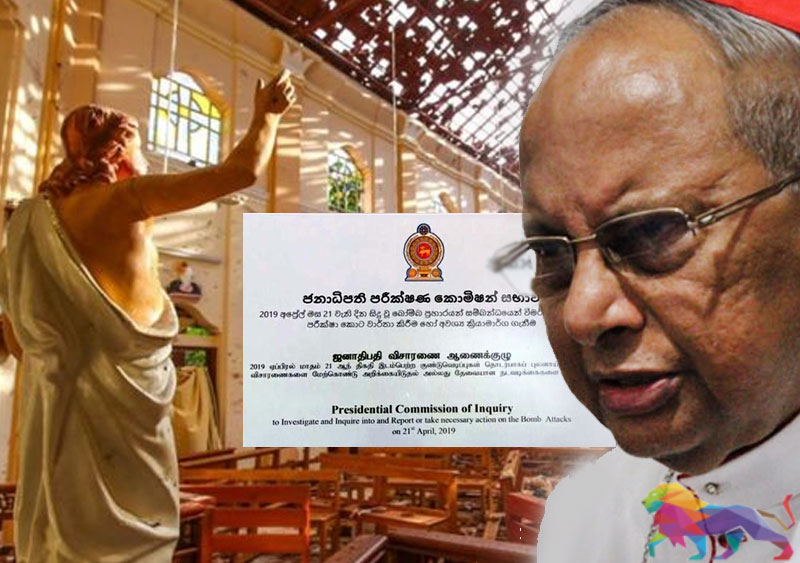
The latest judgment in the Easter Sunday attacks case marks an important step towards accountability, but it cannot be regarded as the end of the search for the truth. Fifteen of the 24 accused tried before the Colombo Permanent Trial-at-Bar were convicted over their involvement in the 2019 Easter Sunday attacks, while nine were acquitted. The Court heard a vast body of evidence during a trial involving 23,270 charges and thousands of witnesses.
The convictions are significant. They establish criminal responsibility against those whom the Court found guilty beyond reasonable doubt. But the central question that has persisted since April 21, 2019 remains. Who planned and directed this atrocity, and who enabled it to happen?
That question cannot be allowed to disappear beneath the weight of a completed trial, though it is a pivotal moment in the quest for justice. The Easter Sunday attacks were not an ordinary criminal act. Suicide bombers struck churches and hotels in a coordinated operation that claimed hundreds of lives (both Sri Lankans and foreigners) and left many more injured and traumatised. Families lost loved ones; survivors continue to live with physical and emotional scars; and an entire country was left questioning how such an attack could have been planned and carried out despite several credible intelligence warnings from India and local sources.
The latest proceedings have established many important facts about those who participated in and supported the terrorist network. But they also underline the need to pursue every remaining lead concerning the wider conspiracy that led to the atrocity.
Indeed, one of those convicted in the latest case, Mohamed Anwar Mohamed Rizkan alias Abu Thariq, told the Court after the verdict that those who are truly responsible for the attacks still remained at large and he was prepared to provide evidence to that effect. That statement, by itself, does not establish the truth of the claim. But if a convicted person is offering evidence that could assist an ongoing investigation, the authorities should determine whether that evidence has any substance and, if so, follow it wherever it leads. There must be no sacred cows in this investigation.
At the same time, the pursuit of accountability must not become a license for mere speculation. The passage of time makes a rigorous, evidence-based investigation even more important as credible evidence could get buried in the sands of time. Every allegation must be tested, every relevant witness heard and every available piece of evidence examined properly. Where the available evidence does not support an allegation, it should also be acknowledged.
The victims deserve a process that is both relentless and fair. Only such an approach can establish responsibility without creating another layer of uncertainty around one of the darkest days in Sri Lanka’s recent history that plunged an entire nation into fear and uncertainty. Fortunately, Church and State authorities were able to prevent a major ethnic conflagration in the immediate aftermath of the terrible tragedy, although a few ugly incidents did take place.
The Government has already taken steps that suggest the investigation is entering territory that had previously remained unresolved. Former Military Intelligence (MI) chief retired Major General (Rtd)Suresh Sallay was arrested in February in connection with the Easter Sunday attacks. Various allegations concerning his role have been reported previously, but they remain matters for the legal process to establish, and Sallay has denied any wrongdoing.
This is precisely why the investigation must be conducted with evidence, impartiality and due process. The objective cannot be to satisfy political expectations or confirm preconceived theories. It must be to establish what really happened.
If there were persons who knew of the impending attacks and failed to act, they must answer for that failure. Courts have already convicted several high-powered figures for that inexcusable negligence. If there were persons who deliberately assisted the suicide bombers and other attackers, they must also face the law. And if evidence establishes that a wider conspiracy existed behind the people who carried out the bombings, those responsible must also be brought before the Courts. Justice for the Easter Sunday attack victims requires nothing less.
There is also a wider lesson here. The country has witnessed too many investigations in which public attention peaks after a tragedy and then fades into oblivion as the years pass. The Easter Sunday attacks cannot become another unresolved chapter in Sri Lanka’s convoluted post-Independence history.
The victims’ kith and kin have waited more than seven years for answers and justice. They do not need political speeches or competing narratives. They need evidence established in Court, the actual perpetrators prosecuted and the truth placed on the record. The recent judgment should therefore be treated not as the closing chapter in this saga, but as another point from which the search can proceed. The Government has repeatedly pledged to establish the truth behind the Easter Sunday attacks. It now has an opportunity and a responsibility to demonstrate that this commitment extends beyond those already convicted for the crime.
Those who carried out the attacks must face justice. Those who facilitated or directed them must face justice. And if there were masterminds who planned, financed, directed or enabled this terrible crime from behind the scenes, they too must be identified and brought before the law. Seven years is already too long for the families who continue to wait in agony. The country owes them the truth.