Conspiracy on to create racial clashes in the south

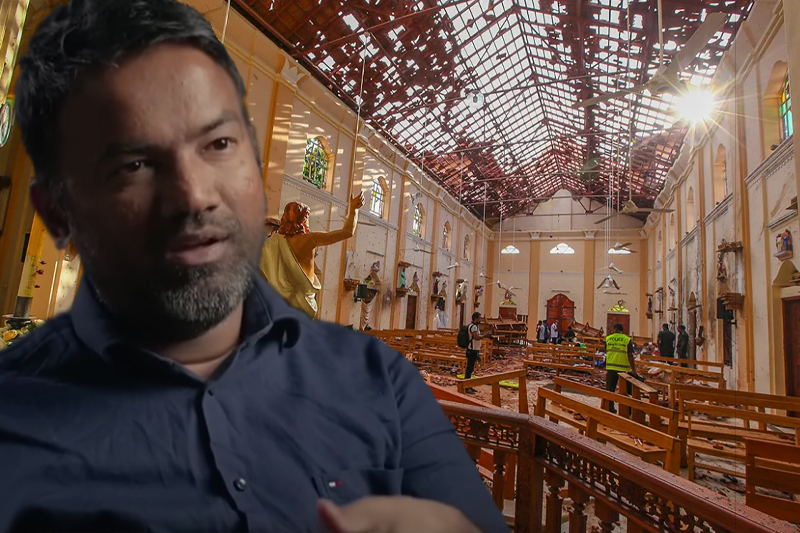
State intelligence has alerted authorities about an ongoing conspiracy to create racial and religious clashes in the south again.

According to government sources, involved in this plot are certain members of the clergy and extremist politicians, who had kept their silence for some time.

They are using social media to spread extremist sentiments, say state intelligence reports.

Abayatissa Thera’s warning

Meanwhile, Prof. Medagoda Abayatissa Thera urges the people to remain vigilant about forces against the country.

Addressing a function in Colombo on 19 November, he said no one should forget the enemy still had its divisive tactics, which could come out in a different form.

What Namal says

In the meantime, SLPP national organizer Namal Rajapaksa, in a post oni X, refers to the withdrawal of an army camp in the north

It is of utmost importance that national security is maintained whether it is in the north or south, he says.

 <a href=

Posted in Uncategorized

NPP sweep is ‘earthquake in Sri Lankan politics’ – Erik Solheim

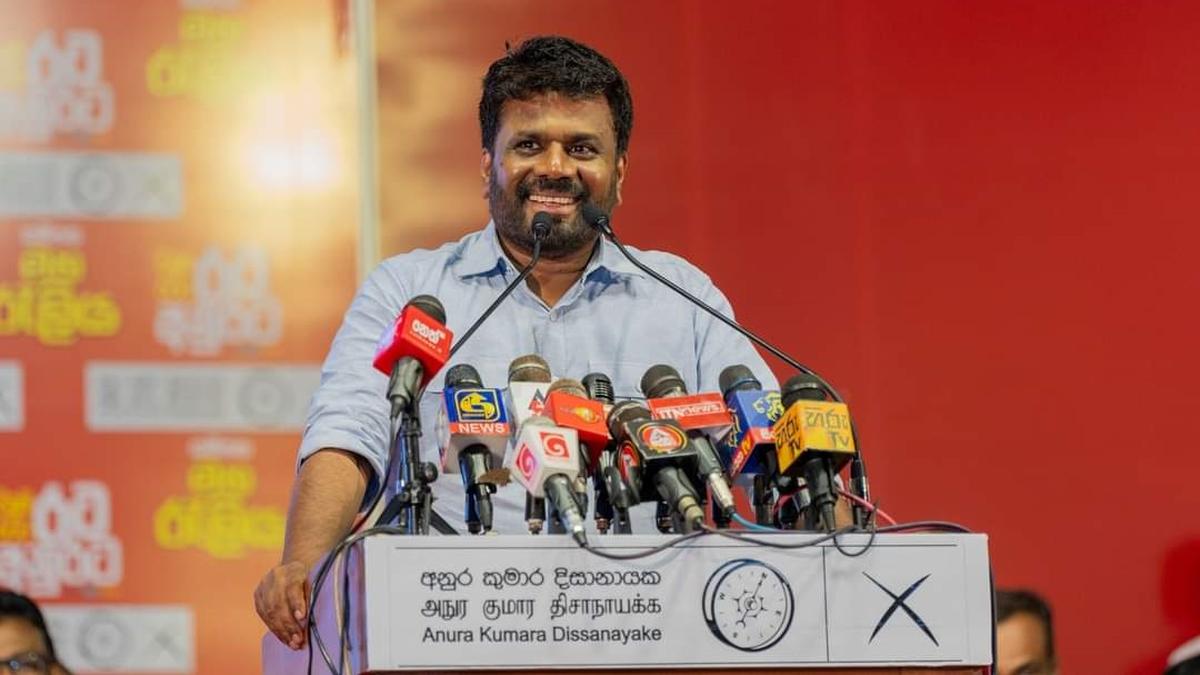
The stunning electoral sweep of the National People’s Power (NPP) led by President Anura Kumara Dissanayake is “an earthquake in Sri Lankan politics”, says Erik Solheim, the former Norwegian peace facilitator in the island nation.

The former diplomat also feels that the strong showing by the NPP in areas populated by Tamils, particularly in the north, marked “a very strong call for a new start in ethnic relations in Sri Lanka”.

Solheim, who has interacted closely with many Sri Lankan leaders, however, warned that while the NPP’s inner core “is for sure non-corrupt, eradicating corruption is a huge task”.

‘Voters angry over corruption’

Solheim, now a committed green activist, piloted the Western-backed peace process which led to a historic pact between Colombo and the Liberation Tigers of Tamil Eelam (LTTE) in early 2002.

But the process collapsed, triggering a renewed war four years later that led to the decimation in 2009 of the LTTE and the annihilation of virtually its entire leadership including founder-leader Velupillai Prabhakaran.

A former leader of the Socialist Left Party in Norway, Solheim remains a keen follower of developments in Sri Lanka, where he once came under attack from sections of the majority Sinhalese community for allegedly being pro-LTTE, a charge he has repeatedly denied.

In an email interview with The Federal from China which he frequently visits, Solheim said he did expect the NPP “to be very successful” in the November 14 elections but “their sweeping victory was even bigger than I (expected)”.

He added: “It is an earthquake in Sri Lankan politics. For the first time, Sri Lankans elected a president and a party from outside the Colombo establishment, the son of a labourer in Anuradhapura.”

He said the voters, particularly the less privileged, were angry over corruption, felt that the traditional elite had not represented them well, and were upset they had to cut meals following the economic collapse of 2022.

Solheim said that while individually many traditional Sri Lankan leaders were very nice, “as a class they have failed Sri Lanka and made the nation underperform compared to say Singapore, Vietnam, Malaysia or Tamil Nadu”.

Is Tamil voting for NPP a rejection of Tamil nationalist politics?

For this, he blamed narrow ethnic appeals that led to a prolonged war – “and no country marches forward in the midst of a civil war”. There was also little ability to formulate a winning economic policy for growth and poverty alleviation.

Solheim said the unexpected scale of electoral support to the NPP – a party otherwise rooted in Sinhalese regions – in Tamil areas was “an astonishing vote of confidence from many Tamils” in the Left-of-Centre party. “I believe it represents a strong desire for peace and normalcy in the north and east. It also comes from a trust that the current NPP is not the same as the JVP (Janatha Vimukti Peramuna, People’s Liberation Front) of the past.”

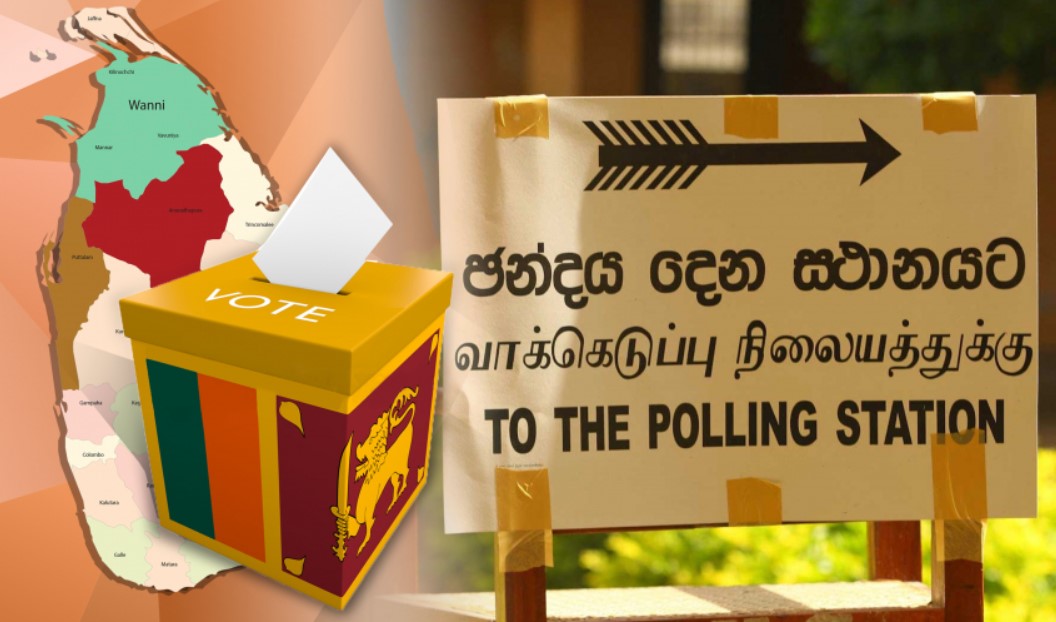
The NPP, whose core strength comes from the leftist JVP, won a whopping 159 seats in the 225-seat parliament, decimating a divided Opposition. It also picked up seats in the Tamil-majority north and the multi-racial eastern province.

Asked if the Tamil voting for the NPP was a rejection of the Tamil nationalist politics, Solheim said: “It is a very strong call for a new start in ethnic relations. If the NPP is able to deliver for Tamils and keep their support, it represents a historic shift.”

The NPP victory in Tamil areas is considered significant as the JVP, the party’s dominant constituent, opposed devolution of power to the Tamil region, stood for a unitary state, and got the once united north-eastern province de-merged into two – all to the chagrin of traditional Tamil politicians.

The Norwegian, a former Undersecretary General in the United Nations (UN), said the new government’s priority would be to negotiate a better deal with the International Monetary Fund (IMF) and to formulate a winning strategy for economic growth with a fairer deal for the poor.

‘Left-wing parties with old-fashioned ideas don’t win elections’

Solheim added that the NPP’s performance – it also won the presidency in September – showed that the Left can win elections if they put Left-wing sectarianism aside and come up with a policy with a broad mass appeal.

“(Dissanayake) embodied this with his inclusive approach. Left-wing parties with old-fashioned ideas don’t win elections,” he said, pointing to the electoral rout of the once powerful Communist Party of India (Marxist) in West Bengal.

“If AKD (Dissanayake) like (President) Lula (da Silva) of Brazil introduces policies for the poor while at the same time working closely with business, the NPP can stay in power for long. It’s too early to tell whether we have experienced a new epoch in Sri Lankan politics or just a change of government for five years. This is the chance for the NPP to establish themselves as a long-term ruling entity with the capacity for a big shift in Sri Lanka,” he said.

Solheim, who often met LTTE leaders including Prabhakaran, reiterated his view that a peace deal could have been found in Sri Lanka in 2002-04. “Unfortunately, we didn’t succeed… The result was the loss of tens of thousands of lives, mainly Tamils but also many Sinhalese. The war of course also brought huge economic hardship to all communities. Sri Lanka was once the shining star in Asia which nearly every other nation wanted to emulate. Now Sri Lanka needs sustained green economic growth for a number of years to catch up with many neighbours.”

Does he, as a Sri Lanka watcher, have a message for President Dissanayake?

“My advice is to focus on economic and ethnic inclusivity. Uplifting the poor is important for all ethnic groups. Added, AKD should respond favourably to the call from Tamils and Muslims for equal rights and self-government,” he said.

Source: The Federal

Sharp split in Muslim vote deprives SLMC, ACMC of seats in some districts

A sharp split in the Muslim vote in many parts of the country at the recently concluded general election has deprived both the Sri Lanka Muslim Congress (SLMC) and the All Ceylon Makkal Congress (ACMC) of parliamentary representation in several districts.

None of the SLMC candidates who contested last week’s general election from the Puttalam, Trincomalee, Kurunegala and Vanni electoral districts on the Samagi Jana Balawegaya (SJB) ticket, were returned.

However, the SLMC, on its own, won a seat each in the Batticaloa and Didamadulla electoral districts where former parliamentarian M.L.A.M. Hisbullah and ex-Eastern Province Minister Meerasahibu Uthumalebbe, respectively, were elected. The SLMC fielded candidates under its ‘Tree’ symbol only in those districts.

SLMC leader Rauf Hakeem, who contested Kandy on the SJB ticket, managed to retain his seat with a paltry 30,883 preferential votes. Among the nine elected on the NPP from the Kandy electoral district were Riyaz Faruk and Mohimed Pasmin who polled 64,043 and 57,716 votes, respectively.

Twelve Kandy District seats were won by the NPP (09), SJB (02) and NDF (01).In terms of the SJB’s agreement with the SLMC, the latter was to get two National List slots, sources said.

“We have proposed our General Secretary Nizam Kariapper as one of the NL nominees. That was for the votes polled by the SLMC in areas outside the Batticaloa and Digamadulla electoral districts,” a well-informed source said.

SLMC leader Hakeem was not immediately available for comment.

The ACMC managed to secure two seats in the Vanni on the SJB ticket while on its own the party, led by former Minister Rishad Bathiudden, won a seat at the Didamadulla electorate. The ACMC contested under the ‘Peacock’ symbol in Digamadulla.

Responding to The Island queries, Bathiudeen said that the unprecedented split in Muslim vote had affected them adversely. The former Commerce and Industries Minister said that they hadn’t been successful in the Puttalam, Anuradhapura, Trincomalee, Kurunegala and Batticaloa districts.

Bathiudden retained his Vanni district seat. The ACMC leader acknowledged that the emergence of the NPP, as a major political force in the Northern and Eastern regions at the general election, had changed the overall dynamics of the contest.

“We expect an NL slot as agreed in the run-up to the election,” Bathiudeen said.

Other sources said that the SLMC and the ACMC won a seat in the Puttalam district by contesting under the Muslim National Alliance (MNA) banner at the 2020 general election. However, that alliance collapsed when Ali Sabry Raheem, elected from MNA, was caught while he was trying to smuggle in a large number of mobile phones and a stock of gold in early 2023. Raheem contested last week’s general election but was not re-elected.

SLMC sources said that several defeated candidates had demanded that they be given the two NL slots at the expense of those listed on the NL. Party leader Hakeem had come under heavy pressure with the rejected candidates and their supporters converging at party headquarters Darussalam. However, the SLMC is of the view that the allocated positions should be given to those listed on the NL.

Chinese Ambassador to Sri Lanka says confused over Jaffna University’s non-cooperation

Chinese Ambassador to Sri Lanka Qi Zhenhong said he is confused over non-cooperation by Sri Lanka’s Northern Jaffna University on education cooperation between the two countries despite active participation from Beijing.

As part of education cooperation, China has been in the process of establishing mutual agreements between Sri Lanka’s local state universities and Chinese counterparts, citing to provide more opportunities to Sri Lankans.

However, the University of Jaffna in the former war zone in the Northern Province of the island nation close to South Indian Tamil Nadu state has been not actively cooperating with the process, the Chinese Ambassador said.

“We don’t know why they are not cooperating to improve the partnership cooperation,” Zhenhong told reporters on Tuesday when he responded to questions raised by journalists at Jaffna Press Club.

“One thing confuses me is that when my colleague communicates with Jaffna University, it seems like the university is not very active in promoting cooperation with the Chinese side. They have something to comprehend,” he said.

“It seems like that university is not very active. This seems like it seems like they are afraid of something, or concede a lot of things. I don’t know why.”

However, Zhenhong said the cooperation with Jaffna University is already in the process and there are some Chinese scholars currently working in a research study in Jaffna University.

“And every year Jaffna students will also go to China for scholarship programs, although the number is not very large for now. But it shows a very good sign between us.”

“I can recall that for the past three consecutive years. The Chinese government has provided the ambassador’s scholarship for students In Jaffna University.”

In 2022, The Chinese Embassy in Sri Lanka donated 4.3 million rupees to support the welfare of the 82 students of the University of Jaffna under the Chinese Ambassador’s Scholarship Scheme .

The Chinese Embassy last month called applications from the needy undergraduate students of University of Jaffna for scholarships targeting students from low income families.

Culture and education cooperation are used by many foreign countries as soft power to make people-to-people connections.

China and India along with Pakistan have been giving a large number of scholarships for Sri Lankans to pursue higher education.

Both China and India also have been giving training for Sri Lanka’s state sector employees as well as military personnel.

Katkolam Army Camp land in North disbanded

In a move under the Army’s restructuring plan, an 8-acre land of the Katkolam Army camp in the north will be returned to civilians, the Army said.

The camp, operated by the 4th Sinha Regiment, is set to be disbanded as part of a broader initiative aimed at returning land occupied by the military to local residents.

The Army is in the process of dismantling the camp’s infrastructure, which is located between Point Pedro and Kodikamam.

Army Spokesman Major General Rasika Kumara said that the decision to remove the camp was made as part of the restructuring efforts.

He said during the security review of the restructuring plan, it has been identified that the camp can be removed.

Meanwhile, the spokesman said that plans are underway to review and return several other lands occupied by the military to the civilian population, although a specific date for the handover has not yet been finalized.

However, the disbandment of the Katkolam camp has not been without controversy. In August of last year, residents of Point Pedro staged a protest against the move, voicing concerns over the potential rise in crime in the area. Protestors, who rallied with placards in front of the Army camp, claimed that the presence of the military had helped reduce crime and played a crucial role in rescuing people during emergencies.

In a similar effort to align with government directives, the Army released 8.6 acres of land in Sittandy, Batticaloa, in 2023, previously used by the 4 Gemunu Watch troops for operational purposes.

Posted in Uncategorized

Asoka Ranwala elected speaker of Sri Lanka’s tenth parliament, Rizvie Salih deputy

National People’s Power (NPP) Gampaha District Member of Parliament Member of Parliament Asoka Sapumal Ranwala has been unanimously appointed as the new Speaker of Parliament.

Dr Mohamed Rizvie Salih was appointed as Deputy Speaker.

His name was proposed by Prime Minister Harini Amarasuriya.

It was seconded by Foreign Minister Vijitha Herath.

There were no other contenders for the post.

Ranwala addressed the forum thereafter

The first sitting of the 10th Parliament of Sri Lanka commenced at 10.00 a.m. this morning (21) with the participation of the newly-elected legislators.

Welcoming the new Speaker, representatives of political parties including PM Harini Amarasuriya, Samagi Jaba Balawegaya (SJB) leader Sajith Premadasa, Sri Lanka Muslim Congress (SLMC) leader Rauf hakeem extended their best wishes to him.

Posted in Uncategorized

Sajith Premadasa named Opposition Leader of 10th Parliament

The Speaker of Parliament Asoka Ranwala announced today (21) that President Anura Kumara Dissanayke has officially recognised Samagi Jana Balawegaya (SJB) MP Sajith Premadasa as the Leader of the Opposition.

The announcement was made during the inaugural session of the 10th Parliament, where the Speaker conveyed the President’s communications to the House.

Following this announcement, proceedings were adjourned until 11:30 a.m., when the President is scheduled to deliver the government’s policy statement to the Parliament.

Ambika Samuel doubles Malayaha representation in Sri Lanka’s parliament

Ambika Samuel, the first Malayaha woman to secure a seat in Sri Lanka’s parliamentary election, says others from her community will follow.

“I am the first to enter politics from here, and my brothers and sisters will undoubtedly follow,” Samuel told reporters.

Samuel was elected to the parliament at the general election held on November 14 from the Badulla district representing the National People’s Power party.

She is the daughter of plantation worker parents, and has been a grassroot level social activist.

“I studied political science for A/Level and was fascinated by Marxism, and I realised what we studied in school and what was practiced in other countries were two different things,” she told an interviewer ahead of the election.

“I was drawn to politics because I wanted to do something for my community. But people like me found it hard to enter politics because there are already established persons from our community.”

After A/Levels, she earned a diploma, and worked for the Education Cooperative Society. “One of the main problems our people have is the language barrier, so I taught Sinhala and English in areas where that was not available.”

Malayahas are Indian workers who arrived during the British period. They were denied formal citizenship after independence through a citizenship law enacted by a national assembly in the style seen in European nation-states, though they were born in the island and some were returned to India.

Citizenship was eventually given through the Grant of Citizenship to Persons of Indian Origin Act, No. 35 of 2003, but the community, many of them plantation workers, still faces many issues.

Samuel, as well as generational politician and former minister Jeevan Thondaman, will now represent the community in the 10th parliament and hopefully ensure quality education, healthcare and many other facilities.

Pilleyan appears before CID

Former State Minister Sivanesathurai Chandrakanthan, also known as Pilleyan, arrived at the Criminal Investigation Department (CID) this morning (20) to provide a statement.

He arrived to provide a statement regarding the controversial Channel 4 documentary on the 2019 Easter Sunday terror attacks in Sri Lanka.

Earlier, the CID launched an investigation into the documentary telecast by Britain’s Channel 4 on the Easter bombings. The documentary, titled ‘Sri Lanka’s Easter Bombings’, was broadcast on September 6, 2023, and features a statement from Muhammad Millar Muhammad Hansir, also known as Azad Hansir Maulana. He was a media presenter and finance secretary for the Tamil Makkal Viduthalai Pulikal (TMVP) party, which was led by Pilleyan.

Police said an external organisation has filed a formal complaint with the Ministry of Public Security regarding the documentary. The complaint was then forwarded to Police Headquarters and handed over to the CID for further investigations.

The CID is probing several issues, including the dissemination of controversial information about the Easter attacks and potential conspiracies outlined in the Penal Code.

The department also presented the matter to the Fort Magistrate’s Court on November 11, according to police.

Pilleyan was initially summoned to the CID on November 12 to provide a statement regarding a new investigation into the Easter Sunday attacks. However, he requested an alternative date for his statement.

Posted in Uncategorized

US Court extends stay for third time on litigation over SL ISBs by Hamilton Reserve Bank

The US District Court for the Southern District of New York has recently granted Sri Lanka’s motion to extend the stay of litigation involving the nation’s defaulted international sovereign bonds (ISBs) until the end of this month.

This decision marks the third extension in the high-stakes legal case brought against the Democratic Socialist Republic of Sri Lanka by Hamilton Reserve Bank Ltd., which claims over $ 240 million in unpaid bonds. The litigation stems from Sri Lanka’s financial default in 2022, a direct result of the economic turmoil that has engulfed the island nation in recent years.

Sri Lanka, grappling with one of its worst economic crises in history, defaulted on its ISBs in May 2022. This marked a significant blow to the country’s financial stability and reputation on the global stage.

Since then, Sri Lanka has been striving to restructure its debt under the framework of a $ 2.9 billion International Monetary Fund (IMF) Extended Fund Facility (EFF). The program aims to provide financial relief in phases over four years, contingent on implementing critical economic reforms and successful agreements with sovereign and private creditors.

In recent months, Sri Lanka has made significant progress in its debt restructuring efforts under former President Ranil Wickremesinghe. The country finalised agreements with sovereign creditors, including the Paris Club members, and secured terms with the Export-Import Bank of China. Additionally, a crucial agreement with private bondholders was reached in September 2024, backed by consultations with the IMF. These developments underscore Sri Lanka’s commitment to resolving its financial obligations while navigating a complex global economic environment. However, challenges persist as the nation works against tight deadlines to implement its restructuring plans.

The Court’s decision to extend the stay highlights its recognition of Sri Lanka’s progress and the critical need to maintain stability during this delicate restructuring process. The stay has been instrumental in allowing the country to finalise its debt agreements without the distraction of ongoing litigation.

Hamilton Reserve Bank, the plaintiff in the case, has raised concerns over the repeated delays, arguing that Sri Lanka might indefinitely seek stays to avoid fulfilling its bond obligations. Nevertheless, the Court emphasised that each extension has been assessed on its own merits, and Sri Lanka’s demonstrated progress has justified the delays.

This legal development coincides with a transformative political shift in Sri Lanka. In September, National People’s Power leader Anura Kumara Dissanayake was elected as the President of Sri Lanka. His party secured a decisive two-thirds majority at the 14 November General Election, marking a turning point in Sri Lanka’s political landscape. This landslide victory reflects a strong mandate from the Sri Lankan public, who have grown increasingly dissatisfied with years of economic mismanagement and political instability under previous administrations. Dissanayake’s leadership promises a new era of reform-oriented governance aimed at rebuilding trust and steering the nation toward stability.

However, with the Court’s decision granting a critical window of opportunity, Sri Lanka now stands at a crossroads. The international spotlight is firmly fixed on its next steps, and the world waits to see whether the island nation can capitalise on this extended timeline to secure a sustainable future. For President Dissanayake and his Government, the coming weeks will be a defining moment in their quest to rebuild a nation shaken by crisis and poised for recovery.

President Dissanayake has assured both domestic and international stakeholders of his administration’s unwavering commitment to the IMF-backed debt restructuring program.

In a statement to the Court, officials confirmed that the Government would uphold the program’s targets and accelerate the implementation of the restructuring plan. This assurance seeks to address concerns raised by creditors and observers that political changes might derail Sri Lanka’s fragile recovery process. Dissanayake’s administration appears poised to leverage its electoral mandate to push through critical reforms, although balancing the competing demands of creditors and the public remains a daunting task.

The Parliamentary Election victory has fortified the Government’s ability to implement reforms, providing a semblance of political stability amid economic uncertainty. However, Sri Lanka’s road to recovery is fraught with challenges. The Government must navigate the intricacies of international negotiations while addressing domestic economic woes, including high inflation, unemployment, and public discontent over austerity measures. The delicate interplay of economic recovery and political reform will determine the success of Sri Lanka’s efforts to emerge from its multifaceted crisis.

While the US Court’s ruling provides a temporary reprieve for Sri Lanka, it also underscores the urgency of swift and decisive action in the coming weeks. The stay extension grants the nation additional time to finalise and launch its formal bond exchange offer, a critical step in its debt restructuring plan.

Citigroup Global Markets Inc. has been appointed to oversee the execution of this complex process, which includes legal documentation, consent solicitation, and the formal exchange of bonds. The Government has indicated that this process should be completed by the end of the year, aligning with the extended timeline granted by the court.

The international community has largely supported Sri Lanka’s efforts. Members of the Paris Club, including France, Canada, and the United Kingdom, have commended the country’s progress and advocated for the continuation of the stay to facilitate ongoing negotiations.

The United States has also expressed its support through multiple Statements of Interest, underscoring the importance of a stable resolution to Sri Lanka’s debt crisis. This international backing has been crucial in enabling Sri Lanka to navigate the complexities of its restructuring process while maintaining confidence among creditors.

The stakes remain high as Sri Lanka races against the clock to implement its restructuring plan. The outcome of these efforts will not only shape the nation’s financial future but also influence its political trajectory under President Dissanayake’s leadership. The successful completion of the debt restructuring program would provide much-needed relief to the country’s economy, potentially paving the way for renewed investment and growth.

However, failure to meet these objectives could exacerbate existing challenges and undermine public confidence in the new administration.