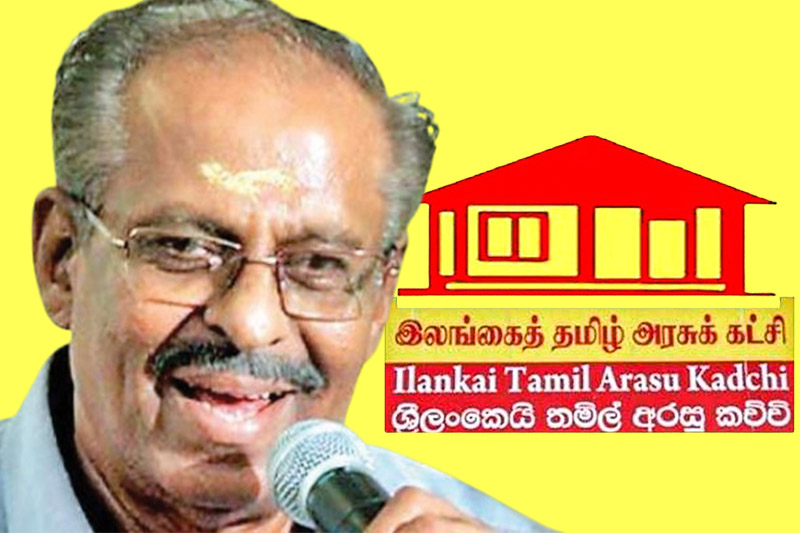
Veteran Tamil political leader Somasundaram Senathirajah popularly known as “Maavai” Senathirajah breathed his last on 29 January 2025. The octogenarian six-footer suffered a brain concussion after a fall in the bathroom of his residence at Maaviddapuram on January 26. He was admitted to the Thellippalai base hospital where a brain haemorrhage was detected. Senathirajah was then transferred to the Jaffna Teaching Hospital and placed under intensive care. Maavai Senathirajah passed away on Wednesday without regaining consciousness. The funeral will be held at Senathirajah’s residence in Maviddapuram on Sunday Feb 2.
History is replete with instances of youthful political rebels blossoming into responsible political leaders. The rebellious youths who engaged in volatile protest demonstrations and campaigns evolved in later life into stable, conventional pillars of the political establishment. Sri Lanka too has many such examples on either side of the ethnic divide. Maavai too is in that list of examples.
Maavai Senathirajah is a Sri Lankan Tamil politician who spent many years of his life in different prisons as a political prisoner in the past. The yesteryear political rebel transformed into the respected leader of the premier political party of the Sri Lankan Tamils in later life. The former leader of the Ilankai Thamil Arasuk Katchi (ITAK) known as the Federal Party (FP) in English has been a Parliamentarian for 25 years.
“Senathi Annan”
Let me begin this article about ‘Maavai’ Senathirajah on a personal note. I have known “Senathi Annan” for over 50 years. I first became familiar with him as a GCE (AL) student at Jaffna College, Vaddukkoddai in the early seventies of the previous century. I did not interact with him personally then.
Those were the days of much student and youth unrest in Jaffna during the United Front Govt of Sirima Bandaranaike. There were many hartals, boycotts, protest marches, processions, black flag demonstrations, fasts etc in that period and Senathirajah was at the forefront as a prominent Tamil youth activist. Senathirajah the six-footer strapper cut a dashing figure then. The long-haired Senathi would tie a thin ribbon around his forehead then and stride with his chest thrust forward.
Maavai Senathirajah was among the 42 youth leaders arrested and detained without trial by the United Front Govt headed by Prime Minister Sirimavo Bandaranaike. The trio of Namasivayam Anandavinayagam alias “Vannai Ananthan”, Kathamuthu Sivananthan alias “Kasi Anandan” and Somasundaram Senathirajah alias “Maavai” Senathirajah were detained for years as political prisoners then. All three of them were inspiring Tamil heroes to many politically conscious Tamil students and youths in those days.
In the later years, I became a journalist and came across Maavai Senathirajah the rising star of Tamil politics in a personal and professional capacity. I was first introduced to him in Colombo by my close friend and one-time political activist “Mandoor” Mahendran in 1977. I joined the “Virakesari” as a cub reporter in 1977. I have met Maavai since then at different times in different places such as Jaffna, Mannar, Colombo, Batticaloa, Chennai and Toronto. I have watched Senathirajah’s evolution and growth as a Tamil political leader over the years. Like Senathirajah, my wife too is from Maviddapuram. It is against this backdrop therefore that I write about him on this solemn occasion.
Maviddapuram/Maavai
As stated earlier, Senathirajah is from the Northern village of Maviddapuram falling under the Valigamam North Pradeshiya Sabha and/or the Thellippalai AGA division area. There is a tendency in Tamil Nadu and Sri Lanka to commonly shorten the names of Tamil places with comparatively longer names.
In Tamil Nadu, Coimbatore is known as Kovai, Thanjavur as Thanjai and Tirunelveli as Nellai. In Jaffna, places like Karaveddy, Neerveli and Kopay are referred to as “Karavai, Neervai and Koavai” respectively. Likewise, Maviddapuram is referred in short as “Maavai”. Senathirajah has the prefix “Maavai” attached to his name as he is from Maavai/Maviddapuram.
Under the earlier first pass of the post-winner electoral system, Maviddapuram formed part of the Kankesanthurai (KKS) constituency. The most famous landmark of Maviddapuram is the historic temple dedicated to Lord Muruga known as the Maviddapuram Kandaswamy Temple.
Next to the Kandaswamy deity known as “Mavvaik Kanthan”, Senathirajah known as “Maavai” Senathirajah was perhaps the most well-known representative of Maviddapuram in recent times. Many addressed him simply as “Senathi”, “Maavai” or “Maavai Anna” (elder brother Maavai) Senathirajah’s father Somasundaram and mother Thaiyalnayagi were from families traditionally engaged in agriculture. However, his father earlier worked as a clerk in a business establishment in what was then known as the Federated Malay States till the Second World War. Somasundaram fled Malaya a few months before the Japanese conquest in December 1941.
27 October 1942
Upon his return, Somasundaram married and engaged in agro-business. Maviddapuram was once well-known for its “Vettrilai” (betel). Somasundaram became a large-scale cultivator and trader of betel. Senathirajah born on 27 October 1942 was the eldest of seven children comprising four boys and three girls.
Young Senathi studied up to the Senior School Certificate (SSC) at Veemankamam Maha Vidyalayam. He later joined Nadeswara College at Kankesanthurai for his Higher School Certificate (HSC). The SSC and HSC were equivalent then to the GCE (OL) and GCE (AL) exams of now. Senathirajah however was not very interested in studies. He was more inclined to help his father in the betel business and immerse himself in political activity and social service.
Having failed to enter Varsity as an internal student, Senathirajah registered as an external student at the Peradeniya University for a BA degree and followed classes in Jaffna. He never completed his degree in Sri Lanka. At one point he gained admission to the Sri Lanka Law College but could not attend classes as he was arrested and detained for his politics. It was as a political refugee in Tamil Nadu with his family after the 1983 Black July anti-Tamil pogrom that Senathirajah was able to complete his tertiary studies. He reportedly enrolled as an external student for courses in History and Tamil studies at Annamalai University in Chidambaram and finally graduated after intermittent periods of study.
Maavai Senathirajah’s political awakening was in 1956 as a teenage student at Veemankamam Mahavidyalayam. The newly elected SWRD Bandaranaike Govt enacted Sinhala as the sole official language excluding Tamil. The ITAK/FP led by SJV Chelvanayagam commenced a Satyagraha on Galle Face Green opposite the old Parliament on June 5th 1956. A mob transported by ministers and MPs in the Govt set upon the peacefully protesting non-violent Satyagrahis and assaulted them while the Police watched as passive spectators.
“Arasaratnam Master”
Among the Satygrahis was “Arasaratnam Master” a school teacher at Veemankamam Maha Vidyalayam. He returned home in tattered clothes with assault injuries and vividly narrated all that had happened in Colombo. The injustice of what had happened at Galle Face Green kindled a spark in young Senadhi’s mind.
That spark was further ignited by subsequent happenings. The anti-Tamil violence of 1958 saw shiploads of Tamils from the south being ferried across the seas to Trincomalee, Point Pedro and Kankesanthurai harbours as refugees in their own and native land. Senathirajah was among the student volunteers who catered to the needs of the displaced people. Their sorrowful tales about their harrowing experiences affected young Senathirajah.
In 1960, two successive Parliamentary elections were held in March and July. Senathirajah though a student worked hard to ensure the victory of SJV Chelvanayagam in the Kankesanthurai electorate. He also became a member of the Ilankai Thamil Arasuk Katchi (ITAK) While Chelvanayagam returned with thumping majorities the ITAK/FP won 15 and 16 seats respectively at the two hustings.
Satyagraha Campaign
In 1961, the ITAK/FP launched a Satyagraha campaign that paralysed the civil administration of the Tamil majority Jaffna, Mannar, Vavuniya, Trincomalee and Batticaloa district Kachcheries or secretariats for nearly three months. There were no Mullaitheevu, Amparai or Kilinochchi districts then. The Satyagraha was at its zenith in Jaffna where even a separate postal service was started and stamps and postcards issued.
The SLFP Govt of the day cracked down hard by deploying the army to quell a peaceful protest. Senathirajah was then a student at Nadeswara College. Senathirajah along with many other students skipped school and participated in processions and demonstrations. He was also among the volunteers rendering assistance to the Satygarahis.
Politicisation of Maavai
All these experiences resulted in the politicisation of Maavai Senathirajah. He was first elected as president of the ITAK youth front in the Kankesanthurai (KKS) electorate. Subsequently, he became the Joint Secretary of the ITAK youth front. The unjust standardisation scheme of 1970 in which a Tamil student had to obtain more than a Sinhala student to gain admission to prestigious courses in University had a devastating impact on Tamil youths in general and students in particular.
Two new Tamil organisations were set up by disgruntled students and youths. One was the “Thamil Maanavar Pearavai”(Tamil Student Federation). The other was the “Thamil Ilaingar Pearavai”(Tamil Youth Federation). Senathirajah was very active in the Youth Federation and served as its president.
The advent of the Ilaingar Paeravai or Youth Federation had a radicalising influence on Tamil politics. A quiet subterranean campaign propagating the goal of forming a separate Tamil state through an armed struggle got underway. The April 1971 JVP insurgency and the creation of Bangladesh in December 1971 boosted these separatist thoughts further.
Senathirajah was one of those who felt the Tamils needed a country of their own. He was one of those critical of the ITAK for joining the UNP-led Government of Prime Minister Dudley Senanayake in 1965. He was also enamoured of the “Tamil self-rule” policy of ex-Kayts MP V. Navaratnam. Senathirajah had remained loyal to the ITAK at the 1970 elections. However, his sympathies were with those who supported a Tamil separate state.
The youth leader Senathirajah was associated with a wide range of radical Tamil youths in those days. Some of them went on to become members and leaders of armed Tamil movements in later days. Senathirajah once told me that he may have got directly involved with the Tamil militant movements and engaged in violence but for the fact that he was arrested beforehand and jailed.
Sirimavo Bandaranaike Govt
When the Tamil United Front(TUF) was formed in May 1972, Senathirajah was elected as the youth wing leader. He was soon arrested and imprisoned without trial by the Sirimavo Bandaranaike Govt. Senathirajah was among 42 Tamil youths held in jail without trial for over three years. They were released in January 1975 but were jailed again in July 1975 after the assassination of Jaffna mayor Alfred Durayappah. They were released a few months before the July 1977 election.
I had a lengthy conversation with Senadhi Annan in October 2017 when he celebrated his 75th Birthday. It was then that he said he would very likely have got involved with a militant movement in the early seventies if he had not been arrested. Tamil armed militancy was in an embryonic stage then. “Sirimavo did a good thing by arresting me then” chuckled Senathirajah.
Seven years in Eight Prisons
Even though Senathirajah never got embroiled in political violence, he suffered prolonged imprisonment in phases. Maavai has been held at different times at the Magazine prison, Welikade jail, Anuradhapura, Negombo and Kalutara. Bogambara, Batticaloa and Jaffna Fort. The various periods of incarceration added together amount to nearly seven years spent in eight prisons.
Senathirajah underwent much torture and hardship during his periods of detention. Since he held administrative positions in the Tamil youth organisations the authorities interrogating him felt he would have a lot of information. So they resorted to third-degree methods when quizzing him. Besides Senathirajah was a tall, well-built man. Many of the “puny” officials questioning him were bullies who relished causing pain to a man bigger than them.
Apart from the detention and torture, Senathirajah suffered financially too at times. I have witnessed personally the difficulties he and his family underwent in Madras now Chennai. The TULF had an office at Thanigasala Mudali Street in Pondy Bazaar in Madras then. Senathirajah with his family was also staying at the premises. Those were tough times. But Senathi single-handedly ran that office those days and kept the TULF flag flying. Eventually, things improved with Senathirajah’s siblings abroad helping out.
Electoral Politics
Senathirajah’s life took a turn for the better after he began engaging in electoral politics. Senathirajah who served as Youth Front president and Politburo member of the TULF, contested Parliamentary elections for the first time in 1989. He polled only 2820 votes in Jaffna and was not elected. In 1994, Senathirajah contested from Amparai district in 1994 but was not elected.
Despite being unsuccessful in the 1989 and 1994 elections, Senathirajah did enter Parliament as a national list MP due to two assassinations by the LTTE. Appapillai Amirthalingam was gunned down by tiger assassins in July 1989. Senathirajah replaced Amirthalingam as the national list MP. Dr. Neelan Tiruchelvam was appointed TULF national list MP in 1994. He was killed in July 1999 in a tiger suicide bomber attack. Again Senathirajah was appointed National List MP in place of Neelan.
Jaffna District MP
Senathirajah was electorally successful in the new millennium. He was elected to Parliament from Jaffna electoral district in the elections of 2000, 2001, 2004, 2010 and 2015. He obtained 10,965 Preference votes in 2000 and 33,831 votes in 2001. Senathirajah contested these polls under the sun symbol of the Tamil United Liberation Front(TULF).
From 2004, Senathirajah contested polls under the house symbol of the Ilankai Thamil Arasuk Katchi (ITAK). He won in 2004, 2010 and 2015 with preference vote tallies of 38783, 20501 and 58782 respectively. Maavai’s successful spree of electoral victories in Jaffna came to an end in 2020. He polled 20,358 votes and was not elected. Senathirajah did not contest the 2024 election.
The ITAK formed in 1949 was active in politics as a political party till 1977. In 1977 the ITAK was the chief constituent of the Tamil United Liberation Front. Although the ITAK became electorally dormant, the party continued to retain its party registration. In 2001, the newly formed Tamil National Alliance contested under the TULF Sun symbol. However, the TNA was unable to contest under the TULF symbol in 2004 because of a legal wrangle. Hence the ITAK was brought in again and the TNA contested under the House symbol
Dormant ITAK Revived
Thus the dormant ITAK was revived again. Rajavarothayam Sampanthan became the ITAK president and Somasundaram Senathirajah the ITAK General secretary. In 2014, Sampanthan stepped down. Senathirajah became ITAK president. He served in that position for 10 years until 2024.
Senathirajah is survived by his wife Bavaani, daughter Tharaka and sons Kalaiamuthan and Aaraavamuthan. The sons were named Amuthan after former TULF leader Amirthalingam who was called “Amuthar”. Senathirajah’s daughter is a medical doctor in India. The younger son, Aaraavamuthan is an engineer in Singapore. Elder son Kalaiamuthan is in Sri Lanka and dabbles in politics. He was a member of the Valigaamam north Pradeshiya Sabha and is married to Pravina, daughter of former Jaffna district MP N.Raviraj.
Summed Up in Two Parts
The track record of Maavai Senathirajah in Tamil politics can be summed up in two parts. The first part corresponds to the early period of his life. Senathirajah the youth activist participated in many protests, underwent imprisonment for political reasons and made considerable sacrifices. His life especially while being self-exiled in India was a tremendous struggle in more ways than one. I have witnessed this first-hand.
The second part of his life is different. This Senathirajah was not the idealist of yore. This Senathirajah was a calculating, selfish politico who was determined to remain on top and was prepared to do anything for it. Senathirajah displayed a selfish greed for political office. The attempts made by him to become a national list MP and cling to party leadership were pathetic.
Those who remember the younger Senathirajah whose life was a struggle full of sacrifices will be reluctant to condemn or criticise him. They will continue to be sympathetic to him, thinking of his past despite what he had turned into later. This writer too is one who had a soft corner for “Senathi Annai” until it was unbearable.
Sweet Swansong not Bitter
It was with great reluctance therefore that I wrote last year, a critical article about the unbearable selfishness of Maavai Senathirajah. Before and after writing, I communicated with him privately too. What I urged then was that Maavai Senathirajah should do what was right and do it fast. I wrote to him that it was time to let go of the reins of the ITAK willingly. I pointed out that Senathi Annan’s swansong should be sweet and not bitter!
Symbol of Resistance
Sadly he did not listen and the last months of his life were not happy, to say the least. Now that Senathirajah is no more, I do not want to discuss this further. I want to remember Senathi Annan as the young political activist who spent years of his life in prison and underwent much hardship for the cause he believed in. Let Maavai Senathirajah be remembered as the symbol of Tamil resistance to majoritarian hegemony for more than five decades.
D.B.S.Jeyaraj can be reached at dbsjeyaraj@yahoo.com.