US sanctions Kapila Chandrasena and Udayanga Weeratunga over corruption

The United States has imposed sanctions on the former CEO of SriLankan Airlines Kapila Chandrasena and former Sri Lankan Ambassador to Russia Udayanga Weeratunga, along with their immediate family members, for their involvement in “significant corruption”.

The U.S. State Department announced a slew of sanctions on Monday to mark International Anti-Corruption Day and the eve of Human Rights Day, targeting individuals from multiple countries.

Accordingly, the US Department of State has designated 14 individuals, including immediate family members, from countries around the world for significant corruption and one individual for gross violations of human rights, pursuant to Section 7031(c) of the Department’s annual appropriations act, rendering them ineligible for entry into the United States.

The Department of State is also further taking steps to impose visa restrictions on dozens of individuals pursuant to multiple policies under section 212(a)(3)(C) of the Immigration and Nationality Act.

The 14 individuals designated for significant corruption includes two Sri Lankan nationals, namely the former CEO of SriLankan Airlines Kapila Chandrasena and former Sri Lankan Ambassador to Russia Udayanga Weeratunga.

A State Department statement said Kapila Chandrasena, the former CEO of SriLankan Airlines, was designated for sanctions along with immediate family members, for allegedly accepting a bribe in exchange for ensuring Sri Lanka purchased Airbus aircraft for over market value.

Sri Lanka’s former ambassador to Russia, Udayanga Weeratunga, meanwhile, was accused of benefiting from a corrupt scheme involving the procurement of MiG aircraft for the Sri Lankan Air Force. He and immediate family members were designated, the statement said.

In 2020, Sri Lanka ordered a probe into allegations of bribery by European planemaker Airbus over the sale of aircraft to state-run carrier SriLankan Airlines, after Airbus agreed to settle a corruption probe with regulators.

A senior official at SriLankan Airlines said at the time that a Colombo court had issued orders to arrest Chandrasena and his wife Priyanka Niyomali Wijenayake as suspects of money laundering.

Also sanctioned were North Macedonia’s former deputy prime minister, Artan Grubi, as well as Enver Bexheti, a judge from that country’s appeals court and Kevin Kedi, a councilman from the Marshall Islands, for allegedly accepting bribes.

The State Department said the United States was redesignating UK resident Fawaz Akhras, father of the British-born wife of the deposed Syrian president, Bashar al-Assad, for providing him with material support.

The State Department also said that the United States, in close coordination with the United Kingdom, was also sanctioning nine individuals and 19 entities involved in a global gold and diamond corruption network based in Zimbabwe.

It said Abdul Qader al-Murtadha, head of the Houthi National Committee for Prisoners’ Affairs (HNCPA) and that organization were designated for involvement in torture, while visa restrictions were imposed on seven individuals accused of undermining peace and security in the West Bank.

None of the individuals named could immediately be reached for comment on the steps, which involve a range of sanctions including freezes of any U.S. assets and U.S. visa bans.

The US State Department statement says the following regarding the two former Sri Lankan officials:

Kapila Chandrasena, Former CEO of Sri Lanka Airlines

“Pursuant to Section 7031(c), the Department of State is publicly designating Kapila Chandrasena for his involvement in significant corruption. Chandrasena accepted a bribe while serving in his capacity as Sri Lankan Airlines CEO in exchange for ensuring Sri Lanka purchased Airbus aircraft for over market value. As part of this action, his immediate family members are also designated.”

Udayanga Weeratunga, Former Ambassador to Russia

“Pursuant to Section 7031(c), the Department of State is publicly designating Udayanga Weeratunga for his involvement in significant corruption. Weeratunga orchestrated and personally benefitted from a corrupt scheme involving the procurement of MiG aircraft for the Sri Lankan Air Force. As part of this action, his immediate family members are also designated.”

Posted in Uncategorized

President’s India, China visits to focus on investments

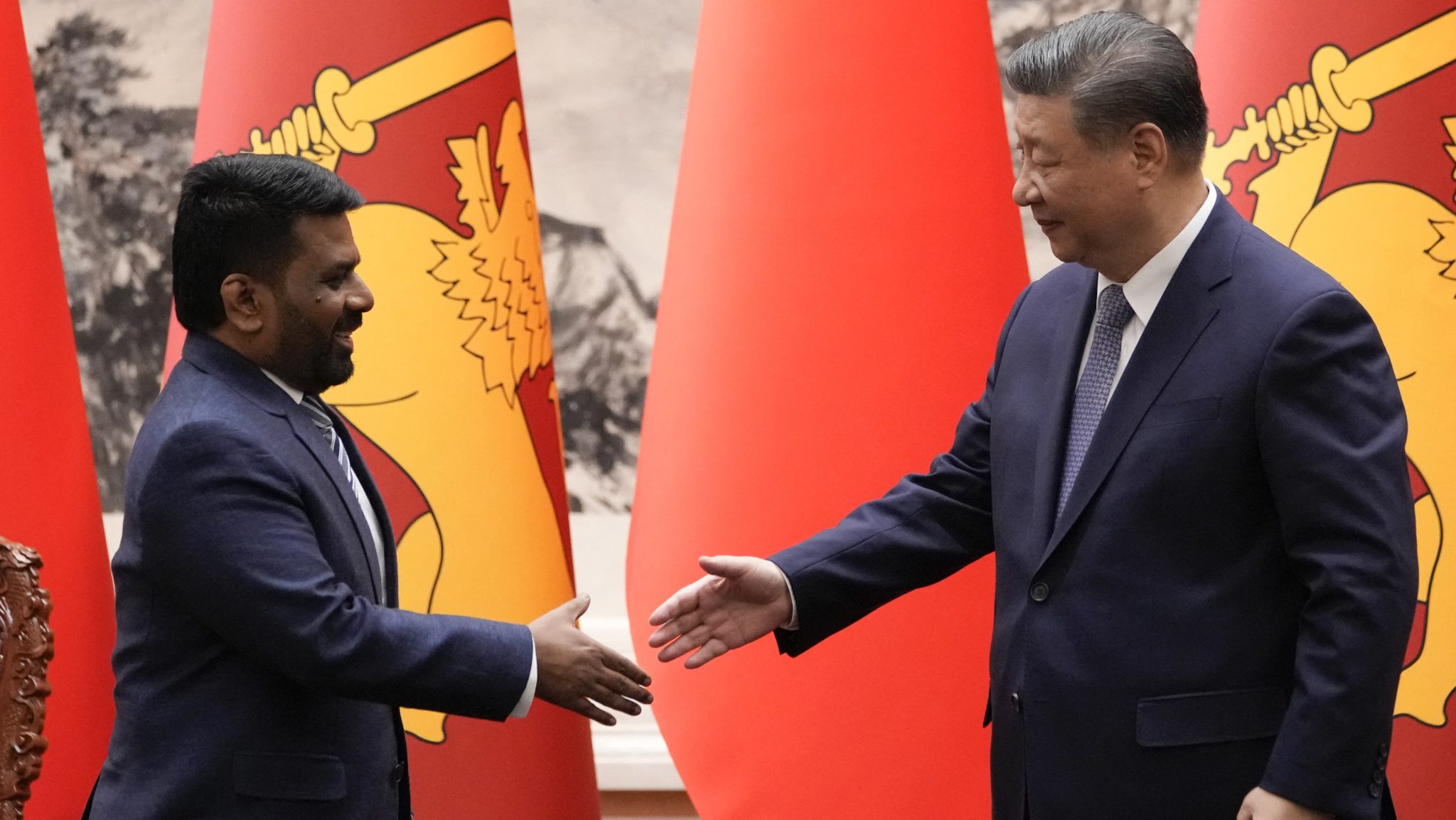
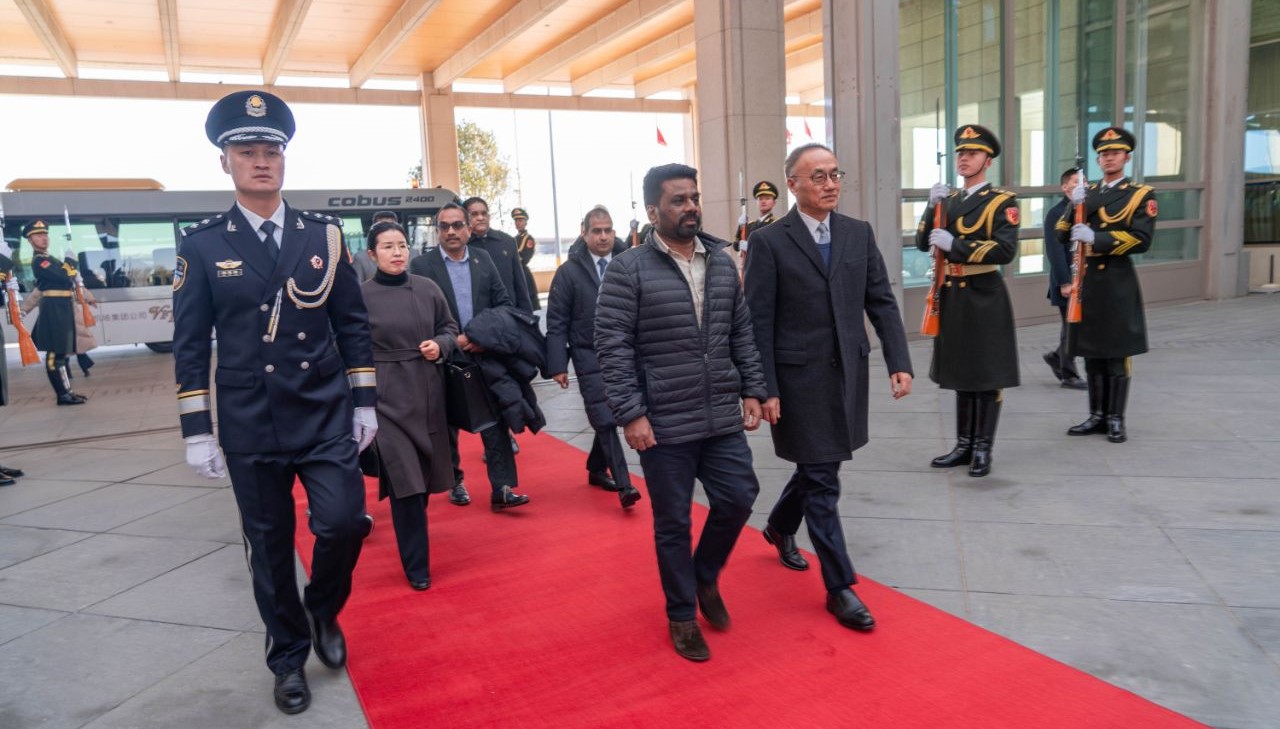
President Anura Kumara Dissanayake will be sharing the new government’s policies with India’s Prime Minister Narendra Modi during his forthcoming visit to India, and shortly after, early next month, an official visit to China, where attracting investments, continuing with projects suspended, and negotiations of restructuring of loans will be the focus.

Foreign Minister Vijitha Herath told the Sunday Times that discussions were underway with Indian officials on the MoUs (Memoranda of Understanding) expected to be signed between the two countries in New Delhi. He said the
focus was likely to centre on Indian investment projects, especially in the power sector.

The visit is scheduled for Monday, December 16. The government was working out the delegation that was to accompany the President.

An official visit by President Dissanayake to China was on the cards early next month, and several MoUs on education and technology would be signed, Minister Herath said.

He said highway projects for which Chinese funding had been provided and later suspended were also among the subjects that would be taken up for discussion during the visit.

“The Chinese government has funded Sri Lanka on several projects and supported the country on the debt restructuring progamme. Among the assistance provided has been the school uniform material for children for next year as a grant and a digitalisation project for schools. Therefore, we believe that the visit will be helpful to obtain further economic support and strengthen relations,” the minister said.

Sri Lanka seeks US assistance in renewable energy sector amid review of India’s Adani deal

Sri Lanka’s new Energy Minister Kumara Jayakody has sought assistance from the United States to develop the renewable energy sector in the island nation, his Ministry said in a statement.

The move comes after President Anura Kumara Dissanayake’s government has promised to review India’s Adani renewable energy deal following some top officials of the Indian company indicted on multiple counts of fraud

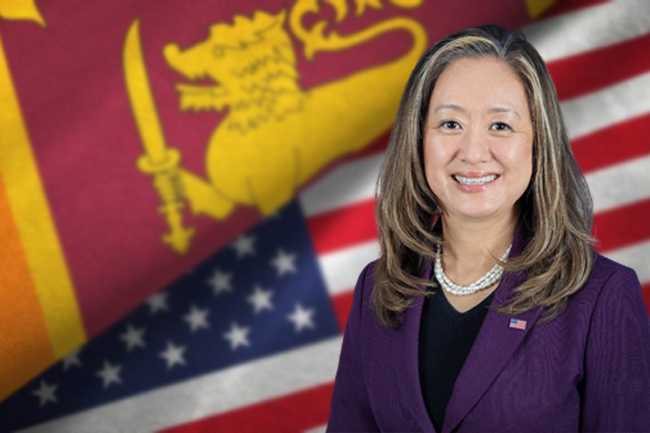
Minister Jayakody sought assistance on Monday (09) when he met the U.S. Ambassador Julie Chung to discuss the “ways to enhance cooperation in the power sector between the two countries”.

“The Ambassador said that the U.S. government is also ready to provide technical and other assistance to Sri Lanka’s power sector,” the Energy Ministry said in the statement.

“Minister of Energy Eng. Kumara Jayakodi explained the new government’s energy policy and vision for energy and expressed his expectation of the US government’s support for the renewable energy sector in the country.”

The U.S. has been promoting sustainable energy in Sri Lanka and has backed some projects.

It has assisted with technical assistance to help further develop Sri Lanka’s electric vehicle sector, a $19 million, 5-year Energy Programto support Sri Lanka’s vision to increase the renewable energy generation to 70 percent by 2030. The aim is to support Sri Lanka’s transition into a cleaner energy-generating nation.

The meeting with the top US official came nearly three weeks after the Federal prosecutors in New York indicted the top eight officials of India’s Adani Group, including the Group Chairman Gautam Adani and seven others on multiple counts of fraud.

Adani had proposed setting up 500MW of wind plants in Sri Lanka’s Northern Mannar and Pooneryn. An energy permit was approved by Sri Lanka’s Sustainable Energy Authority for the Pooneryn plant for 234MW as well in February this year.

The new government has promised to review Adani projects amid environmentalists and the Bishop of Mannar have sought legal actions saying that the plants are in the way of a migrant bird route, and that the price paid for power generated by the project is too high.

No liquor licenses were issued as bribes: Ex-President Ranil responds to allegations

Former President Ranil Wickremesinghe’s office has issued a statement, claiming that the former President did not issue any liquor licenses in violation of the rules and regulations of the Excise Department.

The statement further highlighted that the government has received a revenue of over Rs. 3.1 billion during the first nine months of this year through the new liquor licenses issued during Wickremesinghe’s tenure as the President.

The statement pointed out that the legitimacy of the procedure followed in granting the liquor licenses was verified through the recommendations made in the letter forwarded by the Election Commission to the Commissioner General of Excise on the 19 August 2024.

It further highlights that the incumbent Cabinet of Ministers has the power to renew or revoke these “formal revenue-generating” liquor licenses.

The statement was issued in response to the allegations made in Parliament by Leader of the House Minister Bimal Rathnayake that the former President has issued liquor licenses as political bribes.

Addressing the Parliament recently, Minister Bimal Rathnayake disclosed that former President Ranil Wickremesinghe has issued 361 liquor vendor licenses alleging that 172 of them were granted as political bribes.

“A total of 361 permits have been issued since January. Among these are 172 wine store permits. We believe that these licences were issued as political bribes by former President Ranil Wickremesinghe to entice MPs to change parties”, Rathnayake said while addressing the Parliament.

Meanwhile on November 20, a Fundamental Rights (FR) petition was filed with the Supreme Court seeking an order that the fundamental human rights have been violated through the decision by the respondents including former President Ranil Wickremesinghe to issue liquor licenses in violation of the Excise Act after the 2024 Presidential Election was announced.

The petitioners alleged that these licenses have been issued with the objective of obtaining support in the Presidential Election and that they have been issued in an arbitrary and unjust manner by avoiding the provisions of the Excise Act.

Posted in Uncategorized

Power devolution and provincial polls necessary to fight communalism By Veeragathy Thanabalasingham

The leaders of the ruling National People’s Power (NPP) believe that challenges to the government will arise mainly from communal and ethnic political forces. President Anura Kumara Dissanayake, who formally opened the first session of the new Parliament on November 21 and delivered his government’s policy statement, vowed that the politics of communalism and religious extremism would never be allowed to rise again.

He said that the parliamentary elections have shown a strong opportunity has now been created to build national unity, which has been a long-cherished wish in our country and that despite the different political ideologies, government will not give in to communal politics again.

Following that, Prime Minister Harini Amarasooriya, who opened the parliamentary debate on the President’s policy statement last week, warned that the government will not hesitate to suppress any attempt by defeated political forces to incite communalist divisions for political gain.

Similarly, several ministers, including the Cabinet Spokesperson Nalinda Jayatissa and Justice Minister Harshana Nanayakkara and NPP politicians said that there is no place for communal and religious politics in the country anymore. According to them, “The people have voted for the NPP, regardless of ethnic and religious differences. It is the prime responsibility of the government to prevent racism and religious extremism from being used for political agendas.”

This firm stance by the President and the government against ethnic and religious extremism, which have been a curse to Sri Lanka, is very gratifying. It was also evident that as an indication of government’s determination, immediate legal action was taken against those who posted on social media with the aim of inciting communalism, using visuals of events that took place during the recent Maveerar Day commemorations in the North and East.

Unlike previous elections, the last presidential and parliamentary elections did not witness communal propaganda by the main political parties. It is understandable that the government is keen to ensure that the situation continues. The leaders of the NPP see the overwhelming support given to them by the people throughout the country, including the North and East, as a mandate for building national unity.

But, the success of the government’s “declared war” against communalism and religious extremism entirely depends on the extent to which the leaders of the government show interest in finding practical and substantive solutions to the problems created by communalism and on the extent to which they are able to win the trust of the majority Sinhalese for that purpose.

At the same time, communal forces are waiting for opportunities to rise again. The overwhelming electoral victory of the NPP and the defeat of certain hard-line nationalist politicians cannot be construed as the defeat of communalism in the country. Those who understand the nature of communalism and its history in Sri Lanka will have no confusion about this.

Some Sinhala hard line nationalist politicians who could not tolerate the permission given by the government to the people of the north and east to commemorate their loved ones who lost their lives during the war, condemned the government.

Earlier, when the government took steps to remove some military camps in Jaffna and hand over the lands to the rightful owners, politicians like Namal Rajapaksa, the national organizer of the Sri Lanka Podujana Peramuna (SLPP ) warned that its actions would jeopardize national security.

However, unlike the previous rulers, the leaders of the NPP espcially the Minister of Public Security, Ananda Wijepala, justified the government’s action by insisting that the Tamils have the right to commemorate their relatives who died in the war.

This healthier attitude of government leaders should gradually extend to efforts to find a political solution to the national-ethnic problem.

In particular, the current situation, which government leaders describe as a golden opportunity to forge national unity beyond ethnic and religious differences, should also be used to gradually erase the deep-rooted opposition in South Sri Lanka to the legitimate political aspirations of minority communities, especially devolution of power.

Although the 13th Amendment, which was introduced to establish Provincial Councils following the July 1987 Indo-Sri Lanka Peace Accord, has been in the country’s constitution for 37 years, there is a mental barrier among the main political forces in the South not only to implementing it, but also to speaking about it among the Sinhala people.

The Janatha Vimukthi Peramuna (JVP), the flagship party of the NPP, had opposed the 13th Amendment from the beginning, but over time it contested in elections and participated in the provincial council system. Although the position of the southern Sri Lankan polity is that the Provincial Council system was imposed on Sri Lanka by India, governments have been unable to abolish it.

If the Provincial Councils system had not been introduced as a result of an Accord with India, would we have ever seen any substantive devolution arrangement in Sri Lanka? In the history of the Tamils’ struggle for their political rights, all agreements entered by Tamil leaders with governments in the past were torn up due to the opposition from South Sri Lankan communal forces. The fact is that the Provincial Councils system has been left until today only because it was brought about as a result of Indian intervention.

Anura Kumara Dissanayake would not have forgotten what he said a few months before becoming President that if the Tamils wanted the Provincial Councils system as a solution to their problems, he had no problem in accepting it. The government no longer needs to consider the position of the Tamil political parties and their leaders, who have failed to lead the Tamils through a viable and sensible path after the end of the civil war, on the 13th Amendment and the Provincial Councils system.

Unless these Tamil parties change their line of thinking they risk further isolation from the Tamils. The leaders of Tamil parties, who have been regularly telling government leaders and Indian diplomats in Colombo that provincial council elections and the full implementation of the 13th Amendment should be held as a first step towards a lasting political solution, have done nothing more than that.

It is doubtful whether they have learned any lessons from the parliamentary election results this time.

Following the controversy over the comments made by JVP General Secretary Tilvin Silva in recent media interviews on the future of the Provincial Councils, the leaders of the NPP have clarified that the Provincial Councils will remain until a new constitution is introduced.

However, for the past six years, no elections have been held for the Provincial Councils and they have remained under the administration of Governors, who are the representatives of the President. It was reported that President Dissanayake told the Ilankai Thamizharasu Katchi (ITAK ) Parliamentary Group that met with him last week that his government would hold Provincial Council elections by the end of next year.

However, it is not known if the ITAK Parliamentary Group insisted that the 13th Amendment be fully implemented. When they broached a political solution based on a federal system, President hinted that all such proposals will be considered when the new constitution drafting process begins.

But cabinet spokesman Dr. Nalinda Jayatissa told the weekly press conference last Tuesday that it would take three years to introduce a new constitution and that there would be ample opportunity to hold public dialogues on important issues the including provincial councils and devolution. He also mentioned that they have not taken any final decision regarding provincial councils.

Three years is a long time in politics. There may even be changes in the political situation during that intervening period. The United Front government led by Prime Minister Srima Bandaranaike, which introduced the first Republican Constitution in May 1972, would have brought it earlier had it not been for the 1971 April JVP insurrection. The United National Party (UNP) government led by President J.R. Jayewardene introduced the second Republican Constitution a little over a year after coming to office.

The constitution drafting process undertaken by the ‘ Yahapalanaya ‘ government led by President Maithripala Sirisena and Prime Minister Ranil Wickremesinghe lasted four years (2015-19) and ended with an interim report.

President Dissanayake promised in his election manifesto that the NPP government will complete the constitutional process and resolve the problems. Unlike his rival candidates Ranil Wickremesinghe and Sajith Premadasa, Dissanayake deliberately avoided mentioning the 13th Amendment in the manifesto.

Regarding the NPP government’s plan to introduce a new constitution, an interesting fact is that Dissanayake, who promised the people of the country that he would abolish the executive presidential system, will also remain in the presidency for three years.

Will the government, which claims to be introducing a new constitution, at least make the provincial councils function with the existing powers during the three-year period? The President has told the ITAK Parliamentary Group that provincial council elections will be held by the end of next year. In fact, the provincial council elections are the ones that should be held earlier than the local government elections as elections to PCs have not been held for six years.

The Elections Commission has been forced to hold local government elections as soon as possible in January or February next year, according to the judgment of the Supreme Court in last August. The Tamil parties have not shown interest in approaching the Judiciary against the delay in the provincial council elections.

The government should hold the provincial council elections without waiting until the end of next year, after the local government elections are over. It is important to make the provincial councils functional with full powers before bringing in the new constitution.

How can one expect a new constitution to provide for more powers than those contained in the 13th Amendment, when even those powers have not been fully implemented for 37 years?

There is reason to doubt whether the powers of the 13th Amendment will be fully incorporated into the new constitution. Indian leaders will bring the 13th Amendment and the issue of provincial councils to President Dissanayake’s attention during his talks in New Delhi next week. Let us hope that he will behave differently, instead of saying one thing in New Delhi and another in Colombo, as previous presidents did.

There is no point in President Dissanayake speaking out against communalism without using the current support he and the government is enjoying to take courageous steps to address the deep-rooted opposition of the people of Southern Sri Lanka to the legitimate political aspirations of the minority communities.

But first, NPP leaders must completely remove from their minds opposition to devolution of power, especially the 13 Amendment.

(The writer is a senior journalist based in Colombo)

Posted in Uncategorized

“We, the U.S., support Sri Lanka’s reforms -including anti-corruption- led by President AKD and his new government” – The U.S. Ambassador to Sri Lanka!

The U.S. Ambassador to Sri Lanka, Julie Chung, tweeted today announcing a meeting of a U.S. delegation with President Anura Kumara Dissanayake and reiterating the U.S.’s unwavering support for the new government on its path to reforms, including eradicating corruption.

The U.S. delegation comprising officials from the Bureau of South and Central Asian Affairs, USAID, and the U.S. Treasury Department met with Sri Lankan President Anura Dissanayake and his administration yesterday (Dec 07th). The delegation discussed enhancing cooperation in governance, agriculture, economic growth, and maritime security.

In this meeting, discussing a cooperative path forward, the delegation highlighted the importance of engaging civil society and the private sector, as pointed out by the Ambassador’s tweet.

Screenshot 2024 12 07 at 22 31 06 Ambassador Julie Chung on X Our U.S. delegation from State SCA USAID and USTreasury congratulated President AnuraDisanayake and his new administration today and disc

Japan Donates Rs. 300 Mn Worth of Aid to Sri Lanka for Disaster Relief

A Japanese donation of 300 million rupees has been made to Sri Lanka to assist those affected by recent disasters.

The donation includes tents, mattresses, plastic sheets, and other essential supplies.

The aid was received at the Bandaranaike International Airport in Katunayake by a group of officials, including the Secretary of the Ministry of Defence and the Director General of the Disaster Management Centre.

The aid was delivered through the intervention of the Japan International Cooperation Agency (JICA) and transported by a special cargo plane from Japan.

Posted in Uncategorized

Sri Lanka President meets US diplomat Donald Lu

Visiting US Assistant Secretary Donald Lu has met Sri Lanka’s President Anura Dissanayake.

“We discussed the US’s support for Sri Lanka’s anti-corruption efforts, recovery of stolen funds, and strengthening our economy and sovereignty,” Dissanayake said on social media platform X after the two met on Saturday at the Presidential Secretariat.

“I emphasized fostering a transparent political culture, uplifting rural living standards, and modernizing public services.”

Lu met with other government officials and the opposition leader on Friday.

India extends flood relief to Sri Lanka’s Northern Province

In a significant gesture of solidarity, the High Commission of India in Colombo extended relief assistance to the people of the Northern Province, responding to the recent floods that caused displacement and hardship.Sri Lankan restaurants

On behalf of the High Commission, the distribution was carried out by Consul General of India in Jaffna Shri. Sai Murali, alongside Member of Parliament Kader Masthan, the Indian High Commission in Colombo said.

Approximately 2,100 families from flood-affected areas in Pesalai and Vellankulam villages (Mannar District) and Thunukkai and Manthai East (Mullaitivu District) received essential aid. The relief package included mats and blankets, providing much-needed support to families during this difficult time.

This assistance reflects the vision of Prime Minister Narendra Modi, emphasizing India’s “Neighborhood First” policy. India remains committed to standing by its neighbors in times of need, ensuring timely and effective relief to affected communities, the High Commission said.

Sri Lanka’s ‘Ava’ gang leader arrested in Canada on murder charges

A Sri Lankan national believed to be the head of the criminal gang known as ‘Ava Group’, based in Northern Sri Lanka, has been arrested in Canada.

Canadian media reported that Prasanna Nallalingam, 32, who also goes by the name Ajanthan Subramaniyam, is facing extradition to France to face murder charges after being arrested in Toronto this spring.

The extradition of Nallalingam is being sought in connection with the alleged gang killing of Abiraman Balakirishnan and attempted murder of another man in September 2022 in France, Canada’s Department of Justice confirmed.

Subramaniyam, is believed to be the leader of a group known as AAVA, an outlaw motorcycle gang active in the northern province of Sri Lanka. The filings state the attack targeted a group known to be rivals of AAVA, the LC Boys, foreign media reported.

According to French media reports, the two groups were engaged in a multi-year conflict over control of La Courneuve, a commune located in the northern suburbs of Paris.

Concealing their faces and armed with “sabres, machetes and knives,” Nallalingam and five associates are alleged to have attacked two occupants of a vehicle in La Courneuve on Sept. 21, 2022. According to the filings, Nallalingam, 32, was not only allegedly involved in the attack on Balakirishnan and the second man, but “planned and instigated it.”

“The two victims were found in agony,” French court filings read; Balakirishnan died of his wounds, while the second man survived.

At the time of the attack, Nallalingam was wanted in Sri Lanka for the March 2021 killing of Sivakumaran Jeewarathna. According to court filings, he escaped the country not long after, sparking Interpol to issue an international arrest warrant.

Nallalingam was also already known to French authorities at the time – in 2019, court documents show he was sentenced to a six-month suspended prison sentence for “acts of violence,” and, in 2021, received a sentence of three years for his participation in an organized raid on a restaurant in Paris, reportedly carried out in retaliation for a prior attack on an AAVA member.

Nallalingam entered Canada from the United States in December 2022. According to the filings, he was able to do so by providing a fraudulent name at an unauthorized checkpoint on Roxham Road in Quebec. It is not clear how Nallalingam entered the U.S.

Nallalingam awaited a decision on that claim for the next year, during which French authorities joined Interpol in issuing a warrant for his arrest.

“Considering that (Nallalingam) is strongly suspected of having participated in acts of murder (and) attempted murder committed by an organized gang; That this information related to acts punishable by life imprisonment sentences; That these are acts of a particularly serious nature committed on a public highway; That there is a significant number of protagonists and that (Nallalingam) currently appears to be a fugitive abroad; that he is already being investigated by the Sri Lankan authorities for murder; In view of these elements, it appears necessary and responsible to issue an arrest warrant,” the French warrant reads.

It wasn’t until May of this year that Nallalingam was arrested by the Canada Border Services Agency, assisted by the Toronto Police Service, after failing to appear for a refugee admissibility hearing. Upon taking him into custody, authorities ran the fingerprints provided in his claim against the set on file with Interpol — it was a match.

When reached for comment, Allan Lobel, legal counsel for Nallalingam, declined to comment on the proceedings.

Nallalingam is currently in custody awaiting a decision on the proposed extradition. His hearing is scheduled for May 2025.