Sajith to implement 13th Amendment to the Constitution

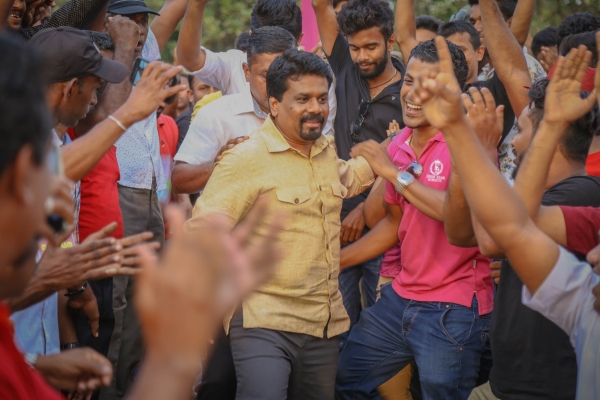
Opposition leader and SJB presidential candidate, Sajith Premadasa, has reiterated his commitment to implementing the 13th Amendment to the Constitution.

Speaking on the importance of achieving reconciliation among Sri Lanka’s diverse ethnic and religious communities, Premadasa stressed that the amendment, which grants powers to provincial councils, is part of the country’s legal framework.

“I have spoken before about the need to implement the 13th Amendment to the Constitution. I will tell that today and tomorrow as well. We need to especially achieve reconciliation among the country’s races and religions. Isn’t the 13th Amendment in the law books or not? We are bound to implement what is stated in the law. That is not harmful to the country’s unity. That has been affirmed through a Supreme Court ruling. Therefore, we are duty bound to implement it. I know that others are afraid to state this. I’m not. I will tell the correct thing as it is.” he told the Sunday Lankadeepa newspaper.

Posted in Uncategorized

Sri Lanka Bondholders, Govt To Hold New Round of Talks

Sri Lanka’s private creditors and the country’s government officials are holding a third round of talks this week to agree on the restructuring of $12.6 billion in defaulted bonds, according to people familiar with the matter, reported Bloomberg.

This new round of negotiations — the first since creditors and the government reached a preliminary agreement on a debt rework in early-July — also marks the third time bondholders have gone “restricted,” or prevented from trading the securities while talks are ongoing, the people said, asking not to be named because talks are private.

Representatives for the bondholders and the government didn’t immediately reply to a request for comment. The creditor group holds about 50% of the outstanding overseas bonds and includes Amundi SA, BlackRock Inc. and T Rowe Price.

The committee is represented by its legal adviser White & Case LLP and its financial adviser Rothschild & Co.

The government is seeking to reach a final agreement on the debt before the country’s presidential election set for Sept. 21, one of the people said, adding that a statement with details on the ongoing negotiations may be released next week.

The July deal with private bondholders envisaged a 28% nominal reduction in the bonds’ principal, and the issuance of so-called macro-linked bonds, whose payouts are linked to economic growth. The agreement needs the backing of the International Monetary Fund and the country’s bilateral creditors, such as China and France.

Sri Lanka bonds due in 2030 trade for around 51.6 cents on the dollar, according to indicative pricing compiled by Bloomberg.

The presidential vote is the first for the South Asian island nation since falling into the worst economic crisis since its 1948 independence. It is shaping up to be a close race between three candidates, including the incumbent who negotiated the IMF bailout and a breakaway opposition leader.

Trincomalee District Judge interdicted

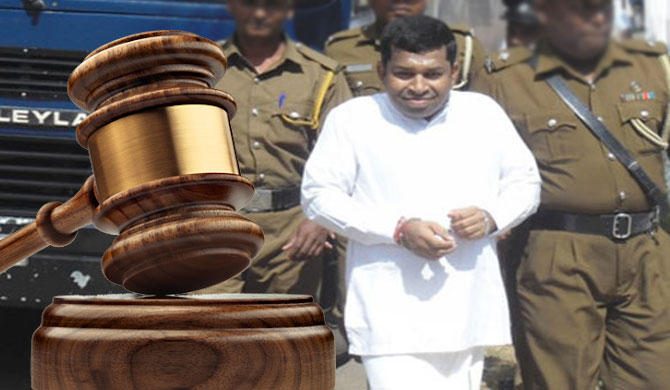
Trincomalee District Judge M. Ganesharajah has been interdicted with immediate effect by the Judicial Services Commission (JSC).

The letter of interdiction has been delivered to him on Thursday (12).

The JSC that investigated an allegation of misconduct against him interdicted him after calling for an explanation.

Trincomalee Chief Magistrate E. Payas Razaq has been appointed to act for the District Judge.

Ballot Papers Stored Under Police Protection

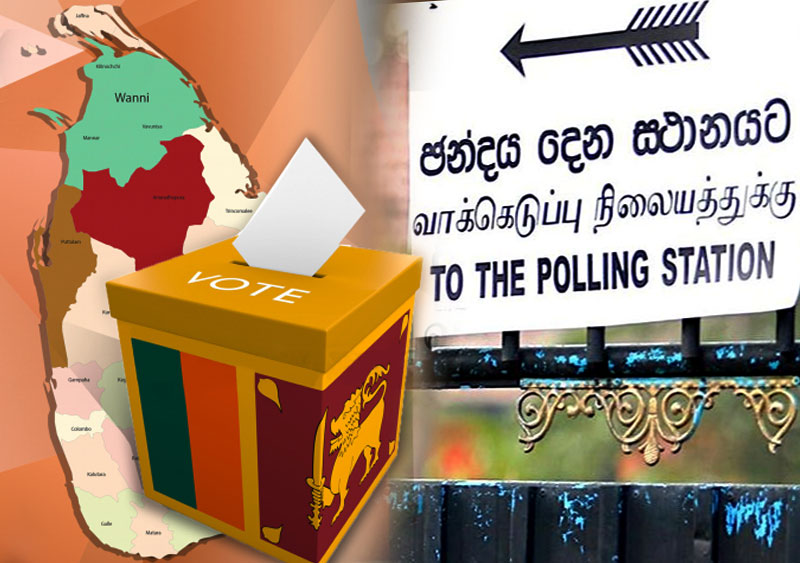
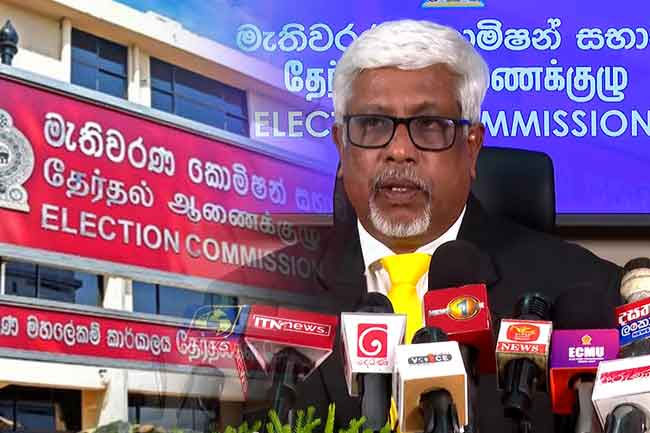
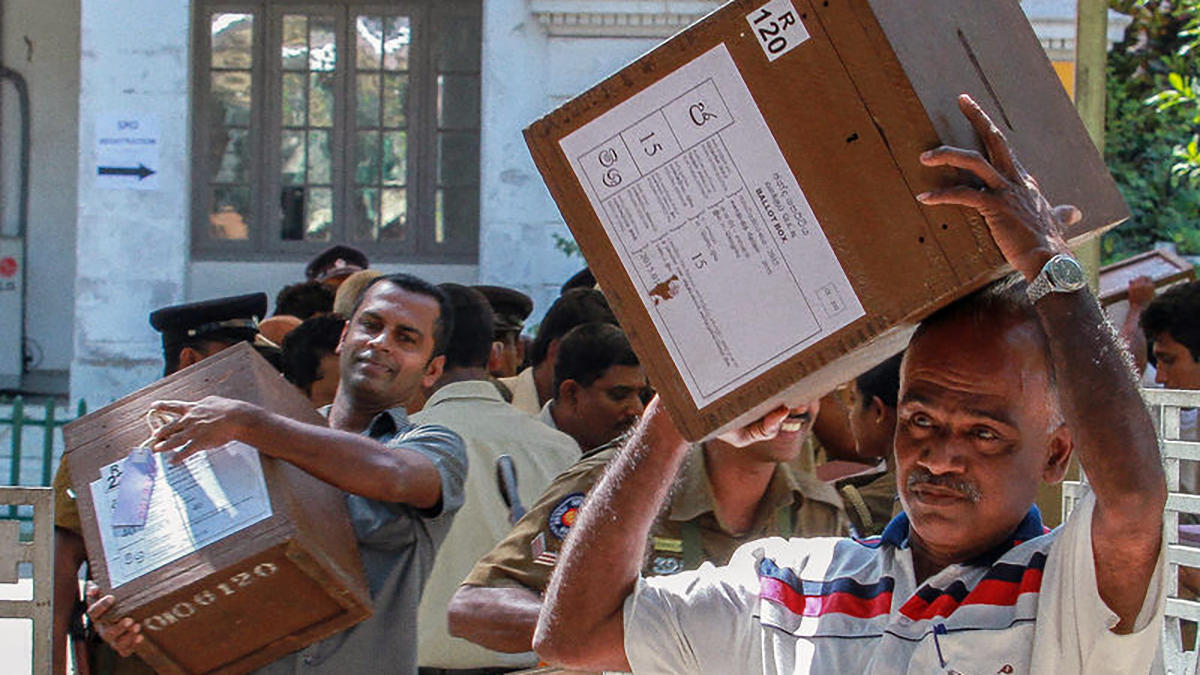
The Election Commission announced that all official ballot papers for the upcoming presidential election have been successfully sent to district secretariats across the country. Currently, these papers are stored under tight police protection in secure vaults to ensure their safety until the election.

The Commission has scheduled the release of these ballot papers to the District Electoral Officers on September 20, in preparation for the voting process.

Additionally, the Commission has finalized the appointment of senior polling station officers, who will oversee the smooth operation of polling stations during the election.

Northern Railway Line will be opened

Renovation of the Anuradhapura–Mahawa railway line, which was implemented at a cost of US$ 92 million with the aim of establishing a regular and efficient transport service in the country, has been completed and was officially handed over to the Sri Lanka Railway Department recently.

The renovation work of the Northern Railway Line which was operated under the loan scheme of the Government of India was carried out in three stages – Anuradhapura–Omanthai, Anuradhapura–Mihintale, and Anuradhapura–Mahawa, Project Director Chinthaka Jayasekara said.

The renovation of the Anuradhapura–Mahawa section was started in January this year under the patronage of Indian High Commissioner to Sri Lanka, Santosh Jha and the Railway Department is confident that the train service from Mahawa to Anuradhapura will be operational again from tomorrow (14).

Jayasekara said that the main benefit resulting from this is that the travel time from Colombo to Kankasanturai will be reduced from seven-and-a-half hours to five hours with the renovation of the railway line.

During the British colonial period, construction of the Northern Railway Line started in 1894. In 1956, the Yaldevi train started running from Colombo to Kankasanturai. Since then, this railway service has been used to transport hundreds of thousands of passengers and goods between the North and the South.

With the escalation of the war in 1986, this railway line was completely closed. After the ending of the war the railway line which was completely destroyed was restored under the Indian loan scheme and trains started running again in 2014 from Colombo to Kankasanturai. But, the trains had to run very slowly under many speed limits.

As a result, the Jaffna–Colombo train journey took seven-and-a-half hours, and the postal train journey took 12 hours, making it difficult to provide an efficient service to the people. A tender worth US$92 million was called for in 2018 from the US$3.1 billion loan proposal received for railway modernisation in 2017 and after a procurement process, the contract was awarded to the Indian government-owned IRCONE company from among the bidders and the renovation work started in 2019.

After 2019, the subject was brought under the purview of three Ministers and five Secretaries and there were various obstacles to start the renovation of this railway line.

After the economic crisis of 2022, the section from Anuradhapura to Omanthai was completed in 2023 and opened in July 2023 under the special efforts of the Minister in charge, Transport, Highways and Mass Media Minister Dr. Bandula Gunawardhana, with the support of the former Indian High Commissioner to Sri Lanka, Gopal Baglay.

Later, the reconstruction of the section from Mahawa to Anuradhapura started in January 2024 with the current Indian High Commissioner in Sri Lanka Santosh Jha. He said that the completed project was officially handed over to the Railway Department on Wednesday at the Transport Ministry after completing the inspection tour by trains on the newly renovated line.

Posted in Uncategorized

Prez Poll: No plans/preparations to impose a curfew

There are no plans in place or preparations being made to impose a curfew in the context of next week’s Presidential Poll, The Daily Morning learnt.

“We will not have a curfew unless the President (who is also the Defence Minister) requires it,” the Secretary of the Ministry of Public Security, Viyani Gunathilaka told The Daily Morning yesterday (12) in response to a query on whether a curfew would be called in the said context. “The President has the power to call a curfew; however, as of now, there are no plans and preparations to organise a curfew.”

When contacted by The Daily Morning on any plans and preparations regarding a curfew in the said context, Police Media Spokesperson, Deputy Inspector General of Police Nihal Thalduwa declined to comment but confirmed that the power to impose a curfew lies with the Executive President. “If the President wishes, there can be a curfew,” Thalduwa said.

A curfew is generally understood to be a Government regulation requiring people to remain indoors during a certain period. In Sri Lanka, the power to impose a curfew is bestowed upon the Executive President and the Police.

Notably, a curfew period was imposed by former President Gotabaya Rajapaksa when protests took place near his residence, where people were banned from being on any public road, parks, and trains or on the seashore unless they had written permission from the relevant authorities.

The Presidential Election is to take place on 21 September with 38 candidates in the fray, including President and independent candidate Ranil Wickremesinghe. It is reported that the country has 17.1 million people eligible to cast their vote in the upcoming Election with one million of them being first time voters.

Posted in Uncategorized

New President can dissolve Parliament 10 or 12 days after his inauguration – Ratnayake

The new President to be elected next week can dissolve parliament about 10 and 12 days after being sworn in, Commissioner General of Elections Saman Sri Ratnayake has said.The next parliamentary election could be held 35 days after the dissolution of Parliament, Ratnayake said, adding that it had to be held within 66 days, he added.

“The next President could also choose to continue with the current parliament until its term ends next year,” he said.

All election propaganda must cease by midnight on 18 Sept., with the presidential election scheduled to be held on 21 September, Ratnayake said.

There are 13,417 polling stations.

Meanwhile, election monitors have reported that election activities have been peaceful thus far.

However, the misuse of state property had been considerable, Manjula Gajanayake, Executive Director of the Institute for Democratic Reforms and Electoral Studies (IRES), told The Island.

“The President’s media unit and the Cabinet of ministers have acted in a highly unethical manner. I fear this has set a very bad precedent,” he said.

Bread and butter issues dominate the Lankan Presidential election By P.K.Balachandran

James Carville, Bill Clinton’s political advisor, said that when it came to elections it was always the economy. “It‘s the economy stupid!” he famously remarked. Carville’s contention has stood the test of time.

While many other issues have also come into play, this year’s US and Sri Lankan Presidential Elections are taking place amidst economic anxieties and the core issue is the economy again.

A number of concerns are being highlighted in the September 21 Presidential poll in Sri Lanka, including the Tamil demand for a federal constitution. But the one upper most in the minds of the voters, across ethnicities and classes, is whether the government should continue to implement the IMF’s prescriptions or re-negotiate them. The ultra-leftists want them rejected, lock, stock and barrel.

President, Ranil Wickremesinghe, who is standing as an “Independent” is highlighting the way he led the country’s recovery from the unprecedented economic crisis it went through in 2022 with the help of the IMF.

He decided to be a “non-partisan”or a “unifying” candidate and appeal for votes solely on the strength of his achievements in the last two years when he shepherded a distraught nation from despair to an era of hope if not prosperity.

But his two principal rivals, Sajith Premadasa of the Samagi Jana Balawegaya (SJB) and Anura Kumara Dissanayake of the National Peoples’ Power (NPP) are seriously challenging his claims, highlighting the common man’s inability to bear a situation in which he has to pay high prices and high taxes without an increase in his earnings. At the ground level, the economy is still sluggish despite manifest improvement at the macro level. Both want the IMF’s prescriptions re-negotiated.

Such a situation makes the September election a close contest in which Wickremesinghe could meet his match in the younger, more radical Dissanayake.

Economic Crisis

In 2022, Sri Lankans experienced power cuts and shortages of essential commodities such as food and fuel.Inflation hit 50%. Protests broke out in April as serpentine queues formed at cooking gas and petrol stations. Schools shut and office goers were asked to work from home.

According to the BBC, Sri Lanka imported US$ 3 billion more than it exported, running out of foreign exchange. In 2019, it had US$ 7.6 billion in forex reserves, which dwindled to US$ 250 million. COVID was cause but mismanagement and bad policies were the major factors.

In April 2022, for the first time in Sri Lankan history, the Gotabaya Rajapaksa government decided to default on repayment of foreign loans which totalled more than US$ 83 billion.

In July, acting President Ranil Wickremesinghe was made President by parliament. Using Emergency provisions, he restored order and began reviving the moribund economy. India, US,China and the Paris Club collaborated to see that the IMF sanctioned a bailout of US$ 3 billion.The World Bank pledged another US$ 600 million.India pumped in US$ 4.5 billon to restore supplies of essentials.

In 2023, as part of the IMF reform program, Sri Lanka introduced income taxes for higher earners, ranging from 12.5% to 36%.It also raised other taxes to pay for critical purchases.

Candidates’ Profiles

A record 39 candidates are running in the September 21 election. However, only three of them are serious contenders. These are, sitting President Ranil Wickremesinghe (Independent), Sajith Premadasa of Samagi Jana Balawegaya (SJB), and Anura Kumara Dissanayake of the National Peoples’ Power (NPP) an alliance led by the ultra-leftist/nationalist Janatha Vimukthi Peramuna (JVP).

Namal Rajapaksa, the eldest son of former President Mahinda Rajapaksa, is also in the fray as the candidate of the Sri Lanka Podujana Peramuna (SLPP). But he is neither expected to win nor to make a significant dent in the votes of others. He is politically raw, and the SLPP is in steep decline.

Ranil Wickremesinghe

Ranil Wickremesinghe (75) is the most experienced, best educated, and the oldest of the top candidates. He was Prime Minister five times,though never for a full term. He has held key ministries like Education, Science and Technology and Industry. And as President, he has held the Defence and Finance portfolios.

The present election is seen as a referendum on Wickremesinghe’s economic reforms and his governance.On the upside, inflation dropped to about 5.9% from 70% in 2022. The economy expanded in the fourth quarter of 2023 by 4.5%, the IMF said.

Interest rates also dropped, the rupee rebounded, foreign reserves increased.Creditor countries such as India, Japan and France, agreed to defer debt repayments until 2028, giving Sri Lanka space to rebuild its economy.

With Presidential Elections due in September 2024, Wickremesinghe brought down power tariffs by 22.5% which should have led to a reduction in the prices of goods by 20% if the traders cooperated.

The downside is that people, especially in the urban areas, are complaining of high prices and taxes. In an article dated September 13, 2023 published by Project Syndicate, Professors Jayati Ghosh and Kanchana N. Ruwanpura pointed out that the IMF had pledged only US$ 3 billion over four years. It is a “tiny fraction of what the country needs to meet its debt-servicing requirements and just one-sixth of its foreign-exchange earnings, which amounted to roughly US$ 18 billion in 2022.”

The IMF imposed a series of conditions that significantly exacerbated Sri Lanka’s cost-of-living crises, the authors said. The mandated shift to market exchange rates, in particular, immediately led to sharp currency devaluation, causing imported fuel and food prices to skyrocket and contributing to a 165% increase in electricity tariffs between June 2022 and February 2023, Ghosh and Ruwanpura said.

“As fiscal restraints were imposed, the economy continued to spiral down, with GDP shrinking by 7.8% in 2022 and 11.5% in the first quarter of 2023. This has had an adverse impact on employment, livelihoods, and the viability of small and medium-size enterprises.”

“Consequently, real wages fell by 30-50% in 2022 and have remained stagnant.Although it includes a modest increase in corporate income taxes, it neglects the possibility of imposing wealth taxes,” the authors added.

Wealth tax is a levy on the total value of a person’s assets, as opposed to taxes on their income, real estate, or asset sales. Wealth tax is a way of moderating extreme wealth inequality. Leftists complain that Wickremesinghe has let the wealthy off the hook while heaping indirect taxes on the poor.

By reducing the interest rates on sovereign bonds held by Sri Lanka’s largest pension funds (EPF) from more than 20% to 12%, and then to 9% from 2025 until maturity, the government aimed to reduce its interest burden by 0.5 percentage points of GDP annually.

Recent estimates by economist Ahilan Kadirgamar suggest that this will result in a 30% decline in the value of retirement funds a decade from now. Moreover, these pension funds, often holding the only financial assets of working people, will be subject to a 30% tax on their returns – higher than the tax rate applied to many in the corporate sector.

Rural-Urban Divide

However, there could be a rural-urban differential in the economic impact of the reforms. Rural folk have gained by the import of diesel and petrol with the US$ 4.5 billion given by India and the dollars from the IMF. The removal of the ban on chemical fertilisers was a boon to the farmers.

Moreover, rural folk do not feel the pinch of high prices as much as the urbanites do, because they do not buy food with cash as urban workers and office goers to do on a daily basis. Nor do they use public or private transport on a daily basis.

Premadasa and Dissanayake

Wickremesinghe’s challengers Sajith Premadasa and Anura Kumara Dissanayaka have said that they will renegotiate some of the aspects of the IMF deal to benefit the poor. But Wickremesinghe has warned that any bid to amend the IMF deal could adversely affect ties with India, China and the Paris Club of creditors, the US, and international lending agencies. And the horrible shortages might return.

The Presidential election is also a contest between administrative experience and inexperience. In contrast to Wickremesinghe, both Premadasa and Dissanayake lack political and administrative experience. So far, Premadasa has only held the portfolio of Housing which is a minor ministry in Sri Lanka. Dissanayake has no administrative experience whatsoever. As a Leftist, he has been an agitator and an MP all his political life.

Dissanayake is appealing to younger voters in the urban areas. But Premadasa is presumed to have the traditional United National Party (UNP) voters across the country, which is not inconsiderable. As a non-doctrinaire and right wing politician, Premadasa could get along with the international community chiefly India and the US.

Dissanayake is just the opposite. He is a Marxist and ideologically anti-West and pro-China. As a staunch Sri Lankan nationalist, he will fight perceived encroachments by external powers. As the leader of the nationalist Janatha Vimukthi Peramuna (JVP), the main party in his alliance NPP, Dissanayake has been anti-India right through.

While releasing his manifesto, he spoke about how Sri Lanka’s consumer goods market is dominated by Indian products and how it is necessary end it. He followed this up by saying that the giant oil tanks at Trincomalee given to India by a bilateral agreement in the 1980s will be given to a consortium of foreign entities through a tender.

Since Dissanayake is pro-China, Beijing may expect him to revive the uncompleted US$ 1.4 billion Chinese-aided Colombo Port City international hub project. This involves coaxing Indian and Western companies to invest in it. But this could prove to be an uphill task given the geopolitics of the Indo-Pacific.

No Change In Decision To Support Sajith, Says Sumanthiran

President’s Counsel M. A. Sumanthiran, representing the Ilangai Tamil Arasu Party (ITAK), has confirmed that the party’s decision to support Sajith Premadasa remains unchanged.

This statement comes amid calls from Mavei Senadhiraja and M. Sreedharan to reconsider the party’s stance.

Sumanthiran emphasized that the decision was made following proper procedures and has now been accepted by all party members.

“Mavei Senadhiraja and Sreedharan had stated that we should reconsider the decision taken by the party. But we have stated that there is no need to reconsider it. It is a decision taken by our party according to the proper method. Now both of them have accepted that. Therefore, they have accepted that the future work should be discussed again with Sajith Premadasa,” he said.

Regarding the possibility of dealing with Anura Kumara Dissanayake if he becomes president, Sumanthiran expressed readiness.

“Yes. We are ready for it. We worked together in the good governance government. Even if we are in the opposition when they come to power, there are many things to deal with them. Especially against fraud and corruption,” he stated.

Posted in Uncategorized

Sajith assures Archbishop on establishment of Public Prosecutor’s Office

Samagi Jana Balawegaya (SJB) Leader Sajith Premadasa assured the Archbishop of Colombo, Malcolm Cardinal Ranjith, on the establishment of a Public Prosecutor’s Office to find the truth behind the Easter Sunday Attacks.

A meeting took place between Premadasa and His Eminence Cardinal Malcolm Ranjith at the Archbishop’s residence in Colombo, Wednesday.

During the meeting the Opposition Leader gave an assurance to establish a Public Prosecutor’s Office to find the truth behind the Easter Attacks and deliver justice to the victims of the attack.

Speaking at an election rally in Puttalam on Tuesday, Premadasa said that former President Gotabaya Rajapaksa and incumbent President Ranil Wickremesinghe failed to properly investigate the deadly attacks.

Premadasa said that his Government, if elected at the Presidential election on 21st September, will initiate legal action on all those linked to the attacks and ensure they are punished.

Speaking at an election rally in Puttalam, Premadasa said that former President Gotabaya Rajapaksa and incumbent President Ranil Wickremesinghe failed to properly investigate the deadly attacks.

Premadasa said that his Government, if elected at the Presidential election on 21st September, will initiate legal action on all those linked to the attacks and ensure they are punished.