Mirusuvil massacre: Petition against presidential pardon by Gotabaya fixed for consideration

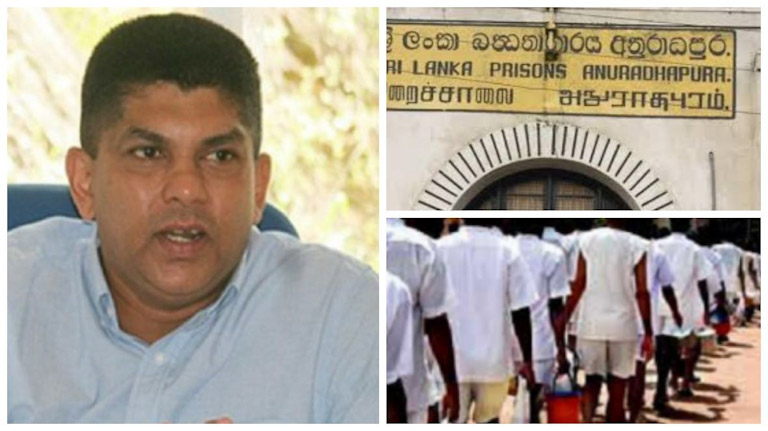
The Fundamental Rights (FR) petitions filed against the presidential pardon granted to former army officer Sunil Ratnayake, who was on the death row over the Mirusuvil massacre, has been fixed for consideration on January 15, 2025, by the Supreme Court.

The petitions seek to invalidate the decision taken by former President Gotabaya Rajapaksa to pardon former army officer Sunil Ratnayake, who was convicted of the murder of 8 civilians at Mirusuvil in Jaffna in December 2000 and was sentenced to death in the year 2015.

The relevant petitions were filed by the family members of the victims of the Mirusuvil massacre, the Centre for Policy Alternatives and the former Commissioner General of the Human Rights Council of Sri Lanka (HRCSL) Ambika Satkunanathan.

However, the court also granted time for the respondents of the petitions to file objections.

On June 25, 2015, he was found guilty for the killing of 8 civilians in Mirusuvil and sentenced to death by the Colombo High Court.

The murders occurred on 19 December, 2000 when eight internally displaced refugees returning to inspect their property were arrested in the village of Mirusuvil. They were subsequently murdered and buried in a mass grave, about 16 miles east of Jaffna town.

The Attorney General had filed charges against 5 army soldiers in connection with the incident.

When the case was taken up, the court sentenced Staff Sergeant Sunil Rathnayake to death as sufficient evidence had proven the allegations against him. However, the other 4 soldiers were acquitted as there was insufficient evidence to link them to the murders.

In 2020, then President Gotabaya Rajapaksa pardoned and released Ratnayake.

Posted in Uncategorized

Senathiraja now agrees with ITAK decision to back Sajith

ITAK president Mavai Senathirajah now says their central committee decision to back SJB’s Sajith Premadasa at the presidential election should be accepted.

He made the remark to journalists in Jaffna on Monday (02).

A day earlier, he questioned the validity of the CC decision, saying it had been taken without the involvement of key party leaders.

Senathirajah urged Tamils to use their vote for their unity and liberation.

Postal voting for 2024 Presidential election kicks off

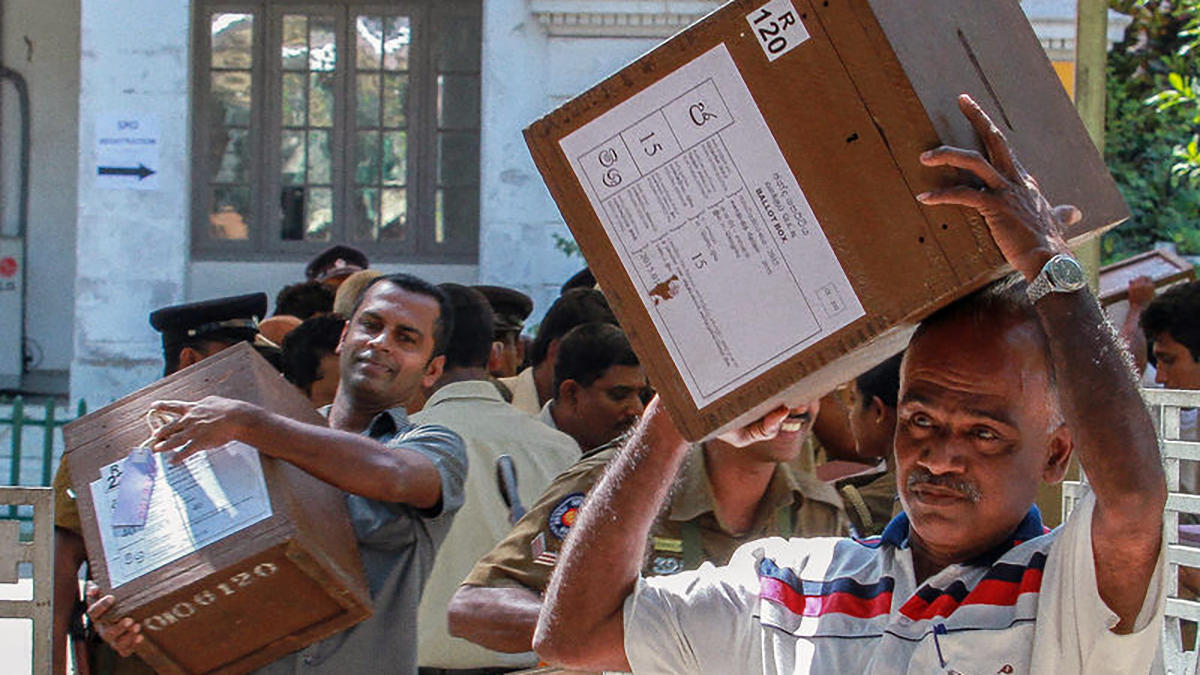
Postal voting for the 2024 Presidential election officially begins today, with over 700,000 eligible voters set to cast their ballots.

According to the Election Commission, postal votes can be marked today (September 4) at District Secretariats and Election Commission offices across the country.

For uniformed staff and civil workers attached to law enforcement and security offices, postal voting will be available on September 4 and 6. This includes Senior DIG and DIG Offices, SP and ASP Offices, Police Stations, Special Task Force (STF) Camps, Special Police Units, and VIP Security Divisions.

On September 5 and 6, postal voting will be conducted at Tri-Forces camps and all other government institutions.

In cases where voters are unable to cast their votes on the initial dates, the Election Commission has allocated additional days on September 11 and 12. Voters can visit the District Election Offices in the district where their workplace is located to mark their postal votes.

To participate in postal voting, voters must present proof of identity, such as a National Identity Card, valid Driving License, valid Passport, or a temporary Identity Card issued by the Election Commission.

A total of 736,589 applications were received for postal voting for this election. However, 24,268 of these applications were rejected, leaving 712,321 eligible voters to cast their postal votes.

Independent Tamil Candidate Launches Policy Statement

Independent presidential candidate P. Ariyanethran unveiled his policy statement, presenting the Tamil National Common Structure for the upcoming election.

The manifesto explains that a Tamil common candidate was nominated this year due to the Tamil people’s seven-decade-long struggle for their rights, which has yet to yield satisfactory answers.

The manifesto calls for the constitution to recognize the independence and self-determination of the Tamil people as a solution to the national question.

It emphasizes moving forward as a united country while ensuring the diversity of Sri Lanka’s population.

The manifesto argues that the political aspirations of the Tamil people cannot be fulfilled under the current unitary state framework.

It asserts that the Tamil people should have the right to seek international support for their chosen solutions.

Arianethran calls for international investigations into genocide and war crimes.

The policy statement, which includes nine fundamental points, underscores the need for a new approach to address the longstanding issues faced by the Tamil community in Sri Lanka.

Comprehensive Development for North, East

Sajith Premadasa, the presidential candidate from the Samagi Jana Balavegaya has made a bold promise to implement a robust development program for the war-torn Northern and Eastern Provinces, a feat no previous president has achieved.

Premadasa announced plans to hold a significant international support conference focusing on these regions for the first time since the post-war period.

This conference aims to attract global attention and resources to drive massive development initiatives in the Northern and Eastern Provinces.

Premadasa emphasized the strategic importance of Mannar and its connectivity with other districts and India.

Posted in Uncategorized

Sumanthiran accuses “Ranil Rajapaksa” of being a racist

Illangai Thamil Arasu Katchi (ITAK) MP M.A Sumanthiran accused President Ranil Wickremesinghe of being a racist and ending his term as “Ranil Rajapaksa”.

Speaking in Parliament, Tuesday, Sumanthiran said that Wickremesinghe had blocked the 3rd reading of a private members Bill presented by the MP because ITAK had decided not to back the President at the upcoming election.

Sumanthiran said that the President had no objections to the Bill but was being influenced by the forces working with him.

“He is proving that he is in fact Ranil Rajapaksa,” Sumanthiran said.

Sumanthiran said that if Wickremesinghe continues to block the Bill, he will be forever remembered as “Ranil Rajapaksa the racist”.

Responding to the concerns, Leader of the House Susil Premajayantha said that the Government had no objections to the Bill related to the Provincial Councils Elections (Amendment) Act.

However, he said some opposition MPs are opposing the Bill and for that reason Sumanthiran must try and get the full support of the opposition to ensure the Bill goes through without a debate.

Posted in Uncategorized

Cabinet approves drafting of bill to allow recalling of LG Election nominations

The Cabinet of Ministers has granted approval, subject to adoption at the next meeting, to make necessary provisions for the recalling of nominations for Local Government (LG) Elections.

Speaking at the Cabinet press conference held yesterday (03), Cabinet Spokesman, Minister Bandula Gunawardena stated that it has been observed that over 900,000 voters who were included in the renewed 2024 voters’ list are at risk of losing the right to vote and the right for the candidacy as a result of the indefinite postponement of the 2023 LG Election.

Furthermore, he highlighted that although all the citizens above 18 years of age should be allowed to exercise their right to vote as per the Article 4 of the Constitution, voters who were included into the voters’ list in 2024 will lose the opportunity to vote in an election in which the acceptance of nominations were concluded in January 2023.

Additionally, the Cabinet Spokesman expressed that provision should be made for 25% youth representation in nominations submitted for local government bodies following the passing of Local Authorities Elections (Amendment) Act No 30 of 2023, and that, however, this provision has also been overlooked as the relevant nominations were called in 2023.

Thus, it has been decided to direct the legal draftsman to prepare a Local Authorities Elections (Special Provisions) Bill including necessary provision after consulting the Election Commission, in a manner that empowers the election regulatory body to recall the nominations for the aforesaid election and to hold the election based on the updated 2024 voters’ list, in order to address the said issues.

However, the joint proposal submitted to the Cabinet of Ministers by Prime Minister as the Minister of Public Administration, Home Affairs, Provincial Councils & Local Government and the Minister of Justice pertaining to the matter has been approved by the Cabinet of Ministers, subject to adoption at the next meeting.

LG Polls to be held under updated 2024 voter registry?

The Cabinet of Ministers has granted approval – subject to adoption at the next meeting – to make necessary provisions for the recalling of nominations for the Local Government (LG) Elections.

Speaking at the Cabinet press conference held yesterday (3), Cabinet Spokesperson Dr. Bandula Gunawardana stated that it has been observed that over 900,000 voters who were included in the renewed 2024 voters’ list are at risk of losing the right to vote and the right for the candidacy as a result of the indefinite postponement of the 2023 LG Elections.

Furthermore, he highlighted that although all the citizens above 18 years of age should be allowed to exercise their right to vote as per Article 4 of the Constitution, voters who were included into the voters’ list in 2024 will lose the opportunity to vote in the elections in which the acceptance of nominations were concluded in January of last year (2023). Additionally, he expressed that provisions should be made for 25% youth representation in nominations submitted for LG Bodies following the passing of the Local Authorities Elections (Amendment) Act, No. 30 of 2023, and that however, this provision has also been overlooked as the relevant nominations were called in 2023.

Thus, it has been decided to direct the Legal Draftsman to prepare a Local Authorities Elections (Special Provisions) Bill including the necessary provision after consulting the Election Commission (EC), in a manner that empowers the EC to recall the nominations for the aforesaid Elections and to hold the Elections based on the updated 2024 voters’ list, in order to address the said issues.

The joint proposal submitted to the Cabinet by the Prime Minister as the Minister of Public Administration, Home Affairs, Provincial Councils and Local Government and the Minister of Justice pertaining to the matter has been approved by the Cabinet, subject to adoption at the next meeting.

Tamil question in Lankan Presidential manifestos By Veeragathy Thanabalasinhgam

The election manifestos of the three main Presidential candidates were released last week. On August 26, the National People’s Power (NPP) leader Anura Kumara Dissanayake released his manifesto titled ‘ A thriving Nation, A Beautiful Life’.

Then, on August 29, President Ranil Wickremesinghe released his manifesto under the title ‘The Five Years of Winning the Country with Ranil ‘ and the Samagi Jana Balawegaya (SJB) leader Sajith Premadasa released his under the title ‘ A Win for All.’

The three of them prioritized their plans to rescue Sri Lanka from the economic crisis and have presented proposals to find solutions to most of the problems facing the country and its people. But it is doubtful if ordinary people would care to read these lengthy declarations with patience.

President Wickremesinghe’s firm conviction is that there is no other way for economic recovery except to continue the economic restructuring measures that have been carried out for the past two years in accordance with the agreement his government made with the International Monetary Fund ( IMF ). Speaking as if the other two main candidates would not carry out those restructuring measures effectively, he is asking the people to give him a five-year mandate.

Premadasa and Anura Kumara have also announced that they will continue with the agreement with the IMF with some amendments, but will hold talks with the International lender to reduce taxes that burden the people.

Therefore, whoever becomes the new president, it is clear that his action plan regarding the economic recovery will be carried out in accordance with the IMF agreement.

The main purpose of this article is to briefly look at what the three leaders have said in their manifestos on the issues related to the new constitution and the ethnic (Tamil) problem. Long before the announcement of the election, all three candidates had expressed their positions on a political solution to the ethnic problem and they mentioned the same in their manifestos as well.

Although Anura Kumara has been saying for a long time that the NPP government will bring a new constitution, what he has said in the manifesto was unexpected. He says that the constitutional drafting process carried out during the government (2015-2019) led by President Maithripala Sirisena and Prime Minister Ranil Wickremesinghe will be speedily completed and that political and administrative powers will be shared with each local government institution, district and province so that all people can participate in governance. The manifesto makes no reference to the 13th Amendment to the Constitution.

Meanwhile, President Wickremesinghe has said that as per the 13th Amendment, powers will be devolved to the Provincial Councils. He has mentioned that the powers which the central government had taken back from the provinces will be given back to them and the responsibility of deciding on the police powers for the provincial councils will be handed over to the new parliament.

The President, who has promised to give importance to national reconciliation, has said that the Truth and Reconciliation Act will be passed and the report of the Nawaz Commission on Missing Persons will be implemented.

The SJB leader Premadasa says his alliance is committed to changing the present constitution and the formulation of a new constitution with proper consultation with religious dignitaries, political parties representing the Parliament , and members of the civil society.

” In that process, our principle is to convert our current political system to a parliamentary system and with maximum devolution based on 13th amendment under one country,” his manifesto says.

Further, he said his government would be committed to fully implementing the current constitution including the 13th amendment till the passage of the new constitution and reaffirmed the commitment to provincial councils by not retracting the powers granted to them and instead, strengthening the developments made at the provincial level.

When it comes to the aboliltion of the Presidential system, while Anura Kumara has said that his government will abolish the executive Presidential system and establish a parliamentary system of government and create a non-executive presidency, Wickramasinghe has said that the responsibility of drafting a new constitution will be entrusted to the new parliament that will be elected in the general election that will be held following the Presidential election.

The President also said that the new Parliament should decide whether to abolish the Executive Presidency or not.

This is nothing new for him to say. Premadasa and Anura Kumara have also been saying for several months that the responsibility of deciding on the abolition of the Presidential system should be handed over to the next parliament.

Although there have been talks about the abolition of the Executive Presidency for nearly three decades, no tangible attempts have been made in this regard so far. Whatever the three main candidates have promised in their manifestos, people certainly have strong doubts about their political integrity.

Also, an important question is whether it will be possible to find consensus among the political parties in the next Parliament on a new constitution, given the current political landscape and the level of support among the people.

An important point to note is that the three leaders have largely expressed similar positions on issues related to the national ethnic problem. With the Presidential election still three weeks away, a largely non-ethnic trend can be observed in the campaigns of major political parties or coalitions this time around. This is completely different from the situation seen during the 2019 Presidential election.

There is an opportunity in the current situation that the Tamil political parties can exploit effectively.

But it is unfortunate that the many of the North and East Tamil political parties do not care to use it. Most of the Tamil parties which are demanding a permanent solution to the national ethnic problem are not only urging the Sri Lankan government to fully implement the 13th Amendment but also pleading with New Delhi to pressurise Colombo to do so. The leaders of these parties should not think that their responsibility is over just by asking for India’s help. They must work together to use the available opportunities to persuade or pressurise the government to fully implement the 13th Amendment.

A political strategy must be employed to ensure a conducive environment. Now that the three main candidates have taken a favourable position on the 13th Amendment, the leaders of the Tamil parties should hold talks with them and strive to obtain assurance that whoever becomes the President, none of them should oppose any future efforts to implement the amendment. In today’s context, that can be a prudent approach.

This columnist is no fan of the 13th Amendment. But what is wrong with the Tamil parties adopting such a strategy? After all they consider that 13th amendment as a first step in their journey towards a permanent political settlement?

There is also a significant section within the Tamil polity that says that the 13th Amendment should not be accepted in any way. Do the Tamil people today have the political clout to force any future government to bring back one with similar or lesser provision if the amendment is abolished?

This question is not yet answered. Dream world politics is easy. But it is important for the Tamil people today to think about a practical approach.

Anura Kumara has mentioned in his election manifesto that his government will bring a new constitution by completing the constitution drafting process which was carried out during the ‘ Yahapalanya ‘ government. The then Leader of the Opposition, the late R. Sampanthan and Tamil National Alliance (TNA) Parliamentarian M.A. Sumanthiran claimed during that process, that a more comprehensive devolution proposal were explored beyond the provisions of the 13th amendment indicating their perception that there was no need to talk about the 13th Amendment any more.

Due to the change of regime, unfortunately, the constitution drafting process could not continue. However, Prime Minister Wickremesinghe submitted an interim report to Parliament. There are also Tamil politicians who are of the view that the lack of specific reference to the 13th Amendment in the Anura Kumara’s manifesto is not a defect as the he said NPP would complete the stalled constitutional drafting process.

But in a situation where even the 13th Amendment has not been properly implemented for more than three decades, Tamil political parties have been nursing the hope of going beyond the amendment.

This was a ploy used by former President Ranasinghe Premadasa, who fiercely opposed India’s intervention in the Sri Lankan imbroglio and not to implement 13th Amendment.

A Parliamentary Select Committee headed by the then Sri Lanka Freedom Party (SLFP) Member of Parliament Mangala Munasinghe was appointed to explore ways to resolve the ethnic conflict in the context of the resumption of the civil war after the withdrawal of Indian forces during Premadasa’s regime.

Since then, Tamil parties have been believing that they could go beyond the 13th Amendment. That was a strategy used by Premadasa to avoid actually implementing the amendment.

Thereafter Chandrika Kumaratunga and Mahinda Rajapaksa took other initiatives while ensuring that the 13th Amendment was not properly implemented. Mahinda Rajapaksa never released the report of the All-Party Representatitive Committee headed by Professor Tissa Vitharana.

Taking all these experiences as a lesson, it would be prudent for the leaders of the Tamil parties to adopt a strategy that would ensure full implementation of the 13th Amendment for the time being.

Posted in Uncategorized

Differences brew in ITAK over decision to back Sajith Premadasa

Resentment brews within the Ilankai Tamil Arasu Kachchi (ITAK) over the decision by the party’s Central Committee to back Samagi Jana Balawegaya (SJB) presidential candidate Sajith Premadasa in the absence of some its leaders such as former MP Mavai Senathirajah and S. Sridharan.

The Central Committee that met in Vavuniya on Sunday decided to back Mr. Premadasa while a section of the party insists on supporting common Tamil candidate P. Ariyanethran who is a former MP from the Batticaloa District.

Party’s spokesman M.A. Sumanthiran announced the decision to the media. He said the decision was taken after deliberation of five years.

However, Mr. Senathirajah who is the ITAK President, said that the decision was taken even without consulting him.

“On that day, I had a chest pain. Therefore, I had to rush to see a doctor. That is why I couldn’t attend the meeting. Still, the party had taken this decision. There is a dispute now,” he said. He said the decision to back Mr. Premadasa without any understanding with him for the resolution of the ethnic conflict could not be accepted.

The Tamil parties that stand by the common Tamil candidate argue that rejection of him would weaken Tamils’ demand for Federalism.