Power grid connectivity Sri Lanka and India poised to form joint venture

Sri Lanka and India are now poised to form a joint venture to execute the power grid connectivity project, Daily Mirror learns.

Sri Lanka and India are working on an undersea transmission line that will link the power grid with that of India.
The proposal is to link Anuradhapura in Sri Lanka and Chennai, the capital of Tamil Nadu state in India through a direct power line. After a 130 km overland transmission line in India, an undersea line (via a submarine cable) will emerge at Thiruketheeswaram in Mannar in northeast Sri Lanka.

Followed by the Detailed Project Report (DPR), the two sides will now work on the formation of the joint venture to execute the project according to a business model.

The project will enable Sri Lanka to realise its 200 Gigawatts potential of wind and solar energy. The proposed joint venture is expected to raise finances for the project.

Basil pledges continued support for President Ranil

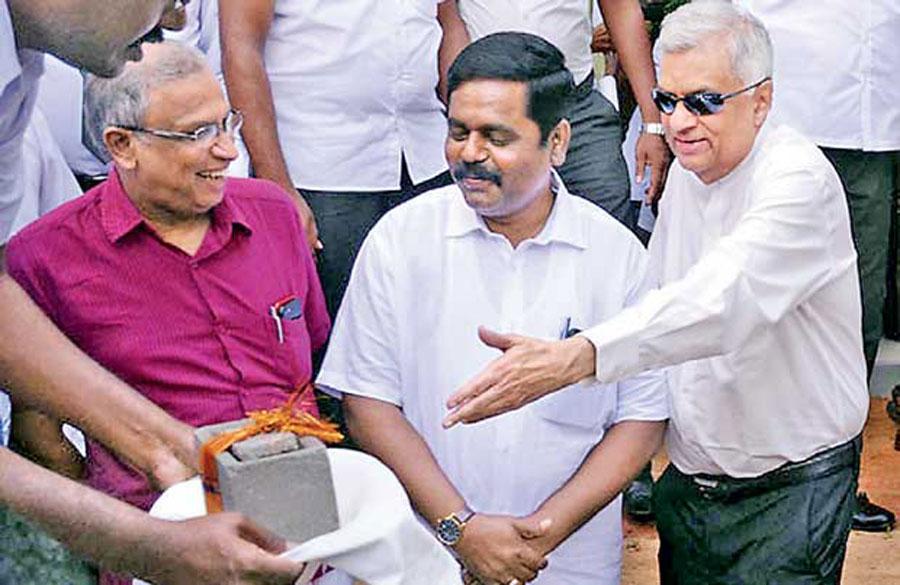
Sri Lanka Podujana Peramuna (SLPP) founder former minister Basil Rajapaksa has declared their intention to continue supporting President Ranil Wickremesinghe with the country’s welfare in mind.

He made this statement while attending a ceremony in Kalutara to mark the 27th anniversary of MP Rohitha Abeygunawardena’s political career.

Rajapaksa emphasized that the SLPP’s support for Wickremesinghe was not motivated by fear, saying, “President, whenever we work as part of the government in moving this party forward, we did not help you out of any fear. We state with great pride that we have no fear and no debt.”

He further noted that the party collectively decided Wickremesinghe had the capability to save the country at a crucial time, and they had been supporting him sincerely since then.

He assured that as long as the President continued to protect the country and its citizens, he would receive their full support.

Former President Mahinda Rajapaksa, who also attended the event, stressed the importance of working with leadership that accepts challenges and moves the country forward, urging the people to support such leadership.

Mattala Rajapaksa International Airport: Russia-India JV under fire

The decision to hand over the management of the Mattala Rajapaksa International Airport (MRIA) to a Joint Venture (JV) between Indian and Russian firms has sparked controversy with the emergence of allegations of a ‘rogue deal’ and concerns about transparency in the selection process, raising questions about the airport’s future.

Last year, the Ministry of Ports, Shipping, and Aviation, on behalf of Airport and Aviation Services (Sri Lanka) Ltd. (AASL), called for Expressions of Interest (EOIs) from prospective investors to develop both direct and indirect aviation-related business ventures at MRIA.

As per the EOI document published by AASL, the EOIs targeted ventures such as Maintenance, Repair, and Overhaul (MRO) services, flying schools, aerospace engineering schools, aircraft spares manufacturing, renewable energy projects, resort hotels, industrial parks, and logistics services.

Successful operators were promised space within a 198 hectare area to build the necessary infrastructure, contingent on Government approvals.

However, according to a senior official who spoke to The Sunday Morning under the condition of anonymity, the process has taken a concerning turn.

“Initially, EOIs were solicited for four separate categories of operations. Yet, for reasons unknown, the management decided to request proposals from the bidders to operate the entire MRIA, effectively transforming the tender into a limited and potentially biased process,” the official claimed.

“They have made a very rogue deal. It is very wrong. It should have been an open tender as this is an international airport. They did something in a drastic way,” the official alleged.

“There were several companies that bid for these separate operations. But somewhere down the line, discussions happened with one particular company out of all other companies, and they suddenly decided to call a limited tender between these few companies which participated.”

The official emphasised that if a single company wished to manage all operations, the process should have been an open tender to ensure fairness and competition.

Instead, the sudden shift to a limited tender excluded many potential large-scale management companies capable of handling such a significant project.

“Initially it was to give out four areas of the airport separately; now the tender is to give out the operations of the entire airport. If you’re sending an EOI to give the entire airport, there are so many other large-scale management companies which can bid for something like this,” the official said.

“They did this without providing that opportunity. Those who submitted the EOIs for separate operations obviously did not have the intention of taking over an airport.”

Furthermore, the urgency of the deal has added to the controversy. The agreements are expected to be signed within one or two weeks, following a Cabinet decision. The terms of the deal have also raised significant concerns.

The official pointed out that the airport would not generate any income under the new management. Despite promises that the company would cover the MRIA’s losses, the airport still has a loan of about $ 7 million every quarter that it must continue to pay.

Additionally, 90% of MRIA employees will be transferred back to the Bandaranaike International Airport (BIA), with AASL shouldering their payments, further exacerbating the financial burden.

“There is no benefit. The losses will keep mounting,” the official warned. “The new company plans to take the MRIA and market it to other investors. This could have been done by a local company.”

Meanwhile, Minister of Ports, Shipping, and Aviation Nimal Siripala de Silva announced last week that MRIA’s management would be handed over to a JV between Indian and Russian firms soon, with India providing $ 69 million for the development of Kankesanthurai Port as part of the broader deal.

Responding to inquiries from The Sunday Morning, AASL Chairman Athula Galketiya refuted allegations of irregularities in the selection process, stating: “It was an EOI. We floated the Request for Proposal (RFP) after selecting the prospective bidders with the necessary qualifications. There has been no irregularity in any way. After shortlisting, we called for EOIs to develop the MRIA, selected those who are capable, and then floated the RFP.”

Galketiya also affirmed that the selected company’s previous experience had been taken into consideration during the EOI process.

Speaking on the management of airport staff, he assured: “The MRIA staff is our staff. They will be handled as per the prevailing labour laws. We have consulted the Labour Department. Those who are selected for the new company will be allowed to join it. We can’t forcibly place them in the new company.”

Regarding investments, Galketiya emphasised: “We are handing over only the operations of the airport. We are holding back the air traffic navigation system, security, and fire rescue and fire fighting. We will be doing that and they will reimburse the cost. There will be no security risk. We are getting a revenue share after three years.”

Explaining the lease details, he stated: “We have 700 hectares; out of that, 500 hectares are needed for airport operations. The balance can be invested in hotels. We will be giving 198 acres on lease, and they will bring down investors for various projects.”

Since its establishment, MRIA has been mired in controversy and allegations of corruption. These issues, stemming from its construction and subsequent financial struggles, have branded it a white elephant, burdening State coffers unnecessarily. As a result, factions in both the current and past administrations have strongly advocated for its privatisation.

Posted in Uncategorized

China Pledges to Support Sri Lanka’s Customs

China has expressed its readiness to collaborate with the Sri Lanka Customs Department to enhance safety, security, and cooperation.

Wang Lingjun, Vice Minister of the General Administration of Customs of China, outlined the Chinese government’s three-step plan for executing these initiatives.

This announcement came during a meeting between Lingjun, his delegation, and officials from the Sri Lankan Customs Department, along side State Finance Minister Shehan Semasinghe, this morning.

Lingjun highlighted that China is implementing the Smart Customs Project, which involves collaborating with customs agencies worldwide through a single platform.

He emphasized China’s commitment to delivering positive outcomes for Sri Lanka and offering support through the Single Window system to enhance efficiency, mutual understanding, and security.

Furthermore, he emphasized China’s willingness to sponsor customs projects in Sri Lanka.

Shehan Semasinghe, Minister of State for Finance, expressed confidence that these efforts would further strengthen the longstanding relationship between China and Sri Lanka.

Sri Lanka to go ahead with Russian firm to operate Mattala airport despite US advice

Sri Lanka will hand over its Chinese-built airport operations to a consortium with Indian and Russian firms, despite the United States has informed about a US sanction on the key stakeholder of Moscow firm, the island’s Aviation Minister said.

A joint venture between Shaurya Aeronautics Pvt Ltd of India and Airports of Regions Management Company of Russia has won the contract to manage Sri Lanka’s Mattala Rajapaksa International Airport for 30 years.

However, officials from the United States have approached Sri Lankan government to inform that the key stakeholder of Russia’s Airports of Regions Management Company is sanctioned by the US treasury in 2018 for suspected meddling in the 2016 U.S. elections,.

“That is not true and correct. We have checked that. It is only a rumour,” Aviation Minister Nimal Siripala de Silva told reporters at a media briefing in Colombo.

“I asked them to give me evidence. Nobody was able to furnish evidence.”

De Silva later told EconomyNext that a top official at the US Embassy also advised him on the Russian firm.

“We are going to hand over the Mattala airport to the Russian and Indian consortium. We had gone through a tedious procedure. I think within a few week time, we will be able to hand over the airport. They are going to take over the airport,” he said.

Officials at the US Embassy were not immediately available for comments on the issue.

The airport, built at a cost of $209 million, was once dubbed the “world’s emptiest airport” because of a lack of flights. The Minister said it incurs a loss of 3 billion rupees (US$10 million) annually.

The airport is strategically located close to the Hambantota port on the southern coast of Sri Lanka where China operates a port on a 99-year lease and also Sinopec is building a US$5 billion refinery.

It has been used sparingly when flights are unable to land in the country’s main airport at Katunayaka, 30 km north to Colombo.

Airports of the Regions, the Russian firm in the joint consortium, is a large airport holding in Russia.

Until 2021, the strategic investor of the company was the Renova Group of Companies, owned by Viktor Felixovich Vekselberg, a Ukrainian born Russian who was sanctioned by the US treasury in 2018 for suspected meddling in the 2016 U.S. elections.

In 2021, however, Vekselberg transferred control over the management company “Airports of the Regions” to a former top manager of Renova, according to media reports.

Sri Lanka used Mattala airport to attract more Russian and Ukrainian tourists soon after the Covid-19 lock down.

Under the previous government, this airport was offered to India with an aim to boost Indian cultural tourists into Sri Lanka. However, the discussion with India to operate the airport did not succeed.

Posted in Uncategorized

President Ranil supports Election Commission’s decision on presidential polls

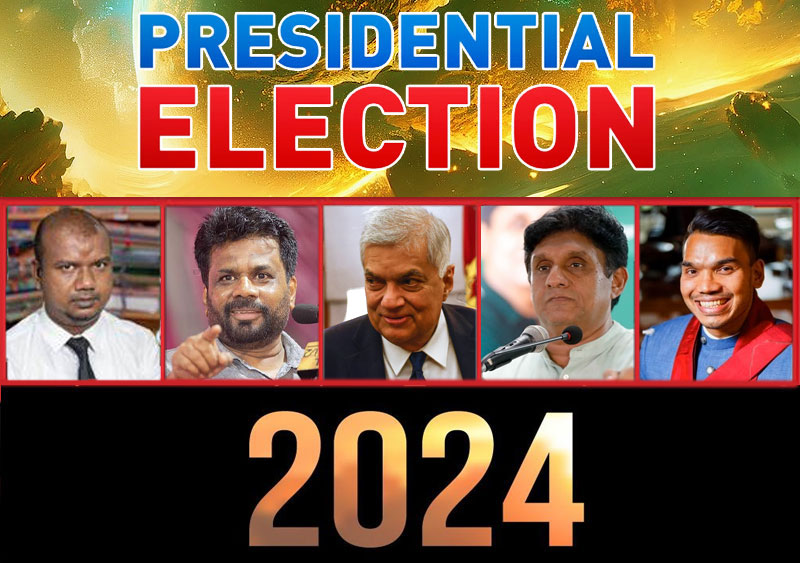
President Ranil Wickremesinghe says he firmly believes that the President’s term is 5 years and supports the Election Commission’s decision to hold the Presidential Election in 2024, the President’s Media Division reported.

An entrepreneur named C.D. Lenaw had filed a fundamental rights (FR) petition yesterday (3) seeking an order preventing the calling of a Presidential Election until the Supreme Court delivers its interpretation on the presidential poll date.

The petition has requested that an interim order be issued to prevent the holding of the presidential election within the currently scheduled period until the court delivers its interpretation on the date of the next presidential election.

Commenting on this, the President stated that neither he nor his lawyers were consulted or informed about this petition before it was submitted.

The media release issued by the PMD states:

“It has been brought to the attention of the Government that one Chamindra Dayan Lenawa has filed an Application in the Supreme Court under and in terms of Articles 126 read with Articles 12(1), 82(6), 3, 4, 118 and 125 of the Constitution of the Democratic Socialist Republic of Sri Lanka praying, inter alia, for a declaration that Article 30(2) should not be interpreted to be amended ab initio by Section 3 of the 19th Amendment to the Constitution and accordingly the Election Commission shall hold the next presidential election taking into account that the term of the office of the President is 6 years and for an interim order restraining the members of the Election Commission from taking any further steps in conducting a Presidential Election in 2024 until the Supreme Court determines this Application.

“President Ranil Wickremesinghe states that the said Chamindra Dayan Lenawa has not consulted the President or his lawyers prior to filing this Application in the Supreme Court.

“Further, President Ranil Wickremesinghe is firmly of the opinion that the term of the President is 5 years, and the Election Commission is correct in taking steps to hold the Presidential Election in 2024.”

Posted in Uncategorized

Eastern Muslims Long for Leader Who Can Ensure Equality By Naalir Jamaldeen

Against the backdrop of the upcoming Presidential Election, the Muslim community is eagerly waiting to elect a leader who treats every citizen equally, particularly minority communities, by rooting out marginalisation and discrimination.

Ceylon Today spoke to Muslims in the Eastern Province to learn more about Muslim political representatives. Their collective allegation was that the advent of Muslim political parties has distanced Muslims from other communities. This situation must change soon and this change will only be realised when a leader who follows democratic principles takes the reins.

Role and contribution of Muslim leaders

Mohammed Ismail Mohammed Faisar said before the emergence of Muslim political parties with Islamic banners, the people belonging to every community, be it Sinhalese, Tamils or Muslims, lived in harmony while protecting their own ethnic identity, the integrity and reconciliation among diverse ethnic groups remained at the highest level. Today, it has turned topsy-turvy. A new political culture must emerge in the country in which every citizen must be able to practise their religion freely.

Mohammed Faisar said in the early times, the Muslim Community didn’t have separate political parties. But then Muslim leaders could win the political and other aspirations of the Muslim community by working together with the main political parties and maintaining cordial relations with them. There is enough evidence in history about it. Muslim leaders like Attorney M.C. Siddi Lebbe, former Sri Lankan High Commissioner for Pakistan T.B. Jayah, former Member of Senate of Ceylon A.M.A. Azeez and other leaders who emerged from the Muslim community did not try to form a political party for Muslims. If they had done so, the situation would have worsened. They didn’t make such an effort because they knew its consequences for the Muslim community.

Mutual understanding and good relations with other communities

As those leaders had good relations with the leaders of majority political parties and had a mutual understanding with each other party, they had no issue in bringing the issues of the Muslim community to the attention of rulers. As they had the power to bargain with the then governments, the Muslim community easily won their privileges and rights same as the majority community of this country had or enjoyed. The Muslim community had enough freedom to express their views then and lived in a safe environment. Unity and mutual understanding between every community prevailed. Though Muslim political parties, with Muslim names, were formed, that concept is not feasible in the present context because the Muslim community itself will transform into a marginalised community.

“The Muslim political parties are viewed by majority communities like racial political parties now, it cannot be considered as a wrong view and they can’t be blamed even because the Muslim political parties have filled their vote banks by spreading their own ideologies under the guise of fighting for their community. I consider that the Muslim political parties are not necessary in this context because certain factions were waiting for opportunities to create problems with the Muslim community,” Mohammed Faisar said.

The present Muslim political parties have done nothing good to the Muslim community except for questioning their existence and transforming them into an isolated community in the country on the grounds of race or religion. There were ample examples in the past.

Muslim political parties’ failure to fulfil their obligations

When the Muslim community confronted many problems after the Easter Sunday terror attack and in several instances before it, the leaders and members of Muslim political parties who came to power getting the votes of Muslim folk did nothing to wipe out their grievances, forgetting the slogans they shouted before coming to power. In the present context and even in future, the Muslim political parties will not be suitable for the country. The time has come for every citizen of this country to rally under the banner of unity and to work for the country beyond race, caste or religious barriers. The Muslim political parties totally failed to fulfil their promises and the aspirations of the Muslim community as well and as a result, those parties are becoming unpopular among the Muslim community and will vanish very soon, Mohammed Faisar added.

Upcoming Presidential Election

The entrance of Muslim political parties and their demands during the upcoming Presidential Election would make the existence of the Muslim community questionable further. The leaders of Muslim political parties remained silent when the Muslims were attacked and severe damage was caused to their properties. The Muslim community is showing interest in casting their votes for majority political parties in the elections to be held in future including the presidential and general elections.

The past mistakes of Muslim political parties have made Muslims think twice before aligning with them. The Muslim community seems to work for the mainstream political parties like Samagi Jana Balawegaya (SJB) or United National Party (UNP) or Sri Lanka Freedom Party (SLFP) in future because it is the only available means the Muslim community has to win its fundamental rights and privileges. Though the Muslim political parties contributed to an extent to the advancement of the community, it is an undeniable truth that they did nothing for Muslims using the power they had.

The Muslim community has clearly understood the nature of leaders and members of Muslim political parties and they can’t be deceived once by spreading the racism among the Muslim folk in the Eastern Province as in the past. Now, the Muslim community remains vigilant of those leaders and the members of their parties. The Muslims gained nothing from them so far except for those who mollycoddled them. The members of Muslim political parties who obtained the votes of Muslims, especially the Eastern Province Muslims giving them fake promises now work with majority political parties completely shattering their hopes. Now Muslim MPs and their party leaders function in Parliament separately with different agendas. It is the present state of Muslim political parties in Sri Lanka. The Muslims will gain nothing from them even in future.

Eliminating racism

Jawhary Abdul Azeez said racism, separatism, demands for a separate State in the North and East, religionism or regionalism persisted in the country in some form over nearly 75 years since Sri Lanka received independence from British imperialists. The leaders who governed the country in the interim could be the cause for the eruption of such a miserable situation. If it lasts, no one can prevent the country from collapsing economically. In such a situation, the existence of a minority Muslim community too will remain questionable. “We need a leader who can treat everyone equally, like parents looking after their children,” he said.

But after the Aragalaya, the majority of people have started to feel that every citizen of this country is equal and must live together in harmony and those who come with racial ideologies must be rejected. This is a good sign for the restoration of peace and unity in the country. Though citizens want to live in harmony, politicians try to create divisions among the people in terms of race, religion or caste for their political survival. Though it is misinterpreted by certain factions, there is no room for racism or regionalism in Islam. It promotes unity and coexistence between different ethnic groups. Islam always prioritises patriotism, Abdul Azeez said.

We are Sri Lankans and unity is our strength

The change of thinking “We are Sri Lankans and unity is our strength” has taken place among the majority of people in Sri Lanka following the Aragalaya, particularly among the Sinhalese. Tamil, Sinhala and Muslim communities live in harmony in the North and East. For instance, the majority of residents in the Kinniya Divisional Secretariat (DS) Division are Muslims but Sinhala and Tamil people also live in some places in this DS Division. Still, they live in harmony, without any disputes, according to Abdul Azeez.

“I don’t think the politicians who come to the people asking for votes with racial ideologies will have any future in politics. Actually, Aragalaya was the turning point in the political history of Sri Lanka. The Provincial Council system did not benefit the people. We need a united Sri Lanka governed by the Central Government where every citizen has equal access to everything including employment,” Abdul Azeez said.

Abdul Azeez said there are Muslims, Buddhists, Tamils and Christians in Malaysia and Singapore. Laws have been enacted in those countries giving equal access to every community and no one can interfere in others’ personal matters and doing so is an offence. Such a system must be implemented in Sri Lanka, where every issue, be it ethnicity or religion-related, can be resolved within democratic norms. Because Sri Lanka is a multi-ethnic country, there must be arrangements in the Constitution to elect a President even from the Muslim and Tamil communities.

The politicians always try to keep the Sinhalese, Tamils and Muslims away because if they unite, they will not have any future in politics. They use racism as a pawn in their political chessboard. If there is a multi-language government school in Kinniya DS Division, it will play a pivotal role in building up the unity between, Muslim, Tamil and Sinhala communities in the region, according to Abdul Azeez.

S.M. Abdul Niyas said it is questionable whether the Muslim MPs who represent the Muslim political parties had any underhand deal with the Government to cast their votes to enact the 18th, 19th and 20th amendments to the Constitution in Parliament. At a time when Muslims were facing various issues including the forced cremation of bodies of Muslims who died in the Covid-19 pandemic, the members and leaders of Muslim political parties who were in Parliament then could do nothing to stop the forced cremation. “Due to such activities, the Muslims who sent them to Parliament with thousands of hopes and dreams were disappointed. Without caring for their own community, they worked in favour of the Government. There were many such instances in the past,” he said.

Behaviour of Muslim political representatives

Abdul Niyas said the behaviour of Muslim politicians isn’t representative of the Muslim community. It is a setback that remains in Muslim politics. Though the politicians from the majority community acted in a manner of affecting the privileges and rights of Tamils and Muslims, the Muslim politicians behaved awkwardly concerning the problems of the Muslim community. Due to the bitter experience, they suffered in the past, the Muslim folk are in great suspicion today about Muslim MPs.

If the Muslims speak up, the truth will come to light. Unfortunately, the Muslims don’t have an alternative leadership today. There is a possibility that the Presidential Election will be postponed by one year. In addition to the mainstream political parties’ presidential candidates, there is a possibility that the Tamil community will field a candidate to represent their interests. Certain factions in the Muslim community are of the same stance as Tamils, Abdul Niyas said.

Abdul Niyas said its worst consequences will be felt by Muslims in the future. If such an imprudent decision was taken by the Muslim political leadership, without a proper plan, it would definitely affect the younger generation in future while making their existence questionable. As Sri Lanka is not a country free from racism or communalism, Muslim politicians must exercise caution before taking a nationally important decision or making a statement publicly that has a direct impact on the existence of the Muslim community. The Muslims must move their pawns on the political chessboard skilfully considering all these aspects. Muslim politics must be based on Islamic principles.

Responsibility of Muslim community

The Muslims tend to think more calmly today. After the anarchy unleashed on Muslims by the SLPP, the Muslim folk have decided to support the UNP, changing the stance they had earlier. Muslim leaders always tried to protect their positions and privileges but not the community that had kept great confidence and trust in them. In the present context, the Muslim community is in a critical state of who is to guide them and who will fight for them. The Muslim civil society organisations in Sri Lanka are inactive. Even though Muslims think rationally, Muslim political leaders remain an obstacle to the community, Abdul Niyas added.

Ensuring democracy

Dr. Abdul Rauff Bizrul Haafi said though democracy is the only means to ensure the safety of a minority community in a country, it is doubtful whether it is accurately practised. The same situation prevails in Sri Lanka today. If the voting rights in a democratic country are not exercised properly, the probability of the wrong person being elected is high and it will lead the country toward anarchy. In countries like the US, they have statutory bodies like the Senate Board to control the Government, in particular the President from misusing his/her power. Due to the lack of such a mechanism in third-world countries, ensuring democracy has become more challenging.

Dr. Bizrul Haafi also suggested that if there are statutory bodies like the Senate in third-world countries, the governing bodies can be kept in check. And then ordinary citizens, in particular the minority communities, will be able to enjoy democratic rights.

Posted in Uncategorized

President responds to petition filed to halt Presidential election

President Ranil Wickremesinghe said today that Chamindra Dayan Lenawa, who filed a fundamental rights petition before the Supreme Court to halt the Presidential election, had not consulted the President or his legal representatives before filing this application, the President’s Media Division said.

The fundamental rights petition was filed before the Supreme Court yesterday seeking an order to prevent the Election Commission from conducting the Presidential election till the Court decides on the incumbent President’s tenure.

The President’s Media Division said that the government has taken note of this development.

They said that President Wickremesinghe is firmly of the opinion that the term of the President is five years, and the Election Commission is correct in taking steps to hold the Presidential Election in 2024.

Posted in Uncategorized

Japan to Expand Maritime Cooperation with Sri Lanka; Vision for Peace and Stability in the Indian Ocean

The Minister for Foreign Affairs of Japan Yoko Kamikawa has said that given the strategic importance of Sri Lanka which is situated on the sea lane between Africa and the Pacific, Japan aims to further strengthen cooperation with Sri Lanka in the maritime sector.

She made this remark during a meeting with her Sri Lankan counterpart Ali Sabry, PC in Tokyo.

Minister Sabry, according to the Ministry of Foreign Affairs of Japan, responded saying that Sri Lanka, as a peace-loving maritime nation, will continue to cooperate with various countries and contribute to the peace and stability in the Indian Ocean.

The Japanese Minister for Foreign Affairs Kamikawa had expressed hope that initiatives like the Japanese Cabinet Office’s “Ship for World Youth” program, which became the opportunity for Minister Sabry’s visit to Japan 28 years ago, as well as the new Project for Human Resource Development Scholarship (JDS), will nurture talented individuals that will contribute to Sri Lanka’s development and serve as bridges between the two countries.

The two Ministers agreed that active people-to-people exchanges are the foundation of bilateral relations, and they concurred on actively promoting such exchanges between the two countries.

No ill-will between Sri Lanka president and ruling party, but views differ: Rajapaksa

There is no bad feeling between President Ranil Wickremesinghe and the Sri Lanka Podujana Peramuna (SLPP), but the president and the ruling party are of two different political positions, SLPP leader Mahinda Rajapaksa said.

The former president told reporters Monday July 01 night at the Bandaranaike International Airport (BIA) in Colombo that the candidate the SLPP opts to back at the upcoming presidential election will have to be someone who can work with the party.

“We’re democratic. We do something after discussing it with everyone,” he said.

Rajapksa had just returned from Beijing, having concluded an “official” four-day visit. In Beijing, he attended the 70th anniversary of the Five Principles of Peaceful Coexistence where he was greeted by Chinese President Xi Jinping.

Asked by reporters if there was bad feeling between the SLPP and President Wickremesinghe, Rajapaksa said: “There is no reason for bad feeling. Politically we’re of two different views.”

Rajapaksa recently spoke against the Wickremesinghe administration’s moves to restructure state-owned enterprises, claiming that a majority of his party are opposed to the “sale of national assets”, even as ministers representing the party continue to express support for ongoing reforms.

A number of prominent SLPP members including Power & Energy Minister Kanchana Wijesekara, Foreign Minister Ali Sabry and MP Mahindananda Aluthgamage were seen at a political rally held in Matara on Sunday June 30 ostensibly as part of President Wickremesinghe’s election campaign, though he has yet to officially announce his candidature.

Asked for comment on the presidential election to be held between September 17 and October 18, Rajapaksa said: “We will put a candidate and see. Wait a little. The party hasn’t made a decision yet.”

“It is someone who can work with us that we can give it to. It must come from the people. Leaders come from the people,” he said.

He denied that the SLPP has already selected a candidate.

“No, not yet. Let’s see. Thee is still time,” he said.