UN concerned over impact of austerity measures in Sri Lanka

The UN High Commissioner for Human Rights Volker Türk raised concerns over the impact of austerity measures in Sri Lanka.

He said that while Sri Lanka’s macro-economic situation has improved, the impacts of the economic crisis together with associated austerity measures are affecting the poorest and already marginalized groups the most.

“Between 2021 and 2023, the poverty rate doubled from 13.1 to 25.9 per cent and is expected to remain at such levels over the next few years,” he told the UN Human Rights Council, Tuesday.

He was speaking while delivering the global update at the 56th session of the Human Rights Council.

“Globally, inequality has seen the largest increase in three decades, as poorer countries took a bigger economic hit from the COVID-19 pandemic compared to richer countries,” Türk said.

According to Oxfam, the wealth of the world’s five richest billionaires has more than doubled since the start of this decade, while 60 per cent of humanity has grown poorer.

Türk said that 4.8 billion people are poorer than they were in 2019 and the wealth gap between men and women globally was 100 trillion USD.

Minor tremor reported in Vavuniya

A minor tremor has been reported in the Vavuniya area.

The Geological Survey and Mines Bureau (GSMB) stated that the minor tremor, measuring 2.3 on the on the Richter scale, had occurred between 10.55 p.m. and 11.10 p.m. last night (18).

It is reported that the tremor was felt in areas including Vavuniya and Medawachchiya and that it had been recorded at the seismic stations at Pallekele, Mahakanadarawa and Hakmana.

Posted in Uncategorized

CC rejects extending AG Rajaratnam’s term

The Constitutional Council (CC), yesterday (18), rejected President Ranil Wickremesinghe’s recommendation to extend Attorney General Sanjay Rajaratnam’s term of office, Speaker Mahinda Yapa Abeywardana told Ceylon Today.

This decision was made during the CC meeting held in Parliament at 2:00 p.m. yesterday, chaired by the Speaker.

The decision comes after the Constitutional Council met twice previously to consider the President’s recommendation regarding the Attorney General’s term but was unable to reach a final decision.

President Wickremesinghe had recommended that Attorney General Rajaratnam’s term of service, which ends on 26 June, be extended till 31 December.

Meanwhile, Opposition political parties strongly objected to the President’s recommendation to extend the Attorney General’s term, especially with a Presidential Election approaching.

President tells Minister Wijeyadasa to quit?

The Senior Vice Chairman of the Sri Lanka Freedom Party (SLFP), Prof. Rohana Lakshman Piyadasa claimed that the President has pressured Justice Minister Wijeyadasa Rajapakshe, to resign from the government.

He alleged that Minister Wijeyadasa Rajapakshe revealed this during a politburo meeting.

However, when inquired by Ada Derana, Minister Rajapakshe said that the statement made by Prof. Rohana Lakshman Piyadasa is untrue.

Posted in Uncategorized

Sri Lanka’s key political risks ahead of presidential election By SHIHAR ANEEZ

Sri Lanka will go for the island nation’s 8th presidential poll to elect a new leader for the next five years later this year between September 17 and October 16.

The election comes two years after President Ranil Wickremesinghe was elected as the 8th leader of the country through the parliament in an unprecedented manner after his predecessor Gotabaya Rajapaksa fled the country fearing for his life in July 2022 amid mass protests across the country following an economic crisis.

Wickremesinghe, since then, had to implement a raft of hard economic reforms committed to the International Monetary Fund (IMF) including tax hikes, and new laws to ensure the economic recovery under an IMF programme.
Wickremesinghe’s policies have started to help the economic recovery at the expense of his popularity in a nation where there is already confusion and division about right or wrong economic policies. They elect leaders based on unproven campaign promises for short term benefits, where the longer term effects are not initially evident.
Here are five key political risks the island nation is facing ahead of the upcoming presidential polls:

Economic Stability:

Sri Lanka still faces significant economic challenges despite Wickremesinghe government’s gains through IMF-led policy reforms. It has returned to positive economic growth, lower single digit inflation, primary surplus in current account, and higher tax revenue due to tough policies under IMF.

The central bank going against the usual ‘overvalued currency’ claims of the IMF has allowed the rupee to appreciate, bringing some benefits of stability to the people.

But the island nation has yet to complete external debt restructuring formally with both bilateral and private commercial creditors/sovereign bond holders.

Sri Lanka has a bad reputation of policy inconsistency from one government to another and sometimes within the same government in the past mainly to sustain electoral wins.

Still the island nation’s political leaders are struggling to agree on key policies. Opposition parties have publicly said they want to amend commitments Wickremesinghe’s government has agreed with the IMF while there are contradictions over the current government policies within the coalition partners of the government. Such undecided policies could impact external creditors and new investors. Wickremesinghe is trying ensure policy stability through parliament approvals such as the proposed Economic Transformation Act.

Inconsistent policies could hit economic stability as well as the ability to seek external funding as well as investments for future economic development.

Another economic crisis could lead to more social unrest and political instability.

Geopolitical Influences:

Sri Lanka’s strategic location in the Indian Ocean makes it a focal point in regional geopolitics, with competing influences from major powers like India and China. That could impact domestic political stability.

Under Wickremesinghe, China has been maintaining a lower profile though it has won crucial deals like Sinopec fuel distributor stations and a the rights to build a massive refinery in the deep Southern port district of Hambantota with their own funds.

India, on the other hand, has been very active in the island nation’s politics and economic recovery. India helped with large loans without an IMF program while other countries halted loans after default.

However, many political analysts and legislators who see unprecedented Indian influence in a number of Sri Lanka’s strategic policies including defence, energy, and economy fear the re-kindling of dormant anti-Indian sentiment. LL
Some political analysts see India as a key strategic partner on one hand and a spoiler on the other hand for its role in intervening in some crucial domestic policies.

The current government leaders have acknowledged the Indian concerns over the regional security against high Chinese influence in the past.

However, they say, India’s hard push for some projects has left the government in difficulties while others have also has unclear terms. These projects include Adani’s renewable energy projects, unique identity card deal funded by India, and key connectivity projects like electricity grids, along with gas and oil pipelines between the two neighbours. India is also pushing to take control of one of the world’s most strategic natural ports in the Eastern port district of Trincomalee on a long term lease similar to China got the Hambantota port in 2017.

These projects, which could be beneficial for the country, are likely to face delays because of the hard push by India and protests by Sri Lankans, government officials say. India, however, has denied claims of intervention and its hard push for projects.

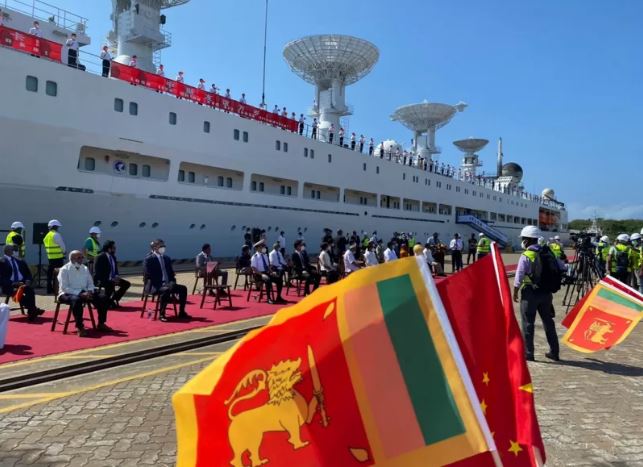
On the other hand, senior government officials say, Beijing has been irritating India through sending its research ships to Sri Lanka time to time for port calls. On repeated strong Indian protests, Sri Lanka banned Chinese research vessels coming to Colombo for research purposes in 2023 for one year. India argues such ships could compromise its and the India Ocean’s security. Some Sri Lanka cabinet ministers say Sri Lanka can’t stop Chinese research ships if they come for port calls.

Recovering from the unprecedented economic crisis, Sri Lanka cannot antagonise either India or China along with other strategic international partners like the United States, Japan, Russia, the United Kingdom, European Union countries, and Iran.

Any future government will be compelled to navigate through the concerns of these international partners when dealing with strategic investment policies. The island nation’s current simple non-aligned foreign policy may not be adequate for such navigations, they say.

Wickremesinghe’s administration has handled such concerns with compromises and political instability could arise if a future government deviate from the current stance, analysts say.

Governance and Corruption:

Concerns persist about governance issues, corruption, and lack of transparency, which erode public trust in institutions and could lead to protests or political instability. One of the key demands of millions of 2022 protestors who forced former leader Gotabaya Rajapaksa to flee the country was to deal with corruption.

They have articulated that past corruption led to the economic crisis in 2022. They have demanded strong actions against those corrupt leaders and bureaucrats and to recover stolen assets owned by them both within and outside Sri Lanka.

Wickremesinghe’s government has come up with Anti-Corruption Act and proposed a strong Proceeds of Crime bill. However, the public perception on the deep rooted corruption has not changed. If Sri Lankan policy makers delay the implementation of corruption-busting policies and punish those involved in past corrupt deals further, it could contribute to instability and public disenchantment of ruling governments.

Concerns over Human Rights/Economic Crimes:

The country’s human rights record, particularly concerning allegations of war crimes and accountability issues related to the civil war, remains a contentious issue both domestically and internationally.

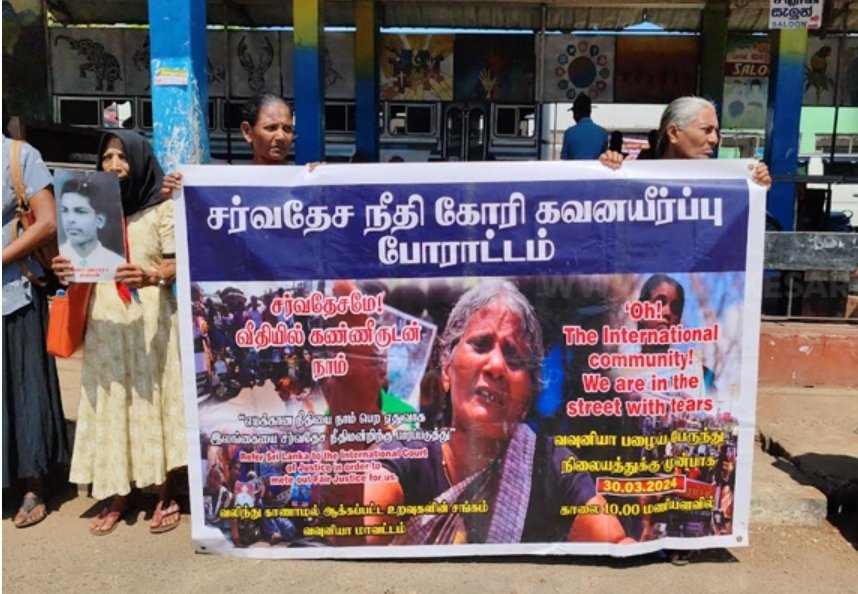
Sri Lanka has taken baby steps to address the past allegations of human rights abuses. These steps include setting up offices to deal with missing people and reparation. However, victims and immediate family members say the government is not doing enough.

Many political leaders still believe demand for accountability on the human rights could disappear with time. Instead, the island nation’s political leaders, military officials, and bureaucrats are still facing sanctions like travel bans from third countries.

Already a new report from the Office of the United Nations High Commissioner for Human Rights (OHCHR) has recommended targeted sanctions on officials responsible for disappearances in Sri Lanka since 1970 and has called for justice outside the country for the families of victims.

A limited number of Western nations have already imposed targeted sanctions, including travel bans for some Sri Lankan political and military leaders, after finding credible information about human rights violations. The United States has imposed a travel ban on former Army Chief Shavendra Silva and his immediate family members, former Navy chief Wasantha Karannagoda, and some others citing human rights violations. Canada last year announced financial sanctions to freeze the assets of former Sri Lankan presidents Mahinda Rajapaksa and Gotabaya Rajapaksa citing rights abuses. This list is expected to expand with Sri Lanka’s denial of addressing the past rights allegations.
The OHCHR has urged the international community to engage with Sri Lanka due to an accountability gap at the domestic level with victims urging prosecution in a third State due to “widespread impunity in Sri Lanka.” With the alleged economic crimes, some new actions including asset freezing are expected in the near future, global analysts say.

The 2022 economic crisis also has also renewed interest Sri Lanka’s international partners on whether assets were bought from money siphoned off through corrupt deals. International analysts say Sri Lankans who are alleged to have misappropriated public funds and properties may also face questioning on the assets owned by them in other countries in future.

The key concern has been most of the alleged human rights violators and economic criminals are yet to face any local investigation or law suit. President Wickremesinghe has been accused of protecting miscreants though he has pledged that he will act according to the law and is strengthening an anti-corruption body including through an IMF program. Those involved in corruption could become a liability for any government in the future unless they are cleared by an independent judiciary. Having such accused could bring some elements of political instability and public unrest.

Political uncertainty:

Sri Lanka is facing uncertainty due to risks involved with possible policy changes after the presidential poll.
President Wickremesinghe has been constrained by a lack of a people’s mandate though his election as the president in the parliament is constitutional. He became the president while his party had only one seat in the 225-member legislature. He is being backed by former President Rajapaksa-led nationalist Sri Lanka Podujana Peramuna (SLPP) which people wanted to oust for its wrong economic policies.

Opposition parties are divided and polarised while political analysts predict no clear winner in the upcoming presidential poll as of now.

Anura Kumara Dissanayaka, the leader of Marxist Janatha Vimukthi Peramuna (JVP)-led National People’s Power (NPP) has gained popularity according to some surveys followed by the main opposition leader Sajith Premadasa.
Analysts say Dissanayaka’s popularity comes mainly from his eloquent critique of corruption under successive governments and promises to act on wrong doers. But there are some concerns over the Marxist leader running an effective government if he wins the poll as he and his party have zero experience in formulating and delivering policies.

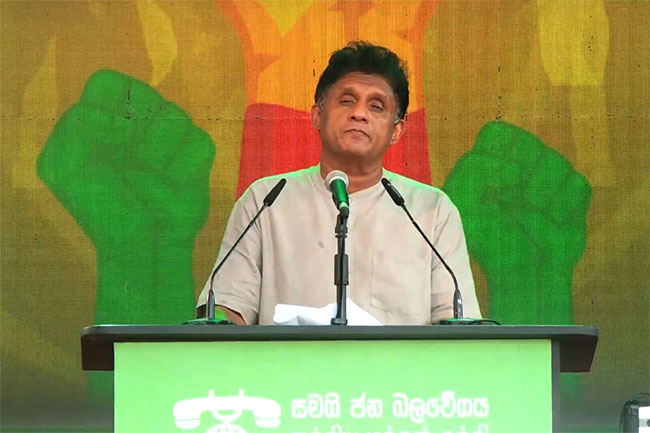
Premadasa has been trying to win people by impressing them with his Japanese language and sports skills among many others. Analysts say Premadasa is benefiting form father former leader Ranasinghe Premadasa and anti-incumbency stance by the public. Premadasa, analysts say, also has little experience in handling a crisis-hit economy. Premadasa was the deputy party leader Wickremesinghe’s UNP until he broke away from it and started Samagi Jana Balawegaya (SJB) as an alternative. Moves to iron out differences between Wickremasinghe and Premadasa have yet to see success.

Wickremesinghe, whose party has only one member in the parliament, is planning to contest under a broader independent coalition, according to some insiders in the expectation that it could allow most current and the past legislators to back him despite ideological differences their parties have.

There is no clear survey or polls to suggest who will be the likely winner at the moment. Wickremesinghe’s popularity has been on the rise among the public in the last two months, but Dissanayaka and Premadasa are ahead of him, analysts say.

These factors collectively contribute to a complex political landscape in Sri Lanka, influencing both domestic governance and international relations.

Posted in Uncategorized

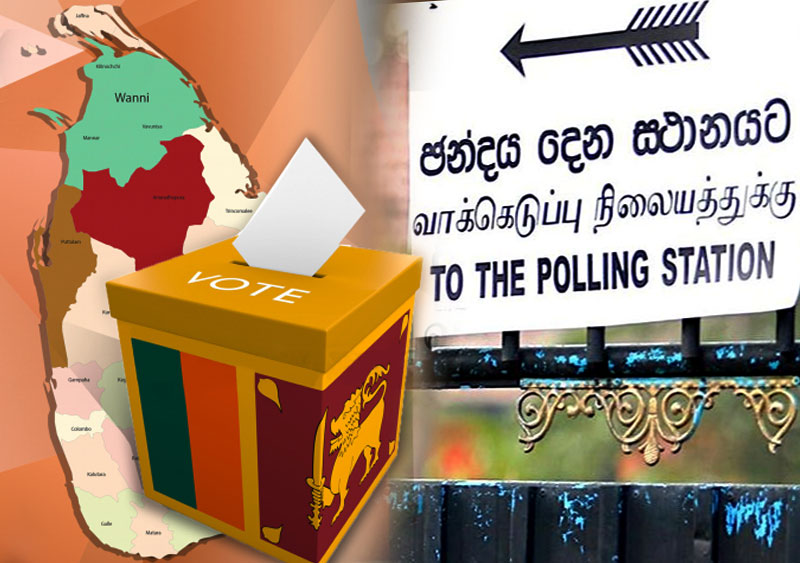
Election Commission to address defects in ballot boxes

The Election Commission has announced that any defects in ballot boxes will be rectified once polling station details are obtained.

Speaking to the Daily Mirror, Election Commission chairman R.M.A.L. Rathnayake said many damaged ballot boxes used in previous elections have been identified and will be sent to the Government Gactory for repairs.

Ratnayake also stated that a census of officers will be conducted soon in preparation for the upcoming election.

He also plans to meet with local election monitoring organizations next week to discuss further arrangements.

The Commission earlier announced that the election will be held during the period from between September 17 and October 16.

Posted in Uncategorized

Provincial Councils: ‘NPP will uphold PC’s, but they are not a lasting solution’: Hadunnetti

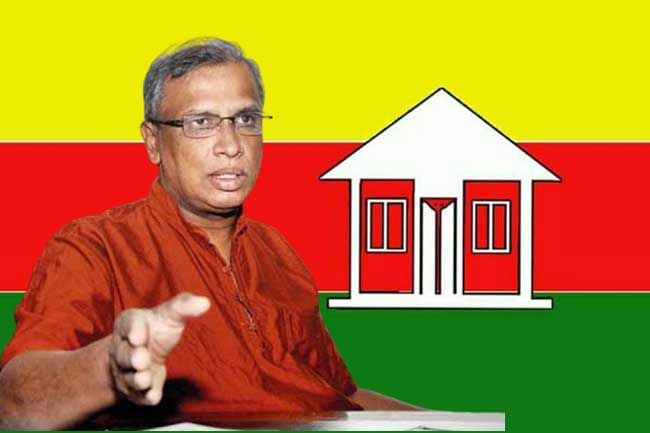
The Janatha Vimukthi Peramuna (JVP)-led National People’s Power (NPP), will uphold the existing Provincial Council system, but does not view them as a definite solution for the ethnic issue in Sri Lanka, NPP Executive Committee Member Sunil Handunnetti said yesterday (17).

This, days after NPP leader Anura Kumara Dissanayake asserted that the Provincial Council (PC) system will remain unchanged under a government led by them in the future.

Last week, speaking at an event in London, Dissanayake reiterated the NPP’s stance that the Provincial Council system, while currently upheld, is not viewed as a definitive solution to the country’s national issues. He highlighted concerns from Tamil and Muslim communities, emphasising their belief that the Provincial Councils represent hard-won rights and any move to dismantle them could lead to unnecessary complications.

Speaking to The Daily Morning yesterday (16), Handunnetti noted further that the NPP will continue the PC system but believe that it is not a lasting solution. He also said that their policy is to continue the PC system in the current form until a lasting solution is identified.

Outlining the party’s approach to maintaining stability while seeking more permanent resolutions, Handunnetti said the entire party holds the same opinion when it comes to the devolution of power. “It is the opinion of our party that the Provincial Council system should be upheld as a means to devolve power and foster inclusivity within the existing framework,” Handunnetti asserted.

Handunnetti emphasised the NPP’s commitment to strengthening the Provincial Council system to ensure effective decentralisation of authority.

The Provincial Council system in Sri Lanka, established in 1987 under the 13th Amendment to the Constitution following Indian influence, has been a subject of debate and contention among various political factions. While some advocate for its enhancement as a tool for regional autonomy and ethnic harmony, others critique its efficacy and call for alternative models of governance to replace it. The 13th amendment, while being part of Legislation for over 30 years, remains a deeply divisive topic in Sri Lankan politics.

Posted in Uncategorized

President meets Mannar Bishop; discuss Indo-Lanka land connectivity; energy exports

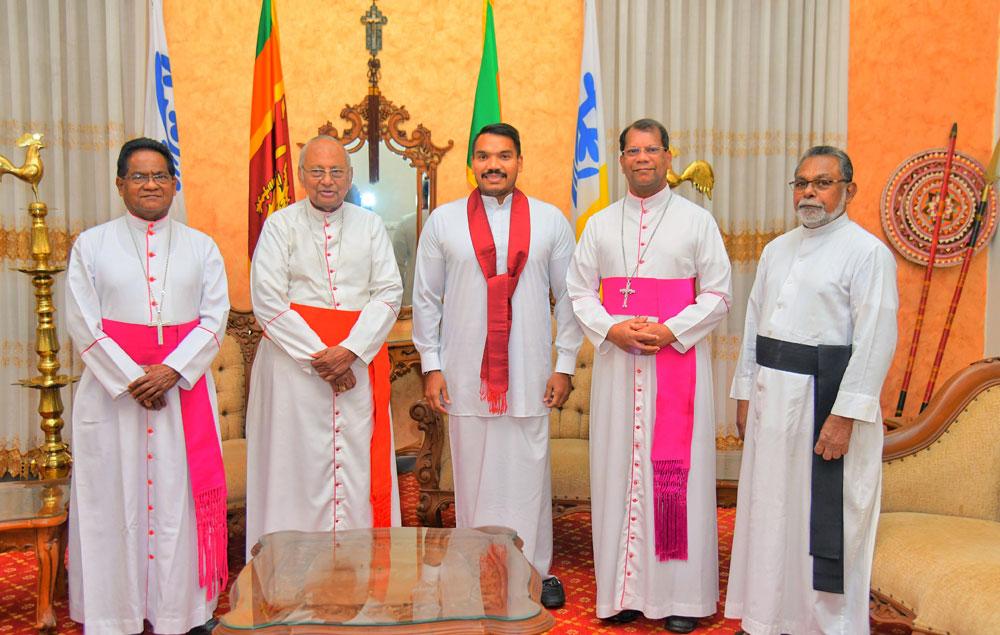
President Ranil Wickremesinghe yesterday met with Most Rev. Dr. Fidelis Lionel Emmanuel Fernando, the Bishop of Mannar, Diocese of Mannar at the Mannar Bishops House.

The Bishop of Mannar commended President Ranil Wickremesinghe for his economic reform efforts aimed at rescuing the country from its financial crisis. During their meeting, they also discussed future development plans for the Mannar district.

Key topics included the development of Point Pedro and Mullaitivu as renewable energy hubs. Emphasis was placed on ensuring that these development activities are carried out in an environmentally friendly manner.

During their discussion it was noted that negotiations are underway regarding the sale of surplus renewable energy to India. A feasibility study is currently being conducted on establishing a power line connection between Sri Lanka and India, with further discussions expected during the upcoming visit of the Indian Foreign Minister to Sri Lanka.

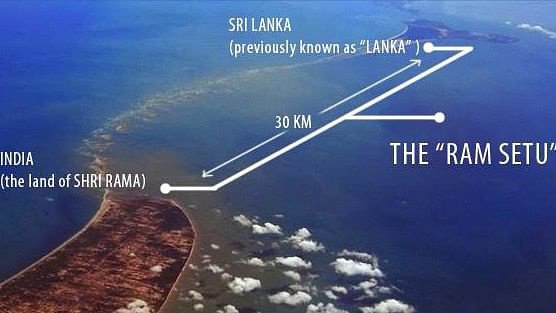
President Wickremesinghe also mentioned that a pre-feasibility study for a land connection between Sri Lanka and India has been completed, and a full feasibility study will be conducted in the near future.

Additionally, plans to develop Mannar as a tourist hub were discussed, including the potential development of Mannar Fort to attract cruise tourists.

President Ranil Wickremesinghe further remarked that these initiatives would lead to extensive development across all sectors in the Mannar district in the future. The Bishop of Mannar also urged the President to address the issues faced by the fishermen of Mannar.

The meeting was attended by Vicar General of the Mannar Diocese, Father P. Christunayagam; Reverend Father Gnanpragasam of Madu Church; Father Peppi Sosei; former Vicar General of the Mannar Diocese; and other clergy members.

Chinese Navy hospital ship to visit Sri Lanka

The Chinese People’s Liberation Army (PLA) Navy hospital ship “Peace Ark” set sail from a military port in Zhoushan to visit several countries, including Sri Lanka.

The ship set sail from a military port in Zhoushan in east China’s Zhejiang Province on Sunday morning for Mission Harmony-2024.

During the mission, the ship will visit 13 countries, namely, Seychelles, Tanzania, Madagascar, Mozambique, South Africa, Angola, the Republic of the Congo, Gabon, Cameroon, Benin, Mauritania, Djibouti and Sri Lanka, and provide medical service to local people. It will also make port calls to France and Greece.

This is the 10th Mission Harmony for “Peace Ark” since its commissioning in 2008. The “Peace Ark” will offer free diagnosis and treatment for common and prevalent diseases to local residents, people in Chinese institutions, and overseas Chinese through onboard clinics and dispatched medical teams.

There are over 100 personnel on board the maritime hospital, featuring 17 clinical departments and 5 auxiliary diagnostic departments.

The “Peace Ark” is the first domestically designed and constructed standard ocean-going hospital ship in China. It has visited 45 countries and regions, providing medical services to over 290,000 people. (Xinhua)

Presidential Election 2024: EC snubs Harin’s 5 Oct. polls date claim

Amidst political tensions, Election Commission (EC) Chairman R.M.A.L. Rathnayake bluntly dismissed claims by Tourism and Sports Minister Harin Fernando regarding a 5 October election date, asserting that the EC, not the Cabinet or Government, held the authority to set the election schedule.

“From 17 July onwards, EC members will convene independently to determine the election date,” Rathnayake declared.

“We will publicly announce the date without obligation to seek approval from any external body, including the Cabinet or President.”

Highlighting procedural specifics, Rathnayake clarified that elections could only commence after 17 September, followed by a mandatory four- to six-week preparation period.

Nomination dates, he added, would be set between 17-21 days post-announcement.

“This reaffirms the EC’s autonomy,” Rathnayake asserted, highlighting the commission’s resolve to uphold constitutional integrity amidst mounting political pressures.

Section 2 of the Presidential Elections Act No.15 of 1981 defines the Elections Commissioner’s duties in overseeing Presidential Elections as mandated by the Constitution.

According to this provision, the commissioner is required to issue an order published in the gazette, specifying two crucial dates.

First, the nomination date for candidates, set between 16 days and one month from the order’s publication date, along with the designated nomination location. Second, the polling date, scheduled between one month and two months from the nomination date.

Importantly, these dates cannot coincide with full moon Poya days or public holidays listed in the First Schedule to the Holidays Act No.29 of 1971. Furthermore, any subsequent declaration of a day as a public holiday after the order’s publication does not invalidate actions taken on that day for the purposes outlined in the act.

Furthermore, Chapter VII, Section 31(3) of the Constitution further specifies that the Presidential Election must occur not less than one month and not more than two months before the term of the incumbent president expires.

Posted in Uncategorized