NPP government will continue Provincial Council system: Anura Kumara

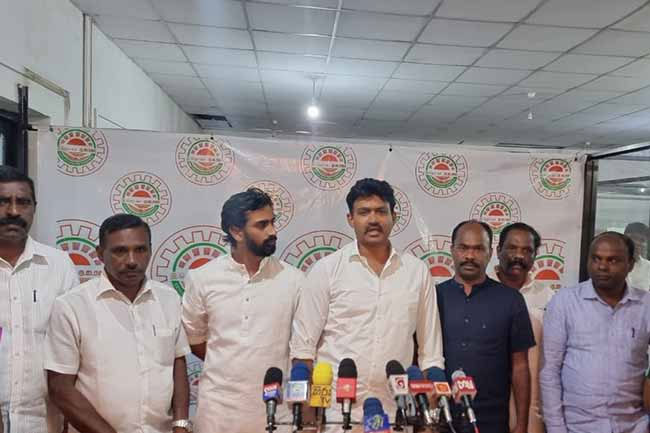
The Provincial Council system will continue in its current form under the National People’s Power government until a new system is identified to create harmony among the Sinhala, Tamil and Muslim communities, NPP leader Anura Kumara Dissanayake said today.

Addressing a gathering in London, he said the NPP never accepts Provincial Council system as a solution to the national issue.

Dissanayake said the Tamil and Muslim communities believe that the Provincial Council is a right that they had won and that scrapping the system will create unnecessary issues.

“We will continue the PC system as an interim solution. We believe that it is not a lasting solution. Our policy is to continue the PC system in the current form until a lasting solution is identified,” he said.

Posted in Uncategorized

Mannar’s long-overdue development to be fast-tracked, says President

President Ranil Wickremesinghe announced that pilgrims to Madhu will be provided with all necessary facilities to engage in their pilgrimage activities without any hindrance.

Addressing the Mannar District Development Committee meeting held today (16) at the Mannar District Secretariat, he emphasized that it is unfair to arrest and fine pilgrims on their way to sacred sites like Madhu Church and Sri Pada.

He instructed that if pilgrims are arrested in the future, the President’s Office should be informed immediately.

During the meeting, the President directed the Sri Lanka Army to clean and develop both sides of the existing Madhu Road for the convenience of the pilgrims visiting Madhu Church.

He also coordinated with a representative of the Bishop of Mannar, the Department of Forest Conservation, the Road Development Authority, and the Sri Lanka Police to ensure these tasks are completed before the upcoming annual festival of the church of Our Lady of Madhu.

Political representatives and government officials attended the meeting, which focused on the future development plans for the Mannar district. Various issues, including those related to health, education, and irrigation, were presented directly to the President, who worked to provide immediate solutions to many of these problems.

The President also addressed the urgent request from the hospital director for a CT scan machine for the Mannar Hospital, promising that this need will be promptly met.

President Ranil Wickremesinghe stated that the lost development will be restored to the Mannar district, with the program starting this year.

He emphasized the necessity of finding solutions that can be implemented in Sri Lanka to adapt to the changing weather patterns over the next five decades. It is predicted that wet regions will receive more rain while dry regions will experience less rainfall in the next fifty years.

The President also stressed the importance of creating a new transformation in the economic, social, educational, and agricultural sectors to align with the evolving global landscape.

Further expressing his views, President Wickremesinghe said:

“After enduring three decades of war, the Mannar district is now rebuilding. This district holds significant potential to boost Sri Lanka’s economy through extensive development. The tourism, fishing, and renewable energy industries have high potential in Mannar.

The district has excellent prospects for wind and solar power generation. Discussions have been held with the Indian Government about producing this energy and selling it to India. The Northern Province, in particular, has a unique capability to generate green energy.

Constructing solar panel power plants on lakes and wind power plants can produce substantial energy. Selling this energy to India and other countries can greatly contribute to Sri Lanka’s economy. Green energy and green hydrogen have the potential to foster a green economy.

Funding for the construction of a new court complex in Mannar will be provided. The possibility of opening the road to Mannar through Puttalam will be discussed in the future. Additionally, arrangements are being made to provide a CT scan machine to the Mannar Hospital. A formal program to create modern agriculture has been presented, and I encourage the development committee to meet, discuss, and suggest the necessary facilities for this initiative. A structured plan is needed to protect the lakes in this area and secure water from the Malwatu Oya project.

In the next five decades, it is predicted that wet regions will receive more rain while dry regions will experience drought. We must start finding solutions now to address this situation.

The road to Madhu Church serves pilgrims, as does the road to Sri Pada for those visiting Sri Pada. It is unfair to arrest and impose a fine of Rs 300,000 on the church. Therefore, representatives from the Diocese of Mannar, Forest Conservation Department, Road Development Authority, Sri Lanka Police, and Army should collaborate to clean and develop this road. These activities will be completed before the annual festival of the church of Our Lady of Madhu.

The guard post at the entrance to Mannar city cannot be removed immediately, but discussions with the security forces will be held to take appropriate measures. Necessary development for the Mannar district will be provided, with the foundational work starting this year.

I wanted to inform you about the extensive development process happening in Mannar. Let’s work together to make Mannar a major contributor to the country’s economy through comprehensive development.”

Source: PMD

Sri Lanka, China hold bilateral consultation in Beijing; policies to be reviewed

Annual bilateral political consultation meeting between top officials of Sri Lanka and China will be held in Beijing next week with the review of some bilateral policies , Sri Lanka’s Foreign Ministry said.

“Secretary, Foreign Affairs, Aruni Wijewardana will lead Sri Lanka’s delegation to the 13th round of Diplomatic Consultations with the People’s Republic of China to be held on 17 June 2024 in Beijing,” the Foreign Ministry said in a statement.

She will co-chair the Consultations with Sun Weidong, the vice Minister of Foreign Affairs of the People’s Republic of China, .

“The discussions are expected to review progress in the areas of bilateral engagement including on political, economic, trade, investment and defence.”

“Sri Lanka’s delegation to the Consultations will include the Ambassador- Designate in Beijing Majintha Jayesinghe, and senior officials of the Ministry of Foreign Affairs including Acting Director General for East Asia Division Poshitha Perera and the Embassy of Sri Lanka in China.

“It is an annual event. Basically some review on the bilateral policies will take place,” Foreign Minister Ali Sabry told EconomyNext.

This year’s consultation meeting comes after a milk hiccup in diplomatic relations between the both countries after Sri Lanka banned Chinese research vessels calling the island nation for research purposes for one year.

The ban came after strong protest by India, which had cited security threats from such research ships, Sri Lanka government officials have said.

Sri Lanka is a key partner in China’s Belt and Road Initiative (BRI), known in China as the One Belt One Road (OBOR) and sometimes referred to as the New Silk Road, a global infrastructure development strategy adopted by the Chinese government in 2013 to invest in more than 150 countries and international organizations.

The BRI is composed of six urban development land corridors linked by road, rail, energy, and digital infrastructure and the Maritime Silk Road linked by the development of ports.

Diplomatic analysts say China has been on a lower profile in Sri Lanka for the last two years unlike in the past.

However, the world’s second largest economy has been able to win Sinopec refinery in the island nation’s Southern port district of Hambantota and Sinopec fuel service stations island wide within the last two months.

Tussle over giving Lankan Tamils devolution of power under the 13 th. Amendment By Veeragathy Thanabalasingham

Many amendments have been brought to the Sri Lankan constitution in more than four and a half decades which were detrimental to democratic governance. But there has been no major controversy about them. But the 13th Amendment (13 A) which has a democratic dimension, has been controversial in the extreme.

It has been in the Constitution for more than three and a half decades, but has not been implemented in full.

The 13A enacted following the July 1987 Indo-Sri Lankan Accord to introduce elected provincial councils has not been properly implemented by any government. As the country looks ahead to the Presidential election, the controversy over 13A has been revived.

Last week in Jaffna, the two main candidates in the upcoming Presidential election, Samagi Jana Balawegaya (SJB ) leader Sajith Premadasa and National People’s Power (NPP ) leader Anura Kumara Dissanayake announced that their governments will implement the 13A.

The Leader of the Opposition Sajith Premadasa who was on a four-day visit to the North last week, promised to implement the 13A while addressing a function in Kilinochchi in the Vanni region. Earlier also, while addressing the SJB rally in Colombo, he said that efforts would be made to resolve the problems of the minority communities with the support of the Sinhalese people and that the 13A would be implemented. He had never taken a strong stand against the amendment before.

At a meeting with the leaders of Ilankai Thamizharasu Katchi (ITAK ) popularly known in English as the Federal Party, in Jaffna last Monday, Premadasa reiterated his current position on the 13A. After the meeting, Premadasa, who met journalists, was asked if he would give police and land powers to the Provincial Councils. In response, he avoided a direct answer but said that 13A would be fully implemented and that there will be no 13A plus or minus.

The next day, Anura Kumara Dissanayake of the NPP also met the leaders of ITAK in Jaffna and assured them that a future NPP government would take steps to solve the national ethnic problem through a new constitution. But before that the Provincial Council system would be properly implemented.

Dissanayake also reminded the Tamil leaders of the pledge given in the 2019 Presidential election manifesto of the NPP to continue the Provincial Council system. It was mentioned in the first paragraph of the section titled ‘National Peace and Reconciliation’. It said that the Provincial Councils would continue to function effectively until a permanent solution was found within a new constitution based on the principles of equality and democracy through the devolution of political and administrative powers.

However, the proper functioning of the Provincial Council system is nothing but the full implementation of the 13A. Based on Dissanayake’s comments to the ITAK leaders, it can be surmised that the NPP currently supports the full implementation of the 13A.

At the same time, Dissanayake has taken the position that the 13A is not a solution to the ethnic problem, just as Tamil political parties have been saying.

Dissanayake, who had visited the North two months ago, had said that he was not prepared to bargain for Tamil votes by promising a solution based on a federal system or even the implementation of the 13A. He has now reversed his stand. But he did not say anything specifically about police and land powers.

When President Ranil Wickremesinghe spoke last year about implementing the 13A well ahead of Premadasa and Dissanayake, hard-line Sinhalese nationalist forces and Buddhist monks expressed strong opposition.

Addressing the 2023 National Thai Pongal Festival in Jaffna, the President announced that his government would take phased steps to fully implement the 13A in two years. Outraged Buddhist monks staged a demonstration outside parliament and set fire to copies of the 13A, when the President ceremonially opened the new session of Parliament on 8 February 2023.

During a session of the All Party Conference at the Presidential Secretariat, the President said in a stern tone that the 13th Amendment to the Constitution should be implemented or abolished and also suggested that a new constitutional amendment could be introduced by any member of parliament as a private member bill to repeal the 13A. But no one has come forward to do so.

A few days before going to New Delhi on an official visit to India in July last year, the President floated the idea of implementing the 13A without police powers at a meeting with Tamil parties. The Tamil parties rejected it outright.

A few weeks ago, when President Wickramasinhge met the former chief minister of the Northern province and a current Member Parliament Justice C.V. Wigneswaran in Jaffna, it was pointed out to him that Premadasa had assured that his government would implement the 13A when he addressed a May Day rally.

The President promptly urged Wigneswaran to ask Premadasa whether he could implement it with police and land powers. It seems that the President expressed his belief that it is impossible for any government to implement the 13A with police and land powers.

Due to the protests against the 13A in South Lanka following the President’s announcement last year, it was widely believed that during the Presidential election it was impossible for any of the major candidates to publicly mention a political solution to the national problem in their election manifestos.

Before Premadasa returned to Colombo from Jaffna, MP Udaya Gammanpila, the leader of Pivithuru Hela Urumaya, condemned Premadasa and said that Leader of the Opposition would not have made that pledge in Jaffna if he had understood the consequences of giving police and land powers to the provinces under the India-imposed 13A.

As the national elections approach, many more Sinhala nationalist political parties and Sinhala Buddhist organizations will no doubt come out against Premadasa and Dissanayake for their “Jaffna Declarations” in order to win over the Sinhala nationalist electorate. Thus the Tamil people doubt whether they will stand firm in their position despite such opposition.

An SJB Colombo District Member of Parliament while addressing reporters in Colombo last week said that their leader would not have spoken in Jaffna about full devolution of police powers to the provinces and that there was no problem in devolving social and environmental police powers to the provinces.

Meanwhile, former Parliament Speaker Karu Jayasuriya, the leader of the National Movement for Social Justice, has appealed to the government and political parties, especially the Tamil political parties, to take advantage of the opportunity given by Premadasa’s assurance in the North and asked the government to convene a round table conference to explore ways of finding solutions to post-war problems.

There has been no response from the political parties to Jayasuriya’s request.

If the main political parties and their leaders stand firm in their positions and do not succumb to the vicious propaganda of the Sinhalese hardline nationalist forces, they can definitely prevent the presidential election from going in a communal direction.

It was learnt from the leaders of the ITAK that Premadasa and Dissanayake said that it was necessary to take advantage of the current situation where the Sinhalese nationalist forces have been weakened in South. Tamil politicians can decide what position to take in the Presidential election depending on whether the leaders of the SJB and the NPP will mention the pledge to implement the 13A in their manifestos or not.

Most of the Tamil politicians are also struggling to take a firm stand on the proposal of fielding a common Tamil candidate.

In this context, it is important to note a pertinent point made by MP M.A. Sumanthiran in his address at a political symposium in Jaffna last week. He said that instead of coming to the Tamil people and giving promises, the main Presidential candidates should explain their plans for a political solution to the national ethnic problem to the Sinhalese people in the South.

Posted in Uncategorized

IMF Approves 3rd Tranche For Sri Lanka After Completing Second Review

The Executive Board of the International Monetary Fund (IMF) completed the second review under the 48-month Extended Fund Facility (EFF) Arrangement, allowing the authorities to draw SDR 254 million (about US$336 million). This brings the total IMF financial support disbursed so far to SDR 762 million (about US$1 billion). The Executive Board also concluded the 2024 Article IV Consultation with Sri Lanka.

The EFF arrangement for Sri Lanka was approved by the Executive Board on March 20, 2023 in an amount of SDR 2.286 billion (395 percent of quota or about US$3 billion. The first review of the EFF was completed by the Executive Board on December 12, 2023 with disbursements of SDR 254 million (about US$337 million).

The EFF-supported program aims to restore Sri Lanka’s macroeconomic stability and debt sustainability, mitigate the economic impact on the poor and vulnerable, rebuild external buffers, safeguard financial sector stability, and strengthen governance and growth potential.

Signs of economic recovery are emerging. Real GDP expanded by 3 percent (y-o-y) in the second half of 2023. May 2024 inflation was 0.9 percent and gross international reserves increased to US$5.5 billion by end-April 2024. The primary balance improved to a surplus with tax revenue increasing to 9.8 percent of GDP in 2023. Despite improvements in non‑performing loans, pockets of vulnerabilities remain in the banking sector.

The recovery remains gradual, and the medium-term growth potential hinges on appropriate policy settings. Growth is projected to recover moderately in 2024-25 given constrained bank credit and fiscal consolidation, while facing uncertainties around the debt restructuring and policy direction following the elections. Inflation is expected to temporarily increase due to one-off factors. The current account is expected to remain positive in 2024, driven by improved tourist arrivals and remittances. Domestic risks could arise from waning reform momentum, especially on revenue mobilization. External risks are associated with intensified regional conflicts, commodity price volatility, and a global slowdown. Slow progress in debt restructuring could widen financing gaps.

Following the Executive Board’s discussion, Mr. Kenji Okamura, Deputy Managing Director and Acting Chair, issued the following statement:

“Sri Lanka’s performance under its Fund-supported program remains strong. All quantitative targets were met, except for the marginal shortfall of indicative target on social spending. Most structural benchmarks were either met or implemented with delay. Reforms and policy adjustment are bearing fruit. The economy is starting to recover, inflation remains low, revenue collection is improving, and reserves continue to accumulate. Despite these positive developments, the economy is still vulnerable and the path to debt sustainability remains knife-edged. Important vulnerabilities associated with the ongoing debt restructuring, revenue mobilization, reserve accumulation, and banks’ ability to support the recovery continue to cloud the outlook. Strong reform efforts, adequate safeguards, and contingency planning help mitigate these risks.

“To restore fiscal sustainability, sustained revenue mobilization efforts, promptly finalizing the debt restructuring in line with program targets, and protecting social and capital spending remain critical. Advancing public financial management will help enhance fiscal discipline, and strengthening the debt management framework is also needed.

“Monetary policy should continue prioritizing price stability, supported by a sustained commitment to refrain from monetary financing and safeguard central bank independence. Continued exchange rate flexibility and gradually phasing out the balance of payments measures remain critical to rebuild external buffers and facilitate external rebalancing.

“Restoring bank capital adequacy and strengthening governance and oversight of state-owned banks are top priorities to revive credit growth and support economic recovery.

“The authorities need to press ahead with their efforts to address structural challenges to unlock long-term potential. Key priorities include steadfast implementation of the governance reforms; further trade liberalization to promote exports and foreign direct investment; labor reforms to upgrade skills and increase female labor force participation; and state-owned enterprise reforms to improve efficiency and fiscal transparency, contain fiscal risks, and promote a level playing field for the private sector.

Executive Board Assessment

Executive Directors commended the authorities’ strong performance under the Fund‑supported program, noting that reforms are bearing fruit. The economy has started to recover, inflation remains low, revenue collection is improving, and reserves continue to accumulate. Directors underscored, however, that important vulnerabilities and uncertainties remain, including with respect to the ongoing debt restructuring and the upcoming elections. Against this backdrop, they called on the authorities to continue strengthening macroeconomic policies to restore economic stability and debt sustainability and to sustain the reform momentum to promote long‑term inclusive growth.

Directors underscored that restoring fiscal sustainability requires additional revenue measures underpinning the 2025 Budget, further tax administration reforms, as well as limiting tax exemptions and making them more transparent. They called for protecting growth‑enhancing and social spending, and for improving the social safety net. Directors welcomed the submission of the new Public Financial Management bill to Parliament, which would strengthen fiscal discipline and establish a solid fiscal framework. They noted that further efforts to strengthen the debt management framework are also needed. Directors welcomed the progress on achieving cost‑recovery in energy pricing, noting its criticality for containing risks from state‑owned enterprises (SOEs).

Directors welcomed the progress made to advance debt restructuring to restore Sri Lanka’s debt sustainability. They called for a swift finalization of the Memorandum of Understanding with the Official Creditor Committee and final agreements with the Export‑Import Bank of China. Directors stressed the importance of seeking comparable, transparent, and timely completion of restructurings with external private creditors consistent with program targets.

Directors emphasized that maintaining price stability remains the top priority for monetary policy, which requires anchoring inflation expectations, continuing to refrain from monetary financing, and the gradual unwinding of government security holdings as markets allow. They also stressed the importance of strengthening central bank independence. Directors underscored the need to continue building external buffers, while maintaining exchange rate flexibility to facilitate external rebalancing and preserve the credibility of the inflation targeting regime. They called for gradually phasing out the balance of payments measures.

Directors underscored the need to strengthen financial sector resilience to support the recovery. They called for swift completion of the restructuring of remaining domestic law, foreign currency loans and for adequate recapitalization of commercial and state‑owned banks. Directors welcomed the enactment of the Banking Act amendments and emphasized the importance of their effective implementation to enhance supervision and the governance of state‑owned banks. They also called for further efforts to strengthen the anti‑money laundering and counter‑terrorism financing framework.

Directors stressed that pressing ahead with governance and structural reforms, supported by development partners and IMF capacity development, is crucial to unlock growth potential. They welcomed the publication of the authorities’ action plan on the key governance reforms recommended in the Governance Diagnostic Report and called for its steadfast implementation. Directors also recommended prioritizing reforms to further liberalize trade, improve the investment climate and SOE efficiency, reduce gender gaps in the labor market, and mitigate climate vulnerabilities.

Posted in Uncategorized

USA Transfers $3 Million Worth of Equipment to Sri Lankan Military

The United States has transferred $3 million worth of equipment to the Sri Lankan military in a ceremony marking the 76th anniversary of US-Sri Lankan diplomatic relations. The event took place at SLAF Base Katunayake in the No. 02 Squadron Hangar.

The ceremony was attended by Air Marshal Udeni Rajapaksa, Commander of the Air Force, and Julie Chung, the US Ambassador to Sri Lanka. The US Embassy’s Senior Defense Official, Lieutenant Colonel Nelson, highlighted the significance of this transfer in enhancing regional security and bilateral ties.

“ $3 million equipment transfer marks another important milestone in our long-standing partnership with Sri Lanka. Enhancing Sri Lanka’s security contributes to regional stability and peace, benefiting everyone. We’re proud to support initiatives that strengthen our ties in ways that help Sri Lanka safeguard their waters, promote regional security, and ensure the prosperity and safety of the Sri Lankan people,” said Lieutenant Colonel Nelson.

The equipment, valued over $1.6 million for the Air Force alone, includes air mobility equipment and aircraft spare parts for C-130 aircraft and the Beechcraft King Air 360 ER, which will soon be donated to the SLAF by the United States. Senior officers from the Sri Lanka Army and Navy, including Air Vice Marshal Deshapriya Silva, were also present for the signing and exchange of official documents.

Ex-police chief sounds warning over possible violent political uprising

Former Inspector General of Police (IGP), Chandra Fernando says that it cannot be expected that the political groups who have engaged in violent political activities in the past will not resume such activities in the future.

He stated this while speaking during a press conference held today (13), with the participation of other retired high-ranking police officers including former IGPs and DIGs.

Fernando further stated that although the government carried out rehabilitation programmes to a large extent after the 1971 insurrection and though everyone believed that the insurrection would end with that, unfortunately, the violence returned in 1989 “destroying lives and properties in the country.”

“We then thought it was all over, but unfortunately, 91 houses were destroyed in one night on the 9th of May, 2022 by an organized group. Therefore when things like this happen, will this not happen in the future as well?” he said.

Easter Attack could have easily been avoided if SIS and DMI hadn’t misled CID – Senior DIG Ravi Seneviratne

Deputy Chief of SIS, DIG Sampath Liyanage prevented Director CID from obtaining a statement from the accused SIS officer

The CID could have easily prevented the Easter attack and save the lives of more than 250

One of the first ‘duties’ of President Gotabaya Rajapaksa was to transfer the CID investigators and hamper the Easter investigations

Head of DMI Nilantha Jayawardena sent four false reports on December 5th, 8th, 14th 2018, and January 3, 2019 to the CID stating that the murders have been committed by the LTTE

Five years after the Easter attack, former Senior DIG, Criminal Investigation Department (CID) Ravi Seneviratne in an exclusive interview with the Daily Mirror, said that he and his most senior officers could have avoided the attack if the State Intelligence Services and Directorate of Military Intelligence provided accurate information to the CID without misleading them.

Seneviratne further said that his team could have concluded the investigations and brought the criminals to book had they were given a few more months before his officers were transferred out of the CID in November 2019.

Seneviratne said how his most senior officer, Director CID SSP Shani Abeysekera was transferred soon after Gotabaya Rajapaksa assumed duties as president in November 2019. Abeysekera was made to take up duties as Personnel Assistant to the DIG Galle District; the move crippled all the high profile investigations and there were no reasons given for the transfer. According to Seneviratne, this transfer was made even before a Prime Minister was appointed in the new government.

“Generally when a new President takes over office, his first duty is to appoint a Prime Minister, cabinet of Ministers and Ministry Secretaries. Other appointments are made later on. But when Gotabaya Rajapaksa assumed duties, his first official duty was to demote SSP Abeysekera. All those who investigated into the Easter attack, politically motivated murders and kidnappings and financial frauds- which involved powerful politicians- were transferred to hamper investigations. Never in the country’s immigration laws, have we ever seen the Department of Immigration and Emigration impose travel bans on the instructions of the CID. Such directives should go through the Judiciary. However, under Gotabaya Rajapaksa’s directive, the newly appointed Director CID, SSP W.Thilakaratne (former personnel security officer to Mahinda Rajapaksa), imposed travel bans on selected 704 CID officers who were directly involved in all the said investigations. This ban is still in force. This is a gross violation of the country’s immigration laws,” he added.

He further said how the CID officers were misled by the State Intelligence Services (SIS) and the Directorate of Military Intelligence (DMI) following the murder of two police constables (PC) at Vavunathivu in Batticaloa on November 30, 2018; which was the turning point of Saharan’s mission that led to the Easter attack five months later.

According to Seneviratne, the intelligence services repeatedly framed former LTTE carders for these murders which prevented the CID probe turning towards Muslim extremists National Thowheed Jamath (NTJ).

According to him, the DMI sent four false reports to the CID on December 5th, 8th, 14th in 2018, and January 3, 2019. All these reports stated that the murders were committed by the Ex-LTTE carders to prevent them from honouring the dead on November 26, 2018. Had the SIS provided the right information to the CID when they were carrying out the Vavunathivu murder investigation and later during the attacks on Buddhist shrines at Mawanella, the CID could have easily prevented the Easter attack and save the lives of more than 250 including foreign nationals and the extensive damages caused to Churches and five star hotels in the country.
Excerpts of the interview:

Q: You claimed that if the SIS and the DMI didn’t mislead the CID your team could have prevented this barbaric attack. On what grounds are you accusing them?

From the very first incident which is believed to be the start of Saharan’s ‘mission’, the SIS and the DMI misled us. Even after the Easter attack, they tried to mislead the CID. I will explain this later during this interview. Your readers can then come to a conclusion why I accused these two intelligence services for misleading the CID.

Q:You further said that if few more months were given, you could have concluded the Easter investigation and brought those who were responsible to book. Why are you saying so because you had nearly seven months to conclude this before Gotabaya Rajapaksa assumed duties as the President in November in 2019?

We were in the process of concluding the investigation when the new President assumed office. By this time we were able to gather the most vital information and had finished the inquiries almost more than ninety percent. One of the first ‘duties’ of President Gotabaya Rajapaksa was to transfer the CID investigators and hamper the Easter investigations. If our team was given a few more months, we would have finished the inquiries and brought the culprits including the big wigs who were directly involved, to books.

Q:What is the connection the Vavunathivu murder of the two PCs had with the Easter attack?
As I said, the Vavunathivu incident was the turning point. On November 30, 2018, the Police Headquarters received a message that two PCs have been murdered at Vavunathivu in Batticaloa. IGP Pujith Jayasundara wanted me to join him with DIG Sarath Peiris of the Special Branch and CI Wijetunge from the CID to visit the scene of crime.

There we met the State, Military and Batticaloa Division Police Intelligence Officers. Before we reached the scene of crime, these intelligence officers had arrived at the conclusion that the murder was carried out by Ajanthan, who was a former rehabilitated LTTE carder because the police sabotaged the ‘Maha Viru’ commemoration on November 26. Not only Ajanthan, but also Sharvanandana- another rehabilitated LTTE carder- has been arrested by the Kilinochchi Police on the information provided by the Batticaloa police for this murder. They had even obtained detention orders for further questioning.

Q:When did the SIS and DMI mislead the CID and how?
Few days after this murder, the DMI and the SIS informed us that this was done by the LTTE. On December 3, Chief of the SIS, SDIG Nilantha Jayawardena informed me that a motorcycle jacket has been found under a culvert in a paddy field closer to the scene of crime and the object can be linked to the murder. SP CID, D.P.D. Jayasinghe was sent there. By the time he reached there, the SIS officers had tampered the backpack that contained the alleged jacket. Although the scents are not traceable for the sniffer dogs after 24 hours, the police dogs picked up the scent from the jacket and had gone to Ajanthan’s house which meant that the jacket has been planted there at least 72 hours after the murder.

Q: What happened next?
When the sniffer dogs went to Ajanthan’s house, his old mother-in-law and his two young children were at home. The mother-in-law had immediately identified the jacket and his two children had said that it was their father’s and had told it was under his bed the previous night.

These wrong information has been fabricated to mislead the investigation team. Later investigations revealed that Ajanthan had no hand in this murders. By the time we realised that the SIS and DMI deliberately misled us to cover up the real culprits – the NTJ, it was too late.

From time to time the Head of DMI sent four false reports to the CID- on December 5th, 8th, 14th 2018, and January 3, 2019 stating that the murders have been committed by the LTTE.

Q: Was the CID carrying out this investigation at the time of the Easter attacks?
Yes. Our officers were fully active, but they could not get any information regarding the LTTE having a link to the murder.

After the bombs started exploding one after another at eight sites- at Kingsbury, Shangri-La and Cinnamon Grand hotels, Katuvapitiya, Kochchikade and Zion churches, Mahavila Garden Dematagoda and Tropical Inn Dehiwela- the IGP, SDIG Nandana Munasinghe, Director CID SSP Shani Abeysekera and myself visited the scene of crime at Kochchikade immediately. The IGP handed over the investigation to the CID. Following this I appointed eight teams to the eight sites each headed by an ASP and an Investigation Officer. SSP Shani Abeysekera was entrusted to oversee all these eight teams. From day one up to three months following this incident, we had early morning conferences daily with all these eight investigation teams and the outcome was reported to the IGP. During this period we were able to arrest many Muslims who were involved with Saharan. During questioning they revealed how they had worked with Saharan and who his other followers were.

Q:How did the CID find that the SIS and DMI was aiding and abetting the suspects at the time of the Easter attack?
With the appointment of a new Director to the Terrorist Investigation Department (TID) SP, J.P.D. Jayasinghe, we received very vital information from him; how the TID and DMI visited the house of the Dehiwela suicide bomber Jameel, before he detonated his bomb at Tropical Inn in Dehiwela.

Jameel had a plan to explode the bomb at Hotel Taj Samudra on April 21 morning. When we came to know about this we checked Taj Samudra CCTV records and saw how Jameel was seated at the Taj lobby and leaving the hotel soon after receiving a call on his mobile.

During further investigations it was revealed how he went to Tropical Inn in Dehiwela, left his bomb laden backpack in his room and went to the nearby mosque. Those who were at the mosque had informed their security guard- who happens to be a retired PC- about Jameel as he was not a familiar visitor to the mosque. This PC, Hadji Marikkar Mohommed Ameer, had questioned Jameel and he had told that he left the house the previous day after an argument with his wife. Jameel had wanted this security guard to talk to his wife, Omar Kaththa, if he does not believe what he says. When the security guard spoke to the wife she had told him that few officers from the DMI and TID had visited their house at Dematagoda to check on Jameel. She has also said that these officers had visited Jameel mother’s house as well at Wellampitiya. During the phone conversation Jameel’s wife had given the phone to one of the DMI officers to talk to the mosque security guard. The DMI officers have requested the security guard to keep Jameel with him, until they come to Dehiwela. This had happened around 12. 30pm on April 21st.
Later Jameel had gone to the Tropical Inn and got the bomb exploded around 1.40pm. Although the then Director TID SSP Waruna Jayasundera knew this ‘operation’, he never informed about this to the CID. After three months, a new Director TID, SP J.P.D. Jayasinghe was appointed and it was he who had informed this to the CID.

When this was informed, we wanted to hold an inquiry on this. By this time the newly appointed Director TID, had recorded statements from TID officers. Although DMI officers too were asked to give statements, they have not turned up until they were told that this will be reported to courts.
When asked why they had visited Jameel’s house before he had exploded the bomb, the DMI officials had revealed that their surveillance team had come to know that Jameel was an Islamic extremists and that was why they went to check his house. Then the CID investigators had asked them, if they had information regarding his links to Islamic extremism, why they were unable to find out that he will be a suicide bomber killing several others in a populated area to which they did not have any answer.

Q: After this incident, what was the response of your fellow officers and were you able to get their assistance to nab those who were involved in this barbaric act?
Few hours after the Easter bombings, the CID was able to establish Saharan’s connection with the attack and within few weeks found out a few names of high ranking officers attached to the SIS, Police and DMI who knew the secret mission and were aiding and abetting the master minders.

After a great effort, the police were able to arrest the Muslim suspects who have worked hand in glove with Saharan. At the questioning, they confirmed their involvement with Saharan and his group in these attacks.

Soon after these explosions, island wide curfew was declared to stop vehicular movements. The same night, I got a message from SDIG Central Province, S.M. Wickremasinghe that Dambulla Police had arrested two Muslim suspects who were stranded there due to the curfew. I sent a team and got them down to Colombo for questioning.

When questioning we found out that they were Saajith and Naufer Maulavi who were planning to flee to Batticaloa. They had asked a three wheeler driver to find a lodge for them to stay overnight. The three wheeler driver who felt suspicious had informed Dambulla police about these two.

During the interrogation, it came to light that Naufer Maulavi is a relative of Saharan and is a follower of his ideology. When further questioning, Maulavi had said that these explosions were carried out by Saharan’s group.
Although Chief of the SIS told me that DMI had informed him that Saharan had fled to India, Maulavi said that Saharan was killed at the Shangri-La blast.

On April 25, 2019, Gafoor Mama, a confidant of Saharan, was arrested in Kalmunai. When questioning, he confessed that the Vavunathivu double murder was carried out by Saharan’s group led by Mihilan, who was in Saudi Arabia at the time of the Easter attack.

We immediately sent a team to bring Mihilan back home, but the Saudi authorities refused to hand him over to us. Subsequently we were able to recover the two revolvers and the uniforms which belonged to the murdered PCs.
After the arrest of Saharan’s wife – Fathima Adhiya, told the CID, that Saharan received several calls from military officers.

Saharan’s wife also said how her husband had received several calls from one Abuhind. According to her, Saharan never allowed anyone to be in the house whenever he received calls from Abuhind as he had secret discussions with him.

We believe that it was Abuhind that had given instructions to Saharan and if the police can find out who this Abuhind is, we can get lot more information about how the Easter attack was planned and who gave them the instructions.

Q:What was the connection those who vandalised the Mawanella Buddhist shrine had with the Saharan group?

A few days after the Easter attack, DIG Kandy, Nalinda Ranaweera, called me and informed that they have arrested two Muslims -Sadiq brothers at Gampola, who were involved in vandalising the Mawanella Buddhist shrine.

I requested Ranaweera to send them to Colombo immediately. But, the DMI had forced Ranaweera to hand him over to them. Without heeding DMI request, Ranaweera had sent the suspects to the CID for questioning
These two suspects accepted the fact that it was they who were with Saharan at Wanathawilluwa safe house when the Mawanella incidents had taken place. Later they were convicted by a Trial at Bar for Mawanella incident as they pleaded guilty.

Then we received information about ‘Podi’ Saharan who was a school leaver from Matale. After he was arrested, at the interrogation, he said he had spoken to a person called ‘Sonic Sonic’ who was later identified as Sub Inspector Bandara of the SIS. Since ‘Podi’ Saharan had contacts with some members of the ISIS Communication Wing at Indonesia, Sonic Sonic (SI Bandara) had asked him, why ISIS still hadn’t accepted their involvement with the Easter attack.

When ‘Podi’ Saharan asked ISIS Communication Wing why they had not acknowledged their involvement in this attack, they had said that if it was carried out by them (ISIS), they would have released a statement with a photograph of the suicide carders along with the pledge.

Within few hours after ‘Podi’ Saharan informed ‘Sonic Sonic’ what the ISIS had told him, a photograph of the suicide bombers giving the pledge was released to the social media along with a press statement. Later it came to light that this photograph had been uploaded from a foreign country to claim that this attack was carried out by the ISIS.

During further investigations, it was revealed that the SIM card used by Sonic Sonic (SI Bandara) was registered under a female City Traffic police officer’s name.

Although the CID was able to record a statement from this female officer, when SSP Shani Abeysekera summoned Bandara to the CID to get a statement recorded, Deputy Chief of SIS, DIG Sampath Liyanage requested CID Director not to record a statement from him.

Q: Did the CID get assistance from foreign counterparts to assist in the investigation process? If so in what way did they help and what was the outcome of their assistance?

Soon after the attack, we requested our foreign counterparts for their assistance. On the request of the Interpol, the Australian Federal Police, the Federal Bureau of Investigations (FBI), Scotland Yard, Israel Mossad, Royal Thai Police and Central Bureau of Investigation (CBI) came to assist us which was a great strength for the investigations.

Since the Saudi Arabian authorities didn’t hand over Mihilan to our police, the FBI, Australian Federal Police and Scotland Yard came forward and made the request to the Saudi Arabian authorities to get down Mihilan back to Sri Lanka.

When being questioned, Mihilan too confessed what Nowfer Maulavi had told about Saharan.

Q:Were you able to get details of Saharan’s contacts for a further breakthrough?
All our attempts to obtain telephone details became unsuccessful as they have used a different app called Thrima to talk to each other where details get erased automatically within few minutes after the call.

After about one month, one of the foreign teams provided us with an Internet Protocol (IP) address and other digital forensic evidence used by one Musilm DMI officer who was a frequent caller to Saharan. We were able to get the International Mobile Equipment Identity (IMEI) number of the phone used by him.

When the CID wanted to summon this DMI officer to record a statement, Director DMI, Chula Kodithuwakku prevented us from questioning him; claiming that this Muslim officer was involved in National Security activities.

Considering the two incidents where Deputy Chief of SIS, DIG Sampath Liyanage and Director DMI, Chula Kodithuwakku prevented the CID from recording statements from the SIS and DMI officers, we felt suspicious why the Deputy Chief of SIS and Director DMI acted in such a manner which became clear that the SIS and DMI had a direct link with Saharan and had the knowledge on the Easter attack.

Considering the sequent of events, what is the purpose of maintaining an intelligence service from the tax payers’ hard earned money, if they cannot provide details into national security and prevent such inhumane attacks which could have easily been prevented?

Q:Despite having conducted a meticulous investigation what was the reason for the former IGP C.D. Wickremaratne to accuse your team of failing to carry out a proper investigation into the Easter attack?

Although the then IGP claimed so, we conducted a thorough investigation into the attack which the Presidential Commission of Inquiry (COI) too agreed upon. It was based on these findings, the Federal Bureau of Investigation (FBI) of the USA, filed legal action against three suspects, Mohamed Naufar, Mohamed Anwar Mohamed Riskan and Ahamed Milhan Hayathu Mohamed (Case N0:m2:20-mj-06014) on November 12, 2020, at the United States District Court, for the Central District of California. Hence I am surprised on what grounds C.D. Wickramaratne levelled allegations against my team.

Although the IGP accused the CID, he himself violated the Police Departmental Orders (DO) for not taking action against the senior-most police officers who visited the Mahanayaka Theras in Kandy and the Chief Prelates in Anuradhapura, to get their intervention to safeguard them from possible legal action against them as their names have been identified in the Presidential Commission of Inquiry report. The Commission has recommended to hold disciplinary inquiry or the Attorney General to take legal action against them for their failure to prevent the Easter attacks. These police officers have not only violated the DO, but has violated the Establishment Code as well by speaking to the media after their meeting with the Prelates.

As the Senior Deputy Inspector General of Police in charge of CID, I briefed the IGP daily on the progress of the investigation and in return he briefed the Security Council on these progresses. Based on these if the IGP said that we hurriedly conducted the investigation and failed to obtain evidence from all connected parties, then he should take the responsibility for not guiding his investigation staff as CID comes directly under his purview.

Posted in Uncategorized

ITAK clueless of a Tamil common candidate

The ITAK is still without a clear idea in regard to a widely-discussed proposal that Tamils should field a common candidate at the presidential polls.

This was made evident when two leaders of the party aired opposing views at a meeting of Tamil politicians, clergy, university teachers, journalists and civil society activists in Jaffna on 09 June.

ITAK MP M.A. Sumanthiran rejected a Tamil candidate, but C.V.K. Sivagnanam said he was not opposed to the idea.

A Tamil common candidate was first mooted on 15 May by a Hindu priest at a remembrance for the war-dead in Nallur.

Thereafter, the idea was discussed widely, with the media raising it with the northern polity regularly.

Sumanthiran claimed the decision lied not with the civil society, but with the politicians.

The outcome of the presidential polls even yet to be announced is already evident, he said further.

For his part, Sivagnanam clarified the ground reality, where he questioned if a Tamil candidate will have support outside the north and the east, but said that did not mean he opposed the idea.

The TNPF led by MP Gajendra Kumar Ponnambalam has called for a boycott of the presidential polls, saying the head of state works only for the majority community within a unitary country.