Sajith warns statement to UN by Easter attack victim’s father could harm Sri Lanka

Opposition Leader Sajith Premadasa has warned that a statement made to the UN human rights office by a grieving father of a child killed in the 2019 Easter Sunday bombings could harm Sri Lanka.

Speaking in Parliament, Premadasa said the father of Vihanga Tejan, one of the victims of the attack at Colombo’s Shangri-La Hotel, had expressed dissatisfaction to the Office of the UN High Commissioner for Human Rights (OHCHR) over the lack of progress in investigations.

“This is harmful for the country,” Premadasa said, urging the government to act decisively to restore confidence among victims’ families. “You must take steps to reassure the victims and give them the credibility they seek.”

Premadasa also called for the release of internal government documents that led to the dismissal of a no-confidence motion against Deputy Defence Minister Aruna Jayasekara.

Opposition lawmakers brought the motion in August, citing serious concerns over Jayasekara’s alleged involvement and potential conflicts of interest related to the Easter Sunday investigations.

While maintaining that he held “no personal issues concerning Aruna Jayasekara,” Premadasa stressed the need for procedural transparency and public accountability in how the government handled the motion’s rejection.

President meets UN High Commissioner for Human Rights in New York

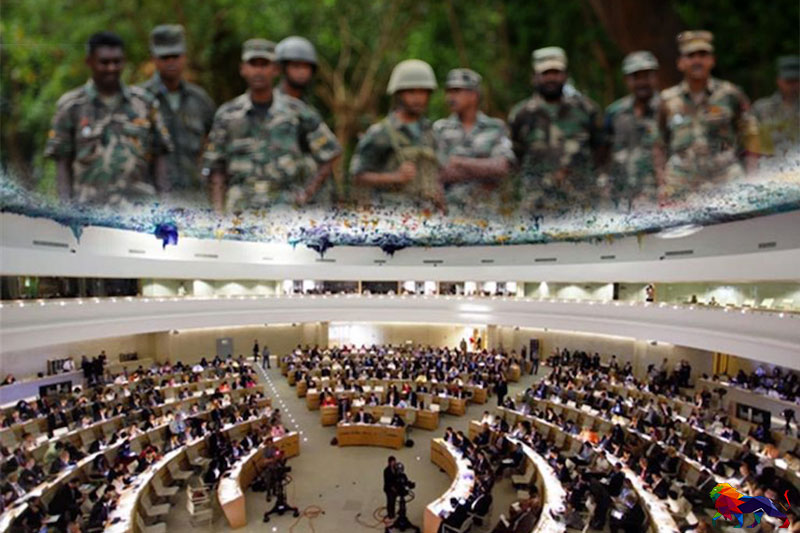
President Anura Kumara Dissanayake, who is in the United States to attend the 80th session of the United Nations General Assembly, met with UN High Commissioner for Human Rights Volker Türk on the afternoon of September 23 (US time) at the Human Rights Council Auditorium of the United Nations Secretariat, the President’s Media Division (PMD) said.

High Commissioner Türk extended a warm welcome to President Dissanayake, and the two engaged in bilateral discussions.

The meeting was attended by Minister of Foreign Affairs, Foreign Employment and Tourism Vijitha Herath, as well as Sri Lanka’s Permanent Representative to the United Nations and former Chief Justice, President’s Counsel Jayantha Jayasuriya.

Posted in Uncategorized

Bilateral ties highlighted as Sri Lanka, India meet at UNGA

A meeting between Sri Lanka’s Foreign Minister Vijitha Herath and Indian External Affairs Minister S. Jaishankar was held in the United States on the sidelines of the United Nations General Assembly (UNGA) session.

In a post on his official X account, Minister Herath said the discussion reaffirmed the strong friendship and close cooperation between Sri Lanka and India.

Herath is accompanying President Anura Kumara Dissanayake to New York, where the President is scheduled to address the UNGA at 3.15 p.m. local time today (24). The Presidential Media Division said the President will also hold bilateral talks with UN Secretary-General António Guterres and several world leaders during his visit.

Meanwhile, Minister Herath also met with U.S. Deputy Secretary of State Alison Hooker. The discussion focused on strengthening bilateral cooperation and advancing shared priorities between Sri Lanka and the United States.

AKD Meets Trump’s Special Envoy for South & Central Asia

Sri Lanka’s President Anura Kumara Dissanayake held discussions with Sergio Gor, Special Envoy for South and Central Asia appointed by former U.S. President Donald Trump, and Director of the White House Presidential Staff.

The meeting in New York City focused on enhancing cooperation in trade, commerce, tourism, and investment, with both parties expressing interest in expanding collaboration across these vital sectors.

President Dissanayake was accompanied by Foreign Minister Vijitha Herath and Permanent Representative Jayanta Jayasuriya during these high-level discussions.

Posted in Uncategorized

Indian High Commissioner visits ex-President Mahinda Rajapaksa at Carlton House

High Commissioner of India to Sri Lanka Santosh Jha has visited former President Mahinda Rajapaksa at his private residence in Hambantota today.

The High Commissioner during the meeting with the former President at Carlton House has held discussions pertaining to India-Sri Lanka bilateral cooperation.

The duo has also held talks on recent political developments in Sri Lanka.

Posted in Uncategorized

Sri Lanka AKD’s 1-year: broken promises, modest gains, and lingering questions – ECONOMYNEXT

When Anura Kumara Dissanayake (AKD) swept into office a year ago, it marked the first time a leftist leader from the National People’s Power (NPP) had captured Sri Lanka’s presidency.

Riding a wave of frustration with mainstream parties and promising a “new political culture,” Dissanayake presented himself as the face of accountability, anti-corruption, and people-centered governance after years of economic hardship and elite impunity.

Ordinary citizens measure a government by their daily hardships. By this yardstick, many feel disappointed. Many people still praise AKD’s anti-corruption policies and some accountability measures. However, they complain that their cost of living has not reduced much. Others, especially youth who voted for change, express frustration that systemic issues are unchanged.

Polls indicate a dip in AKD’s popularity from the euphoria of election night. Opposition parties sense an opening, accusing him of betraying his own voters.

One year into office, President Dissanayake’s scorecard is a patchwork: modest gains on macro stability, welfare, and foreign policy; stalled progress on political reform and anti-corruption; and glaring failure on cost-of-living relief.

He faces a stark choice in year two: either use his political capital to deliver visible change, mainly in easing people’s burdens, or risk becoming another chapter in Sri Lanka’s long story of broken promises.

Twelve months later, his administration faces mixed reviews. Some of his campaign pledges like trimming presidential powers, pursuing corruption investigations, and expanding welfare, have seen partial traction. But on crucial fronts such as economic relief, public sector reform, and debt restructuring, expectations have collided with harsh realities.

Here is a scorecard of AKD’s first year, measured against his own promises.

1. Abolishing the “Executive Presidency” – Not Fulfilled

One of Dissanayake’s loudest campaign commitments was to dismantle the overbearing executive presidency that many critics blame for decades of authoritarianism and abuse of power. He pledged to introduce a system where the president would be largely ceremonial, with parliament and independent institutions playing stronger roles.

In practice, progress has been halting. A draft for constitutional reform was floated, with discussions about shifting powers to parliament and curbing presidential immunity. Yet, by his first anniversary in office, no concrete bill has been passed. Government allies argue that constitutional changes require a two-thirds majority and a referendum. Though the NPP has more than two-third parliament majority, it might struggle to win a referendum.

Opponents accuse Dissanayake of enjoying the very powers he once vowed to surrender. The promise remains unfulfilled, and public skepticism is mounting.

2. Fighting Corruption and Recovering Stolen Assets – Partially Fulfilled

Another cornerstone of AKD’s campaign was a pledge to hunt down corrupt politicians and business elites, recover looted wealth, and hold offenders accountable. In his early months, a few high-profile investigations were reopened. The Proceeds of Crime Act was used in several test cases, and his government pushed for tighter financial disclosure rules for MPs and officials.

However, critics say the results are cosmetic. No major conviction of a powerful figure has occurred yet. Asset recovery has been slow, and many cases are bogged down in court procedures. Civil society activists argue that the government lacks the political will to target allies and instead focuses on scapegoats from rival camps.

Supporters counter that systemic change takes time, and laying a legal framework is more important than instant headline arrests.

3. Cost of Living and Economic Relief – Not Fulfilled

Dissanayake’s most immediate promise to the electorate was easing the unbearable cost of living. His campaign narrative was built on empathy for ordinary Sri Lankans crushed by inflation, taxes, and shortages.

Yet one year in, the reality looks grim. While inflation has indeed fallen from crisis highs, food prices and utility bills remain punishing for lower- and middle-income families. Electricity tariff reforms demanded by the IMF remain a flashpoint, with his government reluctant to implement cost-reflective pricing but unable to shield households fully from hikes.

On taxation, the government has struggled to balance IMF conditions with popular pressure. Income and VAT increases have deepened public resentment.

Many citizens feel little tangible relief, accusing the president of abandoning his people-friendly rhetoric once in office.

4. Debt Restructuring and Economic Recovery – Partially Fulfilled

On the macroeconomic front, AKD inherited an IMF-supported program and a country emerging from default. His pledge was to renegotiate terms more equitably, protect sovereignty, and accelerate recovery.

To his credit, Sri Lanka has seen modest growth retud inflation run, improved foreign reserves, and stabilized inflation. Debt restructuring talks advanced during his first year, with significant progress on bilateral and commercial fronts. However, deals have dragged on longer than expected, and uncertainty clouds investor confidence.

The administration has promoted new foreign direct investment (FDI) deals in ports, energy, and agriculture. But critics argue the government lacks a coherent long-term industrial or export strategy.

5. Public Sector Reform and Job Creation – Not Fulfilled

Dissanayake promised to rationalize Sri Lanka’s bloated public sector, make it efficient, and generate jobs in productive sectors. But reforms have barely scratched the surface. The state payroll remains unwieldy, and attempts to restructure loss-making SOEs have stalled amid union resistance.

Unemployment among youth is still high, and many graduates remain underemployed. While vocational training and digital economy initiatives have been announced, their impact is not yet visible.

6. Social Protection and Welfare – Partially Fulfilled

To cushion vulnerable groups, AKD’s government expanded targeted welfare payments under the “Aswesuma” program, while trimming wasteful subsidies. Digital cash transfers have improved efficiency, though implementation has been uneven.

Poorer families acknowledge some benefits, but the broader public feels welfare alone cannot offset economic pain.

8. Foreign Policy with Non-Aligned Pragmatism – Partially Fulfilled

Dissanayake campaigned on restoring Sri Lanka’s non-aligned posture, distancing from great power rivalry while safeguarding sovereignty. In his first year, Colombo balanced ties with India, China, and the West, avoiding overt alignment.

His government courted investment from India and China but emphasized transparency in deals. Relations with the IMF, UN, and regional partners remain functional. However, Colombo’s handling of sensitive issues like Palestine and Ukraine has attracted scrutiny, with some accusing the president of fence-sitting.

10. New Political Culture – Not Fulfilled

One of AKD’s boldest promises was introducing a “new political culture”: clean politics, people-first governance, and transparency. A year later, the verdict is sobering.

While rhetoric has changed, old patterns remain: patronage, lack of consultation, and centralization of power. His cabinet has faced criticism for weak performance and a shortage of technocratic expertise. Parliamentary behaviour has not improved significantly.

The dream of transformative politics is still just a dream.

Posted in Uncategorized

Southern politicians linked to drug and organized crime networks – Public Security Minister

Minister of Public Security Ananda Wijepala has claimed that certain politicians in the Southern Province are allegedly connected to drug trafficking and organized criminal networks.

Speaking at a media briefing held today (22), the Public Security Minister stated that this information is emerging based on intelligence reports and tips received from the general public.

Minister Wijepala further noted that the criminal underworld and drug networks have expanded as a result of past political culture, but emphasized that the current government is now paying special attention to dismantling these operations. The Minister also confirmed that three major drug raids were conducted today in Tangalle.

“There’s an important message for the public. We now have certain information indicating political links to serious drug and organized crime activities—particularly involving politicians from the south,” the Minister said.

Minister of Public Security Ananda Wijepala added, “The public is actively coming forward with information. Police are doing their job diligently, and intelligence agencies are receiving a large volume of data. We appeal to the public to continue sharing any information they have with law enforcement. We assure that both the information and the identity of those providing it will be protected.”

The Public Security Minister also stated that key information related to narcotics is now being uncovered from ‘Kehelbaddara Padme’, a known member of an organized crime gang, and other underworld criminals who were recently arrested in Indonesia and brought back to Sri Lanka.

They are currently being held under the custody of the Criminal Investigation Department (CID).

Posted in Uncategorized

CID tells court: 6,000 LTTE-linked gold items handed over to Central Bank

The Criminal Investigation Department (CID) today informed Colombo Chief Magistrate Asanga S. Bodaragama that out of 10,000 gold items believed to have belonged to the LTTE and discovered in camps, illegal banks and buildings in the Northern and Eastern Provinces during the humanitarian operation and thereafter sent to the National Gem and Jewellery Authority on court orders, 6,000 items have now been handed over to the Central Bank of Sri Lanka.

The court had earlier directed the National Gem and Jewellery Authority to examine the 10,000 gold items and submit a detailed report to court and to the CID, setting out the gold content and weight of the items.

Accordingly, CID officers told court that following such examination by the Authority, 6,000 items had been transferred to the Central Bank.

They further submitted this information while tendering an additional progress report when the case was taken up in court.

It had previously been brought to the attention of court that the gold items recovered in the Northern and Eastern Provinces during the humanitarian operation had either been voluntarily given by the local residents to the LTTE, or had been taken by the LTTE from them by force, and that investigations are continuing to ascertain these matters.

India on alert as Chinese spy ship re-enters Indian Ocean

Three years after its controversial entry into the Indian Ocean, China’s Yuan Wang 5 — a vessel officially designated as a “research ship” but widely recognised as a sophisticated intelligence-gathering platform — has once again been tracked near the region, sparking fresh concerns in India’s security establishment.

According to Indian and Bangladeshi naval sources, the ship was located at 11.0288 S and 100.9873° E at 02:38 UTC (around 8:10 pm IST) on Saturday through the Automatic Identification System (AIS). The vessel has been under close watch since it left Indonesia about 36 hours earlier, with Bangladeshi naval officers noting its likely trajectory toward the Bay of Bengal.

While Dhaka has been openly monitoring the ship’s movements, Indian authorities have remained tight-lipped. However, sources in the national security and intelligence agencies have admitted that the vessel’s entry is being taken “very seriously” given its advanced space-tracking and surveillance capabilities.

This marks the second time in three years that the Yuan Wang 5 has sailed into waters close to India. In August 2022, the ship docked at Sri Lanka’s Chinese-built Hambantota Port despite strong objections from New Delhi. At the time, Beijing defended the deployment as “marine scientific research” consistent with international law, with Chinese Foreign Ministry spokesperson Wang Wenbin asserting that the vessel’s movements “should not be obstructed by any third party.”

The Yuan Wang 5 belongs to China’s latest generation of space-tracking ships, used to monitor satellite launches, rockets and intercontinental ballistic missiles (ICBMs). Its presence so close to the Indian Ocean littoral has long been interpreted by defence analysts as part of Beijing’s expanding military footprint in the region.

The timing of its return has added to strategic unease in India, coinciding with the just-concluded US-Bangladesh joint exercise Pacific Angel-2025 in Chittagong and Cox’s Bazar. Around 120 officers from the United States Air Force (USAF) participated in the drill with Bangladesh Army and Air Force personnel, departing the country on Saturday, September 20.

Analysts in New Delhi caution that the renewed presence of the Yuan Wang 5 may not only be aimed at satellite-tracking but could also provide Beijing with valuable intelligence on regional military activities — particularly as India and the United States deepen security cooperation in South Asia.

(Khabargaon)

India’s Chief of Naval Staff visits Sri Lanka to strengthen maritime ties

Admiral Dinesh K Tripathi, Chief of the Naval Staff of India, is on a four-day official visit to Sri Lanka from September 22 to September 25, according to an official statement from the Ministry of Defence.

During the visit, the Chief of the Naval Staff will call on the Prime Minister of Sri Lanka, Dr. Harini Amarasuriya, VAdm Kanchana Banagoda, and engage in bilateral discussions with the three Service Chiefs and other senior government officials on a broad spectrum of defence cooperation matters, with emphasis on maritime security, capability enhancement, training, and identifying avenues to strengthen cooperation.

He would also participate in the 12th edition of the Galle Dialogue 2025 — International Maritime Conference in Colombo, on the theme “Maritime Outlook of the Indian Ocean under Changing Dynamics.”

The Indian Navy regularly interacts with the Sri Lanka Navy through the Annual Defence Dialogue, Staff Talks, and other operational interactions, which include the Sri Lanka-India Naval Exercise (SLINEX), Passage Exercises, Training, and Hydrography exchanges.

In addition, both navies regularly participate in multilateral events such as the Indian Ocean Naval Symposium, Galle Dialogue, MILAN, Goa Maritime Conclave/Symposium, and Colombo Security Conclave.

The CNS engagements in Sri Lanka are structured to deepen bonds of friendship, paving the way for enhanced understanding in key areas of shared strategic and maritime interests, in line with the vision of ‘MAHASAGAR,’ an official statement said. The visit reaffirms the time-tested India-Sri Lanka relations, anchored on mutual respect, maritime trust, and a shared vision for peace and stability in the Indian Ocean Region.

Earlier, the Indian Navy’s indigenous stealth frigate, INS Satpura, arrived in Colombo on Sunday to a warm reception from personnel of the Sri Lanka Navy.

In a post on X, the Navy spokesperson wrote: “Indian Navy’s indigenous stealth frigate INS Satpura arrived at Colombo to a heartening welcome by the personnel of Sri Lanka Navy, showcasing both nations’ enduring friendship and joint commitment to regional peace and prosperity.”

The ship will engage in professional interactions, rescue and force protection drills, yoga, and sports fixtures with the Sri Lankan Navy. “Commanding Officer called on Rear Adm SJ Kumara, Commander Western Naval Area. Discussions held on enhancing bilateral naval cooperation and joint activities to boost operational synergy — furthering partnership under Govt of India’s Neighbourhood First and MAHASAGAR initiative,” the post added.

India is Sri Lanka’s closest neighbour, and the relationship between the two countries dates back more than 2,500 years, sharing a strong civilizational and historical connection. Sri Lanka has a central place in India’s ‘Neighbourhood First’ policy and Security and Growth for All in the Region (SAGAR) vision, as per the MEA.

Source: ANI

Posted in Uncategorized