Jaffna Hospital would be upgraded as a national hospital in the near future

PMD; President Ranil Wickremesinghe stated that the Jaffna Hospital would be upgraded as a national hospital in the near future to enhance and ensure excellent healthcare standards in the Northern Province.

He further noted that the Cabinet has given its approval for the Karapitiya Hospital to be upgraded as a national hospital.

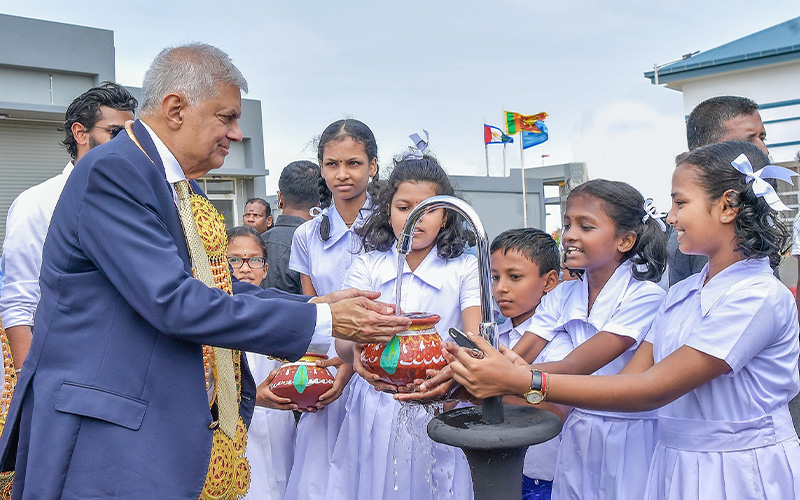
These remarks were made during President Wickremesinghe’s attendance at the inauguration of the Clinical Training and Research Block at the Faculty of Medicine, University of Jaffna, today (24).

Chairman of the University Grants Commission, Prof. Sampath Amaratunga, emphasized the need for modernizing technology across all science-based faculties in the country, including engineering, medical, science, and agriculture faculties. He highlighted that the current out dated technology hinders progress and adaptation to the modern world.

Furthermore, he noted that Sri Lankan children studying abroad excel not because of the technology they use but because of their knowledge. He emphasized that the integration of new technology could significantly propel the country forward.

In response, the President instructed the Ministry of Science and Technology and the Ministry of Education to collaborate on drafting a proposal for modernizing technology in these faculties and present it for his consideration.

Furthermore, the President highlighted significant developments in the region, notably the construction of the Clinical Training and Research Department building at the Jaffna University—the first such structure to be built in 46 years. With an investment of LKR 942 million, this facility will accommodate 1200 students for undergraduate and postgraduate clinical training, fostering international research collaborations.

The building, spanning 6000 square meters, comprises multiple lecture halls, clinical skills laboratories and an auditorium. Additionally, it features essential medical facilities such as operating theatres, recovery rooms, cleaning and disposal areas, sterilization units, preparation rooms and storage facilities.

Furthermore, the building houses patient waiting rooms, consultation rooms, and specialized units dedicated to endoscopy, vascular surgery, and mammography. It also accommodates research laboratories, a forensic investigation unit, and a museum for educational purposes.

Under the management of the Department of Obstetrics and Gynaecology, supported by the Department of Surgery, and other consultants from the teaching Hospital Jaffna, the Fertility Care Unit is set to offer a wide range of services, encompassing specialist consultations, diagnostic procedures, and treatment facilities.

Meanwhile, the Clinical Trials Unit (CTU) will facilitate clinical research on locally adapted patient-oriented, and cost-effective treatment methods. Additionally, the Clinical Genetics Unit (CGU) will aid in genetic cost-effectiveness, disease management, and preventive measures.

Following the unveiling of the plaque and the inauguration of the new building, the President proceeded to embark on an inspection tour.

The President addressing the gathering further stated:

“Your request for the establishment of a national hospital in Jaffna has been duly noted. Coincidentally, I have been contemplating the same. Just last week, the Cabinet approved the upgrade of Karapitiya Hospital, and next hospital to be upgraded as a national hospital is going to be Jaffna Hospital.

It is imperative for Jaffna to have an excellent healthcare system, ensuring equitable access to quality healthcare services not only in Colombo and the southern regions but also in the north and central areas. However, our efforts should not stop there. We must also turn our attention to the broader developmental needs of the region.

Regarding my frequent visits to Jaffna, allow me to clarify the purpose behind my recent visit. Despite it coinciding with a long weekend, I felt compelled to address pending matters, particularly the inauguration of two hospitals as requested by both the local community and the Ambassador for the Netherlands during my previous visit.

I have made it a point to visit Jaffna regularly, both as Prime Minister and President, recognizing the pressing need to address the longstanding issues stemming from the conflict in the north and east. The time has come to shift our focus towards development. There are people here without who are looking for jobs and the potential for Jaffna for development is great, to use that term. Jaffna, which has seen limited development in recent years, holds immense potential for growth.

While I may not delve into all the issues at hand today, it is evident that progress has been made in addressing certain challenges, such as land-related issues. However, there remain unresolved matters concerning detainees and other related issues that require our attention. But we still have, to bring this to a close and that revolves around the remaining political issues.

Moving forward, we must prioritize reconciliation efforts, address concerns regarding missing persons, and devise mechanisms for compensation and truth and reconciliation. I think this is the time now we have to deal with all these issues.

These are complex issues that demand collective cooperation and engagement from all stakeholders. I have discussed this with the members of Parliament from North and the East, as to what measures we need to take.

Amidst economic challenges, we’ve been unable to allocate significant funds in recent years. However, we must earmark resources for truth and reconciliation efforts. The government is committed to establishing the Truth and Reconciliation Commission (TRC), but we must address the critical issue of judicial powers.

We’re deliberating whether the TRC should wield judicial authority or if a separate court should be empowered based on TRC recommendations. This decision is paramount, and I’ve tasked relevant ministers, in consultation with parliamentarians and ambassadors, to draft legislation for parliamentary review.

Moreover, Jaffna holds immense developmental promise, particularly in renewable energy, agriculture, and industries. Harnessing solar and wind power capacities could position Jaffna as a major energy hub. This is the biggest and we have not yet tapped, I mean the potential for the north is not in terms of megawatts but in terms of gigawatts. Additionally, agricultural modernization and industrial zoning initiatives aim to elevate economic prospects in the region.

We aim to cultivate a competitive, high-value export-oriented agriculture sector nationwide, with the Northern Province playing a pivotal role. The province’s farmers possess the requisite skills for this endeavour, which promises to significantly enhance both individual and provincial incomes.

In the realm of industry, discussions are underway to establish the inaugural investment zone in Kankasanthurai, followed by industrial parks in Paranthan and Mankulam. Collaborative efforts with India are also underway to develop Trincomalee.

Furthermore, we’re exploring tourism prospects in the north, anticipating transformative changes with forthcoming land connectivity, particularly benefiting Jaffna.

These initiatives hold the potential to position the Northern Province as a key economic hub of Sri Lanka.

During our visit, we witnessed captivating dance performances by students from the Faculty of Medicine at the University of Jaffna, most of who are under 21 years of age, born in 2002 or 2003.

These individuals belong to Generation Z and are deeply invested in shaping their own futures. It’s incumbent upon us to facilitate their aspirations, which underscores our legislative efforts aimed at propelling rapid development within a new economic paradigm”.

Minister Douglas Devananda:

“For over a decade, since 2003, the Jaffna University Faculty of Medicine Students’ Union has tirelessly advocated for the construction of this building. Today, we stand here witnessing the fulfilment of that long-standing request. Furthermore, swift actions have been taken to address other pressing needs, including those of the Faculty of Agriculture.

During a critical period when the nation grappled with unrest, it was President Ranil Wickremesinghe who stepped forward to assume leadership, demonstrating unparalleled commitment. Today, we witness a multitude of developmental endeavours underway across the country.

President Ranil Wickremesinghe, with his visionary leadership, has transformed a non-functional vehicle into a vehicle fit for travel, symbolizing his capability to navigate the challenges ahead. His unwavering dedication inspires confidence, as evidenced by his track record of tangible achievements.

Member of Parliament Mr. Dharmalingam Siddharthan:

“In a remarkably short span of two years since assuming office, President Ranil Wickremesinghe has spearheaded numerous initiatives for the advancement of the Northern Province. The inauguration of this building for the Faculty of Medicine at the University of Jaffna is yet another testament to his commitment to Northern development.

His decisive actions, particularly concerning sensitive issues like the release of lands, reflect his deep concern for the welfare of the northern population. Even as the Prime Minister, he played a pivotal role in driving development efforts in both the northern and eastern provinces.

Member of Parliament Mr. M. A. Sumanthiran, PC:

“Hon. President, I extend my sincere gratitude for granting me the opportunity to address this esteemed gathering on behalf of the people of Jaffna. I also personally thank you for gracing us with your presence here today.

President Ranil Wickremesinghe has exhibited an unwavering commitment to the progress of not only the North but also the East, dating back to his tenure as Prime Minister. The inauguration of the Faculty of Medicine building at the Jaffna University is a milestone event transpiring today and underscores not just an investment in the North but also a significant contribution to the nation’s advancement. I firmly believe that this institution will evolve into a hub for scientific innovation in Sri Lanka’s future.

As emphasized by previous speakers in this event, the President has accorded special consideration to the development of the Jaffna district and its residents. It is possible that challenges in the North may have impeded your journey in 2005, a fact that I believe is now regretfully acknowledged by the people of the region.

I extend my heartfelt congratulations to the Faculty of Medicine at the University of Jaffna for realizing this monumental project. The dividends of this investment are bound to be substantial. We extend a warm welcome to the President for gracing the Jaffna district with his presence, and we commend him for his dedicated efforts in advancing the interests of the North during this visit.”

Governor of the Northern Province Mrs. P. S. M. Charles:

“It is with immense pride that I announce the completion of the Clinical Training and Research Department of the Faculty of Medicine at the University of Jaffna, marking a significant milestone after 46 years.

In March of last year, I requested the President’s presence for the inauguration of this building. He assured me of his attendance in May, and true to his word, he is here with us today.

In attendance were esteemed dignitaries, including Secretary of the Ministry of Education Thilaka Jayasundara, Chairman of the University Grants Commission Senior Professor Sampath Amaratunga, Dean of the Faculty of Medicine of the University of Jaffna Professor Rajendra Surendrakumaran, and former Member of Parliament Vijayakala Maheswaran.

Ferry Service Between India and Sri Lanka Delayed Indefinitely

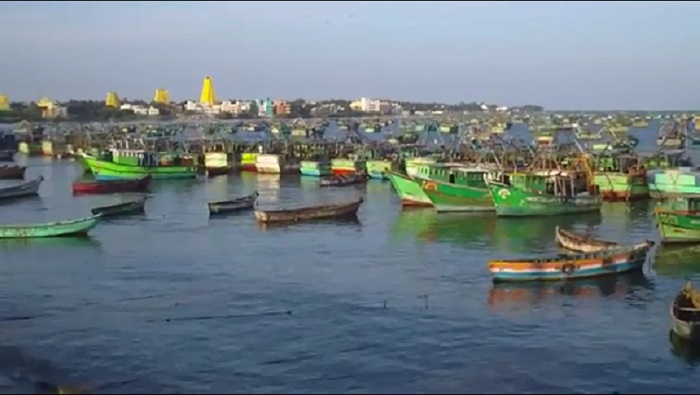
The resumption of passenger ferry service between India and Sri Lanka has been postponed indefinitely, once again.

The service was originally scheduled to begin on Sunday (20).

The agency operating the ferry service between Kankesanthurai in Sri Lanka and Nagapattinam in Tamil Nadu, India, announced another postponement due to a lack of legal approvals and current weather conditions.

This marks the third time the service has been postponed.

The ferry service between the two countries officially began on October 14, 2023.

Posted in Uncategorized

British Tamil Brin Pirathapan crowned MasterChef Champion 2024

Brin Pirathapan, a British Tamil veterinary surgeon, has claimed the prestigious title of MasterChef Champion 2024, winning the 20th series of UK TV’s biggest cooking competition.

In an interview with the Tamil Guardian, 29-year-old Brin spoke of the inspiration he drew from his Tamil background to create bold, creative combinations of flavours that led to him being awarded the coveted MasterChef trophy.

Speaking the day after his historic win on Wednesday evening, he credited his parents, father Gopal, a civil engineer, and mother Darley, who works for a bank, for inspiring his love of food and flavour, and said he felt lucky his Tamil culinary culture had such an integral role in his cooking.

“[My parents] are great cooks and I’ve been lucky enough to be treated to amazing Tamil flavours throughout my life,” said Brin.

“With this Tamil background, I’ve seen how every dish is there for a reason, how certain things do or don’t go with certain things, and how flavours marry up.

“I’ve taken those lessons from our Tamil culture at a foundation level and put them into the different types of cuisine I do and the modern European way I cook.

“Even though you might not see a curry on the plate, the Tamil food I’ve been exposed to has taught me how to refine my bold dishes to be packed full of flavour – I wanted my food to look pretty but to be as flavoursome as a pile of rice with six curries which you eat with your hands.”

In the final episode, his parents spoke of how they had arrived in the UK in a “difficult situation,” with ethnic conflict raging in Sri Lanka. “They came to the UK because Sri Lanka was not a safe place to be,” he told The Times. Brin was clear they played a key role in his MasterChef journey.

“When I look at my childhood all I saw is that they tried to do as much as possible to give me every chance we could have to succeed at life and not be hindered that they came over in a difficult situation,” he told the Tamil Guardian.

“They gave me so many opportunities and it’s made me the person I am today – really it’s made me a MasterChef champion!”

Brin said he felt totally overwhelmed by the support of his Tamil parents and the community at large. He was born in Ilford and grew up in Chelmsford, Essex before moving to Bristol, but has won support from across the country. There was an added element of his family seeing him pursue his passion that made them even more proud.

“We cannot express how proud we are,” his mother Darley said during the final episode.

Throughout his time on MasterChef, the Tamil influence on his dishes shone through.

Brin said his dish in the second round, a sambal-crusted rack of lamb with an aubergine relish, was based on the kathirikai curries he would eat growing up, showcasing how his cooking is an amalgamation of his Tamil heritage and British upbringing.

He fondly recalled how his favourite dishes growing up were mutton curries and mutton rolls, which at times he loved so much his mother had to tell him not to eat so much of at parties, and which he jokingly attributed to being a slightly ‘larger’ kid.

“You have got this pastry with an incredible crunch filled with tender bits of meat wrapped in all these spices, that was top-notch for me,” he said. “Even the vegetarian curries, like fried aubergine, when you’re a teenager you see how tasty these are.”

As he delves into the food industry, he is particularly keen to ensure his Tamil influences are central to his cooking and to learn more about the basis of Tamil food.

“In all honesty, I want to have more of the Tamil influences on my cooking and bring as much of our culture into what I do as much as possible and refine it. And now I have a platform that I can do that.”

Some other noticeable Tamil-inspired dishes during the series included a pork tenderloin and four-way onion dish, in which he described the onion as the basic ingredient of Tamil cooking, and a tiger prawn curry which he told judges was inspired by his father’s memories at school.

“These are ingredient combinations that Brin is inventing,” said MasterChef judge, Gregg Wallace. “That makes him dangerously clever. He’s got technique, he’s got creativity.”

“In my experience, Brin is unique. One of the cleverest talents I’ve ever, ever seen.”

Brin’s competition-winning dishes started with fried capers, pickled chilli, pickled and charred shallots, orange and honey-glazed octopus with tempura mussels, herb tuilles dusted with scallop roe, an orange gel and samphire on a romesco sauce.

His main course was spiced venison loin, beef short-rib and pickled mushroom tartlet, celeriac and miso purée, salt-baked beetroot and pak choi, served with a gochujang and red wine sauce split with a herb oil. He finished his menu with a dessert of white chocolate and cardamom and saffron cremeux, with pistachio meringue shards, whisky-poached mango, raspberry gel, pistachio crumb and a mango, lime and chilli sorbet.

As for the next steps, Brin hopes to refine his online content, release some cookbooks and create some supper clubs or private dining, as he finds his future in the food industry

“I just really hope that I’ve managed to make our Tamil community really proud,” said Brin. “If I’ve done that, I feel like I’ve really succeeded.”

Sri Lanka rejects inclusion of Cuba on list of terrorist states

The Joint Committee of Democratic Unions of Sri Lanka confirmed its support for Cuba’s declaration demanding its fair elimination from the list of states sponsors of terrorism created by the United States.

The organization confirmed in a statement that adding Cuba to the arbitrary list has political purposes and causes serious economic problems for the Cuban people, despite which Cuba resists and is an example for the people who fight against imperialism.

The Committee agreed with the Cuban Foreign Ministry that it is not enough for the United States to recognize Cuba’s full collaboration in the fight against terrorism; they must go further and remove Cuba from the unjust list.

In recent days, various Sri Lankan organizations joined the global demand against the aggressive policy of the United States against Cuba and demanded the removal of Cuba from the unjust list once and for all.

The Left Democratic Front of Sri Lanka and the Sri Lanka-Cuba Parliamentary Friendship Association also urged the current US government to eliminate the inhumane measures it maintains against Cuba, of proven international rejection.

(Cuba SI)

Posted in Uncategorized

Sri Lankan politics: 15 years since the end of the war By Veeragathy Thanabalasingham

Fifteen years have passed since the end of Sri Lanka’s brutal civil war, which lasted for about 30 years. None of the main political problems have been resolved. The country is not progressing economically either. Instead, we saw that all the problems worsened and the country reached a state of chaos and bankruptcy.

A large part of the southern Sinhalese polity does not seem to think that there is a pressing need to find a negotiated political solution to the national ethnic problem that has torn the country apart. In these 15 years, the country has not moved an inch towards finding a political compromise that would fulfil the legitimate political aspirations of the minority communities.

Even the implementation of the 13th Amendment (13A), which has been a part of the Constitution for more than three decades, has finally become impossible. In no other country in the world do we see political forces taking to the streets to protest against the implementation of a constitutional provision.

Former President Mahinda Rajapaksa, who never failed to claim credit for providing what he called courageous political leadership to defeat the Tamil Tigers militarily in war, had the rare historical opportunity to find a political solution to the ethnic problem with the support of the Sinhalese people 15 years ago.

However, he deliberately ignored that opportunity and pursued more aggressive ethnic majoritarian politics with the dream of ruling Sri Lanka for a long period. He liberally used the war victory to divert the attention of the Sinhalese people from the main issues affecting them. That regressive strategy helped him and his family to stay in power for a few more years but did nothing good for the Sinhalese people.

It did not take long for the truth to be exposed that the ethnic majoritarian mobilisation was essentially a cover-up for misrule and corruption. However, the south still does not seem to have learnt a proper lesson from it.

It is very unfortunate that even after Sri Lanka’s unprecedented popular uprising ousted the Rajapaksas from power two years ago, they are still able to run the Government from behind the scenes and are able to claim that the candidate who gets their support and blessings will be the next president.

Only a national election can tell if the popular uprising and the subsequent political developments have brought about any positive change in the political thinking of the people of the south of Sri Lanka.

Doubtful political commitment

Meanwhile, the prospective main candidates will focus on the economic crisis at the Presidential Election, which is still four months away. It is unlikely that they will be concerned about the need to find a political solution to the national problem.

Addressing the Samagi Jana Balawegaya (SJB) May Day rally in Colombo, Opposition Leader Sajith Premadasa said his future government would find solutions to the problems of the minority communities with the support of the Sinhalese people and implement the 13th Amendment to the Constitution. However, it remains to be seen whether he will mention it in his election manifesto.

As for President Ranil Wickremesinghe, although he has the image of being the only Sinhalese leader minority communities in general and Tamils in particular can approach to find a solution to their problems, he is unlikely to show the courage to adopt any approach that could alienate the Sinhalese nationalist electorate.

National People’s Power (NPP) Leader Anura Kumara Dissanayake had recently said in a speech in Jaffna that he would not negotiate to get votes from the Tamils by promising 13A plus or a federal solution. He promised to create a Sri Lankan identity that embraces all communities.

In one of his recent articles, political analyst Rajan Philips said that there was already some identity on everyone’s National Identity Card and passport. He added that Dissanayake was neither here nor there and asked whether he was suggesting anything more.

It is almost certain that none of the main candidates will make any promises that the Sinhalese people do not want in order to win the votes of minority communities. At the same time, it cannot be expected that any candidate will emphasise on the need to find a political solution forcefully in their campaign among the Sinhalese people.

In this background, not only the political problems of the Tamil people but also their humanitarian problems have intensified over the last 15 years. The Tamil people are unable to protect their lands from invasions carried out with the support of security forces and hardline Sinhalese nationalist political forces. They even have to fight to remember the war dead.

Blocking such commemorative events using security forces and Police is a cruel form of racism. This time a strange approach can be seen in the actions of the Police. The Police did not interfere with the commemorations in the north but only prevented them in the east. One could not understand the logic behind it.

Fragmented Tamil polity

At the same time, a major problem facing the Tamil people is the absence of a cohesive polity to properly guide them in the post-war period. Tamil people have Members of Parliament (MPs), but there are no prudent political leaders to draw lessons from past tragedies and guide them in a manner suitable to contemporary domestic and international political situations.

After the end of the war, the historic responsibility of leading the Tamil people of the Northern and Eastern Provinces automatically fell to the Tamil National Alliance (TNA). The leaders of the TNA failed to handle it properly and re-establish a strong polity among the Tamil people. They merely acted in the interest of party politics and did not care to build the TNA into a united political force capable of taking the Tamil people’s struggle for political rights to the next stage post-war. They do not possess the political wisdom or commitment to do so.

As a result, today the Tamil polity is fragmented. All parties are divided in one way or another. Where is the time for the Tamil politicians to care about resolving the problems of the Tamil people when they are incapable of resolving their own disputes?

While the Sinhalese polity, despite the various contradictions within it, mostly has a unified stand on what not to give to the Tamils, the Tamil parties are unable to reach a consensus to demand what the Tamil people need from the Government.

While the southern Lankan parties are not interested in finding a political solution to the national problem, we see a worrisome situation where there is no unity among the Tamil political forces. Although Tamil parties have been holding consultations on the idea of fielding a Tamil common candidate at the Presidential Election, it is difficult to expect them to come to an agreement. It is doubtful whether any dignified non-political personality would come forward as a common candidate when looking at the ridiculous comments made by the leaders of some Tamil parties.

Be that as it may, we now see an intensification of impractical political activities that bind the Tamil people to the memories of past struggles. The Tamil people have every right to remember and honour those who sacrificed their lives in the struggles to win the political rights of their people and the innocent people who were unjustly killed in the war. However, it is very important to understand that there is no point in simply living with memories without introspection as to why those struggles, full of unimaginable sacrifices, ultimately came to a tragic end.

A twofold trend

This being the case, two new unhealthy trends are seriously infiltrating Tamil nationalist politics. One of them is religious extremism. Tamil nationalist politics has been secular since its inception. It embraced all sects among the Tamil-speaking community.

The late S.J.V. Chelvanayakam, affectionately called ‘Thanthai Chelva’ and respected as the leader of the Tamils for decades, was not a Hindu. But there was a time when all sections of the Tamil-speaking community, including the Muslims, irrespective of their religious identities, accepted his leadership. It was also the most significant salutary feature of Tamil nationalist politics.

In recent times, attempts are being made to identify Tamil politics with Hinduism.

Some people are also demanding that only a Hindu should be fielded as a common candidate on behalf of the Tamils at the Presidential Election. Not only that, the idea of putting one of the Hindu gurus who are actively involved in political activities as the common candidate was also proposed. There is no doubt that these efforts are influenced by the Hindutva policy of the Bharatiya Janata Party (BJP) in India.

Another trend is the increased influence of extremist elements within the diaspora Tamil community in Sri Lankan Tamil politics. There was a long period when the diaspora community made a tremendous contribution to the political rights and struggle of the Tamils. The diaspora Tamil community made an enormous contribution in bringing the Government’s oppression of the Tamil people to the attention of the international community.

However, in the period after the end of the war, certain elements among the diaspora Tamils have tended to exercise undue influence in Tamil politics. Due to this, corrupt activities have increased in Tamil politics like never before. They believe that the direction of Sri Lankan Tamil politics can be decided by the money sent from abroad.

Those living in a safe environment abroad and talking about impractical policies can never decide what kind of political solution the Tamils living in the country need. Unhealthy interventions by political groups in the diaspora community also encourage antisocial activities in Tamil areas.

Today’s Sri Lankan Tamil community does not have any of the characteristics of a community that has gone through a three-decade liberation struggle full of unimaginable sacrifices.

Therefore, if this situation continues, there is a danger that Sri Lankan Tamils will become a group of people that the world does not pay attention to and Tamil politicians will become a group of people who make impractical political slogans and only crow within the confines of the peninsula.

(The writer is a senior journalist based in Colombo)

Posted in Uncategorized

Snap general election to follow presidential election immediately

A snap general election will follow immediately after the presidential elections to be concluded in October, this year, the Daily Mirror learns.

President Ranil Wickremesinghe is reported to have ruled out his intention to declare a snap general election ahead of or during the presidential poll. He has told the Cabinet ministers that a parliamentary election will follow the presidential elections.

It is politically sensible that a snap election will be declared whoever wins the presidential elections in October instead of waiting till the scheduled time for such an election in the
middle of next year.

Any candidate who wins will choose to have a new Parliament with a majority for his party or alliance. It is natural in Sri Lankan political culture for the party that wins presidential
elections to win the general elections that follows.

Last time, the general election was conducted in August, 2020. The Election Commission is bound legally to conduct any election declared in terms of the Constitution. Also, there are
provisions for the conduct of the general and presidential elections simultaneously.

After July 17, the Commission will get the authority to initiate work for the presidential elections with the target of polling being taken on a day between September 17 and October
16.

In a notice signed by its chairman R.M.A.L. Ratnayake, the Election Commission said it will call for nominations to hold the presidential election within the specified timeframe in terms of the provisions of the Constitution.

The Commission is currently making logistical arrangements for the conduct of elections.

Posted in Uncategorized

State Minister Wakkumbura Announces Multiple Requests to Invalidate Local Government Nominations

State Minister of Provincial Councils and Local Government, Janaka Wakkumbura, has reported that numerous parties have submitted requests to invalidate nominations for the upcoming local government elections.

Minister Wakkumbura highlighted that the elections cannot proceed as scheduled due to four ongoing court cases related to the electoral process. In light of these legal challenges, a decision has been made to consider postponing the local government elections until the conclusion of these court cases.

Posted in Uncategorized

Proposed NY legislation to delay restructuring

The International Monetary Fund (IMF) warns that proposed New York (NY) legislation on adding legality to debt restructuring would risk complicating and prolonging debt restructurings in countries such as Sri Lanka.

Accordingly, speaking to Bloomberg, an IMF spokesperson said that the bill which the lawmakers in New York are pushing to change the way sovereign debt overhauls are carried out after a country defaults, would introduce “significant uncertainty” into the existing debt restructuring architecture, although the legislation would add more order to the process.

“They may lead to negative impacts on the timeliness and predictability of the sovereign debt restructuring process,” the Fund representative told Bloomberg.

According to the IMF spokesperson, one proposal would create a bankruptcy-like adjustment process under NY law. “These impacts need to be carefully considered in consultation with all stakeholders,” the spokesperson added.

The IMF has not made any formal recommendations on the matter, the spokesperson said the Fund’s Board has backed a contractual approach to debt restructurings which includes covenants known as collective action clauses.

The warning adds a powerful institutional voice to an increasingly contentious issue that has pitted Wall Street against a cadre of politicians, activists, labour unions and charities backing the legislation. Impact on markets has so far been limited–the bills have yet to be scheduled for a vote and the New York legislative session ends 6 June.

At stake is a key part of the business of emerging-market debt investing. Roughly, United States dollars ($) 800 billion of outstanding hard-currency bonds sold by developing nations are governed by New York law, making the State the foremost jurisdiction for sovereign debt issuance.

Under current practice, investors holding those bonds negotiate a settlement with governments after they default.

Lately, however, developing nations have struggled to reach agreements with various creditors, including bondholders, bilateral lenders, and international banks. Recent restructurings in Suriname, Sri Lanka, and Zambia stretched for years.

The bills seek to introduce legal oversight to the process. One of them, the Sovereign Debt Stability Act, would limit the amount bondholders can recoup in the process. Wall Street has rejected the proposals, claiming they would lead to higher upfront borrowing costs for poor nations.

The Chief Economist of the World Bank Group Indermit Gill and a veteran restructuring attorney Lee Buchhei wrote in a blog post last week that while some of the proposals could help ensure losses are equally shared between private bondholders and public creditors–like foreign governments–the language of the bills need to be tweaked.

The proposed legislation “isn’t exactly surgical in its scope,” they wrote, saying the bills should be worded in a way that limits which countries are eligible, and details what “burden-sharing standards” will mean in practice.

“We believe these flaws may yet be salvaged. There is significant value in limiting how much a creditor can collect in a legal proceeding against a low-income country participating in a consensual debt-workout process,” they wrote.

Govts, oppositions, religions, media have failed Sri Lanka’s war victims: Amnesty chief

Successive governments, opposition leaders, the religious establishment and the media have failed the victims of Sri Lanka’s there-decade-long war and the people at large, Amnesty International’s Secretary General Agnès Callamard said.

“This is a significant year for Sri Lanka, marking 15 years since the end of the three-decade long internal armed conflict that left tens of thousands of people injured, dead, displaced, or forcibly disappeared. But it is not just successive governments that have failed the victims and the people of Sri Lanka. All those in positions of leadership, from elected officials to opposition leaders, the religious establishment and the national media, have failed to hold the line on the fight against impunity,” a statement quoted Callamard as saying at the conclusion of a five-day visit to Sri Lanka.

Legislation such as the Online Safety Act and a proposed nongovernmental organisation (NGO) law are worrying evidence of the dangers currently confronting Sri Lankas’s vibrant civil society, she said.

“We are further concerned about the crackdown on freedom of expression and peaceful assembly, including through the use of ICCPR Act provisions, to make arbitrary arrests, These are often carried out under multiple accusations without formal charge or evidence and has led to lives being lived in limbo. This must end,”

Callamard said her visit provided insights into various challenges Sri Lanka is confronting 15 years after the end of the war that has “fractured and polarised Sri Lankan society”.

“I am deeply grateful to all those who engaged with us, recounting their pain and grief, sharing their views and concerns, and voicing their hopes, fears and demands for the present and the future. Amnesty International stands ready to support all genuine efforts and commitments to confront long-standing impunity, address the violations and grievances of the past and present, and put an end to discrimination and the repression of fundamental freedoms,” she said.

Callamard thanked President Ranil Wickremesinghe for the opportunity to engage in a “constructive dialogue over the human rights challenges facing Sri Lanka”.

“As the home of our South Asia Regional Office, Sri Lanka is vital to our work and we appreciate the government’s continued support and commitment to our cause,” she said.

Following the meeting with President Wickremesinghe on Thursday May 16, an Amnesty International delegation travelled to Mullaithivu on Friday to meet families whose loved ones were forcibly disappeared during the war. Callamard took part in the commemoration on May 18 at Mullivaikkal marking the 15th anniversary of the end of war and the “suffering endured by the Tamils in the lead up to 18 May, before returning to Colombo to meet representatives of the Malaiyaha Tamil community, human rights defenders, protestors, members of civil society organizations, members of the international community and government representatives.”

She also commented on the upcoming elections.

“The elections slated in the coming months will also have a major impact on the future of Sri Lanka and human rights considerations for years to come. The political leadership of the country must implement trust building measures that will address divisions, encourage inter-ethnic solidarity, and provide avenues for meaningful healing. It is imperative to address past wrongs; and make a conscious effort to create an enabling environment for redress while the government considers the establishment of a new Truth and Reconciliation Commission.

“A seemingly lack of political will, along with complacency in delivering justice, prevents reconciliation, feeds grievances, and promotes instability. There should be no room for complacency. We urge the international community to work with the national authorities to secure truth and justice for all victims of the war and of on-going human rights violations and lay the foundations for a freer and fairer Sri Lanka,” she said.

Sri Lanka CHEC Port City project completion date extended

Sri Lanka will extend the CHEC Port City Colombo (Pvt) Ltd project completion date by two (2) years, cabinet spokesman Bandula Gunawardena said.

The then Ministry of Megapolis and Western Development, Urban Development Authority and CHEC Port City Colombo (Pvt) Ltd signed a tripartite agreement in 2016 with a target completion date of June 5, 2025.

However, due to the pandemic, and the project company’s financial constraints and inability to generate sufficient revenue to meet obligations to creditors, the project will not be completed on time, the minister said.

“Therefore the period of implementation of the Colombo Port City Development Project will be extended to June 5, 2027 with the signing of a supplementary agreement between the Ministry of Investment Promotion, Colombo Port City Economic Commission and CHEC Port City Colombo (Pvt) Ltd company,” Gunawardena told reporters on Thursday.

Earlier this month Sri Lanka’s Export Development Board signed an agreement with CHEC Port City Colombo to attract and facilitate export-oriented businesses.

Posted in Uncategorized