Human Rights Watch Briefing on the Human Rights Situation in Sri Lanka

At the 60th session of the United Nations Human Rights Council (HRC), the Office of the High Commissioner for Human Rights (OHCHR) will present its report on the human rights situation in Sri Lanka, and the Council will be asked to consider the renewal of the OHCHR mandates in the country. In 2021, HRC resolution 46/1 established two vital mandates:

To the OHCHR Sri Lanka Accountability Project (OSLAP) to collect, analyze and preserve evidence of “gross violations of human rights or serious violations of international humanitarian law in Sri Lanka, to advocate for victims and survivors, and to support relevant judicial and other proceedings, including in Member States, with competent jurisdiction.”
To the High Commissioner for Human Rights to monitor and report to the Council on human rights violations in Sri Lanka.
Human Rights Watch Briefing on the Human Rights Situation in Sri Lanka
Those mandates were renewed by the HRC in 2022 for two years, and in 2024 for one year.

To protect human rights in Sri Lanka, uphold the principle of accountability for the most serious international crimes and give victims’ families an avenue to justice in the absence of any credible domestic accountability process, the Human Rights Council at its 60th session should renew both mandates for two years.

_________________________________________________

In the nearly one year since President Anura Kumara Dissanayake has been in office – despite pledges to uphold Sri Lanka’s human rights obligations – there has been little if any improvement in any of the key human rights issues that led to action by the Human Rights Council. Impunity for mass atrocities and grave rights violations remains absolute, while intimidation and surveillance of victims and activists in previously war-affected areas continues.

The Dissanayake government invited the High Commissioner to visit Sri Lanka in June, but during their meeting the President only spoke of “commitment to national unity and reconciliation as well as to overcoming the economic challenge Sri Lanka is faced with,” instead of publicly backing the efforts of the Human Rights Council to ensure accountability.

A Crisis of Impunity

Tens of thousands of people were killed during the civil war between the Sri Lankan government and the separatist Liberation Tigers of Tamil Eelam (LTTE), including an estimated 40,000 in the final months alone. Abuses by government forces included arbitrary arrests and detention, extrajudicial killings, rape and other sexual violence, enforced disappearance, torture and other ill-treatment, and indiscriminate attacks on civilians. The LTTE committed numerous atrocities, including suicide bombings and other indiscriminate killings of civilians, torture, the use of child soldiers, forced displacement of ethnic populations, targeted killings, and summary executions.

Since end of the war in 2009, the UN has played a vital role in advancing justice and accountability while seeking to end ongoing violations. The Secretary-General’s Panel of Experts report (2011) and OHCHR Investigation on Sri Lanka (OISL, 2015) documented extensive rights abuses and violations by both sides during the conflict, some of which they found may have amounted to war crimes and crimes against humanity. The OISL report found that:

“[t]he sheer number of allegations, their gravity, recurrence and the similarities in their modus operandi, as well as the consistent pattern of conduct they indicate, all point to system crimes… these findings demonstrate that there are reasonable grounds to believe that gross violations of international human rights law, serious violations of international humanitarian law and international crimes were committed by all parties during the period under review. Indeed, if established before a court of law, many of the allegations may… amount to war crimes… and/or crimes against humanity.”

Successive Sri Lankan governments have appointed at least 10 commissions since the 1990s to examine human rights violations and war crimes, but none led to accountability or revealed the fate of thousands of victims of enforced disappearance. Instead, successive governments have blocked the few criminal investigations that had made some progress. During his June visit, High Commissioner Volker Türk warned of the “impunity trap,” and that “an absence of justice will undermine the stability of peace.” At the end of his visit, the High Commissioner stated: “Sri Lanka has struggled to move forward with domestic accountability mechanisms that are credible and have the trust and confidence of victims. This is why Sri Lankans have looked outside for justice, through assistance at the international level.” By blocking accountability successive Sri Lankan governments have deepened the suffering of victim communities, and broken commitments made to the Human Rights Council to ensure truth, justice and reparations.

The series of Human Rights Council resolutions since the war ended has shown Member States’ determination that there must be accountability for these crimes, including by establishing OSLAP to collect and preserve evidence in 2021. Those mandates have been among the very few remaining sources of hope for victims and their families seeking justice. More recently, Sri Lankan governments have rejected the Council’s resolutions outright, while valorizing “war heroes.”

In a statement to the Council on October 9, 2024, the then newly elected Sri Lankan government pledged that “[d]omestic mechanisms and processes that deal with reconciliation, accountability and justice will be credible and independent,” and stated that, “[a]s directed by the President, investigative authorities have already announced redoubling of investigation into a number of clearly identified accountability cases that were pending from the past.” However, there is little if any observable progress – whether active investigations or prosecutions, much less convictions – towards these commitments. Little has changed since prosecutions in a number of emblematic cases were halted under President Gotabaya Rajapaksa (2019-2022). While there remains no apparent prospect of new investigations or prosecutions related to human rights violations or war crimes in the northeast, high-profile proceedings such as in the 2009 murder of Colombo-based newspaper editor Lasantha Wickrematunge, and the 2010 enforced disappearance of journalist Prageeth Ekneligoda, both remain stalled, although the police have collected extensive evidence of security forces involvement in both cases. Since his election, President Dissanayake has made no progress towards his campaign promise to make the prosecutors’ office politically independent. Neither has there been any apparent progress in a promised investigation of the 2019 Easter Sunday bombings, which killed over 250 people, although President Dissanayake has supported claims by whistleblowers and the Catholic church that there was a cover-up of state complicity in the attacks.

Long and bitter experience has caused victims, their families and communities, to lose faith in domestic institutions and processes that have sought to shield alleged perpetrators. Victims’ families have therefore engaged with OSLAP, despite the risk of government reprisals – a risk that continues under the current administration.[1]

Since his election, President Dissanayake has spoken of “reconciliation,” but despite subsequently securing a large parliamentary majority his government has not taken any steps that demonstrate a willingness to appropriately address conflict-era crimes. While a country that endured decades of civil war should embark upon a process of truth telling and reconciliation, this cannot replace the need for a simultaneous justice and accountability process.

Recommendations to the government:

Allow OSLAP access to Sri Lanka to undertake investigations and to meet with victims and witnesses of crimes under international law;
Promptly initiate the process to create the Directorate of Public Prosecutions, separate from the attorney general’s office, as pledged in the election manifesto of the President’s party;
Build on and utilize evidence gathered by previous domestic commissions of inquiry to pursue justice and accountability; and
Ensure fair and thorough investigations of major crimes including the 2019 Easter Sunday bombings, and of emblematic cases that were partially investigated and prosecuted between 2015-19 before those investigations were dropped under President Gotabaya Rajapaksa.
Enforced Disappearances and Mass Graves

Sri Lanka has one of the world’s highest rates of enforced disappearances, numbering in the tens of thousands, including those who disappeared during the 1980s Janatha Vimukthi Peramuna (JVP) insurgency and during and after the civil war between the government and the LTTE. Previous governments have for decades refused to reveal the fate of the disappeared, or to prosecute those responsible. The government’s Office of Missing Persons (OMP) has made almost no apparent progress investigating cases and is widely distrusted by victims’ families.

At least 20 mass graves have been discovered throughout the island, often by accident. Earlier this year a fresh investigation began at Chemmani, near Jaffna, after construction workers uncovered human remains. By late July 2025 the remains of over 100 people, including children, suspected to have been victims of extra-judicial killings by the Sri Lankan army, had been discovered, but lawyers working on the case believe the site may contain many more. Sri Lankan authorities lack the technical capacity to rigorously investigate mass grave sites, and in the past a lack of political will has also undermined investigations, meaning that almost no victims’ remains have ever been identified or other evidence suitably preserved.

When he visited Chemmani and met families of the disappeared on June 25 2025, UN High Commissioner Türk said, “One thing that needs to be done is thorough investigations… by independent experts with forensic expertise who can bring out the truth.”

Recommendations to the government:

End the security forces’ harassment and intimidation of relatives of the disappeared who are campaigning for truth and justice;
Accept international technical assistance to investigate mass graves throughout the island, and identify remains including by DNA testing;

Reform or replace the OMP, to ensure a body that is credible in the eyes of victims’ families, and upholds their rights;
Use evidence gathered by the OMP and numerous commissions of inquiry to reveal the fate of the disappeared;

Allow robust and independent criminal investigations and prosecutions of people alleged to be responsible for enforced disappearances; and Invite the Working Group on Enforced Disappearances to visit Sri Lanka for the first time since 2019.
Surveillance and Intimidation of Families and Human Rights Defenders

In the north and east of Sri Lanka, the areas which were most affected by the civil war, police and intelligence agencies continue to monitor and intimidate the families of victims who are campaigning for justice, as well as human rights defenders and other members of civil society. Among other things, security agencies attempt to monitor victim families’ and activists’ engagement with OSLAP and with the Human Rights Council process. The NGO Secretariat, responsible for regulating civil society organizations, is part of the Ministry of Public Security, indicating that civil society is treated as a threat to public security.

“Every day the police are visiting my house,” a human rights defender in Batticaloa, Eastern Province, told Human Rights Watch in July. A woman in Trincomalee, who has shared extensive information with OSLAP, said counterterrorism police questioned her at her home for three hours in June. “The monitoring is tighter now,” she said. “Sometimes they [police] approach our children to get information about us. That is a type of threat.” According to another human rights defender in the northeast, “The Sri Lankan government wants to show that they allowed the [UN] High Commissioner [for Human Rights] into the country, but they never give a visa for OSLAP to collect the victims’ and witnesses statements.”

Recommendations to the government:

Direct security agencies to end the harassment and intimidation of victims’ families and human rights defenders who are campaigning for truth and justice, including threats and intimidation related to their engagement with UN human rights mechanisms.

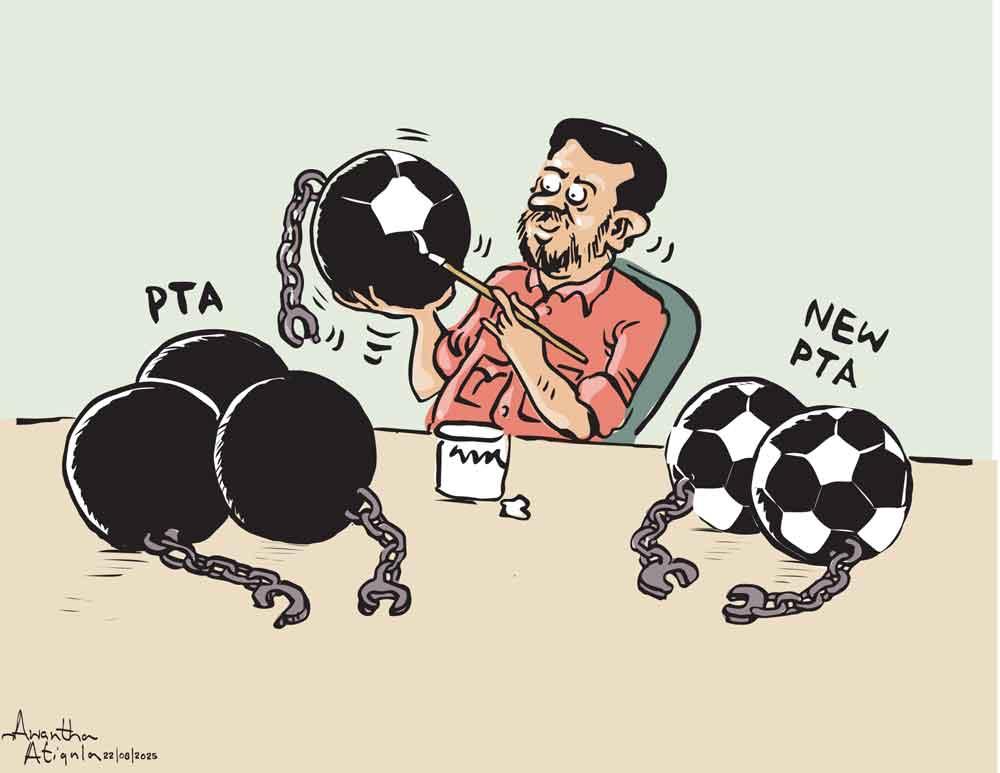
Prevention of Terrorism Act

President Dissanayake’s election manifesto included a commitment to the “[a]bolition of all oppressive acts including the Prevention of Terrorism Act (PTA) and ensuring civil rights of people in all parts of the country.” Previous governments have made similar commitments, including repeatedly to the Human Rights Council. However, since his election the authorities have continued to use the PTA to detain people, often from minority communities, without credible evidence to support terrorism allegations. Many Muslims who were arrested and detained under the PTA without evidence of wrongdoing in connection with the 2019 Easter Sunday bombings continue to face harassment from the security forces.

According to human rights defenders in the Northern and Eastern provinces, members of the police and intelligence agencies routinely warn that they will be accused of terrorism because of their work. The International Monetary Fund (IMF) found in September 2023 that “broad application of counter-terrorism rules” restricts civil society scrutiny of official corruption.

Recommendations to the government:

Immediately impose a full moratorium on the use of the PTA, and promptly implement the commitment to repeal it;
Release remaining long-term PTA prisoners who were convicted on the basis of confessions obtained under torture;
Ensure that any new counterterrorism legislation is compliant with international human rights standards; and
Direct security agencies to end the harassment and intimidation of people, mostly Tamils and Muslims, who were previously accused under the PTA and released due to lack of evidence.

Rights to Freedom of Religion or Belief

The campaign to redesignate Hindu temples as Buddhist sites gathered speed in 2020, when then-President Gotabaya Rajapaksa established the Presidential Task Force for Archaeological Heritage Management in the Eastern Province. Although the task force is no longer active, the policy has continued under President Dissanayake. Agencies, including the Department of Archaeology, Department of Forests, Department of Wildlife Conservation, the military, and the police, have taken part in a concerted strategy assailing the culture and practices of religious minorities. In many cases, private lands belonging to Hindu or Muslim communities have also been affected. These actions violate rights including to freedom of religion or belief, and make government rhetoric of postwar “reconciliation” appear hollow.

Recommendations to the government:

Direct state agencies to end the practices of encroaching upon or denying access to minority religious sites;
Ensure that the police and other state agencies respect court orders upholding the rights of minorities to religious sites; and
Ensure that minority communities’ rights to lands that they use for economic activities are not subject to discriminatory interference or obstruction by government agencies.

[1] For example, according to a report by the Jaffna-based Adayaalam Centre for Policy Research, “In February 2024, two leaders from the FOD {Families of the Disappeared]… travelled to Geneva for advocacy meetings, and faced targeted harassment. While they were away, the [plainclothes police] CID interrogated their family members, relatives, villagers and other FOD, inquiring about the whereabouts and purpose of their travels. Upon their return, they were interrogated and harassed. The activist mentioned above, in particular, has been summoned by both the [anti-terrorism] CTID and CID several times since then… [One] activist concerned told the CID, ‘[Y]ou are not looking for my husband who has forcibly disappeared but are always looking for me!’” Adayaalam Centre for Policy Research, A Phantom that is Real: persisting culture of surveillance and intimidation in the north-east, February 2025, https://adayaalam.org/wp-content/uploads/2025/05/A-Phantom-that-is-Real_-Persisting-Culture-or-Surveilance-and-Intimidation-in-the-NorthEast.pdf (accessed August 4, 2025).

Russia still open for nuke cooperation with Sri Lanka, but won’t force: Ambassador

Russia remains open for cooperation with Sri Lanka in the development of nuclear energy, but will not impose anything in this regard since it is the sovereign right of the country, Russian Ambassador Levan Dzhagaryan said.

In response to a question during an interaction with the press, the Ambassador on Thursday said he is seeking a meeting with the Sri Lankan Energy Minister to discuss the proposal for the setting up of a nuclear power plant.

“The ball is in your court, as I always say,” he said.

Sri Lanka has proposed nuclear power in its energy mix, both under the previous and current governments. The previous government even proposed to build three nuclear plants of 900 megawatts.

Earlier, he put forward the idea during his visit last year, when he met the Energy Minister and senior Foreign Ministry officials of the last government after prior consultations with top executives of Rosatom, Russia’s state nuclear agency.

It was a concept that involved setting up a small nuclear power facility with an initial capacity of 110 megawatts—two units of 55 megawatts each—while leaving open the option of expanding to as many as six units, depending on demand.

Commenting on the Russia-Ukraine war, he said Russia appreciates Sri Lanka’s neutral position despite pressure from the Western powers. The Ambassador said that no force could defeat Russia in this war.

26th remembrance for 24 Tamils killed in AF bombing

A remembrance has taken place for the 26th year for 24 Tamil civilians who were killed in an Air Force bombing at Manduvil in Mullaitivu in September 1999.

Relatives offered flowers and lit lamps to photographs of the victims at the event on 15 September.

A Kfir aircraft dropped two bombs on a busy street around 10.25 am, killing 10 people on the spot and injuring more than 40 others.

Fourteen others succumbed to injuries later.

NESOHR and SNE have documented details of the dead that include two girls aged 12 and 15 years.

Posted in Uncategorized

ICJ urges Govt. to scrap Online Safety Act

The International Commission of Jurists (ICJ) has criticised the Online Safety Act, No. 09 of 2024, in response to a call for public input on amendments, urging the Government to repeal it or substantially revise it.

In its submission to the Government earlier this week the ICJ said revisions were needed to bring it into compliance with Sri Lanka’s international human rights law obligations, and to ensure that the revision process involves full and inclusive consultations with stakeholders.

The Act, which came into force in February 2024, is elaborated in a manner likely to undermine human rights guarantees and lead to further shrinking civic space. As the Act has begun to be implemented over the past year, these human rights risks have materialised in practice, the ICJ noted.

The first arrest under the Act occurred in February 2024, when a suspect was accused of conducting online smear campaigns against the Government under the alleged instructions of a politician. Since then, public authorities and parliamentarians have invoked the Act to accuse individuals of spreading vaguely defined and overly broad “prohibited statements.”

In its submission, the ICJ emphasised that several provisions of the Act threaten the enjoyment of rights to freedom of expression, opinion, and information guaranteed under Article 14(1)(a) of the Constitution of Sri Lanka and Article 19 of the International Covenant on Civil and Political Rights (ICCPR), to which Sri Lanka is a party.

Key concerns include: the overly broad powers of the Online Safety Commission and appointed “experts”; vague and overbroad offences; disproportionate sanctions and punishments; lack of adequate judicial oversight; and disproportionate impact on transgender and gender-diverse persons.

Sri Lanka’s Ministry of Public Security and Parliamentary Affairs has appointed a committee to review the Act and consider amendments, which were published in the Gazette on 31 July 2024.

According to the Minister of Public Security, the committee is chaired by the Solicitor General and includes representatives from the Attorney General’s Department, the Ministries of Justice, Public Security, and Media, as well as a Senior Deputy Inspector General of Police from the Criminal Investigation Department.

France starting talks with Sri Lanka to resume projects after default ends

Talks are starting on resuming stalled projects and starting fresh ones, on the policy priorities of Sri Lanka’s new government, a top official of the French devel agency, Agence Française de Développement (AFD) said.

Sri Lanka had 426 million dollars of bilateral loans from France of which 138 million dollars were in arrears as of March 2025 and as well as unpaid interest.

A June debt bulletin said it was turned into 478 million dollars of loans.

The restructuring agreements between France and Sri Lanka were signed in August.

“So, the discussions of where we are heading to is now starting, with the Sri Lankan government on two sides,” Cyrille Bellier, Head of the Department Europe, Middle East and Asia told reporters in Paris.

“How we can re-engage the projects that have been stopped and for which the Sri Lankan government decided that they were still a priority.”

Projects which are no longer a priority can be cancelled he said.

“And then in which directions we are going to go with the Sri Lankan government, public companies, public banks, private banks, etc,” Bellier said.

“So this is a very active discussion at the moment on the future of our activity in the country.”

AFD’s private sector arm Proparco, finances and banks for on-lending to small and medium businesses as well as directly financing identified private firms of a sufficient size and track record.

AFD has a number of projects in Sri Lanka including in rural dairy, air quality management, geographical indicators for tea and renewable energy support for the Ceylon Electricity Board.

France was co-chair of the Sri Lanka’s debt restructuring efforts through the Paris Club.

The AFD, currently has an active portfolio of around 50 billion euros of which around a third has been committed to the Indo-Pacific area, Executive Director of AFD operations Philippe Orliange said.

Supporting resilience to climate change, preserving biodiversity and energy transition to reduce carbon emissions and helping countries reach sustainable development goals, are key focus areas of the French public lender.

Posted in Uncategorized

Katchatheevu tourism: Govt. to consult stakeholders

The recent visit to Katchatheevu Island in the northern territorial waters by President Anura Kumara Dissanayake during an official visit to Jaffna has swung the regional spotlight back on a matter which has been until now a seasonal bilateral irritant that both Governments across the Palk Strait have often brushed off.

The unprecedented move by a Sri Lankan Head of State ignited the imagination of some segments of the Indian domestic media landscape and State political voices.

When asked if the visit by President Dissanayake to Katchatheevu and the proposed tourism project which is being considered would have an impact on Indo-Lanka relations, Ministry of Foreign Affairs Spokesperson Thushara Rodrigo said: “Sri Lanka and India are strong democracies, and our relationship will not be strained by discussions of development in Katchatheevu.”

He explained that the two nations had built their partnership on deep foundations of respect and cooperation and that these values would guide them as they navigated sensitive issues related to the island, adding that Sri Lanka respected religious sensitivities and the rule of law and that both countries must act on those principles to preserve their democracies.

Rodrigo also dismissed concerns that Dissanayake’s recent visit to Katchatheevu would inflame relations with New Delhi. He described the visit as a symbolic reaffirmation of Sri Lanka’s sovereignty and stressed that it would not undermine the goodwill and mutual understanding that existed between the two countries. He further emphasised that the sanctity of religious spaces such as St. Anthony’s Church must be safeguarded, but that such issues should not be conflated with geopolitical disputes.

A small island with significance

The island of Katchatheevu, which lies in the Palk Strait between India and Sri Lanka, has long been a point of political contention. Though it measures only 285 acres, it occupies an outsized place in the narratives of sovereignty, religious devotion, and livelihood that stretch across the strait. Its status was formally settled in the 1970s through bilateral agreements in which India recognised Sri Lanka’s sovereignty, but in Tamil Nadu the issue has remained politically potent for decades.

The 1974 Indo-Sri Lanka Maritime Agreement handed sovereignty of Katchatheevu to Sri Lanka while allowing Indian fishermen and pilgrims to visit without visas. This agreement, however, did not extend fishing rights to Indian vessels, a fact that became more explicit in the 1976 accord, which prohibited Indian fishermen from Sri Lankan waters. While the agreements remain legally binding, Tamil Nadu politicians have repeatedly argued that India ceded the island without proper consultation and have called for its retrieval. Petitions to this effect remain before the Indian Supreme Court.

Dissanayake’s visit marked the first time a Sri Lankan Head of State had travelled to Katchatheevu, and it was widely seen as a strong and symbolic gesture at a time when Tamil Nadu politicians, including actor-turned-politician Vijay, have revived their calls for the island’s ‘return.’

Development plans

At the same time, the Government is conducting a feasibility study for a tourism development project in the Northern Province. The plan aims to link Katchatheevu with Neduntheevu, also known as Delft Island, and to encourage greater religious tourism as according to Fisheries, Aquatic and Ocean Resources Minister Ramalingam Chandrasekar.

Rodrigo nevertheless insisted that no development would proceed until environmental, social and religious impact assessments were completed.

Ministry of Urban Development, Construction, and Housing Secretary Ranjith Ariyaratne further noted that there had been much speculation but little concrete movement. “There has merely been conjecture on proposed development work, but no work has actually begun. It would fall under the purview of the Urban Development Authority (UDA), but I can confirm that no such project has commenced, and no such order has come from the office of the President,” he said. His clarification underscored that the project remained in the study phase and was not yet a matter of execution.

Concerns of the Catholic community

The proposal has nevertheless sparked debate, particularly among the Catholic community in northern Sri Lanka, about whether such projects might alter the sanctity of St. Anthony’s Church, which has been a sacred pilgrimage site for generations.

Deputy Minister of Buddha Sasana, Religious and Cultural Affairs Gamagedara Dissanayake emphasised that these concerns were being taken seriously. “The Government will try to iron out the concerns of the Catholic community. A development project that does not complement the religious sanctity of the location is without purpose,” he said. “We must and will respect the views of all worshippers. The Government has no intention of forcibly evicting anyone or proceeding with construction that would breach the sanctity of the site.”

He added that while protests were not unusual in relation to sensitive projects, the Presidential Secretariat was directly overseeing the initiative and had instructed that all reasonable demands made by stakeholders had to be considered during the planning and implementation stages.

Attempts to elicit a response from Roman Catholic Bishop of Jaffna, Right Reverend Dr. Justin Bernard Gnanapragasam, did not yield positive results.

Pilgrimage and security

The church is the focal point of the annual feast that brings thousands of pilgrims from both Sri Lanka and India. Rodrigo explained that Indian devotees attended under special provisions of the 1974 agreement. They do not require visas, but a list of pilgrims and vessels must be submitted in advance to Sri Lankan authorities. He noted that the practice resembled the way Sri Lankan Buddhists travelled to religious sites in India and that it was conducted within the framework of the law.

Sri Lanka Navy Spokesperson Commander Buddhika Sampath, elaborating on the entry process, said pilgrims must submit their personal details, along with boat numbers, before making the journey. These details are distributed to the District Secretary of Jaffna, the Navy, the Coast Guard, Immigration, and other agencies. On arrival, pilgrims are checked by Customs, Immigration, Police, and the Coast Guard. After the festival, officials ensure that all participants return to India.

“They cannot travel to the Sri Lankan mainland,” he emphasised. “The Navy and Coast Guard deploy assets to ensure no one penetrates into our territory. Some security measures cannot be revealed, but we have taken all necessary precautions.”

Sampath also confirmed that there were no permanent Government institutions on Katchatheevu. For the festival, temporary infrastructure is brought to the island, set up for the event, and then dismantled. “For security purposes, however, we have a continuous deployment on the island,” he said. “It is not isolated or abandoned, but we do not have permanent buildings there.”

For Sri Lankan fishermen in the north, the dispute over Katchatheevu is intertwined with the frequent challenge of Indian trawlers crossing into Sri Lankan waters. They accuse Indian boats of using bottom trawling, a destructive method banned in Sri Lanka because of its ecological damage. These incursions often lead to arrests and confiscations, fuelling anger among local communities who see their livelihoods threatened.

In Tamil Nadu, fishermen argue that their traditional fishing grounds were lost when India recognised Sri Lanka’s claim to the island. While New Delhi has proposed shifting them to deep-sea fishing, progress has been slow. The result is a persistent cycle of arrests, protests, and political demands that continue to resonate on both sides of the Palk Strait.

Attempts to contact Chandrasekar on the matter failed, with the Minister providing excuses each time he answered the phone.

The economic dimension

Amid this complex mix of politics, diplomacy, religion, and livelihoods, analysts have urged Colombo to adopt a broader view.

Centre for Policy Alternatives Executive Director Dr. Paikiasothy Saravanamuttu believes that the Katchatheevu issue is primarily a State-level political rallying point in Tamil Nadu rather than a matter of contention between the Governments of India and Sri Lanka. “There is a clear understanding that the island belongs to Sri Lanka,” he said. “I do not believe it will become a major point of contention.”

He acknowledged that presidential statements and initiatives could have a ripple effect but said they were unlikely to provoke a serious rift with India. More importantly, he argued, Sri Lanka should see Katchatheevu in terms of economic opportunity.

“India is projected to be one of the world’s fastest-growing economies. Tamil Nadu, in particular, is on track to have a trillion-dollar economy by 2030. Sri Lanka’s northern and eastern regions would be foolish to turn their backs on this economic orbit,” he explained. “Any local issues must be considered against the backdrop of this emerging economic power and prosperity.”

Balancing sovereignty, faith, and development

Dr. Saravanamuttu also addressed the concerns of the Catholic community about the sanctity of St. Anthony’s Church. He suggested that compromise was possible, with both religious devotion and development being respected.

“I believe an agreement can be reached where the sanctity of the region is observed while still looking after people’s livelihoods and development. At the end of the day, religion must serve the betterment of the people, and development is not sacrilegious,” he said.

The Katchatheevu debate thus encompasses multiple layers. For the Sri Lankan Government, the challenge is to reaffirm sovereignty, respect religious sensitivities, and manage cross-strait tensions, all while exploring opportunities for tourism and economic growth. For India, the issue remains a balancing act between the sentiments of Tamil Nadu’s electorate and the strategic realities of its partnership with Colombo. And for the people of the north, the stakes are immediate, involving livelihoods, faith, and the hope of development.

Whether Katchatheevu becomes a point of conflict or cooperation in the future will depend on how effectively these interests are balanced.

Posted in Uncategorized

Jaffna e-library impeded by lack of staff

Insufficient staff is a big setback for Jaffna Public Library’s e-library project, according to the Chief Librarian Anusiya Sivakaran.

“Limited staffing has slowed the e-library’s progress. Users will have to wait longer to access the remaining 11 sections — counter, periodical, lending, children, Indian corner, computer, archive, reference, special youth and Ceylon Collection,” Ms. Sivakaran said.

President Anura Kumara Dissanayake launched the e-library website (jaffna.dlp.gov.lk) and smart card system on September 1.

The focus of the project is on digitalising frequently used materials from the Ceylon Collection of books by Sri Lankan writers that are free from copyrights.

Books are accessible to users within the country and abroad. Materials are available in English, Tamil, and Sinhala, while there are resources in Japanese, Chinese. “The Ceylon Special Collection is the backbone of the Jaffna library,” said Ms Sivakaran.

Since 2006, the scanning process has been ongoing with support from the Noolaham Foundation, but only 1,200 books have been digitalised so far due to funding and equipment limitations.

“The library has decided to continue the project independently,” she said.

About 117,199 books and ‘olai chuvadigal’ (palm-leaf manuscripts) are available in the Jaffna Public Library.

Ms. Sivakaran also said there are Braille books for visually impaired users and that wheelchair access is available. Library employee Mr. Sivakumar, educated at Laila College, India, has installed the NonVisual Desktop Access (NVDA) software on library desktops.

The software supports 55 languages, pronouncing the letters that are being typed and it also reads full sentences upon completion, assisting visually impaired users. Also, mobile services are used to raise community awareness about the facilities and materials available for the less-abled.

Ms. Sivakaran said that when Rs. 100 million was allocated for the project from the 2025 budget, moral support was provided by the Northern Province, Provincial Council, and Jaffna Municipal Council to ensure the funds were used wisely. The smart card online form is also ready, but not yet open to the public. Simultaneously, it will be provided in person to existing members (4,000–5,000) and new members.

The Jaffna Library IT unit uses a system to protect data, prevent cyber-related issues, and restrict access to irrelevant content. Materials can also be printed.

The librarian believes the uploading can be completed by 2026. Staff will be trained to handle the workload. Any potential issues with scanners, the server room, or other equipment will be resolved through proper maintenance, as assured by the government.

Posted in Uncategorized

Namal meets Indian High Commissioner

Sri Lanka Podujana Peramuna (SLPP) MP Namal Rajapaksa met with Indian High Commissioner Santosh Jha in Colombo, where the two discussed ongoing developments in both countries and ways to further enhance bilateral relations.

In a post on X, Rajapaksa said it was a pleasure meeting the High Commissioner, adding that the SLPP “greatly values our longstanding friendship and strong bilateral ties with India” and looks forward to further strengthening the partnership.

The Indian High Commission in Colombo also confirmed the meeting, noting in a post that High Commissioner Jha hosted Rajapaksa at India House.

It said the discussions covered current developments in India and Sri Lanka, along with the “wide-ranging bilateral partnership” shared by the two nations.

Posted in Uncategorized

Chinese Ambassador calls on ex-President Maithripala Sirisena

The Chinese Ambassador to Sri Lanka, Qi Zhenhong has met former President Maithripala Sirisena at his official residence down Hector Kobbekaduwa Mawatha, Colombo, for a discussion.

It is reported that discussions were held pertaining to the on-going political situation in the country.

The Chinese Ambassador in Colombo also met with former Presidents Mahinda Rajapaksa and Ranil Wickremesinghe prior to meeting former President Sirisena.

Meanwhile, under the provisions of the Presidents’ Entitlements (Repeal) Bill, the official residences are required to be handed back to the government.

In line with this, former President Sirisena recently stated that he would hand over his official residence once the necessary documentation is received.

Chemmani mass grave: Sri Lanka’s gap in forensic expertise

In August, the Human Rights Commission of Sri Lanka (HRCSL) conducted a fact-finding mission at the Chemmani mass gravesite in Jaffna, which has thus far contained over 200 human remains, alongside significant systemic challenges in the investigation process.

The investigation unearths not only remains but also entrenched obstacles to delivering justice for alleged extrajudicial killings, highlighting the urgent need for institutional reforms and international collaboration.

Investigation process

The Chemmani site first emerged as a site of national and international attention in the late 1990s following revelations tied to wartime atrocities during Sri Lanka’s violent civil conflict. In 1996, after the brutal rape and murder of Tamil schoolgirl Krishanthi Kumaraswamy by soldiers, a Sri Lanka Army corporal revealed mass graves in the Chemmani area.

However, meaningful investigations stalled for decades until renewed excavations began in early 2025.

As of August this year, over 200 skeletal remains had been uncovered at Chemmani during the ongoing investigation led by the Jaffna Magistrate’s Court in coordination with archaeological experts, forensic medical officers with anthropological specialisations, and the Criminal Investigation Department (CID). Office on Missing Persons (OMP) observers also oversee proceedings.

OMP Commissioner Mirak Raheem commented on the unique complexity of mass grave investigations: “Mass graves tend to be obviously a lot more complicated than your normal crime scenes. The big challenge is that it’s not just about scaling up a normal kind of crime scene investigation by just adding individuals. It’s also about the fact that you need to use a multidisciplinary team to investigate it from the outset.”

Raheem highlighted the multidisciplinary approach at Chemmani, which involves a rotation of Judicial Medical Officers (JMOs) with anthropologic expertise led by Consultant Judicial Medical Officer Dr. Selliah Pranavan alongside archaeological teams including Professor Raj Somadeva and students from the University of Jaffna assisting in medico-legal and archaeological work.

“Given the size of this site, many hands are necessary on deck to assist in the case. This also provides exposure to students who want to enter fields like forensic archaeology and forensic anthropology,” he stressed.

Beyond excavation, parallel investigations explore the history of the site and the circumstances surrounding the burials. The site’s over 20-30 feet of strata require multifaceted sampling both horizontally and vertically to confirm whether bodies relate to a single incident or multiple events spread over time.

“One cannot assume that all bodies found in one site relate to the same event. The lack of public information is a key issue but a significant amount of documentation from previous commissions must be assessed and analysed to help substantiate findings,” noted Raheem.

Forensic challenges

A critical challenge underscored by both the HRCSL report and experts is the limited pool of qualified forensic anthropologists and archaeologists, alongside severe deficits in advanced technological capacity.

The State currently lacks domestic facilities for detailed carbon dating, forcing reliance on foreign laboratories such as one in Florida, which in 2018 dated skeletons in Mannar to approximately 450-550 years ago – a finding that faced contestation from local scholars, particularly, Prof. Somadeva.

“Two commissioners visited the site in Chemmani, and they observed that there weren’t enough resources to be satisfactory for the level of excavation and investigation required. For example, there are only two JMOs. The number of staff is also inadequate.

“We also don’t have the necessary expertise and equipment for carbon dating. So, the Government must ensure that the necessary funds and resources are provided in addition to obtaining international expertise,” said HRCSL Commissioner Nimal Punchihewa.

Retired Government Analyst Ariananda Welianga highlighted the technical divide: “Sri Lanka is competent in DNA testing and has the necessary expertise and tools. However, when it comes to carbon dating, we lack the technology.”

Supporting this, Government judicial medical sources revealed: “For carbon dating, we can’t do that. The usual practice is, we send the material to a Florida-based lab that does the carbon dating analysis for us.”

Operational realities

Aside from expertise gaps, funding and administrative procedures impose further constraints. Recent misinformation suggested delays in excavation due to funding shortages, but this is refuted by investigation officials.

“Funding is based on the budget provided by the JMO, who is scheduled to submit the budget for the third phase by 18 September. Until the budget is submitted, no further funds can be released.

“The team generally works in 15-day blocks without taking weekends off, but some members also work on other sites during rest periods. This planning ensures continuous work during active periods and rest or reassignment afterwards. The team has not been working non-stop since the excavation began,” Raheem clarified.

Justice Minister’s assurances

“The court orders determine the stages of the work, which are progressing well. If additional expertise is required, it will be brought in. Currently, Chemmani is moving quite well. Regarding the budget, there were questions, but it has been confirmed that funding is sufficient and is being released progressively.

“Excavations are conducted in stages as advised by experts and multidisciplinary teams who determine when each phase should proceed. Judges then approve the stages and funding is released accordingly,” said Justice Minister Harshana Nanayakkara.

According to him, the Government consults international partners such as the United Nations (UN) and the International Committee of the Red Cross (ICRC) for scientific and technical support when needed.

“The Government is already obtaining foreign expertise as needed. When the technology or facilities are lacking, it consults with the UN and the ICRC for assistance. As long as the work can be done domestically, it is handled internally; however, scientific and technical help is sought when necessary.”

Justice Minister Nanayakkara acknowledged steps underway to establish an independent prosecutorial office: “Right now we are working on the Independent Prosecutor’s Office. That independent office is on the cards and the committee is meeting to come up with a way to have a directorate of public prosecutions, an independent body. Whether that will serve the need, we can see.”

An example in South and Southeast Asia where foreign expertise was sought for mass grave investigations is Cambodia. After the Khmer Rouge regime, which caused millions of deaths, Cambodia undertook forensic investigations with international assistance.

Beginning in 2001, a team of Cambodian and international researchers and forensic experts collaborated on identifying and excavating gravesites such as Choeung Ek. This project had phases including feasibility studies, site identification, and scientific excavations, backed by international funding and expertise to support trials at the Extraordinary Chambers in the Courts of Cambodia (ECCC).

Law enforcement and media freedom

The HRCSL report raises grave concerns over law enforcement conduct, citing intimidation tactics targeting witnesses and families by CID officers. Additionally, the involvement of the military and regular Police forces in investigations has triggered fears of bias, undue influence, and obstruction of justice.

The summoning of an independent journalist covering the investigation by the Counter-Terrorism and Investigation Division (CTID) sparked broader concerns about press freedom and suppression of independent reporting.

In response to these issues, the HRCSL’s recommendations to the Inspector General of Police include directing CID officers to cease intimidation and antagonistic questioning and ensuring the CTID complies with Police circulars requiring notification to individuals summoned, with particular sensitivity towards journalists.

However, the Ministry of Public Security has defended the decision to deploy Police personnel from posts close to the gravesite in rotation, stressing that the officers involved cannot influence the ongoing investigations.

Voices from the ground

Local communities and families of the disappeared express deep scepticism about the domestic investigation’s independence and transparency.

Kumanan Kanapathipillai, a photojournalist covering the excavation, revealed that those directly affected – the families of the missing and the disappeared – have cast serious doubts over the impartiality of the probe.

“Families of missing persons and disappeared are calling for international support and forensic experts. The families continuously say that they don’t believe in the domestic investigation because they don’t trust it will be independent and transparent due to the involvement of the state. The JMO is under the Ministry of Health which is in turn under the Government, so they believe that the support of international experts would help give credibility.”

Accountability and healing

The Chemmani mass grave investigation is not only a forensic exercise but a litmus test for Sri Lanka’s commitment to truth, justice, and reconciliation after decades of conflict marked by enforced disappearances and extrajudicial killings.

The HRCSL’s report lays bare the intertwined challenges of capacity shortfalls, funding constraints, political interference, and human rights concerns that cloud the path to accountability.

Raheem emphasised the importance of international collaboration, noting: “There is much to be shared by international experts with Sri Lankan forensic experts and investigators to advance the work.”

The demands from families and civil society for independent, transparent investigations supported by international expertise embody a broader call to break cycles of impunity and denial.

Sri Lanka’s ability to leverage this moment in Chemmani – by building institutional capacity, respecting human rights standards, and ensuring independent oversight – will determine whether the echoes of the past truly lead to justice for victims and their families or merely deepen wounds that remain unhealed.

HRCSL recommendations

Highlighting systemic weaknesses, the Human Rights Commission of Sri Lanka (HRCSL) makes crucial recommendations to various State actors to address current failings and ensure credible justice:

To the Minister of Justice:
Develop and implement a Standard Operating Procedure (SOP) for mass grave investigations.
Appoint a focal point to expedite budget approvals and resource allocation.
Expand the use of Ground-Penetrating Radar (GPR) for comprehensive site scanning.
Build local archaeological expertise and secure overseas technical support for DNA and carbon dating.
Establish a DNA bank to aid family identification.
Support continuity of magistrate leadership overseeing the investigation.
Create an independent, permanent office tasked with investigating and prosecuting serious State crimes.
To the Inspector General of Police:
Stop CID intimidation of witnesses and victims’ relatives.
Enforce CTID compliance with notification protocols, especially regarding media personnel.
To the Minister of Defence and Army Commander:
Bar Army personnel from involvement or interference in investigations and contact with investigators, families, or civil society.
To the Minister of Higher Education:
Review and strengthen forensic anthropology training to increase expertise.
Promote forensic archaeology as an academic discipline.
To the Minister of Finance:
Facilitate VAT exemptions and Customs clearance for forensic lab equipment donated to the University of Jaffna.