New EU laws after 2027 set to pose fresh hurdles for Sri Lanka’s exports

* Deforestation regulation EU will ban goods grown or produced on land recently cleared of forest; exporters must provide geo-location data and documentation

* EU authorities can investigate supply chains on suspicion of forced labour; companies must present credible evidence of compliance

* Sri Lanka’s strong labour laws offer an advantage, but exporters must build human-rights due-diligence systems and monitor high-risk suppliers

* Sri Lanka remains attractive in textiles, apparel, rubber and agricultural goods benefiting from GSP+ low tariffs, and has growing potential in IT and business services despite no GSP+ cover

In the wake of Sri Lanka facing headwinds in its export growth because of U.S. tariffs and GSP+, it is now poised to encounter further challenges to overcome in accessing the European Union market because of new laws that will come into effect after 2027, according to a German expert.

In a virtual address to the Sri Lankan stakeholders from Berlin last week, Markus Loning, an expert on human rights and responsible business, said one of them is the EU deforestation regulation, which is relevant to the import of the items – wood, cocoa, coffee, palm oil, leather and beef, soy and rubber.

“Many of these don’t apply to Sri Lanka and are not so important, but at least two of them do. It is important to take this into account. It’s still a while. It’s not so long until this comes into force. What the EU deforestation regulation actually demands is that companies can only place goods on the EU market if they have not been the cause of deforestation,” he said.

Elaborating on the reason for the enforcement of such a regulation, he said the European Union does not want to incentivise further deforestation in any way.

“We want to refrain from buying products grown on plots of land where trees have been cut recently. They (European Union) are taking a baseline, which is a couple of years back. Then, they are looking at what is the plot of land, where this material comes from. That is why you will need to collect geo-location data and documents. They will ask whether this plot of land has been deforested recently. So any product that is linked to forest destruction will not be able to enter the European single market,” he said.

He said the next would be the EU forced labour regulation. Once this law comes into effect, the European Union authorities will investigate into supply chains if there is a suspicion of forced labour, but the burden of proof is different from the deforestation regulation.

The burden of proof is with the authorities in this case. The authorities must have suspicion and evidence. They will then go for an investigation, and the supplier will be able to demonstrate that this is true or not,” he said.

He said that it should be ensured that the goods imported are not made with the help of forced labour.

“Companies are expected to show credible evidence that no forced labour is involved. What’s important about this law is that it applies to all sectors and all countries. There are no exceptions. Anyone importing into the EU or selling goods inside the EU is in the scope of this law. This is something that has been heavily discussed back and forth, but at the end of the day, there was quite a strong consensus here that this is something that the EU is going to stick to,” he said

However, he said that Sri Lanka has very good labour laws in place and the standards are strong.

Key questions will target high-risk supply chains, including Sri Lankan factory suppliers. Companies must set up a human-rights due-diligence system to show their own operations meet legal standards—health, safety, wages and working conditions—and that they monitor high-risk suppliers. Relevant certificates support and document these efforts, according to him.

There’s a clear business opportunity for Sri Lankan companies as an alternative production base—especially in textiles and apparel, rubber-based and agricultural goods, which benefit from GSP+ low tariffs. In addition, IT and business services have strong potential to grow in the EU market, even though they are not covered by GSP+, as this applies to all business with Europe, he said.

EU imports from Sri Lanka amounted to 2.6 billion Euros in 2023. Sri Lanka is now under watch by the European Union for the extension of the GSP+ under the revised criterion to be effective after 2027.

Move to extend OHCHR’s hold on Lanka for two more years

Sri Lanka will remain under the oversight of the Office of the UN High Commissioner for Human Rights for the next two years, with a draft resolution to extend the mandate of the OHCHR due for passage within the next two weeks at the UN Human Rights Council in Geneva.

However, the Government will have a breather till September 2027, when the next comprehensive report on the progress on reconciliation, accountability and human rights is due before the UNHRC.

The main sponsors of the resolution are the United Kingdom, Canada, Malawi, Montenegro, and North Macedonia. The US, which co-sponsored the 2022 Sri Lanka resolution, withdrew from the UNHRC in February.

The term of the dedicated OHCHR Sri Lanka accountability project (OSLap) too will be extended by the resolution.

The project is an evidence-gathering mechanism to develop possible strategies for future accountability processes for gross violations of human rights or serious violations of international humanitarian law in Sri Lanka and to support relevant judicial and other proceedings, including in Member States with competent jurisdiction.

While the new resolution acknowledges the government’s anti-corruption efforts as well as its acknowledgement of the harms and sufferings resulting from decades of divisive racist politics and ethnic conflicts in the country, it highlights the urgent need to repeal the Prevention of Terrorism Act and amend the Online Safety Act.

The resolution refers to the identification of multiple mass grave sites in Sri Lanka and stresses the need for ongoing work to be provided with adequate resources and the importance of the independent and effective functioning of the Office on Missing Persons.

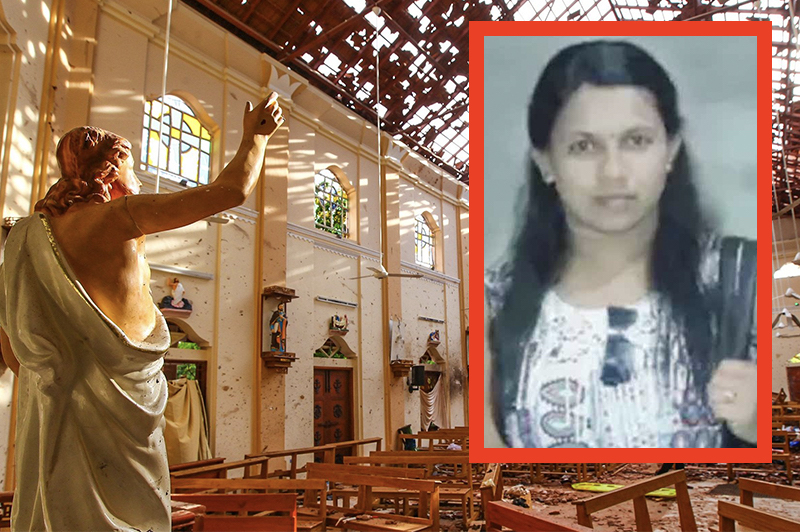
It urges the Government to proactively seek international support to ensure sufficient financial, human and technical resources to conduct exhumations in line with international standards, as well as seek international assistance to strengthen capacities while investigating and prosecuting some emblematic cases of human rights violations, as well as the Easter Sunday bombings.

It also acknowledges with appreciation the Government’s commitment to establish an independent public prosecutorial body while urging that this be fully independent, effective and robust, and encourages the Government to consider the creation of a judicial mechanism with an independent special counsel in relation to the cases of human rights violations and violations of international humanitarian law committed in previous decades.

Govt must announce timeline for PC election, says rights group

The Centre for Human Rights and Research has urged the government to announce the timeline and electoral mechanism for the long-delayed provincial council elections, which have not been held for over a decade.

In a statement issued this week, the Centre called on authorities to make public their plans “without delay,” if they are indeed committed to holding the elections within this year as outlined in the government’s official election manifesto.

Quoting a senior government source, a weekend newspaper reported that the administration is currently considering holding the elections under the previous proportional representation system.

Executive Director of the Centre for Human Rights and Research, Rajith Keerthi Tennakoon, emphasised that provincial councils must once again function as “governance by the people, for the people.”

He added that it is the collective responsibility of all stakeholders to ensure that the elections are held as soon as possible and that elected representatives return to govern these key regional institutions.

Posted in Uncategorized

Justice not yet served allege families of massacre victims

A complaint has been lodged with the police requesting the excavation of a burial site where over 180 unarmed Tamil individuals, including infants, have been buried after being killed by state defence forces.

The complainant is a person who lost ten family members in the massacre.

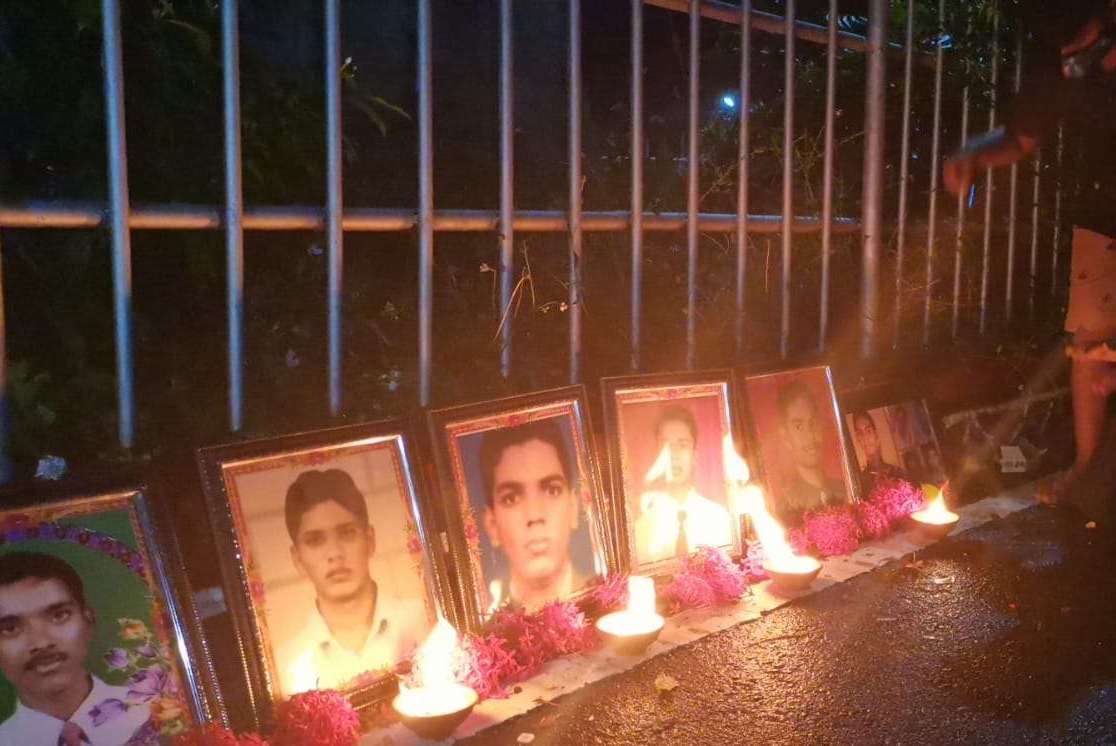
The 35th anniversary of the Sathurukondan massacre, regarding which strong evidence has been recorded before a presidential commission implicating state defence forces, was commemorated by the Tamil community in eastern Sri Lanka with offerings of flowers and the lighting of lamps.

In his complaint to the Kokkuvil Police Station in Batticaloa, Vairamuttu Kulandavadivel describes how he hid and witnessed the army surrounding his village and abducting ten members of his family, including his mother, father, younger sister, younger brother, grandfather, grandmother, and three children of his sisters, three and a half decades ago.

He requests that his relatives’ bodies be recovered, as there are eyewitnesses to the place where they were buried after being killed.

“There are survivors who witnessed that they were hacked, shot and buried at the Boys’ Town camp in Sathurukondan. Therefore, there is a need to recover our relatives’ bodies.”

Through his complaint, he requests the police to conduct excavations at the Boys’ Town camp in Sathurukondan, where villagers including his relatives are said to have been buried.

“I am filing a complaint seeking that excavations be conducted at the Boys’ Town military camp in Sathurukondan, where our relatives have been buried.”

Sathurukondan had not been included in the list of mass graves recently revealed by Justice Minister Harshana Nanayakkara as sites under investigation.

The 35th anniversary commemoration, held on the evening of 9 September 2025 near the monument built at the Panichchaiyadi junction in Sathurukondan, was organized by the relatives of the 184 victims from four villages who were murdered on 9 September 1990.

According to evidence presented before the Presidential Commission of Inquiry into Involuntary Removal or Disappearances of Persons in the Northern and Eastern Provinces, chaired by retired High Court Justice Krishnapillai Palakidner and appointed by former President Chandrika Bandaranaike Kumaratunga on 4 January 1995, officials of the Sathurukondan Boys’ Town camp were implicated in the massacre.

The only person who survived the massacre carried out by the army was Kandasamy Krishnakumar from Pilleiyaradi, who was 27 at the time.

According to him, at around 5.30 pm on 9 September 1990, a group of armed soldiers from the Boys’ Town military camp in Sathurukondan had entered the villages of Sathurukondan, Kokkuvil, Panichchaiyadi and Pilleyaradi, and had ordered villagers to come out of their houses.

In addition, 185 villagers who came out to the streets were surrounded, had their hands tied behind their backs, and were taken to the military camp.

Among them were 38 villagers from Sathurukondan, 47 from Kokkuvil, 37 from Panichchaiyadi and 62 from Pilleyaradi.

Among those arrested by the military were 85 women including pregnant mothers.

The group also included 42 children under the age of ten and 28 people over the age of 60.

Even though the soldiers had told the villagers that they were being taken to the military camp for an ordinary investigation and would be released after questioning, no one returned home for several hours except one.

According to the Palakidner commission’s reports, Krishnakumar, showing his wounds, had said that soldiers stabbed him three times in the chest.

He had also seen around ten other people lying on the ground with stab wounds.

Rape cases involving women

The following is an excerpt from the shocking statement given to the Tamil Net website by Krishnakumar three years later, in which he had revealed the horrific acts against women committed by soldiers.

He had witnessed this while lying on the ground after being wounded.

“They brought girls who were completely naked. Their mouths were filled with soil, and they were raped repeatedly. Then the soldiers brought swords and cut off their breasts. Three of the girls were pushed into a well. While they continued to rape, kill and dispose of bodies in pits, I slowly crawled out in the dark. After the soldiers left, I crawled toward the fence of the camp and hid in the scrub jungle behind it. Later, the soldiers brought tires and set the bodies in the pits on fire. The fire burned until around 3 am. After it was extinguished, the pit was filled with soil.”

Family members of the massacre victims allege that justice has not yet been served despite the fact that it has been revealed before a presidential commission that army personnel and village guards committed that crime.

President to Hold Bilateral Talks in US and Japan

President Anura Kumara Dissanayake will travel to the United States on the 22nd of September to attend the United Nations General Assembly.

During his visit, the President is scheduled to engage in bilateral discussions with several heads of state and government officials and will also meet with UN Secretary-General António Guterres.

Upon concluding his engagements in the United States, President Dissanayake will embark on a state visit to Japan on the 26th of Septmeber, at the invitation of the Japanese government.

While in Japan, he will attend the World Expo International Trade Fair on the 27th of this month and hold high-level discussions with senior Japanese officials.

Posted in Uncategorized

Forgotten PC polls -The Island Editorial (13-sep-2025)

President Anura Kumara Dissanayake met the Provincial Governors and Secretaries on Thursday (11) to discuss matters related to finance, development projects, etc., in the provinces, according to the Presidential Media Division. The President/the Finance Minister meets the representatives of the Provincial Councils (PCs) before preparing the annual national budget.

Ideally, President Dissanayake should have been able to meet the Chief Ministers (CMs) of Provinces at the pre-budget discussions, for it is they who actually represent the people. The Provincial Governors are the President’s representatives, and they do as he says. But the PCs have remained unelected for eight long years, and there are no CMs. Therefore, the President can meet only Provincial Governors at present.

There have been eight nationwide elections since the last PC polls in 2014, and the country has had five governments (including the interim one formed by the NPP in 2024) and five Presidents. When the PC polls will be held is anybody’s guess.

President Dissanayake has said his government does not use the PCs as political instruments to advance his party’s agenda. Ironically, he is exercising control over the PCs through the Governors appointed by him. Until the Local Government polls were conducted in May 2025, after a delay of three years, the Presidents had kept all three tiers of government under their control for three years; besides holding the executive presidency, they controlled the legislature through the ruling parties and the PCs through Provincial Governors and the LG institution through Special Commissioners under the Provincial Governors.

The PCs have been under the Executive President since 2017, when the UNP-led Yahapalana government postponed elections to them indefinitely by amending the PC Elections Act. The Opposition parties, including the JVP, did not vote against the PC Elections (Amendment) Bill introduced for that purpose. In fact, they helped the Yahapalana government secure the passage of that Bill. The SLPP government did not hold the PC polls and postponed the LG polls for fear of losing them. The NPP administration said it would hold the PC polls after the 06 May LG elections. But it has since remained silent on that pledge.

President Dissanayake, at the aforementioned discussion, stressed the need for close coordination between the government and the PCs to implement development projects smoothly. There was absolutely no need for him to make such a call as the PCs are run by his appointees—the Governors. The NPP is running the PCs to all intents and purposes. The situation may change if the delayed PC polls are held.

Government politicians prevaricate when they are asked when the PC polls will be held. Cabinet Spokesman Dr. Nalinda Jayatissa provided an evasive answer to a question about the PC polls, at a recent post-Cabinet media briefing. He said he could not specify a timeframe for the PC elections, but they would be held. Perhaps, the considerable setback the NPP suffered in the LG polls has prompted the government to delay the PC elections further. There is reason to believe that if the NPP had won the LG polls comfortably, it would have gone on to hold the PC elections immediately afterwards.

It behoves the government to reveal when it is going to hold the PC polls, which must not be subjugated to the interests of the NPP. True, the PC system has become a white elephant—a very expensive one at that. But the government should hold elections to the PCs or decide whether to retain or scrap them, as polls monitors have rightly said.

Posted in Uncategorized

Impunity around Nimalarajan’s assassination and the question of accountability By Kamanthi Wickramasinghe

Slain journalist Mylvanagm Nimalarajan was the Jaffna correspondent for Virakesari newspaper and for Sinhala weeklies Haraya and Ravaya

The case of Mylvanagam Nimalarajan’ states that Sri Lanka has systematically protected the murderers and perpetrators of these crimes

Nimalarajan’s daughter in one of the accounts said she has placed hopes on the incumbent government to ensure justice to her father’s murder

As many as 44 media workers and journalists have been killed between 2000 -2010 and a recently launched report titled ‘Killing Sri Lankan journalists: The case of Mylvanagam Nimalarajan’ states that Sri Lanka has systematically protected the murderers and perpetrators of these crimes. The report was launched during an event organised by ‘Families of the Disappeared’ to commemorate the work of this brave journalist and it is an example of the ongoing impunity surrounding the assassination of Nimalarajan. He was the Jaffna correspondent for Virakesari newspaper and for Sinhala weeklies Haraya and Ravaya. He reported for Tamilnet and was a stringer for BBC’s Tamil and Sinhala service. The report underscores the systemic failure to prosecute those responsible, failures that may have tragically enabled further violations, including subsequent targeted killings by suspects who were never brought to justice.


Who is accountable for crimes committed against journalists?

The event commenced by lighting lamps and paying tribute to everyone who had to pay the price with their lives for exposing the truth during the height of the armed conflict. Speaking at the event, Brito Fernando, Families of the Disappeared Chairman and human rights activist said that there are no records to prove the actual number of people who have been subject to enforced disappearances during 1971, 1989 uprisings and during the civil war in the North. “There is a serious concern with regards to accountability around the disappearances and assassinations of journalists. Despite various obligations made at the UNHRC sessions in Geneva, we haven’t achieved anything tangible with regards to the human rights situation in the country, particularly in terms of seeking justice for what happened to Nimalarajan and other journalists. When the incumbent government assumed power many families of victims subject to enforced disappearances had faith about the accountability process and ensuring justice to their loved ones, particularly because these individuals have stayed loyal to the party. Even Nimalarajan’s daughter in one of the accounts said she has placed hopes on the incumbent government to ensure justice to her father’s murder. We have cried and wept enough and we need to seek truth, justice and compensation. There’s a gap between what needs to be done and what could be done and it is important to bridge this gap,” he underscored.

Ongoing impunity on Tamil journalists

N. Vidyadharan, Editor of the Murasu Newspaper had been a close associate of Nimalarajan. Sharing his brief experience with Nimalarajan, he said that after 1990, the situation in Jaffna was different. “There was no social media and news was propagated to people mainly via print or radio. I remember warning him to take care of his life but he couldn’t save his life. Even though some progress has been made on cases such as Prageeth Ekneligoda and Lasantha Wickrematunga, there’s impunity on Tamil journalists. With regards to Nimalarajan’s case it’s easy to investigate and find culprits. The Prevention to Terrorism Act (PTA) was introduced to crush terrorism but state terrorism continues. Tamil journalists are being punished for exposing the truth. If the ruling party is keen to seek the truth we are there to support these investigations,” he added.

According to Chandana Keerthi Bandara, ex-Senior Producer at BBC Sinhala Service Nimalarajan would pedal his bicycle around the military-infested Jaffna peninsula to wherever the story was, be it a scene of a bomb blast, a family searching for their disappeared or powerful politicians engaged in vote-rigging or whether it was Tamils braving the odds to achieve a semblance of ordinary life. In his recollection of Nimalarajan, Bandara states that he had no equipment to file a report online; his community lacked electricity, let alone the internet. “Instead, Nimalarajan wrote these stories by putting pen to paper, with passion and objectivity, then he awaited the telephone call from London and would read them out,” the account read.

A call to end impunity against all crimes

Speaking at the event, senior journalist and media rights activist Mandana Ismail Abeywickrema said Nimalarajan was murdered two years after she joined media. “Back then I worked at The Sunday Leader newspaper and we wrote about his murder. I still recall the story of his sister and I was in complete shock because I was only 20 at the time and it was the first time I heard an incident of this nature. But the fact that justice has not been served to this individual or his family even 25 years later is a something that we should be ashamed of. The murder or disappearance of any individual is a blow to humanity. This report includes faces of 44 journalists who have been shot, murdered or disappeared and each one of them have their own families and parents. They have been bearing the brunt of these atrocities for decades. I remember hanging one of Nimalarajan’s photos in our editorial. As years passed by, the collection of such photographs of journalists increased. In 2009, my own editor Lasantha Wickrematunga was also assassinated and we had to add his photo as well to this collection. When this happened only we realized the trauma experienced by the families. For how long should we keep counting these incidents?” she questioned.

She said that it took a while for people to question who is accountable for these atrocities. “But we ultimately took to the streets and longed to make a change. One such example of change was the change in government in 2015. But I would describe it as one of the biggest betrayals in the history of Sri Lankan politics. People voted for change, for justice. We lit lamps near Lasantha Wickrematunga’s grave and voted at this election. But several years later we are still seeking justice. If we want to progress as an advanced society we need to end impunity against all crimes,” she underscored.

Failures and coverups

The report critically examines how the Sri Lankan justice system responded to Nimalarajan’s assassination, drawing on a detailed analysis of the official court record, from the day after his death until November 2021, when the suspects were released on bail. The report reveals that despite the best efforts of some individuals within the system, the investigation process was never designed or intended to lead to justice and accountability.

Speaking about the government’s response at the UNHRC sessions in Geneva, K. W Janaranjana, senior journalist and Editor-in-Chief of Anidda newspaper said that every September, successive regimes have asked for more time saying that they are a new government etc. in an attempt to delay the process of justice for those who are longing for truth and justice. “This government too will follow a similar path. Today we are talking about media freedom, human rights and so on. But at the time when Nimalarajan engaged in reporting, there was uncertainty hovering around reporters. Prior to his death, the Army referred to him as someone supporting the LTTE. He was blamed for keeping a file of politicians’ names and details. Some even claimed that he was going to submit it to the LTTE. The Eelam People’ Democratic Party (EPDP), LTTE, Army and various racist factions were watching Nimalarajan but despite all these obstacles, Nimalarajan did his reporting without any sort of protection. He is a hero and we need to respect him for his work,” he added.

He further said that Nimalarajan’s house was located in a high security zone. “But his assassins passed through military checkpoints, murdered him and left without leaving any trace. The Jaffna hospital was situated 1-2 km away from his house. When his family members informed the Army about the incident, the Army had said that they would send a jeep. But no jeep arrived and all casualties were taken to hospital in a tractor. While on their way, the shortcut to the hospital was barricaded and they had to take the longer route to reach the hospital. This is how he was assassinated. All facts indicate that this was very well planned,” Janaranjana added.

Shedding light on how investigations could have been expedited, he explained that a scene of crime is an important aspect that could draw links to perpetrators. “But it also depends on the criminal investigator. The report indicates how the investigations attempted to coverup all possible links to perpetrators which is one reason why it had been an uphill task to serve justice to Nimalarajan. The report speaks about the role of the Attorney General and I believe that the role of the judiciary too should be mentioned. Shouldn’t the judiciary be given authority to conduct investigations under special circumstances? One basic approach is to make judgements based on evidence presented in courts. But Sri Lanka doesn’t have the inquisitorial system where a court or judge actively investigates the facts of a case rather than being an impartial referee between opposing parties. Justice wasn’t served for Nimalarajan or his family. But at least his body was there for his family members to perform last rites and mourn his loss. There are thousands of families who haven’t even seen the bodies of their loved ones who have been subject to enforced disappearances,” he said in conclusion.

The report further issues recommendations to the Sri Lankan government, Human Rights Council, Member States and international community, government of UK, media institutions and press freedom groups and to the BBC.

Some of the main recommendations include setting up an independent investigative mechanism with international participation, establishing an independent office of the Special Counsel, engagement with international accountability mechanisms, promotion of victim participation and witness protection, support documentation and legal advocacy, champion public memorialisation and support to the family.

Posted in Uncategorized

Excavation of mass graves: UNHRC Urges SL to Apply Int’l Standards By Sulochana Ramiah Mohan

The Sri Lankan Government is urged to proactively seek international support to secure adequate financial, human, and technical resources to carry out mass graves exhumations in full compliance with international standards, as highlighted in the Sri Lanka resolution set to be adopted during the ongoing 60th Session of the UNHRC.

An informal discussion on the draft resolution, set to be adopted, has been scheduled for Monday, 15 September, at the UNHRC.

Numerous cases of enforced disappearances remain unresolved, causing prolonged suffering for the families of the disappeared. The identification of multiple mass grave sites underscores the urgent need for continued investigations, while the independent and effective functioning of the Office on Missing Persons is crucial to ensuring accountability and justice.

The resolution emphasised the importance of a comprehensive accountability process for all human rights violations and abuses committed in Sri Lanka by all parties, including those by the Liberation Tigers of Tamil Eelam (LTTE).

The UNHRC commended the Government’s renewed approach to long-standing issues, noting the reopening of investigations and prosecutions into emblematic human rights cases, including the Easter Sunday bombings. The Council urged the Government to accelerate these investigations in line with international human rights standards, seek international support to strengthen capacities, and ensure full participation of victims, survivors, and their representatives, along with robust protection for victims and witnesses.

On accountability and justice, the resolution urged Sri Lanka to carry out prompt, thorough, and impartial investigations and prosecutions of all alleged human rights violations and serious violations of international humanitarian law. It encourages the establishment of an independent public prosecutorial body and considers creating a judicial mechanism with a special counsel to address past abuses, ensuring these bodies are fully independent, effective, and robust.

Regarding reconciliation and governance, the Council called on the government to fulfil commitments on devolution of political authority, conduct Provincial Council Elections, and strengthen local governance, particularly in the Northern and Eastern provinces. It also stresses the need to address the root causes of conflict, including militarisation, corruption, and impunity.

The UNHRC welcomed the Government’s commitment to amend the Online Safety Act, acknowledging concerns about its lack of judicial oversight and broad definitions of offences. The Council encourages expeditious amendments to ensure alignment with international standards protecting the right to freedom of opinion and expression. The resolution also notes the commitment to repeal the Prevention of Terrorism Act (PTA) and urges a moratorium on PTA detentions until its repeal, with any new laws fully compliant with international human rights obligations.

The resolution stressed the inclusion of victims, survivors, and their representatives in investigations and prosecutions, and calls for safeguarding civil society, human rights defenders, journalists, victims, and families from harassment or reprisals. It also urges the release of lands still occupied by the military or state actors and calls for resolving land disputes in a transparent, impartial, and non-discriminatory manner.

Also, the resolution extended the mandate of the Office of the High Commissioner for Human Rights (OHCHR), requesting oral updates at the 61st and 64th sessions, a written update at the 63rd session, and a comprehensive report on progress in reconciliation, accountability, and human rights at the 66th session for discussion in an interactive dialogue.

Posted in Uncategorized

Four Police Officers Jailed for Torturing 15-Year-Old in Custody

The Balapitiya High Court has sentenced four police officers to rigorous imprisonment and fines for the brutal torture of a 15-year-old boy taken into custody over a theft allegation in 2008.

Delivering the verdict, High Court Judge Priyantha Liyanage ruled that the prosecution had proven the case beyond reasonable doubt, finding all four accused guilty of subjecting the minor to cruel and degrading treatment while in custody.

Sentences:

Retired Chief Inspector (1st accused): 8 years’ rigorous imprisonment, Rs. 100,000 fine (6 months’ extra jail if unpaid) and Rs. 100,000 compensation to the victim (1-year extra jail if unpaid).

Inspector (2nd accused – serving in Elpitiya): 9 years’ rigorous imprisonment, Rs. 100,000 fine (1-year extra jail if unpaid) and Rs. 100,000 compensation (additional 1-year jail if unpaid).

Sergeant (3rd accused – serving in Kalutara): 8 years’ rigorous imprisonment, Rs. 100,000 fine (1-year extra jail if unpaid) and Rs. 50,000 compensation (further 1-year jail if unpaid).

Police Assistant (4th accused): 8 years’ rigorous imprisonment, Rs. 100,000 fine (1-year extra jail if unpaid) and Rs. 50,000 compensation (further 1-year jail if unpaid).

The case relates to an incident on 7 March 2008, when the teenage boy was tortured while in police custody.

Chinese Ambassador calls on former President Ranil

A special meeting between former President Ranil Wickremesinghe and the Chinese Ambassador to Sri Lanka, Qi Zhenhong, was held last morning (11) at the political party office on Flower Road, Colombo.

The meeting was arranged at the request of the Chinese Ambassador, said Ada Derana reporter.

Discussions focused on the political situation in Sri Lanka as well as developments at the international level.

Prior to this, former President Mahinda Rajapaksa also held a similar discussion with the Chinese Ambassador, before leaving his residence in Colombo yesterday.

The Chinese Ambassador is scheduled to meet with another senior former politician in the near future to continue discussions on related matters.