Visa-free entry extended to visitors from seven countries including India, Russia

The pilot project that allows visa-free entry to visitors from seven countries, which includes India, China and Russia has been extended till April 30, 2024, Minister of Tourism Harin Fernando said.

He said that a final decision regarding the matter will be taken during the next few weeks of the pilot project.

In October last year, the Cabinet approved visa-free entry to visitors from India, China, Russia, Malaysia, Japan, Indonesia and Thailand as a pilot project till 31 March 2024.

Why elections for Presidency all political parties have promised to abolish? By Kusal Perera

President Ranil Wickremesinghe is reported to have told the cabinet of ministers, priority has to be given to the IMF program to ensure economic stability and elections will have to be postponed till the IMF program is concluded. One newspaper report had it, the President had in fact informed the Election Commission too about postponing elections.

Postponing elections being a far cry, there is now a new debate mainly in Colombo circles, whether Basil’s request for a parliamentary election should precede the constitutionally scheduled Presidential election, or not. President Wickremesinghe is said to have told Basil then, it would be the Presidential election that would be held according to Constitutional provisions, but, if MPs need a parliamentary election sooner, they should have a resolution adopted in Parliament to that effect. This only needs a simple majority. With Mahinda Rajapaksa also endorsing the proposal for a parliamentary election first, Basil no doubt has the political clout to get the SLPP to move a motion in Parliament for a parliamentary election and have it passed. Yet they know, with no presidential candidate of their own, their future electoral politics will be a compromise with Wickremesinghe and they have to maintain space for a consensual path.

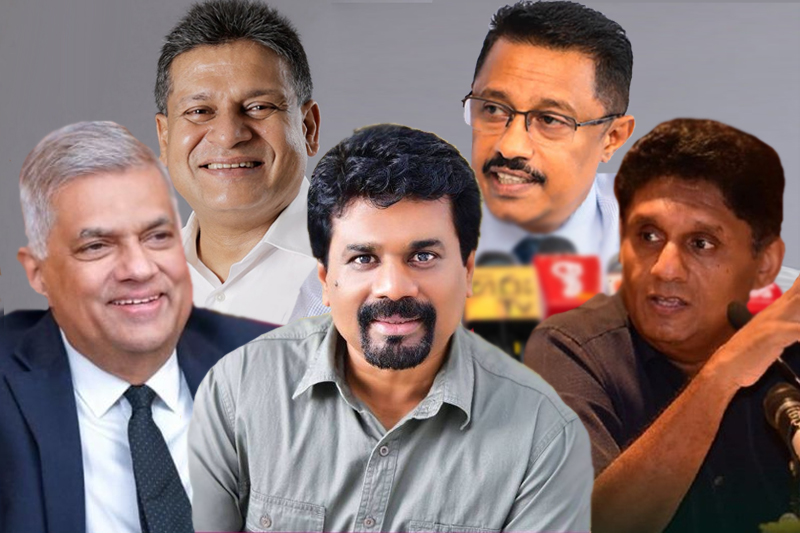
The main Opposition in Parliament the SJB, has no intention in supporting Basil’s proposal for a parliamentary election before the presidential election, they have said. They are clear they want the Presidential election first. The JVP/NPP leadership is seriously in for a Presidential election. They are campaigning for the Presidential election with Anura Kumara as the candidate whom they believe has already won the election. All in all, Colombo seem to want a Presidential election for a “complete change” carrying the same rhetoric the “aragalaya” left as political chaos.

Sri Lanka does need a “change”

Fact remains, Sri Lanka does need a “change”. Not just a “complete change” but a huge change with a wholly new Constitution including the overhaul of the entire State apparatus and politics of governance right down to Local Government bodies. That change is not possible with an election for the Executive Presidency. That needs a new parliament, the legislative body for legislating the total change the people need. A change that begins with the abolition of the “Executive” Presidency, and transferring “executive power” back to Parliament.

Abolition of the “Executive” Presidency is a promise, a pledge given to people by all political parties at different elections during the past 30 years. It was the JVP that first demanded the abolition of the executive presidency at the October Presidential elections in 1994. After a bloody ruthless insurgency that was wiped out with equal brutality by State forces in late 1989, scattered remnants of the JVP regrouped and came to open politics at the 1994 August parliamentary elections contesting all districts except Jaffna, Vanni and Batticaloa in collaboration with Ariya Bulegoda’s Sri Lanka People’s Front (SLPF). They polled a mere 01.1 percent though the new leadership it was said, expected a total poll of 5% plus in few districts to be above the cut-off mark. JVP had only Nihal Galappaththi elected as their MP from Hambantota district, who was nominated as their presidential candidate at the 1994 October Presidential election.

After the parliamentary elections they realised, they would not poll even the 01.1% at a presidential election and thus made a compromise with the People’s Alliance (PA) presidential candidate Chandrika Kumaratunge (CBK) who was tipped to win the Presidential election. Negotiated through Minister Mangala Samaraweera, a very close personal ally of CBK, the JVP request of abolishing the Executive Presidency within six months from swearing in as president was conceded in writing and the JVP withdrew their candidate in support of CBK.

Interestingly, then “The Hindu” correspondent in Colombo met former President Jayewardene, the architect of the Executive Presidency and asked him “Sir, you said this executive presidency is so powerful, it cannot only change the gender. PA candidate Chandrika has promised to abolish it. What have you to say on that?” After his usual haughty laugh, Jayewardene had told him “Meet me after it is abolished. I will then tell you”.

No political leader would abolish such power

Jayewardene was certain no political leader would abolish such power in presidency with legal immunity, they are eager to sit with. Since 1994 October, in almost all elections political leaders tried to outmanoeuvre each other by promising total abolition, immediate abolition and even using the election to have the mandate to abolish the executive presidency calling it the sole reason for all evils in the country including mega corruption. We thus had all political parties that usually gain representation in Parliament agreeing to abolish the dangerously authoritative presidency, but none serious about it once elected. The JVP backed presidential candidates from Mahinda Rajapaksa in November 2005 to Maithripala Sirisena in January 2015, guaranteed the presidency would be abolished as the first most important task when elected. It was in fact the JVP who were vociferous about abolishing the presidency in those election campaigns.

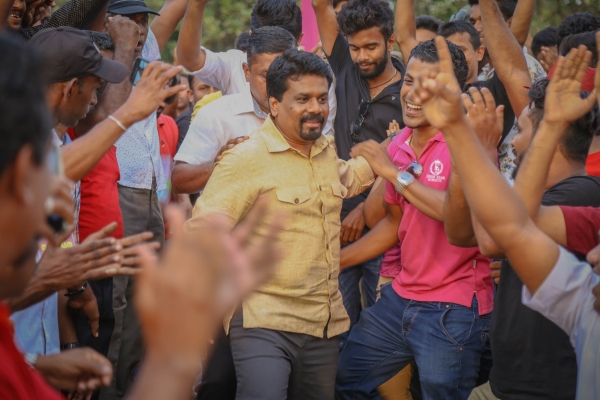
What is politically a clear fraud now with JVP is, driving a heavily funded campaign to have their JVP/NPP candidate Anura Kumara Dissanayake (AKD) elected to that same ruthlessly dictatorial executive presidency they condemned and wanted abolished over the past 30 years as the sole reason for mega corruption. They now remain stony silent on abolishing of the presidency. What is more disgracefully hollow is the political narrative they ride on, claiming they would “use the power the People would vest with them in electing AKD as president to create a society with dignity and equality to all”.

Sri Lanka is certainly at crossroads

Sri Lanka is certainly at crossroads and helplessly so. None in mainstream politics would lead this country on a right path to freedom, democracy and an inclusive society with socio-economic and cultural development. These political leaderships simply have no valid “development program” to back their criticism of the past and the present and their request for political power at the next “presidential” election. A larger crisis therefore is the timidity of the educated urban polity that has access to new information, new knowledge and new social discourses beyond geographical boundaries. They need to accept they have a social responsibility in intervening to create a realistic valid social dialogue and to pressure Governments to stay course. Almost a total lack of their independent intervention in social dialogue has allowed political parties with their own sectarian agendas, possibly with laundered black money to manipulate media, especially social media to dominate social thinking in urban circles. What this country immediately needs therefore is an alternative, realistic intervention in deciding how a new and an effective change could be achieved. First it is about creating a social lobby that would independently engage and address the people. Next is about establishing a Government that would be held responsible for the change needed. Thereafter it is about holding that Government responsible for the change and in implementing reforms necessary at every step of the way, without going into the usual selfish life and waking up yet again when elections are called for.

It is therefore not about electing a president once again to the post that had been condemned, had been socially accepted as dictatorial and therefore promised to be abolished, transferring executive power back to Parliament. It is not the president who could abolish the presidency. It is not the president who could legislate reforms necessary. It is not the president who could allocate public funds for social necessities. All that needs a government in parliament with an active social lobby to hold the elected government responsible to the people. Thus, we at crossroads need a new political phenomenon with people deciding on elections, the next Government and most importantly holding that Government responsible in delivery, with the more advantaged urban polity leading the way. Well, they have to accept their social responsibility is far heavier than what they would like to accept.

Posted in Uncategorized

Election Commission to officially announce the upcoming presidential election in late July or early August

The National Election Commission will officially announce the upcoming presidential election in late July or early August.

The NEC Chairman R.M.A.L. Ratnayake said the election will be held sometime between September 17 and October 17.

He also clarified that the current electoral law will govern the election process.

He said that the new voter list of 2024 will be used for the upcoming presidential election.

The voter registration process is currently underway and is expected to be completed by July.

The estimated expenditure for the upcoming presidential election is Rs. 10 billion.

‘Eye opening’: PM Modi lashes out at Congress for giving away Katchatheevu island to Sri Lanka

Prime Minister Narendra Modi on Sunday lashed out at the Congress party over a controversial island, Katchatheevu that was given to Sri Lanka by former Indian Prime Minister Indira Gandhi in 1974. The Katchatheevu island debate has taken centre stage in Tamil Nadu politics as the Lok Sabha election nears.

PM Modi on Sunday cited a report in Times of India that said, ‘RTI reply shows how Indira Gandhi ceded the island to Sri Lanka’. The PM on the X platfrom wrote, “Eye-opening and startling! New facts reveal how Congress callously gave away Katchatheevu”.

PM Narendra Modi added, “Weakening India’s unity, integrity, and interests has been Congress’ way of working for 75 years and counting”.

According to the document obtained by Tamil Nadu’s Bharatiya Janata Party (BJP) chief K Annamalai via an RTI application, the Indira Gandhi government in 1974 handed over the Katchatheevu island, located in Palk Strait to Sri Lanka.

The report also cited the statement of India’s first Prime Minister Jawaharlal Nehru on the issue.

Sri Lanka, then Ceylon, pressed its claim on the island after independence. The island country said that the Indian Navy (then Royal Indian Navy) could not conduct exercises on Katchatheevu without its permission.

On 10 May 1961, Nehru said he would not hesitate to give up claims to Katchatheevu. “I attach no importance to all to this little island and I would have no hesitation in giving up our claims to it, ” Nehru wrote as quoted by Times of India.

Commonwealth Secretary YD Gundevia quoted Nehru’s minutes. However, until 1974 the final decision on Katchatheevu island was not finalised.

Then-Attorney General MC Setalvad in 1960 also stated that India had a stronger claim on the island formed due to volcanic eruptions in a reference to the Zamindari Rights given by the East Indian company to Raja of Ramnad over the islet and fishery resources around it.

The Raja enjoyed rights in Katchatheevu island from 875 to 1948 which later got vested in the State of Madras after the abolition of the Zamindari system.

In 1968, the Opposition chided the Indira government for speaking wi the Ceylonese PM Senanayake who showed the island in their territory on maps.

In 1973, foreign secretary-level talks were held in Colombo regarding the disputed island. A year later, the decision to relinquish India’s claim was conveyed to Tamil Nadu CM M Karunanidhi in June.

India’s then foreign secretary Kewal Singh emphasised that Sri Lanka had shown records that the island was part of the kingdom of Jaffnapatnam, Dutch and British maps.

In 1974, the island Indian government handed over the island to Sri Lanka in an act of bilateral largesse

Posted in Uncategorized

Sri Lanka port development taken new turn with China help: Prime Minister

Sri Lanka’s port development has taken a new turn of an advanced port development with the assistance of China, Prime Minister Dinesh Gunawardena has said.

“Sri Lanka’s port development has taken a new turn of an advanced port development with the assistance of China, which we appreciate,” Gunawardena said addressing the BOAO Forum for Asia Annual Conference 2024 in Hainan in China.

“Sri Lankan, Colombo port will become a hub, a new developed port with financial instruments that could cater to the new demands that are growing among ourselves, among our countries, for development and investment, which is essential,” Gunawardena was quoted as saying at the forum in a statement by the Prime Minister’s Media division.

Explaining Sri Lanka’s expansion of Colombo Port, and Hambantota Port, as well as Colombo Port City, the new Colombo Financial Center, he said it could be a major financial hub ensuring rapid progress of not only Sri Lanka but also other countries in the region.

Gunawardena also called for relaxing trade barriers, and opening areas for more tourism and different forms of tourism between Asian countries.

“On behalf of Sri Lanka, I pledge our support to continue to work together as we have committed ourselves to the maritime lanes of the Indian Ocean to keep it free for all trade to flow from East Africa to East of Asia.”

Sri Lanka’s China-run Hambantota Port has seen a steep increase in oil and gas vessels in 2023 helped by Sinopec’s bunker operations, and is expecting to double throughput in 2024.

The Southern port was also looking to grow its transshipment business with ports in the South Asian region.

Posted in Uncategorized

Easter Sunday attacks: Sirisena drags India into the scene

Pallewatte Gamaralage Maithripala Sirisena served as Sri Lanka’s seventh President from January 8, 2015 to November 18, 2019. By virtue of his office, he was also the Minister of Defence and Commander-in-Chief of the armed forces.
The worst crisis during his tenure was on Easter Sunday five years ago—the church and hotel bombings that left 247 innocent men, women, and children dead. Nearly 500 more were injured in a massacre that shook the world.

When the bloody carnage unfolded, Sirisena was away in Singapore. He had flown there direct after an official visit to India. Some reports claimed that he had gone shopping for the wedding of his son Daham. However, Sirisena claimed it was for medical reasons and later flaunted documents to show he had taken several tests at the Mount Elizabeth Hospital. In contradictory remarks, he claimed he was on holiday or for a medical checkup. He returned to Colombo only at midnight on April 21. All the blood had flown by then. It is no secret that one of his directives to the security forces and police top brass was not to take orders from his yahapalana government’s Prime Minister Ranil Wickremesinghe. He had taken upon himself the task of giving directives and chairing meetings of the Security Council.

On April 30, 2019, just a week after the massacre, I was at the Presidential Secretariat and saw him speaking exclusively to CNN’s Sam Kiley from a room there. The cameraman and crew were munching pol sambol sandwiches as they listened to then President Sirisena, who appeared in control. The answers to two questions are relevant. The interview was broadcast worldwide. Here are the questions:

Q: Mr President, Could you outline for us any information you have at this stage of connections between the suicide bombers and the so-called Islamic State. There have been reports in the United Kingdom of a connection there with at least one of them. Have you got any information on that?

A: It is very clear that there is a connection between the Sri Lankan suicide bombers and IS, as for the information revealed by the state intelligence services and foreign intelligence services which have been assisting us. Over the past 15 years, there have been connections between IS and certain Sri Lankan persons. It is clear they obtained training from the IS. Therefore, according to the information revealed by international intelligence services as well as domestic services, this has been made evident to us. Furthermore, after the incident that occurred, and, after the explosions that took place in Sammanthurai, the IS headquarters have admitted they sponsored these incidents.

Q: You say you had intelligence both domestic and international that would indicate there was a plan to attack tourists and churchgoers on Easter: nothing was done about that in this country, you are the Minister of Defence, you are responsible for the Police, do you not think this should be a case for you to resign?

A: Well, I was not informed about information pertaining to this attack, prior to the occurrence of the incident. The intelligence services, the Director of Intelligence has informed the Secretary to the Ministry of Defence, who in turn informed the Inspector General of Police. The foreign intelligence services have provided information to intelligence services on the 4th of April, 7 and from the 4th of April to the 12th of April letters have been exchanged by officers. Nobody reported these to me.

On 16th of April, I went out of the country for a personal holiday. The information reached local intelligence services on the 4th of April, and I departed the country 12 days afterwards. I was informed of this information. Therefore, it is not I, it is the IGP of Police and the Secretary to the Ministry of Defence should be resigning. I have taken action to remove them. Action will also be taken to investigate their action as they have been negligent in their duties. Furthermore, action will be taken to investigate their action since I was not updated or notified about the information that they received about the possibility of such a severe attack on our soil.

That the Easter Sunday attacks of 2019 had links to the IS came to be endorsed by others. Intelligence agencies of several countries, including the United States, France, and Germany, were among those allowed free access to interact with local counterparts, make their own assessments, and form their own conclusions. In the United States, two Sri Lankans were tried in courts for IS connections. They were convicted and are now serving a term.

The Cabinet of Ministers chaired by then President Sirisena decided to appoint a Commission of Inquiry on September 22, 2019. Supreme Court Judge Justice Janak de Silva chaired the Commission whose task was to investigate and report on the “series of terrorist attacks on Easter Sunday and to recommend necessary action based on the findings.” The Report comprises 472 pages, 215 annexures and 6 volumes. Other members of the Commission were Court of Appeal judge Nishshanka Bandula Karunaratne, retired Supreme Court judges Nihal Sunil Rajapaksha and A. L. Bandula Kumara Atapattu and the Justice Ministry’s former secretary W.M.M.R. Adhikari.

It is also relevant to record the answers he gave to questions posed when he appeared before the Commission of Inquiry appointed by him.

He responded to questions by Additional Solicitor General Ayesha Jinasena. Here is a brief account of what the former President said:

On the day of the Easter Sunday attacks, where were you?

I had gone to Singapore for a medical checkup. My Security Officer told me about reports of the attacks circulating on social media. Then I received a call from the Presidential Secretary Udaya R. Seneviratne who confirmed the attacks. Then I contacted former Prime Minister Ranil Wickremesinghe, former Defence Secretary Hemasiri Fernando and former Police Chief Pujith Jayasundara, and instructed them to take necessary action.

What were your instructions?

I told them to act in a manner that does not incite the people and to arrest the suspected terrorists. I instructed them to deploy the military in addition to Police. I informed them that I was returning the next day and gave instructions to summon a meeting of the National Security Council. I reject this claim. It infringes on the unitary status of the country and legal action must be taken against anyone who makes such claims.

The former President said that due to the arrest of commanders and intelligence officers of the armed forces, the relevant sections showed a decline. He said the Police were brought under his purview in 2018. Thereafter he summoned senior police officers and held discussions. He said there were no reports about terrorism, but as soon as reports of extremist activities started to come in, he gave orders to arrest Zahran Hashim, who would ultimately go on to become the ringleader of the Easter Sunday attackers. The former President said the State Intelligence Service (SIS) and the Chief of Defence Staff were also present at the meeting attended by senior police officers. The objective of the meeting was to strengthen law and order and give priority to endnig extremism.

MAITHRI’S NEW CLAIMS

In a move that overturns all developments of the past, Maithripala Sirisena has now come up with a new claim to change history. He made this claim with only days to go for Easter Sunday today. Signs that he has made new findings were first hinted at during a visit to Kandy last Friday. At the end of his engagements, he spoke to both the electronic and print media. He said he has now learnt who was behind the Easter Sunday attacks. He still did not identify them. He would disclose them only before a court and insisted that he would seek extra protection for himself and his family due to the sensitivity of the information. It was clear that two people, functioning as his aides, were busy arranging for media interviews in Colombo for Sirisena in the week to follow. The idea was to publicise the explosive accounts.

However, the reportage from the remarks in Colombo saw pressure building on Public Security Minister Tiran Alles to take immediate action. There were sections that argued that former President Sirisena be arrested for withholding information which was a criminal offence. The Minister ordered the Criminal Investigation Department (through the Inspector General of Police) to record a statement from Sirisena. Important enough, the former President was summoned to the CID headquarters so his statement could be recorded. Other than the formalities, Police sources said, the material recorded lasted nearly five hours.

The Sunday Times has learnt that Sirisena has claimed that India was behind the Easter Sunday massacres. How does he know? He has claimed that an Indian diplomat whom he named has not only confessed to him about the attack but also the reason. It was because Sri Lanka has not been considerate in giving India any projects, say like for example, the Mattala Mahinda Rajapaksa International Airport and similar ventures. Does he have proof? He expects the government to investigate it. It appears that Sirisena has not appreciated the seriousness of the accusations he is making. Unless one is out of his mind, a diplomat of any country is not going to walk into a former President’s residence and claim ‘we were behind the Easter Sunday attacks.’ So, the question is did he build a story around after the diplomat visited him?

Former President Sirisena is one of the first in the government hierarchy to become aware that the first warning of an attack on Easter Sunday came from India’s Research and Analysis Wing (RAW), their external intelligence agency. Why is he now making the accusation against India just ahead of Easter Sunday 2024 and that too despite the earlier warning? Sections at the highest levels of the government are probing whether a recently joined aide of Sirisena, described as a wheeler-dealer, was in any way connected with the accusations. The person concerned was earlier associated with former President Mahinda Rajapaksa and has been discontinued from all activity because of his bad conduct. He is still facing investigations. At the same time as Sirisena’s statement was being recorded by the CID, this aide had been with a Western ambassador at a Sri Lankan restaurant at lunch. Even before Sirisena concluded his statement, the diplomatic mission of that envoy had been telling his contacts that India was behind the Easter Sunday attacks. One is not sure whether it was one-upmanship or poking fun by the talkative envoy.

The Sirisena statement to the CID became the subject of discussion at the highest government levels. This is particularly in light of the national security implications. On the advice of the Attorney General, the CID filed a “B” report at the Maligakande Magistrate’s Court. The Court has now issued an order requesting Sirisena to appear on April 4 (Thursday) and make a statement. If he does, that will obviously bring into the open the accusations he has made to the CID. A more important outcome is that it will force a response from the Government of India. Not surprisingly, he may be called upon to prove his accusations.

Whether it was intended or otherwise, pointing the finger entirely at India changes, on the one hand, the entire dynamics. It is very well known that the attacks were carried out by Sri Lankan Muslims. Why should India pick only on one community in Sri Lanka to attack another? On the other, five years of findings where the IS has been implicated, make no sense. There is no doubt that besides these, Sirisena’s accusations have a strong bearing on the leadership of the present government. And that too with only months before a presidential election is to be held. Is there not a mischievous suggestion that the leadership has ignored what Sirisena tries to make out is a huge threat?

The fact that the Attorney General has initiated action in courts is a clear message that the issue over Sirisena’s remarks will not end. More so when the material facts enter the public domain. It also poses questions on other important matters. One such instance is the Supreme Court decision to impose a fine of Rs 100 million on Sirisena. That was after fundamental rights applications by those affected. The facts placed by them have been accepted by highest courts in the country.

Efforts by the Sunday Times to contact Sirisena for a response did not materialize. Several calls to his residence were answered at the switchboard by an operator. He said that Sirisena was “away and the news of the call would be passed over to him.”

A response on behalf of the Catholic Church came from Father Jude Krishantha, Director of the National Catholic Mass Communications. He told a news conference: “Former President Maithripala Sirisena cannot make a statement to the CID or Courts and say it should be held confidentially. If he now says that he knows the persons responsible for the attack, that would amount to misleading the courts. He was already fined Rs 100 million as he could not say who was responsible for the attack. We have doubts that he is making this statement to get some political advantage for him, for his party or making the statement in favour of another party. We wish to tell him don’t try to gain an election victory over the bodies of those who died in the Easter Sunday attack.”

Whether Sirisena has painted himself into a corner with the recent remarks will become clearer in the coming weeks and days.

Timeline of the April 21 Easter Sunday terror

A
chronology of how the Easter Sunday carnage took place, reported earlier by the Sunday Times, is being reproduced to give an idea of how the massacre unfolded and those who were involved.

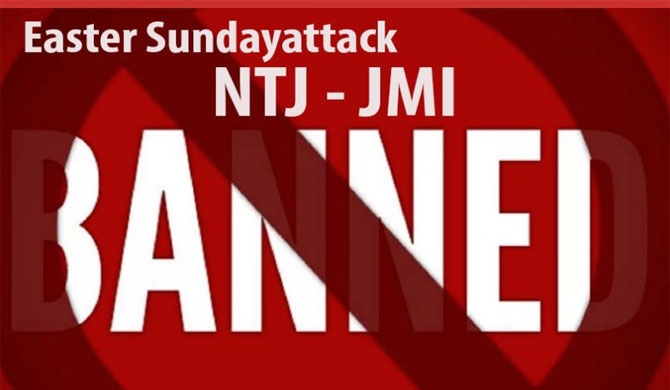
St. Sebastian Church, Katuwapitiya (near Negombo): 8.25 a.m. Mohamed Cassim Mohamed Zeini (brother of Zahran Cassim, leader National Thowheed Jamath (NTJ) terror group) exploded a suicide bomb.

St Anthony’s Church, Kochchikade: 8.45 a.m. Alaudeen Ahmed Muath of the Jamathul Millathu Ibrahim (JMI) exploded a bomb.

Zion Church, Batticaloa: 9.05 a.m. Mohamed Cassim Mohamed Rilwan (also a brother of Zahran Cassim) exploded a suicide bomb. He is known to be a member of the National Thowheed Jamaath (NTJ).

Cinnamon Grand Hotel: Between 9.15 and 9.20 a.m. Mohamed Ibrahim Insaf Ibrahim (Brother of Ilham), suspected of being a JMI member, exploded a suicide bomb.

Shangri La Hotel: Between 9.15 and 9.20 a.m. Mohamed Cassim Mohamed Zahran (Zahran Moulavi) and Ilham Mohamed Ilham Ibrahim carried out suicide bomb attacks. This was an NTJ and JMI joint exercise.

Kingsbury Hotel: 9.15 to 9.20 a.m. Mohamed Azam Mohamed Mubarak of the NTJ exploded a bomb.

New Tropical Inn, Dehiwala: 2.00 p.m. Jamil Mohamed Abdul Latheef was the bomber. There is strong intelligence to confirm he made a failed bid to join the ISIS in 2016.

Mahawela Housing Scheme, Dematagoda: 2.15 p.m. Fathima Jiffry (Wife of Ilham) exploded herself. Two more females and two children were killed in the bomb explosion.

Investigations have revealed that the Taj Samudra Hotel was also a target – a fact which debunks claims that the attackers avoided Indian hotels. Jameel Mohamed Abdul Latheef, it has come to light, wore a suicide jacket to be exploded there. However, the triggering mechanism had malfunctioned. He was then returning to the New Tropical Inn at Dehiwala. He had wanted to stop at St Mary’s Church there. When he alighted from a vehicle, he had found that there were Police personnel standing by. They had been deployed after those at the church complained of the loss of money from the till the previous day. He had then gone to the Inn. Investigators believe his attempts to remove the suicide bomb triggered an explosion. That killed him as well as a couple who were at the next room.

Investigators have confirmed that the explosive used by the terrorists was Triacetone Triperoxide or TATP – the same material used in terrorist bombing attacks mounted by ISIS and Al-Qaeda. The white crystal powder (TATP), reports say, has been referred to as “Mother of Satan” by terrorist organisations which have used it in deadly attacks around the world.

The most important question that begs answer in the near simultaneous attacks in different locations is over the time taken to mount surveillance, make plans and execute them. It also requires a large team. Such a process would have taken several months and despite claims of awareness by intelligence agencies, none of them was in the know that such plans were underway. Intelligence estimates place the suicide cadre strength at around 170, a larger number. In predominantly Muslim Malaysia, the strength is said to be 400 whilst in Libya it was 600.

In addition, at least five foreign trained cadres have been assigned to each suicide cadre. That included an electronics expert, a chemical expert and a bomb maker. Though how large stocks of explosives were smuggled to Sri Lanka is yet to be conclusively established, it is believed that they were smuggled in through the Mannar coast. It is believed that, in the Mannar area, several influential persons have helped in this exercise, often talking to the Police when arrests or inquiries are made. They have also provided assistance to family members of Insaf (one of the bombers of Shangri La Hotel) in business-related matters even granting exclusivity for export of copper.

Investigators have found that the Easter Sunday’s massacres were linked with the three-day long incidents that occurred in Mawanella area from December 23 last year. Buddhist shrines and Buddha statues were damaged in four different places in Mawanella – Randiwela Junction, Miriskudu Handiya, Hingula (on the Colombo-Kandy Road) and Lindulawatte in the Pahala Kadugannawa region. This was after Zahran and another had preached hate and exhorted those who attended Friday’s Jumma prayers to attack Buddha statues in temples and cross signs in churches.

Villagers apprehended one of two attackers in one instance. On questioning him six more suspects were arrested. They are now in remand custody facing charges in courts. It was revealed that they were members of an extremist Islamic group and were being trained to carry out violent attacks against those of other faiths too. The Mawanella group had been led by two brothers identified as Siddiq Abdulla and Shahid Abdul Haq. Both are now missing. Their father, Fazir Mohamed Ibrahim, was later arrested and is now in remand.

Police have found that Fazir Mohamed Ibrahim has been working for an unidentified organisation with links to the ISIS. This was in the eastern Muslim town of Kalmunai. It had come under Cassim Mohamed Zahran who was giving leadership to spread extremist Islamic ideology in Sri Lanka. They had cells in Mawanella, Anuradhapura, Trincomalee, Polonnaruwa and Puttalam. Police then received reports that Zahran was hiding in Kalmunai. A search then proved futile.

Police thereafter raided the house of the two brothers Abdulla and Haq in Hingula on the Colombo-Kandy road. There they found the receipt for the purchase of an air rifle used to teach recruits on firing. It was handed over to CID detectives who took over the probe. They arrested seven suspects and interrogated them. This led detectives to find 150 kilogrammes of explosives and 100 detonators in a coconut estate at Wanathavillu in Puttalam. Further investigations then established that Zahran was the leader of the National Thowheed Jamaath (NTJ)

Posted in Uncategorized

Election Commission ready to hold presidential polls

All arrangements are in place to hold the presidential polls, said Election Commission chairman R.M.A.L. Ratnayake.

He has told ‘Sunday Lankadeepa’ that the election should take place towards the end of this year as per the constitution.

Rs. 10,000 million had already been allotted for the election, he said, adding that more funds could be obtained as required.

The Commission is presently in the processing of purchasing material required for the election.

Posted in Uncategorized

Electoral reforms while elections are on doorstep By M.S.M Ayub

The Cabinet on March 18 approved a proposal to reform the electoral system that will see a hybrid system for parliamentary representation where 160 members would be appointed by the First Past-The-Post system while 65 members would be elected under the Proportional Representation (PR) system.

A statement issued by the Government Information Department said that the proposal made by the Minister of Justice, Prison Affairs and Constitutional Reforms to instruct the Legal Draftsman to draft legislation to amend the electoral system was approved by the Cabinet.

Interestingly, the statement claims that “it has been found necessary to change the existing electoral system to achieve the objectives of the Regulations of Election Expenditure Act No. 3 of 2023…” whereas the hybrid or mixed electoral system of First-Past-the-Post system (FPP) and the Proportional Representation (PR) system had been recommended by three Parliamentary Select Committees (PSCs) since 2001.

The first PSC was appointed during the Presidency of Chandrika Kumaratunga in 2001, the second was during the Mahinda Rajapaksa Presidency in 2006 and the third was in 2021 when Gotabaya Rajapaksa was running the country. Hence, the need for shifting from PR system to a mixed electoral system has stemmed from these PSCs long before the Regulation of Election Expenditure Act was passed last year.

An interesting fact in respect of these three PSCs was that they all were headed by current Prime Minister Dinesh Gunawardena who has been a minister under the said three presidents.

National or provincial level

The statement says that a Cabinet Sub Committee has been appointed to submit a report to the Cabinet after obtaining the views of all Party leaders representing Parliament and other relevant Parties for that purpose. They have expressed their concurrence for electing 160 out of the 225 MPs by the voters directly in the respective constituency and to elect the rest 65 MPs at national or provincial level as per the PR system, the statement said.
Accordingly, the Legal Draftsman is to draft legislation to amend the electoral system, “taking also into consideration the recommendations submitted by the Committee appointed under the Chairmanship of Prime Minister.”
This indicates that after deliberations of three PSCs for two decades where members of all political parties had expressed their views on the mixed electoral system, a Cabinet Sub-Committee has again met the members of the same political parties for the same purpose. And then again “taking also into consideration the recommendations submitted by the Committee appointed under the Chairmanship of Prime Minister” (seems to be one of the three PSCs, especially the third PSC appointed in 2021), the Cabinet has decided to instruct the Legal Draftsman to draft the legislation.

Sri Lankan politicians, especially the leaders of the government seem to be suffering from a severe memory loss. When they felt the need to bring in new legislation to introduce the mixed electoral system while perusing the Election Expenditure Act, they forgot, as we pointed out above the three PSCs that recommended the same hybrid system. Similarly, they have forgotten the fact that the concurrence of all political parties representing the Parliament had been obtained by the PSCs, when they appointed a Cabinet Sub-Committee for the same.

Then again when they decided to instruct the Legal Draftsman to draft legislation to amend the electoral system, they have forgotten the appointment of a nine-member Commission of Inquiry by President Ranil Wickremesinghe on October 16, last year under the Chairmanship of former Chief Justice Priyasath Dep to “Formulate an appropriate mechanism blended with the first-past-the-post voting system for the election of people’s representatives, not limiting to the proportional representation system…” among other objectives.

“Blended” electoral system

This Commission has been instructed by the President to present its report to him within six months from the date of its appointment. Hence the report is expected to be so presented before 16th of next month by which time the Legal Draftsman might have commenced work on the legislation to introduce a “blended” electoral system.
A similar scenario was witnessed two days after this Commission was appointed in October. Prime Minister Dinesh Gunawardena on October 18 had convened a meeting of leaders of political parties in Parliament to discuss the electoral reforms, independent of this Commission. The meeting had ended without a final decision as Opposition parties rejected the ratio between the number of MPs to be elected under the FPP and PR systems, as suggested by the government. These are scenarios where the left hand of the government doesn’t know what its right hand is doing.

This memory issue is evident even when they find solutions to the ethnic problem and the economic crisis, as we have pointed out in our previous columns.

The government’s haste in drafting laws for electoral reforms gains significance with the demand by the ruling party, the Sri Lanka Podujana Peramuna (SLPP) to hold the Parliamentary election before the Presidential election which, as per the Constitution has to be held between September 17 and October 17, this year. The General election which is scheduled to be conducted next year could be advanced by the dissolution of Parliament by the President which he was authorized to do by the Constitution since February last year. He can do the same after the passage of a resolution on the matter passed in Parliament as well.

Despite the Constitution having already authorized the President to dissolve the Parliament, media reported that he has insisted that he would do so only if the Parliament passed a resolution in that regard. And if electoral reforms take precedence, Parliament election would not be able to be held before the Presidential election, as the delimitation process is involved in the mixed electoral system. This process might sometimes take months or years, depending on the wishes of and manipulations by the government leaders.

The Opposition parties expressed fear that the motive behind the electoral reforms is nothing but postponing the Parliamentary election is not unfounded. The track record of the President’s party, the United National Party (UNP) in postponing elections by manipulating the laws related to the elections prompts such a fear. Two recent cases in point are the legal mess the UNP created in 2017 preventing the Provincial Council elections from being held and the fate that befell the Local Government elections last year.

Female representation

The Party presented a Bill in 2017 to strengthen female representation in Provincial Councils and during the committee stage debate on the Bill its leaders introduced an amendment to it which had nothing to do with female representation. The amendment was a set of provisions to introduce the mixed electoral system, which was then an incontrovertible matter among political parties. The party did not present the amendment as a separate Bill, as it should have been referred to the Supreme Court then for perusal and there was a possibility that some of the provisions of it being ruled inconstant to the Constitution. Thus, the Bill was passed with the amendment having bypassed the Supreme Court.

According to the Amendment, a delimitation report was presented to Parliament but only to be rejected with amusingly the minister who presented it too voting against it. Then a committee headed by the then Prime Minister Ranil Wickremesinghe had to present a review report but it never saw the light of the day. Thus, the elections for the Provincial Councils have been postponed indefinitely since 2017.

Similarly, when the Local Government elections were around the corner in 2022 the UNP leaders with the connivance of the SLPP attempted to defer those elections on various pretexts. An attempt was made to amend the Local Government Election Act, a delimitation committee was appointed to freshly demarcate the wards of the LG bodies, Minister Wijeyadasa Rajapakshe requested the Speaker to appoint a PSC for electoral reforms despite the third PSC headed by Dinesh Gunawardena having presented its report six months ago, President Wickremesinghe argued that the announcement of the LG elections is not legally valid in spite of his party having tendered nominations and finally they successfully stalled the elections by withholding funds allocated for the very purpose.

It is against this backdrop that the current efforts for electoral reforms have to be evaluated.

President tells Cabinet no election till IMF programme is over

With serious doubts and concerns raised on whether an election will be held this year and if so, whether a General Election or Presidential Election should be held first, President Ranil Wickremesinghe told his Cabinet of Ministers when they met earlier in the week that the Government is not in a position to jeopardise the ongoing IMF programme by holding an election before the programme concludes. His announcement comes after a lengthy discussion held with the Shadow Cabinet that met a few hours before the Cabinet meeting.

When the Shadow Cabinet met, some MPs raised concerns about the deliberations by various parties on holding the Parliamentary Election before the Presidential Polls.

“We can’t risk the IMF programme by holding elections. According to our projection, it will only conclude by the end of July. Therefore, I am not in a position to hold any election before August,” he said.

President Wickremesinghe also informed the same to the Cabinet. He also said that by law the Elections Commission is empowered to declare a Presidential Election any time after July. “Therefore, the Presidential Election will be held first and all other elections can follow,” he added.

Sections of the Sri Lanka Podujana Peramuna (SLPP) have called for a General Election to be held first. Meanwhile, a young SLPP MP with a powerful surname has supposedly expressed confidence in garnering a two-thirds majority in passing a resolution in Parliament calling the President to dissolve Parliament and go for a General Election.

Basil replaced

The ruling SLPP, on Wednesday (27), replaced its National Organiser Basil Rajapaksa with Hambantota District MP Namal Rajapaksa.

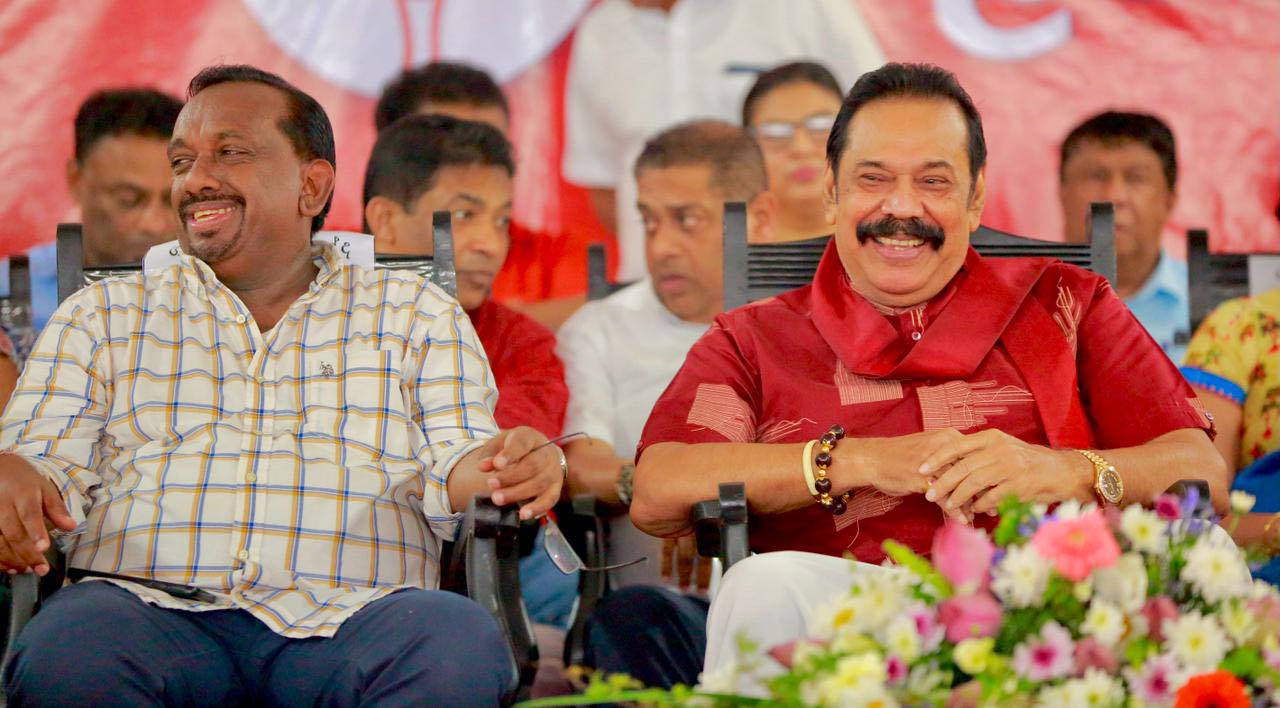
This decision was made at an executive committee meeting of the SLPP at former President Mahinda Rajapaksa’s official residence at Wijerama Mawatha in Colombo.

Meanwhile, political sources claimed the majority of the SLPP MPs and Ministers were quite surprised by the move.

“Both Basil and Chamal Rajapaksa thought that the National Organiser post should be given to a party senior who is not part of the Rajapaksa family. Two names were proposed and those were Minister Prasanna Ranatunga and MP Rohitha Abeygunawardena. But, Ranatunga refused it as he needed to work with other parties as the Chief Government Whip. Therefore, Rohitha would have been appointed,” a party senior said.

The division in the party on fielding a separate presidential candidate instead of backing the incumbent President’s candidacy is expected to deepen with the latest developments.

Minister Prasanna Ranatunga, speaking to journalists at the SLPP office at Nelum Mawatha, said holding the Presidential Election would be more beneficial than a Parliamentary Poll, stressing the need for a stable Government to steer Sri Lanka out of its current challenges.

He also expressed uncertainty about the availability of suitable candidates for the presidential candidacy within the SLPP at this time.

“My stance is that we need to go for a Presidential Election first and Ranil Wickremesinghe, who can take up the challenges and who revived the economy, should win. We need to make decisions for the sake of the country. The country is first. The party is second. If we think of the country, we need to go for a Presidential Election and allow the person who wins to form a government without going for a Parliamentary Election and forming an unstable government. The SLPP must work for Ranil Wickremesinghe and if he wins the election, he should be allowed to form a government. If anyone else wins, he should be allowed to form a government. Then the country will not run into anarchy,” he said.

Ranatunga expressed his preference for SLPP founder Basil Rajapaksa to serve as the National Organiser within the party, citing his experience and track record in managing difficult situations, whilst congratulating Namal Rajapaksa on the appointment as the National Organiser stating that he should be allowed to prove his capabilities in the new role.

Ranatunga said Namal Rajapaksa can contest for the Presidency only in another five to ten years.

Sirisena in a soup

Former President Maithripala Sirisena provided a near six-hour statement to the Criminal Investigation Department (CID) on Monday (25), over his recent remark that he is aware of the ‘real perpetrators’ of the 2019 Easter Sunday terror attacks.

Sirisena arrived at the CID Headquarters at 10:30 a.m.

Public Security Minister Tiran Alles had directed the IGP to promptly investigate statements made by the former President in Kandy, where he claimed knowledge of individuals linked to the Easter Sunday carnage.

Sirisena, on Friday (22), claimed to know the “true mastermind” behind the attacks and expressed willingness to disclose this information to the Judiciary if prompted. However, these assertions have been met with scepticism and condemnation from various parties.

However, on Saturday (23), Sirisena issued a clarification and claimed that his statement on 22 March was based on information he received three weeks ago regarding the Easter Attacks. The former President once again said he is prepared to testify confidentially if ordered by a Court, emphasising his intention to provide a confidential statement, citing concerns for his safety and that of his family if he were to testify in open Court. “This is not merely a matter of political implications. I am making a very sincere statement,” he said.

Members of the Opposition, including Samagi Jana Balawegaya (SJB) MPs Mano Ganesan and Kavinda Jayawardene, called for Sirisena’s prompt arrest and interrogation. National People’s Power (NPP) MP Vijitha Herath also criticised Sirisena’s statement, urging the Government to launch an immediate and comprehensive probe.

Police Spokesman, DIG Nihal Thalduwa said investigations have been initiated by the Criminal Investigation Department (CID) following the controversial statement, made by former President Maithripala Sirisena, on the 2019 Easter Sunday terror attacks.

Speaking to the media, Thalduwa said investigations have commenced, based on the details provided by Sirisena during his interrogation, regarding his revelation to the media that he possesses knowledge about the perpetrators of the Easter Attacks.

He affirmed that as the investigations progress, the guidance of the Attorney General will be sought and further action will be taken accordingly, adhering to legal counsel.

Further, DIG Thalduwa emphasised that disclosing the specifics of Sirisena’s statement to the media cannot be done at present and a report is to be submitted to Court regarding this matter.

Meanwhile, Maligakanda Magistrate Lochana Abeywickrama ordered former President Sirisena to provide a statement to the Court regarding his recent statements on the 2019 Easter Sunday terror attacks.

Dinesh in China

Prime Minister Dinesh Gunawardena, presently on a State visit to China, met Chinese President Xi Jinping on Wednesday (27).

The discussion, held at the Great Hall of the People in Beijing, underscored the commitment of both leaders to uphold principles of friendship, peace, mutual respect and non-interference in internal affairs, as outlined in the fivefold principle governing international relations.

Both leaders emphasised the importance of bilateral relations grounded in mutual respect and productivity, believing that adherence to such principles would serve as a positive example for both nations.

President Xi reiterated China’s unwavering support for

Sri Lanka’s political and socioeconomic progress, reaffirming China’s commitment to safeguarding the independence, territorial integrity and sovereignty of Sri Lanka.

Expressing gratitude for the historical support from Prime Minister Gunawardena’s family lineage, President Xi acknowledged the desire of Sri Lankan political parties, including the Prime Minister’s, to enhance cooperation with the Chinese Communist Party.

In response, Prime Minister Gunawardena expressed appreciation for China’s assistance during Sri Lanka’s recent economic challenges and for providing debt restructuring facilities. He also provided updates on the progress made in implementing decisions made during President Ranil Wickremesinghe’s previous visit to China.

Additionally, the Prime Minister extended gratitude to President Xi for China’s support across various sectors including education, agriculture, health, technology, culture and religion.

A.K. Dissanayake in the Lead for President

The Institute for Health Policy’s (IHP) Sri Lanka Opinion Tracker Survey (SLOTS) MRP provisional estimates of presidential election voting intent in February 2024 show no real changes compared to January. NPP/JVP leader A.K. Dissanayake continues to lead with the support of 53% of all adults followed by SJB leader Sajith Premadasa on 34%, President Ranil Wickremesinghe at 6% (-2) and a generic SLPP candidate at 7% (-1).

These estimates are based on the January 2024 revision of the IHP SLOTS Multilevel Regression and Poststratification (MRP) model. The update is for all adults and uses data from 16,248 interviews conducted from October 2021 to 24 March 2024 including 575 interviews during February 2024. Margins of error are assessed as 1-3% for February.

IHP’s SLOTS MRP methodology first estimates the relationship between a wide variety of characteristics about respondents and their opinions, in this case, “If there was a Presidential Election today, who would you vote for?” in a multilevel statistical model. It then uses a large data file that is calibrated to the national population to predict voting intent in each month since October 2021 according to what the multilevel model says about their probability of voting for various parties (‘post-stratification’) at each point in time.

SLOTS combines interviews from a national sample of adults (ages 18 and over) reached by random digit dialling of mobile numbers, and others coming from a national panel of respondents who were previously recruited through random selection. IHP estimates voting intent using an adaptation of Multilevel Regression and Post-Stratification (MRP), with multiple imputation to account for uncertainties in its modelling, exploiting data from all SLOTS interviews to estimate voting in a particular month.

The February 2024 MRP estimates are based on 16,248 interviews conducted from 1 October 2021-24 March 2024 including 575 interviews conducted in February 2024. All estimates are adjusted to ensure the sample matches the national population with respect to age, sex, ethnicity, socioeconomic status, education, geographical location and voting in the 2019 presidential and 2020 general elections.

Posted in Uncategorized