SL & China to strengthen relationship between sister cities of Shanghai & Colombo

An agreement has been made to establish a strong relationship between Shanghai in China, which is ranked first among the world’s port cities, and the cities of Colombo and Hambantota in Sri Lanka, which have been planned to be developed as a maritime hub in the East and West shipping routes in the future.

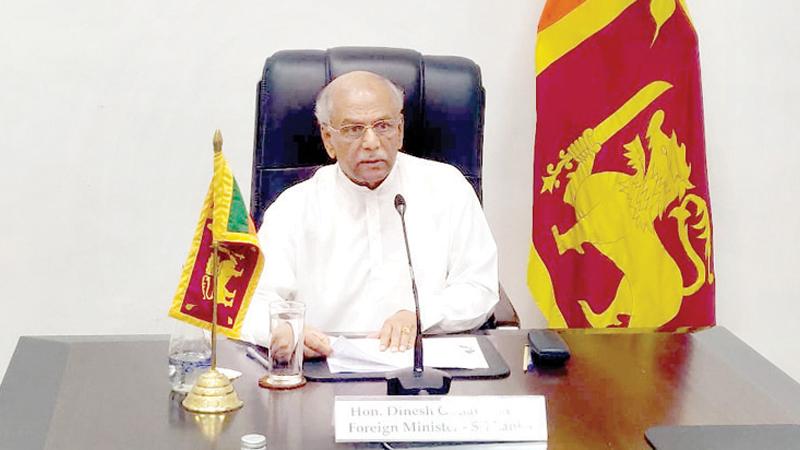
The agreement was made during Sri Lankan Prime Minister Dinesh Gunawardena’s discussion with the Mayor of Shanghai, Gong Seng in Shanghai, China today (Mar 29).

According to the PM’s Office, Prime Minister Gunawardena pointed out that a long time has passed since the Sister City Agreement between Colombo and Shanghai was signed.

The Prime Minister also pointed out that further work can be carried out under this agreement, which was signed when his brother Prasanna Gunawardena was holding the post of Mayor.

It was emphasised that the city of Shanghai, which has handled 49.5 million containers in terms of cargo transportation, last year ranked first in cargo transportation in the world and there are many lessons that can be learnt by Sri Lanka in the said sector.

The Mayor of Shanghai assured that the city of Shanghai, which has an annual production income of 4.72 trillion Yuan and is also a first-class business centre and a centre for financial transactions in the world, will share their experiences with Sri Lanka.

PM Gunawardena pointed out that huge lessons can also be learnt by Sri Lanka from the progress made in the planned urban development of the city of Shanghai, which has a population of 25 million people.

The Mayor of Shanghai expressed his agreement to support Sri Lanka in each of those fields and invited the officials of those fields to visit Shanghai and study the said fields.

The interest of the Chinese people to travel in Sri Lanka, which has many UNESCO heritage sites, has increased, and it was also agreed to explore the possibility of increasing the flights between Colombo and Shanghai.

A group including State Ministers Shehan Samesinhe, Ashoka Priyantha, and Secretary to the Prime Minister Anura Dissanayake participated in the discussion.

How Frontline Socialist Party’s Kumar Gunaratnam fought the Indian Army in 1989 By D.B.S.Jeyaraj

The Janatha Vimukthi Peramuna (Peoples Liberation Front) led Jathika Jana Balawegaya ( National People’s Power is a left-leaning, working class-oriented broad front consisting of the JVP and 27 other organisations. These entities comprise small parties, trade unions, rights groups, Women, student and youth organisations.

The JVP is the pivotal, pre-eminent force in the NPP. The JVP as well as the NPP are led by Anura Kumara Dissanayake MP. A.K. Dissanayake is perceived as a front runner in the forthcoming Presidential race.

AK Dissanayake contested the 2019 Presidential elections and finished a poor third with 418,553 votes (3.16%). At the 2020 Parliamentary polls, the JVP-led NPP contesting under the compass symbol got only three MPs comprising two elected and one appointed from the national list .

Given this poor electoral performance in 2019 and 2020, few would have expected the JVP/NPP to be a potential “winner” in the 2024 Presidential elections. However the political climate seems to have changed in favour of the compass now. Apart from well-attended mass- meetings and political rallies, several political surveys and opinion polls seemingly indicate that the JVP/NPP may be riding the crest of a wave similar to Latin America’s ‘pink tide’.

As a result the JVP/NPP is on a roll these days. The leader Anura Kumara Dissanayake has undertaken trips to Countries like the USA, Australia and India amid much fanfare. His latest overseas trip was to Canada where he met Sri Lankans in Toronto and Vancouver. Other JVP leaders have been visiting European countries like the UK, France,Italy, Germany and the Netherlands in the recent past.

The Crimson Comrades have been the targets of jokes and jibes due to their overseas trips. It has been pointed out that notwithstanding their leftist credentials,the JVP stalwarts have all been visiting Capitalist, Western nations and not socialist countries.

However the JVP visits to these western countries were undertaken with the objective of meeting and interacting with sections of the Sri Lankan Diaspora. Most of these meetings were well attended by large numbers of Sinhalese people in these countries. Though Diplomats stationed in Colombo have held “official” meetings with the JVP leaders, the foreign visits have been ”unofficial”.These visits were essentially people -oriented trips and not officially accredited visits with the exception of India.

Visit to India

In February this year, Anura Kumara Dissanayake led a JVP/NPP four member delegation on a five day (Feb 5-9) visit to India. Other members of the delegation to India comprised JVP senior MP Vijitha Herath, NPP Secretary Nihal Abeysinghe and executive committee member Prof Anil Jayantha.

This was the first time that a JVP delegation visited India on an official invitation from an Indian Govt. The JVP met several leaders and officials during their visits to the Indian capital – New Delhi, Gujerat state capital – Ahmedabad and Kerala state capital – Thiruvananthapuram. Among the important persons they met were Indian Foreign minister Dr. S.Jaishankar, National Security adviser Ajit Doval and Foreign secretary Vinay Mohan Kwatra.

The JVP/NPP’s Indian visit has evoked much controversy across the country. Though several weeks have passed since the trip took place. the discussions and debates have not ended yet. A key feature in many of the responses is the comparing and contrasting of the Janatha Vimukthi Peramuna(JVP) past hard line regarding India and its current soft line towards our big neighbour.

A point highlighted frequently in this regard is the “mismatch” between JVP past and JVP present. The JVP has from its inception been rooted in anti-Indianism. In simplistic terms the JVP is perceived as an Anti-Indian , pro-China , political entity. The JVP opposed the India -Sri Lanka accord of 29 July 1987 and conducted a violent anti – Indian campaign for three years from 1987 to 1989.

Viewed against that backdrop the recent visit suggests a thaw in JVP -India relations. Many voices are questioning as to how the JVP which conducted a violent campaign against India and its army known as the IPKF (Indian Peace Keeping Force) in the past could now cosy up to India. It is indeed amusing to see this ranting and railing by Sri Lankan actors in a situation where New Delhi seems ready to let by gones be bygones.

This positive change in relations between the JVP and India is of great political significance. In the JVP’s case , New Delhi’s approval has given it a veneer of political respectability. In the case of India, a fresh line of communication has been opened with a political party of great future potential in Sri Lanka. As to whether this relationship would be of mutual benefit in the future is a question that cannot be answered at this point of time. There are however some other questions that could be responded to at this juncture.

War Against India

One of the questions that I am being frequently asked in the aftermath of the JVP Indian trip is about the war fought by the JVP against India. Many readers especially the younger ones want to know more about the military conflict between the JVP’s military arm the Deshapremi Janatha Vyaparaya(DJV) or Patriotic People’s Movement and the Indian Army described as the Indian Peace Keeping Force(IPKF).It appears that many are not fully aware of what happened then. This week’s article therefore would briefly outline the JVP-IPKF conflict relying to some extent on my previous writings.

The Sri Lankan ethnic crisis had escalated over the years into a brutal armed conflict. The Rajiv-JR accord was signed with the laudable objective of bringing peace to Sri Lanka by ending the war between the Sri Lankan armed forces and armed Tamil militant groups.

Indo-Lanka Accord

The India – Sri Lanka Accord was signed by former Indian Prime Minister Rajiv Gandhi and ex-Sri Lanka president Junius Richard (JR) Jayewardene on July 29, 1987 in Colombo. The pact is known generally as the Indo-Lanka Accord.A ceasefire was declared and Indian army personnel with the nomenclature of Indian Peace Keeping Force (IPKF) were stationed in the Northern and Eastern provinces of the Island to maintain peace.

Instead of ushering in a durable peace as expected , the Indo-Lanka accord paved the way for more violence and bloodshed. The Liberation Tigers of Tamil Eelam (LTTE) led by its supremo Veluppillai Prabhakaran refused to accept the accord and went back to war. Soon a full-fledged guerrilla war was waged by the LTTE against the IPKF in the North and East.

Meanwhile the national socialist Janatha Vimukthi Peramuna (JVP) led by Rohana Wijeweera also opposed the Indo-Lanka accord and engaged in armed resistance in the predominantly Sinhala areas. The JVP that had been unjustly proscribed in 1983 by the JR govt after “Black July had resorted to anti-state violence even before the Indo-Lanka accord.

The Indo -Lanka accord and presence of Indian soldiers in the Island provided the JVP an opportunity to resort to patriotism in its anti-state activity. The JVP had in 1971 launched an armed insurrection when the United Front Government of Prime Minister Sirimavo Bandaranaike was in power. It was cruelly and brutally crushed with the aid of several countries. This is commonly referred to as the first JVP insurgency.

The second JVP insurgency was against the United National Party(UNP )Governments of President JR Jayewardene and his successor President Ranasinghe Premadasa. It began in 1987 when JR was President and ended in 1989 /90 under President Premadasa.

Second JVP Insurgency

The second JVP insurgency lasting for more than three years resulted in thousands of people being brutally killed by both the JVP as well as the counter insurgency forces comprising Police, paramilitary and security personnel. Tens of thousands of Sinhala youth were massacred by agents of the state. While no reliable estimates are available of the number of killings done by security personnel and other agents of the state, there are official figures of the killings done by the JVP.

During this three-year period, 487 public servants, 342 policemen, 209 security personnel, 16 political leaders, and 4,945 civilians of other descriptions were said to have been killed by the JVP. This tally included 30 Buddhist monks, two Catholic priests, 52 school principals, four medical doctors, 18 estate superintendents and 27 trade unionists. It also includes family members of 93 policemen and 69 servicemen.

There is a widespread belief held by many that the JVP campaign against India in 1987-1989 was twisted in the sense that the “Rathu Sahodarayo” killed people in the South as perceived collaborators of the Indian “invasion” and urged boycotts of Indian products including “Mysore Parippu” and “Bombay Onions” but never ever took on the Indian army directly. The JVP is often mocked for this as cowards who could only kill unarmed people in the South while not daring to lift a finger against the armed Indian soldiers in the North and East.

While this accusation is correct to a very great extent, there was however a notable exception. This was in Trincomalee District where the JVP engaged in armed action against the Indian army and even drew blood in a few instances.

When the JVP launched its second insurgency in 1987,it had very little membership in the pre-dominantly Tamil and Muslim regions of the Northern and Eastern provinces. As such most of its armed activity was in the Sinhala majority seven provinces.

Deshapremi Janatha Vyaparaya

The JVP’s anti-Indian military wing was named “Deshapremi Janatha Vyaparaya” (DJV) or Patriotic People’s Movement). The emphasis on patriotism or love of the country was to mobilise people’s support on those lines. A sense of history was invoked by the nom de guerre adopted by the DJV commander. It was Keerthi Wijebahu.

It was Prince Keerthi who fought against the Chozha Monarchs, Raja Rajan and Rajendran in the 10th Century. The Ruhuna Prince eventually succeeded in evicting the Chola conquerors from Polonnaruwa and crowned himself as Wijebahu. The DJV Commander Keerthi Wijebahu was Saman Piyasiri Fernando. This native of Lunawa in Moratuwa was a Kelaniya University graduate.

Kumar Gunaratnam

DJV leader Keerthi Wijebahu appointed a new area leader for Trincomalee who re-vitalised the JVP militarily in the district. This was none other than Premakumar Gunaratnam the current leader and General Secretary of the “Peratugami Samajavadi Pakshaya” (Frontline Socialist Party). As is well known the FSP was formed by a breakaway faction from the JVP.

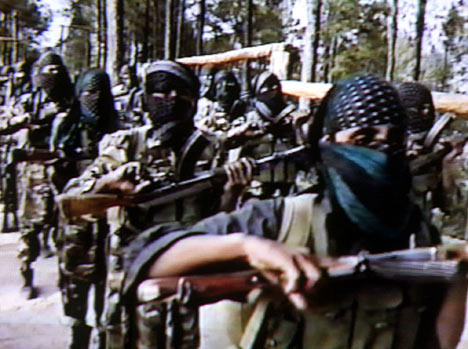
In 1989 Kumar Gunaratnam operating under the nom de guerre “Gemunu” led the JVP/DJV against the Indian army in the Trincomalee District.Under his command, , the DJV-JVP in Trinco accomplished a few military strikes against the Indian Army but these incidents did not gain much publicity due to the concerted efforts of the Sri Lankan and Indian authorities to deliberately suppress information. They did not want the JVP to gain publicity and political credit through these operations. Besides most incidents of that nature in Trincomalee were believed to have been committed by the Tigers then.Although the mass media of the day did not publicised this phase, there is some important material available in books, monographs and research papers.

Ranjithan Gunaratnam

Kumar and elder brother Ranjithan Gunaratnam were in the vanguard of the JVP in the eighties of the 20th century. They were among five children born to Aadhimoolampillai and Valliamma Rajamany Gunaratnam. The father was a Jaffna Tamil and the mother was an Up Country Tamil of Indian origin. The family lived in Anguruwella, Kegalle.

Both Ranjithan and Kumar studied in the Sinhala medium and entered the Peradeniya University Engineering Faculty in different years. Both got immersed in Janatha Vimukthi Peramuna (JVP) politics and as a result, had to drop out of undergraduate studies at different times.

Ranjithan was captured by the Sri Lankan security forces in January 1990. He was tortured and interrogated while in custody. Later he was summarily executed by a paramilitary death squad aligned with the state. His body was disposed of. Ranjithan Gunaratnam is classified among the “missing” still. He was born in 1960 and was 30 years old at the time of his death.

Pallekele Arsenal

Younger brother Kumar who joined the JVP against the wishes of his elder brother was appointed field commander of the JVP unit that seized the arsenal at the Pallekele army camp. This was on April 14, 1987. Kumar went underground and was arrested within six weeks on May 23, 1987, at Galagedara.

Kumar Gunaratnam was later taken to Colombo and detained at the Magazine Prison under the draconian Prevention of Terrorism Act (PTA) as Detenue No D3301. He along with seven others were indicted at the Colombo High Court in 1988 (case No 3591/88) for the Pallekelle armed robbery.

While in Magazine Prison Kumar began conducting political classes for the JVP suspects in custody. He was transferred to the Bogambara Prison in Kandy. There in Bogambara, he and another JVP Central Committee member, “Ragama Somay” devised a plan to escape. This included the digging of a secret tunnel as in the case of the film classic “The Great Escape”. On December 13, 1988, they put the plan into action and broke out of Bogambara Jail. Consequently, an open warrant was issued for the arrest of Kumar Gunaratnam.

Trincomalee

After escaping, Kumar established contact with the JVP hierarchy. Kumar was issued new directives by the JVP leadership. He was appointed secretary of the JVP District Committee in Trincomalee and elevated to the Central Committee. He was also assigned the nom de guerre “Gemunu” and instructed to conduct a military campaign against the Indian forces under the aegis of the “Deshapremi Janatha Vyaparaya

Trincomalee was the only district under Indian army control in which the JVP was functioning. It had about 15 to 20 active cadres in Trinco.When Kumar alias Gemunu took up Command in Trinco in Feb 1989 the JVP had in its possession a small quantity of weapons and explosives.

Being explicitly instructed by the JVP hierarchy to confront the Indian army directly, “Gemunu” of the Deshapremi Janatha Vyaparaya began aiming at the Indian army convoys and vehicles as targets. He was lucky because an army deserter codenamed “Sarath Kule” teamed up with the JVP. He had quit the army after the Indian air drop of June 4, 1987.

Sarath Kule had some training in explosives and could set up landmines. Since Kumar too had an engineering background the two together were able to engage in explosive attacks.

93rd Milepost

The JVP picked the 93rd milepost area on the Kandy-Trincomalee road near Kantale/Kanthalai as the ideal location for a landmine attack. So Sarath Kule and Gemunu set up two landmines in close proximity. Instead of a convoy only a truck and jeep arrived. When the landmines were set off only one exploded and hit the truck. The jeep braked and then reversed rapidly.The soldiers in the truck started firing wildly and running. In the melee, the JVP cadres led by Gemunu managed to retrieve an LMG and SMG and escape into the jungle without injury.

It was after this attack that the Indian security forces realised that the JVP too was now confronting them directly. Some sections of the Sri Lankan security forces were excited by this development. Several security personnel began contacting the JVP, encouraging them to launch attacks against the Indian army and pledging clandestine cooperation.

Accordingly, Gemunu and Sarath Kule took the bold step of entering Trincomalee town and placing a landmine in the dockyard area. They were aided and abetted by Naval personnel. An Indian army truck was targeted but the landmine went off prematurely near the jetty. Both men escaped from the area with the help of sailors.

The JVP high command instructed Gemunu that attacks on the Indian army should be intensified in July to denote the second anniversary of the signing of the Indo-Lanka Accord on July 29.With July 29 fast approaching the JVP Trinco commander Gemunu wanted to make a decisive impact through a major attack.

Mullippothanai Ambush

The opportunity came on July 25, 1989. On that day the JVP launched an ambush in Mullippothanai, a Tamil village to the west of Thambalakamam/Thambalagamuwa.An Indian army truck was hit by a JVP landmine. The JVP cadres then surrounded the vehicle and started firing. Fourteen Indian Jawans were killed and three injured. The JVP made off with the seized firearms. It was a big success for the JVP and sent alarm bells ringing in Colombo corridors of power.

Research and Analysis Wing

What commander Gemunu of the JVP did not know then was that sections of the JVP through initiatives of the Indian espionage agency, Research and Analysis Wing (RAW) had set up a back channel of communication with Indian officials. The Indian Deputy High Commissioner at the time, Nirupam Sen had encouraged such a liaison with the JVP and other southern leftist entities. Sen was to be High Commissioner in Colombo years later.

The then Indian High Commissioner Jyotindra Nath Dixit dubbed in those days as the viceroy of Sri Lanka, had himself re-organised the Colombo mission’s structure after the Indo–Lanka Accord.

Two political secretaries had been appointed with Dr. S. Jaishankar, a Tamil Brahmin looking after the North and East and Gurjeet Singh, a Punjabi Sikh overseeing the other seven provinces. First Secretary Joseph Thariyal, a Keralite Christian, was the RAW point man at the Indian High Commission. Incidentally, Dr. Jaishankar is now the Indian Foreign Minister.

The line of communication to some JVP elements was allegedly maintained by the trio of Nirupam Sen, Gurjeet Singh and Joseph Thariyal. When the JVP under Kumar Gunaratnam struck forcefully on July 25, the Indian officials were shocked and angry. The JVP elements in contact with the Indians had to tender an apology for the incident to Nirupam Sen and promise that it would not happen again.

Gunaratnam/Gemunu

An urgent message was sent to Gunaratnam/Gemunu to suspend attacks against the Indian army. A lull set in thereafter in direct JVP operations against the Indian Army. Gemunu was thoroughly disappointed at this turn of events but continued to strengthen the JVP in Trincomalee until he was arrested on 24 September 1989 in Paalampoattaaru or Monkey Bridge.

This then is the brief tale of the JVP/DJV war against India in 1989. In an interesting twist, Kumar Gunaratnam who commanded the JVP in Trinco under the Nom de Guerre “Gemunu:is today the Leader of the FSP.

D.B.S.Jeyaraj can be reached at dbsjeyaraj@yahoo.com

This article appears Under a different heading in the “Political Pulse”Column of the “Daily FT’dated 27 March 2024.

Posted in Uncategorized

Hundreds of Sri Lankans Fighting For Russia Against Ukraine, Reports Al Jazeera

Amidst the ongoing conflict in Ukraine, a lesser-known aspect has emerged, shedding light on the involvement of Sri Lankan nationals who have taken up arms on both sides of the conflict.

According to a report produced by Al Jazeera, at least two Sri Lankans have been killed fighting for Russia in Ukraine, and three on the Ukrainian side.

The report said that one Sri Lankan was succumbed to injuries sustained from a Ukrainian attack on a Russian bunker in the Donetsk region.

He was reportedly carried away from the site by a fellow Sri Lankan, who was also injured in the attack.

The report noted that as the two Sri Lankans retreated under fire, another wave of Ukrainian drones struck their bunker in the occupied Donetsk region where the two served with the Russian military.

The surviving Sri Lanka had said he had no option but to leave his fellow countryman behind as the Ukrainian drones rained down death.

The body was later identified by other Sri Lankans fighting with Russian forces – and it was the second recruit from the tropical South Asian island to die in recent months fighting for Russia in the bleak Dontesk battlefield.

The two reported deaths add to the three Sri Lankans who were killed last year while fighting for Ukraine against Russia’s invasion.

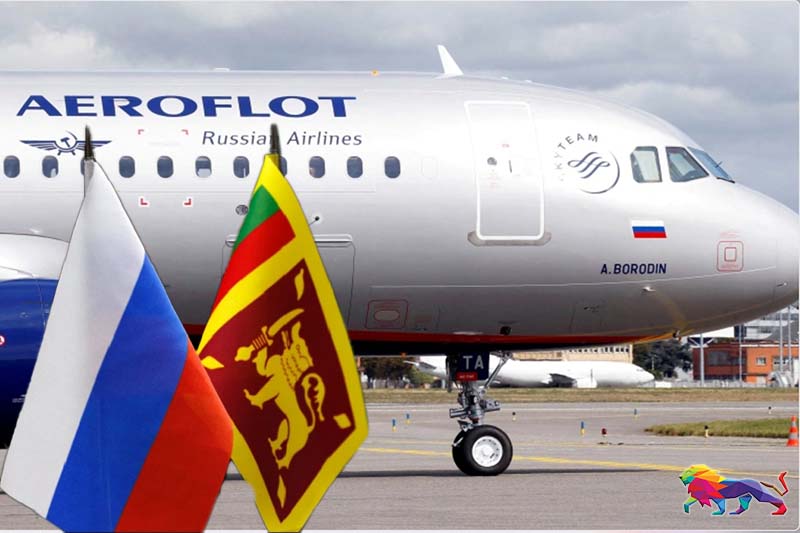
Hundreds of Sri Lankans are now serving with the Russian military in Ukraine, most lured into combat by Russia’s offer of salaries up to $3,000 a month and the prospect of Russian citizenship.

Al Jazeera said that many more – mostly retired Sri Lankan soldiers – are also desperately trying to join the Russian army, willing to risk death at the hands of Ukrainian forces in exchange for Moscow’s money amid dire poverty at home in Sri Lanka.

It added that, according to retired and current members of Sri Lanka’s military, despite the deaths of Sri Lankans in Ukraine, many others are willing to take their places on the Russian front lines.

A serving Sri Lankan soldier also told Al Jazeera that he would consider deserting his post if he had an opportunity to join the Russian military.

Sri Lankans have also died fighting for Ukraine’s freedom.

In December Captain Ranish Hewage, who commanded a special unit of fighters, and MM Priyantha and Rodney Jayasinghe – two other Sri Lankan men – were killed fighting against Russian forces.

Hewage was buried on December 15 with several Ukrainian soldiers at Mlynov, 400km (240 miles) east of Kyiv but the bodies of the other two Sri Lankans were never recovered.

About 20 other Sri Lankans who were serving with the International Legion of Territorial Defense of Ukraine left the unit after Hewage’s death, according to Lahiru Hathurusinghe, 25, who carried injured Ranish Hewage for several kilometres despite his own injuries.

Hathurusinghe, who deserted from the Sri Lanka army to fight for Ukraine, is believed to be the only Sri Lankan still attached to the Ukrainian side in the war with Russia.

UK will continue to keep Sri Lanka travel advice under close review – Lord Ahmad

Amidst growing pressure to amend its travel advice to Sri Lanka which was deemed “overly harsh”, the United Kingdom (UK) has defended its decision and said it would continue to keep the island nation’s travel advise under close review.

UK’s Minister of State for the Middle East, South Asia, Commonwealth Lord Tariq Ahmad of Wimbledon made this remark in the UK Parliament responding to a question raised on plans to update the travel advice to Sri Lanka to reflect the security situation in the country.

He defended the move, saying that the safety of British people is the main factor when determining UK’s travel advice for all countries, including Sri Lanka.

“Our advice is designed to help British people make informed decisions about foreign travel and remains under constant review to ensure it reflects our latest assessment of risks when travelling abroad.

“Our travel advice is based on objective assessments of the risks to British nationals. These assessments are made by drawing on expert sources of information available to the government including local knowledge from our embassies and information provided by the local authorities in each country.”

Earlier this year, leading tourism providers including the Experience Travel Group published an open letter with 35 signatories calling for FCDO advice on Sri Lanka to be amended.

It criticized the mentioning of fuel and food shortages in the country dating back to the 2022 political unrest and continued references to the 2019 terrorist attacks and said the UK the government was “systematically undermining the travel industry” in Sri Lanka.

Posted in Uncategorized

Basil tells SLPP to decide which poll is 1st

The ruling Sri Lanka Podujana Peramuna (SLPP) founder Basil Rajapaksa has informed the Party’s Executive Committee that it was his personal opinion that he informed to President Ranil Wickremesinghe that it is best to hold the Parliamentary Election before the Presidential Election, and for the Party to reach a firm decision on the matter following further discussions.

The Executive Committee of the SLPP met at former President and incumbent Government Parliamentarian, attorney Mahinda Rajapaksa’s official residence in Colombo on Wednesday (27).

Speaking to The Daily Morning yesterday (28), SLPP General Secretary and Government MP, attorney Sagara Kariyawasam said that Basil Rajapaksa had informed them that it was his (Basil Rajapaksa’s) personal opinion that the Parliamentary Election should be held first.

“He said that his personal view is that it is better to hold the Parliamentary Election first. He had also informed the President that it was his view, and not that of the Party. During the Executive Committee meeting, he told the Party to discuss further and make a decision on the matter, if needed.”

With the Presidential Election scheduled to be held late this year (2024), it was reported that a faction of the ruling SLPP MPs was of the view that a Parliamentary Election should be held before it. The matter has led to a social discussion as to which election out of the Parliamentary and Presidential Elections would be held first. Certain MPs representing the SLPP have expressed their willingness to go for a Parliamentary Election first, while the main Parliamentary Opposition, the Samagi Jana Balawegaya has also stated that they are ready to face any Election, be it Presidential or Parliamentary, and the Janatha Vimukthi Peramuna-led National People’s Power has however attributed the talks about a Parliamentary Election to be aimed at suppressing the people’s issues.

The Election Commission has meanwhile assured that it would hold the Presidential Election at the due time, late this year, even if a Parliamentary Election will also have to be held this year.

SLPP Parliamentarian Sanjeeva Edirimanna, when contacted, confirmed that this was Basil Rajapaksa’s position on the matter, which has been expressed at the Party’s Executive Committee meeting.

Posted in Uncategorized

SLPP heading for split

Sri Lanka Podujana Peramuna (SLPP) is heading for a split with one section insisting on fielding its candidate at the presidential election and the other advocating support for the candidacy of President Ranil Wickremesinghe, Daily Mirror learns.

The SLPP faction which is loyal to the Rajapaksa family has firmed up its position that the party should participate in the election by fielding its candidate. When the party’s executive committee met, such an idea emerged, but further discussion did not take place on the matter since the election has not yet been declared.

However, the party’s MPs who currently hold positions in the government openly back the candidacy of the President.

Chief Government Whip Minister Prasanna Ranatunga said the SLPP, as a party, had no one competent enough to win the presidential elections and therefore the party should refrain from fielding a candidate. Also, he was openly critical of the appointment of MP Namal Rajapaksa as the national organizer. He said Mr. Basil Rajapaksa should have taken care of the responsibilities of such a post instead.

The presidential election is scheduled for October this year in terms of the Constitution. The SLPP hierarchy has also sought a snap general election ahead of the presidential election but the President has declined to do so.

Posted in Uncategorized

Attempt to legalize land takeover for Jaffna President’s House thwarted

An attempt to legalize the takeover of private land for President’s House in Jaffna has been thwarted.

Owners of the land protested against a visiting Survey Department team yesterday (26) and handed them a letter of protest.

Of the 29-acre plot, 12 acres belong to the state, on which the facility began to be built in 2010 during the Mahinda Rajapaksa rule.

It is claimed Tamils have deeds to prove they own the other 17 acres.

They say the military took over their land after they fled in the face of the war in 1990.

Without consent by the landowners, the government decided last December to lease 12 acres of the property owned by it to SLIIT, to be followed by the remaining 17 acres too, leased out to the same institute to ensure an income to the Tamils.

Posted in Uncategorized

Sagala Ratnayaka to leave for India

President’s Chief of Staff and National Security Adviser Sagala Ratnayaka will leave for India on Wednesday (27), with a delegation.

The land connectivity to be established with India will be the focus of the visit.

The discussions will commence in New Delhi on Thursday (28).

The delegation includes Secretaries to the Ministry of Transport and Environment, General Manager of Railways, Director General of Customs and the Director General of the Office of the Chief of Staff.

Sri Lanka will hold presidential poll first, no funds allocated for general election: minister

Sri Lanka’s next national election will definitely be a presidential election as no funds have been allocated for a parliamentary election and there is no time for that in 2024, Education Minister Susil Premajanaytha said.

Speaking to reporters on Tuesday March 26, Premajayantha rubbished speculation that parliamentary elections will precede a presidential poll.

“The presidential election is definitely coming. There is no time to hold a parliamentary election, and no funds have been allocated. Attempting to do that is futile,” he said.

President Ranil Wickremesinghe’s United National Party (UNP) also indicated that a presidential poll will be held first. UNP general secretary Palitha Range Bandara said the president is obligated to follow the constitution.

“Anyone can make requests. When they make appeals in cricket, the umpire doesn’t rule everyone out. The president has to act according to the constitution. If he doesn’t do that, he may have to face a problem when he no longer has presidential immunity,” said Bandara.

“He won’t get caught in that,” he added.

President Wickremesinghe met with Sri Lanka Podujana Peramuna (SLPP) national organiser Basil Rajapaksa last week where the matter had been discussed. Wickremesinghe had reportedly told his cabinet ministers later that the presidential election will be held first.

He has yet to officially announce his candidacy, however.

Rajapaksa and the SLPP, meanwhile, have been advocating for early parliamentary polls, arguing that whatever party that wins the presidential election will be able to consolidate power by winning big at the parliamentary elections that will follow. This would not be in the best interest of democracy, Rajapaksa claimed in one interview, though he did not voice this concern when the SLPP went onto secure a two thirds’ majority at the 2020 parliamentary polls after his brother Gotabaya Rajapaksa won the 2019 presidential poll in an unprecedented landslide a few months earlier.

Sri Lanka, China sign nine agreements on cooperation

The signing of nine new agreements between China and Sri Lanka took place on Tuesday (March 26) under the patronage of Chinese Prime Minister Li Qiang and Prime Minister Dinesh Gunawardena.

The Sri Lankan PM paid floral tributes to the martyred war heroes at the Monument to the People’s Heroes at Tiananmen Square, and after receiving the guard of honour from the Chinese military, bilateral talks commenced.

Later, during the discussions held in the Great Hall in Beijing, more attention was paid to increasing overall cooperation in the social, cultural, educational, and agricultural sectors in addition to economic cooperation.

The two prime ministers confirmed that a new chapter in the long-term friendship and cooperation between Sri Lanka and China will begin through the nine Memoranda of Understanding (MoUS) inked on Tuesday.

Secretary to the Prime Minister Anura Dissanayake signed the agreements on behalf of Sri Lanka, and the secretaries of nine ministries signed on behalf of China.

A group including Ministers of the People’s Republic of China, Sri Lankan State Ministers Shehan Semasinghe and Ashoka Priyantha, and MP Yadamini Gunawardena participated in this event.

Posted in Uncategorized