Survey Reveals Record Low Public Trust in Sri Lanka’s Parliament and Political Parties

Public trust in parliament and political parties has plummeted to an all-time low, according to a recent survey conducted by the Centre for Policy Alternatives (CPA).

The survey, titled ‘Survey on Democracy and Reconciliation in Sri Lanka,’ revealed that only 22 percent of the public trust parliament, while political parties fare even worse with only 19 percent trust.

The study, involving 1,350 participants across 25 districts in January, indicates a concerning trend of declining trust in democratic institutions and a growing inclination towards authoritarianism. Interestingly, the Army and Courts emerge as the most trusted institutions in the country, overshadowing the dwindling trust in legislative bodies.

ADB approves USD 100 million loan to support SMEs in Sri Lanka

The Asian Development Bank (ADB) has approved a $100 million loan to provide small and medium-sized enterprises (SMEs) in Sri Lanka more access to finance and build their resilience to external shocks, such as the economic crisis and climate change.

“SMEs play a critical role in Sri Lanka’s economy, contributing 52% to the country’s gross domestic product and employ 45% of the population,” said ADB Senior Financial Sector Specialist Manohari Gunawardhena. “It is therefore important to provide SMEs, particularly women-led enterprises, with the necessary support to sustain and grow the sector’s contribution to the economy. This project will provide working capital and improve SMEs’ access to finance, helping them expand operations and prepare for the changing environment.”

ADB, through participating financial institutions, will open a $50 million line of credit for underserviced SMEs in the export, tourism, technology, agriculture, and manufacturing sectors. It will establish a $500,000 special facility to cover guarantee subsidies for women-led SMEs. A gender gap assessment will be conducted with a view to improving women’s access to finance.

The project will build on the government’s equity contribution through the National Credit Guarantee Institution Limited (NCGI), which provides partial credit guarantees on loans to SMEs. ADB will help the NCGI adopt procedures to effectively support SMEs including underwriting guarantees, risk management and risk-based pricing, and guarantee recovery operations. The project will incorporate green finance elements through climate adaptation and mitigation measures for SMEs.

ADB is committed to achieving a prosperous, inclusive, resilient, and sustainable Asia and the Pacific, while sustaining its efforts to eradicate extreme poverty. Established in 1966, it is owned by 68 members—49 from the region.

-ADB-

SLPP to field presidential candidate?

The Sri Lanka Podujana Peramuna (SLPP) plans to field a presidential candidate, which it is yet to name, said ex-president Mahinda Rajapaksa.

Speaking to journalists on Friday (15), he said his party would definitely win the next election.

Meanwhile, SLPP MP Namal Rajapaksa said their party has not collapsed despite any challenges.

Speaking at a public rally in Hambantota, he recalled how the SLPP elected the president ofits choice via parliament amid all the trouble.

Posted in Uncategorized

Parliament to be dissolved in April with general election in July?

President Ranil Wickremesinghe is considering dissolving parliament in April and going for a snap general election around 20 July, according to political sources.

He is being prompted to do so due to an increasing loss of support to him from the SLPP and the existing popularity for the NPP.

If parliamentary polls take place mid this year, the NPP could likely gain the most number of seats, but the SJB too, is set to secure an almost similar number of seats.

In such a scenario, Wickremesinghe will get the Tamil and Muslim parties to support the SJB to form a government.

He hopes to contest the presidential polls by allying with the SJB.

If a general election is called in July, it will come in the way of holding presidential polls due to issues of funding and timeframe.

Pro China Sri Lanka refutes US claims of Chinese military base

Pro China Sri Lanka has refuted recent claims from US intelligence that there are potential plans for a Chinese military base to be established on its soil.

State Defence Minister Premitha Bandara Tennakoon told Daily Mirror that Sri Lanka has not engaged in any discussions with foreign governments, including China, regarding the establishment of a military base within its borders.

“Sri Lanka has not held discussions with any foreign government including China for a possible establishment of a military base here in Sri Lanka,” the State Minister said in response to a question on the US claims.

In its annual threat assessment 2024 report this week, the US Intelligence Community said that China is exploring the possibility of establishing military facilities in various countries including Sri Lanka, in a bid to bolster their power projection capabilities and safeguard national interests.

“The US intelligence report on the possible establishment of a Chinese military base in Sri Lanka is inaccurate; we vehemently deny these claims,” the minister said.

The State Minister has affirmed that Sri Lanka will not permit any foreign country to establish military bases within its borders under any circumstances.

The US report also stated, “Beyond developing its military base in Djibouti and its military facility at Ream Naval Base in Cambodia, Beijing reportedly is considering pursuing military facilities in multiple locations, including—but not limited to—Burma, Cuba, Equatorial Guinea, Pakistan, Seychelles, Sri Lanka, Tajikistan, Tanzania, and the UAE”.

Posted in Uncategorized

Parliament to become elders’ home if current trend persists: Anunayake Thera

The Anunayake of the Ramanya Nikaya Most Venerable Kappitiyagoda Sirivimala Thera stated yesterday that if the current trend persists, the entire parliament will soon resemble an elders’ home and also emphasized the importance of elderly members stepping down to allow the youth the opportunity to contribute to the country’s development.

The Anunayake Thera emphasized this, when former Minister of Sports, MP Roshan Ranasinghe yesterday (14) visited him at the Getambe Temple.

“Government employees are retiring after reaching the age of 60 because they are no longer able to work hard. However, there are many people who have surpassed the retirement age in the Sri Lankan Parliament. Some individuals retire from government service and transition to parliament. They enter parliament to pursue their next job, showing no inclination to make way for the younger generation and vacate their positions. They are seen struggling to reach parliament with the aid of a walking stick,” the Thera emphasized.

“They have no regard for the people of the country. Their focus is on selling the country’s resources to benefit their own generation. If an ordinary citizen in the country steals fifty or one hundred rupees, they will face the maximum punishment. However,if a powerful individual steals billions of rupees, the law does not seem to apply to them properly,” the Anunayaka Thera said.

The Thera also emphasized that elderly MPs should leave parliament. If they do not leave voluntarily, new laws should be enacted to remove them.

Posted in Uncategorized

China pursuing a military base in Sri Lanka: US claims

China is reportedly exploring the possibility of establishing military facilities in various countries, including Sri Lanka, in a bid to bolster their power projection capabilities and safeguard national interests, a latest report by US Intelligence Community revealed.

The People’s Liberation Army (PLA) will continue to pursue the establishment of overseas military installations and access agreements in an attempt to project power and protect China’s interests abroad,” the annual threat assessment of the US Intelligence Community 2024 stated this week.

“Beyond developing its military base in Djibouti and its military facility at Ream Naval Base in Cambodia, Beijing reportedly is considering pursuing military facilities in multiple locations, including—but not limited to—Burma, Cuba, Equatorial Guinea, Pakistan, Seychelles, Sri Lanka, Tajikistan, Tanzania, and the UAE,” it said.

Beijing will focus on building a fully modernized national defense and military force by 2035 and for the PLA to become a world-class military by 2049, the 40-page report stated.

The report, outlining the collective insights of the US intelligence community, says the US “…faces an increasingly fragile global order, strained by great power competition, transnational challenges and regional conflicts”.

It further cautions that China, Iran and Russia are challenging the current international rules-based order.

Posted in Uncategorized

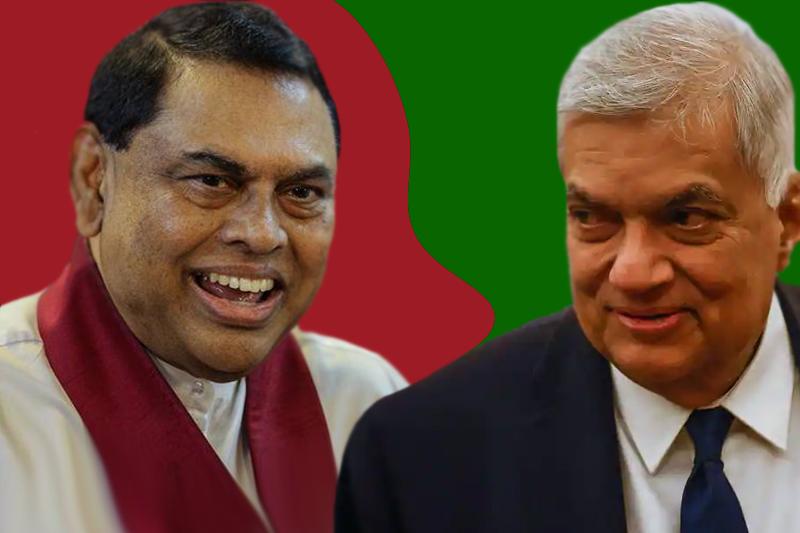
Basil wants general election first for a “balanced” Sri Lanka parliament

Sri Lanka’s next parliament will be a more balanced one if parliamentary elections are held before a presidential election and won’t result in any one party monopolising political power, Sri Lanka Podujana Peramuna (SLPP) national organiser Basil Rajapaksa said.

In an exclusive interview given to the privately owned NewsFirst network on Thursday March 14 , Rajapaksa said power should not be concentrated around one party.

“The party that wins the presidential election may secure unlimited power. I don’t think that’s a good situation. So before that, so as not to be influenced by the result of the presidential election, if the parliamentary election is held first, that will result in a more balanced parliament,” he said.

“No one will be washed away or disappear. This was why the proportional representation system was introduced. We showed that that was of no use,” he added.

Rajapaksa said that following the 2019 presidential election, which the SLPP won in a landslide securing 6.9 million votes, the parliamentary elections that were held in 2020 after some delays due to the pandemic proved hugely beneficial to his party.

“We got a two thirds’ majority, which is unlimited power. The people must decide if it is right to give that much power to one party,” he said.

Asked by the interview if Rajapaksa was saying the SLPP should not have won so big, he said: “There is a belief in the country that both the presidency and the two thirds’ majority concentrated in one place is not ideal.”

Constitutionally, Sri Lanka’s next presidential election is due to be held between September 17 and October 17 this year. President Ranil Wickremesinghe, who heads a government led by the formerly rival SLPP, has said that the presidential election will be held before a parliamentary election.

But Wickremesinghe hasn’t yet said definitively that he intends to contest the election.

Government spokesmen have also alluded to proposals of abolishing the executive presidency this year, which would effectively render the prospects of a presidential election null and void.

The SLPP is currently trailing behind other parties in at least one voting intent poll.

Posted in Uncategorized

IMF Should Oppose Restrictions On Freedoms in Sri Lanka – HRW

The International Monetary Fund (IMF) should urge Sri Lanka’s government to abandon draft legislation that would severely curtail civil society and jeopardize the IMF’s program in the country, Human Rights Watch (HRW) has said in a letter to the global lender that was released today (March 13).

Issuing a statement in this regard, the HRW – an international non-governmental organization that conducts research and advocacy on human right – highlighted that the proposed Non-Governmental Organizations (Registration and Supervision) Act in Sri Lanka is among several recent and planned measures that would curtail fundamental freedoms, despite the critical role of public scrutiny in promoting good governance and combatting corruption.

“The IMF’s US$3 billion bailout of Sri Lanka – which is linked to government commitments to reform – helped stem the immediate economic crisis after the country defaulted on its foreign debt in 2022, but further progress is threatened by the adoption of laws by President Ranil Wickremesinghe’s administration that would severely restrict basic rights”, it mentioned.

The statement also points out that the Online Safety Act, enacted in January, creates vague and broad speech-related offenses punishable with lengthy prison terms. Further, the Anti-Terrorism Bill, currently before parliament, contains sweeping new speech-related offenses and arbitrary powers of arrest, and the draft law to regulate nongovernmental organizations could make independent civil society activity all but impossible in Sri Lanka, it said.

“As the economy collapsed in 2022, Sri Lankans demanded good governance and an end to corruption, but instead now face draconian laws and policies that threaten human rights and undermine reforms,” said Meenakshi Ganguly, deputy Asia director at Human Rights Watch. “The protests helped bring President Wickremesinghe to power, but instead of listening to calls for change, he’s clamping down on peaceful dissent.”

The HRW citing a 2023 IMF study of Sri Lanka known as the Governance Diagnostic Assessment, stated that “anticorruption efforts are unlikely to achieve their objectives unless they also encompass initiatives designed and led by groups outside of government who are committed to rule-based inclusive economic and social progress.”

However, the study found that civil society’s participation in oversight and monitoring of government actions has been “restricted by limited transparency, the lack of platforms for inclusive and participatory governance, and by broad application of counter-terrorism rules.” As a result, “opportunities for public participation and oversight of official behaviour, including by civil society, are increasingly restricted”, according to HRW.

Additionally, it expressed that the government on, January 30, 2024, provided the draft NGO law to selected members of civil society, who were given three weeks to respond. “The bill does not address any evident need, but instead seeks to subject civil society organizations to invasive government scrutiny and interference, and threatens civil society members with prison if they don’t comply with cumbersome administrative procedures.”

The HRW also recalled that the National Collective of CSOs and NGOs, a coalition of Sri Lankan civil society organizations, has written to the government on February 28 raising concerns that the proposed law would ‘violate the fundamental rights to freedom of association and expression,’ while damaging the delivery of services by civil society organizations, including to ‘the many families who are struggling to make ends meet in the midst of severe economic hardship’.

Drawing reference to the United Nations High Commissioner for Human Rights, Volker Türk’s March 1 update to the UN Human Rights Council on the crisis in Sri Lanka, the HRW highlighted that he was “concerned by the introduction of new or proposed laws with potentially far-reaching impact on fundamental rights and freedoms … which variously strengthen the executive, grant broad powers to the security forces, and severely restrict rights to freedom of assembly, association and expression, impacting not only on civic space but the business environment.”

The IMF should protect the credibility and efficacy of its program in Sri Lanka by publicly calling upon the government to abandon the proposed NGO law, impose a moratorium on use of the Online Safety Act, and amend the Anti-Terrorism Bill to ensure that it respects human rights standards, HRW noted.

“The IMF and other international partners supporting Sri Lanka’s economic recovery recognize that this crisis has its roots in misgovernance and corruption,” Ganguly said. “If their efforts are to be successful, they need to stand firm against the government’s attempts to curtail fundamental civil and political rights.”