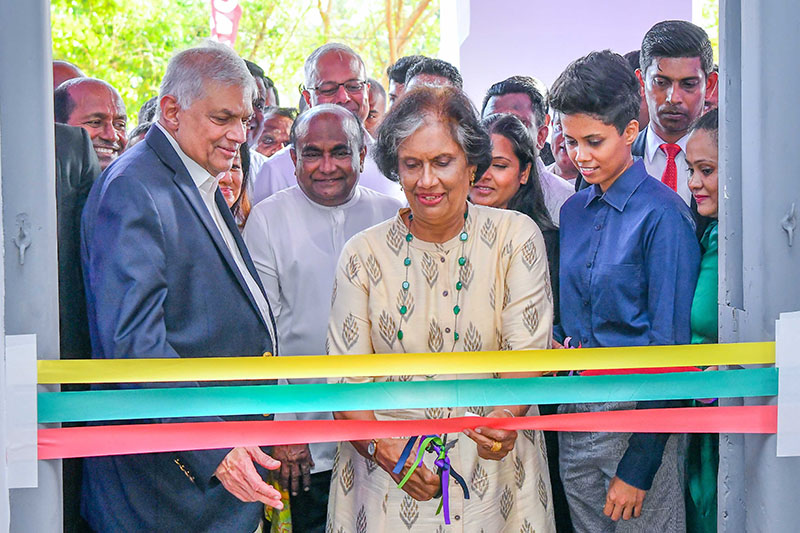
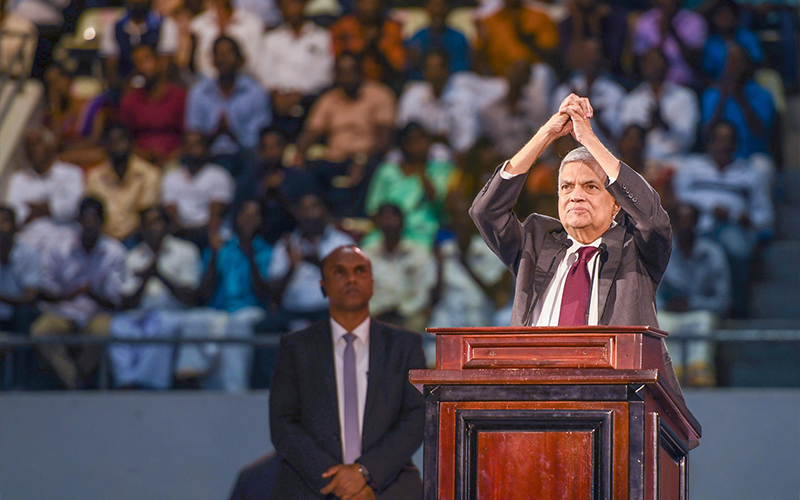
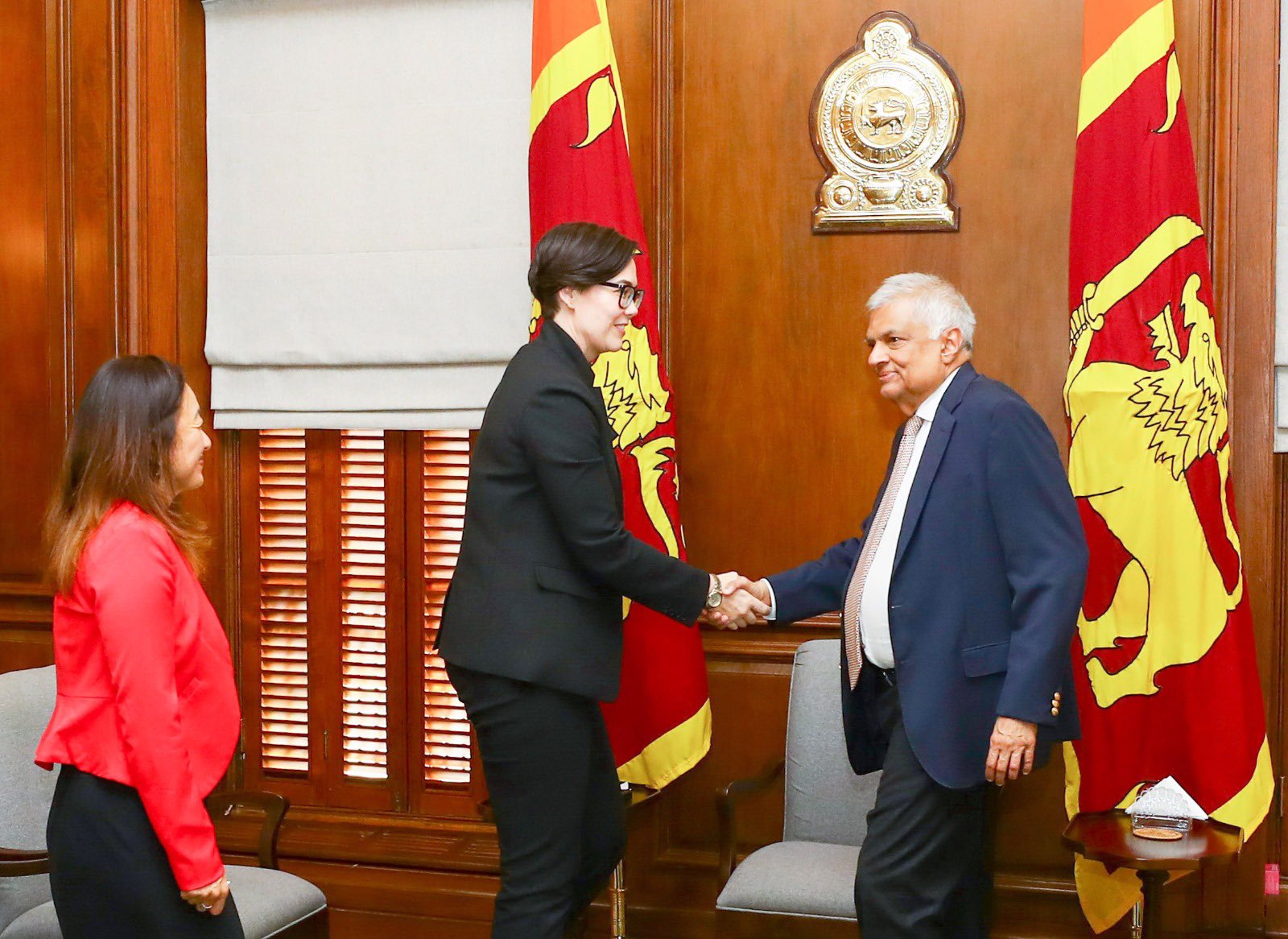
Ranil Wickremesinghe, a 75-year-old lawyer, has been immersed in politics for over 50 years. He has been an MP for almost 44 years. Ranil has served as leader of the Opposition for about 18 years. He has been a deputy minister and Cabinet minister. Above all Wickremesinghe has been sworn in as Prime Minister six times. Impressive as it is, this record of service will not be Wickremesinghe’s lasting political legacy
The first advantage is that Wickremesinghe has a proven track record in this so far. He took over when the country was facing an unprecedented economic crisis. Shortages were rampant amid an acute lack of foreign exchange. There were queues everywhere but supplies were unavailable or inadequate. Power and fuel shortages had virtually paralysed the country
It is against this dismal backdrop that Wickremesinghe has to devise a winning strategy for the 2024 presidential stakes. Gotabaya Rajapaksa won in 2019 with 69 lakhs of votes. Ranil Wickremesinghe needs to poll at least 65 lakhs to be sure of victory. The UNP vote tally was only two and a half lakhs in 2020. How can it be increased about 25 times more to reach 65 lakhs?
The first part of this article published in the “Daily Mirror” on April 20, 2024 under the heading “Ranil Wickremesinghe caravan moves on despite barking dogs” evoked a lot of reader responses. In a climate of Ranil-bashing, many seem to be happy that Wickremesinghe’s courageous decision to accept the challenge of leading the country on the road to economic recovery and the limited yet commendable progress achieved by his Government has been acknowledged. As mentioned in the concluding paragraph of last week’s article, this second part of the article would be focusing on the strategy being devised by Ranil Wickremesinghe to win the 2024 presidential stakes.
The forthcoming presidential election is due in late September or early October this year. It is given that the incumbent president Ranil Wickremesinghe will be contesting despite the fact that he has not made a formal announcement to that effect yet. He has been pointedly dodging or deflecting questions from the media on this topic. Nevertheless it is common knowledge that Wickremesinghe will be a presidential contender this year.
Ranil Wickremesinghe, a 75-year-old lawyer, has been immersed in politics for over 50 years. He has been an MP for almost 44 years. Ranil has served as leader of the Opposition for about 18 years. He has been a deputy minister and Cabinet minister. Above all Wickremesinghe has been sworn in as Prime Minister six times. Impressive as it is, this record of service will not be Wickremesinghe’s lasting political legacy.
Ranil’s legacy
Ranil’s legacy is going to be his record of service to the country as President. Ranil’s mission is to lift Sri Lanka out of the economic morass it has sunk into. His vision is to lead the country on the road to economic recovery and lay the foundation for an economic renaissance. For this he needs to win the 2024 presidential election and continue his work. Furthermore a victory in a presidential election has eluded him twice. Therefore winning this presidential poll is of paramount importance to Wickremesinghe politically and personally.
Realistically, Ranil Wickremesinghe would not be having any illusions about the nature of the challenge facing him. The United National Party (UNP) under his leadership fared miserably in the 2020 Parliamentary elections. This was mainly due to the bulk of the party’s sitting MPs breaking away and forming the Samagi Jana Balawegaya (SJB) under Sajith Premadasa’s leadership. While the Rajapaksa-led Sri Lanka Podujana Peramuna (SLPP) swept the polls in 2020, the SJB came next. Premadasa became the leader of the Opposition.
As for the UNP, it was a humiliating defeat. The party polled only 249,435 (2.15%) votes in the country. For the first time in its history, the grand-old party failed to get an MP elected. The party was only entitled to a single MP on the National List. Ranil Wickremesinghe was appointed as UNP National List MP in June 2021. Wickremesinghe who polled over 500,000 preferential votes in the Colombo district at the 2015 Parliamentary election failed to get elected in 2020. The UNP polled only 30,875 (2.61%) in Colombo which was considered its stronghold for decades.
Winning strategy
It is against this dismal backdrop that Wickremesinghe has to devise a winning strategy for the 2024 presidential stakes. Gotabaya Rajapaksa won in 2019 with 69 lakhs of votes. Ranil Wickremesinghe needs to poll at least 65 lakhs to be sure of victory. The UNP vote tally was only two and a half lakhs in 2020. How can it be increased about 25 times more to reach 65 lakhs?
Besides the presidential race will be a keenly contested triangular tussle with Sajith Premadasa of the SJB and the NPP/JVP’s Anura Kumara Dissanayake in the running. Already “election experts” anticipate a result where no candidate will get 50% in the poll first count.
It is also a harsh fact that the UNP has been in the doldrums for quite a few years. It received a shot in the arm when Wickremesinghe became Prime Minister, acting president and then president through exceptional circumstances in a bizarre situation. The party is now revamping itself but as Wickremesinghe himself was to remark a while ago, the process has neither been speedy nor up to the mark. Therefore it is doubtful as to whether the UNP party machinery in the present state is capable of ensuring a Wickremesinghe victory in the presidential poll.
Under these circumstances Ranil faces an uphill task. At present Wickremesinghe has defied critics and baffled analysts by successfully steering the ship of state as a President whose party has only one MP in Parliament. Likewise Wickremesinghe needs to plan and implement an extra-ordinary strategy to win the Presidential election in an extremely unfavourable environment. He along with key aides and trusted advisers is actively engaged in evolving that electoral strategy now. A few straws in the wind help to gauge the general thrust and direction of the evolving electoral strategy.
As mentioned last week, Ranil Wickremesinghe perceives himself as a unique selling proposition in the presidential election. He regards the poll as a single-issue election namely the economic resurrection and emancipation of Sri Lanka. Ranil is positioning himself as the best person to lead the country towards that goal. He has two advantages over his rivals in this.
First Advantage
The first advantage is that Wickremesinghe has a proven track record in this so far. He took over when the country was facing an unprecedented economic crisis. Shortages were rampant amid an acute lack of foreign exchange. There were queues everywhere but supplies were unavailable or inadequate. Power and fuel shortages had virtually paralysed the country.
Today those crises are no more. Long queues are non -existent. Earlier there was neither availability nor affordability in the case of food and essential items. Now there is availability but affordability is an issue for the less privileged sections of society. Nevertheless people are not on the warpath against the Government as in the days of the “Aragalaya”(struggle). People feel the pinch and grumble but do not protest too strongly despite attempts by trade unions and professional associations to incite them. Many people are still confident that Ranil is doing right so far.
The country is not out of the woods yet and has miles to go but Wickremesinghe is seen as heading in the right direction. This demonstrated track record is Ranil’s first advantageous point. Neither Sajith nor Anura can compete with Ranil in this. Both are untested, unknown quantities. People are not sure whether they could face the challenges as Ranil has done let alone do better than him. Also in the case of Sajith his refusal to accept the challenge when Gota offered the PM post to him first is a black mark.
Second Advantage
The second point to Ranil’s advantage is the lack of viable alternatives. Ranil’s potential chief rivals in the presidential hustings are Anura Kumara and Sajith. Both are critical of Wickremesinghe but have failed to provide valid alternative suggestions or proposals about what should be done. They pinpoint negatives and faults but have no positives or remedies.
Everyone knows that the agreement with the International Monetary Fund (IMF) imposes severe burdens on the people. However, apart from those of an extremely leftist persuasion, most people saw it as a necessary evil. Ranil was criticized by the Opposition but no real alternative to an IMF deal was offered. A JVP economic “expert” said they would get adequate foreign exchange from their supporters in Western countries. The SJB now says they will re-negotiate the IMF deal knowing well that is not possible. Funnily enough when the second tranche of the IMF got delayed all these IMF critics were quick to pounce on Wickremesinghe and blame the Government for not honouring IMF conditions on time.
Besides these two points, it is worth recalling that from the time he became premier, Wickremesinghe has been inviting all parties to join him in the national interest and work together for the betterment of the country. These words have fallen on deaf ears.
Hence there is a feeling among some people that the Opposition political parties have shirked their responsibility to the country by not grasping Ranil’s invitation. Instead of working positively with the Government the Opposition is only negatively nit-picking it is felt. While ordinary people are aware of the dire predicament the country is in economically, the conduct of the Opposition is irresponsible as they seem to be oblivious to the economic plight except to find fault with the Government. This too is a point favourable to Ranil.
“National” candidate
Therefore in this context, Ranil Wickremesinghe intends projecting himself on a personal level as a presidential candidate because he regards himself as the best choice. He does not want to be a party nominee. According to UNP circles Ranil has told Party members that this election would not be a party vs party election. It would be more of a clash between personalities. As such Wickremesinghe would not have a party label. Instead he would be an independent non-party common candidate (Nirpakshika Podu Apekshaya) backed by a group of parties, organizations and key individuals. He would come forward as a “national candidate” backed by people from all ethnicities, religions, regions and all walks of life.
In short Wickremesinghe would be an independent candidate backed by a coalition or alliance. He will have the backing of the alliance but will not be an alliance candidate. What is importantly noteworthy is that Ranil will be an independent, non-party candidate and not a nominee of the coalition or alliance. This coalition or alliance would not be a collection of political parties alone. It would be an assortment of parties, segments of parties and party individuals. People may join forces cutting across party lines or political alignments. Party members and groups would “De-align” from earlier stances and “Re-align” in support of Wickremesinghe .
De-alignment and re-alignment
This de-alignment and re-alignment is already visible with regard to elements of the SLPP vis a vis Wickremesinghe. MPs who de-aligned from the pohottuwa and declared themselves independent have re-grouped under Anura Priyadarshana Yapa and are supportive of Ranil.
Several SLPP Cabinet ministers, deputy ministers and state ministers led by Prasanna Ranatunga have re-aligned themselves in support of Wickremesinghe for the presidency. Likewise another group of backbencher MPs have formed a loose alliance by re-aligning under Nimal Lanza to support Ranil. These MPs though supportive of Ranil are yet loyal to their party and remain with the SLPP. If however the SLPP hierarchy does not act diplomatically this realignment could become permanent in the form of a party split.
What is of crucial importance is that this evolving strategy enables members of different political hues to support Wickremesinghe at the election. They are free to mobilise support for him. This can be done without violating party discipline if the respective party leaderships are amenable. What Wickremesinghe requires is not the party support alone but the votes deliverable by MPs. Therefore institutional support in the form of a structured alliance is not that important. What is important is the quantum of votes each individual member of the alliance is able to mobilise in support of Ranil.
As time progresses and Wickremesinghe’s presidential campaign gathers momentum this process of de-alignment and re-alignment could become a feature in many political parties representing the Sri Lankan Tamils, Muslims and Hill country Tamils too. If the party leaders make choices that are not acceptable to party MPs or if MPs take a position that is contrary to the stance taken by the party hierarchy with regard to the Presidential election, the possibility of parties fracturing on this issue cannot be ruled out.
Strengthening the UNP
Even as he builds a coalition or alliance to back him formally or informally in the presidential fray, Wickremesinghe also needs to strengthen his own Party. The UNP may not play the pivotal role in the presidential election but it will certainly play a key role. Besides the UNP has to contest and do well in the Parliamentary election in the wake of the presidential election.
The UNP was considerably weakened due to the large-scale intra-party split and the formation of the SJB. Therefore Wickremesinghe needs to re-unify the party by getting back a sizable number of crossers-over from the SJB. This is not a case of dividing another party but an exercise to re-unite the already divided UNP. The potential SJB sections who are likely to return to the “mother party” would be treated as misguided prodigal children who are returning to their ancestral abode. As in the case of the biblical parable of the prodigal son, the return of former UNP’ers would be celebrated by the slaughter of fattened calves.
May Day highlights
In this context, speculation is rife that a group of MPs who are in the Telephone party at present would mount the UNP stage on May Day. The UNP will celebrate the May Day in Maradana this time. Plans are afoot to gather a crowd of 100,000 plus. Around 1000 buses carrying 50 each will bring 50,000 from the outstations while another 50,000 will be mobilised within Colombo district. Party organizers at different levels are required to bring a certain number of people in accordance with their capacities. The prime highlight- if it does happen – would be the appearance of UNP turned SJB parliamentarians on the green elephant stage.
I had earlier thought that I could complete the envisaged two part article this week. However, there are some points that need to be elaborated further. Moreover some new information has come to light which requires further analysis. Therefore this article would be continued next week also.
D.B.S.Jeyaraj can be reached at dbsjeyaraj@yahoo.com