Snap general election in April?

A decision on which election should take place first will be taken in April, reports ‘Irida Deshaya’.

As per the constitution, a presidential election has to be held this year.

However, certain government seniors worried by the popularity ratings have asked the president to go for a general election first.

The report says an opinion poll will be held by the president’s side in April, after which the decision is due.

Also, the SLPP will make its decision known in the same month on whether to support the president.

If the SLPP decides against supporting, the seniors have urged the president to get his supporters in the party and go for a snap general election.

Only thereafter, a presidential election will take place.

However, the president wants to hold a presidential election first.

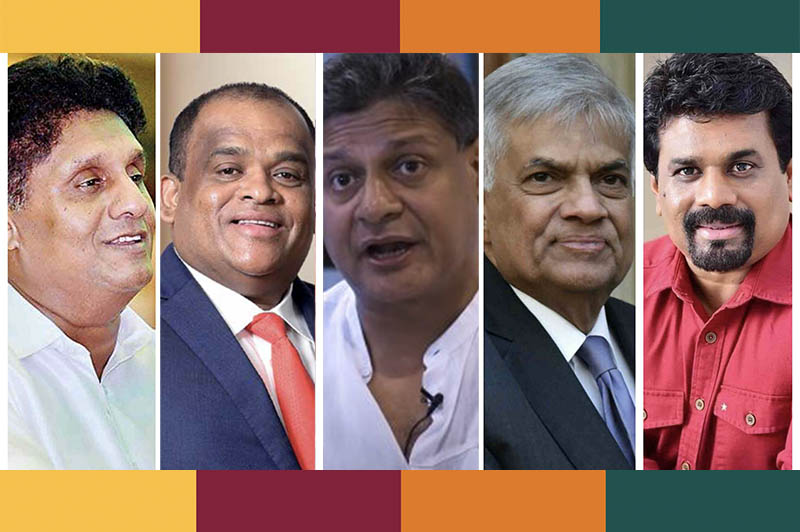
On 09 February, The Leader TV revealed that MPs of several parties reached secret agreement to pressurise the president to go for a general election in order to prevent Anura Kumara Dissanayake from being elected president.

Sri Lanka to introduce India’s digital payment system UPI amid tax evasions

Sri Lanka will introduce India’s Unified Payment Interface (UPI), a revolutionary digital payment move to achieve a cashless economy, which may help to tighten loopholes that have allowed for tax evasion in the island nation.

The UPI will help the public to use their smartphone as a virtual debit card.

In other words, people do not need any cash or card to carry out transactions. They can simply use the smartphone as a debit card and send and receive money through it. The UPI is an interface that allows the user to link more than one bank account in one smartphone app and transfer funds without having to share any account number.

Sri Lanka President Ranil Wickremesinghe will witness the launch of Unified Payment Interface (UPI) services in Sri Lanka and Mauritius along with Prime Minister of Mauritius, Pravind Jugnauth and Indian Prime Minister Narendra Modi on Monday 12 via video conferencing, the Indian High Commission in Sri Lanka said.

“India has emerged as a leader in Fintech innovation and Digital Public Infrastructure. Prime Minister (Modi) has placed a strong emphasis on sharing our development experiences and innovation with partner countries,” the Indian High Commission in Colombo said in a statement.

“Given India’s robust cultural and people-to-people linkages with Sri Lanka and Mauritius, the launch will benefit a wide cross-section of people through a faster and seamless digital transaction experience and enhance digital connectivity between the countries.”

It also said the launch will enable availability of UPI settlement services for Indian nationals travelling to Sri Lanka and Mauritius as well as for Mauritian nationals travelling to India.

Officials at the state-rub Inland Revenue Department (IRD) say the move will help to tax a person at the point of receiving funds or earning income from multiple sources to various bank accounts.

BOOSTS OVERALL TAX REVENUE

According to Indian tax experts, people in India have been rapidly switching to e-wallets due to the various restrictions, limitations, and withdrawal fees in bank accounts.

These digital wallets and UPI transactions are very quick and also save the people from the hassle of carrying cash or a card, they say.

And it can be linked to multiple bank accounts. It is convenient even for those who are not very comfortable with technology.

The UPI saves the taxpayers from paying more taxes, while serving as a foolproof method for tracking transactions and reduces the use of cash which is hard to track.

Electronic transactions also help increase the overall tax revenue of the government.

Local tax experts say tax evaders had used multiple bank accounts under personal names as well as joint bank accounts in the past. They believe the UPI could effectively address the weakness in Sri Lanka’s existing tax collection system with no physical meeting with tax officials. ‘

In India, UPI transactions up to.50,000 Indian rupees are exempt from tax. Any amount exceeding this limit, received through UPI apps or digital wallets, is treated as a gift and taxed as per the provisions applicable to income from other sources. However, if the money received is a repayment of any sum owed to you, it will not be taxed.

Posted in Uncategorized

When AKD met AKD, why and to what end By N Sathiya Moorthy

For the uninitiated in Sri Lanka, AKD in politico-strategic circles in the neighbouring India’s capital, New Delhi, refers to Ajit Kumar Doval, the nation’s all-important National Security Advisor (NSA). For counterparts in India, who are even less initiated, the initials stand for Anura Kumara Dissanayake, leader of the centre-left Janatha Vimukthi Peramuna (JVP), now wanting to be known by its relatively recent name or that of its coalition, National People’s Power (NPP). Anura is also the party’s presidential candidate, and his nomination was announced a year or more before elections that are due by the upcoming October.

At the invitation of the Indian government, AKD met AKD in New Delhi. So did the Sri Lankan AKD and his team met India’s Minister for External Affairs (EAM), Subhramanyam Jaishankar and Foreign Secretary, Vinay Mohan Kwatra. They also visited the west Indian states of Gujarat and Kerala, for first-hand understanding of developments in farm and allied sectors, starting with animal husbandry, as NPP’s National List parliamentarian, Harini Amarasuriya told the interviewer of a Colombo TV channel.

Gujarat is the home state of Prime Minister Narendra Modi – but that is beside the point. The important and immediate point is that Gujarat is home to ‘Amul’ cooperative milk society in a town called Anand. It is the largest and the most efficient one of its kind in South Asia. The Anand/Amul model of dairy farming and processed, packaged milk marketing has been an inspiration and role model for both the public and private sectors across India and elsewhere in the Third World.

Likewise, Kerala, of course, has a leftist government. That again is beside the point – or, again a coincidence. The fact is that Kerala has tea and rubber estates, and also coconut palm along its hill ranges. Their farming and marketing methods are said to be advanced, even relative to Sri Lanka.

Heavy price

Given that Sri Lanka is an agrarian economy and has been neglecting its cash crops over the past several decades and wantonly killed its domestic dairy industry in the name of shamelessly unsustainable imports, especially in the aftermath of the Economic Reforms of 1978, the current economic crisis may be an opportunity to revive both, so as to replace forex-spending with forex-earnings.

Self-discredited President Gotabaya Rajapaksa had the right idea in this regard, but did not have the knowledge, expertise or patience to go through the mill. Simply put, he did not know that he did not know. Hence he allowed himself to be driven by a cabal, inside and outside the government, inside and outside the country. They too did not know, and did not know that they did not know. The nation has paid a heavy price for their ignorance.

Now that certain opinion polls have been consistently putting AKD’s name as the nation’s first choice even if not with the required 50-per cent plus vote-share, they seem wanting to know more than they thought they knew. Having stayed in the Opposition for much of the party’s 60 years, they need a better mental make-up to realise and recognise that it is their job to find solutions to the nation’s problems. Like they have been doing all along, they just cannot blame the rest of them all, both within Parliament and outside, and believe that they had done a good job of it.

Shrugging off the past

The India visit thus comes as an occasion for the JVP leadership to know what lies outside of their confined political and intellectual space. It may have taken years for the AKD leadership to shrug off its own past even in the party’s post-insurgent democratic avatar since the early nineties.

Thankfully, their spokespersons have now begun talking about the modern world, where IT and computer-driven economy are realities in more ways than one. This does not mean that they have to do a complete make-over. As parliamentarian Amarasuriya implied, they acknowledge that the world is inter-connected and they need to know how the world works and how Sri Lanka is working with the other – for them to understand the dynamics to make the desired changes that goes with their basic premises and policies.

Maybe, at some point, they may end up having to revisit the basics to make them relevant to the contemporary world. It is because the world has changed through the Cold War and beyond, and is in the IT-AI era, which is a world by itself, in terms of technology, global and globalised thinking, down to job-creation for Sri Lankan youth, both nearer home and afar.

Indian ‘hegemony’

The JVP has a long way to go and they have just begun. Their India visit is only a part of this learning process. They are now ready to acknowledge that India is a regional power with which Sri Lanka has a lot to do. Since the days of slain party founder Rohana Wijeweera’s ‘Five Classes’ with perceived and unquestioned ‘Third Class’ that centred on what he had concluded without evidence was ‘Indian hegemony, the JVP has been attacking everything Indian.

There were thus Indian goods, including essential food items and medicines, which the JVP wanted, banned – or, banned it themselves in areas where they had the muscle power to do so. In more modern times, they have been highly critical of every development project funded by India.

This went on until or even during the economic crisis, when India and India alone was the one nation to rush aid. They did not take the government to local courts for non-payment of price for organic fertilizer unsuited to the country, as China did, for instance. India also did not talk about war crimes and human rights in the UNHRC even during those horrible days for the nation and its people as the entire West did.

This was not the first time that realisation of the kind had dawned on them. Post-tsunami, 2004, India was the first nation to rush help for rescue, relief, rehabilitation and restoration – even before being asked. This was when India was still assessing how much it had lost in human lives and property, and where all. Subsequently, when the West offered assistance to India, too, New Delhi very clearly told them to send their assistance to nations that needed it, like Sri Lanka.

It was not that all. The JVP leaders saw for themselves how the Indian soldiers pressed into relief work did a professional job of it all, and did not get involved in local politics of any kind. Better still, once the work was done, they packed up and left. The Indian effort also showed them, how India did not require a military base in the country as imagined and could operate out of their own land territory – during war and peace, and peace and peace, to be precise.

This did change their perception of India as a hegemon, but they had not been conditioned as yet to accept the ground reality. Now with the nation’s leadership hanging like a fruit that they can touch, feel and take, their ideas are beginning to change.

At least there is a new way of thinking that the old needs to be reviewed. Rohana’s might have been gospel in his time – which it was not – but it is not so any more. Not after the JVP had left its militant mental make-up to embrace democracy as the acceptable path to serve their people even better.

Learning curve

For India, too, interacting with the JVP leadership is a learning curve. Burdened by the past, New Delh too had found relative comfort in staying away from the JVP. Today, Sri Lanka is changing and there is the need for knowing whom the Sri Lankan people think they know enough to trust them with the risky job of governance, more so in these risky times.

From a purely Indian perspective, there may be more to it than meets the eye – or, so it seems. In common neighbour Maldives, where again India has a lot at stake, both in terms of development funding and security concerns, yes, centred again on China, the overnight emergence of Mohamed Muizzu as President of people’s choice has left the international community confused. Possibly, India too did not want to be caught unawares if Sri Lanka voted AKD and the NPP to power.

India is no exception. A PhD holder in structural engineering from a reputed British university, Muizzu was Works Minister for seven long years (2012-18) and Male city mayor for two years until elections last September, but the Maldivian system did not encourage overseas partners to side-step the leader and establish personal working relationship with the other.

That comfort of facelessness seemed to have worked in his favour. Truth be acknowledged, he is conditioned by the script that he has inherited, from wherever, and his visible anti-India stance on issues of consequence more for the Maldivian people than even for India. The absence of education in foreign policy is showing by the hour, by the day.

In its turn, Sri Lanka has issues of politics and governance, which is its task. Sri Lanka has even more problems still on the economic front. Strategically located in the Indian Ocean all along, more than any time in the past, including the Cold War era, the nation is being made aware of this prime fact. In the past, nations had complained that Sri Lanka, beginning with its days as Ceylon, was using its location-advantage to play the global and/or regional Peter against Paul.

In more recent times, Colombo is beginning to recognise that it’s not as simple as in the past, and not as simple as they had thought all along. The JVP is also in the learning curve all along, only that they are recognising the reality only when the post-Aragalaya public mood purportedly shook them off from their ideological past into a pragmatic present to a performance-centric future.

Nothing against nations

Whatever they may have seen and discussed in Gujarat and Kerala on what needed doing to revive the nation’s economy the JVP way over the medium and long terms, the JVP is aware that the short-term alone takes them there. The short term is about both politics and economics nearer home. It is also about the outside world, what the world thought about Sri Lanka on issues that mattered to both – not just to one side, as parties like the JVP had all along thought.

Thus in New Delhi, the JVP /NPP leadership could have expectedly exchanged views on multiple issues concerning their two nations. With Minister Jaishankar and Secretary Kwatra, they could have exchanged views on multiple bilateral issues, including trade, investment and the ethnic issue. With India’s AKD, Sri Lanka’s AKD could have discussed mutual perceptions of regional security, yes, involving China, too, and Sri Lanka’s own role, position, current posturing, and possibly future possibilities.

As Amarasuriya, MP, implied, the JVP has not changed its views on the Indo-Sri Lanka Accord and 13-A being pushed down the nation’s throat without proper debate in Parliament or elsewhere. But in another context, she also clarified that they had nothing against any nation. Their reservations were only about the Sri Lankan leadership of the time.

Of course, there are critics and critics in the country who have taken exception to AKD’s India visit this time. They did not seem to have any such queries for him when he toured the US not very long ago, or the party conceded that they had to do business with the IMF after all, if elected to power. In the former case, there was no news of their meeting American officials in America. In the latter, they have been claiming that they will re-negotiate the IMF deal, implying that the present rulers did not do enough.

Modern idiom

In her television interview, Harini Amarasuriya described the NPP) as a ‘progressive party that believes in social justice, equal opportunity’ – and indicated that they were fishing for inputs that could translate the ideology in modern idioms and conditions. That is a good beginning, but either way, they do not have too much time and leisure to pull everybody’s present to the past of their comfort. It is easier and cheaper in terms of the ‘price’ the nation would have to pay, for them to travel to the present and take it to the future – that is, if the voters too want them to do it.

It was President Mahinda Rajapaksa who reportedly explained why he thought of sending MPs from his impossible coalition that had the leftist JVP and the rightist JHU, for the second round of failed talks with the LTTE overseas: ‘They need to come out of their cocoon and comfort zones, and see the world for themselves, and what the war has cost the nation and its people in terms of development and prosperity. Then (alone) they would agree that a negotiated settlement is the only way out.’ It did not happen that way, yes, but a decade and a half after the successful conclusion of the war, the nation is worse off than where it had begun before the war.

In the present context, centre-right JHU leader Udaya Gammanpilla, who had broken away from the parent JHU long ago, put the JVP situation so succinctly and effectively. Welcoming Team AKD’s India visit, Gammanpilla had this to say: ‘The JVP has been critical of everything Indian other than Buddhism.’ Now, it is changing and for the good– or, so he seemed to imply.

(The writer is a Chennai-based Policy Analyst & Political Commentator. Email: sathiyam54@nsathiyamoorthy.com)

NPP says world has changed and so has it

The National People’s Power (MPP) says the world had changed and so has the NPP as a political movement.

NPP MP Vijitha Herath told reporters today that the NPP will work with any country.

He said the world has changed, the region has changed and the NPP has also changed.

Herath, who was part of the NPP delegation that visited India, said that the party received an invitation in December to visit Inda.

The MP said the invitation was for a 10-day visit but the NPP cut it down to 5 days owing to other commitments.

While in India, the delegation led by NPP leader Anura Kumara Dissanayake had several meetings including with India’s External Affairs Minister S. Jaishankar and National Security Adviser (NSA) Ajit Doval.

The NPP said that Dissanayake’s visit to India signified a monumental stride for the NPP and Sri Lanka on the global stage.

The party said the strategic engagements and diplomatic finesse showcased during this tour not only strengthen bilateral relations but also position the NPP as a key player in shaping the nation’s destiny.

The NPP further said that as the Sri Lankan people prepare for elections, the international recognition garnered by the NPP sends a powerful message about the party’s capability to lead and navigate the intricacies of global diplomacy, ushering in a new era for Sri Lanka’s international relations.

Posted in Uncategorized

SLFP will support proposal to abolish Executive Presidency – Maithripala

Leader of the Sri Lanka Freedom Party (SLFP) Maithripala Sirisena has assured the party’s support towards a proposal to abolish the Executive Presidency.

Speaking at an SLFP media conference themed ‘We stand for freedom’ (‘Nidahasa Wenuwen Api’), the former President revealed that as per information received, measures are underway to present such a proposal soon.

Meanwhile, Opposition Leader Sajith Premadasa, however, has declared that this is not the right time to abolish the Executive Presidency.

Posted in Uncategorized

Controversial MiG deal: Sri Lanka-Ukraine agreement missing?

Maithri Gunaratne, PC has informed the Fort Magistrate’s Court recently that the agreement between the Governments of Sri Lanka and Ukraine supposedly signed during the ‘MiG deal’ has gone “missing”.

These revelations were made when the case regarding the deal was called before the court last month through a motion.

Gunaratne had informed the court that during the Criminal Investigation Department’s (CID) investigations into the deal, an Air Marshall attached to the Sri Lanka Air Force (SLAF) had revealed that the agreement had gone “missing”.

However, although almost a decade had passed since the revelation, the CID was yet to take any action on the matter, he had said.

Thus, he had claimed that the CID had named witnesses in the case as suspects.

Reports about the controversial ‘MiG deal’ show that although former SLAF Commander Air Marshal Donald Perera had wanted to call for an open tender to procure MiG 27 aircraft in January 2006, Udayanga Weeratunga had accompanied certain Ukrainian and Singaporean businessmen who had met with then Defence Ministry Secretary Gotabaya Rajapaksa, after which it had been decided to buy the aircraft from Ukrinmash – a Ukrainian company. Weeratunga was appointed as the Sri Lankan Ambassador to Russia and Ukraine in June 2006.

As per the supposed contract between the SLAF and Ukrinmash, over $ 14 million had been paid to a private company in the UK, known as Bellimissa Holdings Ltd.

Further investigations into the matter revealed that although the deal was claimed to be a Government-to-Government one, the Ukrainian Government had said that Ukrinmash had no connection to Bellimissa Holdings, thus indicating that millions of dollars of Government funds had gone into private pockets.

When contacted, SLAF Spokesperson Capt. Dushan Wijesinghe said that when the investigation had been carried out years ago, the SLAF had compiled a report on the matter and submitted it to the court. According to Capt. Wijesinghe, the officer in question is now retired.

Police Spokesperson DIG Nihal Thalduwa told The Sunday Morning that they could not comment on court proceedings.

Posted in Uncategorized

NPP’s India visit causes excitement in political circles

Hi guys! How are you doing, exhorted United States Ambassador Julie Chung as she walked towards a group of MPs at the tea party hosted by President Ranil Wickremesinghe last Wednesday. It came at the end of a policy statement he delivered after the ceremonial opening of Parliament.

Turning to onetime minister, Patali Champika Ranawaka, she declared, “I see from the media that you are going to be a presidential candidate.” The newly formed United Republic Front (URF) leader, now preparing for a broad front to support his candidature, smiled. He appeared non-committal. Another parliamentarian quickly shot a question before the US envoy could move over towards another group. “JVP leader, Anura Kumara Dissanayake is in India. Are there any Indo-Pacific issues linked to the visit,” he asked. “No, no,” she hurriedly responded.

Ambassador Chung, who represents a nation that once was the first to put a man on the moon, also used the MPs as a sounding board. She asked whether anyone there had climbed Adam’s Peak or Sri Pada. Then she proudly boasted that she had walked to the top in just two and a half hours last month. From her schooldays, she swaggered, she has done a lot of hiking.

For the group of MPs, even before the US envoy walked in to say hello, the talking point had been the visit to India of a delegation from the Janatha Vimukthi Peramuna (JVP)-led National People’s Power (NPP). The news of the visit and meetings with key players in the Indian government had, without doubt, caused concerns to both those in the government and the opposition. They manifested themselves in different forms. Those in the government were made aware in Colombo of the visit as a matter of courtesy. Besides, Sri Lanka’s High Commissioner in New Delhi, Ms Kshenuka Seneviratne, received a hint during a meeting with National Security Advisor, Ajit Doval. That was days before the NPP delegation arrived in New Delhi.

Thushara Indunil, a parliamentarian from the main opposition, suggested that it was the outcome of a flawed survey which had predicted an overwhelming vote count for NPP leader Anura Kumara Dissanayake. There is some validity in his argument over a faulty survey. As he claimed, it was based on a sample of 500 people and carried out by an agency whose credentials are in question. However, to assume or argue that a country like India would be guided by such a trivial matter is not only ridiculous but also reflects how ill-informed those in the Samagi Jana Balawegaya (SJB) are. Understandably, touted as a potential winner at an election, either presidential or parliamentary, it is a weak-kneed SJB response.

A more hurting accusation against the JVP has been its onetime policy of being opposed to Indian expansionism. This week, National Freedom Front (NFF) leader Wimal Weerawansa was to highlight the issue. Of course, he was himself a member of the JVP and advocated anti-Indian sentiments as a firebrand then. I posed this question to Anura Kumara Dissanayake during an interview in December, last year. He replied, “We are a sovereign and independent country. Therefore, we have the acceptance and the right. That is the principle. But there is a difference between the principle and the reality. Whether we like it or not there is geopolitical competition. There is competition in trade, technology etc. In Sri Lanka, we are not part of that competition. We are not competitors of India, China, Russia, or Europe. They have the competition. Our neighbouur is in the geopolitical situation. That is the reality. Our country’s decisions favour or disfavour India. Therefore, in our foreign policy we cannot ignore India.”

With over eight months for the scheduled presidential elections, electoral surveys that are credible are yet to surface. Hence, one could safely assume that the international recognition or acknowledgement the NPP has received so far, is not based on surveys though it is possible such ones would have been carried out by them. They have already visited the United States and China. Yet, one does not require punditry at the highest levels to observe the changing political landscape for the JVP led NPP.

There are critical areas and the lack of checks and balances. That the NPP is emerging as a strong political force has sent shockwaves to different quarters. They are reminded of the aftermath of the protests two years ago and the attacks on the residences of government parliamentarians and their supporters. The pattern of attacks, it came to light, is the result of an organizational structure that was in place to deal with their rivals. Groups in the opposition feel there could be a repeat of such action. At least one opposition party has been fear-driven at the highest levels to engage in a new revival effort.

This notwithstanding, there are many developments that are worth evaluating. First is how the JVP is morphing itself as the National People’s Power by broad-basing the party structure to encompass different professions. That has included academics in universities in large numbers. A significant step in this regard is the formation of bodies representing retired personnel of the security forces including top officers on a district basis, a factor which was not existent before. They are known to be networking with those who are now serving. Another is a close study of the turnout of crowds for its public rallies. An example would be the one in Matara which had a record turnout. A counterargument to this is the claim that the JVP is known for mustering crowds, but they do not translate into votes at an election. The turnouts at May Day rallies are being cited as an example. However, there appears to be a distinct difference with the formation of the National People’s Power. The crowds do not represent only the youth as in May Day events. It has gone beyond. Contrary to popular belief, funds have not been a problem for the NPP.

Now to the India visit. Formally, the invitation came from the Indian Council for Foreign Cultural Relations (ICFCR), an Indian Government institution that functions under the Ministry of External Affairs in New Delhi. The official delegation on both sides were made up as follows: Anura Kumara Dissanayake, Member of Parliament of Sri Lanka and leader of the Janatha Vimukthi Peramuna (JVP) and NPP, Vijitha Herath, Member of Parliament, JVP, Dr Nihal Abeysinghe, General Secretary of the National People’s Power, Professor Anil Jayantha, Member of the Economic Council of the National People’s Power, Shri Eldos Mathew Punnoose, Counsellor, High Commission of India, Colombo, Abhay Kumar, Deputy Director, ICFCR, Mahinder Segal, Programme Director, ICCR, Ram Kumar, an officer from the Indian Ocean Region and Constantino Xavier, Academician.

The ICFCR’s focus is on connectivity programmes, through visitor programmes targeting official/technical-level government delegations visiting India for identified programmes; and provision of educational scholarships at undergraduate, graduate and post-graduate levels. It has come to light that Sri Lanka has underutilised the 200 scholarship slots allocated. The reasons outlined are that the students prefer to obtain degrees from western countries; at the same time top notch Indian universities find it difficult to absorb scholarship holders given the high demand within India. It was also felt that the availability which is announced by the Education Ministry through gazette notification did not provide adequate publicity.

Anura Kumara Dissanayake had an hour-long meeting with External Affairs Minister Subrahmanyam Jaishankar. Thereafter, he met National Security Advisor Ajit Doval and Foreign Secretary Vinay Kwatra. The JVP/NPP leader also met with officials of the Observer Research Foundation (ORF), a think tank affiliated to the Ministry of External Affairs. In the state of Gujarat, Dissanayake and members of his delegation visited an Amul milk complex in Ahmedabad. It is relevant to note that the JVP/NPP leader strongly criticized the Amul project in Sri Lanka. He later visited Tiruvananthapuram in the State of Kerala before returning to Colombo last night.

Speaking on the telephone to the Sunday Times from the southern Indian city of Tiruvananthapuram, Anura Kumara Dissanayake said, “My talks with External Affairs Minister, Shri Jaishankar was very useful and rewarding. We have changed. He acknowledged that; so, has India. We are not competitors, but India is. We are mindful of India’s concerns including its security. These factors were also discussed with National Security Advisor Ajit Doval.”

Asked how his talks went with those at Amul Dairy, Dissanayake declined details except to say we pitched our position strongly. However, other sources said that Dissanayake explained the NPP position that documents and details relating to the Sri Lanka government’s deal with Amul have remained a secret and have not been tabled in Parliament. He urged that the transactions should be transparent and that was why his party has been raising issues over the matter.

In a separate development, Anura Dissanayake, Secretary to the Prime Minister, will pay a four-day visit to New Delhi beginning February 12. He is to lead a delegation for talks on collaboration between the government and India’s National Centre of Good Governance.

Sri Lanka Podujana Peramuna (SLPP) Parliamentarian Namal Rajapaksa was also in India this week. On Friday, he visited the newly built controversial Ram Mandir (Ram Temple) in Ayodhya in the Indian state of Uttar Pradesh. A special pooja was held for him. Later, he also had a meeting with Maharashtra Chief Minister Eknath Shinde. Hindus believe that Ayodhya is the mythical birthplace of Rama, a principal deity of Hindiusm.

The NFF team’s visit to India came in a week when President Ranil Wickremesinghe last Wednesday ceremonially opened Parliament, which was prorogued at midnight on January 27. The 11-page address, surprisingly enough, did not make any reference to the presidential election which is constitutionally due this year. More so when the President had chosen to skip the address to the nation during the Independence Day celebrations on February 4. So much so, Samagi Jana Balavegaya’s Lakshman Kiriella, the Chief Opposition Whip, suggested at a news conference that the presidential elections could be put off at the eleventh hour. That, however, is not a likely prospect, for President Wickremesinghe is going ahead with plans.

Posted in Uncategorized

Adani Group may run three Sri Lankan airports

Adani Group is negotiating with Sri Lankan authorities to manage three airports in the island nation, including its premier international gateway, Bandarnaike International Airport in Colombo.

Sri Lanka’s minister for tourism, land, sports, and youth affairs, Harin Fernando, said on Friday that modalities are being discussed between the two sides and could involve management contracts as well.

Other airports being offered are Ratmalana Airport in Colombo and Mattala Airport, the latter earning the tag of the world’s emptiest international airport seven years ago.

“There are plans to work with Adani Group for the management of airports,” Fernando told businessline on the sidelines of the OTM travel show in Mumbai.

The plan to rope in a private partner to manage airports comes amid a resurgence in tourism. Foreign tourist arrivals in Sri Lanka doubled to 1.48 million in 2023 on a year-on-year basis. This, however, has put a strain on the country’s airport infrastructure. It is hoped that a private partner would help in expanding the facilities and improving the passenger experience.

The Adani Group did not respond to an email query on the topic.

First foray

If the deal goes through, it could be Adani Group’s first overseas aviation foray. In Sri Lanka, it is already present in ports and the renewable energy sector. Last November, the group secured $553 million funding from the US International Development Finance Corporation for its west container terminal project in Colombo. The US backing was widely viewed as a move to curb Chinese influence in the region.

The Adani Group currently has a portfolio of eight airports (including the upcoming Navi Mumbai airport) in the country, serving 23 per cent of India’s passenger base.

“We are happy with tourism growth. In January, we received 208,000 tourists, and in the first seven days of February, we had 60,000 tourists. Our numbers are trending well, and forward bookings are looking great,” Fernando said. India is the largest source market for the country, accounting for 37 per cent of all arrivals in CY 2023. The Sri Lankan government is also targeting wealthy Indians to park their yachts at their marinas as a part of its marine tourism policy.

“We are targeting 2.3 million tourists in 2024, and we are quite hopeful we will reach the target. By 2030, we hope to attract four million visitors. That’s why we have to go for massive development projects,” he remarked.

New investments

Fernando said new investments are being made in the hospitality sector, and the government is also framing a homestay policy. While ITC is launching its maiden international hotel in Colombo, international brands such as IHG and Ritz Carlton are also developing properties in Sri Lanka.

“The Sri Lankan economy has bounced back. Our treasury was zero when we came to power. Now we have reserves of $4.4 billion. We are a beautiful country with so much potential. If we have five proper years of financial discipline, Sri Lanka will grow. Our government believes in public-private partnerships, and that is the way forward. Indians have done it very well,” he added.

From desertions to contract-killing, where are the armed forces heading? By N Sathiya Moorthy

Reports that serving personnel of the armed forces are taking to contract-killing, that too during duty-hours to create an alibi for themselves, should shock the nation more than any previous threats to democracy, the failed coup-bid of the sixties and CDS Shavendra Silva defying President Gotabaya Rajapaksa at the height of the Arargalaya protests as recently as the year before last. Why, even the continuing economic crisis pales into comparative insignificance if someone understands the seriousness and significance of what passes for increasing indiscipline in the nation’s armed forces.

During the war years, desertions bothered the armed forces. It was not only over the number of trained men lost in the process. It also smacked of indiscipline of the highest order, and reflected on the kind of lack-of-morale that could have spelt doom in other circumstances. It also owed to past experience when in earlier instances unit commanders had surrendered to the LTTE with high motivation – and with that valuable imported armoury that the terror-group could happily do with.

Yes, such desertions may have also owed to the then army commander Sarath Fonseka, since created the nation’s first and only Field Marshal, post-war, going on a massive recruitment-spree across the South. Militarily, it served the tested doctrine that to fight insurgencies, security forces should have a 10:1 upper-hand, not just a few hundreds or even thousands. On the socio-political front, massive recruitments also meant jobs for the unemployed youth in Sinhala South and fixed family incomes with monthly rations, were expected to keep national morale commitment to the war on a higher plane than earlier.

Yet, desertions continued. Even now, every year or two, there are calls for deserters to surrender. The response, at best, has been mixed, though there is no fear of annihilation in the war that was successfully fought out some 15 years back.

Gun-for-hire

In the closing months of the war and more so afterwards, there used to be internal discussions if LTTE deserters and sleeper-cells as ordered by their destroyed command, would become gun-for-hire, both inside the country and more so, outside, especially in Europe and elsewhere. Most LTTE’s ‘military men’ went about in groups and answered to a unit commander of whatever kind, and many of their shocking killings were carried out by suicide-bombers. Yet, there was the case of the sharp-shooter killing of Lakshman Kadirgamar in his swimming pool, very late in the evening. That did leave a mark.

Western diplomats, both positioned in Colombo, and visiting from their home-office, and also academics and media persons had these questions somewhere in the back of their mind. Those who had the occasion and opportunity to quiz those in the know did ask them, but themselves did not have any ideas to offer.

The same applied to deserters from the armed forces during those weeks and months. Would their desertion be seen as unaccounted deaths at the LTTE’s hands that the government wanted to hide? Would they turn out to be rogues in the immediate society with their past training and prevailing mood of one-upmanship compared to his neighbour? Or, would they take to contract-killing, either in groups or individually, when hard-pressed for cash?

Wanton surrender

The question how many of the deserters had smuggled out their service weapons was also being sought and analysed inside the command but little is known of the outcomes of such studies. So was the report of the one-man/one-woman study commissioned by President Mahinda Rajapaksa on assuming office in 2005, about the possibility of army commanders indulging in ‘wanton surrender’ of large armouries to the LTTE, and the quid pro quo involved in such ‘deals’.

In comparison, at least some details of the three-man probe into CDS Shavendra Silva and the commands down the line disrespecting President Gota, their Supreme Commander, and also Defence Secretary, Kamal Gunaratne, elevated as full General long after he had quit the Services, got leaked in the media. But the incumbent government of President Ranil Wickremesinghe is yet to announce its decision / action on the report.

White van era but…

At least the current media reports do not indicate if there is a pattern to the identities of those military personnel taking to contract-killing — whether they are from the army, navy or air force, or from all three. Likewise, if the police investigations into the matter, which the news report relies on, also talks about a pattern in terms of particular units, regiments or even native villages of those involved.

In the normal course, any keen observer would have questioned (at least to himself) how automatic rifles like AK-47 and AK-56 were used in the killing of individuals who were not any big name in politics or society, though maybe somebody at the lower/local level. To think that a group of guys holding those weapons would arrive in a vehicle and kill unarmed men, this time totalling five, in broad-daylight, smacks of the forgotten ‘white van’ era. But no one is anymore referring to the LTTE or the military intelligence in the current phase.

It only meant that the men with guns were keen to be seen as over-powering by their prospective victims and as deliverers by those who hired them. A professional killer would have been discreet and an amateur would still want to escape unless it was a spur-of-the-moment instance, where he would still have ‘self-defence’ and ‘grave provocation’ as defence if caught and produced before the courts.

This one thus sounded like a different kettle of fish. The police investigations, as reported, explains a lot. It also extends to the question of the armed troops on duty looking the other way when the homes and businesses of over 80 dignitaries starting with then President Gota, PM Ranil, now President, and a host of Rajapaksas and their party MPs and other leaders, were burnt down in precision-coordination during the Argalaya.

Today, in the run-up to the President’s poll, and a possible parliamentary election, before or after, the question is if the current gun-culture is a part of some kind of a messaging, to the political class, people at large or both. To the politicians, it’s a message for them to beware and not go high up. To the people, it’s about the continuing failure of the Law & Order machinery under the current dispensation. To both, it is a message that democracy is facing unprecedented and unprovoked challenges of a different kind, like the Aragalaya before it – or, is it?

And all of it only months after the government claimed that there was a great conspiracy to upset the apple-cart, for which armed training was given and taken in a resort, somewhere inside the country. The November deadline has come and gone, only that no one told you if it was circa 2023 or 2024!

(The writer is a Chennai-based Policy Analyst and Political Commentator. Email: sathiyam54@nsathiyamoorthy.com)

US Ambassador and Sri Lankan Speaker Emphasize Democratic Governance in High-level Meeting

US Ambassador Julie Chung held a diplomatic meeting with Speaker of Parliament Mahinda Yapa Abeywardena, emphasizing the legislature’s crucial role in democratic administration.

The meeting’s wide-ranging focus highlighted the importance of legislative institutions as cornerstones of democratic ideals. Speaker Abeywardena and Ambassador Chung discussed how crucial it is to promote inclusive engagement throughout the legislative process, highlighting the necessity of widespread involvement to guarantee efficient government.

The conversation between the Speaker of Parliament and the US Ambassador signals a common dedication to democratic principles and cooperative decision-making procedures.

Posted in Uncategorized