New Indian High Commissioner Santosh Jha meets former President

Newly-appointed Indian High Commissioner Santosh Jha on Saturday met Sri Lanka’s former president Mahinda Rajapaksa and discussed New Delhi’s consistent support to Colombo over the last several decades.

“High Commissioner @santjha met former President @PresRajapaksa and discussed Sri Lanka’s age-old relationship with India, as well as India’s consistent support to Sri Lanka over last several decades as a close friend and neighbour,” the Indian High Commission said in a post on X.

Jha assumed charge as the High Commissioner of India to Sri Lanka in December 2023.

A senior Indian diplomat, Jha was India’s Ambassador to the European Union, Belgium and Luxembourg before taking up his assignment in Colombo.

Jha had also served in Colombo from 2007-2010 as Counsellor at the High Commission, handling work related to commercial and economic matters.

Recalling his previous stint in Sri Lanka, Jha said that he considers it a great privilege to be in Colombo once again to work for further strengthening bilateral friendship and cooperation.

Rajapaksa and his family were ousted from power during anti-government protests in the island nation following an economic crisis in 2022.

Source: PTI

Posted in Uncategorized

Mahanayaka Theros call for necessary legal provisions to prevent distortion of Buddhist teachings

The Chief Prelates (Mahanayaka Theros) of all three Buddhist Chapters in Sri Lanka have called on President Ranil Wickremesinghe to implement the law against the organized groups of people who they claim are spreading false ideologies regarding Buddhism and are harming the Buddhist philosophy and its cultural values.

In a joint letter addressed to the Head of State, the chief prelates highlight that it has become evident that the behaviour of such individuals who are trying to destroy Buddhism can no longer be considered as mere incidents.

Thereby, the Mahanayaka Theros have pointed out that instead of trying to isolate and find solutions to such events, which are carried out in order to corrupt the noble interpretation of the religion, it is time to prepare the necessary legal provisions to prevent such ‘Dharma distortions’ and ‘Sasana distortions’ from repeatedly occurring in the society.

Furthermore, the Mahanayaka Theros have emphasized the urgent need to prepare necessary legal provisions to implement the law against such individuals who are trying to create social disturbances by misleading the Buddhist community by promoting such statements on social media and to regulate the promotion of such statements.

Accordingly, the Mahanayaka Theros have sought prompt attention of the President who is ‘committed to promoting and fostering the safety of Buddhasasana’ regarding the matter.

Jan. 1974 Tamil Conference, police attack and civilian deaths in Jaffna By DBS .Jeyaraj

A significant event in the post-independence history of the Sri Lankan Tamils took place 50 years ago on 10 January 1974 in Jaffna. A joyful cultural celebration was marred by the Sri Lankan Police unleashing violence against Tamil civilians. Ecstasy turned into agony when the panic-stricken people ran helter-skelter for safety. Seven persons died of electrocution when electric wires were dislodged by Police firing in the air. Another died of a heart attack in the melee. The 50th death anniversary of the tragic victims was commemorated in Jaffna on Wednesday

(10 Jan.).

This columnist, then a 19-year-old, lived in Jaffna and attended the research conference related events. The course of events are yet embedded in memory. What happened then was this.

The fourth world Tamil Research Conference of the International Association of Tamil Research (IATR) was held in Jaffna from 3 to 9 January 1974. The conference attended by several internationally reputed Tamil scholars was purely academic and restricted to a selected audience. However a cultural event was held on 10 January for a mass audience with the participation of some of the international Tamil scholars. Several awards were handed out at the event. The huge crowd estimated between 10 and 15,000 spilled over into some streets and roads also.

A platform had been erected in the precincts of Veerasingham hall where the conference had taken place. The crowds attending the event were within Veerasingham hall premises and the Jaffna esplanade. The road between the hall and esplanade was full of people. Initially the Police cooperated fully with the organisers and even re-directed traffic along other roads to divert vehicles away from the crowds. The Police also ensured proper parking of vehicles. The Policemen on duty at the event had no problems with the people and even engaged in amiable conversation

with them.

ASP Chandrasekera

The atmosphere changed drastically when a Police contingent led by the then Assistant Superintendent of Police (ASP) Chandrasekera tried to proceed through the middle of the crowd and asked people through a hailer to move aside and let the Police vehicles pass. The people at the outer edges of the crowd did so and the vehicles proceeded inward slowly. Since the crowd in the middle was dense, the people could not move away and the Police vehicles got stuck. Some of the youngsters in the crowd began hooting and jeering.

ASP Chandrasekera a former bodyguard to the then Prime Minister Sirimavo Bandaranaike, then ordered his men to crack down forcefully although the Police had not sustained any damage or faced any real danger.

ASP Chandrasekera tried to justify his action later at the magisterial inquiry by stating that stones were thrown at the Police. He claimed that two Policemen were injured and a vehicle damaged by the stone throwing. The ASP also said that he was proceeding to the venue because of information that an Indian national and political activist from Tamil Nadu was addressing the meeting though he was not permitted to do so. The person in question was R. Janarthanam the president of the “Ulagath Thamizhar Ilaingar Paeravai” (World Tamil Youth Federation).

Acting under the ASP’s orders the Policemen numbering over 40 first began firing tear gas canisters. This was followed by helmet wearing cops baton charging the crowd. The terrified people began scattering and running in all directions seeking safety. Pandemonium erupted when the Police began using firearms by firing in the air.

Seven electrocuted

The time was past 8 p.m. and additional electricity had been obtained through a generator to enhance illumination. When a Policeman fired upwards, some bullets hit the electric wires and loosened them. The overhead wires fell on an iron railing separating the Veerasingham hall and the road. As a result several people got electrocuted. Seven died. Apart from the deaths, over 50 people were injured in the stampede.

In addition to the seven electrocuted, there was another casualty too on that night. This was a well-known school master who had died of a heart attack while fleeing the Police attack. There had also been two more deaths by electrocution the previous day. A parade with floats or vehicles with exhibits mounted on a platform was held on 9 January in Jaffna. One of the floats was a miniature replica of “Annapoorani” the Valvettithurai built schooner that was sailed to the USA. One of the sails struck overhead wires resulting in two men being electrocuted to death. Thus 10 persons had died in incidents relating to the Jaffna conference.

Police unleashing violence against civilians assembled peacefully at a cultural event shocked the people of Jaffna in particular and the Tamils in general. It was compared by some to the Jalianwala Bagh massacre of 1919 in Punjab, India. Hundreds were killed when Gen. Dyer of the British army ordered his troops to fire on a civilian gathering. “Will the Sinhala majority state not allow Tamils to even participate in a cultural event in their cultural capital, Jaffna” was the question in many Tamil “hearts and minds” then.

Tamil mood

The overwhelming Tamil mood was morose and resentful. While the Police attack was deplorable and by itself incurred the people’s wrath, there were two important reasons for the collective sense of hurt and grief felt by the Tamil people then.

The first was that the research conference had been held in Jaffna after a bitter struggle. Tamil politicians, academics, writers and artistes aligned with or sympathetic to the then United Front Government of Prime Minister Sirimavo Bandaranaike wanted the IATR conference to be held in Colombo. Another section of the Tamil people wanted it in Jaffna. Finally the conference was held in Jaffna despite the obstructionist tactics of the Government and their supporters. Jaffna in its entirety was in a festive mood then. Homage paid by foreign scholars to their mother tongue made all Tamils happy and proud. The unnecessary violence unleashed marred the joyful mood and caused anger and sadness.

The second reason was that the ruling Government showed no remorse or regret for the attack or the loss of life. Furthermore the Government turned a deaf ear to requests that the Government should set up a commission of inquiry to probe the incident. The matter was raised in Parliament too but there was only a deafening silence. The magisterial inquiry held by Jaffna magistrate K. Balakidnar had ruled that the deaths were due to “accidental electrocution”. But prevailing Tamil public opinion was for a commission of inquiry to probe the conduct of the Police.

Impact of incident

What must be realised is that the impact of an incident like this was tremendous five decades ago. It was like a first of its kind incident. Subsequently as the ethnic issue escalated into unbridled violence and open war, the Tamils experienced massacres of far greater proportion. But at that time seven persons dying as a result of Police violence had a profound effect on the Tamil psyche.

It was a crucial factor in strengthening the secessionist tendency among Tamils. It is noteworthy that former Leader of the Opposition and Tamil United Liberation Front (TULF) leader Appapillai Amirthalingam when testifying before the Sansoni Commission observed thus: “The refusal of the government to appoint a Presidential Commission to inquire into the seven deaths and the conduct of the Police which led to those deaths, was a prime cause of the demand for a separate state.”

IATR Conference

Tamils in Sri Lanka had looked forward to the IATR World Tamil Research Conference being held in Jaffna. Tamils are very proud of their ancient language and literature. Tamil is recognised as a classical language. A unique feature of the affectionate regard Tamils have for their language is the reference to “Thamizh Thaai” meaning mother Tamil. Tamils personify their mother tongue as their mother or mother Tamil. Hence an international Tamil conference being held in Jaffna was most welcome. In a land where their language had been deprived of official language status and where they had been systematically discriminated against, the honour and prestige of an international conference on Tamil in Jaffna was something they eagerly anticipated.

Fr. Thaninayagam

Moreover Jaffna had a special link or connection with the IATR and the convening of Tamil research conferences. The IATR and Tamil research conferences was a brainchild of a distinguished Tamil from Jaffna. Rev Fr. Xavier Stanislaus Thaninayagam known respectfully as “Thaninayagam Adigal” was an eminent Catholic Clergyman and renowned linguistic scholar.

Fr. Thaninayagam loved and revered the Tamil language. He taught at many universities and also lectured about the Tamil language, culture and literature globally visiting many countries. Thaninayagam Adigal also edited a quarterly journal called “Tamil Culture” specialising in Tamil studies.

Fr. Thaninayagam served as Dean of the Faculty of Arts and Head of the Indian Studies Department at the University of Malaya (UM) at Kuala Lumpur from 1961 to 1966. During this time, Fr. Thaninayagam participated at the 1964 Orient Scholars Conference in New Delhi. He along with two others convened a meeting of Tamil scholars attending the conference in New Delhi. Thaninayagam proposed the setting up of a body for Tamil studies and research. Thaninayagam’s brainchild became a reality in the form of the International Association for Tamil research (IATR) in New Delhi.

Kuala Lumpur

Xavier Thaninayagam followed through by organising the first world Tamil research conference under the auspices of the IATR in April 1966. It was held at the University of Malaya in Kuala Lumpur. The conference was ceremonially declared open by the Malaysian Prime Minister of that time Tunku Abdul Rahman. A total of 145 research papers were submitted.

Madras

The second IATR World Conference was held in the Indian city of Madras (now Chennai) in January 1968. It was declared open by the Indian President of that time Dr. Zakir Husain who was himself a leading educationist. 163 research papers were submitted. The strongly Tamil nationalist Dravida Munnetra Kazhagam (DMK) ruled the Tamil Nadu

state then.

The DNK chief minister CN Annadura’s Government popularised the academic conference by organising entertaining mass-oriented events simultaneously. Apart from a number of cultural events a gigantic procession followed by a mass meeting at Marina Beach was held. The icing on the cake was the erection of 10 statues of Tamil scholars, poets

and writers.

Paris

The third IATR World Tamil Conference was held in Paris in July 1970. Dr. Malcolm Adiseshiah a Tamil hailing from Vellore in Tamil Nadu was then the deputy director-general of UNESCO. Fr. Thaninayagam in tandem with Dr. Adiseshiah organised the conference in France. It was purely an academic affair. The conference was opened by the then French minister of culture Edmond Michelet. A total of 16 research papers were submitted. The then chief minister of Tamil Nadu, Muthuvel Karunanidhi attended the conference in Paris.

Sri Lanka venue

From inception, the IATR research conferences were held every two years. The fourth conference was scheduled to be held in 1972 and Sri Lanka was to be the venue. The Sirimavo Bandaranaike led Sri Lanka Freedom Party (SLFP) majority government was not receptive to the idea. It was said that the Tamil research conference would radicalise Tamil sentiments in Sri Lanka. It was also said that the leading Sri Lankan Tamil political party, the Ilankai Thamil Arasuk Katchi (ITAK) could politicise the event. Though the Leftist Lanka Sama Samaja Party (LSSP) and Communist Party (CP) were constituents of the Government, they did not enlighten their senior partner.

Chelliah Kumarasuriar

The only Tamil minister in the UF Government was Chelliah Kumarasuriar, an engineer, who held the post and telecommunications ministry portfolio. He had been first appointed Senator and after the abolition of the Senate made an appointed MP. A group of non-political Tamil academics and professionals interacted with Kumarasuriar and got his support to conduct the conference in Sri Lanka. Kumarasuriar in turn obtained the Government’s green light to hold the conference on the condition that it should only be of an academic nature devoid of politics.

The conference which should have been held in 1972 was not held that year. Finally it was scheduled for January 1974.

A committee was set up to organise the conference in Sri Lanka. It was widely representative and consisted of academics, professionals, artistes, writer and journalists. It was supposedly non-political and mandated to organise the conference only.

Colombo or Jaffna?

However the organising committee was soon divided internally. A bloc or group supportive of Kumarasuriar emerged. The primary bone of contention was the venue. Kumarasuriar and his group wanted it to be held in Colombo. The others with the tacit support of the ITAK wanted to be held

in Jaffna.

China’s gift to Sri Lanka the Bandaranaike Memorial International Conference Hall (BMICH) had been opened in Colombo. Kumarasuriar’s group wanted the Tamil conference to be held at the BMICH with the then President (Non-executive) William Gopallawa declaring it open. They argued that it was appropriate to hold the conference in the capital city Colombo. The first and third conferences were held in the Malaysian capital Kula Lumpur and French capital Paris, it was pointed out.

The others did not agree. They said the Tamil Conference should be held in the largest Tamil city in Sri Lanka – Jaffna. Moreover Jaffna was deemed the cultural capital of Sri Lankan Tamils. It was also pointed out that the second conference was held in the Tamil Nadu capital Madras and not New Delhi the Indian capital. After a long tussle the Pro-Jaffna sections in the Committee won the day.

The organising committee broke up and several resigned or were made to quit. Lake House Journalist T. Sabaratnam working for “Thinakaran” was a member of the organising committee. He voted for Jaffna as the venue. A furious Kumarasuriar exerted pressure on the ANCL management and forced Sabaratnam to resign from the committee. Retired Supreme Court Judge H.W. Thambiah was the committee head. He too resigned.

Prof. Vithianandan

A re-constituted organising committee was set up with Prof. Vithianandan as President.

Vithianandan had been the premier force in getting the conference to be held in Jaffna. The joint secretaries were Dr. Kopan Mahadeva and architect V.S. Thurairajah. A secretariat was set up in Main Street, Jaffna to organise the conference. Fr. Thaninayagam was the committee patron and adviser. The committee guaranteed that the conference would be purely academic and would not be

politicised.

The Government was not happy about the conference being held in Jaffna and was non-cooperative. Since the IATR Conference in Madras had been utilised by the ruling DMK to earn political kudos, it was feared that the ITAK would do so in Jaffna. Kumarasuriar and his minions especially the “Mutpoakku Ezhuthhaalar Sanfam” (Progressive Writers Association) and some Tamil academics were hostile. It was in this environment that the 4th IATR World Tamil Research Conference was held in Jaffna. What happened thereafter would be related in the second part of this article.

(The writer can be reached at dbsjeyaraj@yahoo.com.)

UN High Commissioner for Human Rights rings alarm bell

The UN High Commissioner for Human Rights has raised deep concerns about the ongoing anti-drug operation ‘Yukthiya’ in Sri Lanka, stating that the authorities are adopting a ‘heavily security-based response’ to the country’s drug problem.

In a statement on Friday (Jan.12), the UN human rights chief Volker Türk noted that the authorities should instead adopt a response based on public health policies grounded in human rights.

“A staggering 29,000 people have reportedly been arrested on drug related matters since 17 December, with allegations that some have been subjected to ill-treatment and torture. Security forces have reportedly conducted raids without search warrants, detaining suspected drug sellers and users, with hundreds sent to military-run rehabilitation centres. During and after these operations, people are reported to have been subjected to a number of violations, including unauthorised searches, arbitrary arrests and detention, ill-treatment, torture, and strip searches in public. Lawyers acting for those detained have alleged that they have faced intimidation from police officers.”

While acknowledging that drug use presents a serious challenge to society, the UN human rights chief said the ‘heavy-handed law enforcement’ approach is not the solution. He noted that drug abuse and the factors that lead to it are first and foremost public health and social issues.

Raising alarm about the reports of violations concerning the operation, Türk said people suspected of selling or trafficking drugs are entitled to humane treatment, with full respect for due process and transparent, fair trials.

Türk said people who use drugs should be provided with appropriate support and programs that address the root causes of addiction and assist their reintegration into society. He urged the Sri Lankan government to refer the UN Human Rights Office last year issued a report calling on States to develop effective drug policies, including by considering the decriminalisation of drug use and the possession of drugs for personal use.

The UN rights chief urged the Sri Lankan government to review the “Yukthiya” operation and to implement human rights-based approaches, notably the right to health, to address the illicit drugs-related issues prevalent in society.

“Allegations of abuse of authority, torture and ill-treatment and denial of due process and fair trial rights must be thoroughly and impartially investigated, and justice must be served.”

President Ranil Wickremesinghe leaves for Switzerland on official visit

President Ranil Wickremesinghe will attend the World Economic Forum Annual Meeting which will commence on 15 January 2024 in Davos- Klosters in Switzerland.

The World Economic Forum is a global platform where the world’s key decision-makers get together at the beginning of the year to shape the political, economic, social, and environmental agendas. Representatives from over 1000 governments, international organizations, global companies, civil society, academic institutions, and media will be attending the Forum.

During the visit, President Wickremesinghe will deliver the keynote address on “Paving the way towards an Energy Secure Sri Lanka” at the Green Tech Forum organized by the Swiss Asian Chamber of Commerce. The President will also attend the Business Roundtable organized by the Board of Investment of Sri Lanka with the Swiss Asian Chamber of Commerce. A Business Delegation will accompany the President on the visit.

On the sidelines, the President is expected to have bilateral meetings with his counterparts from a number of countries as well as key business leaders.

The Permanent Mission of Sri Lanka to the United Nations in Geneva, Switzerland is coordinating the visit of the President.

Posted in Uncategorized

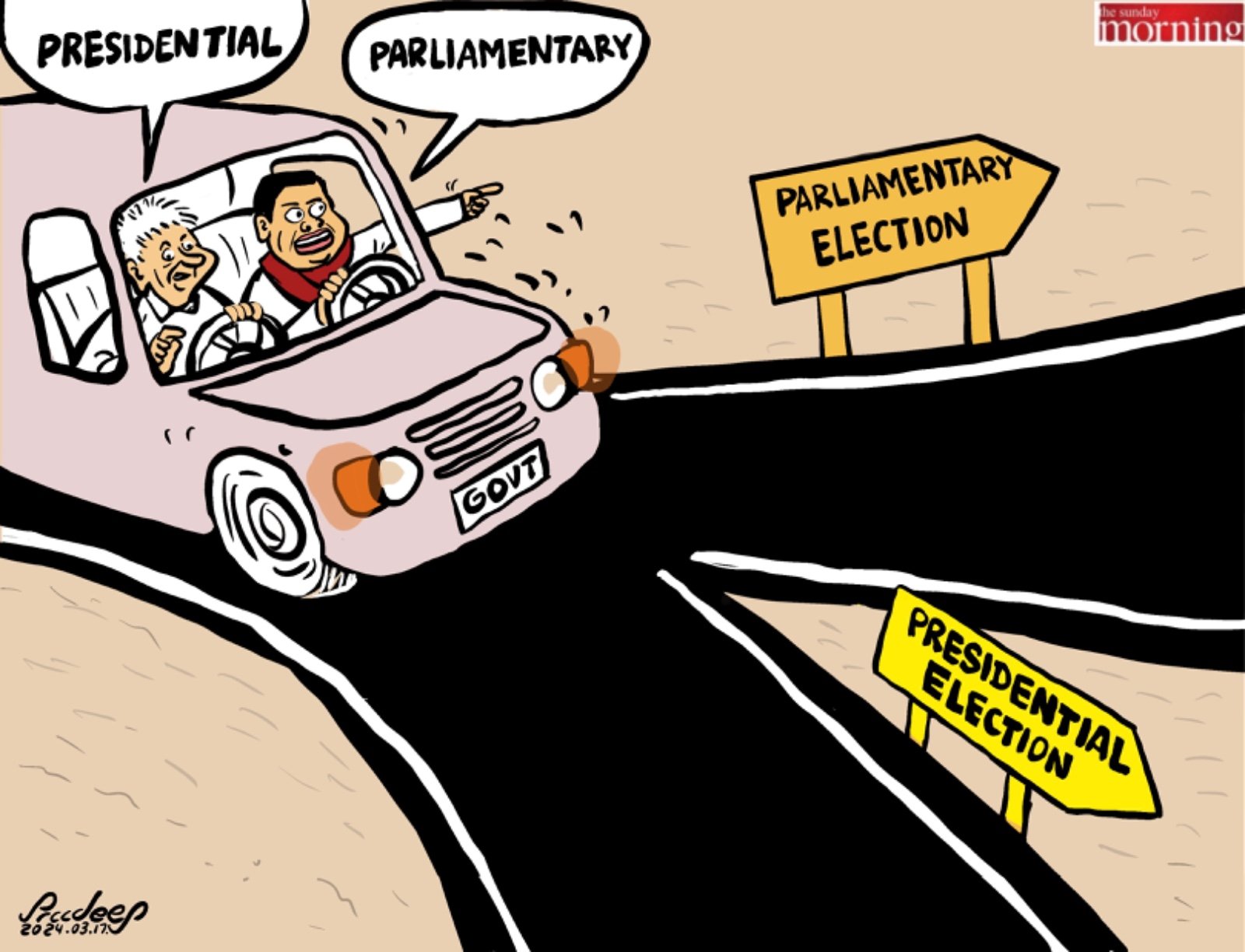
Wickremesinghe will avoid Presidential polls – Sunil Handunnetti

Despite differing opinions among Opposition parties, specifically the Samagi Jana Balawegaya (SJB) and the National People’s Power (NPP), there appears to be a shared consensus that the current President, Ranil Wickremesinghe, will not be entering the fray as a contender in the upcoming 2024 Presidential election.

Former MP and NPP Executive Council member Sunil Handunnetti, during a radio program recently echoed sentiments akin to those expressed by SJB’s S.M. Marikkar, stating his conviction that Ranil Wickremesinghe is likely to abstain from putting forward his nomination as a Presidential candidate.

“The public frequently cautions us about Ranil Wickremesinghe and his various strategies. Looking at his track record, he suffered a defeat in the 2005 election. Subsequently, he abstained from participating in the elections in 2010, 2015, and 2020. Even in 2010 and 2015, when the UNP was in a strong position, he chose not to enter the election. Considering the current significant setback the party is experiencing, is it credible to believe that he will willingly participate in an election at this juncture?” Handunnetti asked.

“He will certainly avoid the election,” Handunnetti maintained. However, the former MP expressed uncertainty about who would come forward instead of Wickremesinghe.

Handunnetti opined that if Wickremesinghe had any intention to contest, his behaviour would be significantly different from what it is now.

Posted in Uncategorized

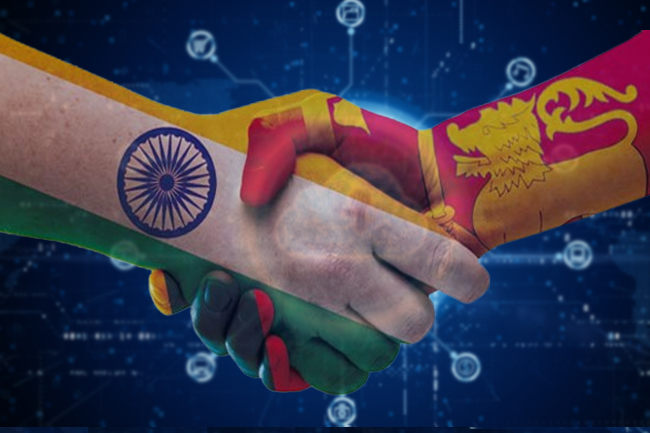
India to develop all-round cooperation with Sri Lanka

India has noted its abiding commitment to develop an even stronger all-round cooperation with Sri Lanka in line with India’s Neighbourhood First policy, with people being at the centre of this cooperation.

The High Commissioner of India to Sri Lanka Santosh Jha visited the prominent Gangaramaya Temple in Colombo to pray to the Lord Buddha for health, peace and prosperity of the people of Sri Lanka and India and the longstanding friendship between the two countries. The High Commissioner’s spouse, Mrs. Tanuja Jha also accompanied him for the visit.

At the Temple, the High Commissioner was welcomed by Venerable Dr. Kirinde Assaji Thero, the Deputy Incumbent of the temple. Venerable Dr. Kirinde Assaji Thero warmly recalled Prime Minister Modi’s visit to the temple in 2017, wherein he had inaugurated the International Vesak Day Celebrations.

Venerable Assaji Thero also shared his learnings from the times he studied in India, the land of Lord Buddha’s enlightenment, and underlined the importance of the civilisational ties between the two countries. He blessed High Commissioner Jha and Mrs. Jha by tying pirith noola on their hands after conducting the special Puja at the temple.

The High Commissioner stressed on the commitment of India’s leadership to strengthen multifaceted ties, especially the deep civilisational, historical, religious and cultural bonds. He also discussed with the Venerable Thero the current engagement of the High Commission of India in offering scholarships for the monks for their higher studies in India along with other developmental projects carried out to strengthen the Buddhist ties between both countries, including the recently signed MoU for solar electrification of religious temples under USD 10 mn Indian grant.

The High Commissioner reiterated India’s abiding commitment to develop an even stronger all-round cooperation with Sri Lanka in line with India’s Neighbourhood First policy, with people being at the centre of this cooperation.

Japan wants Sri Lanka to repay due for LRT cancellation to resume stalled projects

Japan has informed that in order to commence the stalled projects, Sri Lanka must repay due for the cancellation of Colombo Light Rail Transit Project (LRT).

The Japanese Finance Minister Suzuki Shunichi, who was on a two-day official visit to the island-nation has reportedly emphasized this, when he met President Ranil Wickremesinghe and the Opposition Leader Sajith Premadasa.

In March 2019, the Japanese government agreed to grant loan assistance of USD 1,800 million for the LRT system project which was to be implemented that year and completed by 2026, as a solution for the traffic congestion in the city of Colombo and its suburbs.

Japan International Cooperation Agency (JICA) had agreed to provide financial facilities under concessionary credit conditions while the Oriental Consultants Global Company of Japan had agreed to provide consultancy services in collaboration with several other companies.

On March 11, 2019, Japan and Sri Lanka signed the loan agreement and exchanged notes pertaining to the project, which had been designed to construct a 17km-long elevated rail track including 16 stations to cover important and major intersections from Malabe to Colombo Fort.

Under the project, it had been proposed to deploy 25 trains for the service and each unit was supposed to comprise four air-conditioned passenger compartments to accommodate 800 passengers.

The total estimated cost of the project was Japanese Yen 246,641 million, and JICA was to provide JPY 200,415 million (approximately USD 1,800 million) as a concessionary loan. The company had provided the facility of paying the said loan over a period of 40 years including a grace period of 12 years and the annual interest rate thereon was 0.1 percent.

However, in September 2020, the then-Cabinet of Ministers gave the nod to terminate the project citing heavy operating costs, and environmental damage among other reasons.

A report compiled by the National Audit Office in December 2022 revealed that Sri Lanka incurred a loss of Rs. 5,978 million after former President Gotabaya Rajapaksa-led government unilaterally terminated the LRT project.

In May 2023, the current Cabinet of Ministers decided to green-light the revival of the project days before President Wickremesinghe departed for Japan for an official visit. The decision was taken in a bid to restore Sri Lanka’s credibility with the international community.

13 A: Prez accused of abusing GR’s mandate

Dissident SLPP National List MP Gevindu Cumaratunga has accused President Ranil Wickremesinghe of blatantly abusing ousted predecessor Gotabaya Rajapaksa’s mandate.The lawmaker questioned UNP leader Wickremesinghe’s recent declaration in Jaffna regarding the 13th Amendment to the Constitution, enacted in 1988, at the behest of India.

MP Cumaratunga yesterday (12) told The Island that he raised the issue in Parliament early this week, close on the heels of President Wickremesinghe’s high profile visit to Jaffna.

The MP, with an impeccable patriotic pedigree, said that those who voted for Gotabaya Rajapaksa at the Nov 2019 presidential election and gave the SLPP a nearly 2/3 majority at the parliamentary election, the following year, endorsed the country’s unitary status. The Parliament elected Wickremesinghe to complete the remainder of Gotabaya Rajapaksa’s five-year term, Cumaratunga said.

Addressing a gathering in Jaffna, President Wickremesinghe urged all provinces to utilize the powers within the 13th Amendment to achieve development. President Wickremesinghe declared that time was opportune to utilize the 13th Amendment.

Referring to a recent statement made by the Director General of the Office for National Unity and Reconciliation (ONUR) Deepthi Lamahewa, MP Cumaratunga said that the official who had been always supportive of devolution of power to the regions criticized the Provincial Councils for hindering post-war national reconciliation process.

MP Cumaratunga, in his address to Parliament, quoted Lamahewa as having said that Provincial Councils were an obstacle to reconciliation process.

At the onset, lawmaker Cumaratunga pointed out that seven lawmakers, representing the Tamil National Alliance (TNA) and All Ceylon Tamil Congress (ACTC), voted against the ONUR Bill on January 09 even though the new law was meant to appease the Tamil speaking community. Parliament passed the Bill with 48 MPs (SLPP 45+SLPP dissidents 2 +SJB dissident 1) whereas seven opposed and 169 skipped the vote.

Commending Justice Minister Dr. Wijeyadasa Rajapakse, PC, for the spearheading role he played in enacting new laws, ONUR and new Hydrography Bills, MP Cumaratunga said that they owed an explanation why the Tamil voted against the Bill at its Second Reading.

MP Cumaratunga said that if Tamil parties felt that particular Bill required amendments, they could have followed proper procedure to do so at the Committee Stage. Instead, they voted against the Bill.

TMVP leader Sivanesathurai Chandrakanthan aka Pilleyan (Batticaloa District), formerly of the LTTE, voted for the Bill. Lawmaker Cumaratunga was not present in Parliament at the time of voting.

Ahead of the Committee Stage, lawmaker Cumaratunga told Parliament that when the Sectoral Oversight Committee (SOC) on Reconciliation and National Unity examined the ONUR Bill on January 02, 2024, he proposed that the appointment of members to the ONUR office should be subjected to the approval of the Constitutional Council. MP Cumaratunga proposed that those who had been proposed by the Justice Minister and appointed by the President should be subjected to CC’s approval.

However, the Chairman of the SOC on Reconciliation and National Unity MP Dilan Perera hadn’t presented his colleague’s proposal at the Committee Stage, therefore, it was not accommodated. MP Cumaratunga said that when he inquired from the Secretary to the SOC about the status of his proposal he was told the Secretary to the Justice Ministry had been duly informed in this regard.

MP Cumaratunga appreciated President Wickremesinghe, during his recent visit to Jaffna, giving ear to Jaffna-based civil society activist Arun Siddharthan, who wants to unite the races to fight the country’s problems, Lawmaker Cumaratunga, who is also the leader of the Yuthukama civil society group, flayed the Northern and Eastern Provincial Councils for failing to re-open at least one of the Sinhala schools that had been closed down during the war. The MP said that their failure to do so, 15 years after the end of the conflict, couldn’t be justified under any circumstances.

Posted in Uncategorized

AG tells COPF that Port City Commission cannot formulate duty-free rules for malls there

The Attorney General has informed the Committee on Public Finance (COPF) that the Port City Commission is not empowered to formulate duty-free rules for duty-free malls at the Colombo Port City.

This was revealed at a recent meeting of the COPF.The officials from the Port City Commission, who were present, owned up to the error and assured that the rules would be revoked by the end of this week.

However, the Port City Commission has already entered agreements with four investors based on these rules.

No official stepped forward to take responsibility.Given lack of clarity and accountability, the Committee was of the opinion that the aforesaid regulations had to be revoked forthwith.

The Committee directed the Ministry of Investment Promotion to identify the responsible party and asked them to outline measures to prevent similar errors in the future.

Such action was deemed essential to safeguard against potential discouragement of future investments, the committee said.

Furthermore, the Committee on Public Finance considered Gazette Extraordinary No. 2334/39, as per Section 24 of the Board of Investment (BOI) of Sri Lanka Law, No. 4 of 1978.

State Minister (Dr.) Suren Raghavan and Members of Parliament Patali Champika Ranawaka, Chandima Weerakkody, (Dr.) Nalaka Godahewa, Hon. Nimal Lanza, Premnath C. Dolawatte, Madhura Withanage, Mayantha Dissanayake, Rauff Hakeem, M. W. D. Sahan Pradeep, (Dr.) Major Pradeep Undugoda, Isuru Dodangoda were present at the Committee meeting held.