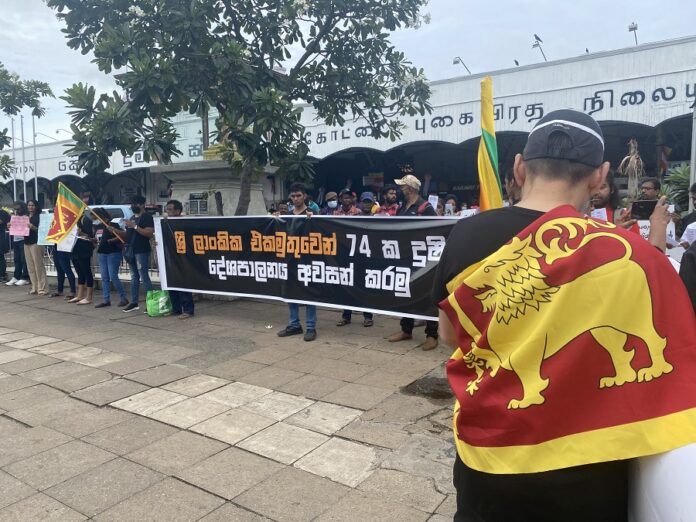
Sri Lanka has not had the benefit of a local Mahatma Gandhi, neither then, nor even today. So the country has to have a different model to India. The ideal model would be a collective leadership with a high level multiparty governing council for a period of time at least to chart a common economic program that sets some key parameters and strategies to set the country on a long term economic and social revival
There was no fight for . . . freedom which involved a fight for principles, policies, and programmes … No. It just came overnight. We just woke up one day and we were told, “You are a dominion now.” – S.W.R.D. Bandaranaike, Ceylon Prime Minister
(1956-1959)
Sri Lanka was declared bankrupt last year, 75 years after independence. The country owes more than it’s worth (or GDP) and its debt to GDP ratio is 120%. Its foreign debt is some $ 55 billion. It has hardly any foreign reserves that the country could call its own as borrowings are also included as foreign reserves. The country has been bailed out on several occasions by India, and China has loaned some $ 7 billion for infrastructure projects.
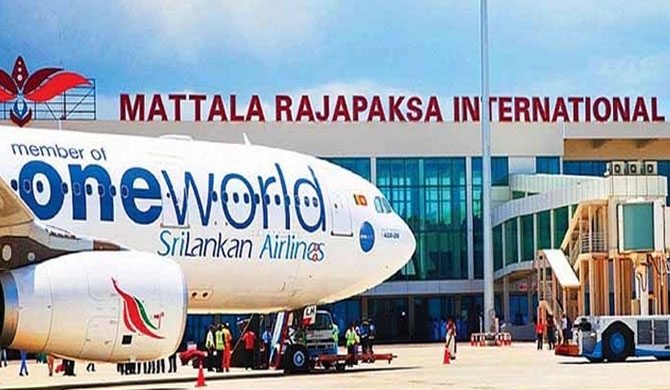
It has an airline that has been accumulating huge debts, $ 1 billion (https://www.ch-aviation.com/news/125137-colombo-to-take-on-srilankan-airlines-1bn-debt-official) and it has two other major government agencies with huge losses Ceylon Petroleum Corporation and the Ceylon Electricity Board. The Public Finance web page providing free and open access to public finance data and analysis states that during the first four months of 2022 the cumulative loss of State-Owned Enterprises (SOEs) amounted to Rs. 860 billion and that this figure outweighed the annual loss of SOEs in 2021. The top 3 contributors to the increase of the loss are listed as (1) Ceylon Petroleum Corporation (CPC) (2) SriLankan Airlines and the (3) Ceylon Electricity Board (https://publicfinance.lk/en/topics/total-soe-losses-in-the-first-four-months-of-2022-outweigh-annual-losses-in-2021-1660039438).
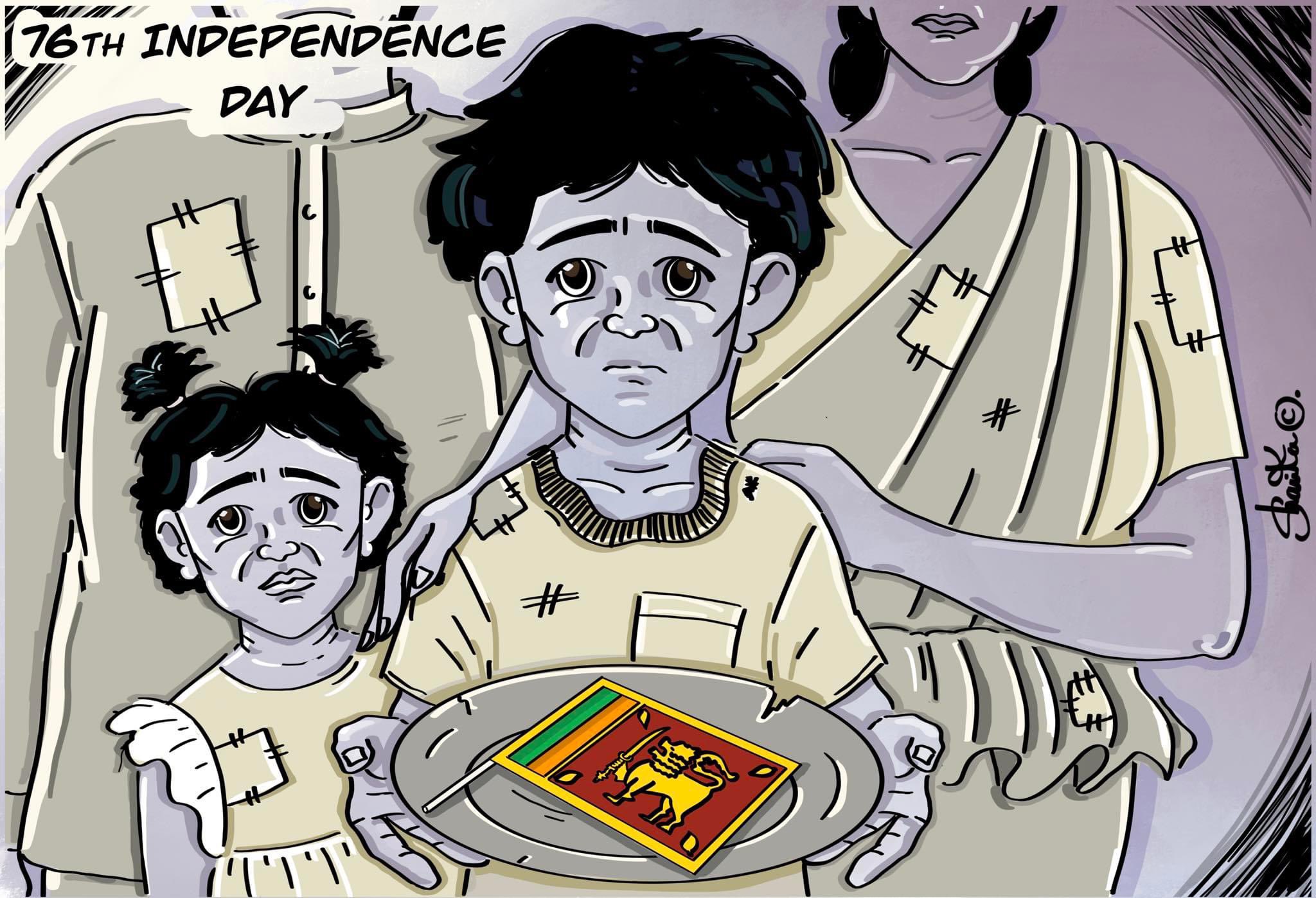
The country’s public health system is in crisis and so is the education sector. Poverty levels have increased as has malnutrition especially amongst children. Recent government income revenue measures have dealt a crippling blow to a huge segment of the society while many seem to opine that these measures are not equitable and hit those in the lower income scales far more than those at the higher levels.
Given this backdrop, what is there to celebrate? Instead, the country should be mourning what has befallen it in the hands of those who have governed it since independence in 1948. While the current Government has been making some unpopular decisions to arrest the country’s decline and has sought assistance from the IMF to provide some oxygen, no Opposition political party or a leader has offered specific alternate solutions as to how they would address these serious issues although their criticisms have been very loud. Reminds one of empty vessels.
This is the backdrop to the troublesome situation the country is in on its 76th independence anniversary. Despite this, in true “nava gilunath band chun” style (a reference to the sinking Titanic when the ship’s band kept playing while the ship was sinking), the country is celebrating the event!
What did the country achieve in 1948 and was there a universal feeling of being free?
The Oxford Academic, its International Journal of Constitutional Law, in an article authored by Rehan Abeyaratne and published on 21 January 2020, examines in detail the status of sovereignty in Ceylon’s Dominion period (1948–1972). He says that “unlike India and Pakistan, which experienced protracted and violent struggles for independence, and then appointed constituent assemblies to draft indigenous constitutions, Ceylon remained loyal to the British government in the 1940s. It achieved Dominion status through constitutional reforms negotiated by anglicised—and largely Anglophile—political leaders. This elite-driven process aimed to engender goodwill from the British government that would lead to greater concessions, culminating in the Ceylon Independence Act, 1947, which entrenched Dominion status” (https://academic.oup.com/icon/article/17/4/1258/5710838?login=false).
While Sri Lanka (then Ceylon) became “free” from British colonial rule on 4 February 1948, the status it had from then till 22 May 1972, was that of a Dominion within the British Empire. It retained the British sovereign as its own sovereign, and it took 24 years from then for Ceylon to be truly free politically when the country became a Republic on 22 May 1972. India became a Republic three years after they were granted dominion status in 1947.
Unacknowledged factors that influenced “independence”.
India’s freedom struggle
While it is known and well recorded that India, under the leadership of Mahatma Gandhi, carried out an unyielding fight for independence from Britain, there are no similar records of Sri Lankans (then Ceylonese) “fighting” for the country’s independence.
This is echoed by Dharmasiri Kariyawasam in his YouTube series titled “Kaarige Channel Eka” where he states that there are no similar records of Sri Lankans (then Ceylonese) “fighting” for the country’s independence as India did. In fact, if one were to go by the revelations made by Kariyawasam, even the leader subsequently named the Father of the Nation, had been content to settle for what one might call, a “dependent, limited, self-determination” where the elite in Sri Lanka would continue to rule Ceylon without any plans for a broad-based independent Ceylon.
b. The Atlantic Conference & Charter of 1941
Another little known or acknowledged factor that influenced and galvanised freedom fighters like Mahatma Gandhi to fight for independence in India was a particular development related to World War 2. This was the Atlantic Conference & Charter, 1941, a joint declaration released by the US President Franklin D. Roosevelt and British Prime Minister Winston Churchill on 14 August 1941, following a meeting of the two heads of government in Newfoundland. The Atlantic Charter provided a broad statement of US and British war aims (https://history.state.gov/milestones/1937-1945/atlantic-conf).
The Charter they drafted included eight “common principles” that the United States and Britain would be committed to supporting in the postwar world. These principles were.
1. No territorial gains were to be sought by the United States or the United Kingdom.
2. Territorial adjustments must be in accord with the wishes of the peoples concerned.
3. All people had a right to self-determination
4. Trade barriers were to be lowered.
5. There was to be global economic co-operation and advancement of social welfare.
6. The participants would work for a world free of want and fear.
7. The participants would work for freedom of the seas.
8. There was to be disarmament of aggressor nations and a common disarmament after the war.
As can be seen, a significant inclusion was that both the United States and Britain would be committed to supporting the restoration of self-governments for all countries that had been occupied during the war and allowing all peoples to choose their own form of government.
Although the Atlantic Charter of August 1941 was not a binding treaty, it was, nonetheless, significant for several reasons, amongst them, the right for self-determination. It is a widely published view though that Winston Churchill vehemently opposed the right for self-determination for countries as he felt that it would end British colonialism. It may be inferred that this is exactly what President Roosevelt had in mind!
Sadly, going on the current utterings by political leaders and the culture of promises rather than specific governance measures, and the refusal of political leaders to accept the repeated invitation by the President to meet and discuss a common program, it is very unlikely that there will ever be a climate in the country where the country comes before the self-interests of political leaders
A letter written by Mahatma Gandhi to President Roosevelt in 1942 expresses Gandhi’s concerns about the prevarication on self-determination by Britain. Mahatma Gandhi says “I venture to think that the Allied declaration that the Allies are fighting to make the world safe for the freedom of the individual and for democracy sounds hollow so long as India and for that matter Africa are exploited by Great Britain”. Although it is reported that Roosevelt went soft on self determination to accommodate Churchill and the broader goal of the Charter itself, ultimately it did serve as an inspiration for colonial subjects throughout the Third World, from Algeria to Vietnam, including India and Sri Lanka, as the stage was set primarily by President Roosevelt, for colonialism to end.
The acknowledgment that all people had a right to self-determination gave hope to independence leaders in British colonies. Historian Caroline Elkins said, “The independence genie was out of her bottle, and it was the Atlantic Charter that had set her free.
The future
The objective here is not to discuss or debate the lesser or greater efforts of leaders at the time regarding their efforts to gain independence for the country. It is history.
It is really to present a view that unlike in India where the sense of nationalism brought together leaders and ordinary folk of India of all faiths and stations in life in a common cause, the Sri Lankan effort was limited more or less to an English educated affluent few, many of whom were at times referred to as being more British than the British. Keeping in mind the fact that only around 5% of the population was conversant with English then, the absence of inclusiveness appeared to have been a designed strategy to keep the reins of power amongst that select few. Despite several drawbacks, the Indian sense of nationalism has persisted and grown making it a country that has a nondependent, self-reliant psyche built into its inner core.
Such a psyche never developed amongst Sri Lankans, and dependency, rather than real independence has instead become its inherent psyche. Self-determination was not a goal perhaps for most people as they did not know what it meant. Hundreds of years under the reign of Kings and Queens, followed by over four centuries of colonial rule would have made the general populace, subservient and ignorant of the meaning of nationalism.
It appears that the only time the country rises as one nation with a deep sense of nationalism is during the game of international cricket. This is so whether it happens in Sri Lanka or overseas, and Sri Lankans throughout the world have cheered for the Sri Lankan cricket team.
Sri Lanka has not had the benefit of a local Mahatma Gandhi, neither then, nor even today. So the country has to have a different model to India. The ideal model would be a collective leadership with a high level multiparty governing council for a period of time at least to chart a common economic program that sets some key parameters and strategies to set the country on a long term economic and social revival. What are the parameters?
They can be (a) An agreed target for GDP growth and per capita income over an agreed period (b) a debt to GDP ratio that should be agreed and not exceeded (c) a target for export earnings and an agreed common program to achieve such a target (d) a rupee revenue target and an agreed expenditure projection as a percentage of the income (e) An agreed tax and revenue raising policy and structure that is equitable, and which includes introduction of penalties for non-disclosure and nonpayment of taxes (f) an agreed infrastructure development program based on need and not want, with a clearly defined return on investment and which may be funded by long term, low interest bilateral loans or similar borrowings from international agencies like the World Bank, BRICS, ADB (g) the creation of a future fund with two components, one for foreign exchange and the other for rupees. Such a fund should only be used for emergency situations with the approval of the above-mentioned high level multiparty governing council.
Sadly, going on the current utterings by political leaders and the culture of promises rather than specific governance measures, and the refusal of political leaders to accept the repeated invitation by the President to meet and discuss a common program, it is very unlikely that there will ever be a climate in the country where the country comes before the self-interests of political leaders.
A strategy to show public displeasure with political parties – Register a protest vote
Perhaps the voters should either not vote at the next election or spoil their votes when voting to register their displeasure with the political parties, and their leaders unless very specific governance policies and very specific measures as to how their policies are to be achieved are publicly announced by them at least three months before an election for the Presidency and the general election. If a sizable majority of people were to do this, it would send a message to the political leaders and their political parties that they are not wanted, and it could give rise to a new breed of political leaders and political parties untainted by failure, corruption and lack of strategic thinking and action. All the key political parties and their leaders today have had their stints in governments, from the Presidency to cabinet ministerships. It is the same lot that is asking the people for their vote once again to acquire power without specific policies and without specific strategies to achieve their objectives. A serious question does arise as to why people should vote them in and continue with the charade of 76 years.
People have been fooled enough with false promises and these leaders should know they cannot be fooled all the time. The truth needs to be told as to where the country is today and how the decline may be arrested and how growth and prosperity may be ushered in at least for the future generations.