SriLankan Airlines Suffers USD 6 Million Loss Due to Recent Flight Delays

SriLankan Airlines has reported a substantial loss of USD 6 million attributed to recent flight delays. Minister of Ports and Aviation, Nimal Siripala De Silva, announced this development today, shedding light on the financial impact of these disruptions.

Minister De Silva revealed that the airline’s losses were directly linked to the recent delays experienced in eight flights, which caused substantial inconvenience to passengers and incurred significant financial repercussions. These delays have come at a challenging time for the airline, further exacerbated by the ongoing economic constraints.

He emphasized the grim financial reality by stating that, under the current circumstances, there is no room for granting allowances or salary increases to the airline’s employees. This statement underscores the financial strain that SriLankan Airlines is currently facing.

In response to these challenges, Minister De Silva unveiled a strategic decision aimed at mitigating losses and safeguarding the interests of SriLankan Airlines. The plan involves allowing other airlines to operate some of the carrier’s flights under the ‘5th freedom of the air’ framework. This measure is intended to optimize flight operations and minimize losses while still preserving the rights and integrity of SriLankan Airlines.

Recent times have seen a series of flight delays and cancellations by SriLankan Airlines, often attributed to technical or other operational issues. These disruptions have caused inconvenience to travelers and financial losses to the national carrier.

In light of these setbacks, SriLankan Airlines publicly extended its apologies to affected passengers in the recent past, acknowledging the impact of these flight interruptions. However, the airline now faces the challenging task of overcoming these operational hurdles and navigating the complex aviation landscape to regain its financial stability.

Supreme Court issues notice on Election Commission members

The Supreme Court today (02) ordered to once again issue notice on the new chairman and the members of the Election Commission to appear before the court.

This order was issued by a five-member Supreme Court bench, when the petitions seeking an order declaring that the fundamental human rights of the people have been violated by the failure to hold the 2023 LG election on March 09, 2023, as previously scheduled, and to issue an order to the election body to hold the relevant election on time, were taken up for consideration today (02).

The petitions were filed by the National People’s Power (NPP), Samagi Jana Balavegaya (SJB), the Centre for Policy Alternatives and the People’s Action for Free and Fair Elections (PAFFREL), naming the Chairman and the members of the election commission as respondents.

Chief Justice Jayantha Jayasuriya, Justices Priyantha Jayawardena, Vijith Malalgoda, Murdu Fernando and Gamini Amarasekara had comprised the five-member judge bench which issued this order.

There, President’s Counsel Nigel Hatch, who appeared on behalf of the NPP, requested the court for an early date for hearing of the petition since the fundamental human rights of the people are violated by the postponement of the election.

At the time, the Chief Justice mentioned that although the hearing of the relevant petitions was scheduled to be held today, a situation had arisen where it is not possible to carry out the hearing due to the fact that the petitioners had not properly issued notice to the respondents.

The Chief Justice further emphasized that not only the petitions related to the local government polls but also the facts related to each and every petition presented to the court will be considered in depth.

Accordingly, the judge bench ordered the petitioning party to issue notices to the new members of the Election Commission and former member of the commission P.S.M. Charles, who were added to the list of respondents of the petitions, within a period of one week.

Later, the relevant petitions were ordered to be recalled for hearing on November 21, 22, 29, 30 and December 01, 2023.

Posted in Uncategorized

HRCSL’s dire warning against the proposed ‘Online Safety Bill’

In a letter penned by Chairman of the the Human Rights Commission of Sri Lanka (HRCSL) former Supreme Court Judge Lakshman Tikiri Bandara Dehideniya, the Government has been urged to exercise caution in its approach to the proposed Online Safety Bill (OSB). The letter, addressed to Minister of Public Security Tiran Alles, emphasises the importance of safeguarding fundamental rights while addressing the challenges posed by online spaces.

The HRCSL’s recommendations touch on critical aspects of the bill, including the misapplication of existing laws, concerns over political independence, and the need for clear criteria in classifying online accounts. One of the most striking points in the letter is the acknowledgement of the significance of making online spaces safer for Sri Lankans. While the objective is laudable, the HRCSL underscores the challenges faced by law enforcement authorities in interpreting and applying current criminal laws to online activities.

The misapplication of section 3 of the International Covenant on Civil and Political Rights (ICCPR) Act, No. 56 of 2007, is cited as a prime example, raising doubts about its effectiveness in addressing online incitement to violence and the potential for stifling free speech. Despite previous notifications to authorities regarding this issue, the misapplication of the ICCPR Act continues, as evidenced by a recent High Court case. These concerns have led the HRCSL to propose a reconsideration of the timing of the OSB.

The HRCSL argues that strengthening the institutional capacity of law enforcement authorities should precede the introduction of new legislation, highlighting the risk of jeopardising freedom of speech and expression without such reforms. The HRCSL has also presented a series of general observations and recommendations aimed at ensuring that the OSB aligns with the fundamental rights chapter of the constitution. These include refraining from criminalising statements deemed merely “distressing,” ensuring the political independence of the proposed Online Safety Commission (OSC), and revising procedures to afford individuals an opportunity to be heard.

Additionally, the letter notes the need for clear criteria in classifying ‘inauthentic online accounts’ while preserving online user freedoms and cautions against vesting police powers in private actors assisting investigations. HRCSL plans to engage with relevant stakeholders to further refine its observations and recommendations on the proposed OSB. In doing so, the HRCSL aims to strike a balance between online safety and the protection of fundamental rights in Sri Lanka’s evolving digital landscape.

Do not raise third party concerns with US-SL tells USA, Japan

Sri Lanka has informed the United States and Japan to have direct dialogue regarding matters of their own geopolitical concerns but not those of any third party, Daily Mirror learns.

Daily Mirror reliably learns that Foreign Minister Ali Sabry conveyed such a message to these countries when he met with their representatives including U.S. Under Secretary of State Victoria Nuland in recent times.

The minister had a series of bilateral engagements on the sidelines of the UN General Assembly.

Mr. Sabry is reported to have requested these countries to raise their concerns on any matter directly but not those of any third country.

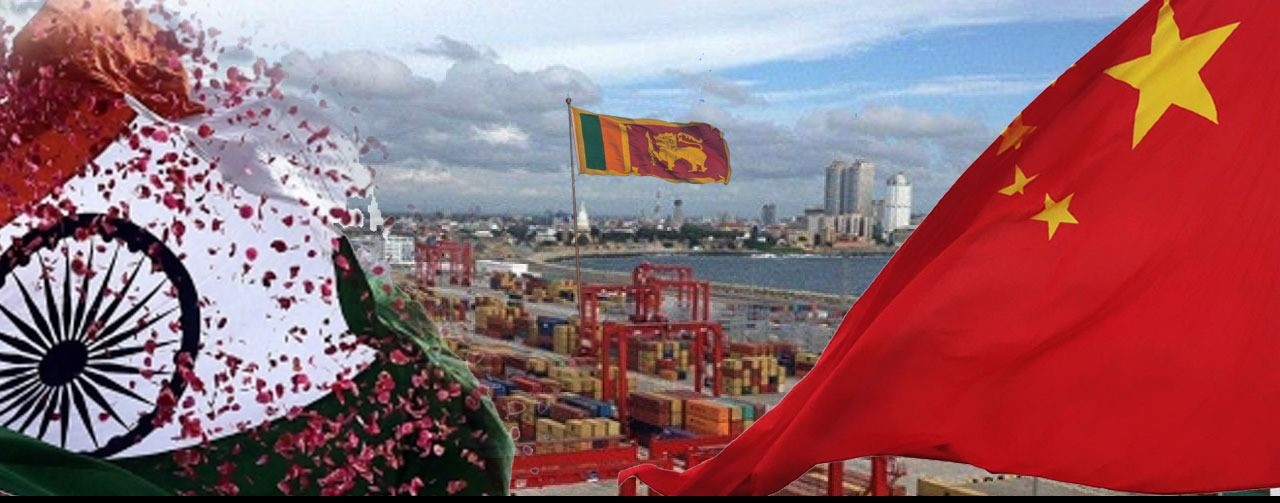
Sri Lanka is currently under trilateral pressure involving India, Japan and the U.S. over the planned visit of the Chinese research vessel ‘Shi Yang 6’.

China insists that the ship visit should take place in October though Sri Lanka wants it to be deferred till November.

Posted in Uncategorized

Jaffna University teachers’ union condemns intimidation of judges, administrators

Judges and administrators who refuse to support or connive with the Sinhala-Buddhist agenda face intimidation and come under heavy political duress, the University of Teacher’s Association University of Jaffna has said in a media statement.

Full text of the statement:Judge T. Saravanarajah, District Court Judge of Mullaitivu, has resigned from all his positions in the judicial system and fled the country amidst threats to his life and political pressure from the top. This development has caused shock and despair among those who value justice and democracy. It also demonstrates the extent to which the independence of Sri Lanka’s judicial system has been undermined.

Judge Saravanarajah openly condemned the illegal nature of the archaeological excavation carried out in Kurunthurmalai with the Sinhala-Buddhist nationalist agenda and issued rulings that are considered fair. He also ruled in defense of people’s right to memorialization, whenever there were attempts to abort commemoration events organized by the Tamil community.

Recently, extreme Sinhala nationalist forces in the South launched a hate campaign and issued threats against this judge who is widely perceived as a person of integrity and great courage. Not so long ago, Mr. Sarath Weerasekara, Member of Parliament representing the Colombo district, made vituperative statements against the judge.

Judge Saravanarajah has mentioned in his letter of resignation the threats on his life and the pressure he faced. It is reported in the media that the Attorney General summoned Judge Saravanarajah to his office on the 21st of September 2023 and, in the guise of advising the judge, exerted pressure on him to change his ruling in the Kurnthurmalai issue. If a judge who carried out his responsibilities in line with the law of the land is facing such an unsettling, dangerous situation, what is the predicament of the minority communities who face and resist racism on a daily basis?

The University of Jaffna Teachers’ Association strongly condemns the intimidation and the hate campaign against Judge Saravanarajah and the pressure applied on him to prevent him from discharging his responsibilities in an independent manner. The Association demands that all those who are involved in the hate campaigns and the acts of interference and intimidation against the judge be held accountable.

The Association notes with dismay that the judicial system in the North-East of Sri Lanka is afflicted with intimidation and political interference today. The Sinhala-Buddhist agenda of the state is the root cause of the threats that the judges who serve the courts in the North-East are subjected to. Sinahalizing and Buddhisizing this region where the Tamil and Muslim communities form the majority population and blocking memorialization events of the Tamil community are central to this agenda.

Judges and administrators attached to the public sector who refuse to support or connive with this agenda face intimidation and come under heavy political duress. It is important to recognize that as long as Sinhala-Buddhist chauvinism reigns supreme, the independence of the judicial system and the administrative services in the North-East will be under threat. It is vital that progressive forces on the island rally together across ethnic, religious and regional divides against this chauvinism and work towards ensuring the equal coexistence of all communities.

Posted in Uncategorized

IMF recommends 16 priority areas to improve Sri Lanka governance

The International Monetary Fund’s (IMF) corruption-busting governance diagnostic report compiled by the recently concluded IMF mission has made 16 Priority Recommendations for Sri Lanka to improve the island nation’s governance system, IMF sources divulged.

Sri Lanka is the first country in Asia to undergo an IMF governance diagnostic under the global lender’s key structural reform to address corruption vulnerabilities and enhance growth.

The Sri Lanka Governance Diagnostic Assessment September 2023 by the IMF mission has revealed that social tensions remain high in the island nation due to falling real incomes.

This is despite tentative signs of macroeconomic stabilization with inflation moderating, exchange rate stabilizing, and the Central Bank of Sri Lanka (CBSL) rebuilding reserves buffers.

It adds that the government measures to address the balance of payment crisis, including tax reforms and cost-recovery pricing in the energy sector, have raised the cost of living.

Posted in Uncategorized

Pro-China Candidate Wins Maldives Election

The Maldives, a strategically located country in the Indian Ocean, has elected a pro-China president, Mohamed Muizzu. This is a major setback for India, which has traditionally been the Maldives’ closest partner.

Muizzu, who ran on a platform of closer ties with China, defeated the incumbent president, Ibrahim Mohamed Solih, who had strengthened relations with India. Solih’s defeat is seen as a sign of China’s growing influence in the region and a setback for India’s “India First” policy.

The Maldives is located in a key maritime chokepoint, and both India and China are vying for influence in the country. India has long sought to maintain its presence in the Maldives in order to monitor its maritime borders and keep its rivals at bay. China, with its rapidly expanding naval forces, also wants access to such a strategically important location.

In recent years, China has made significant investments in the Maldives, including infrastructure projects such as ports, bridges, and airports. China has also provided the Maldives with military aid and training.

The election of a pro-China president in the Maldives is likely to lead to a further shift in the country’s foreign policy. It is possible that Muizzu’s government will allow China to deploy military assets in the Maldives, which would be a major concern for India.

The election of a pro-China president in the Maldives is a significant development that will have implications for the security of both India and China in the Indian Ocean. It is important to note that the Maldives is not the only country in the region where China is making inroads. China is also expanding its influence in other countries such as Sri Lanka, Bangladesh, and Myanmar. This is part of China’s broader strategy to increase its influence in the Indo-Pacific region.

India is facing a major challenge in countering China’s growing influence in the Maldives and other countries in the Indian Ocean. India will need to work with its allies and partners to develop a coherent strategy to deal with China’s growing assertiveness in the region.

Posted in Uncategorized

Sri Lanka – Nation Building, Devolution and the 13th Amend Dr. Lionel Bopagement – Part II

A historical perspective

Devolution in Sri Lanka is a story of missed opportunities. The armed conflict ended in 2009, but the political conflict has not. A settlement to the political conflict can be achieved only by offering a share of state power to all communities within a framework of democratic governance. Many Sri Lankans in the country and overseas are yet to be convinced of this requirement.

Sri Lanka is an overwhelmingly stagnating unitary state. In 2018, one of the former Auditor Generals stated that Sri Lanka was ranked the topmost country in terms of public sector misappropriation and corruption. The country’s parliamentary system has neglected its primary responsibilities of formulating policies, enacting laws and implementing transparent public financial systems. And the general public, ignorant of facts due to misinformation and deception, has repeatedly elected a set of crooks who have used ‘rule by law’, instead of ‘rule of law’ to maintain their autocratic rule.

All of these led to catastrophic consequences for the people in recent times. In 2022, the ‘ARAGALAYA’ protests ousted the last elected Sri Lankan President. With the severe shortage of essentials and defaulted debt payments, the country has encountered a poly-crisis. Despite the assurances made by the installed President Ranil Wickremasinghe, many people continue to suffer terribly. Those who can leave the country are leaving in droves, looking for greener pastures.

From schools and hospitals to the justice system and utility services, much of the country’s administrative functions have come to a grinding halt. Corruption, mismanagement, wastage, political patronage, and a lack of transparency and accountability that have prevailed for the last four decades contributed to a combined economic and political firestorm. The Rajapaksas, who are responsible for aggravating the crisis to its epic proportions are waiting in the wings to regain power by tacitly supporting the president they installed. They are rebuilding their chauvinist fundamentalist bases, utilizing whatever opportunities and resources they can get their hands on to divide the society and capture power.

District Development Councils – a history

In 1977, the JR Jayewardene regime introduced an open economy and provided commercial interests the opportunity to invigorate the private sector. However, this intensified social contradictions due to the general public not given opportunities to enjoy the positive outcomes offered by the expanding economy. Many, particularly among the Sinhala majority population, felt left behind. The Tamil people in the Northeast also felt frustrated as the economy opened up almost overnight to international competition. The importation of chilies, onions, staple foods, etc from India destroyed their major means of living – agriculture. They have been demanding better opportunities for upward social mobility and a greater share of national productivity growth.

This demand has a history running back to the days of the Legislative Council in 1926, where the possibility of a second tier of government was discussed. The issue was again discussed at the Donoughmore Commission of 1928. It had recognized the need for decentralization of powers so that much of the administrative work carried out at the centre could be performed more directly at the local level, leaving the government to concentrate on the macro affairs of running the country. The Commission also pronounced its proposals for Provincial Councils. Those proposals also suggested that “the special views of the different races predominant in the different parts of the island” might have an effect “in the administration of these parts.” Unfortunately, the recommendations regarding Provincial Councils were not implemented. This was possibly due to the opposition of politicians and bureaucrats, who were not willing to share their authority with those in the provinces or districts.

A large segment of the Tamil community increasingly felt the only effective solution to address their right to self-determination was to form their own autonomous state – Tamil Eelam. For this they gave an overwhelming mandate to their political leadership, the Tamil United Liberation Front(TULF), at the August 1977 General Elections. Socially, economically and politically the country was facing a chaotic and disintegrating situation. And the Jayawardene regime resorted to more authoritarian ways of enforcing its dictates. In 1981, the Jayawardene regime established District Development Councils (DDCs) for each administrative district as a supposed instrument of devolution.

However, the DDCs were politically toothless. They could not independently attend to matters under their jurisdiction as there was no separate administrative mechanism established to allow them to function. So, the DDCs had to depend on the bureaucracies of the local and central government agencies and resources to do their work[1]. In practice, this system helped the Sinhalese political elite to garner more influence in district administration, creating another state tier to muster and sustain political party patronage[3]. In addition, the Ministers of the then government overpowered the DDCs, impeding the activities that fell under their jurisdiction. If the JVP (Janatha Vimukthi Peramuna) experience is anything to go by, the DDCs did not have any powers of financial management. Frustrated with its incapability, the Chairman of the Jaffna DDC thew it away in July 1983[3].

The first remedy that allowed for devolution, since the unilateral abrogation of the Bandaranaike-Chelvanayakam (B-C) pact and the Dudley-Chelvanayakam (D-C) pact, was imposed under the auspices of the Indian Government in 1987. Since then, the Thirteenth Amendment has been in the Constitution for nearly three and a half decades without being fully implemented. Starting with the Jayawardene regime, all regimes have resolutely held absolute control over land and police powers. They even seriously restricted financial powers of Provincial Councils. This is despite many complaints made by the Provincial Councils that they do not have any real administrative control over their regions and do not have enough money even to buy the essential necessities of those councils.

History of constitutional amendments

Currently the executive, the legislature, provincial councils and the local governments of the country have about 10,000 elected and nominated representatives. They are supposed to address the socio-economic, political and multicultural issues of the entire country. However, the governance system has become a complete failure. Moving from crisis to crisis, the authoritarian, centralised, non-accountable governance system has plunged the country into the current poly-crisis. This system is accompanied by corruption, wastage, mismanagement, and impunity for those who commit terror and violence to protect the ruling elite. This debasement and mortification continue to prevail in every nook and cranny of the country.

Let us examine the last four amendments made to the Constitution of Sri Lanka. The good governance regime elected in 2015 enacted the 19th Amendment but was not fully committed to implementing it with sufficient responsibility and speed. Despite the election pledges made in 2015 to abolish the authoritarian powers acquired by the previous Rajapaksa regime, President Maithripala Sirisena and Prime Minister Ranil Wickremasinghe did not have the political will to bring it to fruition in any meaningful way.

This situation paved the way for the 20th Amendment enacted in 2020. It allegedly crippled the whole audit process that was there to ensure accountability and transparency to public financial transactions. A Parliamentary Council was to be introduced that could make observations regarding appointments to independent commissions. However, the president wielded total discretion in making those appointments. Later, the 21st Amendment was enacted to restore the executive presidency’s powers and perks taken away by the 19th Amendment.

Then the 22nd Amendment was brought intending to reduce certain powers granted to the president under the 20th Amendment by re-establishing a Constitutional Council. It, too, allowed the president to hold defence and any other portfolio he wished to hold. However, it did not significantly impact the powers vested in the President, as was evident from the now-President Ranil Wickremesinghe’s unpresidential behaviour during the last two years. Failure to curtail the excessive power in the executive presidency has proven to be disastrous for the country’s economy and the rule of law.

To be continued..

Panel recommends Indian Citizenship for Sri Lankan refugees in Tamil Nadu

A panel appointed by the Tamil Nadu Government has proposed granting Indian Citizenship for Sri Lankan refugees in Tamil Nadu.

The panel appointed to address the issues of Sri Lankan Tamils living in the State has submitted its interim report to Chief Minister M.K. Stalin.

The report outlines recommendations for granting Indian citizenship to Sri Lankan nationals living in Tamil Nadu and explores legal pathways for their integration.

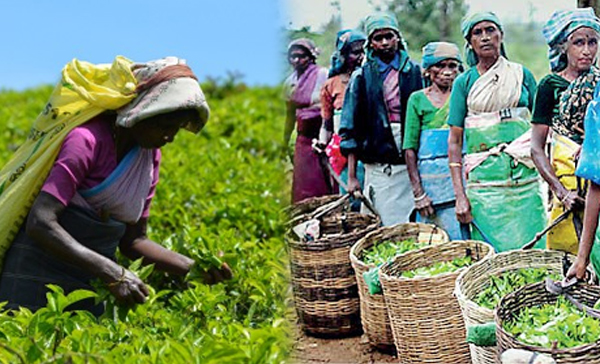
Among the proposals are pathways to citizenship, steps for their smooth integration into Tamil Nadu society, and the development of a repatriation package. The report emphasizes the strong case for approximately 5,000 Indian-origin Tamils who were brought to Sri Lanka by British colonial authorities to work in tea plantations.

Additionally, it categorizes Sri Lankan Tamils into six groups based on their entry into India and explores citizenship options for each group.

The Minister for Non-Resident Tamils Welfare, Gingee K.S. Masthan, presented the report, which involved migration and refugee experts as well as representatives from UNHCR.

Sinopec increases fuel prices

SINOPEC has announced a revision of their fuel prices effective from 6.00 p.m. today (Oct. 01).

Accordingly, the price of 92 Octane Petrol remains unchanged at Rs. 358 per litre, while the price of 95 Octane Petrol has been increased by Rs. 06.

The price of Auto Diesel has been increased by Rs. 10 and Super Diesel by Rs. 61, with effect from 6.00 p.m. today, according to SINOPEC Energy Lanka Pvt Ltd.

The revised prices are as follows:

92 Octane Petrol – Rs. 358 (remains unchanged)
95 Octane Petrol – Rs. 420 (increased by Rs. 06)
Auto Diesel – Rs. 348 (increased by Rs. 10)
Super Diesel – Rs. 417 (increased by Rs. 61)

Posted in Uncategorized