Tamil Nadu CM Stalin Urges Immediate Release Of 17 Fishermen Arrested By Sri Lanka

Flagging the arrest of 17 Tamil Nadu fishermen by Sri Lanka, Chief Minister M K Stalin on Thursday urged the Centre to secure their immediate release.

Writing to External Affairs Minister S Jaishankar, Stalin said, “earlier today, three mechanised boats and 17 Tamil Nadu fishermen were apprehended by the Sri Lankan Navy, allegedly for crossing the International Maritime Boundary Line (IMBL) into Sri Lankan waters.”

Stalin requested him to take up immediate diplomatic efforts to secure their release. “These fishermen, who rely on fishing as their primary and sole source of livelihood, sometimes find themselves unintentionally drifting into Sri Lankan waters due to the absence of clear demarcation and navigational challenges.”

Recurring incidents of apprehension of Tamil Nadu fishermen by Sri Lankan Navy continues to aggravate the atmosphere of fear and uncertainty among fishermen. The arrest of fishermen by Sri Lankan Navy has escalated tensions, disrupted lives, and caused economic hardship to the fishermen and their families.

The CM reiterated his demand for a lasting diplomatic solution to bring peace in the lives of thousands of Indian fishermen.

Posted in Uncategorized

Citing ‘inadequate progress’ on rights front, India urges Sri Lanka to keep its promises

India on Tuesday said the progress made by Sri Lanka, on its commitment to fulfil the Tamils’ aspirations, was “inadequate” and urged the island nation to “work meaningfully” to keep its promises.

“We have taken note of reaffirmation by the Government of Sri Lanka on implementation of its commitments. However, progress on the same is inadequate and we urge the Government of Sri Lanka to work meaningfully towards early implementation of its commitments to ensure that the fundamental freedoms and human rights of all its citizens are fully protected,” India’s representative told the UN Human Rights Council in Geneva at its ongoing 54th session.

The position was consistent with New Delhi’s remarks last year, that voiced concern over the “lack of measurable progress”.

Unresolved Conflict

India’s intervention at the ‘Interactive Dialogue’, comes in the wake of the latest report of the Office of the United Nations High Commissioner for Human Rights (OHCHR) on ‘Promoting reconciliation, accountability, and human rights in Sri Lanka’. Fourteen years after the civil war ended, Sri Lanka is far from reconciling the ethnic conflict that triggered it.

If the country’s past is troubled, its present is marred by last year’s devastating financial meltdown that has left over half its population vulnerable.

The High Commissioner’s office sought to highlight both the challenges. Addressing the Council on Monday, Nada Al-Nashif, the UN Deputy High Commissioner for Human Rights said one year after the “remarkable protest movement” — the Janatha Aragalaya that ousted the Rajapaksas as the island’s economy crashed dramatically — demanding deep political and democratic reforms, the transformation “has still not materialised”.

Pointing to soaring poverty levels and the enduring impact of the crisis, she said an estimated 37% of households faced acute food insecurity.

Further, the top UN official underscored the limits placed on citizen’s political participation and free expression, owing to the delays in holding local government elections, and in reconstituting Provincial Councils under the 13th amendment to the Sri Lankan Constitution.

India, too, reiterated its position on power devolution, citing its “two guiding principles” of support to the aspirations of Tamils for equality, justice, dignity, and peace; and to the unity, territorial integrity, and sovereignty of Sri Lanka. “We hope that the Government of Sri Lanka will fulfill the aspirations of Tamils for equality, justice and peace and its commitment to implement the Thirteenth Amendment and conduct Provincial Council Elections to ensure a life of respect and dignity for Tamils in Sri Lanka,” the Indian diplomat said.

The UN official also highlighted escalating tensions in the island’s north and east, due to land acquisition “for expansion of military installations, Buddhist heritage conservation at Hindu or Muslim sites, and forestry protection.

At the ongoing session, the Council will not vote on a Sri Lanka resolution but is reviewing the island’s own commitments. While the High Commissioner’s report said it “recognises” the Sri Lankan government’s initiatives in regard to truth-seeking and reconciliation, it stressed that “urgent confidence-building steps” are needed for “genuine reconciliation and transitional justice process” to succeed. The Sri Lankan government rejected the report, and termed earlier resolutions of the Council “intrusive and polarising”.

China’s ‘Shi Yan 6’ research ship ready for Indian Ocean expedition

The Chinese geophysical scientific research vessel Shi yan 6 (Experiment 6) is set to head for an expeditionary voyage in the eastern area of the Indian Ocean, departing from Guangzhou, south China’s Guangdong Province, on Sunday.

Organized by the South China Sea Institute of Oceanology (SCSIO) under the Chinese Academy of Sciences, the vessel is scheduled to operate at sea for 80 days with 28 scientific research projects from 13 research teams onboard, covering a range of more than 12,000 nautical miles (roughly 22,200 kilometers).

The voyage, based on multidisciplinary observations, aims to obtain a large amount of basic data for revealing the mechanisms by which dynamic processes affect biogeochemical cycles, ecosystems and sedimentary processes in that region, clarifying the geographical pattern of biodiversity in the study area, uncovering the response and indicative role of biological communities to physical processes, as well as understanding paleoclimate changes, Wang Weiqing, chief scientist of the expedition, told China Media Group.

An observation system will be deployed in the key observation area to study the current system in the local topographic evolution and its relationship with seabed sediments and geology, said Wang.

The voyage is also expected to strengthen scientific research cooperation and exchanges with countries along the Maritime Silk Road and further realize the integration of science and education to serve the Belt and Road Initiative, said Lin Qiang, project leader and deputy director of SCSIO.

With a total investment of over 500 million yuan (about $77 million), Shiyan 6 is hailed as one of the main forces of China’s 3,000-tonne vessels for deep-ocean scientific research.

The ship, measuring at 90.6 meters long and 17 meters wide, harbors an open operation deck area of more than 600 square meters and can carry a 60-member crew for 60 days at sea.

Source: CGTN

HRCSL seeks copy of new anti-terrorism bill for observations

The Human Rights Commission of Sri Lanka (HRCSL) requested President Ranil Wickremesinghe to submit a copy of the Bill titled ‘Anti-Terrorism’, which the Cabinet of Ministers had approved recently, a statement from the Commission said.

The Commission stated it understands that the said Bill is a revised version of the Bill previously gazetted on March 17, 2023.

The HRCSL had also sent its observations and recommendations on the Bill gazetted in March 2023.

It expects to send further observations and recommendations on the revised Bill upon receiving a copy of the new version.

Posted in Uncategorized

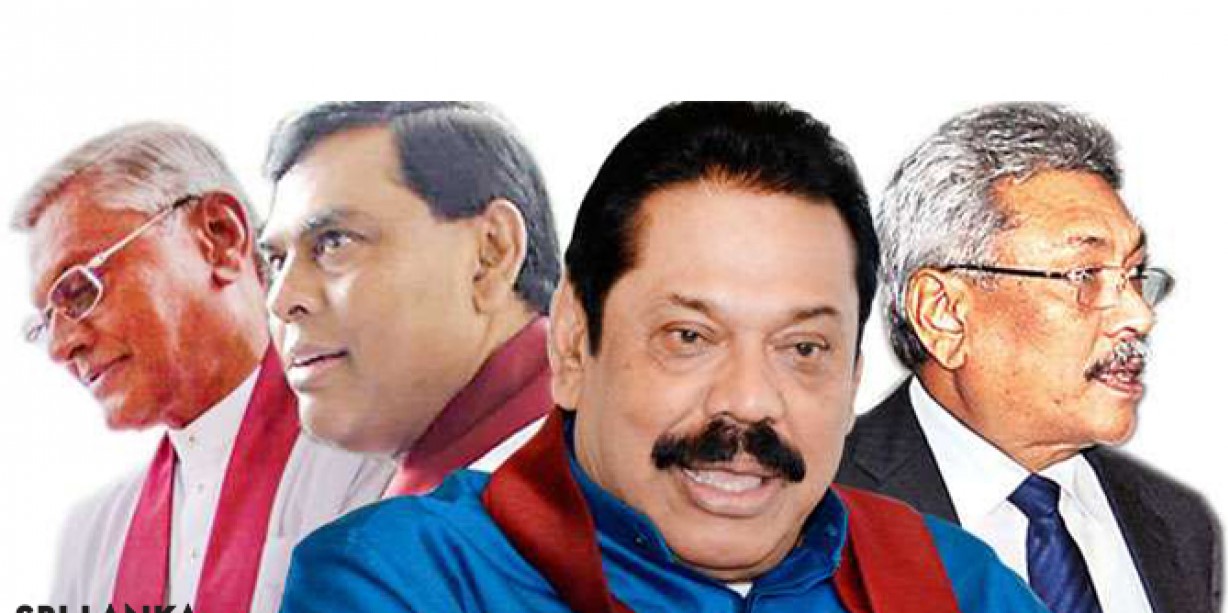
SLPP and UNP likely to form grand alliance

The Sri Lanka Podujana Peramuna (SLPP) and the United National Party (UNP) are likely to form a grand alliance ahead of the next elections, Colombo Gazette learns.

Sources told Colombo Gazette that talks in this regard are at the initial stages and includes attempting to agree on a common policy and framework on governing the country.

While it is still not clear if there is majority consensus for the move, it is understood that both sides are in agreement that working together in an alliance is the only way both sides can win the next election.

Sources also said that key UNP members have been tasked with attempting to secure the support of some former UNP members who are now in the opposition Samagi Jana Balawegaya (SJB).

Negotiators from the UNP-SLPP are also expected to seek talks with rebel MPs of the SLPP who defected to the opposition or are independent MPs.

Meanwhile, it is understood that the SLPP and the UNP have already reached a consensus on the budget proposals for 2024.

UNP Leader Ranil Wickremesinghe is expected to contest the Presidential elections next year. It is still not clear what role SLPP Leader Mahinda Rajapaksa will play in the event Wickremesinghe does contest.

The popularity of the SLPP dropped during the economic crisis and the ‘Aragalaya’ protests.

During the crisis the SLPP was forced to back the appointment of Wickremesinghe as Prime Minister and later President.

Posted in Uncategorized

Shri Santosh Jha appointed as next High Commissioner of India to Sri Lanka

The Government of India has appointed Shri Santosh Jha (IFS: 1993), presently Ambassador of India to Belgium, as the next High Commissioner of India to Sri Lanka. He is expected to take up the assignment shortly.

Shri Jha is a career diplomat with over 28 years of experience in the Indian Foreign Service. He has served in various capacities in India’s diplomatic missions in Russia, Uzbekistan, and the United States. He was also the Deputy Chief of Mission in the Embassy of India in Washington, D.C.

In his previous assignment as Ambassador of India to Belgium, Shri Jha has played a key role in strengthening India’s bilateral relations with Belgium and the European Union. He has also been actively involved in promoting trade and investment between India and Belgium.

Shri Jha is a graduate of the University of Delhi and the Jawaharlal Nehru University. He is also a recipient of the Indian Foreign Service Award for Excellence.

His appointment as the next High Commissioner of India to Sri Lanka is a recognition of his diplomatic skills and experience. He is expected to play a key role in further strengthening India’s relations with Sri Lanka.

In a statement, the Ministry of External Affairs said that Shri Jha’s appointment is a “reflection of the strong and close ties” between India and Sri Lanka. The ministry said that Shri Jha will work to “further deepen and diversify” the bilateral relationship.

Shri Jha’s appointment is also seen as a sign of India’s commitment to help Sri Lanka overcome its current economic crisis. India has already extended financial assistance to Sri Lanka and is working to provide further support.

Ex-President Maithripala calls for international probe into Easter Sunday bombings

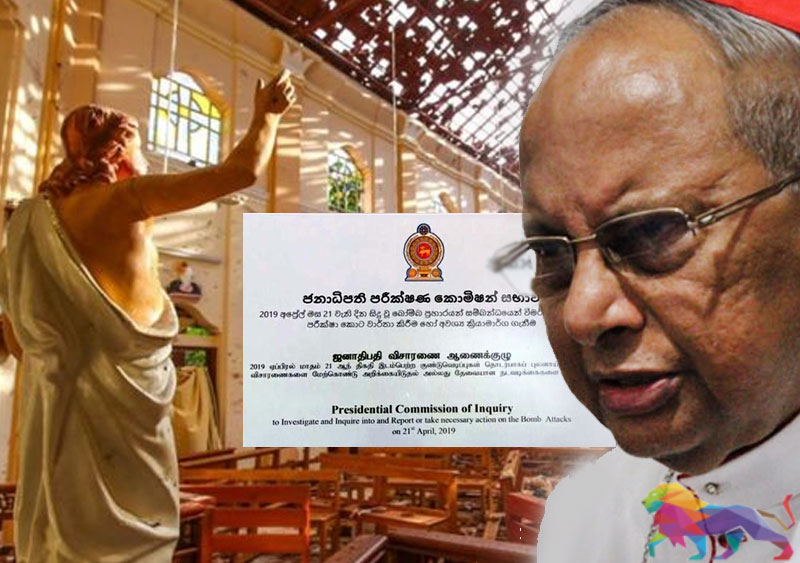
Former President Maithripala Sirisena has called for an international probe into the Easter Sunday bombings of 2019, in light of the revelations made by UK’s Channel 4 in their latest exposé on the tragic incidents.

Speaking to the media in this regard on Wednesday (13 Sep.), Sirisena claimed that although he was accused of several allegations in relation to the terror attacks over the last four years, the British television channel’s documentary shed a different light on those who should be held responsible for the attacks.

“We too, are raising our voices, and call for an international probe into the attacks, as proposed by the United Nations. I was judged with regards to this matter for four years, and court orders were given too. But when you look at the Channel 4 (documentary) it is clear that what actually took place is something completely different to what was perceived”, he said in this regard.

Posted in Uncategorized

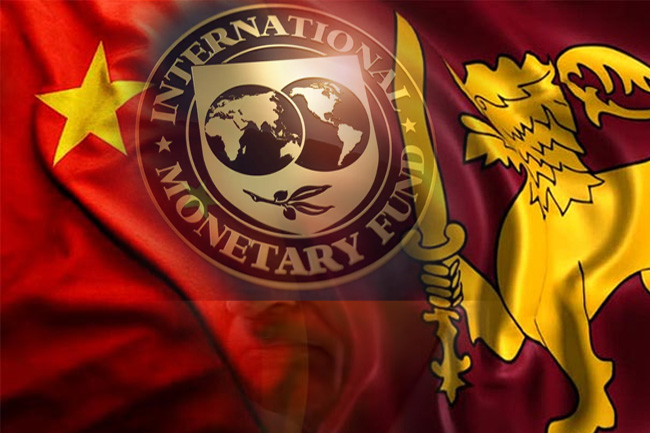
Sri Lanka’s Dangerous Domestic Debt Restructuring

COLOMBO – More than a year after the mass protest movement known as the Aragalaya ousted Sri Lanka’s President Gotabaya Rajapaksa and his brother, Prime Minister Mahinda Rajapaksa, Sri Lankans have once again taken to the streets.

The impetus for the resurgence of public discontent is the recent bailout agreement between the International Monetary Fund and President Ranil Wickremesinghe’s government. The deal, which aims to address the country’s ongoing balance-of-payments crisis, offers Sri Lanka less than $3 billion over four years – a tiny fraction of what the country needs to meet its debt-servicing requirements and just one-sixth of its foreign-exchange earnings, which amounted to roughly $18 billion in 2022.

In exchange for this emergency loan, the IMF imposed a series of conditions that have significantly exacerbated Sri Lanka’s wage and cost-of-living crises. The mandated shift to market exchange rates, in particular, immediately led to a sharp currency devaluation, causing imported fuel and food prices to skyrocket and contributing to a 165% increase in electricity tariffs between June 2022 and February 2023.

As fiscal restraints were imposed, the economy continued to spiral down, with GDP shrinking by 7.8% in 2022 and 11.5% in the first quarter of 2023. This has had an adverse impact on employment, livelihoods, and the viability of small and medium-size enterprises. Consequently, real wages fell by 30-50% in 2022 and have remained stagnant.

Despite paying lip service to the importance of combating corruption and curbing illicit financial flows, the IMF plan falls short of tackling these issues effectively. Although it includes a modest increase in corporate income taxes, it neglects the possibility of imposing wealth taxes. Moreover, its focus on highly regressive measures, such as nearly doubling the value-added tax to 15%, means that the bulk of additional revenues will be generated through indirect taxes that disproportionately affect ordinary people.

The current wave of protests is partly a reaction to the government’s decision to comply with the IMF’s demand to restructure both external and domestic debt. Instead of focusing on lowering the external debt to a sustainable level, however, the agreement aims to bring down total debt, thereby reducing the haircut imposed on foreign creditors to just 30%.

This has exacerbated the crisis and is difficult to justify. In countries that do not issue global reserve currencies, there is a clear distinction between domestic and external debt. Governments can and do service domestic debt using their own currencies, the supply of which is controlled by their central banks. By contrast, foreign currency-denominated debt necessitates either foreign-exchange earnings or new borrowing.

Sri Lanka’s crisis is largely the result of the country’s inability to service its external debt due to insufficient foreign-currency reserves. Since 2016, the government has preferred to take on new international loans, primarily from private lenders, to repay its foreign creditors, including bilateral and multilateral lenders. In early 2022, the government chose to default on its foreign loans rather than explore alternative solutions.

But restructuring domestic debt in an economy already in decline is both painful and unnecessary. Sri Lanka’s domestic debt is held by various entities, including the central bank, commercial banks, and pension funds. Given that the country’s banking system is already severely weakened, pension funds will almost certainly bear the brunt of the expected adjustment.

This will have a significant impact on the retirement savings of workers who have already been hit by massive price increases. By reducing the interest rates on sovereign bonds held by Sri Lanka’s largest pension funds from more than 20% to 12%, and then to 9% from 2025 until maturity, the government aims to reduce its interest burden by 0.5 percentage points of GDP annually.

Recent estimates by Ahilan Kadirgamar suggest that this will result in a 30% decline in the value of retirement funds a decade from now. Moreover, these pension funds, often holding the only financial assets of working people, will be subject to a 30% tax on their returns – higher than the tax rate applied to many in the corporate sector.

Many workers whose life savings are invested in these retirement funds earn wage incomes well below the minimum taxable rate. This includes workers who face numerous intersecting deprivations stemming from gender and ethnic discrimination, such as women employed in the garment industry and tea-plantation workers, especially those from minority Tamil groups.

These groups have already experienced an alarming decline in living standards. Nearly 56% of Sri Lanka’s 22.2 million people are now grappling with multidimensional vulnerabilities, with women and girls being the hardest hit. Official estimates suggest that roughly 43% of children under the age of five suffer from malnutrition, as do a growing number of pregnant and lactating women.

By targeting the meager pension funds of Sri Lanka’s wage workers, the government’s domestic-debt restructuring plan is likely to exacerbate existing class, gender, and ethnic inequalities. With their hard-earned savings eroded, poverty-level workers will be pushed further into destitution.

Meanwhile, the adjustment process relies heavily on the unpaid labor of women who continue to provide care in the face of austerity and diminishing social services. The plight of working-class Sri Lankan women underscores the clearly gendered effects of the county’s debt crises and the government’s approach to tackling them.

A genuine resolution to Sri Lanka’s prolonged economic crisis would require a dramatic change in strategy. To bring about a robust economic recovery, the government and the IMF must focus on improving the lives of working people rather than imposing on them the burden of adjustment.

Source:project-syndicate.org

Russia donates 352MT of sunflower oil consignment to Sri Lanka

The Russian Federation has handed over a consignment of sunflower oil to Sri Lanka, in an emergency operation to support those affected by the economic crisis in Sri Lanka, the Russian Embassy in Sri Lanka announced.

Accordingly, the cargo addressed to the people of Sri Lanka containing the consignment of 352 Metric Tonnes of sunflower oil fortified with vitamins A and D has been ceremoniously handed over to Sri Lanka, with the participation of the Russian Ambassador to Sri Lanka Levan S. Dzhagaryan.

The event reportedly took place at the Veyangoda Economic Center premises yesterday (Sep. 12).

The oil consignment which was delivered to Sri Lanka as a humanitarian aid and gift from the Russian people will contribute to the fight against hunger and obstacles of neocolonialism of the Western powers, the Russian Embassy in Sri Lanka said.

The donated consignment of sunflower oil will be distributed in Sri Lanka through the World Food Programme

GR to back new political party?

Former President Gotabaya Rajapaksa who has maintained a stark silence since his resignation in July last year is now eyeing to recapture and strengthen his failed image through a new political party which is now led by one of his close aide’s and media owner who declared his entry into politics yesterday.

The Daily Mirror learns that Gotabaya Rajapaksa who has been given all the privileges and facilities as a former President despite being forced out of office by the citizens, is reportedly backing the Mawbima Janatha Party which was recently purchased by his close aide Dilith Jayaweera.

According to sources in the Elections Commission, the Mawbima Janatha Party recently changed its constitution and elected new office bearers after Jayaweera took over the party.

The party is also now open to accepting new members and it is learnt that a hunt is on for educated individuals, an attempt similar to Rajapaksa’s Viyathmaga.

Gotabaya Rajapaksa’s latest attempt to clear up his image comes after the Daily Mirror had reported in Oct.2022, that a team put together by a media personality and business tycoon were visiting the villages which he had visited under the ‘Gama Samaga Pilisandara’ programme when he was President, and these members were speaking to the people to clear the former president’s image.

The residents of those villages were also being informed that Rajapaksa had been misled and those to blame were those close to him including his family members.

Opinion polls were also conducted in these villages to gather the people’s feedback on Gotabaya Rajapaksa, to test the waters if there is any public trust remaining for the former president.

Now in his latest attempt, it is learnt that Gotabaya Rajapaksa will give his blessings and back the Mawbima Janatha Party which is led by Jayaweera as the country gears up for the Presidential Election which will be held next year.

Senior leader of the Mawbima Janatha Party, Hemakumara Nanayakkara told the Daily Mirror that the Mawbima Janatha Party and the Aramuna organization of Dilith Jayaweera had joined hands to contest future elections as the Mawbima Janatha Party and said they were working together towards that end.

He also said they will contest the upcoming Presidential election as well.